Application of iridium complexes in asymmetric catalytic hydrogenation of unsaturated carboxylic acids
US20110092732A1
2011-04-21
12/989,620
2009-01-20
✅ Patent granted
US 8,692,018 B2
2014-04-08
WO; PCT/CN2009/070231; 20090120
WO; WO2009/129701; 20091029
Paul A Zucker
Blue Filament Law PLLC | Avery N. Goldstein
2030-06-05
Abstract:
The present invention relates to a preparation method of carboxylic acids with optical activity, particularly, publishes that very useful chiral carboxylic acids can be obtained by the asymmetric catalytic hydrogenation of tri-substituted α,β-unsaturated carboxylic acids, with the complexes of the chiral phosphor nitrogen ligands and iridium used as the catalysts which show high activity and enantioselectivity (up to 99.8% ee), thus provides a more efficient method with higher enantioselectivity for asymmetric catalytic hydrogenation of chiral carboxylic acid-like compounds, and has important application value to asymmetric hydrogenation of chiral carboxylic acids.
Inventors:
- Qilin Zhou 7 🇨🇳 Tianjin, China
- Lixin Wang 7 🇨🇳 Tianjin, China
- Shoufei Zhu 3 🇨🇳 Tianjin, China
- Shen Li 2 🇨🇳 Tianjin, China
- Canming Zhang 1 🇨🇳 Tianjin, China
- Shoufei Zhu 2 🇨🇳 Trianjin, China
Assignee:
- Zheijiang Jiuzhou Pharmaceutical Co., Ltd. 2 🇨🇳 Taizhou City, Zhejiang, China
- Zheijiang Jiuzhou Pharmaceutical Co., Ltd. 1 🇨🇳 , China
Applicant:
Interested in similar patents?
Get notified when new applications in this technology area are published.
Classification:
C07F9/653 » CPC main
Compounds containing elements of Groups 5 or 15 of the Periodic System; Phosphorus compounds; Heterocyclic compounds, e.g. containing phosphorus as a ring hetero atom having nitrogen and oxygen atoms as the only ring hetero atoms Five-membered rings
B01J31/189 » CPC further
Catalysts comprising hydrides, coordination complexes or organic compounds containing coordination complexes containing nitrogen, phosphorus, arsenic or antimony as complexing atoms, e.g. in pyridine ligands, or in resonance therewith, e.g. in isocyanide ligands C=N-R or as complexed central atoms containing both nitrogen and phosphorus as complexing atoms, including e.g. phosphino moieties, in one at least bidentate or bridging ligand
B01J31/2295 » CPC further
Catalysts comprising hydrides, coordination complexes or organic compounds containing coordination complexes; Organic complexes; Unsaturated compounds used as ligands Cyclic compounds, e.g. cyclopentadienyls
C07B53/00 » CPC further
Asymmetric syntheses
C07D263/12 » CPC further
Heterocyclic compounds containing 1,3-oxazole or hydrogenated 1,3-oxazole rings not condensed with other rings having one double bond between ring members or between a ring member and a non-ring member with only hydrogen atoms, hydrocarbon or substituted hydrocarbon radicals, directly attached to ring carbon atoms with radicals containing only hydrogen and carbon atoms
C07D307/54 » CPC further
Heterocyclic compounds containing five-membered rings having one oxygen atom as the only ring hetero atom not condensed with other rings having two or three double bonds between ring members or between ring members and non-ring members with substituted hydrocarbon radicals attached to ring carbon atoms Radicals substituted by carbon atoms having three bonds to hetero atoms with at the most one bond to halogen, e.g. ester or nitrile radicals
C07F15/0033 » CPC further
Compounds containing elements of Groups 8, 9, 10 or 18 of the Periodic System compounds of the platinum group Iridium compounds
C07F17/02 » CPC further
of metals of Groups 8, 9 or 10 of the Periodic System
B01J2231/645 » CPC further
Catalytic reactions performed with catalysts classified in; Reduction reactions, e.g. hydrogenation; Reductions in general of organic substrates, e.g. hydride reductions or hydrogenations; Hydrogenation of organic substrates, i.e. H or H-transfer hydrogenations, e.g. Fischer-Tropsch processes of C=C or C-C triple bonds
B01J2531/827 » CPC further
Additional information regarding catalytic systems classified in; Complexes comprising metals of Group VIII as the central metal; Metals of the platinum group Iridium
C07B2200/07 » CPC further
Indexing scheme relating to specific properties of organic compounds Optical isomers
C07C57/30 » CPC further
Unsaturated compounds having carboxyl groups bound to acyclic carbon atoms containing six-membered aromatic rings
C07C51/36 » CPC further
Preparation of carboxylic acids or their salts, halides or anhydrides by reactions not involving formation of carboxyl groups by hydrogenation of carbon-to-carbon unsaturated bonds
C07C59/64 » CPC further
Compounds having carboxyl groups bound to acyclic carbon atoms and containing any of the groups OH, O—metal, —CHO, keto, ether, groups, groups, or groups; Unsaturated compounds containing ether groups, groups, groups, or groups containing six-membered aromatic rings
C07B55/00 IPC
Racemisation; Complete or partial inversion
C07C63/04 IPC
Compounds having carboxyl groups bound to a carbon atoms of six-membered aromatic rings Monocyclic monocarboxylic acids
Description
FIELD OF TECHNOLOGY
The present invention relates to a preparation method of carboxylic acids with optical activity, particularly, publishes the application of iridium complexes of chiral phosphor nitrogen ligands in asymmetric catalytic hydrogenation of tri-substituted α,β-unsaturated carboxylic acids for preparing chiral carboxylic acids. In the invention, very useful chiral carboxylic acids can be obtained by the asymmetric catalytic hydrogenation of tri-substituted α,β-unsaturated carboxylic acids, with the complexes of the chiral phosphor nitrogen ligands and iridium used as the catalysts which show high activity and enantioselectivity (up to 99.8% ee). This is one of the most efficient methods for synthesizing carboxylic acids with optical activity by the asymmetric catalytic hydrogenation.
DESCRIPTION OF RELATED ARTS
In organic synthesis, the chiral carboxylic acids are important components of a lot of natural products with biological activity and drug molecules, so the development of the synthesis methods of optically pure carboxylic acid-like compounds is one of the hot research fields in the current academia and industry (Lednicer, D.; Mitscher, L. A. The Organic Chemistry of Drug Synthesis 1977 and 1980, Wiley: New York, Vols. 1 and 2). Among many methods for synthesizing unsaturated carboxylic acids, the asymmetric catalytic hydrogenation of α,β-unsaturated carboxylic acids attracted great interest from researchers for its atoms are highly economic and it is environmental friendly (Jacobsen, E. N.; Pfaltz, A.; Yamamoto, H. Comprehensive Asymmetric Catalysis, Springer: Berlin, 1999, Vols. I.; Tang, W.; Zhang, X. Chem. Rev. 2003, 103, 3029). In 1987, Noyori achieved the homogeneous asymmetric catalytic hydrogenation of α,β-unsaturated carboxylic acid—tiglic acid for the first time with the ruthenium acetate complex of BINAP as the catalyst , and obtained the ee value of 91%, and also prepared (S)-Naproxen with the same catalyst, and obtained the ee value of 97% (Ohta, T.; Takaya, H.; Kitamura, M.; Nagai, K.; Noyori, R. J. Org. Chem. 1987, 52, 3176). Since then, people have developed several chiral ruthenium and rhodium complex catalysts, they achieved very good catalytic effects in the catalytic asymmetric hydrogenation of unsaturated carboxylic acids, and there are many examples of successful industrialization (Boogers J. A. F.; Felfer, U.; Kotthaus, M.; Lefort, L.; Steinbauer, G.; de Vries, A. H. M.; de Vries, J. G. Org. Proc. Res. Dev. 2007, 11, 585). However, due to the specificity of catalytic hydrogenation reaction, each catalyst can be effective only to one or a few kinds of substrates, so far there are still many substrates that can not be catalyzed well; and, most of known chiral catalysts still have various defects, which appear mainly to be higher amount of catalysts, rigorous reaction conditions, too long reaction time and so on. Therefore, there is a need to find more effective chiral catalysts, to achieve hydrogenation of α,β-unsaturated carboxylic acids with high enantioselectivity.
In addition to ruthenium and rhodium complexes, the chiral catalysts formed by the transition metal iridium and chiral ligands are also used broadly in asymmetric catalytic hydrogenation, particularly the asymmetric hydrogenation of the non-functional groups olefin and imine, and results better than other transition metal catalysts can be obtained ((Blaser, H. -U. Adv. Synth. Catal. 2002, 344, 17; Zhou, Y. -G. Acc. Chem. Res. 2007, 40, 1357; Roseblade, S. J.; Pfaltz, A. Acc. Chem. Res. 2007, 40, 1402). However, so far there is only one report about the iridium complex for asymmetric hydrogenation of unsaturated carboxylic acids, that is, Matteoli et.al. catalyzed the asymmetric hydrogenation of a di-substituted α,β-unsaturated carboxylic acid -α-phenylethyl acrylic acid with a chiral iridium catalyst, but that catalyst only showed moderate reactivity and enantioselectivity (Scrivanti, A.; Bova, S.; Ciappa, A.; Matteoli, U. Tetrahedron Lett. 2006, 47, 9261). Therefore, the development of novel iridium complex catalysts to achieve high efficient asymmetric hydrogenation of α,β-unsaturated carboxylic acids has important research and application values.
SUMMARY OF THE INVENTION
Aspects of the present invention generally pertain to a preparation method of chiral carboxylic acids by using an iridium complex of a chiral phosphor nitrogen ligand in asymmetric catalytic hydrogenation of tri-substituted α,β-unsaturated carboxylic acids, which is a successful application of iridium complex catalysts in asymmetric catalytic hydrogenation of tri-substituted α,β-unsaturated carboxylic acids, thus provides a more efficient method with higher enantioselectivity for asymmetric catalytic hydrogenation of chiral carboxylic acid-like compounds.
The preparation method of chiral carboxylic acids by using the iridium complex of the chiral phosphor nitrogen ligand to catalyze asymmetric hydrogenation of tri-substituted α,β-unsaturated carboxylic acids provided by the present invention is that the asymmetric catalytic hydrogenation of the tri-substituted α,β-unsaturated carboxylic acids is carried out with the presence of an additive and the chiral iridium complex of the chiral phosphor nitrogen ligand to obtain chiral carboxylic acids having certain optical purity.
The preparation method of chiral carboxylic acids of the present invention, characterized in that it is carried out by the following catalytic hydrogenation reaction process:
Wherein: [Ir] is the iridium complex catalyst of the chiral phosphor nitrogen ligand; R1, R2 are halogen, hydroxyl, C1˜C8 alkyl, halogenated alkyl, C1˜C8 alkoxy, phenoxy, C1˜C8 alkyl-substituted phenoxy, hydroxyl-substituted phenoxy, C1˜C8 alkoxy-substituted phenoxy, C2˜C8 acyloxy-substituted phenoxy, halogenated phenoxy, amino-substituted phenoxy, (C1˜C8 acyl) amino-substituted phenoxy, di (C1˜C8 alkyl) amino-substituted phenoxy, C1˜C8 acyl-substituted phenoxy, C2˜C8 esteryl-substituted phenoxy, naphthyloxy, furyloxy, thienyloxy, benzyloxy, C2˜C8 acyloxy, C1˜C8 acyl, C2˜C8 esteryl, (C1˜C8 acyl) amino, di (C1˜C8 alkyl) amino, phenyl, C1˜C8 alkyl-substituted phenyl, hydroxyl-substituted phenyl, C1˜C8 alkoxy-substituted phenyl, C2˜C8 acyloxy-substituted phenyl, halogenated phenyl, amino-substituted phenyl, (C1˜C8 acyl) amino-substituted phenyl, di (C1˜C8 alkyl) amino-substituted phenyl, C1˜C8 acyl-substituted phenyl, C2˜C8 esteryl-substituted phenyl, naphthyl, furyl, thienyl, respectively; R1 and R2 can be same or different; the position marked by the asterisk is the chiral center.
The preparation method of chiral carboxylic acids of the present invention is achieved with the iridium complex catalyst of the chiral phosphor nitrogen ligand having the following general formula.
Wherein:
is the chiral phosphor nitrogen ligand;
is cyclooctadiene; n =0˜3; R1, R2, R3, R4, R5, R6, R7 are defined as the compound (I); X is halogen, C1˜C8 carboxylate radical, sulfate radical, tetra (3,5-bis trifluoromethylphenyl) borate radical, tetra (pentafluorophenyl) borate radical, tetra (perfluoro-tert-butoxy) aluminum ion, tetra (hexafluoroisopropoxy) aluminum ion, hexafluoro phosphate ion, hexafluoro antimonlate ion, tetrafluoro borate ion or triflluoro methanesulfonate ion; cyclooctadiene ligand can be substituted by ethylene or norbornadiene.
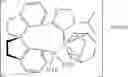
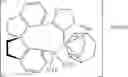
The chiral phosphor nitrogen ligand contained in the above-mentioned iridium complex catalyst of the chiral phosphor nitrogen ligand has the following structural formula:
Wherein: m=0˜3, n=0˜4, p=0˜6; R3, R4 are H, C1˜C8 alkyl, halogenated alkyl, C1˜C8 alkoxy, C2˜C8 acyloxy, C1˜C8 acyl, C2˜C8 esteryl, (C1˜C8 acyl) amino, di (C1˜C8 alkyl) amino, halogen, phenyl, C1˜C8 alkyl-substituted phenyl, hydroxyl-substituted phenyl, C1˜C8 alkoxy-substituted phenyl, C2˜C8 acyloxy-substituted phenyl, halogenated phenyl, amino-substituted phenyl, (C1˜C8 acyl) amino-substituted phenyl, di (C1˜C8 alkyl) amino-substituted phenyl, C1˜C8 acyl-substituted phenyl, C2˜C8 esteryl-substituted phenyl, naphthyl, furyl, thienyl, respectively or combined alicyclic or aromatic ring when m, n, p≧2; R3 and R4 can be same or different;
R5, R6, R7, R8 are H, C1˜C8 alkyl, halogenated alkyl, C1˜C8 alkoxy, C2˜C8 acyloxy, C1˜C8 acyl, C2˜C8 esteryl, (C1˜C8 acyl) amino, di (C1˜C8 alkyl) amino, halogen, phenyl, C1˜C8 alkyl-substituted phenyl, hydroxyl-substituted phenyl, C1˜C8 alkoxy-substituted phenyl, C2˜C8 acyloxy-substituted phenyl, halogenated phenyl, amino-substituted phenyl, (C1˜C8 acyl) amino-substituted phenyl, di (C1˜C8 alkyl) amino-substituted phenyl, C1˜C8 acyl-substituted phenyl, C2˜C8 esteryl-substituted phenyl, naphthyl, furyl, thienyl, respectively or R5˜R6, R7˜R8 are combined alicyclic or aromatic ring; R5, R6, R7, R8 can be same or different;
R9, R10 are H, C1˜C8 alkyl, halogenated alkyl, C1˜C8 alkoxy, C2˜C8 acyloxy, C1˜C8 acyl, C2˜C8 esteryl, (C1˜C8 acyl) amino, di (C1˜C8 alkyl) amino, halogen, benzyl, phenyl, C1˜C8 alkyl-substituted phenyl, hydroxyl-substituted phenyl, C1˜C8 alkoxy-substituted phenyl, C2˜C8 acyloxy-substituted phenyl, halogenated phenyl, amino-substituted phenyl, (C1˜C8 acyl) amino-substituted phenyl, di (C1˜C8 alkyl) amino-substituted phenyl, C1˜C8 acyl-substituted phenyl, C2˜C8 esteryl-substituted phenyl, naphthyl, furyl, thienyl, respectively or R9˜R10 are combined alicyclic or aromatic ring; R9 and R10 can be same or different;
R11 is C1˜C8 alkyl, phenyl, C1˜C8 alkyl-substituted phenyl, hydroxyl-substituted phenyl, sulfo-substituted phenyl, C1˜C8 alkoxy-substituted phenyl, C2˜C8 acyloxy-substituted phenyl, halogenated phenyl, amino-substituted phenyl, (C1˜C8 acyl) amino-substituted phenyl, di (C1˜C8 alkyl) amino-substituted phenyl, C1˜C8 acyl-substituted phenyl, C2˜C8 esteryl-substituted phenyl, naphthyl, furyl, thienyl.
The C1˜C8 alkyl is methyl, ethyl, n-propyl, isopropyl, cyclopropyl, n-butyl, isobutyl, sec-butyl, tert-butyl, cyclobutyl, pentyl, isoamyl, neopentyl, sec-pentyl, tert pentyl, cyclopentyl, n-hexyl, isohexyl, neohexyl, sec-hexyl, tert-hexyl, cyclohexyl, n-heptyl, isoheptyl, neoheptyl, sec-heptyl, tert-heptyl, cycloheptyl, n-octyl, isooctyl, neooctyl, sec-octyl, tert-octyl or cyclooctyl;
The C1˜C8 alkoxy is methoxy, ethoxy, n-propoxy, isopropoxy, cyclopropoxy, n-butoxy, isobutoxy, sec-butoxy, tert-butoxy, cyclobutoxy, n-pentyloxy, isopentyloxy, neopentyloxy, sec-pentyloxy, tert-pentyloxy, cyclopentyloxy, n-hexyloxy, isohexyloxy, neohexyloxy, sec-hexyloxy, tert-hexyloxy, cyclohexyloxy, n-heptyloxy, isoheptyloxy, neoheptyloxy, sec-heptyloxy, tert-heptyloxy, cycloheptyloxy, n-octyloxy, iso-octyloxy, neooctyloxy, sec-octyloxy, tert-octyloxy, cyclooctyloxy;
The C1˜C8 acyl is formoxyl, acetyl, propionyl, n-butyryl, isobutyryl, n-valeryl, isovaleryl, sec-valeryl, neovaleryl, n-hexanoyl, isohexanoyl, neohexanoyl, sec-hexanoyl, n-heptanoyl, isoheptanoyl, neoheptanoyl, sec-heptanoyl, n-octanoyl, isooctanoyl, neooctanoyl, sec-octanoyl, 1-cyclopropyl formoxyl, 1-cyclobutyl formoxyl, 1-cyclopentyl formoxyl, 1-cyclohexyl formoxyl, 1-cycloheptyl formoxyl;
The C2˜C8 acyloxy is acetoxyl, propionyloxy, n-butyryloxy, isobutyryloxy, n-valeryloxy, isovaleryloxy sec-valeryloxy, neovaleryloxy, n-hexanoyloxy, isohexanoyloxy, neohexanoyloxy, sec-hexanoyloxy, n-heptanoyloxy, isoheptanoyloxy, neoheptanoyloxy, sec-heptanoyloxy, n-octanoyloxy, isooctanoyloxy, neooctanoyloxy, sec-octanoyloxy, 1-cyclopropyl acetoxyl, 1-cyclobutyl acetoxyl, 1-cyclopentyl acetoxyl, 1-cyclohexyl acetoxyl, 1-cycloheptyl acetoxyl;
The C2˜C8 esteryl is methoxycarbonyl, ethoxycarbonyl, propoxycarbonyl, isopropoxycarbonyl, butoxycarbonyl, isobutoxycarbonyl, n-pentyloxycarbonyl, isopentyloxycarbonyl, neopentyloxycarbonyl, sec-pentyloxycarbonyl, tert-pentyloxycarbonyl, cyclopentyloxycarbonyl, n-hexyloxycarbonyl, isohexyloxycarbonyl, neohexyloxycarbonyl, sec-hexyloxycarbonyl, tert-hexyloxycarbonyl, cyclohexyloxycarbonyl, n-heptyloxycarbonyl, isoheptyloxycarbonyl, neoheptyloxycarbonyl, sec-heptyloxycarbonyl, tert-heptyloxycarbonyl, cycloheptyloxycarbonyl;
The halogenated alkyl is a halogenated alkyl containing fluoride, chlorine, bromine or iodine.
The preparation method of chiral carboxylic acids of the present invention is that: under the protection of argon or nitrogen, the catalyst and the substrate are added into the inner tube of the reactor, then the additive and the solvent are added, the reactor is sealed and the air in the reactor is replaced carefully with hydrogen for 3 to 5 times, after the reactor is filled with hydrogen to the desired pressure, the mixture is stirred to the end;
The solvent used is ethyl acetate or C1˜C6 alcohol; the amount of the catalyst is 0.001˜1 mol %; the concentration of the substrate is 0.001˜10.0 M; the additive is one or several of iodine, isopropylamine, tert-butylamine, dimethylamine, diethyl amine, diisopropylamine, diisopropyl ethylamine, trimethylamine, triethylamine, 1,8-diazabicyclo [5,4,0]undec-7-ene (DBU), 1,4-diazabicyclo [2,2,2]octane (DABCO), sodium hydride, sodium hydroxide, sodium carbonate, sodium bicarbonate, sodium tert-butyl alcohol, potassium hydroxide, potassium carbonate, potassium bicarbonate, potassium tert-butyl alcohol, cesium hydroxide, cesium carbonate; the reaction temperature is 0˜100° C.; the hydrogen pressure, is 0.1˜10 Mpa; the tri-substituted α,β-unsaturated carboxylic acid is stirred in the reactor to react for 0.5˜48 h.
The present invention provides a successful application of iridium complex catalysts of chiral phosphor nitrogen ligands in asymmetric catalytic hydrogenation of tri-substituted α,β-unsaturated carboxylic acids. Very useful chiral carboxylic acids can be obtained by the asymmetric catalytic hydrogenation of tri-substituted α,β-unsaturated carboxylic acids, with the complexes of the chiral phosphor nitrogen ligands and iridium used as the catalysts which show high activity and enantioselectivity (up to 99.8% ee), thus the present invention provides a more efficient method with higher enantioselectivity for asymmetric catalytic hydrogenation of chiral carboxylic acid-like compounds, and has important application value to asymmetric hydrogenation of chiral carboxylic acids.
DETAILED DESCRIPTION OF THE PREFERRED EMBODIMENT
The following embodiments will facilitate to further understand the present invention, but do not limit the contents of the present invention. The preparation method of the present invention can be shown further with the representative compounds as follows:
General explanation:
The following abbreviations are used in the embodiments, and their meanings are as follows:
Me is methyl, llPr is n-propyl, iPr is isopropyl, iBu is isobutyl, lBu is tert-butyl, Ph is phenyl, Bn is benzyl, An is p-methoxyphenyl, Xyl is 3,5-dimethylphenyl, DMM is 3,5-dimethyl-4-methoxyphenyl, DTB is 3,5-di-tert-butyl-phenyl, BARF- is tetra (3,5-bis trifluoromethylphenyl) borate radical; PF6− is hexafluoro phosphate ion, Naphthyl is naphthyl, Furan-2-yl is 2-furyl; NMR is nuclear magnetic resonance, the chiral SFC is a supercritical fluid chromatography equipped with a chiral column, the chiral HPLC is a high pressure liquid chromatography equipped with a chiral chromatographic column; the ee value is the excess value of enantiomer.
The solvents used are purified and dried with the standard operation before use; the reagents used are commercially available or synthesized according to the existing literature methods and purified before use.
Embodiment 1
Asymmetric Catalytic Hydrogenation of α-methyl Cinnamic Acid
In the glove box, the catalyst (0.00125 mmol) and α-methyl cinnamic acid 1a (81 mg, 0.5 mmol) are weighted in the reaction inner tube with stirring bar, then the reaction inner tube is sealed for use. When the reaction inner tube is took out, the additive and the solvent are added, then the inner tube is placed into the hydrogenation reactor, the mixture is stirred under the hydrogen pressure of 0.6˜10 Mpa till the pressure stops declining. Then the stirring is stopped, the hydrogen is released. After the system is condensed by evaporating off rotatably, the system is adjusted pH <3 with 3N hydrochloric acid water solution, extracted with diethyl ether (10 mL×3), and separated, the organic phase is collected, washed with saturated salt water, and dried with anhydrous sodium sulfate. The desiccant is removed by suction filtration, the solvent is evaporated off by rotating, then the object product 2a is obtained. The conversion rate is analyzed through 1H NMR, after it is converted to amide, its ee value is analyzed through the chiral HPLC analysis. The experimental results obtained are shown in Table 1:
| TABLE 1 |
| the experimental results of asymmetric catalytic hydrogenation of α-methyl cinnamic acid 1a |
| Hydrogen | Conversion |
| Catalyst | pressure | Additive | Solvent | Temperature | rate | ee value | |
| 1 | 0.6 MPa | Non | methanol | room temperature | 15% | 82% | |
| 2 | 0.6 MPa | Non | methanol | room temperature | 0 | ||
| 3 | 0.6 MPa | Non | methanol | room temperature | 17% | 80% | |
| 4 | 0.6 MPa | Non | methanol | room temperature | 18% | 65% | |
| 5 | 0.6 MPa | Non | methanol | room temperature | 61% | 53% | |
| 6 | 0.6 MPa | Non | methanol | room temperature | 16% | 85% | |
| 7 | 0.6 MPa | Non | methanol | room temperature | 30% | 76% | |
| 8 | 0.6 MPa | Non | methanol | room temperature | 25% | 72% | |
| 9 | 0.6 MPa | Non | methanol | room temperature | 58% | >99% | |
| 10 | 2 MPa | Non | methanol | room temperature | 62% | 98% | |
| 11 | 5 MPa | Non | methanol | room temperature | 63% | 96% | |
| 12 | 10 MPa | Non | methanol | room temperature | 65% | 91% | |
| 13 | 0.6 MPa | Non | ethyl acetate | room temperature | 45% | 86% | |
| 14 | 0.6 MPa | Non | dichloromethane | room temperature | 0 | ||
| 15 | 0.6 MPa | Non | diethyl ether | room temperature | 0 | ||
| 16 | 0.6 MPa | Non | tetrahydrofuran | room temperature | 0 | ||
| 17 | 0.6 MPa | Non | methylbenzene | Room temperature | 0 | ||
| 18 | 0.6 MPa | Non | methanol | 50° C. | 85% | 94% | |
| 19 | 0.6 MPa | iodine | methanol | room temperature | 0 | ||
| 20 | 0.6 MPa | NaBARF3H2O | methanol | room temperature | 54% | 99% | |
| 21 | 0.6 MPa | Triethylamine (0.05 mmol) | methanol | room temperature | 60% | >99% | |
| 22 | 0.6 MPa | Triethylamine (0.1 mmol) | methanol | room temperature | 75% | >99% | |
| 23 | 0.6 MPa | Triethylamine (0.25 mmol) | methanol | room temperature | 100% | >99% | |
| 24 | 0.6 MPa | Triethylamine (0.5 mmol) | methanol | room temperature | 100% | >99% | |
| 25 | 0.6 MPa | Triethylamine (0.25 mmol) | ethanol | room temperature | 95% | >99% | |
| 26 | 0.6 MPa | Triethylamine (0.25 mmol) | isopropanol | room temperature | 100% | 99% | |
| 27 | 0.1 MPa | Triethylamine (0.25 mmol) | methanol | room temperature | 100% | >99% | |
| 28 | 0.6 MPa | Triethylamine (0.25 mmol) | methanol | room temperature | 100% | 96% | |
| 29 | 0.6 MPa | Triethylamine (0.25 mmol) | methanol | room temperature | 100% | >99% | |
| 30 | 0.6 MPa | Triethylamine (0.25 mmol) | methanol | room temperature | 100% | >99% | |
| 31 | 0.6 MPa | Triethylamine (0.25 mmol) | methanol | room temperature | 100% | >99% | |
Embodiment 2
Asymmetric Catalytic Hydrogenation of α-methyl Cinnamic Acid Derivatives
In the glove box, the catalyst
(2.4 mg, 0.00125 mmol) and the substrate 1 (0.5 mmol) are weighted in the reaction inner tube with stirring bar, then the reaction inner tube is sealed for use. When the reaction inner tube is took out, triethylamine (35 μL, 0.25 mmol) and anhydrous methanol (2 mL) are added with a syringe, then the inner tube is placed into the hydrogenation reactor, the mixture is stirred under the hydrogen pressure of 0.6 MPa till the pressure stops declining. Then the stirring is stopped, the hydrogen is released. After the system is condensed by evaporating off rotatably, the system is adjusted pH <3 with 3N hydrochloric acid water solution, extracted with diethyl ether (10 mL×3), and separated, the organic phase is collected, washed with saturated salt water, and dried with anhydrous sodium sulfate. The desiccant is removed by suction filtration, the solvent is evaporated off by rotating, then the object product 2 is obtained. The conversion rate is analyzed through 1H NMR, after it is converted to amide, its ee value is analyzed through the chiral HPLC or SFC analysis. The experimental results obtained are shown in Table 2:
| TABLE 2 |
| the experimental results of asymmetric catalytic |
| hydrogenation of α-substituted cinnamic acids |
| Conversion | ||||||
| R1 | Ar2 | rate | Yield | ee value | ||
| 1 | Me | Ph | 100% | 99% | >99% | |
| 2 | Me | 2-MeC6H4 | 100% | 97% | 99% | |
| 3 | Me | 3-MeC6H4 | 100% | 98% | 99% | |
| 4 | Me | 4-MeC6H4 | 100% | 98% | >99% | |
| 5 | Me | 2-MeOC6H4 | 100% | 98% | 99% | |
| 6 | Me | 3-MeOC6H4 | 100% | 99% | 98% | |
| 7 | Me | 4-MeOC6H4 | 100% | 97% | 99% | |
| 8 | Me | 2-ClC6H4 | 100% | 97% | 96% | |
| 9 | Me | 3-ClC6H4 | 100% | 98% | 99% | |
| 10 | Me | 4-ClC6H4 | 100% | 97% | 98% | |
| 11 | Me | 3-BrC6H4 | 100% | 97% | 99% | |
| 12 | Me | 4-BrC6H4 | 100% | 97% | 98% | |
| 13 | Me | 4-CF3C6H4 | 100% | 98% | 97% | |
| 14 | Me | 2-Naphthyl | 100% | 96% | 99% | |
| 15 | Me | Furan-2-yl | 100% | 98% | 98% | |
| 16 | iPr | Ph | 100% | 97% | 99% | |
Embodiment 3
Asymmetric Catalytic Hydrogenation of Tiglic Acid
In the glove box, the catalyst (0.00125 mmol) and tiglic acid 3a (50 mg, 0.5 mmol) are weighted in the reaction inner tube with stirring bar, then the reaction inner tube is sealed for use. When the reaction inner tube is took out, the additive and the solvent (2 mL) are added, then the inner tube is placed into the hydrogenation reactor, the mixture is stirred under the hydrogen pressure of 0.6 MPa till the pressure stops declining. Then the stirring is stopped, the hydrogen is released. After the system is condensed by evaporating off rotatably, the system is adjusted pH <3 with 3N hydrochloric acid water solution, extracted with diethyl ether (10 mL×3), and separated, the organic phase is collected, washed with saturated salt water, and dried with anhydrous sodium sulfate. The desiccant is removed by suction filtration, the solvent is evaporated off by rotating, then the object product 4a is obtained. The conversion rate is analyzed through 1H NMR, after it is converted to amide, its ee value is analyzed through the chiral HPLC or SFC analysis. The experimental results obtained are shown in Table 3:
| TABLE 3 |
| the experimental results of asymmetric catalytic hydrogenation of tiglic acid |
| Catalyst | Additive | Solvent | Conversion rate | ee value | |
| 1 | triethylamine (0.25 mmol) | methanol | 95% | 97% | |
| 2 | triethylamine (0.25 mmol) | methanol | 100% | 94% | |
| 3 | triethylamine (0.25 mmol) | methanol | 90% | 98% | |
| 4 | triethylamine (0.25 mmol) | methanol | 95% | 97% | |
| 5 | pyridine (0.25 mmol) | methanol | 0 | — | |
| 6 | diisopropyl ethylamine (0.25 mmol) | methanol | 95% | 99% | |
| 7 | diisopropyl amine (0.25 mmol) | methanol | 95% | 99% | |
| 8 | potassium hydroxide (025 mmol) | methanol | 95% | 98% | |
| 9 | potassium acetate (0.25 mmol) | methanol | 80% | 96% | |
| 10 | potassium bicarbonate (0.25 mmol) | methanol | 85% | 98% | |
| 11 | potassium carbonate (0.25 mmol) | methanol | 100% | 99% | |
| 12 | sodium carbonate (0.25 mmol) | methanol | 100% | 98% | |
| 13 | cesium carbonate (025 mmol) | methanol | 100% | >99% | |
| 14 | cesium carbonate (0.25 mmol) | ethanol | 90% | 98% | |
| 15 | cesium carbonate (0.25 mmol) | isopropanol | 80% | 98% | |
Embodiment 4
Asymmetric Catalytic Hydrogenation of Tiglic Acid Derivatives
In the glove box, the catalyst
(2.4 mg, 0.00125 mmol), the substrate 3 (0.5 mmol) and cesium carbonate (82 mg, 0.25 mmol) are weighted in the reaction inner tube with stirring bar, then the reaction inner tube is sealed for use. When the reaction inner tube is took out, anhydrous methanol (2 mL) is added with a syringe, then the inner tube is placed into the hydrogenation reactor, the mixture is stirred under the hydrogen pressure of 0.6 MPa till the pressure stops declining. Then the stirring is stopped, the hydrogen is released. After the system is condensed by evaporating off rotatably, the system is adjusted pH <3 with 3N hydrochloric acid water solution, extracted with diethyl ether (10 mL×3), and separated, the organic phase is collected, washed with saturated salt water, and dried with anhydrous sodium sulfate. The desiccant is removed by suction filtration, the solvent is evaporated off by rotating, then the object product is obtained. The conversion rate is analyzed through 1H NMR, after it is converted to amide, its ee value is analyzed through the chiral HPLC or SFC analysis. The experimental results obtained are shown in Table 4:
| TABLE 4 |
| the experimental results of asymmetric catalytic |
| hydrogenation of tiglic acid derivatives |
| R1 | R2 | Conversion rate | Yield | ee value | ||
| 1 | Me | Me | 100% | 92% | 99.1% | |
| 2 | Me | Et | 100% | 93% | 98% | |
| 3 | Me | ″Pr | 100% | 89% | 99% | |
| 4 | Me | iBu | 100% | 97% | 90% | |
| 5 | Et | ″Pr | 100% | 89% | 99.4% | |
| 6 | ″Pr | Me | 100% | 92% | 98% | |
Embodiment 5
Asymmetric Catalytic Hydrogenation of (E)-2-[3-(3-methoxy-propoxy)-4-methoxy phenyl methylene]-3-methyl-butyric Acid
In the glove box, the catalyst (0.0025 mmol) and (E)-2-[3-(3-methoxy-propoxy)-4-methoxy phenyl methylene]-3-methyl-butyric acid 5 (77.1 mg, 0.25 mmol) are weighted in the reaction inner tube with stirring bar, then the reaction inner tube is sealed for use. When the reaction inner tube is took out, triethylamine (12.6 mg, 0.125 mmol) and anhydrous methanol (2 mL) are added with a syringe, then the inner tube is placed into the hydrogenation reactor, the mixture is stirred at the room temperature under the hydrogen pressure of 0.6 MPa for 24 h. Then the stirring is stopped, the hydrogen is released. After the system is condensed by evaporating off rotatably, the system is adjusted pH <3 with 3N hydrochloric acid water solution, extracted with diethyl ether (10 mL×3), and separated, the organic phase is collected, washed with saturated salt water, and dried with anhydrous sodium sulfate. The desiccant is removed by suction filtration, the solvent is evaporated off by rotating, then the object product 6 is obtained. The conversion rate is analyzed through 1H NMR, after it is converted to amide, its ee value is analyzed through the chiral HPLC or SFC analysis. The experimental results obtained are shown in Table 5:
| TABLE 5 |
| the experimental results of asymmetric catalytic hydrogenation of (E)-2-[3-(3- |
| methoxy-propoxy)-4-methoxy phenyl methylene]-3-methyl-butyric acid |
| Catalyst | Conversion rate | Yield | ee value | |
| 1 | 100% | 94% | 98% | |
| 2 | 80% | 70% | 95% | |
| 3 | 100% | 93% | 98% | |
| 4 | 100% | 95% | 98% | |
| 5 | 100% | 95% | 98% | |
| 6 | 9% | — | — | |
| 7 | 48% | 30% | 91% | |
Embodiment 6
Asymmetric Catalytic Hydrogenation of (R)-2-[3-(3-methoxy-propoxy)-4-methoxy phenyl methylene]-3-methyl-butyric Acid
In the glove box, the catalyst
(0.8 mg, 0.417 μmol) and (E)-2-[3-(3-methoxy-propoxy)-4-methoxy phenyl methylene]-3-methyl-butyric acid 5 (771 mg, 2.5 mmol) are weighted in the reaction inner tube with stirring bar, then the reaction inner tube is sealed for use. When the reaction inner tube is took out, triethylamine (1.26 g, 12.5 mmol) and anhydrous methanol (3.5 mL) are added with a syringe, then the inner tube is placed into the hydrogenation reactor, the mixture is stirred in 70 ° C. oil bath under the hydrogen pressure of 1.2 MPa for 7 h. Then the stirring is stopped, the hydrogen is released. After the system is condensed by evaporating off rotatably, the system is adjusted pH <3 with 3N hydrochloric acid water solution, extracted with diethyl ether (50 mL×3), and separated, the organic phase is collected, washed with saturated salt water, and dried with anhydrous sodium sulfate. The desiccant is removed by suction filtration, the solvent is evaporated off by rotating, then the object product (R)-6 is obtained, and is a white solid, through the 1H NMR analysis, the conversion rate is 100% and the yield is 96%. Mp 44-45 ° C.; [α]D21÷42.2 (c 1.0, CH2Cl2); 1H NMR (400 MHz, CDCl3): δ 9.71 (brs, 1H, COOH), 6.73-6.68 (m, 3H, Ar—H), 4.06 (t, J=6.4 Hz, 2H, CH2), 3.79 (s, 3H, CH3), 3.53 (t, J=6.4 Hz, 2H, CH2), 3.32 (s, 3H, CH3), 2.81-2.71 (m, 2H, CH2 and CH), 2.43-2.38 (m, 1H, CH2), 2.08-2.01 (m, 2H, CH2), 1.90 (sextet, J=6.4 Hz, 1H, CH), 1.00 (dd, J=13.2 and 6.8 Hz, 6H, CH3); after it is converted to methyl ester, its ee value is 98% through the chiral SFC analysis. Under the same condition, the amount of the catalyst is further reduced to 0.01 mol %, the reaction lasts for 18 h, then the conversion rate is 97%, the yield is 95%, and the ee value is 95%.
Embodiment 7
Asymmetric Catalytic Hydrogenation of α-methoxy Cinnamic Acid
In the glove box, the catalyst (0.00125 mmol) and α-methoxy cinnamic acid 7a (89 mg, 0.5 mmol) are weighted in the reaction inner tube with stirring bar, then the reaction inner tube is sealed for use. When the reaction inner tube is took out, the additive and the solvent (2 mL) are added with a syringe, then the inner tube is placed into the hydrogenation reactor, the mixture is stirred at the room temperature under the hydrogen pressure of 0.6 MPa till the pressure stops declining. Then the stirring is stopped, the hydrogen is released. After the system is condensed by evaporating off rotatably, the system is adjusted pH <3 with 3N hydrochloric acid water solution, extracted with diethyl ether (10 mL×3), and separated, the organic phase is collected, washed with saturated salt water, and dried with anhydrous sodium sulfate. The desiccant is removed by suction filtration, the solvent is evaporated off by rotating, then the object product 8a is obtained. The conversion rate is analyzed through 1H NMR, after it is converted to amide, its ee value is analyzed through the chiral HPLC or SFC analysis. The experimental results obtained are shown in Table 6:
| TABLE 6 |
| the experimental results of asymmetric catalytic hydrogenation of α-methoxy cinnamic acid |
| Catalyst | Additive | Conversion rate | ee value | |
| 1 | triethylamine (0.25 mmol) | 95% | 99.5% | |
| 2 | triethylamine (0.25 mmol) | 90% | 99.8% | |
| 3 | triethylamine (0.25 mmol) | 95% | 99.5% | |
| 4 | triethylamine (0.25 mmol) | 95% | 99.5% | |
| 5 | cesium carbonate (0.25 mmol) | 100% | 99.3% | |
Embodiment 8
Asymmetric Catalytic Hydrogenation of α-methoxy Cinnamic Acid Derivatives
In the glove box, the catalyst
(2.4 mg, 0.00125 mmol), the reaction substrate 7 (0.5 mmol) and cesium carbonate (82 mg, 0.25 mmol) are weighted in the reaction inner tube with stirring bar, then the reaction inner tube is sealed for use. When the reaction inner tube is took out, anhydrous methanol (2 mL) is added with a syringe, then the inner tube is placed into the hydrogenation reactor, the mixture is stirred at the room temperature under the hydrogen pressure of 0.6 MPa till the pressure stops declining. Then the stirring is stopped, the hydrogen is released. After the system is condensed by evaporating off rotatably, the system is adjusted pH <3 with 3N hydrochloric acid water solution, extracted with diethyl ether (10 mL×3), and separated, the organic phase is collected, washed with saturated salt water, and dried with anhydrous sodium sulfate. The desiccant is removed by suction filtration, the solvent is evaporated off by rotating, then the object product 8 is obtained. The conversion rate is analyzed through 1H NMR, after it is converted to amide, its ee value is analyzed through the chiral SFC analysis. The experimental results obtained are shown in Table 7:
| TABLE 7 |
| the experimental results of asymmetric catalytic hydrogenation |
| of α- methoxy cinnamic acid derivatives |
| R1 | Ar2 | Conversion rate | Yield | ee value | |
| 1 | Me | Ph | 100% | 95% | 99.3% |
| 2 | Me | o-Tol | 100% | 93% | 99.7% |
| 3 | Me | m-Tol | 100% | 91% | 99.0% |
| 4 | Me | p-Tol | 100% | 94% | 99.6% |
| 5 | Me | o-MeOPh | 100% | 97% | 99.2% |
| 6 | Me | m-MeOPh | 100% | 91% | 99.7% |
| 7 | Me | p-MeOPh | 100% | 92% | 99.7% |
| 8 | Me | o-ClPh | 100% | 95% | 99.4% |
| 9 | Me | m-ClPh | 100% | 93% | 99.3% |
| 10 | Me | p-ClPh | 100% | 91% | 99.8% |
| 11 | Me | o-BrPh | 100% | 91% | 99.5% |
| 12 | Me | m-BrPh | 100% | 94% | 99.6% |
| 13 | Me | p-NO2Ph | 100% | 96% | 99.7% |
| 14 | Me | p-CF3Ph | 100% | 95% | 99.2% |
| 15 | Me | 2-naphthyl | 100% | 93% | 99.8% |
| 16 | Et | Ph | 100% | 92% | 99.7% |
| 17 | Et | p-BnOPh | 100% | 93% | 99.5% |
| 18 | Bn | Ph | 100% | 94% | 99.5% |
| 19 | Bn | o-Tol | 100% | 93% | 99.8% |
| 20 | Bn | m-Tol | 100% | 94% | 99.8% |
| 21 | Bn | p-Tol | 100% | 91% | 99.8% |
| 22 | Bn | o-MeOPh | 100% | 93% | 99.4% |
| 23 | Bn | m-MeOPh | 100% | 95% | 99.4% |
| 24 | Bn | p-MeOPh | 100% | 93% | 99.6% |
Embodiment 9
Asymmetric Catalytic Hydrogenation of α-phenoxy-2-butenoic Acid
In the glove box, the catalyst (0.0025 mmol) and α-phenoxy-2-butenoic acid 9a (89 mg, 0.5 mmol) are weighted in the reaction inner tube with stirring bar, then the reaction inner tube is sealed for use. When the reaction inner tube is took out, the additive and the solvent (2 mL) are added with a syringe, then the inner tube is placed into the hydrogenation reactor, the mixture is stirred under the hydrogen pressure of 0.6 MPa till the pressure stops declining. Then the stirring is stopped, the hydrogen is released. After the system is condensed by evaporating off rotatably, the system is adjusted pH <3 with 3N hydrochloric acid water solution, extracted with diethyl ether (10 mL×3), and separated, the organic phase is collected, washed with saturated salt water, and dried with anhydrous sodium sulfate. The desiccant is removed by suction filtration, the solvent is evaporated off by rotating, then the object product 10a is obtained. The conversion rate is analyzed through 1H NMR, after it is converted to amide, its ee value is analyzed through the chiral HPLC or SFC analysis. The experimental results obtained are shown in Table 8:
| TABLE 8 |
| the experimental results of asymmetric catalytic hydrogenation of α-phenoxy-2-butenoic acid |
| Catalyst | Additive | Solvent | Temperature | Conversion rate | ee value | |
| 1 | triethylamine (0.25 mmol) | methanol | room temperature | 32% | 98% | |
| 2 | triethylamine (0.25 mmol) | methanol | room temperature | 22% | 90% | |
| 3 | triethylamine (0.25 mmol) | methanol | room temperature | 26% | 99% | |
| 4 | triethylamine (0.25 mmol) | methanol | room temperature | 28% | 98% | |
| 5 | triethylamine (0.25 mmol) | methanol | room temperature | 10% | 95% | |
| 6 | cesium carbonate (0.25 mmol) | methanol | room temperature | 93% | 98% | |
| 7 | cesium carbonate (0.25 mmol) | ethanol | room temperature | 95% | 98% | |
| 8 | cesium carbonate (0.25 mmol) | isopropanol | room temperature | 56% | 98% | |
| 9 | cesium carbonate (0.25 mmol) | methanol | 40° C. | 100% | 99% | |
Embodiment 10
Asymmetric Catalytic Hydrogenation of α-phenoxy-2-butenoic Acid Derivatives
In the glove box, the catalyst
(4.8 mg, 0.0025 mmol), the reaction substrate 9 (0.5 mmol) and cesium carbonate (82 mg, 0.25 mmol) are weighted in the reaction inner tube with stirring bar, then the reaction inner tube is sealed for use. When the reaction inner tube is took out, anhydrous methanol (2 mL) is added with a syringe, then the inner tube is placed into the hydrogenation reactor, the mixture is stirred in 40° C. water bath under the hydrogen pressure of 0.6 MPa till the pressure stops declining. Then the stirring is stopped, the hydrogen is released. After the system is condensed by evaporating off rotatably, the system is adjusted pH <3 with 3N hydrochloric acid water solution, extracted with diethyl ether (10 mL×3), and separated, the organic phase is collected, washed with saturated salt water, and dried with anhydrous sodium sulfate. The desiccant is removed by suction filtration, the solvent is evaporated off by rotating, then the object product 10 is obtained. The conversion rate is analyzed through 1H NMR, after it is converted to amide, its ee value is analyzed through the chiral HPLC or SFC analysis. The experimental results obtained are shown in Table 9:
| TABLE 9 |
| the experimental results of asymmetric catalytic |
| hydrogenation of α- phenoxy -2- butenoic acid derivatives |
| Ar1 | R2 | Conversion rate | Yield | ee value | |
| 1 | Ph | Me | 100% | 95% | 99% |
| 2 | m-Tol | Me | 100% | 93% | 98% |
| 3 | m-BrPh | Me | 100% | 91% | 96% |
| 4 | p-Tol | Me | 100% | 92% | >99% |
| 5 | p-tBuPh | Me | 100% | 94% | 97% |
| 6 | p-MeOPh | Me | 100% | 93% | >99% |
| 7 | p-ClPh | Me | 100% | 92% | 98% |
| 8 | p-BrPh | Me | 100% | 93% | 97% |
| 9 | 3,5-F2Ph | Me | 100% | 88% | 89% |
| 10 | 2-naphthyl | Me | 100% | 94% | 97% |
Embodiment 11
Asymmetric Catalytic Hydrogenation of α-phenoxy Cinnamic Acid and Derivatives Thereof
In the glove box, the catalyst
(4.8 mg, 0.0025 mmol), the reaction substrate 11 (0.5 mmol) and cesium carbonate (82 mg, 0.25 mmol) are weighted in the reaction inner tube with stirring bar, then the reaction inner tube is sealed for use. When the reaction inner tube is took out, anhydrous methanol (2 mL) is added with a syringe, then the inner tube is placed into the hydrogenation reactor, the mixture is stirred in 40° C. water bath under the hydrogen pressure of 0.6 MPa till the pressure stops declining. Then the stirring is stopped, the hydrogen is released. After the system is condensed by evaporating off rotatably, the system is adjusted pH <3 with 3N hydrochloric acid water solution, extracted with diethyl ether (10 mL×3), and separated, the organic phase is collected, washed with saturated salt water, and dried with anhydrous sodium sulfate. The desiccant is removed by suction filtration, the solvent is evaporated off by rotating, then the object product 12 is obtained. The conversion rate is analyzed through 1H NMR, after it is converted to amide, its ee value is analyzed through the chiral HPLC or SFC analysis. The experimental results obtained are shown in Table 10:
| TABLE 10 |
| the experimental results of asymmetric catalytic hydrogenation |
| of α- phenoxy cinnamic acid and derivatives thereof |
| Ar1 | Ar2 | Conversion rate | Yield | ee value | |
| 1 | Ph | Ph | 100% | 95% | 99.6% |
| 2 | Ph | m-Tol | 100% | 91% | 99.7% |
| 3 | Ph | p-Tol | 100% | 94% | 99.8% |
| 4 | Ph | o-MeOPh | 100% | 98% | 97% |
| 5 | Ph | m-MeOPh | 100% | 96% | 99.6% |
| 6 | Ph | p-MeOPh | 100% | 91% | 99.4% |
| 7 | Ph | m-ClPh | 100% | 90% | 99.8% |
| 8 | Ph | p-ClPh | 100% | 87% | 99.7% |
| 9 | Ph | p-FPh | 100% | 93% | 99% |
| 10 | Ph | o-CF3Ph | 100% | 91% | 99.8% |
| 11 | Ph | m-CF3Ph | 100% | 92% | 99.7% |
| 12 | Ph | p-CF3Ph | 100% | 93% | 99% |
| 13 | Ph | 1-naphthyl | 100% | 98% | 99.4% |
| 14 | Ph | 2-naphthyl | 100% | 92% | 99.2% |
| 15 | Ph | furyl | 100% | 94% | 99% |
| 16 | o-Tol | Ph | 100% | 89% | 99.5% |
| 17 | m-Tol | Ph | 100% | 92% | 99.5% |
| 18 | p-Tol | Ph | 100% | 91% | 99.5% |
| 19 | p-MeOPh | Ph | 100% | 94% | 99.8% |
| 20 | p-ClPh | Ph | 100% | 93% | 99.1% |
Embodiment 12
Asymmetric Catalytic Hydrogenation of α-phenyl Cinnamic Acid
In the glove box, the catalyst (0.0025 mmol), α-phenyl cinnamic acid 13 (56 mg, 0.25 mmol) and cesium carbonate (41 mg, 0.125 mmol) are weighted in the reaction inner tube with stirring bar, then the reaction inner tube is sealed for use. When the reaction inner tube is took out, anhydrous methanol (2 mL) is added with a syringe, then the inner tube is placed into the hydrogenation reactor, the mixture is stirred at the room temperature under the hydrogen pressure of 0.6 MPa till the pressure stops declining— Then the stirring is stopped, the hydrogen is released. After the system is condensed by evaporating off rotatably, the system is adjusted pH <3 with 3N hydrochloric acid water solution, extracted with diethyl ether (10 mL×3), and separated, the organic phase is collected, washed with saturated salt water, and dried with anhydrous sodium sulfate. The desiccant is removed by suction filtration, the solvent is evaporated off by rotating, then the object product 14 is obtained. The conversion rate is analyzed through 1H NMR, after it is converted to amide, its ee value is analyzed through the chiral HPLC or SFC analysis. The experimental results obtained are shown in Table 11:
| TABLE 11 |
| the experimental results of asymmetric catalytic hydrogenation of |
| α-phenyl cinnamic acid |
| Conver- | ee | ||
| Catalyst | sion rate | value | |
| 1 | 100% | 91% | |
| 2 | 100% | 93% | |
Claims
1. A preparation method of chiral carboxylic acids, being that the asymmetric catalytic hydrogenation of tri-substituted α,β-unsaturated carboxylic acids is carried out with the presence of a chiral iridium complex of a chiral phosphor nitrogen ligand and an alkaline additive to obtain chiral carboxylic acids having certain optical purity.
2. The preparation method of chiral carboxylic acids according to claim 1, wherein it is carried out by the following catalytic hydrogenation reaction process:
wherein: [Ir] is the iridium complex catalyst of the chiral phosphor nitrogen ligand; R1, R2 are halogen, hydroxyl, C1˜C8 alkyl, halogenated alkyl, C1˜C8 alkoxy, phenoxy, C1˜C8 alkyl-substituted phenoxy, hydroxyl-substituted phenoxy, C1˜C8 alkoxy-substituted phenoxy, C2˜C8 acyloxy-substituted phenoxy, halogenated phenoxy, amino-substituted phenoxy, (C1˜C8 acyl) amino-substituted phenoxy, di (C1˜C8 alkyl) amino-substituted phenoxy, C1˜C8 acyl-substituted phenoxy, C2˜C8 esteryl-substituted phenoxy, naphthyloxy, furyloxy, thienyloxy, benzyloxy, C2˜C8 acyloxy, C1˜C8 acyl, C2˜C8 esteryl, (C1˜C8 acyl) amino, di (C1˜C8 alkyl) amino, phenyl, C1˜C8 alkyl-substituted phenyl, hydroxyl-substituted phenyl, C1˜C8 alkoxy-substituted phenyl, C2˜C8 acyloxy-substituted phenyl, halogenated phenyl, amino-substituted phenyl, (C1˜C8 acyl) amino-substituted phenyl, di (C1˜C8 alkyl) amino-substituted phenyl, C1˜C8 acyl-substituted phenyl, C2˜C8 esteryl-substituted phenyl, naphthyl, furyl, thienyl, respectively; R1 and R2 can be same or different; the position marked by the asterisk is the chiral center.
3. The preparation method of chiral carboxylic acids according to claim 1, wherein the iridium complex catalyst of the chiral phosphor nitrogen ligand has the following structural formula:
wherein:
is the chiral phosphor nitrogen ligand;
is cyclooctadiene; n=0˜3; R1, R2, R3, R4, R5, R6, R7 are defined as the compound (I); X is halogen, C1˜C8 carboxylate radical, sulfate radical, tetra (3,5-bis trifluoromethylphenyl) borate radical, tetra (pentafluorophenyl) borate radical, tetra (perfluoro-tert-butoxy) aluminum ion, tetra (hexafluoroisopropoxy) aluminum ion, hexafluoro phosphate ion, hexafluoro antimonlate ion, tetrafluoro borate ion or triflluoro methanesulfonate ion; cyclooctadiene ligand can be substituted by ethylene or norbornadiene.
4. The preparation method of chiral carboxylic acids according to claim 3, wherein the chiral phosphor nitrogen ligand contained in the iridium complex catalyst of the chiral phosphor nitrogen ligand has the following structural formula:
wherein: m=0˜3, n=0˜4, p=0˜6; R3, R4 are H, C1˜C8 alkyl, halogenated alkyl, C1˜C8 alkoxy, C2˜C8 acyloxy, C1˜C8 acyl, C2˜C8 esteryl, (C1˜C8 acyl) amino, di (C1˜C8 alkyl) amino, halogen, phenyl, C1˜C8 alkyl-substituted phenyl, hydroxyl-substituted phenyl, C1˜C8 alkoxy-substituted phenyl, C2˜C8 acyloxy-substituted phenyl, halogenated phenyl, amino-substituted phenyl, (C1˜C8 acyl) amino-substituted phenyl, di (C1˜C8 alkyl) amino-substituted phenyl, C1˜C8 acyl-substituted phenyl, C2˜C8 esteryl-substituted phenyl, naphthyl, furyl, thienyl, respectively or combined alicyclic or aromatic ring when m, n, p≧2; R3 and R4 can be same or different;
R5, R6, R7, R8 are H, C1˜C8 alkyl, halogenated alkyl, C1˜C8 alkoxy, C2˜C8 acyloxy, C1˜C8 acyl, C2˜C8 esteryl, (C1˜C8 acyl) amino, di (C1˜C18 alkyl) amino, halogen, phenyl, C1˜C8 alkyl-substituted phenyl, hydroxyl-substituted phenyl, C1˜C8 alkoxy-substituted phenyl, C2˜C8 acyloxy-substituted phenyl, halogenated phenyl, amino-substituted phenyl, (C1˜C8 acyl) amino-substituted phenyl, di (C1˜C8 alkyl) amino-substituted phenyl, C1˜C8 acyl-substituted phenyl, C2˜C8 esteryl-substituted phenyl, naphthyl, furyl, thienyl, respectively or R5˜R6, R7˜R8are combined alicyclic or aromatic ring; R5, R6, R7, R8 can be same or different;
R9, R10 are H, C1˜C8 alkyl, halogenated alkyl, C1˜C8 alkoxy, C2˜C8 acyloxy, C1˜C8 acyl, C2˜C8 esteryl, (C1˜C8 acyl) amino, di (C1˜C8 alkyl) amino, halogen, benzyl, phenyl, C1˜C8 alkyl-substituted phenyl, hydroxyl-substituted phenyl, C1˜C8 alkoxy-substituted phenyl, C2˜C8 acyloxy-substituted phenyl, halogenated phenyl, amino-substituted phenyl, (C1˜C8 acyl) amino-substituted phenyl, di (C1˜C8 alkyl) amino-substituted phenyl, C1˜C8 acyl-substituted phenyl, C2˜C8 esteryl-substituted phenyl, naphthyl, furyl, thienyl, respectively or R9˜R10 are combined alicyclic or aromatic ring; R9 and R10 can be same or different;
R11 is C1˜C8 alkyl, phenyl, C1˜C8 alkyl-substituted phenyl, hydroxyl-substituted phenyl, sulfo-substituted phenyl, C1˜C8 alkoxy-substituted phenyl, C2˜C8 acyloxy-substituted phenyl, halogenated phenyl, amino-substituted phenyl, (C1˜C8 acyl) amino-substituted phenyl, di (C1˜C8 alkyl) amino-substituted phenyl, C1˜C8 acyl-substituted phenyl, C2˜C8 esteryl- substituted phenyl, naphthyl, furyl, thienyl;
the C1˜C8 alkyl is methyl, ethyl, n-propyl, isopropyl, cyclopropyl, n-butyl, isobutyl, sec-butyl, tert-butyl, cyclobutyl, pentyl, isoamyl, neopentyl, sec-pentyl, tert pentyl, cyclopentyl, n-hexyl, isohexyl, neohexyl, sec-hexyl, tert-hexyl, cyclohexyl, n-heptyl, isoheptyl, neoheptyl, sec-heptyl, tert-heptyl, cycloheptyl, n-octyl, isooctyl, neooctyl, sec-octyl, tert-octyl or cyclooctyl;
the C1˜C8 alkoxy is methoxy, ethoxy, n-propoxy, isopropoxy, cyclopropoxy, n-butoxy, isobutoxy, sec-butoxy, tert-butoxy, cyclobutoxy, n-pentyloxy, isopentyloxy, neopentyloxy, sec-pentyloxy, tert-pentyloxy, cyclopentyloxy, n-hexyloxy, isohexyloxy, neohexyloxy, sec-hexyloxy, tert-hexyloxy, cyclohexyloxy, n-heptyloxy, isoheptyloxy, neoheptyloxy, sec-heptyloxy, tert-heptyloxy, cycloheptyloxy, n-octyloxy, iso-octyloxy, neooctyloxy, sec-octyloxy, tert-octyloxy, cyclooctyloxy;
the C1˜C8 acyl is formoxyl, acetyl, propionyl, n-butyryl, isobutyryl, n-valeryl, isovaleryl, sec-valeryl, neovaleryl, n-hexanoyl, isohexanoyl, neohexanoyl, sec-hexanoyl, n-heptanoyl, isoheptanoyl, neoheptanoyl, sec-heptanoyl, n-octanoyl, isooctanoyl, neooctanoyl, sec-octanoyl, 1-cyclopropyl formoxyl, 1-cyclobutyl formoxyl, 1-cyclopentyl formoxyl, 1-cyclohexyl formoxyl, 1-cycloheptyl formoxyl;
the C2˜C8 acyloxy is acetoxyl, propionyloxy, n-butyryloxy, isobutyryloxy, n-valeryloxy, isovaleryloxy sec-valeryloxy, neovaleryloxy, n-hexanoyloxy, isohexanoyloxy, neohexanoyloxy, sec-hexanoyloxy, n-heptanoyloxy, isoheptanoyloxy, neoheptanoyloxy, sec-heptanoyloxy, n-octanoyloxy, isooctanoyloxy, neooctanoyloxy, sec-octanoyloxy, 1-cyclopropyl acetoxyl, 1-cyclobutyl acetoxyl, 1-cyclopentyl acetoxyl, 1-cyclohexyl acetoxyl, 1-cycloheptyl acetoxyl;
the C2˜C8 esteryl is methoxycarbonyl, ethoxycarbonyl, propoxycarbonyl, isopropoxycarbonyl, butoxycarbonyl, isobutoxycarbonyl, n-pentyloxycarbonyl, isopentyloxycarbonyl, neopentyloxycarbonyl, sec-pentyloxycarbonyl, tert-pentyloxycarbonyl, cyclopentyloxycarbonyl, n-hexyloxycarbonyl, isohexyloxycarbonyl, neohexyloxycarbonyl, sec- hexyloxycarbonyl, tert-hexyloxycarbonyl, cyclohexyloxycarbonyl, n-heptyloxycarbonyl, isoheptyloxycarbonyl, neoheptyloxycarbonyl, sec-heptyloxycarbonyl, tert-heptyloxycarbonyl, cycloheptyloxycarbonyl;
the halogenated alkyl is a halogenated alkyl containing fluoride, chlorine, bromine or iodine.
5. The preparation method of chiral carboxylic acids according to claim 1, wherein under the protection of argon or nitrogen, the catalyst and the substrate are added into the inner tube of the reactor, then the additive and the solvent are added, the reactor is sealed and the air in the reactor is replaced carefully with hydrogen for 3 to 5 times, after the reactor is filled with hydrogen to the desired pressure, the mixture is stirred to the end;
the catalytic hydrogenation reaction condition is that: the solvent used is ethyl acetate or C1˜C6 alcohol; the amount of the catalyst is 0.001˜1 mol %; the concentration of the substrate is 0.001˜10.0 M; the additive is one or several of iodine, isopropylamine, tert-butylamine, dimethylamine, diethyl amine, diisopropylamine, diisopropyl ethylamine, trimethylamine, triethylamine, 1,8-diazabicyclo [5,4,0] undec-7-ene (DBU), 1,4-diazabicyclo [2,2,2] octane (DABCO), sodium hydride, sodium hydroxide, sodium carbonate, sodium bicarbonate, sodium tert-butyl alcohol, potassium hydroxide, potassium carbonate, potassium bicarbonate, potassium tert-butyl alcohol, cesium hydroxide, cesium carbonate; the reaction temperature is 0˜100° C. the hydrogen pressure is 0.1˜10 MPa; the tri-substituted α,β-unsaturated carboxylic acid is stirred in the reactor to react for 0.5˜48 h.
6. The preparation method of chiral carboxylic acids according to claim 5, wherein the solvent is ethyl acetate, methanol, ethanol or isopropanol.
7. The preparation method of chiral carboxylic acids according to claim 5, wherein the additive is diisopropylamine, diisopropyl ethylamine, triethylamine, sodium carbonate, sodium bicarbonate, potassium hydroxide, potassium carbonate, potassium bicarbonate, cesium carbonate.
8. The preparation method of chiral carboxylic acids according to claim 1, wherein the tri-substituted α,β-unsaturated carboxylic acids are:
α-methyl cinnamic acid and derivatives thereof;
tiglic acid and derivatives thereof;
(E)-2-[3-(3-methoxy-propoxy)-4-methoxy phenyl methylene]-3-methyl-butyric acid;
α-methoxy cinnamic acid and derivatives thereof;
α-phenoxy-2-butenoic acid and derivatives thereof;
α-phenoxy cinnamic acid and derivatives thereof;
α-phenyl cinnamic acid.
9. The preparation method of chiral carboxylic acids according to claim 1, wherein under the optimal hydrogenation reaction condition, the optical purity of the chiral carboxylic acids is at least 90% ee.
10. The preparation method of chiral carboxylic acids according to claim 2, wherein the iridium complex catalyst of the chiral phosphor nitrogen ligand has the following structural formula:
wherein:
is the chiral phosphor nitrogen ligand;
is cyclooctadiene; n=0˜3; R1, R2, R3, R4, R5, R6, R7 are defined as the compound (I); X is halogen, C1˜C8 carboxylate radical, sulfate radical, tetra (3,5-bis trifluoromethylphenyl) borate radical, tetra (pentafluorophenyl) borate radical, tetra (perfluoro-tert-butoxy) aluminum ion, tetra (hexafluoroisopropoxy) aluminum ion, hexafluoro phosphate ion, hexafluoro antimonlate ion, tetrafluoro borate ion or triflluoro methanesulfonate ion; cyclooctadiene ligand can be substituted by ethylene or norbornadiene.
11. The preparation method of chiral carboxylic acids according to claim 10, wherein the chiral phosphor nitrogen ligand contained in the iridium complex catalyst of the chiral phosphor nitrogen ligand has the following structural formula:
wherein: m=0˜3, n=0˜4, p=0˜6; R3, R4 are H, C1˜C8 alkyl, halogenated alkyl, C1˜C8 alkoxy, C2˜C8 acyloxy, C1˜C8 acyl, C2˜C8 esteryl, (C1˜C8 acyl) amino, di (C1˜C8 alkyl) amino, halogen, phenyl, C1˜C8 alkyl-substituted phenyl, hydroxyl-substituted phenyl, C1˜C8 alkoxy-substituted phenyl, C2˜C8 acyloxy-substituted phenyl, halogenated phenyl, amino-substituted phenyl, (C1˜C8 acyl) amino-substituted phenyl, di (C1˜C8 alkyl) amino-substituted phenyl, C1˜C8 acyl-substituted phenyl, C2˜C8 esteryl-substituted phenyl, naphthyl, furyl, thienyl, respectively or combined alicyclic or aromatic ring when m, n, p≧2; R3 and R4 can be same or different;
R5, R6, R7, R8 are H, C1˜C8 alkyl, halogenated alkyl, C1˜C8 alkoxy, C2˜C8 acyloxy, C1˜C8 acyl, C2˜C8 esteryl, (C1˜C8 acyl) amino, di (C1˜C8 alkyl) amino, halogen, phenyl, C1˜C8 alkyl-substituted phenyl, hydroxyl-substituted phenyl, C1˜C8 alkoxy-substituted phenyl, C2˜C8 acyloxy-substituted phenyl, halogenated phenyl, amino-substituted phenyl, (C1˜C8 acyl) amino-substituted phenyl, di (C1˜C8 alkyl) amino-substituted phenyl, C1˜C8 acyl-substituted phenyl, C2˜C8 esteryl-substituted phenyl, naphthyl, furyl, thienyl, respectively or R5˜R6, R7˜R8 are combined alicyclic or aromatic ring; R5, R6, R7, R8 can be same or different;
R9, R10 are H, C1˜C8 alkyl, halogenated alkyl, C1˜C8 alkoxy, C2 C8 acyloxy, C1˜C8 acyl, C2˜C8 esteryl, (C1˜C8 acyl) amino, di (C1˜C8 alkyl) amino, halogen, benzyl, phenyl, C1˜C8 alkyl-substituted phenyl, hydroxyl-substituted phenyl, C1˜C8 alkoxy-substituted phenyl, C2˜C8 acyloxy-substituted phenyl, halogenated phenyl, amino-substituted phenyl, (C1˜C8 acyl) amino-substituted phenyl, di (C1˜C8 alkyl) amino-substituted phenyl, C1˜C8 acyl-substituted phenyl, C2˜C8 esteryl-substituted phenyl, naphthyl, furyl, thienyl, respectively or R9˜R10 are combined alicyclic or aromatic ring; R9 and R10 can be same or different;
R11 is C1˜C8 alkyl, phenyl, C1˜C8 alkyl-substituted phenyl, hydroxyl-substituted phenyl, sulfo-substituted phenyl, C1˜C8 alkoxy-substituted phenyl, C2˜C8 acyloxy-substituted phenyl, halogenated phenyl, amino-substituted phenyl, (C1˜C8 acyl) amino-substituted phenyl, di (C1˜C8 alkyl) amino-substituted phenyl, C1˜C8 acyl-substituted phenyl, C2˜C8 esteryl-substituted phenyl, naphthyl, furyl, thienyl;
the C1˜C8 alkyl is methyl, ethyl, n-propyl, isopropyl, cyclopropyl, n-butyl, isobutyl, sec-butyl, tert-butyl, cyclobutyl, pentyl, isoamyl, neopentyl, sec-pentyl, tert pentyl, cyclopentyl, n-hexyl, isohexyl, neohexyl, sec-hexyl, tert-hexyl, cyclohexyl, n-heptyl, isoheptyl, neoheptyl, sec-heptyl, tert-heptyl, cycloheptyl, n-octyl, isooctyl, neooctyl, sec-octyl, tert-octyl or cyclooctyl;
the C1˜C8 alkoxy is methoxy, ethoxy, n-propoxy, isopropoxy, cyclopropoxy, n-butoxy, isobutoxy, sec-butoxy, tert-butoxy, cyclobutoxy, n-pentyloxy, isopentyloxy, neopentyloxy, sec-pentyloxy, tert-pentyloxy, cyclopentyloxy, n-hexyloxy, isohexyloxy, neohexyloxy, sec-hexyloxy, tert-hexyloxy, cyclohexyloxy, n-heptyloxy, isoheptyloxy, neoheptyloxy, sec-heptyloxy, tert-heptyloxy, cycloheptyloxy, n-octyloxy, iso-octyloxy, neooctyloxy, sec-octyloxy, tert-octyloxy, cyclooctyloxy;
the C1˜C8 acyl is formoxyl, acetyl, propionyl, n-butyryl, isobutyryl, n-valeryl, isovaleryl, sec-valeryl, neovaleryl, n-hexanoyl, isohexanoyl, neohexanoyl, sec-hexanoyl, n-heptanoyl, isoheptanoyl, neoheptanoyl, sec-heptanoyl, n-octanoyl, isooctanoyl, neooctanoyl, sec-octanoyl, 1-cyclopropyl formoxyl, 1-cyclobutyl formoxyl, 1-cyclopentyl formoxyl, 1-cyclohexyl formoxyl, 1-cycloheptyl formoxyl;
the C2˜C8 acyloxy is acetoxyl, propionyloxy, n-butyryloxy, isobutyryloxy, n-valeryloxy, isovaleryloxy sec-valeryloxy, neovaleryloxy, n-hexanoyloxy, isohexanoyloxy, neohexanoyloxy, sec-hexanoyloxy, n-heptanoyloxy, isoheptanoyloxy, neoheptanoyloxy, sec-heptanoyloxy, n-octanoyloxy, isooctanoyloxy, neooctanoyloxy, sec-octanoyloxy, 1-cyclopropyl acetoxyl, 1-cyclobutyl acetoxyl, 1-cyclopentyl acetoxyl, 1-cyclohexyl acetoxyl, 1-cycloheptyl acetoxyl;
the C2˜C8 esteryl is methoxycarbonyl, ethoxycarbonyl, propoxycarbonyl, isopropoxycarbonyl, butoxycarbonyl, isobutoxycarbonyl, n-pentyloxycarbonyl, isopentyloxycarbonyl, neopentyloxycarbonyl, sec-pentyloxycarbonyl, tert-pentyloxycarbonyl, cyclopentyloxycarbonyl, n-hexyloxycarbonyl, isohexyloxycarbonyl, neohexyloxycarbonyl, sec-hexyloxycarbonyl, tert-hexyloxycarbonyl, cyclohexyloxycarbonyl, n-heptyloxycarbonyl, isoheptyloxycarbonyl, neoheptyloxycarbonyl, sec-heptyloxycarbonyl, tert-heptyloxycarbonyl, cycloheptyloxycarbonyl;
the halogenated alkyl is a halogenated alkyl containing fluoride, chlorine, bromine or iodine.
12. The preparation method of chiral carboxylic acids according to claim 2, wherein under the protection of argon or nitrogen, the catalyst and the substrate are added into the inner tube of the reactor, then the additive and the solvent are added, the reactor is sealed and the air in the reactor is replaced carefully with hydrogen for 3 to 5 times, after the reactor is filled with hydrogen to the desired pressure, the mixture is stirred to the end;
the catalytic hydrogenation reaction condition is that: the solvent used is ethyl acetate or C1˜C6 alcohol; the amount of the catalyst is 0.001˜1 mol %; the concentration of the substrate is 0.001˜10.0 M; the additive is one or several of iodine, isopropylamine, tert-butylamine, dimethylamine, diethyl amine, diisopropylamine, diisopropyl ethylamine, trimethylamine, triethylamine, 1,8-diazabicyclo [5,4,0] undec-7-ene (DBU), 1,4-diazabicyclo [2,2,2] octane (DABCO), sodium hydride, sodium hydroxide, sodium carbonate, sodium bicarbonate, sodium tert-butyl alcohol, potassium hydroxide, potassium carbonate, potassium bicarbonate, potassium tert-butyl alcohol, cesium hydroxide, cesium carbonate; the reaction temperature is 0˜100 ° C. the hydrogen pressure is 0.1˜10 MPa; the tri-substituted α,β-unsaturated carboxylic acid is stirred in the reactor to react for 0.5˜48 h.
13. The preparation method of chiral carboxylic acids according to claim 12, wherein the solvent is ethyl acetate, methanol, ethanol or isopropanol.
14. The preparation method of chiral carboxylic acids according to claim 12, wherein the additive is diisopropylamine, diisopropyl ethylamine, triethylamine, sodium carbonate, sodium bicarbonate, potassium hydroxide, potassium carbonate, potassium bicarbonate, cesium carbonate.
15. The preparation method of chiral carboxylic acids according to claim 12, wherein the tri-substituted α,β-unsaturated carboxylic acids are:
α-methyl cinnamic acid and derivatives thereof;
tiglic acid and derivatives thereof;
(E)-2-[3-(3-methoxy-propoxy)-4-methoxy phenyl methylene]-3-methyl-butyric acid;
α-methoxy cinnamic acid and derivatives thereof;
α-phenoxy-2-butenoic acid and derivatives thereof;
α-phenoxy cinnamic acid and derivatives thereof;
α-phenyl cinnamic acid.
Images & Drawings included:






Sources:
- United States Patent and Trademark Office - verify current appl. status at the USPTO↗
Recent applications in this class:
- » 20240336642 2024-10-10
INHIBITORS OF 12/15-LIPOXYGENASE - » 20210079030 2021-03-18
3,3,3′,3′-tetramethyl-1,1′-spirobiindane-based phosphinooxazoline ligand compound, preparation method and uses of the same - » 20200392168 2020-12-17
Oxazolidinone-quinolone hybrid antibacterial for the parenteral treatment of prophylaxis of bacterial diseases - » 20170362260 2017-12-21
Neprilysin inhibitors - » 20170305943 2017-10-26
COMPOUNDS FOR THE TREATMENT OF BACTERIAL INFECTIONS - » 20160130288 2016-05-12
Oxazolidinone-quinolone hybrid antibacterials for the parenteral treatment or prophylaxis of bacterial diseases - » 20160090393 2016-03-31
Neprilysin inhibitors - » 20150119571 2015-04-30
NEPRILYSIN INHIBITORS - » 20140329989 2014-11-06
PREPARATION OF MICAFUNGIN INTERMEDIATES - » 20140296183 2014-10-02
AMINE COMPOUND AND USE THEREOF FOR MEDICAL PURPOSES
Recent applications for this Assignee:
- » 20110118472 2011-05-19
Spiro phosphine-oxazoline, preparation method and application thereof