COMPOSITE ARTICLES OF CERAMIC AND PLASTIC AND METHOD FOR MAKING THE SAME
US20110104435A1
2011-05-05
12/815,501
2010-06-15
Abstract:
A composite article of ceramic and plastic is provided. The composite article comprises a ceramic substrate defining a receiving portion therein, and at least one plastic member made of thermoplastic resin positioned in the receiving portion.
Assignee:
- FIH (HONG KONG) LIMITED 1,461 🇭🇰 Kowloon, Hong Kong
- SHENZHEN FUTAIHONG PRECISION INDUSTRY CO., LTD. 1,108 🇨🇳 ShenZhen City, China
Interested in similar patents?
Get notified when new applications in this technology area are published.
Classification:
H05K5/0243 » CPC main
Casings, cabinets or drawers for electric apparatus; Details; Mechanical details of casings for decorative purposes
H05K5/0243 » CPC main
Casings, cabinets or drawers for electric apparatus; Details; Mechanical details of casings for decorative purposes
B29C45/0053 » CPC further
Injection moulding, i.e. forcing the required volume of moulding material through a nozzle into a closed mould; Apparatus therefor combined with a final operation, e.g. shaping
B29C45/14344 » CPC further
Injection moulding, i.e. forcing the required volume of moulding material through a nozzle into a closed mould; Apparatus therefor incorporating preformed parts or layers, e.g. injection moulding around inserts or for coating articles; Coating a portion of the article, e.g. the edge of the article Moulding in or through a hole in the article, e.g. outsert moulding
B44C3/10 » CPC further
Processes, not specifically provided for elsewhere, for producing ornamental structures Producing and filling perforations, e.g. tarsia plates
B44C5/04 » CPC further
Processes for producing special ornamental bodies Ornamental plaques, e.g. decorative panels, decorative veneers
C04B41/83 » CPC further
After-treatment of mortars, concrete, artificial stone or ceramics; Treatment of natural stone of only ceramics; Coating or impregnation with organic materials Macromolecular compounds
C04B41/90 » CPC further
After-treatment of mortars, concrete, artificial stone or ceramics; Treatment of natural stone of only ceramics; Coating or impregnation for obtaining at least two superposed coatings having different compositions at least one coating being a metal
C04B41/009 » CPC further
After-treatment of mortars, concrete, artificial stone or ceramics; Treatment of natural stone characterised by the material treated
C04B41/48 » CPC further
After-treatment of mortars, concrete, artificial stone or ceramics; Treatment of natural stone; Coating or impregnating e.g. injection in masonry, partial coating of green or fired ceramics, organic coating compositions for adhering together two concrete elements, with organic materials Macromolecular compounds
B29C2045/0079 » CPC further
Injection moulding, i.e. forcing the required volume of moulding material through a nozzle into a closed mould; Apparatus therefor combined with a final operation, e.g. shaping applying a coating or covering
B29K2709/02 » CPC further
Use of inorganic materials not provided for in groups -, for preformed parts, e.g. for inserts Ceramics
C04B2111/00844 » CPC further
Mortars, concrete or artificial stone or mixtures to prepare them, characterised by specific function, property or use; Uses not provided for elsewhere in for electronic applications
Y10T428/24331 » CPC further
Stock material or miscellaneous articles; Structurally defined web or sheet [e.g., overall dimension, etc.] including aperture; Composite web or sheet including nonapertured component
C04B41/52 » CPC further
After-treatment of mortars, concrete, artificial stone or ceramics; Treatment of natural stone; Coating or impregnating e.g. injection in masonry, partial coating of green or fired ceramics, organic coating compositions for adhering together two concrete elements, Multiple coating or impregnating multiple coating or impregnating with the same composition or with compositions only differing in the concentration of the constituents, is classified as single coating or impregnation
C04B41/4564 » CPC further
After-treatment of mortars, concrete, artificial stone or ceramics; Treatment of natural stone; Coating or impregnating e.g. injection in masonry, partial coating of green or fired ceramics, organic coating compositions for adhering together two concrete elements, characterised by the method of application Electrolytic or electrophoretic processes, e.g. electrochemical re-alkalisation of reinforced concrete
C04B41/51 » CPC further
After-treatment of mortars, concrete, artificial stone or ceramics; Treatment of natural stone; Coating or impregnating e.g. injection in masonry, partial coating of green or fired ceramics, organic coating compositions for adhering together two concrete elements, with inorganic materials Metallising, e.g. infiltration of sintered ceramic preforms with molten metal
C04B41/4572 » CPC further
After-treatment of mortars, concrete, artificial stone or ceramics; Treatment of natural stone; Coating or impregnating e.g. injection in masonry, partial coating of green or fired ceramics, organic coating compositions for adhering together two concrete elements, Partial coating or impregnation of the surface of the substrate
C04B33/00 » CPC further
Ceramics
C04B33/00 » CPC further
Clay-wares
B32B3/10 IPC
Layered products comprising a layer with external or internal discontinuities or unevennesses, or a layer of non-planar form ; Layered products having particular features of form characterised by a discontinuous layer, i.e. formed of separate pieces of material
B28B19/00 IPC
Machines or methods for applying the material to surfaces to form a permanent layer thereon
B28B11/04 IPC
Apparatus or processes for treating or working the shaped or preshaped articles for coating or applying engobing layers
B28B17/00 IPC
Details of, or accessories for, apparatus for shaping the material; Auxiliary measures taken in connection with such shaping
Description
BACKGROUND
1. Technical field
The present disclosure relates to a composite article made of ceramic and plastic and method for making the same.
2. Description of related art
Plastic and ceramic are usually mechanically assembled to form composite articles for functional or decorative effect. However, the assembling process can be complex and costly.
Therefore, there is room for improvement within the art.
BRIEF DESCRIPTION OF THE DRAWINGS
Many aspects of the present composite article of ceramic and plastic and method for making the same can be better understood with reference to the following drawings. The components in the various drawings are not necessarily drawn to scale, the emphasis instead being placed upon clearly illustrating the principles of the present composite article of ceramic and plastic and method for making. Moreover, in the drawings, like reference numerals designate corresponding parts throughout the diagrams.
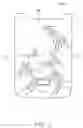
FIG. 1 is a schematic view of a composite article according to an exemplary embodiment.
FIG. 2 is a schematic cross-section view of the composite article shown in FIG. 1 taken along line II-II.
FIG. 3 is a schematic cross-section view of a ceramic substrate defining a receiving portion according to a first exemplary embodiment.
FIG. 4 is a schematic cross-section view of a ceramic substrate defining a receiving portion according to a second exemplary embodiment.
DETAILED DESCRIPTION
FIG. 1 shows an exemplary composite article 100, such as a housing for an electronic device. The composite article 100 includes a ceramic substrate 10 and at least one plastic member 20 positioned within the ceramic substrate 10.
The ceramic substrate 10 can be made of reinforced ceramic and constitute a main portion of the composite article 100. Referring to FIG. 3, the ceramic substrate 10 defines a receiving portion 12 for receiving the plastic member(s) 20. The receiving portion 12 can be comprised of at least one hole 122 defined through the ceramic substrate 10. Each hole 122 has a broad portion 1223 between and wider than the two ends 1221 of the hole 122. The receiving portion 12 can be comprised of a plurality of through holes 122. The holes 122 need not be all the same size but can come in a variety of shapes and sizes. The receiving portion 12 may be designed for aesthetic and/or informative purposes depicting various patterns or symbols.
Referring to FIG. 4, in the second exemplary embodiment, the receiving portion 12 also can be composed of at least one recess 124 formed on the ceramic substrate 10. The bottom 1241 of the recess 124 is wider than the top 1243 of recess 124.
The plastic member(s) 20 is received in the receiving portion 12. The plastic member(s) 20 and the ceramic substrate 10 can be integrally formed by insert molding. The plastic member(s) can form decorative patterns or symbols on the ceramic substrate 10. When the plastic member(s) 20 is made of a plastic which can be electroplated, for example, acrylonitrile-butadiene-styrene (ABS), polycarbonate (PC), and polyethylmethacrylate (PMMA), an electroplated coating 30 can be further formed on the exposed portions 22 of the plastic member 20, to achieve a metallic appearance.
An exemplary method for making the composite article 100 may include the following steps.
A preformed ceramic substrate 10 is provided. The ceramic substrate 10 can be formed by preforming a clay body of ceramic powder and adhesive and sintering the clay body. The ceramic substrate 10 includes the receiving portion 12. The receiving portion 12 can either be formed as part of the preforming of the substrate 10 or by machining after the sintering.
Thermoplastic resin is filled into the receiving portion 12 to form the plastic member(s) 20. Once cooled, the plastic member(s) 20 combines the ceramic substrate 10 to form the composite article 100. This step can be accomplished by insert molding.
When the plastic member(s) 20 is made of a plastic which can be electroplated, the electroplated coating 30 can be further formed on the exposed portions 22 to achieve a metallic appearance.
It should be understood, however, that even though numerous characteristics and advantages of the present embodiments have been set forth in the foregoing description, together with details of the structures and functions of the embodiments, the disclosure is illustrative only, and changes may be made in detail, especially in matters of shape, size, and arrangement of parts within the principles of the invention to the full extent indicated by the broad general meaning of the terms in which the appended claims are expressed.
Claims
What is claimed is:1. A composite article, comprising:
a ceramic substrate, the ceramic substrate defining an receiving portion therein; and
at least one plastic member made of thermoplastic resin positioned in the receiving portion.
2. The composite article as claimed in claim 1, wherein the receiving portion is comprised of at least one hole defined through the substrate.
3. The composite article as claimed in claim 2, wherein each hole has a broad portion between and wider than the two ends of the hole.
4. The composite article as claimed in claim 1, wherein the receiving portion is comprised of at least one recess formed on the substrate.
5. The composite article as claimed in claim 4, wherein the bottom of the at least one recess is wider then the top of the recess.
6. The composite article as claimed in claim 1, wherein the receiving portion depicts patterns or symbols.
7. The composite article as claimed in claim 1, wherein the composite article further includes an electroplated coating formed on the exposed portion of the plastic member.
8. The composite article as claimed in claim 1, wherein the plastic member is made of one of the acrylonitrile-butadiene-styrene, polycarbonate, and polyethylmethacrylate.
9. A method for making a composite article, comprising:
providing a preformed ceramic substrate, the substrate defining an receiving portion therein; and
filling thermoplastic resin into the receiving portion to form at least one plastic member in the receiving portion to form the composite article.
10. The method as claimed in claim 9, wherein the method further comprise forming an electroplated coating on the portion of the plastic member exposed out of the substrate.
11. The method as claimed in claim 9, wherein substrate is formed by preforming a clay body of ceramic powder and adhesive and sintering the clay body.
12. The method as claimed in claim 9, wherein the receiving portion is comprised of at least one recess formed on the substrate.
13. The method as claimed in claim 12, wherein the bottom of the at least one recess is wider then the top of the recess.
14. The method as claimed in claim 9, wherein the receiving portion is comprised of at least one hole defined through the substrate.
15. The method as claimed in claim 14, wherein each hole has a broad portion between and wider than the two ends of the hole.
16. The method as claimed in claim 9, wherein the receiving portion depicts patterns or symbols on the substrate.
Images & Drawings included:



Sources:
- United States Patent and Trademark Office - verify current appl. status at the USPTO↗
Recent applications in this class:
- » 20250176124 2025-05-29
DECORATIVE SUBSTRATE AND PREPARATION METHOD THEREFOR, COVER PLATE AND ELECTRONIC DEVICE - » 20250176123 2025-05-29
Decorative Plate and Preparation Method Therefor, and Electronic Device - » 20250113451 2025-04-03
DEEP-COLORED HOUSING AND ELECTRONIC DEVICE COMPRISING SAME - » 20250056744 2025-02-13
Housing Assembly, Housing Assembly Preparation Method, and Electronic Device - » 20250024617 2025-01-16
Decorative Plate and Manufacturing Method Therefor, and Electronic Device - » 20240298415 2024-09-05
Electrical Control Console for Watercraft - » 20240215185 2024-06-27
FOLDABLE ELECTRONIC DEVICES - » 20240074076 2024-02-29
PATTERNED ELECTRONIC DEVICE AND HOUSING - » 20240015910 2024-01-11
HOUSING COMPRISING PLATING LAYER AND ELECTRONIC DEVICE COMPRISING HOUSING - » 20230111348 2023-04-13
LASER-MARKED ELECTRONIC DEVICE HOUSINGS
Recent applications for this Assignee:
- » 20220140846 2022-05-05
Antenna structure and wireless communication device using same - » 20220094077 2022-03-24
Antenna structure and wireless communication device using same - » 20220059931 2022-02-24
Antenna structure and wireless communication device - » 20220021116 2022-01-20
Single antenna structure capable of operating in multiple band widths - » 20220010948 2022-01-13
Anti-loosing structure and backlight module - » 20200170133 2020-05-28
Housing, electronic device, and method for manufacturing same - » 20200122194 2020-04-23
Frame and surface treatment method for the frame - » 20200060034 2020-02-20
Housing, method for manufacturing the same, and electronic device having the same - » 20200016805 2020-01-16
Housing, electronic device, and method for manufacturing the same - » 20190368052 2019-12-05
COMPOSITE AND METHOD FOR MAKING SAME