Surface piece
US20110206945A1
2011-08-25
13/057,005
2009-08-05
✅ Patent granted
US 10,358,749 B2
2019-07-23
WO; PCT/EP2009/005659; 20090805
WO; WO2010/015391; 20100211
Andrew T Piziali
Bachman & LaPointe, PC
2032-08-16
Abstract:
A surface piece of crossing threads (12, 14) comprising plastic filaments, which as a woven fabric web (10) is equipped with two mutually opposing surfaces and with openings (16) formed therein. The fabric web comprises a metallisation applied on one side as a surface layer and between 15 and 80%, in particular between 20 and 70% of the fabric web is configured in the form of network intermediate spaces (16).
Assignee:
- Sefar AG 24 🇨🇭 Heiden, Switzerland
Applicant:
Interested in similar patents?
Get notified when new applications in this technology area are published.
Classification:
D03D15/00 » CPC further
Woven fabrics characterised by the material, structure or properties of the fibres, filaments, yarns, threads or other warp or weft elements used
B32B5/028 » CPC further
Layered products characterised by the non- homogeneity or physical structure, i.e. comprising a fibrous, filamentary, particulate or foam layer; Layered products characterised by having a layer differing constitutionally or physically in different parts characterised by structural features of a layer Net structure, e.g. spaced apart filaments bonded at the crossing points
B32B27/06 » CPC further
Layered products comprising synthetic resin as the main or only constituent of a layer, next to another layer of a
D03D1/0076 » CPC further
Woven fabrics designed to make specified articles Photovoltaic fabrics
B32B2250/05 » CPC further
Layers arrangement 5 or more layers
B32B2250/40 » CPC further
Layers arrangement Symmetrical or sandwich layers, e.g. ABA, ABCBA, ABCCBA
B32B2307/402 » CPC further
Properties of the layers or laminate having particular optical properties Coloured
B32B2307/406 » CPC further
Properties of the layers or laminate having particular optical properties Bright, glossy, shiny surface
B32B2307/732 » CPC further
Properties of the layers or laminate; Other properties Dimensional properties
D10B2331/10 » CPC further
Fibres made from polymers obtained otherwise than by reactions only involving carbon-to-carbon unsaturated bonds, e.g. polycondensation products polyurethanes
D10B2401/16 » CPC further
Physical properties antistatic; conductive
D10B2505/20 » CPC further
Industrial for civil engineering, e.g. geotextiles
B32B3/00 IPC
Layered products comprising a layer with external or internal discontinuities or unevennesses, or a layer of non-planar form ; Layered products having particular features of form
B32B2307/412 » CPC further
Properties of the layers or laminate having particular optical properties Transparent
B32B5/024 » CPC further
Layered products characterised by the non- homogeneity or physical structure, i.e. comprising a fibrous, filamentary, particulate or foam layer; Layered products characterised by having a layer differing constitutionally or physically in different parts characterised by structural features of a layer Woven fabric
B32B17/10036 » CPC further
Layered products essentially comprising sheet glass, or glass, slag, or like fibres comprising glass as the main or only constituent of a layer, next to another layer of a specific material of synthetic resin laminated safety glass or glazing characterized by the number, the constitution or treatment of glass sheets comprising two outer glass sheets
B32B17/10247 » CPC further
Layered products essentially comprising sheet glass, or glass, slag, or like fibres comprising glass as the main or only constituent of a layer, next to another layer of a specific material of synthetic resin laminated safety glass or glazing; Functional features of the laminated safety glass or glazing Laminated safety glass or glazing containing decorations or patterns for aesthetic reasons
B32B17/10761 » CPC further
Layered products essentially comprising sheet glass, or glass, slag, or like fibres comprising glass as the main or only constituent of a layer, next to another layer of a specific material of synthetic resin laminated safety glass or glazing characterized by the resin layer, i.e. interlayer containing vinyl acetal
B32B27/306 » CPC further
Layered products comprising synthetic resin comprising vinyl (co)polymers; comprising acrylic (co)polymers comprising vinyl acetate or vinyl alcohol (co)polymers
D03D1/007 » CPC further
Woven fabrics designed to make specified articles; Protective fabrics UV radiation protecting
B32B2255/02 » CPC further
Coating on the layer surface on fibrous or filamentary layer
B32B2255/205 » CPC further
Coating on the layer surface; Inorganic coating Metallic coating
B32B2262/0276 » CPC further
Composition or structural features of fibres which form a fibrous or filamentary layer or are present as additives; Synthetic macromolecular fibres Polyester fibres
B32B2262/0292 » CPC further
Composition or structural features of fibres which form a fibrous or filamentary layer or are present as additives; Synthetic macromolecular fibres Polyurethane fibres
B32B2307/404 » CPC further
Properties of the layers or laminate having particular optical properties; Coloured Multi-coloured
B32B2307/712 » CPC further
Properties of the layers or laminate; Other properties Weather resistant
B32B2451/00 » CPC further
Decorative or ornamental articles
B32B2590/00 » CPC further
Signboards, advertising panels, road signs
H01L31/02021 » CPC further
Semiconductor devices sensitive to infra-red radiation, light, electromagnetic radiation of shorter wavelength or corpuscular radiation and specially adapted either for the conversion of the energy of such radiation into electrical energy or for the control of electrical energy by such radiation; Processes or apparatus specially adapted for the manufacture or treatment thereof or of parts thereof; Details thereof; Details; Circuit arrangements of general character for the devices for devices characterised by at least one potential jump barrier or surface barrier for solar cells
Y10T428/12535 » CPC further
Stock material or miscellaneous articles; All metal or with adjacent metals; Composite; i.e., plural, adjacent, spatially distinct metal components [e.g., layers, joint, etc.] with additional, spatially distinct nonmetal component
Y10T428/24802 » CPC further
Stock material or miscellaneous articles; Structurally defined web or sheet [e.g., overall dimension, etc.] Discontinuous or differential coating, impregnation or bond [e.g., artwork, printing, retouched photograph, etc.]
Y10T442/3382 » CPC further
Fabric [woven, knitted, or nonwoven textile or cloth, etc.]; Woven fabric [i.e., woven strand or strip material] Including a free metal or alloy constituent
B32B15/08 IPC
Layered products comprising a layer of metal comprising metal as the main or only constituent of a layer, next to another layer of a of synthetic resin
D03D9/00 » CPC main
Open-work fabrics
B32B17/10 IPC
Layered products essentially comprising sheet glass, or glass, slag, or like fibres comprising glass as the main or only constituent of a layer, next to another layer of a specific material of synthetic resin
B32B27/12 » CPC further
Layered products comprising synthetic resin next to a fibrous or filamentary layer
B32B27/30 » CPC further
Layered products comprising synthetic resin comprising vinyl (co)polymers; comprising acrylic (co)polymers
B32B27/40 » CPC further
Layered products comprising synthetic resin comprising polyurethanes
D03D1/00 IPC
Woven fabrics designed to make specified articles
D03D1/00 IPC
Woven fabrics; Methods of weaving other than those characterised by the operation of a particular loom
D06M11/83 » CPC further
Treating fibres, threads, yarns, fabrics or fibrous goods made from such materials, with inorganic substances or complexes thereof; Such treatment combined with mechanical treatment, e.g. mercerising with metals; with metal-generating compounds, e.g. metal carbonyls; Reduction of metal compounds on textiles
D06P5/00 » CPC further
Other features in dyeing or printing textiles, or dyeing leather, furs, or solid macromolecular substances in any form
D06P5/12 » CPC further
Other features in dyeing or printing textiles, or dyeing leather, furs, or solid macromolecular substances in any form Reserving parts of the material before dyeing or printing ; Locally decreasing dye affinity by chemical means
B32B5/02 IPC
Layered products characterised by the non- homogeneity or physical structure, i.e. comprising a fibrous, filamentary, particulate or foam layer; Layered products characterised by having a layer differing constitutionally or physically in different parts characterised by structural features of a layer
H01L31/02 IPC
Semiconductor devices sensitive to infra-red radiation, light, electromagnetic radiation of shorter wavelength or corpuscular radiation and specially adapted either for the conversion of the energy of such radiation into electrical energy or for the control of electrical energy by such radiation; Processes or apparatus specially adapted for the manufacture or treatment thereof or of parts thereof; Details thereof Details
B32B27/08 » CPC further
Layered products comprising synthetic resin as the main or only constituent of a layer, next to another layer of a of synthetic resin
B32B2307/75 » CPC further
Properties of the layers or laminate; Other properties Printability
Description
BACKGROUND OF THE INVENTION
The present invention relates to a surface piece of crossing threads made of plastic filaments as a woven fabric web.
Such a device is generally known from the prior art and is possibly disclosed in the form of DE 10 2004 060 105 A1 of the applicant as a self-adhesive printing substrate of perforated films and papers. Such a fabric web is white on the front side and black on the back side; a printed pattern or the like is applied to the white side. If this printing substrate is mounted on a window pane or on a corresponding transparent surface carrier element, the printing is therefore extensively visible from outside but from inside, the observer can see towards the outside through the black surface; for him the printed pattern provided on the white surface side remains invisible. Such a procedure particularly advantageously possibly allows the formation of larger advertising surfaces which on the one hand are transparent from inside, on the other hand should ensure protection from the sun and visual protection. The black back surface also has the advantage that the view of an observer is concentrated on processes on the other surface side (assuming a brighter external environment).
At the same time, it has been found in the practice of using such fabrics that in particular from the viewpoints of light (sun) reflection on an outer side, a typical application in the architecture or building area, there is a need for improvement here as before since light reflection of incident light in particular (and therefore a desired shading of an interior) needs to be improved still further, which, however, can only be ensured up to a certain limit by the known outer-side white coloration.
It is an object of the present invention to improve a generic surface piece comprising a fabric web in regard to light transmission properties, suitability in particular for large-area cladding of architectural objects or the like, as well as additional visual and aesthetic effects.
SUMMARY OF THE INVENTION
The foregoing object is achieved by the surface piece of crossing threads comprising plastic filaments, which as a woven fabric web is equipped with two mutually opposing surfaces and with openings formed therein, characterised in that the fabric web comprises a metallisation applied on one side as a surface layer and between 15 and 80%, in particular between 20 and 70% of the fabric web is configured in the form of network intermediate spaces.
In an advantageous manner according to the invention, there is provided a plastic filament woven web which is provided (merely) on one side with a metallisation whilst the second surface remains as plastic filament (advantageously and according to a further development, coloured black).
A fabric web thus configured, in particular with a fraction of network intermediate spaces as open areas in the range between 15 and 80% of the entire area of the fabric web, therefore offers the best conditions for architectural and design freedoms: on the one hand, as before, the (preferably black) plastic surface as a side facing the interior, provides an almost perturbation-free, glare-proof view into the exterior, whilst the metallised outer surface on the other hand allows the greatest possible design freedom as an attractive metal outer surface which, additionally if desired, can be printed simply and using a metallic priming effect according to a further development. The metallisation has also proved to be particularly favourable with respect to incident solar rays or similar ambient light, and an advantageous one-sided application according to the invention of a metal such as Al, Cu, Cr, Ti, Au, AlCu or other suitable metals capable of being sputtered or vapour-deposited, is exceptionally suitable for a cost-effective, yet reliable and high-quality surface configuration.
For the metallisation, an application thickness in the range between 50 and 200 nm, in particular in the range between 60 and 120 nm, as a metallisation layer thickness on a fibre (a plastic filament) has proved to be particularly preferred, wherein according to a further development, the metallisation can also take place in a multilayer manner, possibly in the form of an underlying first metal layer (for example, Al is particularly suitable for this purpose) with a second metal layer (possibly Au, Cu, AlCu or the like) applied thereon. Here, suitable desired optical effects can be achieved, also a particularly favourable adhesion and/or stabilisation of the outermost visible layer can be achieved in this way.
For the fabric web having the fraction of open area specified according to the invention, a fabric thickness in the range between 100 and 400 μm, further preferably between 140 and 260 μm, is particularly suitable, wherein it has been found to be preferable that a fabric web tending to be rather thin, that is in the range of about 140 μm, also achieved particularly favourable optical effects if this thin fabric thickness occurs in combination with very open fabric (that is in the range of about 70%).
In the further development according to the invention, it has proved to be particularly preferable to use the fabric web of the surface piece together with transparent or partially transparent carrier materials such as glass or plastic plates in order to thus produce modular, surface pieces particularly suitable for architectural or building purposes in a particularly suitable manner and within the framework of the invention.
To this end, according to a first preferred embodiment, it is favourable to fasten a fabric web metallised on one side on a glass or plastic plate by means of an interposed film-like plastic layer, wherein it is further preferred that this exemplary embodiment is implemented in a doubled—sandwich-like manner so that on both sides the central fabric web is followed by respectively one of the plastic films and then respectively one of the glass or plastic plates. With an advantageous selection of the film possibly as PVB (alternatively PVA, EVA, TPU or the like) having a favourable thickness in the range between 0.2 and 2 mm, preferably between 0.38 and 0.76 mm, following autoclaving or vacuum treatment to avoid the occurrence of harmful air bubbles or the like, it is possible to produce a laminate which combines in a particularly elegant manner advantageous optical and architectural properties with high rupture safety (wherein according to a further development, composite or safety glass can be used in particular here as plate material).
A second alternative embodiment of the invention for producing modular surface pieces provides that the fabric web is clamped between two glass layers at the edge, wherein this embodiment favourably and advantageously provides that a cavity formed between the glass layers or the fabric web metallised on one side has a vacuum, alternatively a protective and/or inert gas filling.
A third variant to achieve modular surface pieces, again favourably for architectural or building purposes, but not restricted to this area of application, provides that the fabric web is inserted directly between plastic plates, where a subsequent heat treatment of the plastic plates then produces a corresponding softening or fusing of said plates and produces a mechanical bonding with the fabric web, again with the previously described advantageous effects.
The present invention offers arbitrary possibilities for producing decorative surface layers. In this context, it is on the one hand covered by the invention to use the metallisation as a decorative surface layer itself, in this respect the term “printed pattern” is also to be understood as metallisation. Alternatively, the metallisation itself in turn provides excellent priming for a layer used for printing to be applied thereon, possibly by means of sublimation or digital printing. The metallisation is not only favourably suitable as an adhesive substrate, as well as a visually attractive back-lighting or gloss border for an additional printing of a printed pattern to be applied can be achieved, particularly if this additional printed pattern (possibly relative to the cross-sectional shape of a metallised fibre) leaves an unprinted metallised area at the edge.
As a result, an attractive, easy to process and highly flexible surface piece is produced by the present invention, which combines exceptional visual properties with the best possible suitability for the building, facade and/or architectural area, since possibilities for embedding the fabric web in corresponding support structures provided advantageously and according to further developments allow optimum protection and resistance to weathering, even over long lifetimes.
BRIEF DESCRIPTION OF THE DRAWINGS
Further advantages, features and details of the invention are obtained from the following description of preferred exemplary embodiments and with reference to the drawings; these show in:
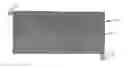
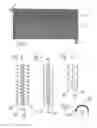
FIG. 1: a schematic plan view of a fabric web metallised on one side for implementing a first embodiment of the present invention;
FIG. 2 shows a longitudinal section through an arrangement comprising a fabric web accompanied on both sides by a plastic film layer and a glass plate as a laminate arrangement;
FIG. 3 shows a longitudinal section through an insulating glass arrangement with a fabric web metallised on one side, spanned between two glass layers;
FIG. 4 shows as a third embodiment an implementation of a composite material comprising fabric web (metallised on one side) between two plastic materials in the mechanically connected state and
FIG. 5: shows a detailed view of a printed pattern additionally applied to the metallisation, viewed in isolation for an individual fibre.
DETAILED DESCRIPTION
FIG. 1 shows a fabric web 10 which is woven in a netlike manner from crossing polyurethane (PU) threads 12, 14, the thread networks defining intermediate spaces 16 of approximately square shape. These intermediate spaces as open area form approximately 40% of the entire area.
The threads 12, 14 are plastic filaments of a monofilament synthetic fabric one surface whereof is vapour-coated on one side with a metallisation (here: aluminium having a layer thickness of about 80 nm).
FIG. 2 shows in the longitudinal sectional view how the fabric web 10 from FIG. 1 is inserted in the manner of a double laminate between a pair of glass plates 30 (typical thickness about 7 mm in each case), where a thin film 32 of polyvinyl butyral (PVB) is inserted between the respective glass plates 30 and the central fabric web 10. The arrangement is treated by autoclaving in vacuum (to avoid disadvantageous air bubbles) such that a firm, undetachable composite arrangement is formed which, with its metallic outer side and its visible fabric inner side made of black plastic fabric, is exceptionally suitable for a plurality of building and architectural applications, in particular because individual modules are formed in the manner shown in FIG. 2, which can be easily built in as surface pieces or plates.
FIG. 3 shows a variant for implementing such modules: here the fabric web 10 from FIG. 1 is clamped between two glass layers 40, the clamping taking place at the edge. An incipient cavity 42 is filled with a protective gas. This arrangement is also suitable for the building or architectural purposes described (and is furthermore almost unlimited in its range of application).
Finally FIG. 4 shows as an exemplary embodiment an arrangement in which the fabric web 10 from FIG. 1 is inserted directly between a pair of plastic plates 50; this arrangement was heated so that the polymeric material of the plastic plates 50 penetrates into the intermediate spaces of the fabric web and a mechanically stable, permanent connection is thus formed.
All the variants shown also enable a printed pattern to be applied to the metallisation 18 (FIG. 1); this can take place in an otherwise usual manner by techniques such as sublimation or digital printing.
Such a printed pattern in conjunction with the metallisation is particularly effective when the printed pattern is configured by a corresponding printing process such that, as illustrated in the detailed view in FIG. 5, the effect is produced that the metallisation 18 on the fibre 12 shown projects under the printing 60 at the edge, in other words the printing merely covers a partial area of the metallisation, but relative to a respective half fibre coating. In this way, the printing, which can be multicoloured in an otherwise known manner, acquires an attractive and metallic effect which allows creative free spaces.
Whilst the present invention was described primarily in connection with modular-configured surface pieces for architectural purposes or the like, the invention is not restricted to this. On the contrary, the present invention extends fundamentally to any surface pieces in which a plastic fabric having advantageous optical properties undergoes a metallisation on one side.
Claims
1-12. (canceled)
13. A surface piece comprising crossing threads of plastic filaments, which as a woven fabric web is equipped with two mutually opposing surfaces and with openings formed therein, wherein the fabric web comprises a metallisation applied on one side as a surface layer and between 15 and 80% of the fabric web is configured in the form of network intermediate spaces.
14. The surface piece according to claim 13, wherein between 20 and 70% of the fabric web is configured in the form of network intermediate spaces.
15. The surface piece according to claim 13, wherein the surface layer comprises a metal which is selected from the group consisting of Au, Cu, Ti, Cr, Al, AlCu and alloys thereof.
16. The surface piece according to claim 13, wherein the surface layer applied to one side comprises a first underlying metal layer and a second metal layer applied thereon.
17. The surface piece according to claim 16, wherein the first underlying metal layer comprises Al and the second metal layer applied thereon comprises a metal selected from the group consisting of Au, AlCu and Cu.
18. The surface piece according to claim 13, wherein the metallisation has a thickness in the range between 50 and 200 nm.
19. The surface piece according to claim 18, wherein the thickness is between 60 and 120 nm.
20. The surface piece according to claim 13, wherein the plastic filaments comprise a monofilament of polyurethane.
21. The surface piece according to claim 13, wherein the fabric web has a thickness in the range between 100 and 400 μm.
22. The surface piece according to claim 13, wherein the fabric web has a thickness in the range between 140 and 260 μm.
23. The surface piece according to claim 13, wherein at least one of the opposing surfaces of the woven fabric web is fastened with an interposed film plastic layer on one of a glass and plastic plate.
24. The surface piece according to claim 23, wherein the film plastic layer comprises a film material which is selected from the group consisting of PVB, PVA, EVA, TPU and in an unprocessed state has a thickness in the range between 0.2 and 2 mm.
25. The surface piece according to claim 24, wherein the film plastic layer comprises a film material which is selected from the group consisting of PVB, PVA, EVA, TPU and in an unprocessed state has a thickness in the range between 0.38 and 0. 76 mm.
26. The surface piece according to claim 13, wherein the woven fabric web is clamped between two glass layers at an edge, and wherein a cavity is formed between the glass layers and has one of a vacuum and an inert gas filling.
27. The surface piece according to claim 13, wherein the woven fabric web is inserted between a pair of plastic plates, the plastic material whereof is selected such that a mechanical bonding with the fabric web takes place as a reaction to a thermal treatment of the layer arrangement of plastic plates and interposed fabric web.
28. The surface piece according to claim 13, wherein a printed pattern is on the metallization.
Images & Drawings included:
Sources:
- United States Patent and Trademark Office - verify current appl. status at the USPTO↗
Similar patent applications:
- » 20150367464
Processing system and method for a work piece surface - » 20220285883
Connector with bent piece such that the bent piece can block fitting of the partner connector by a bent piece surface forming the tip end portion, and therefore prevent erroneous insertion - » 20100210187
Device and method for fine or finest processing of a rotationally symmetric work piece surface - » 20150165553
Methods and systems to keep a work piece surface free from liquid accumulation while performing liquid-jet guided laser based material processing - » 20190224780
Methods and systems to keep a work piece surface free from liquid accumulation while performing liquid-jet guided laser based material processing - » 20190292696
Surface piece - » 20080132148
Precision abrasive machining of work piece surfaces - » 20050148219
Two piece surface mount header assembly having a contact alignment member - » 20130043220
Air-carbon arc system and apparatus for detecting and/or reducing irregularities in a work piece surface and method of using the same - » 20110234525
SINGLE PIECE TOP SURFACE DISPLAY LAYER AND INTEGRATED FRONT COVER FOR AN ELECTRONIC DEVICE
Recent applications in this class:
- » 20250207303 2025-06-26
HIGH DEFINITION SCREEN MATERIALS - » 20250146190 2025-05-08
Textilene Mesh Fabric and Application - » 20250084568 2025-03-13
WOVEN FABRIC, VACUUM INDUCED RESIN INFUSION PROCESS AND FIBRE REINFORCED COMPOSITE - » 20220325444 2022-10-13
A NET - » 20210324551 2021-10-21
MESH SHEET FOR CURVED SURFACE FORMATION AND STORAGE BAG FORMED BY MESH SHEET - » 20210010169 2021-01-14
WOVEN TEXTILE - » 20200399797 2020-12-24
SCRIM MATERIAL HAVING LOW TENACITY WEFT FIBERS - » 20190292696 2019-09-26
Surface piece - » 20180282913 2018-10-04
Waterproof Apertured Surfaces or Materials Using Nanoparticle Hydrophobic Treatments - » 20180237963 2018-08-23
Waterproof Apertured Surfaces or Materials Using Nanoparticle Hydrophobic Treatments
Recent applications for this Assignee:
- » 20240139395 2024-05-02
FILTER ELEMENT AND METHOD FOR ITS PRODUCTION - » 20230136835 2023-05-04
POLYMERIC FABRIC - » 20220371050 2022-11-24
Method for producing a carrier layer with a hydrophilic polymeric nanocoating - » 20210175382 2021-06-10
PHOTOVOLTAIC CELL, AND METHOD FOR THE MANUFACTURE THEREOF - » 20190292696 2019-09-26
Surface piece - » 20190224363 2019-07-25
INDICATOR DRESSING AND METHOD FOR INDICATING A CONTAMINATION, IN PARTICULAR OF A WOUND - » 20190143248 2019-05-16
FILTER ELEMENT AND METHOD FOR PRODUCING THE SAME - » 20190008692 2019-01-10
DRESSING ARRANGEMENT AND METHOD FOR TREATING A WOUND - » 20180237967 2018-08-23
Protective Vent and Method for Producing a Protective Vent - » 20180147315 2018-05-31
Wound dressing material and method for its production