ECO-FRIENDLY SYSTEM AND PROCESS FOR GENERATING THERMAL ENERGY FROM WASTE BIOMASS
US20110214593A1
2011-09-08
12/718,504
2010-03-05
Abstract:
An eco-friendly system for generating thermal energy from waste biomass comprises a furnace, a set of boiler tubes placed on the top of the furnace, a rectangular or tubular structure housing the boiler tube and the furnace, an outlet for the flue gases leading to a cyclone, said cyclone carrying a tubular body for leading away a part of flue gases and fitted with a butterfly control valve for regulating flow of effluent gases, a tubular body connecting the body to the suction blower, a water tank, a hopper for waste biomass, and a fuel injection blower for introducing fuel inside the furnace by means of pressurized air jet blown through the pipe.
Inventors:
- Prabir Kumar Roychoudhury 1 🇮🇳 West Bengal, India
- Sayan Roychoudhury 1 🇮🇳 West Bengal, India
Interested in similar patents?
Get notified when new applications in this technology area are published.
Classification:
Y02A50/2351 » CPC further
in human health protection, e.g. against extreme weather; Air quality improvement or preservation, e.g. vehicle emission control or emission reduction by using catalytic converters Atmospheric particulate matter [PM], e.g. carbon smoke microparticles, smog, aerosol particles, dust
Y02E20/12 » CPC further
Combustion technologies with mitigation potential Heat utilisation in combustion or incineration of waste
Y02E20/12 » CPC further
Combustion technologies with mitigation potential Heat utilisation in combustion or incineration of waste
F23G5/02 » CPC further
Incineration of waste ; Incinerator constructions; Details, accessories or control therefor with pretreatment
F23J15/04 » CPC further
Arrangements of devices for treating smoke or fumes of purifiers, e.g. for removing noxious material using washing fluids
F23G5/24 » CPC further
Incineration of waste ; Incinerator constructions; Details, accessories or control therefor having a vertical, substantially cylindrical, combustion chamber
F23G5/44 » CPC further
Incineration of waste ; Incinerator constructions; Details, accessories or control therefor Details; Accessories
F23B99/00 » CPC main
Subject matter not provided for in other groups of this subclass
F23C9/06 » CPC further
Combustion apparatus characterised by arrangements for returning combustion products or flue gases to the combustion chamber for completing combustion
Description
BACKGROUND
The present invention relates to a novel eco-friendly system for generating thermal energy from biomass, and a process therefor. More particularly the subject invention deals with a system which generates considerable amount of heat energy by burning renewable lignocellulosic agricultural and industrial wastes pretreated with a chemical, and emit negligible amounts of greenhouse gases and particulate matters through its effluents. The system effectively uses waste heat for preheating treated fuel, thereby cutting down fuel consumption and is ideally suited for running captive power plants in remote rural areas doing away with the systems using fossil fuel with considerable emission of greenhouse gases and environmental pollution by ejection of particulate matters like fly ash.
Coal as a fossil fuel is still widely used in thermal power plants in large quantities, depleting its valuable reserve and posing danger of bringing about ecological disaster, not to speak of the expenses involved.
Nuclear energy is no doubt a source of ‘clean energy’, but the initial cost of setting up a reactor, safety measures and disposal of nuclear wastes are major stumbling blocks, at least for a developing country like India.
Hydro-electric power plants are ecologically safe offering ‘clean energy’, but erecting dams over rivers may often pose problems, mainly due to silt deposition and lack of vigilance and maintenance. Large projects like this dam on the river Yangsikiang in China, river experts opine, is potentially unsafe and unfit to withstand earthquakes.
Non-conventional energy like solar energy, wind energy, energy from tidal waves, geothermal energy and the like are some other sources of energy which are being utilized on an increasing scale in almost all countries in the world having potential therefor. Here the major difficulty resides in storage of energy generated, and distribution and utilization of stored energy without description. Extensive research is under progress, but it is likely to take some more time before such as sources can be tapped properly.
Search for source of energy generation has been going on for quite some time past and considerable volume of work in this direction has been done and is still being carried out. Some of the prior patents and allied publications are discussed below:
- U.S. Pat. No. 4,389,981 narrated a hydrogen gas injector system for internal combustion engine.
- U.S. Pat. No. 4,465,455 described start up/shut down for a hydrogen gas burner and a hydrogen gas burner was described in the U.S. Pat. No. 4,421,474.
- U.S. Pat. No. 4,826,581 dealt with controlled process for the production of thermal energy from gases and apparatus useful therefor.
- U.S. Pat. No. 4,936,961 described a method for production of a fuel gas.
- U.S. Pat. No. 5,149,407 disclosed a process and apparatus for the production of fuel gas and the enhanced release of thermal energy from such gas.
In a recent development, a Denmark based company, Burmeister & Wayne Energy A/S, has come out with super critical boilers, the characteristic feature of which is the steam properties of 600° C. temperature and 305 bar pressure. Double reheating has been introduced in order to increase the efficiency and in order to reduce the wetness of the exhaust steam from the LP turbine. The fuel includes coal, oil, straw and wood-pellets and the combustion system enables both single fuel as well as co-firing. The yearly biomass production is planned to be 40,000 tons of wood pellets and 110,000 tons of straw pellets. This is 37% of the fuel input (energy) and will substitute about 95,000 tons of coal. The yearly potential for CO2 reduction is o the order of 220,000 tons.
Biomass for heat and power production has traditionally been used in grate fired and fluidized bed boilers. By the introduction of biomass pellets and milling plant, utilization of large volumes of biomass has been made for burners in direct-fired utility boilers.
However, despite the claimed efficiency, such boilers use large volume of coal, reserves of which are dwindling fast all over the world. Besides, the menace of CO2 emission as a greenhouse gas is still there, not to speak of the generation of fly ash causing considerable environmental problems, even affecting fertility of arable land and contaminating water bodies adversely affecting marine life—as has been witnessed in Orissa, West Bengal and Andhra Pradesh in India.
Moreover, biomass in the form of wood pellets would mean large scale felling of trees leading to deforestation, the effect of which is already affecting rainfall pattern in areas where forest cover is disappearing at an alarming rate, not to speak of loss of flora and fauna peculiar and characteristic of geographical location, for example in Costa Rica, Madagascar, Brazil, India and in various African countries, where replanting programmes are seldom executed in practice.
SUMMARY OF THE INVENTION
The present invention aims at overcoming the drawbacks of the existing modes of thermal power generation by providing a system which is not only eco-friendly, but also uses lignocellulosic waste materials abundantly generated and available in an agrarian country like India. The system is capable of being installed even in remote rural areas, the only condition being availability of agricultural wastes to be used as fuel.
The principal object of this invention is to provide a novel eco-friendly system for generating thermal energy from biomass.
A further object of this invention is to provide a novel system wherein waste lignocellulosic materials like saw dust, rice or wheat husk, bamboo dust and chips, jute stick, waste hemp, sisal and jute, dried leaves, straw, lumps of waste wood, etc. are used as fuel for running a specially designed furnace, achieving a thermal efficiency in excess of 98%.
A still further object of the subject invention is to provide a novel eco-friendly system wherein the fuel introduced is a chemically treated one which helps in maintaining the fuel in a fluidized condition under influence of a pressurized air jet, achieving an enhanced temperature in the range of 650° C. to 800° C.
Another object of this invention is to provide a system which generates superheated steam in situ and in turn produces water gas (i.e. mixture of CO and H2) by reacting with carbon (charcoal) formed under the reaction conditions prevailing in the furnace, thereby attaining a high temperature of around 800° C.
Yet another object of this invention is to provide a process for generating thermal energy with the help of the eco-friendly system as mentioned hereinbefore.
The foregoing objects are achieved by the present invention which relates to a novel eco-friendly system for generating thermal energy from waste biomass, comprising—
- (i) a furnace capable of generating and withstanding high temperature, round or tetragonal at the bottom and tapering at the top assuming a conical shape and fitted at the top with a pipe;
- (ii) a set of boiler tubes placed on top of the furnace;
- (iii) a rectangular or tubular structure housing the boiler tube and the furnace, the said structure having insulated walls to prevent dissipation of heat;
- (iv) an outlet for the flue gases leading to a cyclone equipped with means for spraying water or wet steam, the said cyclone carrying a tubular body for leading away a part of flue gases and fitted with a butterfly control valve for regulating flow of effluent gases;
- (v) a tubular body connecting the said body to the suction blower with a connection at the bottom of the furnace for blowing air/hot gases inside the burner zone of the furnace;
- (vi) a water tank in which the downpipe of the cyclone is kept submerged in water for trapping particulate matter carried by the effluent gases from the furnace;
- (vii) a hopper for waste biomass used as fuel fitted with a fluid flow control device, from which fuel is released onto an endless conveyer belt for being led to the furnace gate with the help of suction point of blower, and
- (viii) a fuel injection blower for introducing fuel inside the furnace by means of pressurized air jet blown through the pipe.
The subject invention also pertains to a process for generating thermal energy with the help of the novel system as described herein, wherein one or more biomass selected from the group of saw dust, husk, bamboo dust, jute stick, waste jute, cotton waste, wooden blocks and the like renewable lignocellulosic agricultural and industrial waste materials are employed as fuel for generating heat on ignition to run the furnace, characterized in that the said biomass or mixture thereof are soaked in common salt solution and dried to 20-30% by weight, moisture content prior to being introduced into the furnace as fuel for burning, the effluent gas flow through the cyclone is controlled by means of the butterfly air exhaust control device, for effecting heat recovery by introducing the hot flue gases inside the furnace to preheat the fuel and removal of suspended particulate matters is effected by spraying fine stream of water or wet steam through the sprayer and the lower end of the downpipe of cyclone is kept submerged in a water tank wherein the said particulate impurities collect, the said process achieving a thermal efficiency in excess of 98%.
BRIEF DESCRIPTION OF THE DRAWING
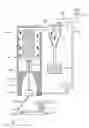
FIG. 1 is a schematic representation of the present system.
DESCRIPTION OF THE INVENTION
The present invention will now be described with the help of the illustrative drawing accompanying this specification wherein—
1 is the boiler tube, 1A is the insulation, 1B is the pathway for the effluent hot gases, 2 is furnace, 2A is the tubular body on the upper part of the furnace, 3 is the cyclone, 3A is a double bent pipe connecting the cyclone and the butterfly air controlling valve 5, simultaneously serving as the outlet for effluent gases, 3B is a by-pass pipe connecting the outlet pipe and suction blower 4, 6 is the water tank, 7 is the fuel flow control device, 8 is the fuel hopper, 9 is the conveyor, 10 represents fuel injection blower, 11 is the air inlet pipe carrying fuel, 12 is the spray mechanism for injecting water or wet steam, 13 is the insulated wall of the main structure, 14 is the device for recycling superheated steam and 15 is the opining in the furnace hearth for introducing fuel.
As may be seen from the accompanying drawing, the conical furnace (2) carries a tube (14) running from grate to mouth which is meant for recycling superheated steam. The furnace is made of a metal shell with a tubular structure at its upper part, usually stainless steel of grade 310, capable of withstanding high temperature. The inside surface is clad with insulating firebricks. The main structure is usually tubular or cylindrical in shape, the lower part of which is brick-built to accommodate the exterior part of the furnace, in conformity with its contour.
Before feeding the furnace with the partially dried waste biomass fuel, the raw mass is soaked in 20-30% solution of common salt for some time, solution drained out and the soaked mass is dried, usually under the sun. During rainy season or with overcast sky, waste heat from the furnace may be utilized for attaining desired level of moisture content. Such utilization of waste heat adds to the overall economy of the system and renders the process further cost-effective.
The initial start up of the furnace may be done by burning low-grade coal, diesel or any other grade of fuel oil, including oil from vegetative sources like Honge, Jatropha, Rapeseed, green oil or mixture thereof. Once the furnace is lit up, the entire burning operation may be continued with the help of the treated waste biomass exclusively, dispensing with the use of fossil fuel.
The use of coal for power generation has pronounced shortcomings—
- (i) Thermal efficiency hardly rises beyond 40% even when the units are operating in full swing,
- (ii) Emission of fly-ash in exceedingly large volume often brings about ecological disaster; so much so at least one thermal power station had to be shut down (in Mejia, Bankura district, West Bengal) owing to damage caused to arable land and water bodies;
- (iii) Investment in a thermal power generation unit is exceedingly high with separate units for coal crushing, washing, beneficiation, drying, storing and conveying the treated material to the furnace for burning. Moreover, variation in the coal grade, its ash content, presence of sulphur and such other factors affects/influences power generation per unit of fuel burnt. Emission control means like electrostatic precipitators are also expensive and add to the overall cost of the set up.
- (iv) Release of greenhouse gases is another negative aspect, and
- (v) Expert opine that with the present scale of consumption, world reserve of coal is depleting fast and is likely to last for another 3 to 4 decades.
Hydroelectricity undoubted affords a clean energy, but is seasonal as it depends entirely on the level of water in the flowing rivers or reservoirs artificially created for ensuring steady flow of water to run the turbines. With a normal level of rainfall, there is satisfactory generation of electricity during monsoon or a couple of months following it. During summer months volume of water supply dwindles and consequently power generation is affected. In the event of drought, power generation may even come to a halt.
On the contrary, the novel system of this invention utilizes vegetative wastes like agricultural waste materials including plants, shrubs and/or creepers of little or no commercial value as the biomass fuel. Experiments have shown that water hyacinth may be effectively used in admixture with saw dust or waste wood as the biomass. Coconut shell powder is another renewable source of biomass. In a predominantly agricultural country like India, there is no dearth of waste biomass including, inter alia, rice and wheat husk, bamboo chips and dust, jute sticks and the like, which entitles the system to be located even in remote, far flung, rural areas where electricity has remained a dream even after 6 decades since attaining independence. Each unit will be capable of generating, say, 1 MW of power for use among rural population only. The entire array of plants and equipments is nominal in comparison with the conventional coal-based power generation units.
It has surprisingly been found that the novel system emits virtually no particulate impurities with the effluent gases, and there is negligible emission of greenhouse gases. The operation o the system also results in a valuable by-product, namely, high grade pure carbon black which is recovered from the bottom of the water tank (6).
Sprinkling fine spray of water or injecting wet steam into the effluent gases by means of the spray (12) effectively reduces particle load thereof, and substantially removes greenhouse gases, thereby virtually eliminating all possibilities of environmental pollution.
Another surprising aspect of this invention is its reduced consumption of biomass fuel following the salt treatment with partial drying of the feedstock.
The following examples give the details of working which are given by way of illustration and not by way of limitation.
Example—1
Originally the thermal fluid heater used a Diesel burner, consuming around 30 ltrs. of Diesel per hour, Per working day spanning 8 hours, Diesel consumption was around 180 litres/diem, which received the temperature of the thermal fluid ranging between 150° C. and 180° C.
After switching over to waste biomass fuel, consumption per diem has been found to be around 275 Kg. of saw dust and 100-150 Kg. of wood lumps in the same 8 hours' working, resulting in considerable saving in the cost of fuel. Surprisingly, there is an enhancement in the temperature of the thermal fluid attaining a temperature range of from 170° C. to 200° C.
In the process according to this invention, saw dust is treated with brine solution and dried to around 20 to 30%, preferably, 20 to 25 percent by weight, of moisture content, and injected in the furnace with the help of high pressure air jet, which has been found to increase the thermal efficiency to a level exceeding 98%. 100 Kg. of saw dust carries about 20-30 Kg. water which turns into superheated steam as the furnace temperature gradually rises to around 700° C., coming into interaction with charcoal produced from the fed biomass with the formation of water gas, i.e. a mixture of CO and H2. Moreover, when excess heated steam is recycled through a red-hot iron tube, there is produced hydrogen gas having much higher calorific value, —which in all probability contributes to the surge in the temperature rise.
Design of the furnace and the improved burning system in accordance with this invention play a vital role and may be considered to be key factors. Furnace chamber is to be made of a metal capable withstanding high temperature. Stainless steel of appropriate grade (say 310) is preferred for the construction of the furnace, which is cylindrical at the bottom portion and conical on top, fitted with a long iron pipe at the neck of the furnace, as may be seen in the drawing accompanying this specification.
The treated fuel selected from saw dust, bamboo dust, jute stick particles, paddy husk, pieces of dried shrubs/aquatic plants (like water hyacinth), etc. with a residual moisture content of 20-30% is injected with high pressure air jet into the furnace through an iron pipe. The fuel burns in a floating condition inside the furnace, creating a ‘fluidized bed’ for all intents and purposes.
Thermal value of the waste biomass materials referred to above usually varies between 3500 and 4000 Kcal per gram. In normal burning, these yield rather poor thermal value, thermal efficiency hardly exceeding 20%. On the contrary, pre-treatment of the biomass with brine, drying of the treated biomass to a moisture content of 20-30% and burning the same with the high pressure air jet creating a fluidized bed condition contribute to the attainment of thermal efficiency level beyond any reasonable expectation, exceeding 98%, —a level not achieved or reported heretofore anywhere In the world.
The undernoted working data lend support to the statements made above:—
-
- (i) Pump capacity—36 M3/hour;
- Density of thermal fluid—0.88 gm/cc, which works out to 31,680 Kg./hour.
- (ii) Assuming efficiency of the pump to be 80%, flow of thermal fluid is 25.344 Kg./hour.
- (iii) Specific heat of thermal fluid is 0.75 Calorie, and average rise in temperature from inlet to outlet is 28° C.
- (iv) Average consumption of saw dust and wood lumps per hour—60 Kg.
- (v) 60 Kg. wood/saw dust (waste biomass) gives—
- 25,344 Kg.×0.75×0.88=5.32.224 Kcal. or 8,870 Kcal per Kg.
- (i) Pump capacity—36 M3/hour;
As mentioned hereinbefore thermal value of wood/saw dust is around 3500 to 4000 Kcal per Kg. and thermal efficiency in normal burning process is around 20%. The data given above clearly establishes the difference between normal burning and burning in accordance with the present invention.
Example—2
Experiments were conducted to ascertain the particle load, presence of toxic and greenhouse gases in the effluent gases and temperature of emission, and the o served results are goven below:
-
- I. Height of the stack—12.0 M (from ground level)
- II. Diameter of the stack (M)—
- a. Top—0.2
- b. Bottom—0.2
- c. Sampling point—0.2
- III. Shape of the stack—circular.
- IV. Height of the sampling port (M):
- From ground level—10.0
- V. Stack connected to—Thermic fluid heater through APC system.
- VI. Material of construction—M.S.
Results:
| DURING | |||
| SL. | BEFORE | COM- | |
| NO. | VARIABLES | COMBUSTION | BUSTION |
| 1 | Temperature of emission (° C.) | 24 | 87 |
| 2 | Barometric pressure (mmHg) | 753 | 753 |
| 3 | Velocity of gas flow (M/Sec.) | 0.57 | 4.17 |
| 4 | Quantity of gas flow (NM3/hr.) | 64.11 | 386.96 |
| 5 | Concentration of particulate matter | 0.84 | 50.0 |
| (mg/NM3) | |||
| 6 | Concentration of SO2 (mg/NM3) | ND | ND |
| 7 | Concentration of CO2 (% v/v) | <0.2 | 10.0 |
| 8 | Concentration of CO (% v/v) | <0.2 | <0.2 |
| 9 | Concentration of NO2 (mg/NM3) | ND | ND |
| ND = not detectable |
An attempt may be made to draw a comparative analysis of the quantum of fuel consumption and cost involvement in case of 1 MW power generation involving coal and treated biomass of this invention:
-
- A. Coal—640 Kg per hour or 15 MT per day—Rs.75,000.00 per day.
- B. Treated biomass—350 Kg/hr. or 3 to 4 MT per day—Rs.8,400.00/day max.
This comparative data do not take into account the investment on plant and machinery and emission problem of coal-based power generation. As for the treated waste biomass-based power generation, the bulk of the particulate matter going out with the flue gases is finely divided pure carbon which is trapped under water, dried and sold in paint, rubber and other industries for further processing. This adds to the overall economy of the process of the present invention.
ADVANTAGES OF THE INVENTION
-
- The system is highly suited for power generation in remote rural areas where electricity has not and is unlikely to reach even in future.
- It uses waste biomass as fuel which is renewable, eco-friendly and virtually free from emission problems.
- It does not necessitate large capital investment in plant and machinery and does not need costly ant-pollution equipments.
- It generates a useful by-product in the form of pure carbon powder which has a ready market and thus adds to the overall cost effectiveness of the system.
- It does not use any sophisticated/imported equipments or machine parts.
- It poses no pollution problem, easily re-locatable and is aimed at generating employment amongst unemployed rural youth.
As the present invention may be embodied in several forms without departing from the spirit and essential characteristics thereof, it should also be understood that the above-described examples are not limited by any of the details of the foregoing descriptions, unless otherwise specified, but rather should be construed broadly within the spirit and scope as defined in the appended claims, and therefore all changes and modifications that fall within the meets and bounds of the claims, or equivalents of such meets and bounds are intended to be embraced by the claims appended hereafter.
Claims
We claim:1. A novel eco-friendly system for generating thermal energy from waste biomass, comprising—
(i) a furnace (2) capable of generating and withstanding high temperature, round or tetragonal at the bottom and tapering at the top assuming a conical shape and fitted at the top with a pipe (2A);
(ii) a set of boiler tube(s) (1) placed on the top of the furnace;
(iii) a rectangular or tubular structure (1A) housing the boiler tube (1) and the furnace (2), the said structure having insulated wall (13) to prevent dissipation of heat;
(iv) an outlet (18) for the flue gases leading to a cyclone (3) equipped with means for spraying water or wet steam (12), the said cyclone carrying a tubular body (3A) for leading away a part of flue gases and fitted with a butterfly control valve (5) for regulating flow of effluent gases;
(v) a tubular body connecting the said body (3A) to the suction blower (4) with a connection at the bottom of the furnace (2) for blowing air/hot gases inside the burner zone of the furnace (2);
(vi) a water tank (6) in which the downpipe of the cyclone is kept submerged in water for trapping particulate matter carried by the effluent gases from the furnace;
(vii) a hopper (8) for waste biomass used as fuel fitted with a fuel flow control device (7), from which the fuel is released onto an endless conveyor belt (9) for being led to the furnace gate (15) with the help of suction point o blower (7) and
(viii) a fuel injection blower (10) for introducing fuel inside the furnace by means of pressurized air jet blown through the pipe (11).
2. A system as claimed in claim 1, wherein the conical furnace (2) carries a tube (14) running from grate to the mouth meant for recycling superheated steam.
3. A system claimed in claim 1, wherein the furnace is made of a metal shell, with a tubular structure at its upper part, usually stainless steel of grade 310, capable of withstanding high temperature.
4. A system as claimed in claims 1 and 3, wherein the inside surface of the furnace is clad with insulating firebricks.
5. A system as claimed in claims 1 to 4, wherein the lower part of tubular structure is made of bricks to accommodate the exterior part of the furnace (2) following its contour.
6. A novel eco-friendly system for generating thermal energy from biomass, substantially as hereinbefore described with particular reference to the accompanying drawing.
7. A process for generating thermal energy with the help of the novel system as claimed in claims 1 to 6, wherein one or more biomass selected from the group of saw dust, husk, bamboo dust, jute stick, waste jute, cotton waste, wooden blocks and the like renewable lignocellulosic agricultural and industrial waste materials are employed as fuel for generating heat or ignition to run the furnace, characterized in that the said biomass or mixture thereof are soaked in common salt solution and dried to 20-30% by weight moisture content prior to being introduced into the furnace (2) as fuel for burning, the effluent gas flow through the cyclone is controlled by means of the butterfly air exhaust control device (5), for effecting heat recovery by introducing the hot flue given inside the furnace to preheat the fuel and removal of suspended particulate matters is affected by spraying fine stream of water or wet steam through the sprayer (12) and the lower end of the downpipe of cyclone (3) is kept submerged in a water tank wherein the said particulate impurities collect, the said process achieving a thermal efficiency in excess of 98%.
8. A process as claimed in claim 7, wherein the particulate materials trapped in the water tank are pure carbon with no associated impurities which is a valuable by-product of the procedure.
9. A process as claimed in claim 7, wherein exhaust flue gas is mixed with superheated steam generated in a secondary boiler chamber before being reintroduced in the furnace which effectively reduces consumption of fresh fuel and for initial heating lumps of wooden waste blocks and/or coal is used.
10. A process for generating thermal energy by employing lignocellulosic agricultural and industrial waste materials substantially as hereinbefore described.
Images & Drawings included:

Sources:
- United States Patent and Trademark Office - verify current appl. status at the USPTO↗
Recent applications in this class:
- » 20230141851 2023-05-11
SYSTEMS AND METHODS FOR HEATING OF DISPERSED METALLIC PARTICLES - » 20180180279 2018-06-28
Pumpless Metal Atomization And Combustion Using Vacuum Generation And Suitable Material Flow Control