Structural composite having novel organic components and method of manufacture
US20110219985A1
2011-09-15
12/724,149
2010-03-15
✅ Patent granted
US 8,475,586 B2
2013-07-02
-
-
Kaj K Olsen | Karam Hijji
B. Y. Mathis
2030-04-05
Abstract:
Various methods for forming structural composites are disclosed. For example, a particular method may include adding an effective amount of algae extract to an aggregate mixture so as to provide a plasticizer to the aggregate mixture, and processing the aggregate mixture to form a hardened composite.
Applicant:
Interested in similar patents?
Get notified when new applications in this technology area are published.
Classification:
Y02P40/10 » CPC further
Technologies relating to the processing of minerals Production of cement, e.g. improving or optimising the production methods; Cement grinding
Y02P40/10 » CPC further
Technologies relating to the processing of minerals Production of cement, e.g. improving or optimising the production methods; Cement grinding
Y02W30/91 » CPC further
Technologies for solid waste management; Reuse, recycling or recovery technologies Use of waste materials as fillers for mortars or concrete
Y02W30/91 » CPC further
Technologies for solid waste management; Reuse, recycling or recovery technologies Use of waste materials as fillers for mortars or concrete
C04B28/006 » CPC main
Compositions of mortars, concrete or artificial stone, containing inorganic binders or the reaction product of an inorganic and an organic binder, e.g. polycarboxylate cements containing mineral polymers, e.g. geopolymers of the Davidovits type
C04B14/042 » CPC further
Use of inorganic materials as fillers, e.g. pigments, for mortars, concrete or artificial stone; Treatment of inorganic materials specially adapted to enhance their filling properties in mortars, concrete or artificial stone; Granular materials, e.g. microballoons; Silica-rich materials; Silicates Magnesium silicates, e.g. talc, sepiolite
C04B14/304 » CPC further
Use of inorganic materials as fillers, e.g. pigments, for mortars, concrete or artificial stone; Treatment of inorganic materials specially adapted to enhance their filling properties in mortars, concrete or artificial stone; Granular materials, e.g. microballoons; Oxides other than silica Magnesia
C04B18/08 » CPC further
Use of agglomerated or waste materials or refuse as fillers for mortars, concrete or artificial stone ; Treatment of agglomerated or waste materials or refuse, specially adapted to enhance their filling properties in mortars, concrete or artificial stone; Waste materials; Refuse; Combustion residues, e.g. purification products of smoke, fumes or exhaust gases Flue dust, i.e. fly ash
C04B24/24 » CPC further
Use of organic materials as active ingredients for mortars, concrete or artificial stone, e.g. plasticisers Macromolecular compounds
C04B12/04 IPC
Cements not provided for in groups - Alkali metal or ammonium silicate cements Alkyl silicate cements; Silica sol cements; Soluble silicate cements
C04B24/00 » CPC further
Use of organic materials as active ingredients for mortars, concrete or artificial stone, e.g. plasticisers
C04B28/30 IPC
Compositions of mortars, concrete or artificial stone, containing inorganic binders or the reaction product of an inorganic and an organic binder, e.g. polycarboxylate cements containing magnesium cements or similar cements
C04B24/14 IPC
Use of organic materials as active ingredients for mortars, concrete or artificial stone, e.g. plasticisers; Nitrogen containing compounds organic derivatives of hydrazine Peptides; Proteins; Derivatives thereof
C08L97/00 IPC
Compositions of lignin-containing materials
C09D197/00 IPC
Coating compositions based on lignin-containing materials
C09D189/00 IPC
Coating compositions based on natural macromolecular compounds or on derivatives thereof
C09D189/00 IPC
Coating compositions based on proteins; Coating compositions based on derivatives thereof
C09J197/00 IPC
Adhesives based on lignin-containing materials
C09J189/00 IPC
Adhesives based on natural macromolecular compounds or on derivatives thereof
C09J189/00 IPC
Adhesives based on proteins; Adhesives based on derivatives thereof
Description
This application incorporates the entire content of U.S. Provisional Application No. 61/158,584 filed on Mar. 13, 2009 by inventor Marcos Gonzalez.
BACKGROUND
I. Field
This disclosure relates to geopolymer or other concrete-like materials using algae-produced materials for plasticizers and/or accelerants.
II. Background
The term “geopolymer” refers to a class of synthetic aluminosilicate materials with potential use in a number of areas, but predominantly as a replacement for Portland cement. Compared to Portland cement, geopolymers have lower carbon dioxide production emissions, greater chemical and thermal resistance and better mechanical properties at both atmospheric and extreme conditions.
Geopolymers are generally formed by reaction of an aluminosilicate powder with an alkaline silicate solution at roughly ambient conditions. Conventional geopolymers can be made from natural sources of pozzolanic materials, such as lava or fly ash from coal. Most studies have been carried out using natural or industrial waste sources of metakaolin and other aluminosilicates.
A particular ingredient used in the production of concrete and geopolymers is known as a “plasticizer.” Plasticizers are water reducers or dispersants that can be added to concrete/geopolymer mixtures to improve workability. Generally, the strength of a concrete is inversely proportional to the amount of water added or water-cement (w/c) ratio. In order to produce a stronger concrete/geopolymer, less water is added. Too little water, however, “starves” the mix, which makes the concrete/geopolymer mixture very unworkable and difficult to mix, necessitating the use of plasticizers.
In ancient times, the Romans used animal fat, milk and animal blood as a plasticizer for their concrete mixes. More modern plasticizers are commonly manufactured from lignosulfonates and sulfonated napthalene, better known as sulfonated melamine or formaldehyde. These chemicals are by-products from the paper manufacturing.
Unfortunately, such chemicals can be toxic and environmentally unfriendly, and use of such plasticizers requires dependency of the formidable infrastructure needed to produce such chemicals. Accordingly, new and more environmentally friendly approaches to the production of plasticizers are desirable.
SUMMARY
Various aspects and embodiments of the invention are described in further detail below.
In an embodiment, a method for forming a structural composite can include adding an algae extract to an aggregate mixture so as to provide an effective plasticizer to aggregate mixture, and processing the aggregate mixture to form a hardened composite.
In another embodiment, a structural composite can include a geopolymer made from an aggregate including an algae extract acting as an effective plasticizer.
BRIEF DESCRIPTION OF THE DRAWINGS
The features and nature of the present disclosure will become more apparent from the detailed description set forth below when taken in conjunction with the accompanying drawings in which reference characters identify corresponding items.
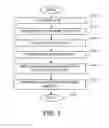
FIG. 1 is a flowchart outlining an exemplary operation.
DETAILED DESCRIPTION
The disclosed methods and systems below may be described generally, as well as in terms of specific examples and/or specific embodiments. For instances where references are made to detailed examples and/or embodiments, it should be appreciated that any of the underlying principals described are not to be limited to a single embodiment, but may be expanded for use with any of the other methods and systems described herein as will be understood by one of ordinary skill in the art unless otherwise stated specifically.
The following definitions apply for this disclosure:
Aggregate: a component of a composite material used to resist compressive stress.
Structural composite: a concrete, a geopolymer or a cryptobiotic material.
This disclosure describes a novel process and mixtures producing a structural composite suitable as a building material. The process and resultant materials can produce structures that are both low-cost and durable compared to structures made of conventional building materials.
The process starts in step S100 where one or more targeted species of algae is grown. In the non-limiting example of this disclosure, the algae used may include Synechocystis (PCC 6803) and/or any number of species of the collenia genus noting that there may be a wide range of suitable microbes. Because these organisms (cyandobacteria) reproduce asexually, they can be cultured in bioreactors by a photosynthesis process. Next, in step S102 the algae may be removed from the bioreactor or whatever growth medium/mechanism is used. Control continues to step S104.
In step S104 the cell walls of the algae may be sliced or otherwise ruptured by any number of known or later-developed process, such as a high-speed blending process, application of ultra-sonic energy, chemical treatment, and so on. Next, in step S106, the various enzymes, lipids and other contents of the sliced/ruptured algae may be strained/filtered from the algae cell walls and thus separated. For the purpose of this disclosure, the strained portion of the algae may be referred to as an algae extract. It is to be appreciated that the algae extract may be combined with laminin, a protein binder from animal blood plasma and/or with keratin. The algae extract and/or modified algae extract may thus be made into a fluid which is a viscous biofilm resulting in a natural plasticizer.
The steps above can produce polycarboxylate ethers (PCE) or just polycarboxylate (PC). PCE/PC represents a new generation of plasticizers that are not only chemically different from the older sulfonated melamine and naphthalene-based products, but their action mechanism is also different. That is, PCE/PC can act by causing particle dispersion of a composite by steric stabilisation. In contrast, conventional plasticizers use an electrostatic repulsion effect to achieve particle dispersion.
The steric stabilisation form of dispersion is more powerful in its effect and gives improved workability retention to the cementitious mix. Furthermore, the chemical structure of PCE allows for a greater degree of chemical modification than the older-generation products, offering a range of performance that can be tailored to meet specific needs. Control continues to step S108.
Referring to step S108, the algae extract (or any number of modified algae extracts) may be added to an aggregate mixture for concrete or any number of concrete of geopolymer formulations. With regard to geoploymers, a theory arises that sepiolite (e.g., polygorskite with a biofilm blend of enzymes and genus species of cryptomatic soils and cyanobacteria cultures) can act as carrier minerals that break down as the alkalinity rises, thus delivering soluble and mobile SiO2 and Al2O3 for pozzolanic reactions that form more polymeric minerals. In various embodiments, the reaction may be accelerated with reactive magnesium oxide, which can produce stronger bonds and control the PH during the reaction curve. Polycondensation of organic substances (natural polymers, proteins, enzymes and minerals produced organic and inorganically by chemical reactions that result in cross-linked through hydrogen bonding forming covalent bonds of aggregates and materials, which in turn may form cryptomatic composites.
The combination of the biofilm (enzymes) produced by the algae microbes with keratin and laminin can produce an effective bonding agent by geosynthesis to in turn create covalent bonds with a cross-linking matrix in combination with conventional geopolymer aggregates when combined with aluminum silacate, selenium, humic acid, sodium metasilrate reactive magnesium oxide and fly ash.
An accelerant (e.g., calcium hydroxide with structured water) (15%-20% H2O) may be added to increase exothermal reaction to bond the enzymes into the mixture with coarse and fine aggregates (e.g., low calcium fly ash).
Also, polymers for tensile elements or fibers may be added.
Hydration may be achieved using fresh water, salt water or structured water (water made by electrolysis) at a Ratio of 15%-20% by weight of aggregates. The percentage of algae extract may vary, but it is envisioned that an effective amount of extract may, depending on variations of aggregated and chemistry, range from less than 5%, e.g., 1%-3%, by weight of aggregates.
In step S110, the aggregate mixture can be further processed to form a composite. In various examples, such processing may include adding more water, noting that less water may be added when adding accelerants or surfactants (foam) or air; mixing in a rotary (or other) mixer; pouring the aggregate mixture; and allowing the mixture to set and cure into a hardened composite.
What has been described above includes examples of one or more embodiments. It is, of course, not possible to describe every conceivable combination of components or methodologies for purposes of describing the aforementioned embodiments, but one of ordinary skill in the art may recognize that many further combinations and permutations of various embodiments are possible. Accordingly, the described embodiments are intended to embrace all such alterations, modifications and variations that fall within the spirit and scope of the appended claims. Furthermore, to the extent that the term “includes” is used in either the detailed description or the claims, such term is intended to be inclusive in a manner similar to the term “comprising” as “comprising” is interpreted when employed as a transitional word in a claim.
Claims
What is claimed is:1. A method for forming a structural composite, the method comprising:
adding an algae extract to an aggregate mixture so as to provide an effective plasticizer to aggregate mixture; and
processing the aggregate mixture to form a hardened composite.
2. The method of claim 1, wherein the algae extract is added in the ratio of 1%-3% in weight of the aggregate mixture.
3. The method of claim 2, wherein the composite mixture is a geopolymer.
4. The method of claim 3, wherein the aggregate mixture includes an effective amount of reactive magnesium oxide acting as an accelerant.
5. The method of claim 3, wherein the aggregate mixture includes aluminum silicate, selenium, humic acid, sodium metasilrate, reactive magnesium oxide and fly ash.
6. The method of claim 1, further comprising deriving the algae extract.
7. The method of claim 4, wherein deriving the algae extract includes the steps of:
growing an amount of algae;
rupturing the cell walls of the grown algae; and
filtering the algae extract from cell wall material.
8. The method of claim 7, wherein deriving the algae extract further includes adding at least one of keratin and laminin to the filtered algae extract.
9. A structural composite, comprising:
a geopolymer made from an aggregate including an algae extract acting as an effective plasticizer.
10. The composite of claim 9, wherein the algae extract is added in the ratio of 1%-3% in weight of the aggregate mixture.
11. The composite of claim 10, wherein the aggregate mixture includes an effective amount of reactive magnesium oxide acting as an accelerant.
12. The composite of claim 10, wherein the aggregate mixture includes aluminum silacate, selenium, humic acid, sodium metasilrate, reactive magnesium oxide and fly ash.
Images & Drawings included:
Sources:
- United States Patent and Trademark Office - verify current appl. status at the USPTO↗
Recent applications in this class:
- » 20250282683 2025-09-11
BRINE-REINFORCED GEOPOLYMER COMPOSITION - » 20250243115 2025-07-31
CARBON-FOOTPRINT-REDUCED CONCRETE SLAB ON GROUND SYSTEM AND METHOD FOR CONSTRUCTING SAME - » 20250230099 2025-07-17
GEOPOLYMER-BASED CONCRETE COMPOSITION - » 20250230098 2025-07-17
HIGHLY REACTIVE GEOPOLYMER FOAM FORMULATIONS FOR FAST CURE PROCESS - » 20250230097 2025-07-17
PROCESS FOR THE PRODUCTION OF GEOPOLYMER OR GEOPOLYMER COMPOSITE - » 20250223227 2025-07-10
METHOD FOR MANUFACTURING GEOPOLYMER FOAM - » 20250100932 2025-03-27
CHEMICAL ACTIVATION OF SUPERCALCINED CLAYS - » 20250066250 2025-02-27
GEOPOLYMER FORMULATION AND METHOD OF MAKING AND APPLYING FORMULATION - » 20250011236 2025-01-09
GEOPOLYMER PRODUCTION METHOD - » 20240327287 2024-10-03
CARBON-FOOTPRINT-REDUCED CONCRETE SLAB ON GROUND SYSTEM AND METHOD FOR CONSTRUCTING SAME