Method and Apparatus for Predicting Pharmaceutical Efficacy of Anti-TNFa Antibody Drug Against Rheumatoid Arthritis
US20110236899A1
2011-09-29
13/075,490
2011-03-30
Abstract:
A method for predicting a pharmaceutical efficacy of an anti-TNFα antibody drug against rheumatoid arthritis, the method including measuring an amount of ADAMTS5 contained in a sample derived from a subject, and determining whether or not the anti-TNFα antibody drug is efficient against rheumatoid arthritis by employing the amount of ADAMTS5 as an index.
Interested in similar patents?
Get notified when new applications in this technology area are published.
Classification:
C12Q1/6883 » CPC main
Measuring or testing processes involving enzymes, nucleic acids or microorganisms ; Compositions therefor; Processes of preparing such compositions involving nucleic acids; Nucleic acid products used in the analysis of nucleic acids, e.g. primers or probes for diseases caused by alterations of genetic material
A61P19/02 » CPC further
Drugs for skeletal disorders for joint disorders, e.g. arthritis, arthrosis
C07K16/241 » CPC further
Immunoglobulins [IGs], e.g. monoclonal or polyclonal antibodies against material from animals or humans against cytokines, lymphokines or interferons Tumor Necrosis Factors
G01N33/564 » CPC further
Investigating or analysing materials by specific methods not covered by groups -; Biological material, e.g. blood, urine ; Haemocytometers; Chemical analysis of biological material, e.g. blood, urine; Testing involving biospecific ligand binding methods; Immunological testing; Immunoassay; Biospecific binding assay; Materials therefor for pre-existing immune complex or autoimmune disease, i.e. systemic lupus erythematosus, rheumatoid arthritis, multiple sclerosis, rheumatoid factors or complement components C1-C9
A61K2039/505 » CPC further
Medicinal preparations containing antigens or antibodies comprising antibodies
C12Q2600/106 » CPC further
Oligonucleotides characterized by their use Pharmacogenomics, i.e. genetic variability in individual responses to drugs and drug metabolism
C12Q2600/158 » CPC further
Oligonucleotides characterized by their use Expression markers
G01N2800/52 » CPC further
Detection or diagnosis of diseases Predicting or monitoring the response to treatment, e.g. for selection of therapy based on assay results in personalised medicine; Prognosis
C12Q1/68 IPC
Measuring or testing processes involving enzymes, nucleic acids or microorganisms ; Compositions therefor; Processes of preparing such compositions involving nucleic acids
C12M1/34 IPC
Apparatus for enzymology or microbiology Measuring or testing with condition measuring or sensing means, e.g. colony counters
Description
CROSS-REFERENCE TO RELATED APPLICATION
This is a continuation application of PCT/JP2009/067187, filed on Oct. 1, 2009.
BACKGROUND OF THE INVENTION
1. Field of the Invention
The present invention relates to a method and an apparatus for predicting a pharmaceutical efficacy of an anti-TNFα antibody drug against rheumatoid arthritis by employing as an index an amount of ADAMTS5 contained in a sample derived from a subject.
2. Description of the Related Art
In recent years, biologics targeting to TNFα (tumor necrosis factor-α) have been used for the purpose of remitting rheumatoid arthritis, and their efficacy has been recognized. Infliximab (INF) is a biologic containing an anti-TNFα monoclonal antibody and targeting to TNFα. It has already been found that infliximab suppresses activity of rheumatoid arthritis from a clinical index referred to as DAS (Disease activity score) 28. Infliximab not only suppresses activity of rheumatoid arthritis, but also suppresses bone destruction associated with rheumatoid arthritis.
Regardless of such remarkable efficacy, some cases with rheumatoid arthritis do not respond to infliximab. Furthermore, infliximab is prone to cause, as adverse side effects, infections such as Pneumocystis pneumonia and pulmonary tuberculosis. Thus, predicting infliximab efficacy prior to administration thereof allows us to administer infliximab to cases on which it assuredly takes effects, preventing the occurrence of unnecessary adverse side effects.
Some attempts to identify an INF efficacy predictive factor have already been reported (see, for example, Laqurre T, Gauthier-Jauneau A, Bansard C, Derambure C, Hiron M, Vittecoql O, Daveau M, Mejjad O, Daragon A, Tron F, Le Loet X, Salier J-P. Arthritis Res Ther 2006; 8: R105; and Trocme C, Marotte H, Baillet A, Pallot-Prades B, Garin J, Grange L, Miossec P, Tebib J, Berger F, Nissen M J, Juvin R, Morel F, Gaudin P. Ann Rheum Dis. 2009 August; 68(8): 1328-1333.). Many of them analyzed expressions of genes associated with infliximab responders by an algorithm through a retrospective study comparing infliximab responders with infliximab nonresponders. No infliximab efficacy predictive factor with high reliability has been identified that could be confirmed in a prospective study, etc.
It is known that ADAMTS (a disintegrin and metalloproteinase with thrombospondin motifs) 5 is an aggrecanase that belongs to the ADAMTS family and involved in cartilage destruction. In particular, ADAMTS5 deficiency results in preventing cartilage destruction in a murine model of degenerative arthritis.
However, it has not been known whether or not the expression level of ADAMTS5 associates with an efficacy of an anti-TNFα antibody drug against rheumatoid arthritis.
BRIEF SUMMARY OF THE INVENTION
The present invention aims to solve the above existing problems and achieve the following objects. Specifically, an object of the present invention is to provide a method and an apparatus for predicting a pharmaceutical efficacy of an anti-TNFα antibody drug against rheumatoid arthritis, which can predict an efficacy of an anti-TNFα antibody drug against rheumatoid arthritis with high reliability and in a simple manner as well as can predict activity of rheumatoid arthritis after administration of the anti-TNFα antibody drug, resulting in that the anti-TNFα antibody drug can be administered to cases on which it assuredly takes effects to prevent the occurrence of unnecessary adverse side effects.
The present inventors conducted extensive studies to solve the above problems and have found that the lower the amount of ADAMTS5 contained in peripheral blood of a patient with rheumatoid arthritis before administration of infliximab, the more efficient infliximab against rheumatoid arthritis. No prospective study has showed that the efficacy of infliximab could be predicted by determining the amount of ADAMTS5 contained in blood before administration of infliximab. Thus, this finding is first obtained by the present inventors.
The term “retrospective study” refers to a study that analyzes past data and present data, while the term “prospective study” refers to a study that follows up a phenomenon occurring in the future. The obtained results are more reliable in the prospective study than in the retrospective study. This is because the retrospective study is performed on the already known matter and thus easily involves due to researchers' bias while the prospective study is performed on unknown matter and thus is free from researchers' bias. Therefore, the prospective study is superior to the retrospective study.
The present invention is based on the above finding obtained by the present inventors. Means for solving the above existing problems are as follows.
<1> A method for predicting a pharmaceutical efficacy of an anti-TNFα antibody drug against rheumatoid arthritis, the method including:
measuring an amount of ADAMTS5 contained in a sample derived from a subject, and
determining whether or not the anti-TNFα antibody drug is efficient against rheumatoid arthritis by employing the amount of ADAMTS5 as an index.
<2> The method according to <1>, wherein the anti-TNFα antibody drug is infliximab (INF).
<3> The method according to <1> or <2>, wherein the amount of ADAMTS5 contained in the sample derived from the subject is an expression level of ADAMTS5 mRNA.
<4> The method according to <3>, wherein the expression level of ADAMTS5 mRNA is measured by a real-time PCR method.
<5> An apparatus for predicting a pharmaceutical efficacy of an anti-TNFα antibody drug against rheumatoid arthritis, the apparatus including:
a unit configured to measure an amount of ADAMTS5 contained in a sample derived from a subject, and
a unit configured to determine whether or not the anti-TNFα antibody drug is efficient against rheumatoid arthritis by employing the amount of ADAMTS5 as an index.
<6> The apparatus according to <5>, wherein the anti-TNFα antibody drug is infliximab (INF).
<7> The apparatus according to <5> or <6>, wherein the amount of ADAMTS5 contained in the sample derived from the subject is an expression level of ADAMTS5 mRNA.
<8> The apparatus according to <7>, wherein the expression level of ADAMTS5 mRNA is measured by a real-time PCR method.
The present invention can solve the above existing problems to achieve the following objects. The present invention can provide a method and an apparatus for predicting a pharmaceutical efficacy of an anti-TNFα antibody drug against rheumatoid arthritis, which can predict the efficacy of the anti-TNFα antibody drug against rheumatoid arthritis with high reliability and in a simple manner as well as can predict activity of rheumatoid arthritis after administration of the anti-TNFα antibody drug, resulting in that the anti-TNFα antibody drug can be administered to cases on which it assuredly takes effects to prevent the occurrence of unnecessary adverse side effects.
BRIEF DESCRIPTION OF THE DRAWINGS
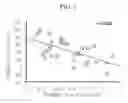
FIG. 1 is a graph indicating correlation between the expression level of ADAMTS5 mRNA before administration of infliximab and the change of DAS28 at the end of 14 weeks of infliximab administration (DAS % reduction).
DETAILED DESCRIPTION OF THE INVENTION
(Method and Apparatus for Predicting a Pharmaceutical Efficacy of an Anti-TNFα Antibody Drug Against Rheumatoid Arthritis)
A method of the present invention for predicting a pharmaceutical efficacy of an anti-TNFα antibody drug against rheumatoid arthritis includes at least measuring an amount of ADAMTS5 contained in a sample derived from a subject (measuring step) and determining whether or not the anti-TNFα antibody drug is efficient against rheumatoid arthritis by employing the amount of ADAMTS5 as an index (determining step); and, if necessary, further includes other steps.
An apparatus of the present invention for predicting a pharmaceutical efficacy of an anti-TNFα antibody drug against rheumatoid arthritis includes at least a unit configured to measure an amount of ADAMTS5 contained in a sample derived from a subject (measuring unit) and a unit configured to determine whether or not the anti-TNFα antibody drug is efficient against rheumatoid arthritis by employing the amount of ADAMTS5 as an index (determining unit); and, if necessary, further includes other units.
<Measuring Step and Measuring Unit>
The measuring step is a step of measuring an amount of ADAMTS5 contained in a sample derived from a subject.
The measuring unit is a unit configured to measure an amount of ADAMTS5 contained in a sample derived from a subject.
Sample Derived from Subject
The sample derived from a subject is not particularly limited and may be appropriately selected depending on the intended purpose. Examples thereof include peripheral blood, a synovial membrane and synovial fluid. In particular, peripheral blood is preferred because it is easy to collect.
The subject is not particularly limited and may be appropriately selected depending on the intended purpose. Examples thereof include human.
ADAMTS5
The ADAMTS (a disintegrin and metalloproteinase with thrombospondin motifs) 5 is an aggrecanase that belongs to the ADAMTS family and involved in cartilage destruction.
The nucleotide sequence of ADAMTS5 gene is known in human, for example. The nucleotide sequence is easily available from public databases such as GenBank (NCBI). For example, the nucleotide sequence of human ADAMTS5 gene is available under NCBI accession number NM—007038.
Measurement of Amount
The method for measuring the amount of ADAMTS5 contained in the sample derived from a subject is not particularly limited and may be appropriately selected depending on the intended purpose. Examples thereof include a method for measuring an mRNA expression level and a method for measuring a protein expression level.
The method for measuring the mRNA expression level is not particularly limited and may be appropriately selected depending on the intended purpose. Examples thereof include a polymerase chain reaction (PCR) method, a real-time PCR method, a DNA array method, and a Northern blotting method.
The apparatus for measuring the mRNA expression level is not particularly limited and may be appropriately selected depending on the intended purpose. Examples thereof include a PCR apparatus, a real-time PCR apparatus, a DNA array apparatus, and a Northern blotting apparatus. Each of the above apparatuses can be suitably used as the measuring unit.
The real-time PCR method is not particularly limited and may be appropriately selected depending on the intended purpose. Examples thereof include a method that includes constructing a standard curve and quantifying a sample using the standard curve (standard curve method).
The template DNA control used for the standard curve method is not particularly limited and may be appropriately selected depending on the intended purpose. Examples thereof include the whole cDNA obtained and purified from healthy human, and a plasmid into which ADAMTS5 cDNA has been incorporated.
The primers used in the real-time PCR method are not particularly limited, so long as ADAMTS5 can be amplified, and may be appropriately selected depending on the intended purpose.
The endogenous control used in the real-time PCR method is not particularly limited and may be appropriately selected depending on the intended purpose. Examples thereof include β-actin and GAPDH (glyceraldehyde-3-phosphate dehydrogenase).
<Determining Step and Determining Unit>
The determining step is a step of determining whether or not the anti-TNFα antibody drug is efficient against rheumatoid arthritis by employing the amount of ADAMTS5 as an index.
The determining unit is a unit configured to determine whether or not the anti-TNFα antibody drug is efficient against rheumatoid arthritis by employing the amount of ADAMTS5 as an index.
Anti-TNFα Antibody Drug
The anti-TNFα (tumor necrosis factor-α) antibody drug is not particularly limited and may be appropriately selected depending on the intended purpose. For example, infliximab (INF) is preferred.
Index
As the index, an amount of ADAMTS5 contained is used.
Determination
The method for determining whether or not the anti-TNFα antibody drug is efficient against rheumatoid arthritis is not particularly limited and may be appropriately selected depending on the intended purpose. For example, an anti-TNFα antibody drug can be determined as being efficient against rheumatoid arthritis, if the amount of ADAMTS5 of a patient is low among patients with rheumatoid arthritis.
Specifically, an anti-TNFα antibody drug can be determined as being efficient against rheumatoid arthritis, if the expression level of ADAMTS5 mRNA (ADAMTS5/β-actin) is less than 0.6×1/25 when using the amount of ADAMTS5 as the index (details will be described in the below Example 1).
The determining unit is not particularly limited and may be appropriately selected depending on the intended purpose. Examples thereof include an electronic calculator (a computer). The above unit can be suitably used as the determining unit.
The determination enables DAS28 to be predicted after administration of an anti-TNFα antibody drug.
The term “DAS28” is an abbreviation of Disease Activity Score which is established by the European League Against Rheumatism (EULAR) in order to score activity of rheumatoid arthritis and described in Fransen J, et al. Clin Exp Rheumatol 2005; 23 (Suppl. 39): S93-S99.
The method for predicting DAS28 after administration of an anti-TNFα antibody drug is not particularly limited and may be appropriately selected depending on the intended purpose. One exemplary method for predicting DAS28 after administration of an anti-TNFα antibody drug includes determining an amount of ADAMTS5 mRNA contained in peripheral blood of a patient with rheumatoid arthritis, applying the amount of ADAMTS5 mRNA to the graph referred to in the below Example 1 (see FIG. 1) and calculating the percentage of DAS28 reduced from the score before administration of the anti-TNFα antibody drug.
EXAMPLES
The present invention will next be described in detail by way of Examples, which should not be construed as limiting the present invention thereto.
Example 1
<Efficacy Prediction of Infliximab Against Rheumatoid Arthritis by Employing an Amount of ADAMTS5 as an Index>
Thirty patients with rheumatoid arthritis were enrolled in this study. They visited the Division of Rheumatology, Department of Internal Medicine, Saitama Medical Center, Saitama. Medical University from October 2007 to April 2008 and treated with infliximab.
Measuring Step
Measurement of the Expression Level of ADAMTS5 mRNA in Peripheral Blood
Peripheral blood (2.5 mL) was collected from the patients with rheumatoid arthritis before administration of infliximab, and then placed in a PAXgene Blood RNA Tube (registered trademark, product of Becton, Dickinson and Company Japan), followed by isolating total RNA using a PAXgene Blood RNA Kit (registered trademark, product of PreAnalytiX GmbH). The total RNA was converted to whole cDNA using a reverse transcriptase. Using the whole cDNA as a template DNA, the expression level of ADAMTS5 mRNA was measured by a real-time PCR method using Taqman (registered trademark) Gene Expression Assay (product of Applied Biosystems). The primers and probes used were a primer-probe set (TaqMan Gene (registered trademark) Expression Assay 00199841_m1, product of Applied Biosystems).
The amount of ADAMTS5 mRNA obtained above was quantified as a relative value to the level of β-actin (endogenous control) mRNA.
The primers and probes of β-actin were a primer-probe set (Pre-Developed TaqMan (registered trademark) Assay Reagents (Human ACTB, NIM—001101, is product of Applied Biosystems)).
Determining Step
The activity of the patient with rheumatoid arthritis was determined according to DAS28 before administration of infliximab and at 14 weeks after infliximab administration (DAS28 (0 w) and DAS28 (14 w)).
According to the EULAR response criteria using DAS28 (14 w), the patients were determined as “good response,” “moderate response” or “no response”.
The EULAR response criteria are established by European League Against Rheumatism (EULAR) and described in Fransen J, et al. Clin Exp Rheumatol 2005; 23 (Suppl. 39): S93-S99.
Regarding to infliximab efficacy at 14 weeks after administration of infliximab, good response cases, moderate response cases and nonresponse cases were respectively 16, 6, and 8 according to the EULAR response criteria. Additionally, 14 cases entered remission (DAS28 (14 w)<2.6).
Comparison of R Group with NR Group
The 30 cases with rheumatoid arthritis, who had been treated with infliximab, were categorized into the R group (moderate response+good response) and the NR group (no response). The expression level of ADAMTS5 mRNA before administration of infliximab was compared between the R group and the NR group by a real-time PCR method with a standard curve method using the whole cDNA from healthy human as a template DNA control. As a result, the ADAMTS5 mRNA expression level in the R group was significantly lower than that in the NR group (see Table 1).
| TABLE 1 |
| ADAMTS5/β-actin(×1/25) |
| R group (n = 22) | 0.467 ± 0.254 | |||
| {close oversize bracket} | p = 0.0014 | |||
| NR group (n = 8) | 0.815 ± 0.031 | |||
Also, as shown in Table 2, the cases whose ADAMTS5 mRNA expression level was lower than 0.6×1/25 were classified into the low ADAMTS5 group (Low while the cases whose ADAMTS5 mRNA expression level was equal to or higher than 0.6×1/25 were classified, into the high ADAMTS5 group (High).
| TABLE 2 | ||||
| ADAMTS5 | R | NR | Total | |
| Low | 16 | 0 | 16 | |
| High | 6 | 8 | 14 | |
| Total | 22 | 8 | 30 | |
| χ2 p = 0.0004 |
Based on the classification in Table 2, percentages of sensitivity, specificity, positive predictive value, and negative predictive value were calculated according to the following equations. The results are shown in Table 3.
Sensitivity (%)=A/(A+C)×100
Specificity (%)=D/(D+B)×100
Positive predictive value (PPV) (%)=A/(B+A)×100
Negative predictive value (NPV) (%)=D/(D+C)×100
where A to D means as follows:
A: Number of cases classified into the low ADAMTS5 group and the R group
B: Number of cases classified into the low ADAMTS5 group and the NR group
C: Number of cases classified into the high ADAMTS5 group and the R group
D: Number of cases classified into the high ADAMTS5 group and the NR group
| TABLE 3 | ||
| Sensitivity | 72.7% | |
| Specificity | 100% | |
| PPV | 100% | |
| NPV | 57.1% | |
As is clear from Table 3, the positive predictive value (PPV), which predicts that the cases classified into the low ADAMTS5 group would be classified into the R group, was found to be 100%. Therefore, it was found that a pharmaceutical. efficacy of infliximab against rheumatoid arthritis can be predicted by employing as an index an amount of ADAMTS5 before administration of infliximab.
Comparison of GR Group with NGR Group
The 30 cases with rheumatoid arthritis, who had been treated with infliximab, were categorized into the GR group (good response) and the NGR group (no response+moderate response). The expression level of ADAMTS5 mRNA before administration of infliximab was compared between the GR group and the NGR group by a real-time PCR method using a standard curve constructed with the whole cDNA from healthy human as a template DNA control. As a result, the ADAMTS5 mRNA expression level in the GR group was significantly lower than that in the NGR group (see Table 4).
| TABLE 4 |
| ADAMTS5/β-actin(×1/25) |
| GR group (n = 16) | 0.453 ± 0.227 | |||
| {close oversize bracket} | p = 0.0231 | |||
| NGR group (n = 14) | 0.682 ± 0.086 | |||
Also, as shown in Table 5, the cases whose ADAMTS5 mRNA expression level was lower than 0.6×1/25 were classified into the low ADAMTS5 group (Low), while the cases whose ADAMTS5 mRNA expression level was equal to or higher than 0.6×1/25 were classified into the high ADAMTS5 group (High).
| TABLE 5 | ||||
| ADAMTS5 | GR | NGR | Total | |
| Low | 12 | 4 | 16 | |
| High | 4 | 10 | 14 | |
| Total | 16 | 14 | 30 | |
| χ2 p = 0.0110 |
Based on the classification in Table 5, percentages of sensitivity, specificity, positive predictive value, and negative predictive value were calculated according to the following equations. The results are shown in Table 6.
Sensitivity (%)=E/(E+G)×100
Specificity (%)=H/(H+F)×100
Positive predictive value (PPV) (%)=E/(F+E)×100
Negative predictive value (NPV) (%)=H/(H+G)×100
where E to G means as follows:
E: Number of cases classified into the low ADAMTS5 group and GR group
F: Number of cases classified into the low ADAMTS5 group and NGR group
G: Number of cases classified into the high ADAMTS5 group and GR group
H: Number of cases classified into the high ADAMTS5 group and NGR group
| TABLE 6 | ||
| Sensitivity | 75.0% | |
| Specificity | 71.4% | |
| PPV | 75.0% | |
| NPV | 71.4% | |
As is clear from Table 6, the positive predictive value (PPV), which predicts that the cases classified into the low ADAMTS5 group would be classified into the GR group, was found to be high; Le., 75.0%. Therefore, it was found that a pharmaceutical efficacy of infliximab against rheumatoid arthritis can be predicted by employing as an index an amount of ADAMTS5 before administration of infliximab.
Comparison of Re Group with Nre Group
The 30 cases with rheumatoid arthritis who were treated with infliximab were categorized into the Re group (remission) and the Nre group (non-remission). The expression level of ADAMTS5 mRNA before administration of infliximab was compared between the Nre group and the Re group by a real-time PCR method using a standard curve constructed with the whole cDNA from healthy human as a template DNA control. As a result, the ADAMTS5 mRNA expression level in the Re group was significantly lower than that in the Nre group (see Table 7).
| TABLE 7 |
| ADAMTS5/β-actin(×1/25) |
| Re group (n = 14) | 0.434 ± 0.231 | |||
| {close oversize bracket} | p = 0.0189 | |||
| Nre group (n = 16) | 0.670 ± 0.078 | |||
Also, as shown in Table 8, the cases whose ADAMTS5 mRNA expression level was lower than 0.6×1/25 were classified into the low ADAMTS5 group (Low), while the cases whose ADAMTS5 mRNA expression level was equal to or higher than 0.6×1/25 were classified into the high ADAMTS5 group (High).
| TABLE 8 | ||||
| ADAMTS5 | remission | non-remission | Total | |
| Low | 11 | 5 | 16 | |
| High | 3 | 11 | 14 | |
| Total | 14 | 16 | 30 | |
| χ2 p = 0.0095 |
Based on the classification in Table 8, percentages of sensitivity, specificity, positive predictive value, and negative predictive value were calculated according to the following equations. The results are shown in Table 9.
Sensitivity (%)=I/(I+K)×100
Specificity (%)=L/(L+J)×100
Positive predictive value (PPV) (%)=I/(J+I)×100
Negative predictive value (NPV) (%)=L/(L+K)×100
where I to L means as follows:
I: Number of cases classified into the low ADAMTS5 group and the He group
J: Number of cases classified into the low ADAMTS5 group and the Nre group
K: Number of cases classified into the high ADAMTS5 group and the Re group
L: Number of cases classified into the high ADAMTS5 group and the Nre group
| TABLE 9 | ||
| Sensitivity | 78.6% | |
| Specificity | 68.8% | |
| PPV | 68.8% | |
| NPV | 78.6% | |
As is clear from Table 9, the positive predictive value (PPV), which predicts that the cases classified into the low ADAMTS5 group would enter remission (classified into the Re group, was found to be high; i.e., 68.8%. Also, the negative predictive value (NPV), which predicts that the cases classified into the high ADAMTS5 group would not enter remission, was found to be high; i.e., 78.6%. Therefore, it was found that whether or not cases enter remission can be predicted by employing as an index an amount of ADAMTS5 before administration of infliximab.
Prediction of DAS28 after Administration of Infliximab
FIG. 1 shows correlation between the ADAMTS5 m RNA expression level of peripheral blood before administration of infliximab and the change of DAS28 at the end of 14 weeks of infliximab administration with respect to DAS28 before administration of infliximab (DAS % reduction).
As shown in FIG. 1, the ADAMTS5 in RNA expression level before administration of infliximab was found to be negatively correlated (r=−0.6) with the change of DAS28 at the end of 14 weeks of infliximab administration with respect to DAS28 before administration of infliximab (DAS % reduction).
That is, these results suggest that the lower an amount of ADAMTS5 contained in a sample derived from a subject before administration of infliximab, the more efficient an anti-TNFα antibody drug against rheumatoid arthritis. Thus, DAS28 after administration of an anti-TNFα antibody drug can be predicted by employing as an index an amount of ADAMTS5 contained in a sample derived from a subject before administration of infliximab.
<Comparison with Previously Reported Case 1>
Comparison with the Report by Luquerre Et Al.
The method of the present invention was compared with that of the report by Luquerre et al. (Laqurre T, et al. Arthritis Res Ther 2006; 8: R105). The report by Luquerre et al. predicted an efficacy of infliximab by employing a real-time PCR method and an algorithm.
Luquerre et al. compared DAS28 before infliximab administration with DAS28 at the end of 14 weeks after infliximab administration. They defined a case as an efficient case if DAS28 reduction (ΔDAS)<1.2 was observed. In this case, the positive predictive value (PPV) was 75% (20 transcripts) and 100% (8 transcripts),
On the other hand, the positive predictive value in Example 1 was 93.8% when calculated according to the same definition as in the report by Luquerre et al.
The present invention is superior to the report by Luquerre et al. in that the present invention uses a prospective study while Luquerre et al. use a retrospective study.
| TABLE 10 | ||
| Present invention | ||
| (Ex. 1) | Report by Luquerre et al. | |
| Method of analysis | Real-time PCR | Real-time PCR + algorithm |
| Sample used for | Blood before INF | Blood before INF |
| predicting efficacy | administration (0 w) | administration (0 w) |
| Type of study | Prospective study | Retrospective study |
| Result of | Definition | Efficient if ΔDAS < | Efficient if ΔDAS < 1.2 |
| predicting | 1.2 | ||
| efficacy | Result | PPV = 93.8% | PPV = 75% (20 transcripts) |
| (at 14 w) | PPV = 100% (8 transcripts) | ||
<Comparison with Previously Reported Case 2>
Comparison with the Report by Trocme Et Al.
The method of the present invention was compared with that of the report by Trocme et al. (Trocme C, et al. Ann Rheum Dis 2008. Epub ahead of print). The report by Trocme et al. predicted an efficacy of infliximab by employing a real-time PCR method and an algorithm.
Trocme et al. defined as an efficient case an ACR70 case in which 70% improvement was observed according to the ACR criteria, and defined as an inefficient case an under-ACR20 case where ACR20 means that 20% improvement was observed according to the ACR criteria. The “ACR criteria” was established by American College of Rheumatology in order to score degrees of improvement in rheumatoid arthritis symptoms and is described in Felson D T, et al. Arthritis Rheum 36: 729° 740, 1993. The sensitivity and specificity based on the above definition were respectively 97.1% and 97.5%.
On the other hand, the sensitivity and specificity in Example 1 were respectively 75% and 100%, when calculated according to a definition almost the same as in Trocme et al. (good response group according to DAS28 was defined as efficient and no response group as inefficient).
The present invention is superior to the efficacy predicting study described in the report by Trocme et al. in that the present invention uses a prospective study while Trocme et at use a retrospective study.
| TABLE 11 | ||
| Present invention | Report by Trocme | |
| (Example 1) | et al. | |
| Method of analysis | Real-time PCR | Real-time PCR + |
| algorithm | ||
| Sample used for | Blood before INF | Blood before INF |
| predicting efficacy | administration (0 w) | administration (0 w) |
| Type of study | Prospective study | Retrospective study |
| Result of | Definition | good response: efficient | ACR70: efficient |
| predicting | no response: inefficient | Under-ACR20: | |
| efficacy | according to DAS28 | inefficient | |
| (at 14 w) | Result | Sensitivity = 75% | Sensitivity = 97.1% |
| Specificity = 100% | Specificity = 97.5% | ||
<Comparison with Previously Reported Case 3>
Comparison with RNA Check by DNA Chip Research Inc.
The method of the present invention was compared with the RNA check by DNA Chip Research Inc. The RNA check predicted an efficacy of infliximab by employing a microarray and an algorithm with a prospective study.
This kit defined an ACR50 case as an efficient case in which the positive predictive value (PPV) was 46.6% and the negative predictive value (NPV) was 44.4%.
On the other hand, the positive predictive value and the negative predictive value in Example 1 were respectively 75% and 71.4% when calculated according to a definition almost the same as the kit's definition (good response group according to DAS28 was defined as efficient).
Therefore, the percentage of efficacy prediction in the present invention is superior to that of the RNA check of DNA Chip Research Inc., although both use a prospective study.
| TABLE 12 | ||
| Present invention | RNA check | |
| (Example 1) | (DNA Chip Research Inc.) | |
| Method of analysis | Real-time PCR | Microarray + Algorithm |
| Sample used for | Blood before INF | Blood before INF |
| predicting efficacy | administration (0 w) | administration (0 w) |
| Type of study | Prospective study | Prospective study |
| Result of | Definition | good response | ACR50: efficient |
| predicting | according to | ||
| efficacy | DAS28: efficient | ||
| (at 14 w) | Result | PPV = 75% | PPV = 46.6% |
| NPV = 71.4% | NPV = 44.4% | ||
INDUSTRIAL APPLICABILITY
The method of the present invention for predicting a pharmaceutical efficacy of an anti-TNFα antibody drug against rheumatoid arthritis can predict an efficacy of an anti-TNFα antibody drug against rheumatoid arthritis with high reliability is and in a simple manner as well as can predict activity of rheumatoid arthritis after administration of the anti-TNFα antibody drug by employing as an index an amount of ADAMTS5 at a time point before administration of the anti-TNFα antibody drug, resulting in that the anti-TNFα antibody drug can be administered to cases on which it assuredly takes effects to prevent the occurrence of unnecessary adverse side effects. Thus, the method of the present method can be suitably used for medical diagnosis and treatments.
The apparatus of the present invention for predicting a pharmaceutical efficacy of an anti-TNFα antibody drug against rheumatoid arthritis can predict an efficacy of an anti-TNFα antibody drug against rheumatoid arthritis with high reliability and in a simple manner as well as can predict activity of rheumatoid arthritis after administration of the anti-TNFα antibody drug by employing as an index an amount of ADAMTS5 at a time point before administration of the anti-TNFα antibody drug, resulting in that the anti-TNFα antibody drug can be administered to cases on which it assuredly takes effects to prevent the occurrence of unnecessary adverse side effects. Thus, the apparatus of the present method can be suitably used for medical diagnosis and treatments.
Claims
What is claimed is:1. A method for predicting a pharmaceutical efficacy of an anti-TNFα antibody drug against rheumatoid arthritis, the method comprising:
measuring an amount of ADAMTS5 contained in a sample derived from a subject, and
determining whether or not the anti-TNFα antibody drug is efficient against rheumatoid arthritis by employing the amount of ADAMTS5 as an index.
2. The method according to claim 1, wherein the anti-TNFα antibody drug is Infliximab (INF).
3. The method according to claim 1, wherein the amount of ADAMTS5 contained in the sample derived from the subject is an expression level of ADAMTS5 mRNA.
4. The method according to claim 2, wherein the amount of ADAMTS5 contained in the sample derived from the subject is an expression level of ADAMTS5 mRNA.
5. The method according to claim 3, wherein the expression level of ADAMTS5 mRNA is measured by a real-time PCR method.
6. The method according to claim 4, wherein the expression level of ADAMTS5 mRNA is measured by a real-time PCR method.
7. An apparatus for predicting a pharmaceutical efficacy of an anti-TNFα antibody drug against rheumatoid arthritis, the apparatus comprising:
a unit configured to measure an amount of ADAMTS5 contained in a sample derived from a subject, and
a unit configured to determine whether or not the anti-TNFα antibody drug is efficient against rheumatoid arthritis by employing the amount of ADAMTS5 as an index.
8. The apparatus according to claim 7, wherein the anti-TNFα antibody drug is Infliximab (INF).
9. The apparatus according to claim 7, wherein the amount of ADAMTS5 contained in the sample derived from the subject is an expression level of ADAMTS5 mRNA.
10. The apparatus according to claim 8, wherein the amount of ADAMTS5 contained in the sample derived from the subject is an expression level of ADAMTS5 mRNA.
11. The apparatus according to claim 9, wherein the expression level of ADAMTS5 mRNA is measured by a real-time PCR method.
12. The apparatus according to claim 10, wherein the expression level of ADAMTS5 mRNA is measured by a real-time PCR method.
Images & Drawings included:
Sources:
- United States Patent and Trademark Office - verify current appl. status at the USPTO↗
Recent applications in this class:
- » 20250171852 2025-05-29
METHOD FOR DETERMINING THE VIRAL OR BACTERIAL NATURE OF AN INFECTION - » 20250171851 2025-05-29
BIOMARKER miR-32533 FOR COGNITIVE IMPAIRMENT-RELATED DISEASE AND USE THEREOF - » 20250171850 2025-05-29
METHODS FOR SIMULTANEOUS AMPLIFICATION OF TARGET LOCI - » 20250163512 2025-05-22
METHODS FOR SIMULTANEOUS AMPLIFICATION OF TARGET LOCI - » 20250163511 2025-05-22
MICRO RNA BIOMARKERS FOR THE DIAGNOSIS OF USHER SYNDROME - » 20250163510 2025-05-22
USE OF MICROVESICLE SIGNATURES IN THE IDENTIFICATION AND TREATMENT OF RENAL DISORDERS - » 20250154595 2025-05-15
SUBMANDIBULAR GLAND TISSUE BIOMARKER FOR DIAGNOSIS, PROGNOSIS PREDICTION, OR TREATMENT OF PARKINSON'S DISEASE, METHOD FOR DIAGNOSING PARKINSON'S DISEASE, OR PREDICTING PROGNOSIS USING THE SAME, AND METHOD FOR SCREENING SUBSTANCES FOR TREATING PARKINSON'S DISEASE - » 20250154594 2025-05-15
BLOOD BIOMARKER FOR DIAGNOSIS, PROGNOSIS PREDICTION, OR TREATMENT OF PARKINSON’S DISEASE, METHOD FOR DIAGNOSING PARKINSON’S DISEASE, OR PREDICTING PROGNOSIS USING THE SAME, AND METHOD FOR SCREENING SUBSTANCES FOR TREATING PARKINSON’S DISEASE - » 20250154593 2025-05-15
Processes and Compositions for Methylation-Based Enrichment of Nucleic Acid From a Sample Useful for Non-Invasive Diagnosis of Disease - » 20250154592 2025-05-15
Methods and Compositions for Evaluating Biomarkers in Salivary Exosomes and Evaluating Cognitive Fatigue