Process for preparing catalyst comprising palladium supported on carrier with high dispersion
US20110237430A1
2011-09-29
13/128,546
2009-06-25
✅ Patent granted
US 8,765,632 B2
2014-07-01
WO; PCT/CN2009/072453; 20090625
WO; WO2010/054552; 20100520
Cam N. Nguyen
Hamre, Schumann, Mueller & Larson, P.C.
2030-04-24
Abstract:
A process for preparing a catalyst comprising palladium supported on a carrier via a layered precursor, comprising the following steps: (1) synthesis of hydrotalcite layered precursor which comprises promoting metal element and aluminium on the surface of the carrier of Al2O3 microspheres, the atoms of the promoting metal and aluminium being highly dispersed by each other and bonded firmly to the carrier due to the crystal lattice positioning effect of the hydrotalcite crystal; (2) introduction of palladium into the carrier through impregnation; (3) drying; and (4) calcination and reduction with H2, the hydrotalcite layered precursor being converted into a composite oxide which consists of oxides of the promoting metal and aluminium, and the promoting metal element and aluminium being highly dispersed by each other and being able to separate and disperse the mainly active palladium element loaded later. The process has the advantages of improving the catalytic performance of the catalyst, enhancing the stability of the catalyst, and achieving the object of reducing the consumption of the precious metal-palladium.
Inventors:
- Peng Chen 84 🇨🇳 Beijing, China
- Hui Zhang 156 🇨🇳 Beijing, China
- Feng LI 186 🇨🇳 Beijing, China
- Dianqing Li 11 🇨🇳 Beijing, China
- Chao Gao 16 🇨🇳 Beijing, China
- Xue Duan 18 🇨🇳 Beijing, China
- Fazhi Zhang 2 🇨🇳 Beijing, China
- Rong Hou 1 🇨🇳 Beijing, China
- Jiali Chen 1 🇨🇳 Beijing, China
Assignee:
- Beijing University of Chemical Technology 105 🇨🇳 Beijing, China
Applicant:
Interested in similar patents?
Get notified when new applications in this technology area are published.
Classification:
C08F4/02 IPC
Polymerisation catalysts Carriers therefor
B01J23/007 » CPC main
Catalysts comprising metals or metal oxides or hydroxides, not provided for in group Mixed salts
B01J23/58 » CPC further
Catalysts comprising metals or metal oxides or hydroxides, not provided for in group of noble metals combined with metals, oxides or hydroxides provided for in groups - ; Platinum group metals with alkali- or alkaline earth metals
B01J23/892 » CPC further
Catalysts comprising metals or metal oxides or hydroxides, not provided for in group of the iron group metals or copper combined with noble metals Nickel and noble metals
B01J23/8926 » CPC further
Catalysts comprising metals or metal oxides or hydroxides, not provided for in group of the iron group metals or copper combined with noble metals Copper and noble metals
B01J35/008 » CPC further
Catalysts, in general, characterised by their form or physical properties; Catalysts characterised by their physical properties; Distribution of the active metal ingredient egg-shell like
B01J37/0201 » CPC further
Processes, in general, for preparing catalysts; Processes, in general, for activation of catalysts; Impregnation, coating or precipitation Impregnation
C01P2002/22 » CPC further
Crystal-structural characteristics; Two-dimensional structures layered hydroxide-type, e.g. of the hydrotalcite-type
C07C2601/14 » CPC further
Systems containing only non-condensed rings with a six-membered ring The ring being saturated
C07C67/303 » CPC further
Preparation of carboxylic acid esters by modifying the acid moiety of the ester, such modification not being an introduction of an ester group by hydrogenation of unsaturated carbon-to-carbon bonds
C07C69/75 » CPC further
Esters of carboxylic acids; Esters of carbonic or haloformic acids; Esters of carboxylic acids having an esterified carboxyl group bound to a carbon atom of a ring other than a six-membered aromatic ring of acids with a six-membered ring
B01J37/06 IPC
Processes, in general, for preparing catalysts; Processes, in general, for activation of catalysts Washing
B01J37/18 » CPC further
Processes, in general, for preparing catalysts; Processes, in general, for activation of catalysts; Reducing with gases containing free hydrogen
B01J37/08 IPC
Processes, in general, for preparing catalysts; Processes, in general, for activation of catalysts Heat treatment
B01J35/02 IPC
Catalysts, in general, characterised by their form or physical properties Solids
B01J21/10 IPC
Catalysts comprising the elements, oxides, or hydroxides of magnesium, boron, aluminium, carbon, silicon, titanium, zirconium, or hafnium Magnesium; Oxides or hydroxides thereof
B01J23/44 » CPC further
Catalysts comprising metals or metal oxides or hydroxides, not provided for in group of noble metals of the platinum group metals Palladium
B01J21/04 IPC
Catalysts comprising the elements, oxides, or hydroxides of magnesium, boron, aluminium, carbon, silicon, titanium, zirconium, or hafnium; Boron or aluminium; Oxides or hydroxides thereof Alumina
B01J23/00 IPC
Catalysts comprising metals or metal oxides or hydroxides, not provided for in group
B01J23/02 IPC
Catalysts comprising metals or metal oxides or hydroxides, not provided for in group of the alkali- or alkaline earth metals or beryllium
B01J23/08 IPC
Catalysts comprising metals or metal oxides or hydroxides, not provided for in group of gallium, indium or thallium
B01J23/40 IPC
Catalysts comprising metals or metal oxides or hydroxides, not provided for in group of noble metals of the platinum group metals
B01J23/42 IPC
Catalysts comprising metals or metal oxides or hydroxides, not provided for in group of noble metals of the platinum group metals Platinum
B01J20/00 IPC
Solid sorbent compositions or filter aid compositions; Sorbents for chromatography; Processes for preparing, regenerating or reactivating thereof
B01J20/00 IPC
Solid sorbent compositions or filter aid compositions; Sorbents for chromatography; Catalysts
B01J31/00 IPC
Catalysts comprising hydrides, coordination complexes or organic compounds
B01J37/00 IPC
Processes, in general, for preparing catalysts; Processes, in general, for activation of catalysts
C08F4/60 IPC
Polymerisation catalysts; Metals; Metal hydrides; Metallo-organic compounds; Use thereof as catalyst precursors selected from light metals, zinc, cadmium, mercury, copper, silver, gold, boron, gallium, indium, thallium, rare earths or actinides together with refractory metals, iron group metals, platinum group metals, manganese, rhenium technetium or compounds thereof
Description
FIELD OF THE INVENTION
The present invention relates to the field of catalyst technology, and particularly provides a preparation method of catalyst comprising palladium supported on a carrier with high dispersion.
BACKGROUND OF THE INVENTION
Supported catalysts have been largely applied in the petrochemical industry field, particularly in the hydrocarbon conversion, olefin selective oxidation, selective hydrogenation and other important reaction processes, because of their excellent heat and mass transfer performance, and the feature that can achieve continuous reaction easily. Their application account for more than 70% of the total catalyst.
In the preparation process of the supported catalysts used in the important petrochemical reactions, the immersion, spray and coating methods are usually used to add the supporting metal into the catalyst. By the use of above methods, the supported metals are easy to be influenced by the solvation effect and the cluster effect of the metal during the preparation process, and it is also easy to form the aggregation of the metal microcrystal in the followed calcination process, which may result in poor distribution of the supported metal and instability of the catalyst structure, low dispersion degree of the active metal, high energy consumption and large wastage of the noble metal.
Hydrotalcite-type composition include pure hydrotalcite or hydrotalcite-like compound, the host structure of hydrotalcite usually comprises two type of metal hydroxides, therefore hydrotalcite is also known as layered double hydroxides (LDHs). The intercalation composition of LDHs can be named as intercalated-LDHs. Hydrotalcite, hydrotalcite-like and intercalated-LDHs are generally named as LDH intercalation materials. These materials feature hexagonal lamellar structure, and the LDH sheets are high rigidity; therefore it is difficult to prepare the lamellar structure with controllable morphology. LDHs are one type of inorganic materials with unique structural characteristics, such as the elemental compositions and the pore structure can be tuned in a wide range, and the types of the interlayer anions can also be designed. These features supply a basis for LDHs to become the potential catalysts and the catalyst precursors in industry.
The public patent (CN 1269260A) describes a preparation method of the supported hydrotalcite. The method involves a simple one-dropping or double-dropping process to assemble the divalent-metal-containing LDH precursor at the surface and in the inner pore of the Al2O3 carrier through a reaction of the alkaline-earth metals and soluble trivalent metal salts. The calcination product of the LDH precursor exhibit a good catalysis activity in the alcohol/ether reaction of the formation of the amyl acetate. A literature (Journal of catalysis 231(2005) 92-104) reported that Ni metal supported on the Mg—Al composite oxides can enhance its activity as a catalyst. As well, because of the isolation effect on the metal atoms induced by the ion interaction in the LDH layer, this method can also enhance the catalysis performance and the stability of the catalyst, and play a positive role in reducing the consumption of the noble metals.
SUMMARY OF THE INVENTION
The method in this patent involves the formation of the hydrotalcite precursors containing the catalyst (promotor metals and aluminum elements) on the surface of the Al2O3 microspheres (carrier). The lattice localization effect of hydrotalcite can highly disperse the metal atoms (promotor) and aluminum atoms, which anchor firmly with the carrier; in the following process of the drying and calcination, the obtained hydrotalcite precursors transfer into composite oxides containing the promotor metal and aluminum with high dispersion, which can isolate and dilute the main active component palladium element that will be supported afterwards. This method can therefore enhance the total catalysis performance and the stability of the catalyst. In additional, this method can also decrease the consumption of the palladium noble metal.
The Detailed Steps of the Invention are as Follows:
1. The Preparation of the M2+Al-LDHs/Al2O3 Precursors.
Weighting certain content of the urea and dissolving it into deionized water, where the obtained concentration of the urea is in the range 0.2˜2 mol/L; Adding the Al2O3 carrier (mesh size: 26˜100) with regular geometry into the above solution, where the adding content of the Al2O3 is 1˜6 g/100 mL. Stirring the above solution at 80˜150° C. for 3˜15 hours to obtain a mixed solution. Weighting certain content of the soluble M2+ salt into deionized water to form M2+ solution. Based on a certain ratio, adding the M2+solution into the mixed solution, where the concentration of the M2+ solution is in the range of 0.1˜1 mol/L; stirring the obtained solution under 80˜160° C. for 3˜15 hours, after the process of cooling, filtration, and washed by the deionized water, the product is dried at 80˜120° C., and the M2+Al-LDHs/Al2O3 precursors can be obtained.
wherein the M2+ is divalent cation, preferentially, M2+ can be one or more types of Mg2+, Ni2+, Ca2+, Pd2+ and Cu2+; more preferentially, M2+ is one or more types of Mg2+, Ni2+, Ca2+.
The as-mentioned sentence “the concentration of the M2+ solution is in the range of 0.1˜1 mol/L” means that the M2+ ion is in the range of 0.1˜1 mol/L in the mixed solution when no chemical reaction occur in the whole system.
wherein the shape of the Al2O3 carrier can be one or more types of spherical shape, clover or sheet-like shapes; the crystalline form of the Al2O3 carrier can be one or more types of δ, β, γ, θ and η.
X-ray diffraction (XRD), fourier transform infrared (FT-IR), X-ray photoelectron spectroscopy (XPS) and other characterization methods confirmed that the M2+Al-LDHs mentioned in this innovation are located at the surface and in the inner pore of the Al2O3 carrier in the as-prepared M2+Al-LDHs/Al2O3.
2. The Preparation of the Supported Catalyst.
Weighing certain quality of palladium chloride (PdCl2) to form a PdCl2 solution, wherein the obtained concentrations of PdCl2 aqueous solution maintains at 0.03˜0.3 mol/L; adding the M2+Al-LDHs precursors in the step 1 into the PdCl2 aqueous solution, and placing the solution into a shaker under 50˜90° C. water bath for 1-'24 hours; After the process of filtration, and washed by the deionized water, the product is dried at 80-120° C. Then, calcinating the product at 300˜900° C. for 2˜24 hours; then the product was treated by a reduction process in a fixed bed reduction equipment under H2 atmosphere at 200-600° C. for 2˜24 hours. The supported catalyst can be obtained.
By the use of the inductively coupled plasma emission spectroscopy, the content of Pd in the catalyst can be determined at 0.1-5 wt %.
Under the condition of the urea, the active layer of aluminum can be formed on the surface of aluminum oxide, so as to provide aluminum resources for the formation of the hydrotalcite precursor. The method in the present invention used a layered precursor method, which involves the formation of the precursor with layered structure on the surface of material firstly, then the layered structure gradually disappears in the following treatment. Therefore, this method can achieve the localization of the M2+Al-LDHs at the surface and in the inner pore of the Al2O3 carrier, which is the character of this invention. Because of the lattice localization effect of LDHs, the supported metal and aluminum element distributed at the surface of the carrier can be restricted by the lattice and can be isolated orientationally and uniformly. In the following calcination process, the metal ion is not easy to move, and Pd element is dispersed and isolated effectively. Therefore, the supported metal and active metal can be steadily distributed at the surface of the carrier, which enhance the total stability and the catalysis performance of the catalyst, and further reduce the use of noble metal catalyst.
The as-prepared catalyst in this invent were further evaluated on the fixed bed micro-reactor catalytic hydrogenation equipment. The formation of the dimethyl 1,4-cyclohexanedicarboxylate by the hydrogenation of the dimethyl terephthalate was chosen as the reaction system. The reactant conversion rate is 90˜97%, and the selectivity is 90˜98%; while using the Pd/Al2O3 catalyst prepared by the typical immersion method for the same reaction, the reaction conversion rate is 85˜95%, and the selectivity is 75˜88%. Therefore, it can be concluded that the Pd/Al2O3 catalyst prepared by the layered precursor method exhibit higher catalyst performance (hydrogenation reactant activity and selectivity) than that of the typical immersion method.
BRIEF DESCRIPTION OF THE DRAWINGS:
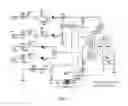
FIG. 1 is the schematic figure for the fixed bed micro-reactor catalytic hydrogenation equipment obtained from example 1-3;
FIG. 2 is the XRD pattern of the as-prepared MgAl-LDHs/Al2O3 obtained from example 1;
FIG. 3 is the nitrogen adsorption-desorption isotherm profile of the NiAl-LDHs/Al2O3 obtained from example 2; wherein P is nitrogen partial pressure, P0 is the saturation vapor pressure for the tested materials.
DETAILED DESCRIPTION OF THE EMBODIMENTS
The Present Invention Will Be Further Explained Through Following Examples:
In the following examples, the products in this invent were measured by the following methods and instruments.
The structural analysis was performed on a Rigaku XRD-6000 X-ray diffractometer under air condition, using Cu Ka radiation (0.154 nm) at 40 kV, 30 mA with a continuous scanning rate of 2/min.
Pore structural analysis was performed on a S-IC-VP-type specific surface area-pore size distribution analyzer (Quanatachrome Instruments Company in US); the sample was degassed for 2 h at 373K in liquid nitrogen atmosphere for further nitrogen desorption test.
Example 1
Weighting 4 g of the urea and dissolving it into deionized water to form 80 ml solution; Adding 2 g of the η-Al2O3 carrier (mesh size: 60) with spherical shape into the above solution, mixing the above solution at 130° C. for 12 hours. Weighting 12 g of the Mg(NO3)2·6H2O into deionized water to form 20 mL solution and adding it into the mixture. Stirring the obtained solution under 130° C. for 12 hours, after the process of cooling, filtration, and washed by the deionized water, the product is dried at 80° C., and the MgAl-LDHs/Al2O3 precursor can be obtained.
Weighing 0.04 g of PdCl2 to form a PdCl2 solution,; adding the MgAl-LDHs/Al2O3 precursors into the PdCl2 aqueous solution, and placing the solution into a shaker under 50° C. water bath for 24 hours; After the process of filtration, and washed by the deionized water, the solid product was dried at 80° C. Then, calcinating the product at 450° C. for 8 hours; the product was treated by a reduction process in a fixed bed reduction equipment under H2 atmosphere at 300° C. for 3 hours. The supported catalyst can be obtained.
Based on the XRD profile, the obtained product is MgAl-LDHs/Al2O3.
Catalyst performance measurement: by the use of the fixed bed micro-reactor catalytic hydrogenation equipment (MRCS-2000DR micro-reactor chromatographic system), the obtained supported catalyst was used to catalyze the hydrogenation reaction of the dimethyl phthalate to form the 1,4-cyclohexanedicarboxylate. The reaction condition include: reaction temperature: 220° C.; pressure of the H2: 80 atm; ratio of the hydrogen/oil: 80; solvent:ethyl acetate (100 ml/3 g dimethyl terephthalate); reaction time: 6 h. the reaction conversion rate of the dimethyl terephthalate is 91%, and the selectivity of the dimethyl 1,4-cyclohexanedicarboxylate is 98%.
Comparation Example 1
As a comparation, a catalyst was prepared by the immersion method through supporting 12 g of Mg(NO3)2·6H2O and 0.04 g of PdCl2 on the Al2O3 carrier. The catalysis performance was evaluated by the same method in the example 1. The reaction conversion rate of the dimethyl terephthalate is 88%, and the selectivity of the dimethyl 1,4-cyclohexanedicarboxylate is 80%.
Example 2
Weighting 8 g of the urea and dissolving it into deionized water to form 70 ml solution; Adding 3 g of the θ-Al2O3 carrier (mesh size: 100) with spherical shape into the above solution, mixing the above solution at 100° C. for 15 hours. Weighting 16 g of Ni(NO3)2·6H2O into deionized water to form 30 mL solution and adding it into the mixture. Stirring the obtained solution under 110° C. for 14 hours, after the process of cooling, filtration, and washed by the deionized water, the product is dried at 100° C., and the NiAl-LDHs/Al2O3 precursor can be obtained.
Weighing 0.3 g of PdCl2 to form a PdCl2 solution,; adding the NiAl-LDHs/Al2O3 precursors into the PdCl2 aqueous solution, and placing the solution into a shaker under 80° C. water bath for 12 hours; After the process of filtration, and washed by the deionized water, the solid product was dried at 120° C. Then, calcinating the product at 500° C. for 6 hours; then the product was treated by a reduction process in a fixed bed reduction equipment under H2 atmosphere at 400° C. for 2.5 hours. The supported catalyst can be obtained.
Based on the XRD profile, the obtained product is NiAl-LDHs/Al2O3.
The catalysis performance was evaluated by the same method in the example 1. The reaction conversion rate of the dimethyl terephthalate is 90%, and the selectivity of the dimethyl 1,4-cyclohexanedicarboxylate is 94%.
Comparation Example 2
As a comparation, a catalyst was prepared by the immersion method through supporting 16 g of Ni(NO3)2·6H2O and 0.3 g of PdCl2 on the Al2O3 carrier. The catalysis performance was evaluated by the same method in the example 1. The reaction conversion rate of the dimethyl terephthalate is 92%, and the selectivity of the dimethyl 1,4-cyclohexanedicarboxylate is 88%.
Example 3
Weighting 6 g of the urea and dissolving it into deionized water to form 60 ml solution; Adding 3 g of the γ-Al2O3 carrier (mesh size: 40) with spherical shape into the above solution, mixing the above solution at 100° C. for 15 hours at 100° C. Weighting 9 g of CaCl2 into deionized water to form 60 mL solution and adding it into the mixture. Stirring the obtained solution under 120° C. for 10 hours, after the process of cooling, filtration, and washed by the deionized water, the product is dried at 90° C., and the CaAl-LDHs/Al2O3 precursor can be obtained.
Weighing 0.3 g of PdCl2 to form a PdCl2 solution,; adding the CaAl-LDHs/Al2O3 precursors into the PdCl2 aqueous solution, and placing the solution into a shaker under 90° C. water bath for 14 hours; After the process of filtration, and washed by the deionized water, the solid product was dried at 100° C. Then, calcinating the product at 400° C. for 9 hours; then the product was treated by a reduction process in a fixed bed reduction equipment under H2 atmosphere at 300° C. for 4 hours. The supported catalyst can be obtained.
Based on the XRD profile, the obtained product is CaAl-LDHs/Al2O3.
The catalysis performance was evaluated by the same method in the example 1. The reaction conversion rate of the dimethyl terephthalate is 92%, and the selectivity of the dimethyl 1,4-cyclohexanedicarboxylate is 90%.
Comparation Example 3
As a comparation, a catalyst was prepared by the immersion method through supporting 18 g of CaCl2 and 0.3 g of PdCl2 on the Al2O3 carrier. The catalysis performance was evaluated by the same method in the example 1. The reaction conversion rate of the dimethyl terephthalate is 85%, and the selectivity of the dimethyl 1,4-cyclohexanedicarboxylate is 78%.
Claims
1. A Process for preparing catalyst comprising palladium supported on a carrier, wherein the characters are: the detailed process are as follows:
(1) the preparation of the M2+Al-LDHs/Al2O3 precursors. Weighting certain content of the urea and dissolving it into deionized water, where the obtained concentration of the urea is in the range 0.2˜2 mol/L; Adding the Al2O3 carrier (mesh size: 26˜100) with regular geometry into the above solution, where the adding content of the Al2O3 is 1˜6 g/100 mL. Stirring the above solution at 80˜150° C. for 3˜15 hours to obtain a mixed solution. Weighting certain content of the soluble M2+ salt into deionized water to form M2+ solution. Based on a certain ratio, adding the M2+solution into the mixed solution, where the concentration of the M2+ solution is in the range of 0.1˜1 mol/L; stirring the obtained solution under 80˜160° C. for 3˜15 hours, after the process of cooling, filtration, and washed by the deionized water, the product is dried at 80˜120° C., and the M2+Al-LDHs/Al2O3 precursors can be obtained.
(2) the preparation of the supported catalyst.
Weighing certain quality of palladium chloride (PdCl2) to form a PdCl2 solution, wherein the obtained concentrations of PdCl2 aqueous solution maintains at 0.03˜0.3 mol/L; adding the M2+Al-LDHs precursors in the step 1 into the PdCl2 aqueous solution, and placing the solution into a shaker under 50˜90° C. water bath for 1˜24 hours; After the process of filtration, and washed by the deionized water, the product is dried at 80˜120° C. Then, calcinating the product at 300˜900° C. for 2˜24 hours; then the product was treated by a reduction process in a fixed bed reduction equipment under H2 atmosphere at 200˜600° C. for 2˜24 hours. The supported catalyst can be obtained.
2. According to claim 1, wherein the characters are: the shape of the Al2O3 carrier can be one or more types of spherical shape, clover or sheet-like shapes; the crystalline form of the Al2O3 carrier can be one or more types of δ, β, γ, θ and η.
3. According to claim 1, wherein the characters is: M2+ can be one or more types of Mg2+, Ni2+, Ca2+, Pd2+ and Cu2+.
Images & Drawings included:

Sources:
- United States Patent and Trademark Office - verify current appl. status at the USPTO↗
Recent applications in this class:
- » 20150258530 2015-09-17
Polycondensation catalyst for producing polyester and method for producing polyester using the same - » 20120253091 2012-10-04
Method for making hydrocarbons by using a lipid derived from a biological organism and hydrotalcite - » 20110268646 2011-11-03
Preparation method of carbon nanotube by decomposing the polymer with hydrotalcite as a catalyst - » 20110105316 2011-05-05
Mixed Metal Oxide Ingredients for Bulk Metal Oxide Catalysts - » 20110014103 2011-01-20
Preparation of desulphurisation materials - » 20100075390 2010-03-25
DEVELOPMENT AND USE OF AN IRON-BASED CATALYST FOR IMPLEMENTING AN OXIDATION-REDUCTION PROCESS FOR SUBSTANCES TO BE REDUCED - » 20100041913 2010-02-18
Polycondensation catalyst for producing polyester and method for producing polyester using the same - » 20090286915 2009-11-19
Zinc-containing calcium-aluminium double salts - » 20090261020 2009-10-22
Nickel based catalyst using hydrotalcite-like precursor and steam reforming reaction of LPG - » 20090257934 2009-10-15
Transition metal-substituted hydrotalcite catalyst for removing nitrogen oxides from the exhaust gas of diesel engine by storage-reduction
Recent applications for this Assignee:
- » 20250272572 2025-08-28
INCREMENTAL LEARNING METHOD AND APPARATUS FOR LARGE VISION-LANGUAGE MODEL FOR AUTONOMOUS DRIVING - » 20250145463 2025-05-08
HOMOLOGOUS HETEROSTRUCTURE FeSe ELECTRODE MATERIAL WITH HIGH TAP DENSITY AND PREPARATION METHOD THEREOF - » 20250092535 2025-03-20
LOW ENERGY CONSUMPTION ELECTROCATALYTIC METHOD FOR ELECTROSYNTHESIS OF HYDROGEN PEROXIDE COUPLED WITH OXIDATION UPCYCLING OF PET PLASTICS - » 20250091974 2025-03-20
Device and method for refining ethanol - » 20250091040 2025-03-20
PREPARATION METHOD FOR NI AND MN BIMETALLIC ELECTROCATALYST AND ITS APPLICATION IN SMALL MOLECULE ELECTROOXIDATION - » 20250067564 2025-02-27
DEEP LEARNING BASED METHOD FOR INTEGRATING DEMAND FORECASTING AND SCHEDULING OF ONLINE RIDE-HAILING AT HUB - » 20250037155 2025-01-30
DEEP LEARNING MODEL BASED METHOD FOR FORECASTING ONLINE RIDE-HAILING SHORT-TERM DEMAND - » 20240425889 2024-12-26
GENETIC ENGINEERING BACTERIUM FOR DE NOVO SYNTHESIS OF CIS,CIS-MUCONIC ACID BY TAKING GLUCOSE AS SUBSTRATE AND APPLICATIONS THEREOF - » 20240421347 2024-12-19
Lithium-aluminum hydrotalcite-based solid electrolyte film working at room temperature, preparation method thereof, and lithium battery including same - » 20240410443 2024-12-12
PNEUMATIC-LIQUID AUTO-BALANCE ACTUATOR WITH LARGE DIAMETER