Selective hydrogenation catalyst comprising palladium on porous silica glass and the use thereof
US20110237841A1
2011-09-29
13/059,477
2009-08-20
✅ Patent granted
US 8,530,707 B2
2013-09-10
WO; PCT/EP2009/060764; 20090820
WO; WO2010/020671; 20100225
Sikarl Witherspoon
Nixon & Vanderhye P.C.
2029-10-05
Abstract:
The present invention is directed to a catalyst comprising palladium on a porous Silica glass as carrier, as well as to the use of such catalyst for the selective hydrogenation of alkines to alkenes.
Inventors:
- Werner Bonrath 42 🇩🇪 Freiburg, Germany
- Bernd Ondruschka 2 🇩🇪 Leipzig, Germany
- Christine Schmoeger 1 🇩🇪 Kraftsdorf/OT Toppeln, Germany
- Achim Stolle 1 🇩🇪 Jena, Germany
- Werner Bonrath 1 🇩🇪 Frelburg, Germany
- Christine Schmoeger 1 🇩🇪 Toppeln, Germany
Assignee:
- DSM IP ASSETS B.V. 1,844 🇳🇱 Heerlen, Netherlands
Applicant:
Interested in similar patents?
Get notified when new applications in this technology area are published.
Classification:
C07C29/17 » CPC further
Preparation of compounds having hydroxy or O-metal groups bound to a carbon atom not belonging to a six-membered aromatic ring by hydrogenation of carbon-to-carbon double or triple bonds
C07C5/09 » CPC main
Preparation of hydrocarbons from hydrocarbons containing the same number of carbon atoms by hydrogenation of carbon-to-carbon triple bonds to carbon-to-carbon double bonds
B01J23/44 » CPC further
Catalysts comprising metals or metal oxides or hydroxides, not provided for in group of noble metals of the platinum group metals Palladium
B01J35/023 » CPC further
Catalysts, in general, characterised by their form or physical properties; Solids Catalysts characterised by dimensions, e.g. grain size
B01J35/1014 » CPC further
Catalysts, in general, characterised by their form or physical properties; Solids characterised by their surface properties or porosity; Surface area 10-100 m2/g
B01J35/1019 » CPC further
Catalysts, in general, characterised by their form or physical properties; Solids characterised by their surface properties or porosity; Surface area 100-500 m2/g
B01J35/1047 » CPC further
Catalysts, in general, characterised by their form or physical properties; Solids characterised by their surface properties or porosity; Pore volume more than 1.0 ml/g
B01J35/1066 » CPC further
Catalysts, in general, characterised by their form or physical properties; Solids characterised by their surface properties or porosity; Pore diameter 50-500 nm
B01J35/1038 » CPC further
Catalysts, in general, characterised by their form or physical properties; Solids characterised by their surface properties or porosity; Pore volume less than 0.5 ml/g
B01J35/1042 » CPC further
Catalysts, in general, characterised by their form or physical properties; Solids characterised by their surface properties or porosity; Pore volume 0.5-1.0 ml/g
B01J35/1061 » CPC further
Catalysts, in general, characterised by their form or physical properties; Solids characterised by their surface properties or porosity; Pore diameter 2-50 nm
C07C2523/44 » CPC further
Catalysts comprising metals or metal oxides or hydroxides, not provided for in group of noble metals of the platinum group metals Palladium
C07C33/02 » CPC further
Unsaturated compounds having hydroxy or O-metal groups bound to acyclic carbon atoms Acyclic alcohols with carbon-to-carbon double bonds
C07C33/025 » CPC further
Unsaturated compounds having hydroxy or O-metal groups bound to acyclic carbon atoms; Acyclic alcohols with carbon-to-carbon double bonds with only one double bond
B01J35/10 IPC
Catalysts, in general, characterised by their form or physical properties; Solids characterised by their surface properties or porosity
B01J35/02 IPC
Catalysts, in general, characterised by their form or physical properties Solids
B01J21/08 » CPC further
Catalysts comprising the elements, oxides, or hydroxides of magnesium, boron, aluminium, carbon, silicon, titanium, zirconium, or hafnium; Silicon, titanium, zirconium or hafnium; Oxides or hydroxides thereof Silica
B01J35/00 IPC
Catalysts, in general, characterised by their form or physical properties
Description
The present invention is directed to a catalyst comprising palladium on a porous Silica glass as carrier, as well as to the use of such catalyst for the selective hydrogenation of alkines to alkenes.
The catalyst of the present invention comprises palladium on a porous Silica glass.
Preferably the catalyst of the present invention is palladium on a porous Silica glass.
The porous Silica glass shows preferably the following characteristics:
- a) a particle diameter in the range of 20 to 500 μm, preferably in the range of 50 to 400 μm, more preferably in the range of 80 to 300 μm, most preferably in the range of 100 to 200 μm; and/or
- b) a pore size in the range of 10 to 400 nm; preferably in the range of 30 250 nm, more preferably in the range of 40 150 nm, most preferably in the range of 50 to 60 nm; and/or
- c) a pore volume in the range of 100 to 5000 mm3/g; preferably in the range of 250 to 2500 mm3/g, more preferably in the range of 500 to 2000 mm3/g, most preferably in the range of 1000 to 1500 mm3/g; and/or
- d) a specific surface in the range of 5 to 500 m2/g; preferably in the range of 25 to 300 m2/g, more preferably in the range of 40 to 250 m2/g, most preferably in the range of 50 to 200 m2/g.
Preferably the porous Silica glass shows all characteristics a) to d), whereby the present invention encompasses any possible combination of the preferred/more preferred/most preferred characteristics.
Such porous Silica glasses are commercially available. An especially preferred one is sold under the trademark TRISOPERL® by the Schuller GmbH, Wertheim, Germany. TRISOPERL® is a porous Silica glass with an average particle size in the range of 100 to 200 μm, an average pore size of 54.47 nm, a specific surface of 93.72 m2/g and an average pore volume of 1255.5 mm3/g.
The catalyst according to the present invention may be used for the selective hydrogenation of terminal C≡C triple bonds to terminal C═C double bonds in the presence of the following functional groups:
-
- alkyl: linear C1-50 alkyl, branched C3-50 alkyl, C3-20 cycloalkyl, as well as alkylcycloalkyls and cycloalkylalkyls with 1 to 50 C-atoms; preferred are C1-20 alkyl—may it be linear (C1-20), branched (C3-20) or cylic (C3-20) or an alkylcycloalkyl (C4-20) or a cycloalkylalkyl (C4-20);
- alkenyl: linear C2-50 alkenyl, branched C3-50 alkenyl; preferred are C2-20 alkenyl—may it be linear (C2-20) or branched (C3-20);
- heteroalkyl: i.e. non-aromatic carbon hydrogen moieties, preferred saturated carbon hydrogen moieties with 3 to 50 C atoms (preferably 3 to 30 C atoms) comprising one or more of the heteroatoms nitrogen and/or oxygen, such as ethers e.g. tetrahydrofuran and tetrahydropyran;
- alkylaryl and aryl such as phenyl, tolyl, xylyl, mesityl, naphthyl etc., preferably having 6-17 C atoms;
- heteroaryl, preferably having 5-17 C atoms, whereby the heteroatom is either oxygen or nitrogen; the heteroaryl may also contain several heteroatoms (number of heteroatoms 1), so that also heteroaryl are encompassed which contain O atoms as well as N atoms; examples are pyridyl, indyl, furyl;
- hydroxy (—OH);
- nitrooxy (—NO2);
- amino (—NH2);
- SiR1R2R3, wherein R1, R2 and R3 are independently from each other alkyl (linear or branched C1-C6) or aryl or alkylaryl; preferably R1═R2═R3.
That means alkines RC≡CH are hydrogenated to alkenes RHC═CH2, whereby R is a carbon hydrogen moiety optionally bearing a heteroatom O and/or N or several of them and/or the following functional groups as defined above: —OH, —NO2, —NH2, and —SiR3. Preferably R is selected from the group consisting of alkyl, alkenyl, aryl, alkylaryl, heteroaryl,—as defined above—which all may further bear one or more heteroatoms O and/or N, or further functional groups such as —OH, —NO2, —NH2, and —SiR3. Preferably the alkines are precursors of isoprenoid building blocks.
Thus, the present invention is also directed to such use, as well as to a process for the manufacture of alkenes comprising the step of hydrogenating alkines in the presence of a catalyst as defined above.
In general the hydrogenation may be carried out at a temperature in the range of 0° C. to 150° C. and/or at a pressure in the range of 1 bar to 150 bar.
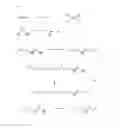
Preferred examples of such alkines and the corresponding alkenes are given in the following table:
| Alkine | Alkene | FIG. 1 |
| 2-methylbutinol | 2-methylbutenol | (1) |
| dehydrolinalool | linalool | (2) |
| dehydroisophytol | isophytol | (3) |
| 3,7-dimethyl-1-octyn-3-ol | 3,7-dimethyl-1-octen-3-ol | (4) |
REFERRED EMBODIMENTS OF THE PRESENT INVENTION
Hydrogenation of Dehydroisophytol to Isophytol
In a preferred embodiment of the present invention the alkine 3,7,11,15-tetramethyl-1-hexadecine-3-ol (dehydroisophytol) is hydrogenated to the alkene 3,7,11,15-tetramethyl-1-hexadecene-3-ol (isophytol).
In general this hydrogenation may be carried out at a temperature in the range of 0° C. to 150° C., preferably at a temperature in the range of 10° C. to 100° C., more preferably at a temperature in the range of 15° C. to 95° C., most preferably at a temperature up to 75° C.
The hydrogen pressure may vary in the range of 1 to 50 bar, preferably in the range of 1.1 to 10 bar, more preferably in the range of 1.2 to 8 bar, most preferably around 6 bar.
Preferably this hydrogenation is performed in the absence of a solvent.
Hydrogenation of 2-methylbutinol to 2-methylbutenol
In another preferred embodiment of the present invention the alkine 2-methylbutinol is hydrogenated to the alkene 2-methylbutenol.
In general this hydrogenation may be carried out at a temperature in the range of 0° C. to 150° C., preferably at a temperature in the range of 15° C. to 80° C., more preferably at a temperature in the range of 20° C. to 75° C., most preferably at a temperature around 60° C.
The hydrogen pressure may vary in the range of 1 to 50 bar, preferably in the range of 1.2 to 15 bar, more preferably in the range of 1.5 to 10 bar, most preferably around 6 bar.
Advantageously a compound poisoning the catalyst, thus reducing its activity, is used. This compound is in general a sulfur- or phosphor containing organic compound. Preferred catalyst poisons are selected from the group consisting of phosphanes (particularly trialklyphosphanes), thioethers, thiols and disulfides. Especially preferred are thioethers such as dipropyl sulfide, ethyl-2-hydroxyethyl sulfide, tetrahydrothiophene, thiophene and 2,2′-(ethylendithio)-diethanol, thiols such as 2,2′-(ethylendioxy)-diethanthiol, and disulfides such as propyl disulfide and isopropyl disulfide. Most preferred is 2,2′-(ethylendithio)-diethanol. The catalyst poison may also be used in the hydrogenation of dehydroisophytol to isophytol as described above.
Hydrogenation of Dehydrolinalool to Linalool
In a further preferred embodiment of the present invention the alkine dehydrolinalool is hydrogenated to the alkene linalool.
In general this hydrogenation may be carried out at a temperature in the range of 0° C. to 120° C., preferably at a temperature in the range of 10° C. to 100° C., more preferably at a temperature in the range of 20° C. to 90° C.
The hydrogen pressure may vary in the range of 1 bar to 50 bar, preferably in the range of 1.2 to 15 bar, more preferably in the range of 1.5 to 10 bar, most preferably around 3 bar.
Hydrogenation of 3,7-dimethyl-1-octvn-3-ol to 3,7-dimethyl-1-octen-3-ol
In another preferred embodiment of the present invention the alkine 3,7-dimethyl-1-octyn-3-ol is hydrogenated to the alkene 3,7-dimethyl-1-octen-3-ol.
The invention will now be illustrated in the following non-limiting examples.
EXAMPLES
The carrier used in the examples was TRISOPERL® sold by the Schuller GmbH, Wertheim, Germany. TRISOPERL® is a porous Silica glass with an average particle size in the range of 100 to 200 μm, an average pore size of 54.47 nm, a specific surface of 93.72 m2/g and an average pore volume of 1255.5 mm3/g.
Example 1
Preparation of the Catalyst
21 mg Pd(OAc)2 (0.09 mmol) were suspended in 50 mL of dichloromethane. 1 g of TRISOPERL® were added and the solvent was removed (bath temperature: 40° C./pressure: 950 mbar). The carrier doped with Pd(OAc)2 was calcinated for 2 hours at 300° C. in an oven (pre-heating of the oven for 20 minutes for 1000 W to 300° C.). The loading of the catalyst on the carrier was then ca. 1 weight-% Pd, i.e. 10 mg Pd on 1 g carrier.
Example 2
Hydrogenation of 2-methyl-3-butin-2-ol (MBI) to 2-methyl-3-buten-2-ol (MBE) in an Autoclave
3.2 mol of MBI were hydrogenated in the presence of 200 mg of the catalyst as prepared according to example 1 at 60° C. and 2.8 bara for 280 minutes under stirring (2000 rpm). The conversion was 98% and the yield 94%.
Examples 3-4
Hydrogenation of Dehydroisophytol (DIP) to Isophytol (IP) without Solvent
3.75 mmol of DIP were hydrogenated in the presence of 100 mg of the catalyst as prepared according to example 1. The temperature and the pressure at which the hydrogenations were carried out are given in the following table. A sample was taken after 3 hours reaction time and the yield and the selectivity determined with gas chromatography.
b) Reaction Time: 3 hours
| Selectivity | ||||
| Pressure | Temperature | Conversion based on | based on | |
| Example | [bara] | [° C.] | DIP [%] | IP [%] |
| 3 | 21 | 50 | 88 | 86 |
| 4 | 41 | 50 | 95 | 85 |
Example 5
Solvent Free Hydrogenation of Dehydroisophytol (DIP) to Isophytol (IP) at a Larger Scale
265 g (0.9 mol) of DIP were hydrogenated at 80° C. and 2 bar in the presence of 106 mg of the catalyst as prepared according to example 1 and 23 mg of 2,2′-(ethylendithio)-di-ethanol in a 500 ml autoclave. The reaction mixture was stirred with 2000 rpm for 4 hours. The conversion was 99% and the yield was 89.6%, based on DIP.
Example 6
Hydrogenation of Dehydroisophytol (DIP) to Isophytol (IP) in a Solvent
3.75 mmol of DIP were dissolved in 0.5 ml of ethyl acetate and hydrogenated at 50° C. and 21 bara in the presence of 100 mg of the catalyst as prepared according to example 1. A sample was taken after 1 hour reaction time and the yield and the selectivity determined with gas chromatography. The conversion was 93% based on DIP and the selectivity 91% based on IP.
Claims
1. Catalyst comprising palladium on a porous Silica glass as carrier.
2. The catalyst according to claim 1, wherein the carrier has a particle diameter in the range of 20 to 500 □m, preferably in the range of 50 to 400 □m, more preferably in the range of 80 to 300 □m, most preferably in the range of 100 to 200 □m.
3. The catalyst according to claim 1, wherein the carrier has a pore size in the range of 10 to 400 nm; preferably in the range of 30 250 nm, more preferably in the range of 40 150 nm, most preferably in the range of 50 to 60 nm.
4. The catalyst according to claim 1, wherein the carrier has a pore volume in the range of 100 to 5000 mm3/g; preferably in the range of 250 to 2500 mm3/g, more preferably in the range of 500 to 2000 mm3/g, most preferably in the range of 1000 to 1500 mm3/g.
5. The catalyst according to claim 1, wherein the carrier has a specific surface in the range of 5 to 500 m2/g;
preferably in the range of 25 to 300 m2/g, more preferably in the range of 40 to 250 m2/g, most preferably in the range of 50 to 200 m2/g.
6. Use of a catalyst according to claim 1, for the selective hydrogenation of C═C triple bonds to C═C double bonds.
7. A process for the manufacture of alkenes comprising the step of hydrogenating alkines in the presence of a catalyst according to claim 1.
8. The process according to claim 7, wherein the alkine is 3,7,11,15-tetramethyl-1-hexadecine-3-ol (dehydroisophytol) and the alkene is 3,7,11,15-tetramethyl-1-hexadecene-3-ol (isophytol).
9. The process according to claim 7, wherein the alkine is 2-methylbutinol and the alkene is 2-methylbutenol.
10. The process according to claim 8, or wherein the hydrogenation is carried out in the presence of a sulfur-containing compound.
11. The process according to claim 10, wherein the sulfur-containing compound is 2,2′-(ethylendithio)-diethanol.
Images & Drawings included:

Sources:
- United States Patent and Trademark Office - verify current appl. status at the USPTO↗
Recent applications in this class:
- » 20240208885 2024-06-27
SELECTIVE PHOTOCATALYTIC REDUCTION OF ALKYNES TO ALKENES - » 20240208884 2024-06-27
SELECTIVE PHOTOCATALYTIC REDUCTION OF ALKYNES TO ALKENES POWERED BY A COBALT-PORPHYRIN METAL-ORGANIC FRAMEWORKS - » 20240043357 2024-02-08
METHOD FOR THE SELECTIVE HYDROGENATION OF THE C2 FRACTION COMPRISING ACETYLENE IN THE PRESENCE OF A CATALYST IN MONOLITHIC FORM - » 20230257325 2023-08-17
METHODS AND APPARATUS FOR PERFORMING CHEMICAL AND ELECTROCHEMICAL REACTIONS - » 20230133746 2023-05-04
Process for producing hydrogen, carbon, and ethylene from methane-containing feedstock - » 20220340504 2022-10-27
Upgrading streams comprising Cand Chydrocarbons - » 20220267234 2022-08-25
Integrated systems and methods for producing 1,3-butadiene via extractive distillation, distillation, and/or selective hydrogenation - » 20220242806 2022-08-04
Processes for converting alkyne to olefin - » 20220135498 2022-05-05
Methods for operating acetylene hydrogenation units in olefin production processes - » 20210253496 2021-08-19
Selective hydrogenation of polyunsaturates
Recent applications for this Assignee:
- » 20250069708 2025-02-27
COMPUTER-BASED METHOD FOR DETERMINING A SUNSCREEN COMPOSITION COMPRISING A PLURALITY OF UV FILTER SUBSTANCES - » 20240327777 2024-10-03
Fermentation system, feed controller, and related methods - » 20240293437 2024-09-05
METHODS OF SELECTIVELY MODULATING GASTROINTESTINAL MICROBIAL GROWTH - » 20240237688 2024-07-18
Steviol glycoside transport - » 20240148953 2024-05-09
CENTRIFUGE - » 20240026152 2024-01-25
Synthetic membrane composition comprising a polyurethane and a polyoxazoline - » 20230270920 2023-08-31
Method of making an osteoconductive fibrous article and a medical implant comprising such osteoconductive fibrous article - » 20230227862 2023-07-20
Biosynthesis of retinoids - » 20230227510 2023-07-20
Steviol glycoside transport - » 20230212486 2023-07-06
Process for the preparation of a stable beverage