Precast Concrete to Foundation Connection
US20110239581A1
2011-10-06
13/040,069
2011-03-03
Abstract:
The connecting system of the invention eliminates the need to prelocate embedded bolts or other embedded elements within the concrete foundation before it is cast and eliminates the need to align the panel embedments with the foundation embedments and also eliminates the need to utilize threaded anchor bolts with nuts.
Interested in similar patents?
Get notified when new applications in this technology area are published.
Classification:
E04B1/043 » CPC main
Constructions in general; Structures which are not restricted either to walls, e.g. partitions, or floors or ceilings or roofs; Structures consisting primarily of load-supporting, block-shaped, or slab-shaped elements the elements consisting of concrete, e.g. reinforced concrete, or other stone-like material Connections specially adapted therefor
E04B1/4114 » CPC further
Constructions in general; Structures which are not restricted either to walls, e.g. partitions, or floors or ceilings or roofs; Connections for building structures in general; Separate connecting elements; Connecting devices specially adapted for embedding in concrete Elements with sockets
E04B1/483 » CPC further
Constructions in general; Structures which are not restricted either to walls, e.g. partitions, or floors or ceilings or roofs; Connections for building structures in general; Separate connecting elements; Dowels, i.e. members adapted to penetrate the surfaces of two parts and to take the shear stresses Shear dowels to be embedded in concrete
E04B1/21 IPC
Constructions in general; Structures which are not restricted either to walls, e.g. partitions, or floors or ceilings or roofs; Structures comprising elongated load-supporting parts, e.g. columns, girders, skeletons the supporting parts consisting of concrete, e.g. reinforced concrete, or other stonelike material Connections specially adapted therefor
E04B1/38 IPC
Constructions in general; Structures which are not restricted either to walls, e.g. partitions, or floors or ceilings or roofs Connections for building structures in general
Description
PRIOR APPLICATION
This application emanates from a previously filed provisional application; 61/309,992 filed on Mar. 3, 2010
FIELD OF THE INVENTION
This invention relates generally to building construction and more particularly to the fabrication and anchoring of concrete wall panels that are erected into place and attached to form the walls of a building.
BACKGROUND OF THE INVENTION
Pre-cast concrete wall panel construction has been used for years to construct commercial buildings such as warehouses, factories, and the like. In general, such construction entails building a rectangular concrete form, placing steel reinforcing bars (rebar) or other reinforcement in the form, filling the form with concrete, and, after the concrete cures, the resulting concrete panel is transported as needed and erected into place to form a wall section. Numerous wall sections generally are fabricated and attached together and to framing members of the building to form complete walls. Utility conduits may be embedded within the wall sections as needed to provide for electricity and plumbing. U.S. Pat. Nos. 3,394,523 of Sackett, 4,104,356 of Deutsch et al., 3,604,174 of Nelson, and 4,856,244 of Clapp disclose various examples of concrete wall panel construction techniques.
While traditional concrete wall panel construction techniques have been somewhat successful in construction commercial buildings, they nevertheless have been fraught with a variety of inherent problems and shortcomings. Among these are the fact that, in most cases, the forms into which the concrete is poured usually are fabricated from wood or metal. The building of such forms is a tedious and time consuming process and further requires a high level of skill on behalf of workers to assure that the panels are all the correct size and configuration.
Another such problem is lateral forces. It has been found desirable with the construction of some buildings with concrete wall panels to provide a system for connecting the wall panels to the concrete foundation in order to resist any lateral or uplift forces on the wall panels relative to the foundation, for example, as may be produced by a hurricane or an earthquake. While it is known to attach base plates to the wall panels and to embed prelocated vertical anchor bolts within the foundation for receiving the base plates, there is a problem in obtaining precision is location of the base plate on the wall panels and corresponding precision location of the bolts within the foundation so that the wall panels are precisely positioned and aligned after they are erected. There is also a problem with the anchor bolt threads and corresponding nuts that are easily damaged and the time consuming process of turning the nuts onto the anchor bolts at a predetermined torque.
SUMMARY OF THE INVENTION
The current invention is an improvement over existing connections between precast concrete wall panels and a supporting foundation by the use of special metal connectors, which attach the base of each wall panel to the foundation. The connecting system of the invention eliminates the need to prelocate embedded bolts or other embedded elements within the concrete foundation before it is cast and eliminates the need to align the panel embedment with the foundation embodiments and also eliminates the need to utilize threaded anchor bolts with nuts.
In accordance with one embodiment of the invention, each precast concrete wall panel is connected or attached to the foundation by a set of embedded metal connectors, which are attached to the forms for the concrete wall panels before they are cast. Each connector includes a tubular cavity-forming element that extends from the base of the panel to a void forming element at an accessible face of the panel. The tubular cavity-forming element is welded to an anchor strap at each end. After each wall panel is poured, cured, transported and erected to its aligned vertical position supported by the foundation, the void forming element is removed from the panel and an inclined hole is drilled into the foundation with a drill bit extending through and guided by each tubular cavity-forming element. A deformed tie rod is inserted into the drilled hole and extends into the tubular cavity-forming element. The tie rod is then encased in a pourable grout to the top of the cavity-forming element. The grout upon curing and hardening together with the tie rod rigidly connect the wall panel to the is foundation.
BRIEF DESCRIPTION OF DRAWINGS
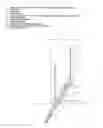
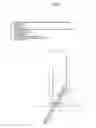
FIG. 1 is a frontal view of all parts comprised.
DETAILED DESCRIPTION OF DRAWINGS
-
- 1. Deformed tie rod—this rod acts as the tension and shear connection between the concrete foundation and the precast concrete panel. In the rods final position, it is encased in pourable grout; the grout acts as a force transfer medium between the deformations on the rod and the tubular cavity forming element or the drilled hole.
- 2. Void forming element- this item forms a void at the face of the precast panel in order to allow access to the tubular cavity for drilling the hole, placement of the deformed rod and grout. This void may be grouted in order to achieve a smooth panel surface and to protect the connection from corrosion.
- 3. Tubular cavity forming element—this member allows access to the foundation when drilling into the foundation and also transfers forces from the cured grout to the upper and lower anchor straps.
- 4. Bottom view of the tubular cavity-forming element—this view illiterates a taper at the lower end of the tubular cavity-forming element. The taper generates compressive forces around the harden grout and deformed rod when the connection is subject to uplift forces.
- 5. Upper concrete anchor strap—transfers forces from the upper end of the tubular cavity-forming element to the panel concrete.
- 6. Side view of the Lower concrete anchor strap—this side view depicts the bent configuration of this strap
- 7. Lower concrete anchor strap—transfers forces from the lower end of the tubular cavity-forming element to the panel concrete. The strap also has holes for the attachment of the connection to the precast panel form.
Claims
The invention having thus been described, the following is claimed:1. A precast concrete to foundation connection for securing a precast concrete wall panel to a supporting concrete foundation, comprising an inclined tubular cavity forming element embedded in the wall panel, a deformed rod adapted to extend through said cavity forming member and into an inclined hole formed within the foundation, a pourable grout that encases the deformed rod and fills the hole formed in the foundation and the tubular cavity forming element thus securing the wall panel to the foundation upon curing of the grout.
2. A precast concrete to foundation connection as defined in claim 1 and including a plurality of concrete anchor rods welded to said tubular cavity forming element
3. A precast concrete to foundation connection as defined in claim 1 and including a plurality of concrete anchor straps welded to said tubular cavity forming element.
4. A precast concrete to foundation connection as defined in claim 1 wherein said deformed rod is not deformed in the middle section of the rod.
5. A precast concrete to foundation connection as defined in claim 1 wherein said tubular cavity forming element is tapered to a smaller size at one end.
6. A precast concrete to foundation connection as defined in claim 1 and including a void forming element at the accessible face of the panel.
7. A deformed rod as defined in claim 4 wherein said middle section of the rod is coated with a bond inhibiting coating.
8. A precast concrete to foundation connection as defined in claim 3 wherein said anchoring straps have holes for mounting onto the casting forms.
9. A method of securing a precast concrete wall panel to a supporting concrete foundation, comprising the steps of forming at least one rigid connector with a tubular cavity forming portion, positioning the connector adjacent a horizontal bottom form for the wall panel, casting the wall panel and embedding the connector within the wall panel with the tubular cavity forming portion extending to a side surface of the wall panel, transporting and erecting the wall panel to a vertical position and positioning the wall panel on the foundation, drilling an inclined hole into the foundation through the tubular cavity forming portion of the connector , inserting within the hole in the foundation a deformed rod having an upper end portion extending into the tubular cavity forming portion of the connector, and encasing the deformed rod in grout, and filling the hole and tubular cavity portion of the connector with grout to tie the embedded connector and the wall panel to the foundation.
Images & Drawings included:

Sources:
- United States Patent and Trademark Office - verify current appl. status at the USPTO↗
Recent applications in this class:
- » 20240229444 2024-07-11
FABRICATED CONCRETE CONNECTION STRUCTURE AND CONSTRUCTION METHOD - » 20240209617 2024-06-27
STRUCTURAL LAMINATED FIBER-REINFORCED CEMENT BEAMS AND COLUMNS - » 20240209616 2024-06-27
FRAMING MEMBER, CONSTRUCTION PANEL, AND METHODS OF MANUFACTURING - » 20240133173 2024-04-25
FABRICATED CONCRETE CONNECTION STRUCTURE AND CONSTRUCTION METHOD - » 20240125108 2024-04-18
Angular offset stacking building block - » 20230392364 2023-12-07
A WALL JOINT, METHOD AND SYSTEM TO FORM THE WALL JOINT WITH A MECHANICAL CONNECTOR - » 20230358030 2023-11-09
CONDUCTIVE CONCRETE COMPOSITIONS FOR INFRASTRUCTURE APPLICATIONS - » 20230340771 2023-10-26
ASSEMBLED CONCRETE SHEAR WALL JOINTS AND METHOD OF ASSEMBLY THEREOF - » 20230203800 2023-06-29
A BUILDING SYSTEM - » 20230030089 2023-02-02
Modular Precast Concrete Water Storage Device and System