Methods for affixing overlay sheets to concrete form
US20110240216A1
2011-10-06
12/750,142
2010-03-30
✅ Patent granted
US 8,163,121 B2
2012-04-24
-
-
Linda L Gray
2030-08-05
Abstract:
A resin impregnated overlay sheet is laid atop a wood veneer to create a concrete form. At a pre-press station, pressure is applied to a veneer assembly having an overlay sheet laid atop it. Thereafter, the pressed overlaid assembly is transferred for final hot pressing. The pre-pressing of the overlay sheet onto the wood veneer ensures the static adherence of the overlay sheet to the veneer prior to final hot pressing.
Inventors:
- Jeremy Burford 2 🇺🇸 Alexandria, LA, United States
- Todd Burton 2 🇺🇸 Alexandria, LA, United States
- Stanley Flenniken 2 🇺🇸 Natchitoches, LA, United States
Assignee:
- Roy O. Martin Lumber Co. 1 🇺🇸 Alexandria, LA, United States
Interested in similar patents?
Get notified when new applications in this technology area are published.
Classification:
B32B37/02 IPC
Methods or apparatus for laminating, e.g. by curing or by ultrasonic bonding characterised by a sequence of laminating steps, e.g. by adding new layers at consecutive laminating stations
B32B37/10 » CPC main
Methods or apparatus for laminating, e.g. by curing or by ultrasonic bonding characterised by the pressing technique, e.g. using action of vacuum or fluid pressure
B32B7/12 » CPC further
Layered products characterised by the relation between layers; Layered products characterised by the relative orientation of features between layers, or by the relative values of a measurable parameter between layers, i.e. products comprising layers having different physical, chemical or physicochemical properties; Layered products characterised by the interconnection of layers; Interconnection of layers using interposed adhesives or interposed materials with bonding properties
B32B21/06 » CPC further
Layered products comprising a layer of wood, e.g. wood board, veneer, wood particle board comprising wood as the main or only constituent of a layer, next to another layer of a of paper or cardboard
B32B21/14 » CPC further
Layered products comprising a layer of wood, e.g. wood board, veneer, wood particle board comprising wood board or veneer
B32B29/06 » CPC further
Layered products comprising a layer of paper or cardboard specially treated, e.g. surfaced, parchmentised
E04G9/04 » CPC further
Forming or shuttering elements for general use; Forming boards or similar elements the form surface being of wood
B32B38/0004 » CPC further
Ancillary operations in connection with laminating processes Cutting, tearing or severing, e.g. bursting; Cutter details
B32B2255/12 » CPC further
Coating on the layer surface on paper layer
B32B2255/26 » CPC further
Coating on the layer surface Polymeric coating
B32B2260/028 » CPC further
Layered product comprising an impregnated, embedded, or bonded layer wherein the layer comprises an impregnation, embedding, or binder material; Composition of the impregnated, bonded or embedded layer Paper layer
B32B2260/046 » CPC further
Layered product comprising an impregnated, embedded, or bonded layer wherein the layer comprises an impregnation, embedding, or binder material; Impregnation, embedding, or binder material Synthetic resin
B32B2309/04 » CPC further
Parameters for the laminating or treatment process; Apparatus details Time
B32B2309/12 » CPC further
Parameters for the laminating or treatment process; Apparatus details Pressure
B32B2607/00 » CPC further
Walls, panels
Y10T156/10 » CPC further
Adhesive bonding and miscellaneous chemical manufacture Methods of surface bonding and/or assembly therefor
Y10T156/1052 » CPC further
Adhesive bonding and miscellaneous chemical manufacture; Methods of surface bonding and/or assembly therefor with cutting, punching, tearing or severing
Y10T156/1075 » CPC further
Adhesive bonding and miscellaneous chemical manufacture; Methods of surface bonding and/or assembly therefor with cutting, punching, tearing or severing; Prior to assembly of plural laminae from single stock and assembling to each other or to additional lamina
Y10T156/1093 » CPC further
Adhesive bonding and miscellaneous chemical manufacture; Methods of surface bonding and/or assembly therefor of discrete laminae to single face of additional lamina; All laminae planar and face to face with covering of discrete laminae with additional lamina
B32B37/00 IPC
Methods or apparatus for making layered products; Treatment of the layers or of the layered products
B32B37/00 IPC
Methods or apparatus for laminating, e.g. by curing or by ultrasonic bonding
B29C65/02 IPC
Joining of preformed parts ; Apparatus therefor by heating, with or without pressure
B32B37/04 IPC
Methods or apparatus for laminating, e.g. by curing or by ultrasonic bonding characterised by the partial melting of at least one layer
B32B37/18 IPC
Methods or apparatus for laminating, e.g. by curing or by ultrasonic bonding characterised by the properties of the layers with all layers existing as coherent layers before laminating involving the assembly of discrete sheets or panels only
B32B38/04 IPC
Ancillary operations in connection with laminating processes Punching, slitting or perforating
Description
FIELD OF THE INVENTION
The present invention relates generally to concrete forms and, more particularly, to methods for applying overlay sheets to veneer assemblies in order to manufacture the concrete forms more efficiently.
SUMMARY OF THE INVENTION
The present invention provides methods for manufacturing a form using an assembly line. An assembly of veneers is cut, cleaned, and transported to a side shift location. At the side shift location, an overlay sheet is applied to the top layer of the veneer assembly to create an overlaid assembly, and the overlaid assemblies are stacked to create a unit. The unit is then transported to a pre-press station for pre-pressing. Pressure is then applied for a pre-determined period, thereby pressing the veneer assemblies together such that the veneers stick to each other and their corresponding overlay sheet. Thereafter, the unit is transported to a hot press for final bonding.
BRIEF DESCRIPTION OF THE DRAWINGS
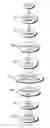
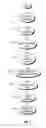
FIG. 1 is a flow chart illustrated an exemplary methodology of the present invention;
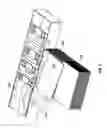
FIG. 2 is a pictorial illustration of step (40) of FIG. 1 according to an exemplary methodology of the present invention; and
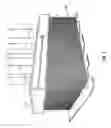
FIG. 3 is a pictorial illustration of step (60) of FIG. 1 according to an exemplary methodology of the present invention.
DESCRIPTION OF ILLUSTRATIVE EMBODIMENTS
Illustrative methodologies of the invention are described below as they might be employed to manufacture concrete forms. In the interest of clarity, not all features of an actual implementation are described in this specification. It will of course be appreciated that in the development of any such actual embodiment, numerous implementation-specific decisions must be made to achieve the developers' specific goals, such as compliance with system-related and business-related constraints, which will vary from one implementation to another. Moreover, it will be appreciated that such a development effort might be complex and time-consuming, but would nevertheless be a routine undertaking for those of ordinary skill in the art having the benefit of this disclosure. Further aspects and advantages of the various methodologies of the invention will become apparent from consideration of the following description and drawings.
FIG. 1 is a flow chart illustrating an exemplary method of the present invention whereby an overlay sheet is applied during the manufacturing of a concrete form. At step (10), a plywood veneer is constructed according to any method known in the art. In this exemplary embodiment, the veneer assembly (i.e., stacked veneers with glue in-between) is assembled using Southern Group 1 face, back and core veneers on a continuous run foam line lay-up process as understood in the art. In this embodiment, the veneer assembly moves via an automated assembly, such as a conveyor belt system. However, those skilled in the art having the benefit of this disclosure realize the process may also employ human assistance or some combination of human and mechanical automation. In addition, those skilled in the art having the benefit of this disclosure realize other materials may be used in place of the wood veneers, such as, for example, metals, plastics, etc.
As the veneer assembly moves to the end of the foam line, each is cut using a flying cut-off saw at step (20). As the veneer assembly moves further along the conveyor system, at step (30), an automated blower system removes saw dust and other wood particles from the face of the veneer assembly. At step (40), and referring to FIG. 2, the clean cut veneer assembly 100 moves onto a side shift location where an overlay sheet 102 is manually placed on the face of the assembly. Side shifts are well known in the art. Also, there are a variety of overlay sheets which may be utilized such as, for example, a thermosetting phenolic resin impregnated cellulose-fiber sheet, having an additional resin coating on the back of the sheet, manufactured by Arclin™.
In further reference to FIG. 2, a human operator 104 stands adjacent the side shift location to place overlay sheet 102 onto each veneer assembly 100 as it is forced onto overlaid assembly unit 106. As veneer assembly 100 is forced onto overlaid assembly unit 106, operator 104 places an overlay sheet 102, taken from overlay stack 108 placed adjacent to overlaid assembly unit 106, onto the top of veneer assembly 100 such that there is no interruption in the conveyor process. As such, the assembly just overlaid will rest atop unit 106 as another veneer assembly 100 moves onto the side shift location, and the process repeats. Although described herein in conjunction with a human operator, those ordinarily skilled in the art having the benefit of this disclosure realize the overlay step can also be automated. In addition, the placement of the overlay sheet can be guided by light sensors to ensure proper positioning and alignment, as smoother flow, as would be understood in the art by those ordinarily skilled having the benefit of this disclosure.
At step (50), the newly overlaid assembly is placed on a unit (i.e., a stack of overlaid assemblies). At this point in the process, there is nothing holding overlay sheet 102 to the veneer assemblies 100. Rather, the overlay sheet 102 is held on top of the veneer assemblies 100 by gravity. The unit is then transferred to a pre-press station at step (60), as illustrated in FIG. 3. Those ordinarily skilled in the art having the benefit of this disclosure realize there are a variety of pre-press stations which could be utilized with the present invention, such as, for example, a Globe™ pre-press.
Referring to FIG. 3, at the pre-press station 110 approximately 155 psi of pressure P is applied to the unit 106 for a period of 4.5-5 minutes. However, those ordinarily skilled in the art having the benefit of this disclosure understand the amount of pressure applied is dependent upon the type of wood utilized in the veneers. This pre-press process ensures the static adherence of the overlay sheet to the top of each veneer assembly prior to final pressing. Here, the assemblies are simply pressed together using extreme pressure and the pre-press creates intimate contact between the paper and the top of each veneer assembly, thereby creating a tackiness which allows them to stick to each; there is no heat involved. Thereafter, at step (70), the unit is transferred to a press charger and loaded into a plywood press, such as a 50 opening Spar-tek™ hot oil plywood press, for final pressing/bonding, thereby creating a panel. In addition, the face of the overlaid assemblies is cleaned using a blower prior to final pressing. At step (80), the panels are removed from the plywood press and sent for further processing, inspection and prepared for shipment.
Accordingly, methodologies of the present invention provide a method of manufacturing a form using an assembly line, the method comprising the steps of constructing an assembly comprising a plurality of wood veneers; cutting the assembly; cleaning a face of the assembly; transporting the assembly to a side shift location; applying an overlay sheet onto the face of the assembly at the side shift location to create an overlaid assembly, the application being accomplished by a human operator without interrupting movement of the assembly line; stacking the overlaid assembly onto a unit, the unit comprising a plurality of stacked overlaid assemblies; transporting the unit to a pre-press station; applying pressure to the unit for a pre-determined period, thereby pressing the overlaid assemblies together such the wood veneers stick to each other and their corresponding overlay sheet; and transporting the unit to a plywood press for final bonding, thereby creating the forms. In another exemplary methodology, the pressure applied at the pre-press is approximately 155 psi of pressure applied for a period of 4.5-5 minutes. In yet another exemplary methodology, no heat is applied at the pre-press station. In yet another methodology, heat is involved in the final bonding. In another exemplary methodology, the overlay sheet is resin impregnated and the resin assists in causing the wood veneers and overlay sheets to stick together during the pre-pressing. In another methodology, the form is a concrete form.
Methodologies of the present invention also provide a method of manufacturing a form, the method comprising the steps of constructing an assembly comprising a plurality of wood veneers; cutting the assembly; cleaning a face of the assembly; applying an overlay sheet onto the assembly face to create an overlaid assembly; and applying pressure to the overlaid assembly for a pre-determined period. In another exemplary methodology, the form is a concrete form. In yet another methodology, the pressure applied to the unit is approximately 155 psi of pressure applied for a period of 4.5-5 minutes. In another methodology, the step of transporting the overlaid assembly to a hot press wherein heat is applied for final bonding of the form. In the alternative, no heat is applied when the pressure is applied to the overlaid assembly for a pre-determined time. In yet another exemplary methodology, the overlay sheet is resin impregnated, and, when the pressure is applied to the overlaid assembly, the sheet and the assembly stick together in response to the applied pressure. In another methodology, the application of the overlay sheet is accomplished by a human operator, the overlay sheet being applied without interrupting movement of the assembly line. In another methodology, the overlay sheet is applied at a side shift location.
Methodologies of the present invention also provide a method of manufacturing a form, the method comprising the steps of applying an overlay sheet to an assembly face to create an overlaid assembly; applying pressure to the overlaid assembly; and transporting the overlaid assembly to a separate press for final pressing, thereby creating the form. In the alternative, the pressure applied to the overlaid assembly is approximately 155 psi of pressure applied for a period of 4.5-5 minutes and no heat is applied. In yet another methodology, heat is applied at the final pressing. In yet another exemplary methodology, the overlay sheet is applied at a side shift location. Also, the sheet may be applied by a human operator.
Although various embodiments have been shown and described, the invention is not limited to such embodiments and will be understood to include all modifications and variations as would be apparent to one skilled in the art. For example, those ordinarily skilled in the art having the benefit of this disclosure realize the methodologies of the present invention may be utilized to manufacture a variety of concrete forms, such as MDO concrete forms. Therefore, it should be understood that the invention is not intended to be limited to the particular forms disclosed. Rather, the intention is to cover all modifications, equivalents and alternatives falling within the spirit and scope of the invention as defined by the appended claims.
Claims
What is claimed is:1. A method of manufacturing a form using an assembly line, the method comprising the steps of:
(a) constructing an assembly comprising a plurality of wood veneers;
(b) cutting the assembly;
(c) cleaning a face of the assembly;
(d) transporting the assembly to a side shift location;
(e) applying an overlay sheet onto the face of the assembly at the side shift location to create an overlaid assembly, the application being accomplished by a human operator without interrupting movement of the assembly line;
(f) stacking the overlaid assembly onto a unit, the unit comprising a plurality of stacked overlaid assemblies;
(g) transporting the unit to a pre-press station;
(h) applying pressure to the unit for a pre-determined period, thereby pressing the overlaid assemblies together such the wood veneers stick to each other and their corresponding overlay sheet; and
(i) transporting the unit to a plywood press for final bonding, thereby creating the forms.
2. A method as defined in claim 1, wherein the pressure applied to the unit in step (h) is approximately 155 psi of pressure applied for a period of 4.5-5 minutes.
3. A method as defined in claim 1, wherein no heat is involved in step (h).
4. A method as defined in claim 3, wherein heat is involved in step (i).
5. A method as defined in claim 1, wherein the overlay sheet is resin impregnated and the resin assists in causing the wood veneers and overlay sheets to stick together in step (h).
6. A method as defined in claim 1, wherein the form is a concrete form.
7. A method of manufacturing a form, the method comprising the steps of:
(a) constructing an assembly comprising a plurality of wood veneers;
(b) cutting the assembly;
(c) cleaning a face of the assembly;
(d) applying an overlay sheet onto the assembly face to create an overlaid assembly; and
(e) applying pressure to the overlaid assembly for a pre-determined period.
8. A method as defined in claim 7, wherein the form is a concrete form.
9. A method as defined in claim 7, wherein the pressure applied to the unit in step (e) is approximately 155 psi of pressure applied for a period of 4.5-5 minutes.
10. A method as defined in claim 7, further comprising the step of transporting the overlaid assembly to a hot press wherein heat is applied for final bonding of the form.
11. A method as defined in claim 7, wherein no heat is involved in step (e).
12. A method as defined in claim 11, wherein the overlay sheet is resin impregnated, step (e) further comprising the step of causing the assembly and overlay sheet to stick together in response to the applied pressure.
13. A method as defined in claim 7, wherein the application of the overlay sheet in step (d) is accomplished by a human operator, the overlay sheet being applied without interrupting movement of the assembly line.
14. A method as defined in claim 7, wherein step (d) is performed at a side shift location.
15. A method of manufacturing a form, the method comprising the steps of:
(a) applying an overlay sheet to an assembly face to create an overlaid assembly;
(b) applying pressure to the overlaid assembly; and
(c) transporting the overlaid assembly to a separate press for final pressing, thereby creating the form.
16. A method as defined in claim 15, wherein the pressure applied in step (b) is approximately 155 psi of pressure applied for a period of 4.5-5 minutes.
17. A method as defined in claim 15, wherein no heat is involved in step (b).
18. A method as defined in claim 15, wherein heat is involved in the final pressing of step (c).
19. A method as defined in claim 15, wherein step (a) is performed at a side shift location.
20. A method as defined in claim 19, wherein step (a) is further performed by a human operator.
Images & Drawings included:
Sources:
- United States Patent and Trademark Office - verify current appl. status at the USPTO↗
Similar patent applications:
- » 20120125532
METHODS FOR AFFIXING OVERLAY SHEETS TO CONCRETE FORM
Recent applications in this class:
- » 20250282128 2025-09-11
METHOD FOR MANUFACTURING SOUND-ABSORBING MEMBER - » 20250153478 2025-05-15
MANUFACTURING SYSTEM AND MANUFACTURING METHOD FOR WATERPROOF FILM COMPONENT - » 20250135762 2025-05-01
METHODS OF CALENDARING AND/OR LAMINATING FIBER WEBS - » 20250128507 2025-04-24
Method for Metal Bonding - » 20250042145 2025-02-06
LAMINATING DEVICE AND LAMINATION METHOD - » 20250026119 2025-01-23
LAMINATING DEVICE AND LAMINATION METHOD - » 20240399730 2024-12-05
METHODS OF BONDING THAT EMPLOY PREHEATING - » 20240383245 2024-11-21
AFFIXING DEVICE - » 20240375392 2024-11-14
ROLL-TO-ROLL GLASS LAMINATION SYSTEM AND METHOD OF LAMINATING GLASS - » 20240351323 2024-10-24
PROTECTION FILM, METHOD FOR AFFIXING SAME, AND METHOD FOR MANUFACTURING SEMICONDUCTOR COMPONENT