Deformable granule production
US20110241236A1
2011-10-06
12/998,385
2009-10-14
✅ Patent granted
US 8,425,809 B2
2013-04-23
WO; PCT/GB2009/002463; 20091014
WO; WO2010/043864; 20100422
Mary F Theisen
Winstead PC
2030-02-20
Abstract:
A method of forming granules, the method including forming a suspension of a nanopowder such as a nano zirconia powder containing yttria. The powder is formed from a suspension, and freon is added directly to the suspension as an additive. The suspension is then granulated by spray freeze drying, and the freon subsequently removed by heat treatment. The voids left by the vacated freon provide meso, micro and macro flaws or structural defects in the granules.
Inventors:
- Balasubramaniam Vaidhyanathan 5 🇬🇧 Leicestershire, United Kingdom
- Annapoorani Ketharam 1 🇬🇧 Leicestershrie, United Kingdom
- Bala Praveen Chakkravarthy Raghupathy 1 🇬🇧 Leicestershire, United Kingdom
- Jonathan Graham Peel Binner 2 🇬🇧 Leicestershire, United Kingdom
- Annapoorani Ketharam 1 🇬🇧 Leicestershire, United Kingdom
Assignee:
- Loughborough University 15 🇬🇧 Leicestershire, United Kingdom
Applicant:
Interested in similar patents?
Get notified when new applications in this technology area are published.
Classification:
B29B9/00 IPC
Making granules
C09C3/045 » CPC main
Treatment in general of inorganic materials, other than fibrous fillers, to enhance their pigmenting or filling properties; Physical treatment, e.g. grinding, treatment with ultrasonic vibrations Agglomeration, granulation, pelleting
C04B35/486 » CPC further
Shaped ceramic products characterised by their composition ; Ceramics compositions ; Processing powders of inorganic compounds preparatory to the manufacturing of ceramic products based on oxide ceramics based on zirconium or hafnium oxides, zirconates, zircon or hafnates Fine ceramics
C04B35/6263 » CPC further
Shaped ceramic products characterised by their composition ; Ceramics compositions ; Processing powders of inorganic compounds preparatory to the manufacturing of ceramic products; Forming processes; Processing powders of inorganic compounds preparatory to the manufacturing of ceramic products; Preparing or treating the powders individually or as batches ; preparing or treating macroscopic reinforcing agents for ceramic products, e.g. fibres; mechanical aspects section; Treating the starting powders individually or as mixtures; Wet mixtures characterised by their solids loadings, i.e. the percentage of solids
C04B35/62655 » CPC further
Shaped ceramic products characterised by their composition ; Ceramics compositions ; Processing powders of inorganic compounds preparatory to the manufacturing of ceramic products; Forming processes; Processing powders of inorganic compounds preparatory to the manufacturing of ceramic products; Preparing or treating the powders individually or as batches ; preparing or treating macroscopic reinforcing agents for ceramic products, e.g. fibres; mechanical aspects section; Treating the starting powders individually or as mixtures; Thermal treatment of powders or mixtures thereof other than sintering Drying, e.g. freeze-drying, spray-drying, microwave or supercritical drying
C04B35/62695 » CPC further
Shaped ceramic products characterised by their composition ; Ceramics compositions ; Processing powders of inorganic compounds preparatory to the manufacturing of ceramic products; Forming processes; Processing powders of inorganic compounds preparatory to the manufacturing of ceramic products; Preparing or treating the powders individually or as batches ; preparing or treating macroscopic reinforcing agents for ceramic products, e.g. fibres; mechanical aspects section; Treating the starting powders individually or as mixtures Granulation or pelletising
C04B35/632 » CPC further
Shaped ceramic products characterised by their composition ; Ceramics compositions ; Processing powders of inorganic compounds preparatory to the manufacturing of ceramic products; Forming processes; Processing powders of inorganic compounds preparatory to the manufacturing of ceramic products; Preparing or treating the powders individually or as batches ; preparing or treating macroscopic reinforcing agents for ceramic products, e.g. fibres; mechanical aspects section using additives specially adapted for forming the products, e.g.. binder binders Organic additives
C01P2004/64 » CPC further
Particle morphology; Particles characterised by their size Nanometer sized, i.e. from 1-100 nanometer
C01P2004/84 » CPC further
Particle morphology; Particles consisting of a mixture of two or more inorganic phases two phases having the same anion, e.g. both oxidic phases one phase coated with the other
C04B2235/3225 » CPC further
Aspects relating to ceramic starting mixtures or sintered ceramic products; Composition of constituents of the starting material or of secondary phases of the final product; Constituents and secondary phases not being of a fibrous nature; Metal oxides, mixed metal oxides, or oxide-forming salts thereof, e.g. carbonates, nitrates, (oxy)hydroxides, chlorides; Rare earth oxide or oxide forming salts thereof, e.g. scandium oxide Yttrium oxide or oxide-forming salts thereof
C04B2235/604 » CPC further
Aspects relating to ceramic starting mixtures or sintered ceramic products; Aspects relating to the preparation, properties or mechanical treatment of green bodies or pre-forms Pressing at temperatures other than sintering temperatures
C04B38/009 » CPC further
Porous mortars, concrete, artificial stone or ceramic ware; Preparation thereof Porous or hollow ceramic granular materials, e.g. microballoons
C04B35/00 » CPC further
Shaped ceramic products characterised by their composition ; Ceramics compositions ; Processing powders of inorganic compounds preparatory to the manufacturing of ceramic products
C04B35/638 IPC
Shaped ceramic products characterised by their composition ; Ceramics compositions ; Processing powders of inorganic compounds preparatory to the manufacturing of ceramic products; Forming processes; Processing powders of inorganic compounds preparatory to the manufacturing of ceramic products; Preparing or treating the powders individually or as batches ; preparing or treating macroscopic reinforcing agents for ceramic products, e.g. fibres; mechanical aspects section using additives specially adapted for forming the products, e.g.. binder binders Removal thereof
C04B38/00 IPC
Porous mortars, concrete, artificial stone or ceramic ware; Preparation thereof
C04B38/10 IPC
Porous mortars, concrete, artificial stone or ceramic ware; Preparation thereof by using foaming agents or by using mechanical means, e.g. adding preformed foam
C04B35/48 IPC
Shaped ceramic products characterised by their composition ; Ceramics compositions ; Processing powders of inorganic compounds preparatory to the manufacturing of ceramic products based on oxide ceramics based on zirconium or hafnium oxides, zirconates, zircon or hafnates
B82Y40/00 IPC
Manufacture or treatment of nanostructures
Description
This invention concerns a method of forming granules from a nanopowder, and particularly but not exclusively a ceramic nanopowder, and also a method of manufacturing a component.
Several nanomaterials have been shown to yield desirable properties suitable for various applications. For example, nano grain sized alumina has been made in its unusual transparent form. Nano zirconia has been shown to have higher hydrothermal stability and fracture toughness than conventional zirconia ceramics. However, mass manufacturing of nanoceramic components is still a big challenge.
Die pressing is the preferred component manufacturing route. Unagglomerated ceramic nanopowders are though cohesive and have poor flowability and thus poor die filling characteristics. One way to overcome this problem is to granulate them. However, nanopowders have a tendency to form hard agglomerates during granulation, resulting in nanocomponents which may have undesirable material properties.
As the granule density increases, the primary particles (nanopowders) are closely packed within the granules. As the inter-particle distance reduces, the agglomerates thus formed are hard, i.e. they resist deformation when pressure is applied, and which leads to excessive grain growth during the sintering stage and hence the favourable nanostructure is lost. Low density granules are generally soft and hence crush down into fine particles yielding a homogeneous nanostructure when consolidated. However the latter suffer from poor flow and fill characteristics.
According to a first aspect of the present invention there is provided a method of forming granules, the method comprising forming a suspension of a nanopowder, adding to the suspension an additive, drying the suspension so as to form granules, and removing at least a substantial part of the additive from the granules to form flaws in the granules.
A concentrated suspension of nanoparticles may be produced, and the concentrated suspension may be produced by a method according to the applicant's patent application PCT/GB06/002081.
The additive may be a foaming agent or a pore former. The additive may have a boiling point or sublimation temperature of below 100° C. The additive may be a fluid or solid.
The additive may be any of freon, octylphenoxypolyethoyethanol such as Triton X available from National Diagnostics Inc of Atlanta USA, ammonium C6-10 alcohol ethoxysulfate such as Alpha foamer available from Stepan Canada Inc of Ontario Canada, or camphene.
The additive may be added to the suspension directly, or may be added in solution.
The suspension may be dried so as to form generally spherical granules, and may be dried using a spraying device. The suspension may be dried using spray freeze drying or spray drying.
As an alternative, the granules may be formed by fluidising or using a shear granulator.
Removing of the additive may include heating of the granules and/or subjecting the granules to reduced pressure. The heating may include microwave heating.
At least some of the additive may be removed in a controlled manner such that flaws are provided in the granules by removal of the additive.
At least some of the additive may be removed rapidly so as to produce cracks or other formations in the granules to provide flaws.
Additional additives may be added to the suspension, which additives may act as binders, plasticisers, or lubricants.
The nanopowder may be a ceramic powder, may be a zirconia powder, and may be yttria stabilised zirconia including up to 10 mol % yttria. The nanopowder may have a particle size of substantially 20 nm.
The suspension may be aqueous or non-aqueous.
According to a second aspect of the invention there is provided a method of manufacturing a component, the method including forming granules by a method according to any of the preceding thirteen paragraphs, locating the granules in a die press, and pressing the granules such that the granules break down to powder during pressing to form a green compact.
The green compact may be subsequently fired.
An embodiment of the present invention will now be described by way of example only and with reference to the accompanying drawings, in which:
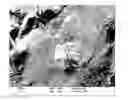
FIG. 1 is a microscopic image of a fracture surface of a die pressed compact not according to the invention;
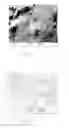
FIG. 2 is a similar view to FIG. 1 but of a die pressed compact according to the invention;
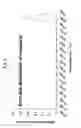
FIG. 3 is a Mercury Porosimetry plot of pore volume against pore size of a die pressed compact similar to FIG. 2 produced as per the invention; and
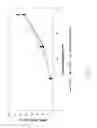
FIG. 4 is a graph of mass flow rate against orifice diameter for granules made according to the invention and otherwise, being tested in a Hall flowmeter.
An yttria stabilised nano zirconia powder containing 3 mol % yttria with a particle size of substantially 20 nm, was formed into a 60 wt % solids concentrated suspension by a method according to the applicant's patent application no. PCT/GB06/002081. Freon was added directly to the suspension as an additive and thoroughly mixed in.
The suspension was granulated by spray freeze drying which involves spraying the suspension into a cryogent, and then driving off the liquid at low temperature under vacuum. The freon was then removed by a 70° C. heat treatment for one hour. The voids left by the vacated freon provide meso, micro and macro flaws or structural defects in the granules.
The granules were then located into a die press and pressed to form a green compact. Pressing of the granules causes the granules to be crushed and break into their primary particles. The green compact can subsequently be fired.
The granules thus produced have excellent flowability as measured using a Hall flowmeter as illustrated in the graph of FIG. 4 which compares the above granulated nanopowder shown by the diamond plots, similar granules but without the Freon additive as shown by triangular plots, and shown by square plots Tosoh, a commercially available submicron zirconia powder supplied by Tosoh Corporation of Japan, and used as a benchmark standard in this case.
The granules made by the above method are weaker than would be the case without the freon additive, and the fracture surface as shown in FIG. 2 of a pressed green compact made by the method shows a uniform microstructure which can thus be sintered into a dense nanograined ceramic. This contrasts with FIG. 1 where no additive has been used, and uncrushed hard agglomerates can be seen. Mercury porosimetry data on compacts made from granules according to the present invention also confirms the achievement of a microstructure devoid of large pores (FIG. 3). This illustrates that the granules were crushed by the pressing.
The invention therefore provides a method of forming soft deformable nano granules which have excellent flowability, and also have high crushability. This means the granules can be broken down to their primary particles during pressing to provide the advantages as provided by nanoparticles outlined above.
It is to be realised that a wide range of modifications relative to the above described example can be made without departing from the scope of the invention. For example, different additives may be used, and potential examples include octylphenoxypolyethoyethanol such as Triton X available from National Diagnostics Inc of Atlanta USA, ammonium C6-10 alcohol ethoxysulfate such as Alpha foamer available from Stepan Canada Inc of Ontario Canada, or camphene. The additive will generally be a foaming agent or pore former, and it is advantageous if the additive has a boiling point of below 100° C. or is a sublimable solid which sublimes at a temperature of below 100° C. The additive can be added directly to the suspension or may be added as part of a solution.
The granules could be formed by spray drying, fluidising or using a shear granulator. The additive may be removed using heat and/or subjecting to reduced pressure. The heating may include microwave heating. The additive can be removed slowly and in a controlled manner to produce voids where the additive had been located, the voids providing flaws in the granules. Alternatively, the additive can be removed rapidly so as to produce cracks or other formations to provide flaws.
Additional additives may be added to the suspension to act as binders, plasticisers or lubricants. Different nanopowders could be used, which could be a different zirconia or other ceramics, or other materials, including for instance pharmaceuticals. The suspension may be aqueous or non-aqueous.
Whilst endeavouring in the foregoing specification to draw attention to those features of the invention believed to be of particular importance it should be understood that the Applicant claims protection in respect of any patentable feature or combination of features hereinbefore referred to and/or shown in the drawings whether or not particular emphasis has been placed thereon.
Claims
1. A method of forming granules, the method comprising forming a suspension of a nanopowder, adding to the suspension an additive, drying the suspension so as to form granules, and removing at least a substantial part of the additive from the granules to form flaws in the granules.
2. A method according to claim 1, wherein a concentrated suspension of nanoparticles is produced.
3. (canceled)
4. A method according to claim 1, wherein the additive is a foaming agent or a pore former.
5. A method according to claim 1, wherein the additive has a boiling point or sublimation temperature of below 100° C.
6. A method according to claim 1, wherein the additive is a fluid or solid.
7. A method according to claim 1, wherein the additive is any of Freon, octylphenoxypolyethoyethanol, ammonium C6-10 alcohol ethoxysulfate, or camphene.
8. A method according to claim 1, wherein the additive is added to the suspension directly.
9. A method according to claim 1, wherein the additive is added to the suspension in solution.
10. A method according to claim 1, wherein the suspension is dried so as to form generally spherical granules.
11. A method according to claim 10, wherein the suspension is dried using a spraying device.
12. A method according to claim 11, wherein the suspension is dried using spray freeze drying.
13. A method according to claim 11, wherein the suspension is dried using spray drying.
14. A method according to claim 1, wherein the granules are formed by fluidizing or using a shear granulator.
15. A method according to claim 1, wherein removing of the additive includes heating of the granules and/or subjecting the granules to reduced pressure.
16. A method according to claim 15, wherein the heating includes microwave heating.
17. A method according to claim 1, wherein at least some of the additive is removed in a controlled manner such that flaws are provided in the granules by removal of the additive.
18. A method according to claim 1, wherein at least some of the additive is removed rapidly so as to produce cracks or other formations in the granules to provide flaws.
19. A method according to claim 1, wherein additional additives are added to the suspension, which additives may act as binders, plasticisers, or lubricants.
20. A method according to claim 1, wherein the nanopowder is a ceramic powder.
21. A method according to claim 20, wherein the nanopowder is a zirconia powder.
22. A method according to claim 21, wherein the nanopowder is yttria stabilised zirconia including up to 10 mol % yttria.
23. A method according to claim 1, wherein the nanopowder has a particle size of substantially 20 nm.
24. A method according to claim 1, wherein the suspension is aqueous.
25. A method according to claim 1, wherein the suspension is non-aqueous.
26. A method of manufacturing a component, the method including forming granules by a method according to claim 1, locating the granules in a die press, and pressing the granules such that the granules break down during pressing to form a green compact.
27. A method according to claim 26, wherein the green compact is subsequently fired.
28. (canceled)
29. (canceled)
30. (canceled)
Images & Drawings included:
Sources:
- United States Patent and Trademark Office - verify current appl. status at the USPTO↗
Recent applications in this class:
- » 20240309216 2024-09-19
Method for Agglomerating Pigments and Powders - » 20190177552 2019-06-13
Non-dusting effect pigment preparation - » 20180273765 2018-09-27
Pigment granulation process and method of use for coloring building materials - » 20180148577 2018-05-31
INORGANIC GRANULATE MATERIALS - » 20150183996 2015-07-02
Process for manufacturing coated filler particles - » 20120129977 2012-05-24
Color powder for coating - » 20110251303 2011-10-13
Pigment granules - » 20100006007 2010-01-14
Color powder for coating - » 20080317794 2008-12-25
Agglomerate Particles, Method for Producing Nanocomposites, and the Use Thereof - » 20080257213 2008-10-23
Process for the preparation of pigment granules and the use thereof
Recent applications for this Assignee:
- » 20230213326 2023-07-06
Method and apparatus for measuring distance - » 20220390347 2022-12-08
Shape analysis device - » 20210162658 2021-06-03
Methods and apparatus for selectively combining particulate material - » 20200023312 2020-01-23
Producing ammonium carbamate and reducing nitrogen oxides - » 20180021773 2018-01-25
ASSAY DEVICES, METHODS FOR CARRYING OUT ASSAYS, ASSAY KITS AND METHOD FOR MANUFACTURING ASSAY DEVICES - » 20160319491 2016-11-03
Railway points, railway points operating apparatus and railway track crossing - » 20160278646 2016-09-29
Opto-physiological sensor and method of assembly - » 20140314613 2014-10-23
Methods and apparatus for selectively combining particulate material - » 20140202353 2014-07-24
Train suspension system - » 20140166391 2014-06-19
Attenuators, arrangements of attenuators, acoustic barriers and methods for constructing acoustic barriers