Surgical systems and methods for transvaginal apical suspension
US20110245588A1
2011-10-06
12/897,368
2010-10-04
✅ Patent granted
US 9,168,119 B2
2015-10-27
-
-
Catherine B Kuhlman
Inskeep IP Group, Inc.
2031-07-09
Abstract:
Systems and surgical methods and procedures for performing transvaginal apical suspension are provided.
Applicant:
Interested in similar patents?
Get notified when new applications in this technology area are published.
Classification:
A61F6/08 » CPC further
Contraceptive devices; Pessaries; Applicators therefor for use by females Pessaries, i.e. devices worn in the vagina to support the uterus, remedy a malposition or prevent conception, e.g. combined with devices protecting against contagion
A61F2/02 IPC
Filters implantable into blood vessels; Prostheses, i.e. artificial substitutes or replacements for parts of the body; Appliances for connecting them with the body; Devices providing patency to, or preventing collapsing of, tubular structures of the body, e.g. stents Prostheses implantable into the body
A61F2/0045 » CPC main
Filters implantable into blood vessels; Prostheses, i.e. artificial substitutes or replacements for parts of the body; Appliances for connecting them with the body; Devices providing patency to, or preventing collapsing of, tubular structures of the body, e.g. stents; Closure means for urethra or rectum, i.e. anti-incontinence devices or support slings against pelvic prolapse for constricting the lumen; Support slings for the urethra implantable Support slings
A61F2/0063 » CPC main
Filters implantable into blood vessels; Prostheses, i.e. artificial substitutes or replacements for parts of the body; Appliances for connecting them with the body; Devices providing patency to, or preventing collapsing of, tubular structures of the body, e.g. stents Implantable repair or support meshes, e.g. hernia meshes
A61B2017/00805 » CPC further
Surgical instruments, devices or methods, e.g. tourniquets; Type of operation; Specification of treatment sites Treatment of female stress urinary incontinence
A61F2/00 IPC
Filters implantable into blood vessels; Prostheses, i.e. artificial substitutes or replacements for parts of the body; Appliances for connecting them with the body; Devices providing patency to, or preventing collapsing of, tubular structures of the body, e.g. stents
A61B17/00 IPC
Surgery
A61B17/00 IPC
Surgical instruments, devices or methods, e.g. tourniquets
Description
PRIORITY
This application claims the benefit of U.S. Provisional Application Ser. No. 61/249,511 entitled “SURGICAL SYSTEMS AND METHODS FOR TRANSVAGINAL APICAL SUSPENSION,” filed Oct. 7, 2009, which application is hereby incorporated by reference in its entirety.
FIELD OF THE INVENTION
The present invention relates to systems and methods for surgical techniques implemented to perform transvaginal apical suspension.
BACKGROUND OF THE INVENTION
Pelvic prolapse, including vaginal prolapse, can be caused by the weakening or breakdown of various parts of the pelvic support system, such as the pelvic floor or tissue surrounding the vagina. Due to the lack of support, structures such as the uterus, rectum, bladder, urethra, small intestine, or vagina, may begin to fall out of their normal positions. Prolapse may cause pelvic discomfort and may affect bodily functions such as urination and defecation. Pelvic prolapse conditions can be treated by various surgical and nonsurgical methods. Non-surgical treatments for vaginal prolapse include pelvic muscle exercises, estrogen supplementation, and vaginal pessaries. The Perigee® system, developed by American Medical Systems, located in Minnetonka, Minn. (“AMS”) is a surgical technique for the repair of anterior vaginal prolapse. Additionally, the Apogee® system, developed by AMS is a surgical technique for the repair of vaginal vault prolapse and posterior prolapse. Further, AMS developed a single-incision technique, the Elevate® system, to treat cystoceies and vault prolapse. The Elevate® system includes a slim needle and low profile self-fixating tips designed to minimize tissue trauma and provide for a shorter recovery period for the patient.
SUMMARY OF THE INVENTION
The present disclosure is generally directed to a surgical procedure and system for transvaginal apical suspension, including:
Dissection—The procedure can start with a posterior dissection featuring an elongated diamond shaped incision that spans the entire vaginal length starting at the perineal body and ending at the vaginal cuff. The dissection first involves separating the vaginal wall from the rectum then shifts to opening up the pararectal space. The dissection is aided by a Martin Arms system which is fixed to the patent's bed and holds both regular and custom made retractors. Once the pararectal space is entered, four fixed retractors hold it open to the depth of 14 cm. At the depth of the retracted space lies what appears to be the sacrum (S2-S3).
Fixation—Fixation can utilized a Monarc® (commercial product of American Medical Systems, Inc. of Minnetonka, Minn.) tape. It starts with passing a long custom designed needle through the pelvic sidewall starting with the pubo coccegeous muscle. The needle is loaded through an eyelet on its tip with a double looped suture. As the needle traverses what looks like the Levator plate it emerges at a location deep inside the pararectal tunnel. With another long custom designed needle, the suture on the top of the first needle is fished out and tied to one end on the Monarch mesh tape. The suture is then pulled through the needle pass dragging with it the mesh tape. Fixation of the mesh tape is achieved by pulling the plastic sheath off of the Monarc tape and allowing the Sparc mesh to engage the tissue.
Suspension—Suspension of the vaginal apex can be carried out by attaching one end of the Monarc tape to the vaginal apex at midline of the cuff. The location of attachment point could shift posteriorly or anteriorly based on specific conditions in the anterior or posterior vaginal compartments and requirements for maintaining tensioning balance on the vaginal wall between the two compartments. Once the tape is sutured to the apex, the apex is mechanically lifted with packing and slack that is created in the Monarc tape is taken out by pulling on the mesh tape end that is protruding from the pelvic sidewall and pubo coccegeous muscle. To finalize the apical suspension, the sheath covering the mesh tape is removed to allow the tape to anchor into tissue and fixate.
Closure—This related to closing the colpotomy. The vaginal incision can be closed with interrupted sutures but uses layering to close the perineal body incision so as to reduce potential for dyspareunia.
BRIEF DESCRIPTION OF THE DRAWINGS
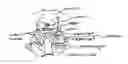
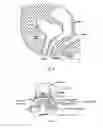
FIGS. 1-2 are schematic section views showing anatomical structures of the female pelvic region.
DETAILED DESCRIPTION OF THE INVENTION
The following description is meant to be illustrative only, and not limiting other embodiments of this invention that will be apparent to those of ordinary skill in the art in view of this description.
The invention generally involves surgical systems and methods for performing a surgical transvaginal apical suspension. In certain embodiments, the surgical procedure can include the following steps:
-
- 1. Incision is made on the outside of the vagina making a diamond shape where the left and right sides of the diamond where the top and bottom of the diamond are the anterior and posterior sides of the patent. The diamond is made from (1) the perineal body which is outside the vaginal opening and (2) the posterior vaginal wall.
- a. The purpose of the diamond is to allow for a tunneled path to the fulcrum site of the mesh (sling) and which can be closed to create a straight line and return the vagina (and all other internal organ orientation) to a pre-pathological state.
- 2. Separate out the fascia menogia—this will allow for the spatial orientation of the rectal wall to become apparent.
- 3. The dissection on each side of the medial vaginal line will allow for the peritoneal foci to become visible.
- 4. Avoiding the vagina, bladder and rectal walls allows for less blood in surgical field—avoid cutting these and create a tunnel which is anterior to the sacral-coccyx junction.
- 5. Look for the para-rectal space.
- 6. Once the para-rectal space has been located, the rectal-vaginal space should become visible.
- 7. A tunnel (approximately 1 inch in diameter) is made using 3 retractors (2 martin retractors and 1 retractor to mimic a finger retraction).
- 8. Creation of the tunnel
- a. Exam under anesthesia reveals a complete vault prolapse with a displacement and a distension sytocele, ruptured perineum and poor perineal body, enterocele and a displacement rectocele.
- b. Two cocal clamps are placed at the 5 and 7 o'clock position at the level of the hymen.
- c. A “V-shaped” incision is made between these two clamps.
- d. The skin is dissected off the perineal body and the rectum through the scar until the rectal-vaginal space is identified.
- e. The dissection is carried cephalad—toward the vaginal apex and the sac of the enerocele is identified.
- f. The enterocele sac is not altered and the dissection continues to the apex of the vagina.
- g. The enterocele sac is opened and a high purse string ligation is performed with two sutures.
- h. The dissection is directed back towards the vaginal opening.
- i. The rectum is mobilized medially, the para-rectal space on the right is identified, a retractor is placed to hold the bladder and anterior vaginal wall cephalad and the bladder medially, the ischial spine is visualized and palpated and the levators are noted.
- j. The dissection is further carried within the para-rectal space until the retro-peritoneal space is dissected as much as the patient's indivisual anatomy permits.
- k. A straight ligature carrier is placed by puncturing through the pubococcygeus muscles and tunneled to the highest point, centimeters above the ischial spine past the coccygeus (ischiococcygeus) muscle above the surface of the sacrum into whatever that structure is (i.e., ligamentus in some patients and muscular in others).
- l. Usually this tunnel is in excess of 12 centimeters from the hymen.
- 9. The ligature carrier has a durable suture through it. This suture is recovered with a hook and the suture is pulled through the dissected opening, the metal instrument is removed leaving the suture that traverses into the surgical site, then the surgical exposure, through coccygeus muscle, through all the levators, to the most cephalad point and then comes through the opening again.
- 10. On the medial side, a SPARC mesh/sheath complex is tied.
- 11. Usually at this time, insert a urethral Foley to empty the bladder.
- 12. Take two Alice clamps and take pinches of the anterior vaginal wall.
- 13. Make a straight cut into the anterior vaginal wall for the full thickness vagina and identify the full thickness vagina and separate the bladder off the posterior vaginal wall.
- 14. Extend the incision approximately 0.5-1 cm from the external levators all the way anterior.
- 15. Connect the incision which started posterior from the rectum to where the enterocele was dissected as high as possible and connect the incision site from the anterior wall moving posterior. It is at this point that a surgeon could place a sling, MiniArc, etc.
- 16. The surgeon then fixes the cystocele, excises the external vagina tissue and begins to close from the anterior most points with the intention of picking the proper orientation of the apex of the vagina.
- 17. Once the Apex is determined, the blue dot on the mesh is removed.
- 18. Take a sponge and reposition the vagina back into the hollow of the pelvis.
- 19. Where the plastic cover of the SPARC mesh is tied with suture, the opposite side of the suture (non-medial side) is pulled through.
- 20. As the mesh/sheath complex is pulled, the vagina will begin to fill the pelvic void until the vagina is positioned where the pulley systems (created by the mesh/sheath complex) has positioned the vagina in a manner satisfactory to the surgeon.
- 21. The sheath is pulled off—revealing the fixation of the mesh and vaginal prolapse repair.
- 22. Where the surgeon has pierced the pubococcygeus muscle the mesh is cut.
- 23. Close the incision moving from the anterior to the posterior to slightly below the level of the hymen.
- 24. The muscles of the perineum are rebuilt and repaired using interrupted sutures.
- 25. The angle is established, continue closing the incision site by going deep to the interrupted sutures and repair and complete the perineal incision and repair.
- 1. Incision is made on the outside of the vagina making a diamond shape where the left and right sides of the diamond where the top and bottom of the diamond are the anterior and posterior sides of the patent. The diamond is made from (1) the perineal body which is outside the vaginal opening and (2) the posterior vaginal wall.
Once insertion tunnel is developed, use a needle to tunnel and retract. This will create the tunnel to develop a pulley style system with a bioabsorbable thread.
-
- a. The tunnel for the mesh goes through the following musculature:
- 1. Through the pubococcygeus muscle
- 2. Past the iliococcygeus muscle
- 3. Past the coccygeus muscle
- 4. Start to lose muscular definition
- 5. Insertion point is ideal near tendonous insertion points of the sacrum (this will vary from patient to patient).
- b. It has been noted that 100% of Vault Prolapse has enterocele. This can be attributed to the lack of pressure by the vagina on the small intestine, and this can be because enterocele is inevitable because of the additional space available post-vaginal prolapse.
- c. When suturing from the urethra to the vagina, the surgeon can determine the apex of the vagina (e.g., to make the apex a little posterior).
- a. The tunnel for the mesh goes through the following musculature:
Additional steps are appropriate in accordance with the teachings of provisional application Ser. No. 61/249,511, incorporated herein by reference.
Refraction can include the use of standalone disposal retraction system that would obviate the need for the Martin arms system that can be used. The system would provide full access under direct visualization to the target fixation site for more effective and safe fixation.
The mesh design can be the Monarc tape. Other known mesh materials or configuration, or those developed, can be used with a new weave similar to the one developed for TOPAS but would also expand to address potential requirements of a new fixation method and possibly a new way of attaching to vaginal apex and segments of the vaginal wall.
Tissue dissection can include the development of a new method of dissection that does not entail cutting through the full length of the vaginal wall, especially if current dissection proves to be prohibitive to some physicians.
Various systems, devices, and techniques disclosed in U.S. Pat. Nos. 7,357,773 and 7,070,556, as well as International PCT Publication Nos. WO2009/017680 and WO2009/075800, which are incorporated herein by reference in their entirety, can be used with or adapted for the surgical systems and procedures disclosed herein.
All patents, patent applications, and publications cited herein are hereby incorporated by reference in their entirety as if individually incorporated, and include those references incorporated within the identified patents, patent applications and publications.
Obviously, numerous modifications and variations of the present invention are possible in light of the teachings herein. It is therefore to be understood that within the scope of the appended claims, the invention may be practiced other than as specifically described herein.
Claims
What is claimed is:1. A surgical system and method procedure as disclosed herein.
2. A method of performing a surgical transvaginal procedure as disclosed herein.
3. A surgical method of performing transvaginal apical suspension as disclosed herein.
Images & Drawings included:
Sources:
- United States Patent and Trademark Office - verify current appl. status at the USPTO↗
Similar patent applications:
Recent applications in this class:
- » 20250288405 2025-09-18
TRANSFER INSTRUMENT - » 20250288404 2025-09-18
TRANSFER INSTRUMENT - » 20250288403 2025-09-18
PRE-SHAPED ALLOGRAFT IMPLANT FOR PELVIC ORGAN PROLAPSE - » 20250268701 2025-08-28
SURGICAL ATTACHMENT DEVICE - » 20250262040 2025-08-21
TIME DEPENDENT PHYSIOLOGIC TISSUE SCAFFOLD - » 20250235303 2025-07-24
ABSORBABLE IMPLANTS FOR PLASTIC SURGERY - » 20250213344 2025-07-03
TEXTURED MEDICAL TEXTILES - » 20250205034 2025-06-26
SURGICAL APPLICATION SYSTEM FOR A NECK LIFT AND METHOD OF INSERTION SAME - » 20250205033 2025-06-26
Method for inducing an improvement in the mechanical strength of an implantable device comprising one or more yarns of PLA at the end of a determined hydrolysis, and implantable device which can be obtained by said method - » 20250205032 2025-06-26
AN ANATOMICAL DEFECT REPAIR MESH