Process for reducing the set time of a settable slurry
US20110247526A1
2011-10-13
12/936,781
2009-03-23
✅ Patent granted
US 8,523,424 B2
2013-09-03
WO; PCT/GB2009/050267; 20090323
WO; WO2009/125210; 20091015
Kaj K Olsen | Karam Hijji
GrayRobinson, P.A. | Michael J. Colitz, III
2029-03-23
Abstract:
A process for reducing the set time a plaster slurry. The process comprises the steps of providing a pre-determined amount of water, providing a pre-determined amount of the plaster, mixing the water and the plaster together at a first time to form a slurry, and, re-directing a portion of the slurry formed at the first time to combine with slurry formed at a second time.
Inventors:
- Ian Paul Wilkes 1 🇬🇧 Loughborough, United Kingdom
- Danny Lynham 1 🇬🇧 Yorkshire, United Kingdom
Assignee:
- BPB Limited 5 🇬🇧 , United Kingdom
Applicant:
Interested in similar patents?
Get notified when new applications in this technology area are published.
Classification:
C04B14/00 IPC
Use of materials as fillers
C04B14/00 IPC
Use of inorganic materials as fillers, e.g. pigments, for mortars, concrete or artificial stone; Treatment of inorganic materials specially adapted to enhance their filling properties in mortars, concrete or artificial stone
C04B22/143 » CPC main
Use of inorganic materials as active ingredients for mortars, concrete or artificial stone, e.g. accelerators, shrinkage compensating agents; Acids or salts thereof containing sulfur in the anion, e.g. sulfides; Sulfates Calcium-sulfate
C04B22/0086 » CPC further
Use of inorganic materials as active ingredients for mortars, concrete or artificial stone, e.g. accelerators, shrinkage compensating agents Seeding materials
C04B28/145 » CPC further
Compositions of mortars, concrete or artificial stone, containing inorganic binders or the reaction product of an inorganic and an organic binder, e.g. polycarboxylate cements containing calcium sulfate cements Calcium sulfate hemi-hydrate with a specific crystal form
C04B2103/12 » CPC further
Function or property of ingredients for mortars, concrete or artificial stone; Accelerators; Activators Set accelerators
C04B11/00 IPC
Calcium sulfate cements
B28C5/00 IPC
Apparatus or methods for producing mixtures of cement with other substances, e.g. slurries, mortars, porous or fibrous compositions
B28C7/00 IPC
Controlling the operation of apparatus for producing mixtures of clay or cement with other substances; Supplying or proportioning the ingredients for mixing clay or cement with other substances; Discharging the mixture
C04B16/00 IPC
Use of organic materials as fillers, e.g. pigments, for mortars, concrete or artificial stone; Treatment of organic materials specially adapted to enhance their filling properties in mortars, concrete or artificial stone
C04B24/00 IPC
Use of organic materials as active ingredients for mortars, concrete or artificial stone, e.g. plasticisers
C04B28/10 IPC
Compositions of mortars, concrete or artificial stone, containing inorganic binders or the reaction product of an inorganic and an organic binder, e.g. polycarboxylate cements containing hydraulic cements other than calcium sulfates Lime cements or magnesium oxide cements
C04B7/38 IPC
Hydraulic cements; Manufacture of hydraulic cements in general Preparing or treating the raw materials individually or as batches, e.g. mixing with fuel;
C04B9/04 IPC
Magnesium cements or similar cements Magnesium cements containing sulfates, nitrates, phosphates or fluorides
C04B2/10 IPC
Lime, magnesia or dolomite Preheating, burning calcining or cooling
B28C5/46 IPC
Apparatus or methods for producing mixtures of cement with other substances, e.g. slurries, mortars, porous or fibrous compositions Arrangements for applying super- or sub-atmospheric pressure during mixing; Arrangements for cooling or heating during mixing, e.g. by introducing vapour
Description
The present invention relates to a process for reducing the set time of a settable cementitious slurry and particularly, but not exclusively, to a process for reducing the set time of an aqueous slurry of calcium sulphate hemihydrate.
Gypsum, also known as calcium sulphate hemihydrate is a well known material in the building trade. Gypsum based products such as plaster boards, are prepared from an aqueous slurry of calcium sulphate hemihydrate. The calcium sulphate hemihydrate is known to be mixed with a fibre, and various other additives that increase moisture resistance and fire resistance, and water, and the board is formed by sandwiching a core of the formed slurry between two sheets of thick paper. When the slurry sets and is dried, the sandwich becomes rigid and strong enough for use as a building material.
As the calcium sulphate hemihydrate hydrates, i.e. combines with the water, an interlocking matrix of calcium sulphate di-hydrate crystals are formed. The set time of the slurry depends on a number of factors including the mixing temperature, pH, particle size and the addition of additives. For example, in U.S. Pat. No. 5,575,844, a foam is introduced into the slurry to aerate the slurry. However, this method creates a porous plaster product which has a density which is typically too low for commercial purposes.
Commercial plaster is usually provided with an excess of water. Accordingly, the excess water is typically purged, dried or allowed to evaporate from the gypsum based water suspension to form the final product. Drying the wet gypsum however is a time consuming process. Moreover, if additives are used to increase the rate of set of the gypsum, then careful control of the addition is needed in order to achieve a consistent quality of structure.
We have now devised an improved process for reducing the set time of a settable slurry.
According to a first aspect of the present invention there is provided a process for reducing the set time of a settable cementitious slurry, the process comprising:
-
- providing a pre-determined amount of water;
- providing a pre-determined amount of the slurry forming substance;
- mixing the pre-determined amount of water and the predetermined amount of slurry forming substance together at a first time, to form an aqueous slurry; and,
- re-directing a portion of the aqueous slurry formed at the first time to combine with aqueous slurry formed at a second time.
Preferably, the aqueous slurry is formed by mixing the pre-determined amount of water with the predetermined amount of slurry forming substance in a mixer.
Preferably, the mixer comprises an input and an output.
The pre-determined amount of water and predetermined amount of slurry forming substance is preferably introduced into the mixer via the input, at a specified rate, to control the ratio of the water to the slurry forming substance.
The aqueous slurry formed at the first time is preferably formed before the aqueous slurry formed at the second time. In this manner, the aqueous slurry formed at the first time undergoes partial setting with respect to the aqueous slurry formed at the second time.
Preferably, the portion of aqueous slurry formed at the first time is extracted from the mixer and redirected back into the mixer via the input, at a specified rate, with the water and calcium sulphate hemihydrate.
Alternatively, the portion of aqueous slurry formed at the first time is preferably extracted from the outlet of the mixer and is re-directed into the mixer via the input, at a specified rate, with the water and calcium sulphate hemihydrate.
More preferably, the portion of aqueous slurry is extracted from the outlet of the mixer and reintroduced into the outlet following a time delay.
Preferably, the slurry forming substance comprises substantially calcium sulphate hemihydrate.
In each of the above cases, the redirected aqueous slurry formed at the first time is partially nucleated with respect of the aqueous slurry formed at the second time to which it is recombined, to increase the set rate of the slurry, thereby allowing a faster development of a network monolith structure.
According to a second aspect of the present invention there is provided a method of preparing gypsum based products, the method comprising the process of the first aspect.
The preferred embodiments of this invention may now be described by way of example only and with reference to the accompanying drawings in which:
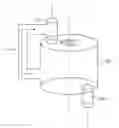
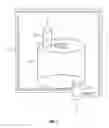
FIG. 1 is a schematic illustration of a known slurry forming process;
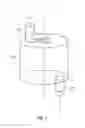
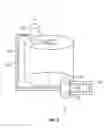
FIG. 2 is a schematic illustration of the slurry forming process according to the present invention;
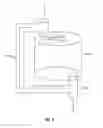
FIG. 3 is a schematic illustration of an alternative slurry forming process according to the present invention; and
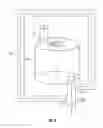
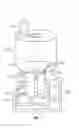
FIG. 4 is a schematic illustration of a further alternative slurry forming process according to the present invention.
FIG. 5 is a schematic illustration of a further alternative slurry forming process according to the present invention.
FIG. 6 is a schematic illustration of a further alternative slurry forming process according to the present invention.
FIG. 7 is a schematic illustration of a further alternative slurry forming process according to the present invention.
Referring to FIG. 1 there is shown a known process for mixing the constituents of substantially gypsum plaster. The process comprises the use of a mixer 100 comprising an inlet 110 schematically as a number of inlets for introducing water and calcium sulphate hemihydrate (hereinafter referred to as gypsum) into the mixer and an outlet 120 for removing the mixed slurry formed therein from the mixer 100.
The water and gypsum are fed into the mixer 100 at a specified rate using a pump (not shown) to control the ratio of the constituents within the mix.
Referring to FIGS. 2 to 7, there is shown a process according to the present invention. The process is a development over that shown in FIG. 1 and further comprises a feedback duct for re-directing a portion of the slurry with later formed slurry to reduce the set time of the slurry.
Referring to a first embodiment of the present invention, as illustrated in FIG. 2, there is provided a duct 130 and a pump (not shown). The duct 130 extends from the base of the mixer 100 to the mixer inlet 110. The pump (not shown) pumps a portion of the aqueous slurry at a controlled rate using a controller (not shown), from the mixer back to the inlet where it combines with the unmixed constituents, and is re-input into the mixer 100 with the separate constituents. The mixed slurry is subsequently extracted from the mixer 100 via the outlet 120 and is used to form gypsum based products such as plasterboards.
Referring to a second embodiment of the present invention, as illustrated in FIG. 3, there is provided a duct 140 and a pump (not shown). The duct 140 extends from the outlet 120 of the mixer 100 to the mixer inlet 110. The pump (not shown) pumps a portion of the aqueous slurry at a controlled rate using a controller (not shown), from the outlet 120 back to the inlet 110 where it combines with the unmixed constituents, and is re-input into the mixer 100 with the separate constituents.
According to a third embodiment of the present invention, as illustrated in FIG. 4, there is provided a duct 150 and a pump (not shown). The duct 150 extends from the lower portion 115 of the outlet 120 of the mixer 100 along a path, and back to the outlet 120 at a position 125 higher than the duct outlet 115. The pump (not shown) pumps a portion of the aqueous slurry at a controlled rate using a controller (not shown), from the outlet 120, back to the outlet 120, where it combines with more recently formed aqueous slurry.
Further embodiment of the present invention are schematically illustrated in FIGS. 5 to 7.
According to a fourth embodiment of the present invention, as illustrated in FIG. 5 there is provided the duct 170 and a pump (not shown). The duct 170 extends from the lower portion 115 of the outlet 120 of the mixer 100 along the path and back to the outlet 120 at a position 125 higher than the duct outlet 115. The pump (not shown) pumps the portion of the aqueous slurry at a controlled rate using a controller (not shown) from the outlet 120 back to the outlet 120 where it combines with later formed aqueous slurry.
According to a fifth embodiment of the present invention, as illustrated in FIG. 6, there is provided a duct 160 and a pump (not shown). The duct 160 extends from the outlet 120 of the mixer 100 along the path and back to the inlet 110 of the mixer. In addition there is a further duct 165 which extends from a duct inlet position 180 at a higher end of the mixer outlet 120 and forms a flow path back into the mixer outlet 120 at a lower duct inlet position 185. Thus some of the slurry from the mixer outlet is drawn out along this flow path through duct 165 and reintroduced within the mixer outlet at 185 in a controlled and timed manner.
According to a sixth embodiment of the present invention, as illustrated in FIG. 7, there is provided a series of mixer outlets 120, 120a and 120b extending from a mixer 100. The mixer outlet 120 is provided with a duct 190 which links mixer outlet 120 to mixer outlet 120b and slurry is extracted from mixer outlet 120 and reintroduced into mixer outlet 120b at a duct inlet 195. A duct 200 connects mixer outlet 120a with mixer outlet 120b. Slurry is drawn out from mixer outlet 120a and reintroduced into mixer outlet 120b at a duct inlet position 205. Finally, mixer outlet 120b has a further duct 210. Slurry is drawn from the mixer 120b at the duct outlet position 215 and reintroduced at a lower point in the mixer outlet 120b shown as the duct inlet point 220. In all cases the direction of the arrows indicates the direction of the slurry through the ducts along the flow path.
In each of the above embodiments, the portion of aqueous slurry that is extracted from the various positions within the process, becomes partially set with respect to the slurry to which is recombined with. The partially set slurry comprises nucleation sites around which the slurry can crystallise. In this manner, mixing the partially set slurry with more recently formed slurry (i.e. slurry which has undergone less hardening) is found to increase the set rate of the aqueous slurry passing from the outlet 120.
The set time for each of the above embodiments was compared with the set rate using the known process, as illustrated in FIG. 1, using an accelerator additive. The results revealed a reduction in the set time for the slurry using the process of the first embodiment when compared with the known process, and a greater reduction in set time using the process of the second embodiment. However, the greatest reduction in set time for the slurry was achieved by extracting a portion of the aqueous slurry from the outlet and recombining the portion with more recently formed slurry within the outlet, according to the third embodiment.
From the foregoing therefore, it is evident that plaster slurry formed with the process of the present invention, hardens more rapidly than untreated slurry and slurry which has been prepared with additives.
Claims
1. A process for reducing the set time of a settable cementitious slurry, the process comprising:
providing a pre-determined amount of water;
providing a pre-determined amount of the slurry forming substance;
missing said pre-determined amount of water and said predetermined amount of slurry forming substance together at a first time, to form an aqueous slurry; and
re-directing a portion of said aqueous slurry formed at said first time to combine with aqueous slurry formed at a second time.
2. A process according to claim 1, wherein said slurry is formed by mixing said pre-determined amount of water and said predetermined amount of slurry forming substance in a mixer.
3. A process according to claim 2, wherein the mixer comprises an input and an output.
4. A process according to claim 3, wherein said pre-determined amount of water and said pre-determined amount of slurry forming substance are introduced into said mixer via said input at a specified rate, to control the ratio of said water to said slurry forming substance.
5. A process according to claim 4, wherein said pre-determined amount of slurry forming substance are introduced into said mixer via said input at a specified rate, to control the ratio of said water to said slurry forming substance.
6. A process according to claim 1, wherein said aqueous slurry formed at said first time is formed before said aqueous slurry formed at said second time.
7. A process according to claim 1, wherein said aqueous slurry formed at first time undergoes partial setting before being introduced with said aqueous slurry is formed at the second time.
8. A process according to claim 2, wherein the portion of aqueous slurry formed at said first time is extracted from said mixer and re-directed back into said mixer via said input, at a specified rate, with said water and said slurry forming substance.
9. A process according to claim 2, wherein said portion of aqueous slurry formed at said first time is extracted from said outlet of said mixer and is re-directed into said mixer via said input, at a specified rate, with said water and said slurry forming substance.
10. A process according to claim 2, wherein said portion of aqueous slurry is extracted from said outlet of said mixer and re-introduced into said outlet following a time delay.
11. A process according to claim 1, wherein said slurry forming substance comprises substantially calcium sulphate hemihydrate.
12. A method of preparing gypsum based products, the method comprising the process of claim 1.
Images & Drawings included:

Sources:
- United States Patent and Trademark Office - verify current appl. status at the USPTO↗
Recent applications in this class:
- » 20250051233 2025-02-13
MORTAR AND CONSTRUCTION MATERIAL - » 20230033308 2023-02-02
CEMENT ADDITIVE - » 20180305257 2018-10-25
Gypsum set accelerator and method of preparing same - » 20170022107 2017-01-26
SYNTHESIS AND APPLICATION OF CaSO4-BASED HARDENING ACCELERATORS - » 20150344368 2015-12-03
Additive for masses that set hydraulically - » 20140033954 2014-02-06
ACTIVATOR COMPOSITION FOR LATENT HYDRAULIC AND/OR POZZOLANIC BINDER MATERIALS - » 20050250888 2005-11-10
High strength flooring compositions - » 20050235882 2005-10-27
Sprayable machinable media
Recent applications for this Assignee:
- » 20150239779 2015-08-27
Gypsum based formulations - » 20120090183 2012-04-19
Cutting tool - » 20120073899 2012-03-29
Laminated acoustic soundproofing panel - » 20120058356 2012-03-08
Gypsum based formulations