Optical fiber connector
US20110255833A1
2011-10-20
12/975,221
2010-12-21
✅ Patent granted
US 8,459,879 B2
2013-06-11
-
-
Michelle R Connelly
Altis Law Group, Inc.
2031-10-11
Abstract:
An optical fiber connector includes an optical fiber, a body and an optical fiber receiving block. The body includes a top surface, a bottom surface, a front surface, and a rear surface. The top surface and the bottom surface extend from the front surface to the rear surface. The body defines a receiving groove in the rear surface. The body includes a lens portion arranged at the front surface. The optical fiber receiving block is attached on the body in the receiving groove. The optical fiber receiving block defines a through hole therein. The through hole receives the optical fiber. The lens portion is optically coupled with the optical fiber.
Assignee:
- HON HAI PRECISION INDUSTRY CO., LTD. 12,833 🇹🇼 Tu-Cheng, Taiwan
- HON HAI PRECISION INDUSTRY CO., LTD. 10,014 🇹🇼 New Taipei, Taiwan
Applicant:
Interested in similar patents?
Get notified when new applications in this technology area are published.
Classification:
G02B6/3865 » CPC main
Light guides; Coupling light guides; Mechanical coupling means having fibre to fibre mating means; Dismountable connectors, i.e. comprising plugs; Details of mounting fibres in ferrules; Assembly methods; Manufacture fabricated by using moulding techniques
G02B6/3885 » CPC further
Light guides; Coupling light guides; Mechanical coupling means having fibre to fibre mating means; Dismountable connectors, i.e. comprising plugs; Connectors using guide surfaces for aligning ferrule ends, e.g. tubes, sleeves, V-grooves, rods, pins, balls Multicore or multichannel optical connectors, i.e. one single ferrule containing more than one fibre, e.g. ribbon type
G02B6/32 » CPC further
Light guides; Coupling light guides; Optical coupling means having lens focusing means positioned between opposed fibre ends
G02B6/36 IPC
Light guides; Coupling light guides Mechanical coupling means
Description
BACKGROUND
1. Technical Field
The present disclosure relates to optical fiber connectors.
2. Description of Related Art
Optical fiber connectors typically include a lens and a blind hole behind the lens. The blind hole receives an optical fiber. The lens receives and guides light from the optical fiber. The alignment accuracy between the blind hole and the lens is very important to the optical transmission ability of the optical fiber connectors.
Injection molding is a current molding process for molding the optical fiber connectors. A mold used in the injection molding process includes a core pin used to mold the blind hole. During the injection molding process, the core pin must be kept still to make sure the molded blind hole coincides with the design.
However, a distal end of the core pin in the mold cavity is easily bent under the impact of the molding material during the molding process. This deteriorates optical performance of the molded optical fiber connector.
Therefore, an optical fiber connector, which can overcome the limitations described, is needed.
BRIEF DESCRIPTION OF THE DRAWINGS
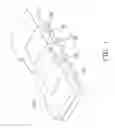
FIG. 1 is a schematic and isometric view of an optical fiber connector, according to an exemplary embodiment.
FIG. 2 is an exploded view of the optical fiber connector of FIG. 1.
FIG. 3 is similar to FIG. 2, but viewed from another angle.
DETAILED DESCRIPTION
Referring to FIGS. 1 to 3, an optical fiber connector 10, according to an exemplary embodiment, includes a body 11, two optical fiber receiving blocks 12, and four optical fibers 20.
The body 11 includes a top surface 111, a bottom surface 112, a front surface 113, and a rear surface 114. The top surface 111, the rear surface 114, the bottom surface 112, and the front surface 113 are connected end-to-end in that order. The top surface 111 is opposite to the bottom surface 112. The front surface 113 is opposite to the rear surface 114. The top surface 111 and the bottom surface 112 extend from the front surface 113 to the rear surface 114. The body 11 includes four lens portions 13 arranged at the front surface 113.
Two receiving grooves 110 are defined in the rear surface 114. Each of the receiving grooves 110 is shaped to match a corresponding optical fiber receiving block 12. Each optical fiber receiving block 12 is attached on the body 11 in the corresponding receiving groove 110 with glue. Also, the receiving grooves 110 are exposed at the top surface 111.
A material of the optical fiber receiving block 12 is different from that of the body 11. The optical fiber receiving block 12 is transparent for ultraviolet light so that the glue can be cured by the ultraviolet light. The optical fiber receiving block 12 defines two through holes 120 parallel to each other. The through hole 120 is configured for receiving a corresponding optical fiber 20. The through hole 120 of the optical fiber receiving block 12 can serve as a blind hole of the optical fiber connector 10 to receive the optical fiber 20. Therefore, when forming the optical fiber receiving block 12, two distal ends of a core pin for forming the through hole 120 can be secured and the core pin can resist the impact of the molding material during the injection molding process. This improves optical performance of the optical fiber connector 10.
The four lens portions 13 are formed on the front surface 113. Each lens portion 13 is aligned with a corresponding through hole 120, and optically coupled with a corresponding optical fiber 20 received in the through hole 120.
It is to be understood that in alternative embodiments, the number of the optical fiber receiving blocks 12, the receiving grooves 110, and the lens portions 13 can be different from the present embodiment and may depend on practical use.
When making the optical fiber connector 10, the optical fiber receiving blocks 12 and the body 11 with the lens portions 13 are formed by an injection-molding process. Then the optical fiber receiving block 12 is attached on the body 11 in the corresponding receiving groove 110. The optical fibers 20 are extended into the respective through holes 120. It is to be understood that the optical fibers 20 may be extended into the through holes 120 before the optical fiber receiving blocks 12 are attached on the body 11.
The optical fiber receiving block 12 can be used as a reference standard piece to fit the body 11 of different shapes as long as the body 11 defines the receiving groove 110 to match the optical fiber receiving block 12. Therefore, time and cost for making the optical fiber connector 10 can be reduced.
It is to be understood, however, that even though numerous characteristics and advantages of the present embodiments have been set forth in the foregoing description, together with details of the structures and functions of the embodiments, the disclosure is illustrative only, and changes may be made in detail, especially in matters of shape, size, and arrangement of parts within the principles of the disclosure to the full extent indicated by the broad general meaning of the terms in which the appended claims are expressed.
Claims
What is claimed is:1. An optical fiber connector comprising:
an optical fiber;
a body comprising a top surface, a bottom surface, a front surface, and a rear surface, the top surface and the bottom surface extending from the front surface to the rear surface, the body defining a receiving groove in the rear surface, the body including a lens portion arranged at the front surface; and
an optical fiber receiving block attached on the body in the receiving groove, the optical fiber receiving block defining a through hole therein, the through hole receiving the optical fiber, the lens portion optically coupled with the optical fiber.
2. The optical fiber connector of claim 1, wherein a material of the body is different from a material of the optical fiber receiving block.
3. An optical fiber connector comprising:
a plurality of optical fibers;
a body comprising a top surface, a bottom surface, a front surface, and a rear surface, the top surface and the bottom surface extending from the front surface to the rear surface, the body defining a plurality of receiving grooves in the rear surface, the body including a plurality of lens portions arranged at the front surface; and
a plurality of optical fiber receiving blocks each attached on the body in a corresponding receiving groove, each optical fiber receiving block defining a plurality of through holes therein, each through hole receiving a corresponding optical fiber, each lens portion optically coupled with the corresponding optical fiber.
4. The optical fiber connector of claim 3, wherein a material of the body is different from a material of the optical fiber receiving blocks.
5. The optical fiber connector of claim 3, wherein the receiving grooves are exposed at the top surface.
Images & Drawings included:



Sources:
- United States Patent and Trademark Office - verify current appl. status at the USPTO↗
Similar patent applications:
- » 20140105548
Optical fiber connector, optical fiber connector assembling method, fusion-spliced portion reinforcing method, pin clamp, cap-attached optical fiber connector, optical fiber connector cap, optical fiber connector assembling tool, and optical fiber connector assembling set - » 20120281951
Optical fiber connector, optical fiber connector assembling method, fusion-spliced portion reinforcing method, pin clamp, cap-attached optical fiber connector, optical fiber connector cap, optical fiber connector assembling tool, and optical fiber connector assembling set - » 20150198766
Optical fiber connector, optical fiber connector assembling method, optical fiber connector assembling tool, and optical fiber connector assembling set - » 20150139589
OPTICAL FIBER CONNECTOR, METHOD FOR MANUFACTURING OPTICAL FIBER CONNECTOR, METHOD FOR CONNECTING OPTICAL FIBER CONNECTOR AND OPTICAL FIBER, AND ASSEMBLED BODY OF OPTICAL FIBER CONNECTOR AND OPTICAL FIBER - » 20130216191
Optical fiber connector component and optical fiber connector provided with optical fiber connector component - » 20150260924
Optical fiber connector, optical fiber adaptor and optical fiber connector assembly - » 20150293313
Fiber optic connector, fiber optic connector and cable assembly, and methods for manufacturing - » 20140064665
Fiber optic connector, fiber optic connector and cable assembly, and methods for manufacturing - » 20160299298
Optical fiber connector, optical fiber adaptor and optical fiber connector assembly - » 20160363732
FIBER OPTIC CONNECTOR, FIBER OPTIC CONNECTOR AND CABLE ASSEMBLY, AND METHODS FOR MANUFACTURING
Recent applications in this class:
- » 20250155651 2025-05-15
MULTICORE OPTICAL FERRULE, OPTICAL CONNECTOR, AND MANUFACTURING METHOD OF MULTICORE OPTICAL FERRULE - » 20230144989 2023-05-11
Optical ferrules and optical ferrule molds - » 20220269014 2022-08-25
FIBER OPTIC CONNECTOR WITH OVERMOLD LEAD-IN TUBE - » 20220229242 2022-07-21
Optical ferrules and optical ferrule molds - » 20210294046 2021-09-23
Ferrule assembly, method for manufacturing a ferrule assembly and optical fiber fixing mold - » 20210231883 2021-07-29
Microfabrication method for optical components - » 20200301080 2020-09-24
Optical ferrules and optical ferrule molds - » 20200049901 2020-02-13
Microfabrication method for optical components - » 20180356603 2018-12-13
Method for making optical fiber connector and structure thereof - » 20180259718 2018-09-13
Optical ferrules and optical ferrule molds
Recent applications for this Assignee:
- » 20250218287 2025-07-03
METHOD OF GENERATING AND PROMPTING TRAFFIC INFORMATION, AND ROADSIDE DEVICE THEREOF - » 20250178535 2025-06-05
METHOD FOR CONSTRUCTING 3D PANORAMIC VIEW MODEL, VEHICLE-MOUNTED DEVICE, AND STORAGE MEDIUM - » 20250074444 2025-03-06
METHOD FOR EARLY WARNING A BLIND AREA, ELECTRONIC DEVICE AND STORAGE MEDIUM - » 20240416754 2024-12-19
DISPLAY CONTROL DEVICE, DISPLAY EQUIPMENT, AND VEHICLE EMPLOYING DEVICE - » 20240411051 2024-12-12
Light-emitting device array and optical transceiver system having the same - » 20240324114 2024-09-26
DISPLAY CONTROL DEVICE AND VEHICLE EMPLOYING DEVICE - » 20240295957 2024-09-05
METHOD FOR CONTROLLING ELECTRONIC DEVICE, ELECTRONIC DEVICE AND COMPUTER STROAGE MEDIUM EMPLOYING METHOD - » 20240257357 2024-08-01
METHOD FOR DETECTING OBSTACLES, ELECTRONIC DEVICE, AND STORAGE MEDIUM - » 20240203133 2024-06-20
LANE LINE RECOGNITION METHOD, ELECTRONIC DEVICE AND STORAGE MEDIUM - » 20240194999 2024-06-13
Robot using limiting device for locking battery