EAR PADDING FOR OXYGEN TUBING
US20110259348A1
2011-10-27
12/765,102
2010-04-22
Abstract:
The present invention relates to padding for placement over a section of oxygen tubing comprising: a section of hypo-allergenic foam; and a slit along the length of the foam, where the slit provides a means to insert a section of oxygen tubing and the foam conforms to the outer surface of the tubing. The padding provides protection for the user of the oxygen tubing.
Interested in similar patents?
Get notified when new applications in this technology area are published.
Classification:
A61M16/0666 » CPC main
Devices for influencing the respiratory system of patients by gas treatment, e.g. mouth-to-mouth respiration; Tracheal tubes; Respiratory or anaesthetic masks Nasal cannulas or tubing
A61M16/0672 » CPC further
Devices for influencing the respiratory system of patients by gas treatment, e.g. mouth-to-mouth respiration; Tracheal tubes; Respiratory or anaesthetic masks; Nasal cannulas or tubing Nasal cannula assemblies for oxygen therapy
A61M2202/0208 » CPC further
Special media to be introduced, removed or treated; Gases Oxygen
A61F11/14 IPC
Methods or devices for treatment of the ears or hearing sense ; Non-electric hearing aids; Methods or devices for enabling ear patients to achieve auditory perception through physiological senses other than hearing sense; Protective devices for the ears, carried on the body or in the hand; Protective devices for the ears external, e.g. earcaps or earmuffs
Description
BACKGROUND OF THE INVENTION
1. Field of Invention
The present invention relates to flexible ear pads that are inserted over oxygen tubing.
2. Description of Related Art
Many individuals require oxygen as part of their healthcare maintenance. Oxygen is usually delivered through tubing where the tube loops around the patient's ears and supplies an outlet of oxygen near the patient's breathing nostrils. The oxygen tubing is referred to as nasal cannula or oral nasal cannula where a flexible tube with short, multiple end branches comfortably insert into the nostrils of the patient. The tubing may be placed over the patient's ears therefore over a period of time, where the tubing may cause lesions, sores or swelling to a patient's ears. Consequently it would be advantageous to have a means or a device that could alleviate the swelling or soreness that may occur through the prolonged use of oxygen tubing over a patient's ears.
SUMMARY OF THE INVENTION
The present invention relates to padding for placement over a section of oxygen tubing comprising: a section of hypo-allergenic foam; and a slit along the length of the foam, where the slit provides a means to insert a section of oxygen tubing and the foam conforms to the outer surface of the tubing. The padding provides protection for the user of the oxygen tubing.
BRIEF DESCRIPTION OF DRAWINGS
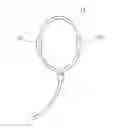
FIG. 1 depicts a section of oxygen tubing that includes ear pads according to the present invention.
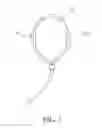
FIG. 2A shows a detailed view of the ear padding inserted over a section of oxygen tubing according to the present invention.
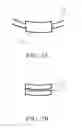
FIG. 2B depicts a reverse view of the ear padding according to the present invention.
DETAILED DESCRIPTION
The present invention relates to ear padding that is conveniently inserted over the oxygen tubing to protect and pad the patient's ear from abrasion due to continued use of the oxygen tubing. The oxygen tubing is looped over a patient's ear in order to place the oxygen outlets in close proximity to the patient's breathing path. The present invention includes a hypo-allergenic foam that is used to pad the ear when using the oxygen tubing. The hypo-allergenic foaming reduces the rubbing and abrasion that occurs through prolonged use of the oxygen tubes over a patient's ears.
FIG. 1 depicts the insertion of foam pads 12a, 12b at opposite sides of an oxygen tube 14. As depicted, a foam pad 12a, 12b is placed on each side of the oxygen tubing to protect each ear of the patient. The oxygen tubing 14 is of a conventional size. The foam pads 12a, 12b each include a slit that allows for the insertion and removal of the foam padding onto and off of the oxygen tubing 14. The foam pads 12a, 12b are cylindrical in shape to conform to the tubing.
FIG. 2A depicts an exemplary foam ear pad 12 according to the present invention. The ear pad 12 inserts over the oxygen tube 14. The reverse view of the foam pad is depicted in FIG. 2B. A slit 11 is provided in the foam pad 12 to allow for the insertion of the foam pad 12 over the oxygen tubing. The foam 12 is soft, flexible and does not interfere with the flow of oxygen through the tubing but however provides sufficient padding to alleviate discomfort by the patient. In one particular embodiment, the foam pad 12 is about three inches in length and is inserted over the tubing and placed near the rear ear region to protect the ear from discomfort.
The ear protection foam attachment according to the present invention is capable of being inserted onto various sizes of oxygen tubes and is suitably adjusted to the patient's ears. The foam ear pads may be removed and washed as needed to prevent the accumulation of dust, grease and dirt. Also the ear pads may be discarded and replaced with a new pair due to the ease in which the padding may be removed and placed upon the oxygen tubing. The instant invention has been shown and described in what it considers to be the most practical and preferred embodiments. It is recognized, however, that departures may be made there from within the scope of the invention and that obvious modifications will occur to a person skilled in the art.
Claims
What is claimed is:1. Padding for placement over an oxygen tube comprising:
a. a section of hypo-allergenic foam; and
b. a slit along the length of the foam, where the slit provides a means to insert a section of oxygen tubing and the foam conforms to the outer surface of the tubing.
2. The padding for placement according to claim 1, where the section of hypo-allergenic foam is cylindrical in shape.
Images & Drawings included:

Sources:
- United States Patent and Trademark Office - verify current appl. status at the USPTO↗
Recent applications in this class:
- » 20250161618 2025-05-22
PATIENT INTERFACE - » 20250161617 2025-05-22
SEAL-FORMING STRUCTURE FOR PATIENT INTERFACE - » 20250152891 2025-05-15
PATIENT INTERFACE - » 20250152890 2025-05-15
PATIENT INTERFACE - » 20250144348 2025-05-08
PATIENT INTERFACE SYSTEMS - » 20250144347 2025-05-08
PATIENT INTERFACE SYSTEMS - » 20250144346 2025-05-08
NASAL CANNULA AND SECUREMENT SYSTEM - » 20250144345 2025-05-08
BREATHING ASSISTANCE APPARATUS - » 20250135141 2025-05-01
PATIENT INTERFACE AND ASPECTS THEREOF - » 20250128010 2025-04-24
PATIENT INTERFACE AND ASPECTS THEREOF