Protective Boot Construction
US20110265350A1
2011-11-03
13/098,013
2011-04-29
Abstract:
A protective boot is provided for firefighters and other emergency workers. The protective boot includes a sole, and an upper having a multi-layer construction to surround a foot of a wearer. The multi-layer upper includes an outershell, at least one radiant energy reflective layer located within the outershell, and at least one thermal insulative layer located within the at least one radiant energy reflective layer.
Interested in similar patents?
Get notified when new applications in this technology area are published.
Classification:
A43B23/0225 » CPC main
Uppers; Boot legs; Stiffeners; Other single parts of footwear; Uppers; Boot legs characterised by the material Composite materials, e.g. material with a matrix
A43B7/32 » CPC further
Footwear with health or hygienic arrangements with shock-absorbing means
A43B23/0235 » CPC further
Uppers; Boot legs; Stiffeners; Other single parts of footwear; Uppers; Boot legs characterised by the material Different layers of different material
A43B23/24 IPC
Uppers; Boot legs; Stiffeners; Other single parts of footwear Ornamental buckles; Other ornaments for shoes without fastening function
Description
CROSS-REFERENCE TO RELATED APPLICATIONS
This application claims the benefit of the filing date of U.S. Provisional Application No. 61/330,269, filed Apr. 30, 2010, which is hereby incorporated by reference.
FEDERALLY SPONSORED RESEARCH OR DEVELOPMENT
Not Applicable.
MICROFICHE/COPYRIGHT REFERENCE
Not Applicable.
FIELD
The disclosure relates to footwear, and more particularly to protective boots and even more particularly to protective boots worn by firefighters and other emergency workers or first responders for proximity/crash-fire rescue.
BACKGROUND
At least one protective boot for proximity/crash-fire rescue is known that meets certification under NFPA 1971, 2007 Edition for Proximity. This boot is commercially available from Honeywell as Aircraft Rescue Fire Fighting Boot (ARFF) Model 6211-16 inch ARFF Bunker-Male and Model 6210-16 inch ARFF Bunker-Female. This model of boot weighs approximately 10 pounds per boot and is made with a molded rubber upper/shaft that is bonded or cemented to a sole and includes an insulative lining of Nomex® that is approximately one inch thick. While these boots perform well for their intended function, there is always room for improvement.
SUMMARY
A protective boot for firefighters and other emergency workers is provided and is particularly useful for proximity/crash-fire rescue. The upper and the shaft of the boot are multi-layer constructions and include an outershell of performance leather, at least one radiant energy reflective barrier or layer located within the outershell, and at least one thermal insulative barrier or layer located within the reflective layer, with all of the barriers/layers being connected to each other to form a multi-layered upper and shaft that surround the foot and lower leg of a wearer. In some forms, the radiant energy reflective barrier/layer is an aluminized/para aramid ripstop knit, such as the product that is supplied commercially by Gentex Corporation as product style Type 1088, aluminized/para aramid ripstop knit (PA290Ripstop) having an 8.5 ounce per square yard weight and a thickness of 0.023 inches, and the at least one thermal insulative barrier/layer is a layer (or two layers) of needle-punched nonwoven polyfiber that is coated with a film of Mylar or another suitable metallic coating or film, such as the product that is supplied commercially by Texel Inc., a division of ADS Inc., under the RADIANTEX® trademark, and the performance leather is a full grain, waterproof, 5-5.5 ounce cowhide leather. In some forms, a bootie is located within the upper and shaft and includes a moisture barrier (preferably of CROSSTECH®), a thermal barrier (preferably of quilted 7.5 ounce Kevlar® thermal barrier material), and an innermost most layer (preferably of Cambrelle® material). In some forms, the boot construction meets certification under NFPA 1971, 2007 Edition for Proximity, and NFPA 1992 for liquid splash. In some applications, the boot further meets certification under the 2001 Edition of the Federal Aviation Administration Regulation Part 139 as it pertains to protective clothing requirements for airport firefighting and rescue personnel (FAA-AC 150/510-14A Jul. 13, 1995).
Other features and advantages of the disclosed boots will become apparent from a review of the entire specification, including the appended drawings and digital photos.
BRIEF DESCRIPTION OF THE DRAWINGS
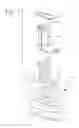
FIG. 1 is a somewhat diagrammatic, exploded, perspective view of a protective boot having a multi-layered upper/shaft construction; and
FIGS. 2-4 are perspective views of another boot embodiment having the multi-layered upper/shaft construction, with FIG. 3 showing a portion of the boot broken open and somewhat separated to better reveal its multi-layered construction, and FIG. 4 being an enlarged view of a portion of FIG. 3.
DETAILED DESCRIPTION OF THE DISCLOSED EMBODIMENTS
With reference to FIG. 1, a protective boot 10 is shown and includes a sole 12, a vamp or upper 14, and a shaft 16, with the exterior of the upper 14 and shaft 16 being defined by an outershell 20 and the upper 14 and shaft 16 being connected to the sole 12 using a Goodyear welt construction 21. The illustrated boot 10 further includes a bootie 22 and a removable food bed insert 24 that is placed within the bootie 22.
The sole 12, welt 21, and the bootie 22 are of known constructions and are produced for commercial availability by Honeywell under the Pro Warrington™ trademark for use in boot Model Nos. 4132, 3009 and 5006. As best seen in FIG. 1, the sole 12 includes an insole 24, a shank 26, a steel plate 28, a layer of corking 30, a mid-sole 32 and a rubber outsole 34. In another form (not shown), the sole includes an insole board, a shank, a layer of insulative material marketed under the RadianTex® trademark, a steel plate, a midsole, and a rubber outsole, all stacked in the order described. As best seen in FIG. 4, the bootie 22 includes an outermost moisture barrier 36, a thermal barrier 38, and an innermost layer 40. In the illustrated embodiment, the innermost layer 40 is made from Cambrelle® material, the thermal barrier 38 is made of 7.5 ounce Kevlar® material that is quilted to the Cambrelle® layer 40, and the moisture barrier 36 is Crosstech® material.
The upper 14 and the shaft 16 are multi-layer constructions that each include the outershell 20 of performance leather, a radiant energy reflective barrier or layer 42 located within the outershell 20, and two thermal barriers or layers 44 located within the reflective layer 42, with each of the barriers/layers 42 and 44 surrounding the foot and lower leg of a wearer. In some forms, the radiant energy reflective barrier or layer 42 is an aluminized/para aramid ripstop knit, and is an even more specific form is the material supplied commercially by Gentex Corporation as product style Type 1088, aluminized/para aramid ripstop knit (PA290Ripstop) having an 8.5 ounce per square yard weight and a thickness of 0.023 inches. In some forms, each of the thermal barriers or layers 44 is a layer of needle-punched polyfiber that is coated with a film 50 of Mylar or other suitable metallic coating or film, and in an even more specific form is the material supplied commercially by Texel Inc., a division of ADS Inc. under the RadianTex® trademark. In this regard, it will be appreciated that the film 50 on each of the layers 44 acts as a further radiant energy reflective barrier. In some forms, the performance leather of the outershell 20 is a full grain, waterproof, 5-5.5 ounce cowhide leather, black.
In the illustrated embodiment, the boot 10 and bootie 22 combination are constructed by assembling the multi-layered upper 14 and shaft 16 to the sole 12 with the Goodyear welt 21, with a layer 52 of the RadianTex® being placed over the insole 24 of the sole 12, assembling the bootie 22 as a separate component and then inserting the assembled bootie 22 into the assembled boot 10. In one form, the bootie 22 is cemented to the interior of the upper 14 and shaft 16, and in another form the bootie is cemented to an insole board of the sole 12. In one form, the assembled boot/bootie has a thickness of approximately 0.6 inch through the multi-layered construction.
In the area of the boot heel, some forms of the multi-layer construction of the boot include the two RadianTex® layers 44, a Centex® layer 42, a heel counter 60, and the outershell 20, as best seen in FIG. 1. In some forms, a portion of the multi-layer construction may be cut away in part of the area of the boot heel. In the area of the boot toe, some forms of the multi-layer construction include the two layers 44 of RadianTex® the layer 42 of Gentex®, a steel toe 62, and the outershell 20.
In some forms, the layers 42 and 44 are joined together by stitching around the circumference at the top of the shaft 16, with a top binding 64 placed over the edges of the layers 42 and 44 and the bootie 22 and attached by the stitching around the circumference, as best seen in FIG. 2. A toe cap 66 is also provided on the outershell 20 in one form, and can be made of leather (as shown in FIGS. 2-4) or any other suitable material (as shown in FIG. 1).
It will be appreciated that the multi-layered construction of the upper 14 and the shaft 16 provide for a boot construction 10 that can be certified under any or all of NFPA 1971, 2007 Edition for Proximity, NFPA 1992 for liquid splash, and the 2001 Edition of the Federal Aviation Administration Regulation Part 139 as it pertains to protective clothing requirements for airport firefighting and rescue personnel (FAA-AC 150/510-14A Jul. 13, 1995), while being less bulky and having a smaller profile than the prior art boot discussed in the Background section of the present application. Further, it has been found that the multi-layered construction of the upper 14 and the shaft 16 allow for the boot 10 to weigh approximately 30% less than the prior art boot described in the Background section of this application (6.8 pounds for the boot 10 in comparison to 10 pounds for the prior art boot). This provides a distinct advantage because studies have shown that the main cause of disabilities in firefighters is directly attributable to stress and studies have further found that each pound taken off of a firefighter's foot is equivalent stress-wise to 6.4 pounds on the firefighter's body. Accordingly, the smaller profile of the boot 10 and the lighter weight of the boot 10 allows for the firefighter to have more agility and to be less prone to accidents while performing firefighting activities.
It should be appreciated that while certain specific embodiments have been described herein, other forms and/or embodiments and/or modifications are possible. For example, while an aluminized/para aramid ripstop knit has been described for the radiant energy reflective barrier/layer 42, other suitable materials may be found and used for the radiant energy reflective barrier/layer 42. Similarly, while a needle-punch nonwoven polyfiber has been described for the thermal insulative barrier/layer(s) 44, other suitable materials may be found and utilized for the thermal insulative barrier(s) 44, such as, for example, a layer of a para aramid material including, for example, a layer of Kevlar® or a layer of the previously described para aramid ripstop knit material provided by Gentex®. As a further example, while a performance leather has been described for the outershell 20, other suitable materials may be found and utilized for the outershell 20. Similarly, while specific constructions have been provided for the sole 12, welt 21, and bootie 22, other suitable constructions may be found and utilized for the sole 12, the welt 21, and the bootie 22. Furthermore, it should be understood that other components may be added to or removed from the described boot constructions 10. Accordingly, the claims are not intended to be limited to the specific embodiments described herein unless such structure is expressly recited in the claims.
Claims
1. A protective boot for firefighters and other emergency workers, the boot comprising:
an upper having a multi-layer construction to surround a foot of a wearer and including
an outershell,
at least one radiant energy reflective layer located within the outershell, and
at least one thermal insulative layer located within the at least one radiant energy reflective layer.
2. The protective boot of claim 1 wherein the multi-layer construction of the upper further includes a shaft to surround the lower leg of a wearer, the shaft including the outershell, the at least one radiant energy reflective layer located within the shaft, and the at least one thermal insulative layer located within the at least one radiant energy reflective layer.
3. The protective boot of claim 1 wherein the outershell is performance leather.
4. The protective boot of claim 3 wherein the performance leather is full grain, waterproof, 5 to 5.5 ounce cowhide leather.
5. The protective boot of claim 1 wherein the at least one radiant energy reflective layer is an aluminized/para aramid ripstop knit.
6. The protective boot of claim 1 wherein the at least one thermal insulative layer is needle-punched nonwoven polyfiber.
7. The protective boot of claim 6 wherein the needle-punched nonwoven polyfiber is coated with a metallic coating or film.
8. The protective boot of claim 1 wherein the at least one thermal insulative layer is two layers.
9. The protective boot of claim 1 further comprising a bootie within the upper, the bootie including a moisture barrier, a thermal barrier, and an innermost layer.
10. The protective boot of claim 1 wherein the boot meets certification under NFPA 1971, 2007 Edition for Proximity and NFPA 1992 for splash.
11. The protective boot of claim 10 wherein the boot meets certification under the 2001 Edition of the Federal Aviation Administration Regulation Part 139 as it pertains to protective clothing requirements for airport firefighting and rescue personnel.
Images & Drawings included:



Sources:
- United States Patent and Trademark Office - verify current appl. status at the USPTO↗
Recent applications in this class:
- » 20240415230 2024-12-19
FIBER-BOUND ENGINEERED MATERIALS FORMED USING FOUNDATION SCRIMS - » 20240277112 2024-08-22
FIBER-BOUND ENGINEERED MATERIALS FORMED USING ZONAL SCRIMS - » 20240081480 2024-03-14
POLYMERIC COVER PANELS WITH INTEGRAL PLASTIC FRAGMENTS FOR FOOTWEAR UPPERS AND METHODS FOR MAKING THE SAME - » 20230043499 2023-02-09
ARTICLE OF FOOTWEAR HAVING A DEGRADABLE COMPONENT - » 20210235815 2021-08-05
VAMP AND SHOE BODY INCLUDING THE VAMP - » 20210112921 2021-04-22
Fiber-bound engineered materials formed using foundation scrims - » 20210030117 2021-02-04
Textiles and articles and processes for making the same - » 20200315296 2020-10-08
Footwear upper - » 20200221825 2020-07-16
SHOE UPPERS - » 20190387839 2019-12-26
Fiber-bound engineered materials formed using zonal scrims