Exercising device for lower-body
US20110287908A1
2011-11-24
13/133,943
2008-06-16
✅ Patent granted
US 9,199,121 B2
2015-12-01
WO; PCT/KR2008/003365; 20080616
WO; WO2008/156267; 20081224
Jerome w Donnelly
Revolution IP, PLLC
2033-03-30
Abstract:
Provided is an exercise device for a lower body capable of simultaneously performing anaerobic exercise for leg muscle strengthening and stretching and aerobic exercise such as cycle pedal exercise. The exercise device for a lower body includes a pair of base bars 11 parallelly aligned with each other and having an arc shape; connecting shafts 12 fixed to side surfaces of center parts of the base bars 11 to opposite each other and having a pivot coupling structure installed therebetween; a pair of rotary arms 14 laterally pivotally hinged to upper surfaces of the center parts of the base bars 11 and having heel support frames 13 such that both feet are seated on upper surfaces of the rotary arms 11 to simultaneously perform anaerobic (static) exercise and aerobic (dynamic) exercise for leg muscles; and spring members 15 resiliently supported between the rotary arms 11 and the connecting shafts 12 to inwardly bias the rotary arms 14.
Applicant:
Interested in similar patents?
Get notified when new applications in this technology area are published.
Classification:
A63B21/15 » CPC further
Exercising apparatus for developing or strengthening the muscles or joints of the body by working against a counterforce, with or without measuring devices Arrangements for force transmissions
A63B21/4047 » CPC further
Exercising apparatus for developing or strengthening the muscles or joints of the body by working against a counterforce, with or without measuring devices; Interfaces with the user related to strength training; Details thereof characterised by the movements of the interface Pivoting movement
A63B21/00072 » CPC further
Exercising apparatus for developing or strengthening the muscles or joints of the body by working against a counterforce, with or without measuring devices; Mechanical means for varying the resistance; Setting or adjusting the resistance level; Compensating for a preload prior to use, e.g. changing length of resistance or adjusting a valve by changing the length of a lever
A63B21/023 » CPC further
Exercising apparatus for developing or strengthening the muscles or joints of the body by working against a counterforce, with or without measuring devices using resilient force-resisters Wound springs
A63B22/0056 » CPC further
Exercising apparatus specially adapted for conditioning the cardio-vascular system, for training agility or co-ordination of movements with cantilevered support elements pivoting about an axis the pivoting movement being in a vertical plane, e.g. steppers with a horizontal axis
A63B23/0405 » CPC further
Exercising apparatus specially adapted for particular parts of the body for limbs, i.e. upper or lower limbs, e.g. simultaneously for lower limbs involving a bending of the knee and hip joints simultaneously
A63B21/0552 » CPC further
Exercising apparatus for developing or strengthening the muscles or joints of the body by working against a counterforce, with or without measuring devices using resilient force-resisters extension element type Elastic ropes or bands
A63B2022/003 » CPC further
Exercising apparatus specially adapted for conditioning the cardio-vascular system, for training agility or co-ordination of movements; Particular aspects relating to the orientation of movement paths of the limbs relative to the body; Relative relationship between the movements of the limbs the movement path being non-parallel to the body-symmetrical-plane, e.g. support elements moving at an angle to the body-symmetrical-plane the movement path being perpendicular to the body-symmetrical-plane
A63B2208/0228 » CPC further
Characteristics or parameters related to the user or player posture Sitting on the buttocks
A63B2225/093 » CPC further
Miscellaneous features of sport apparatus, devices or equipment; Adjustable dimensions Height
A63B21/02 IPC
Exercising apparatus for developing or strengthening the muscles or joints of the body by working against a counterforce, with or without measuring devices using resilient force-resisters
A63B22/16 » CPC further
Exercising apparatus specially adapted for conditioning the cardio-vascular system, for training agility or co-ordination of movements Platforms for rocking motion about a horizontal axis, e.g. axis through the middle of the platform ; Balancing drums; Balancing boards or the like
A63B23/0488 » CPC main
Exercising apparatus specially adapted for particular parts of the body for limbs, i.e. upper or lower limbs, e.g. simultaneously for lower limbs primarily by articulating the hip joints by spreading the legs
A63B21/00 IPC
Exercising apparatus for developing or strengthening the muscles or joints of the body by working against a counterforce, with or without measuring devices
A63B23/04 IPC
Exercising apparatus specially adapted for particular parts of the body for limbs, i.e. upper or lower limbs, e.g. simultaneously for lower limbs
A63B22/00 IPC
Exercising apparatus specially adapted for conditioning the cardio-vascular system, for training agility or co-ordination of movements
A63B21/055 IPC
Exercising apparatus for developing or strengthening the muscles or joints of the body by working against a counterforce, with or without measuring devices using resilient force-resisters extension element type
Description
TECHNICAL FIELD
The present invention relates to an exercise device for a lower body, and more particularly, to an exercise device for a lower body capable of simultaneously performing anaerobic exercise for leg muscle strengthening and stretching and aerobic exercise such as cycle pedal exercise.
BACKGROUND ART
There is no room for doubt about importance of health, and professional physical educators or medical personnel recognize the state of the abdomen and correct posture as criterion of health. Though many peoples interested in health use various exercise equipment, most of the peoples failed to promote their health.
In general, exercise equipment uses the gravity load and is limited to one simple exercise such as sit-up, treadmill exercise, and so on, using the upper body and the lower body. Most of small exercise equipment is insufficient to exercise the entire body due to structural limitation caused by partial exercise, and thus, it is difficult to sequentially stimulate muscles related to peripheral parts of the exercise region and obtain synergy effect of the exercise.
That is, in all kinds of exercises, when composite lightweight exercise constituted by anaerobic exercise and aerobic exercise with correct posture is performed, fat is maximally burned and fine muscles are developed to maximize exercise effects within a short time. However, there is no exercise device capable of simultaneously performing the anaerobic exercise and aerobic exercise to obtain coordinate exercise effect.
A typical problem is that weight training is a burden to an exerciser from the beginning of the exercise. In addition, the weight training may cause injury during the exercise. Further, simple and repeated movements constituted by dynamic movement only, without static posture, make the exerciser feel tedious and difficult to abandon the exercise before purpose of the exercise is not accomplished.
DISCLOSURE OF INVENTION
Technical Problem
In order to solve the foregoing and/or other problems, it is an aspect of the present invention to provide an exercise device for a lower body capable of simultaneously performing static exercise (meridian massage and ankle pumping) and dynamic exercise (aerobic and weight training) using an exerciser's muscular strength, without load of the exercise device or the exerciser's weight, and being readily used by people of all ages and both sexes.
Technical Solution
One aspect of the present invention provides an exercise device for a lower body including: a pair of base bars parallelly aligned with each other and having an arc shape; connecting shafts fixed to side surfaces of center parts of the base bars to opposite each other and having a pivot coupling structure installed therebetween; a pair of rotary arms laterally pivotally hinged to upper surfaces of the center parts of the base bars and having heel support frames such that both feet are seated on upper surfaces of the rotary arms to simultaneously perform anaerobic (static) exercise and aerobic (dynamic) exercise for leg muscles; and spring members resiliently supported between the rotary arms and the connecting shafts to inwardly bias the rotary arms.
As can be seen from the foregoing, since anaerobic exercise and aerobic exercise for a lower body can be simultaneously performed using a single exercise device, it is possible to reduce a purchase price of an exercise device in comparison with individual exercise devices. In addition, since the exercise device is configured to be operated by an exerciser's will, not using the weight of the exercise device, there is no burden to the exerciser and probability of injury to the exerciser, thereby securing safety use of the exercise device.
While an exemplary embodiment of the present invention has been shown and described, it will be appreciated by those skilled in the art that various changes may be made to the embodiment without departing from the spirit and scope of the invention as defined by the appended claims and their equivalents.
BRIEF DESCRIPTION OF THE DRAWINGS
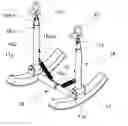
FIG. 1 is a perspective view of an exercise device for a lower body in accordance with an exemplary embodiment of the present invention.
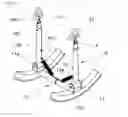
FIG. 2 is an exploded perspective view showing constitution of the exercise device for a lower body in accordance with an exemplary embodiment of the present invention in detail.
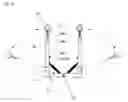
FIG. 3 is a front view of the exercise device for a lower body in accordance with an exemplary embodiment of the present invention.
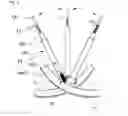
FIG. 4 illustrates a view showing operation of one embodiment of the exercise device for a lower body, and a partially enlarged view.
FIG. 5 illustrates a view showing another operation of the exercise device for a lower body in accordance with an exemplary embodiment of the present invention.
DESCRIPTION OF MAJOR REFERENCE NUMERALS
- 11: Base bar 12: Connecting shaft
- 12a: Connecting piece 12b: Pivot pin
- 13: Heel support frame 14: Rotary arm
- 14a: Arm body 14a-1: Rotary unit
- 14b: Height adjustment arm 14b-1: Height adjustment hole
- 14c: Height adjustment pin 15: Spring member
- 15a: Bellows cover 16: Elastic rubber
- 17: Cushion coil
BEST MODE FOR CARRYING OUT THE INVENTION
In order to accomplish the object, the present invention provides an exercise device for a lower body including:
a pair of base bars parallelly aligned with each other and having an arc shape;
connecting shafts fixed to side surfaces of center parts of the base bars to opposite each other and having a pivot coupling structure installed therebetween;
a pair of rotary arms laterally pivotally hinged to upper surfaces of the center parts of the base bars and having heel support frames such that both feet are seated on upper surfaces of the rotary arms to simultaneously perform anaerobic (static) exercise and aerobic (dynamic) exercise for leg muscles;
and spring members resiliently supported between the rotary arms and the connecting shafts to inwardly bias the rotary arms.
Mode for the Invention
An exemplary embodiment of the present invention will now be described in detail with reference to the accompanying drawings.
FIG. 1 is a perspective view of an exercise device for a lower body in accordance with an exemplary embodiment of the present invention, FIG. 2 is an exploded perspective view showing constitution of the exercise device for a lower body in accordance with an exemplary embodiment of the present invention in detail, FIG. 3 is a front view of the exercise device for a lower body in accordance with an exemplary embodiment of the present invention, FIG. 4 illustrates a view showing operation of one embodiment of the exercise device for a lower body, and a partially enlarged view, and FIG. 5 illustrates a view showing another operation of the exercise device for a lower body in accordance with an exemplary embodiment of the present invention.
As shown in FIGS. 1 to 3, the present invention includes base bars 11 parallelly aligned with each other.
The base bars 11 have the same arc shape with convex center parts, and connecting shafts 12 are fixed to inner surfaces f the center parts of the base bars 11 to opposite to each other.
In addition, connecting pieces 12a are inserted into ends of the connecting shafts 12, and pivot pins 12b are rotatably coupled to centers of the connecting pieces 12a to connect the connecting shafts 12 and individually move the base bars 11 depending on movement of rotary arms 14, which will be described.
Meanwhile, brackets 11a are installed at upper surfaces of the center parts of the base bars 11, and a pair of rotary arms 14 are coupled to the brackets 11a by bolts and nuts and have a rotation route perpendicular to movement of the base bars, respectively. Each of the rotary arms 14 includes an arm body 14a rotatably coupled to the bracket 11a by a bolt-nut coupler and having a through-hole 14a-1 formed at an upper end thereof, a height adjustment arm 14b having a heel support frame 13 coupled to its upper part, slidably coupled to project from and enter the arm body 14a, and having a plurality of height adjustment holes 14b-1 formed in a longitudinal direction thereof at predetermined intervals, and a height adjustment pin 14c inserted into the through-hole 14a-1 and an arbitrary height adjustment hole 14b-1 aligned thereto to adjust the height of the rotary arm 14.
In addition, a locking ring 14a-2 is formed inside the rotary arm 12, specifically, at an inner part of the arm body 14a. A spring member 15 is installed between the locking ring 14a-2 and an eccentric side of the connecting shaft 12 to inwardly bias the rotary arm 14.
The spring member 15 may be a coil spring, or may be a latex rubber wire having high tension.
Further, a bellows cover 15a is installed around the spring member 15 to freely extends or shrink depending on resilient displacement of the spring member 15 to prevent injury to a user.
Meanwhile, the heel support frame 13 installed at the upper end of the rotary arm 14 is supported by an elastic rubber 16, and a cushion coil 17 is installed around the heel support frame 13 such that the support frame 13 can be freely tilted.
In addition, the heel support frame 13 is configured to safely fix the instep and ankle of the exerciser, and formed of a material having good cushion to minimize fatigue due to the exercise of the lower body.
Hereinafter, operation of the exercise device for a lower body in accordance with an exemplary embodiment of the present invention will be described.
As described above, the exercise device for a lower body in accordance with an exemplary embodiment of the present invention can simultaneously perform anaerobic exercise and aerobic exercise as described above.
That is, as shown in FIG. 4, in the anaerobic exercise, since the rotary arms 14 hinged to the brackets 11a formed at the upper surfaces of the center parts of the base bars 11 have a rotation route perpendicular to a longitudinal direction of the base bars 11 and the spring members 15 always pull the rotary arms 14, an exerciser can put his/her feet on the heel support frames 13 with lay or sat on a chair and press the rotary arms 14 to widen the rotary arms 14 with power that overcomes the resilient force, thereby stably stretching his/her body.
Here, core technology of the present invention is that an exercise load is applied by an exerciser's muscle power only, not the weight or gravity of the exercise device. Therefore, it is possible to prevent secondary injury due to the exercise and thus allow people of all ages and both sexes to enjoy the exercise without any burden.
In addition, in the aerobic exercise, as shown in FIG. 5, since the connecting shafts 12 are fixed to the base bars 11 but are freely rotatably coupled to each other by the pivot pins 12b in a rotational direction thereof, the exerciser can perform leg training like pedals of a bicycle. At this time, the exerciser can perform the leg training with his/her will using interference of the spring members 15, without influence by the weight of the exercise device.
Further, the exerciser can simultaneously perform two operations to draw a circle to exercise both the anaerobic exercise and aerobic exercise.
Claims
1. An exercise device for a lower body comprising:
a pair of base bars 11 parallelly aligned with each other and bent in an arc shape;
connecting shafts 12 fixed to side surfaces of center parts of the base bars 11 to opposite each other and including a pivot coupling structure installed therebetween;
a pair of rotary arms 14 laterally pivotally hinged to upper surfaces of the center parts of the base bars 11 and including heel support frames 13 such that both feet are seated on upper surfaces of the rotary arms 11 to simultaneously perform anaerobic (static) exercise and aerobic (dynamic) exercise for leg muscles; and
spring members 15 resiliently supported between the rotary arms 11 and the connecting shafts 12 to inwardly bias the rotary arms 14.
2. The exercise device for a lower body according to claim 1, wherein each of the rotary arms 14 comprises:
an arm body 14a hinged to the base bars 11 and including a through-hole formed at an upper end thereof;
a height adjustment arm 14b including a heel support frame 13 coupled to its upper part, slidably coupled to project from and enter the arm body 14a, and including a plurality of height adjustment holes 14b-1 formed in a longitudinal direction thereof at predetermined intervals; and
a height adjustment pin 14c inserted into the through-hole 14a-1 and an arbitrary height adjustment hole 14b-1 aligned thereto to adjust the height of the rotary arm 14.
3. The exercise device for a lower body according to claim 1, wherein the heel support frames 13 coupled to the upper ends of the rotary arms 14 are supported by elastic rubbers 16, and cushion coils 17 are installed around the heel support frames 13 such that the support frames 13 are freely tilted.
Images & Drawings included:


Sources:
- United States Patent and Trademark Office - verify current appl. status at the USPTO↗
Similar patent applications:
- » 20110111927
EXERCISEING DEVICE FOR LOWER-BODY
Recent applications in this class:
- » 20240165460 2024-05-23
HIP LOADING EXERCISE BOARD - » 20240024733 2024-01-25
Arcing exercise station for legs - » 20210101050 2021-04-08
Modular exercise system - » 20200047025 2020-02-13
Lower Body Exercise Apparatus - » 20200038707 2020-02-06
EXERCISE DEVICE AND METHODS OF USE - » 20180290016 2018-10-11
Leg Stretching Apparatus - » 20180001137 2018-01-04
LEG STRETCHING APPARATUS - » 20170282009 2017-10-05
Device for training abductors and/or adductors of the hip joint - » 20160271443 2016-09-22
Leg stretcher - » 20150051520 2015-02-19
Mobility aid and rehabilitation device and related components