Crimped flat wire as core of oval cord
US20110290397A1
2011-12-01
13/145,468
2009-11-23
✅ Patent granted
US 8,720,175 B2
2014-05-13
WO; PCT/EP2009/065631; 20091123
WO; WO2010/086043; 20100805
Shaun R Hurley
Foley & Lardner LLP
2030-07-14
Abstract:
A steel cord (10) adapted for the reinforcement of rubber products, the steel cord comprises a core (12) and a layer of filaments (14) with round cross-sections twisted around the core (12). The core (12) comprises a flat wire at a waveform, which lies in the plane of the flat wire. The wire is obtainable by first crimping a round wire and thereafter flattening the crimped wire. The filaments of the layer do not substantially contact each other to make spaces between each other to insure adequate rubber penetration into the cords. The steel cord has improvements on elongation at break.
Inventors:
- Javier Del Río Rodriguez 4 🇫🇷 Lille, France
- Johan Pille 1 🇧🇪 Roeselare, Belgium
- Lieven Loncke 1 🇧🇪 Zwevegem, Belgium
Assignee:
- NV Bekaert SA 251 🇧🇪 Zwevegem, Belgium
Applicant:
Interested in similar patents?
Get notified when new applications in this technology area are published.
Classification:
D07B2201/2018 » CPC further
Ropes or cables; Rope or cable components; Strands characterised by their cross-sectional shape oval
D07B2801/12 » CPC further
Linked indexing codes associated with indexing codes or classes of Strand
D07B2501/2046 » CPC further
Application field related to ropes or cables Tire cords
D07B2201/2059 » CPC further
Ropes or cables; Rope or cable components; Cores characterised by their structure comprising wires
B60C9/0007 » CPC main
Reinforcements or ply arrangement of pneumatic tyres Reinforcements made of metallic elements, e.g. cords, yarns, filaments or fibres made from metal
B60C9/0057 » CPC further
Reinforcements or ply arrangement of pneumatic tyres Reinforcements comprising preshaped elements, e.g. undulated or zig-zag filaments
D07B1/0653 » CPC further
Constructional features of ropes or cables; Ropes or cables built-up from metal wires, e.g. of section wires around a hemp core; Reinforcing cords for rubber or plastic articles comprising longitudinally preformed wires in the core
D07B7/025 » CPC further
Details of, or auxiliary devices incorporated in, rope- or cable-making machines; Auxiliary apparatus associated with such machines; Machine details; Auxiliary devices Preforming the wires or strands prior to closing
D07B2801/14 » CPC further
Linked indexing codes associated with indexing codes or classes of Core
D07B2201/2023 » CPC further
Ropes or cables; Rope or cable components; Strands with core
B60C9/18 IPC
Reinforcements or ply arrangement of pneumatic tyres Structure or arrangement of belts or breakers, crown-reinforcing or cushioning layers
Y10T152/10765 » CPC further
Resilient tires and wheels; Tires, resilient; Pneumatic tire or inner tube Characterized by belt or breaker structure
Y10T428/2922 » CPC further
Stock material or miscellaneous articles; Coated or structually defined flake, particle, cell, strand, strand portion, rod, filament, macroscopic fiber or mass thereof; Rod, strand, filament or fiber Nonlinear [e.g., crimped, coiled, etc.]
Y10T428/2973 » CPC further
Stock material or miscellaneous articles; Coated or structually defined flake, particle, cell, strand, strand portion, rod, filament, macroscopic fiber or mass thereof; Rod, strand, filament or fiber Particular cross section
D07B2201/2003 » CPC further
Ropes or cables; Rope or cable components; Wires or filaments characterised by their cross-sectional shape flat
D07B2201/2048 » CPC further
Ropes or cables; Rope or cable components; Cores characterised by their cross-sectional shape
B21F45/04 IPC
Wire-working in the manufacture of other particular articles of elements, e.g. levers or links, for bottle stoppers
D02G3/00 IPC
Yarns or threads, e.g. fancy yarns; Processes or apparatus for the production thereof, not otherwise provided for
D02G3/48 IPC
Yarns or threads, e.g. fancy yarns; Processes or apparatus for the production thereof, not otherwise provided for; Yarns or threads characterised by the purpose for which they are designed Tyre cords
Description
TECHNICAL FIELD
The present invention relates to a steel cord adapted for the reinforcement of rubber products and more particularly to a steel cord for use as reinforcing elements for the belt or breaker structure of pneumatic radial tires, especially pneumatic radial truck tires.
BACKGROUND ART
Pneumatic vehicle tires are generally reinforced with steel cords having substantially round cross-sections. A plurality of single filaments or strands are twisted together to form such a cord. Flat wires for the reinforcement of pneumatic tires have an improved lateral stiffness, require a thinner rubber ply, and have a better compression performance and a greater elongation at break than cords having substantially round cross-sections. However the latter have a better tensile strength and better fatigue performance than flat wire.
EP 0264145A1 discloses that a steel cord comprises a layer of steel filaments that are wound around an untwisted monofilament which has an elongated cross-section and a width-to-thickness ratio of at least 2. But in this cord structure that the filaments in the layer line contacts with the adjoining filaments, the space between each pair of sheath filaments is so narrow that rubber can not easily penetrate. Besides, as the width-to-thickness ratio becomes larger, the productivity is lowered.
EP 0551124A2 discloses that a steel cord comprises one wave-form or helical core steel filament, and a plurality of sheath steel filaments disposed around the core steel filament, which allows better rubber penetration for improved resistance to corrosion. However, such construction increases the thickness of the ply. In addition, the proposed structure has the same stiffness in the plane and perpendicular to the plane of the core, so it is not so flexible to deformation perpendicular to the plane of the core, which is disadvantageous for its use in belt or breaker plies of pneumatic radial tires.
DISCLOSURE OF INVENTION
It is an object of the invention to provide a steel cord with adequate rubber penetration coupled with a greater elongation at break.
A steel cord adapted for the reinforcement of rubber products, comprises a core, the core comprises a flat wire at a waveform with a ratio of a width W to the thickness T, which is 1.2≦W/T≦3.0. The wavy flat wire is obtainable by first crimping a round wire and thereafter flattening the crimped wire. The steel cord further comprises a layer twisted around said core. Each filament of the layer around the core has a round cross-section. At least two of said filaments in the layer around the core do not substantially contact each other.
The wavy form is a crimp form obtainable by means of one pair of toothed wheels. Crimps may also be obtained by a set of cams. A crimp is a planar wave. However, depending upon the way of twisting the planar wave may not rotate or may rotate.
The amplitude of the wavy form ranges from 0.1 mm to 5.0 mm. For example, from 0.5 mm to 4.0 mm; for example, from 1.0 mm to 3.0 mm etc. If the amplitude of the wavy form is smaller than 0.1 mm, the spacing between the core and the layer is too small to allow rubber penetration and the productivity is lowered. If the amplitude of the wavy form is bigger than 5.0 mm, the spacing between the core and the layer is too big and the strength is lowered.
The pitch of the wavy form ranges from 3.0 mm to 15.0 mm. For example, from 4.0 mm to 12.0 mm; for example, from 5.0 mm to 10.0 mm etc. If the pitch of the wavy form is smaller than 3.0 mm, the spacing between the core and the layer is too big and the strength is lowered. If the pitch of the wavy form is greater than 15.0 mm, the spacing between the core and the layer is too small to allow rubber penetration.
The width-to-thickness ratio of the core is 1.2≦W/T≦3.0, and by preference, lies between 1.5 and 2.5. A minimum ratio is necessary to keep the cord in place during its manufacturing process. The maximum ratio is determined by stability considerations.
The steel filaments in the layer surround the core, at least two of them do not substantially contact each other; and by preference, none of the adjacent metal filaments does contact each other so as to ensure more space for enabling rubber to penetrate to the core.
The planar wave of the core of the steel cord is made by first crimping a round wire and thereafter flattening the crimped wire by rolling thereby both making the wire flat and making the wave planar. Otherwise, if first rolling a round wire then crimping the flatten wire, the chance for wire fracture is great, which will result in reposition of the wire and manufacture efficiency is low. On the contrary, the method of manufacturing a steel cord according to the invention easily avoids the above problems and further improves manufacture efficiency.
Instead of integrating such a planar wavy filament in a cord structure, this planar wavy core filament may also be used as independent element for rubber reinforcement.
A steel cord according to the invention may be used in the carcass or in the belt structure of pneumatic radial tires, and particularly useful for use in truck tires.
BRIEF DESCRIPTION OF FIGURES IN THE DRAWINGS
The invention will now be described into more details with reference to the accompanying drawings.
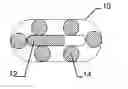
FIG. 1 schematically shows a cross-sectional view of a steel cord incorporating present invention.
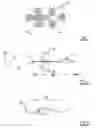
FIG. 2 schematically illustrates the method to make core wavy.
FIG. 3 is an upper view of the flattened and wavy core wire.
FIG. 4 is a schematic view of the flattened and wavy core wire.
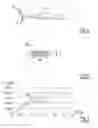
FIG. 5 is a cross-section of the flattened and wavy core wire.
FIG. 6 shows a load elongation curve of a cord according to the invention.
MODE(S) FOR CARRYING OUT THE INVENTION
Referring to FIG. 1, a steel cord 10 adapted for the reinforcement of rubber products, comprises a core 12, which is a wavy flat wire, and six filaments 14 in a layer twisted around the core 12. Since the core 12 is crimped into wavy form, there are spaces between the core 12 and the adjacent filaments 14. An additional advantage of a wavy flat wire is that larger ratio of width-to-thickness can be reached than with cords where the flat core is not wavy.
Referring to FIG. 2, a round core wire 12 goes through a pair of toothed wheels 16, and the core 12 is crimped into wavy form. Besides, the toothed wheels 16 may or may not be driven by external means. Thereafter, the round crimped wire is flattened by means of one or more pairs of rolls 17 which simultaneously flatten the round wire and make the wave planar and flat.
FIG. 3 shows a schematic diagram of a crimped core 12 flattened in the plane of waveform. The amplitude Lc of the wavy form is between 0.1 mm to 5.0 mm, which is measured from top to top with inclusion of core thickness, while the pitch of the wavy form is between 3.0 mm to 15.0 mm.
FIG. 4 shows a perspective view of a crimped core 12 flattened in the plane of waveform with the width-to-thickness ratio 1.2≦W/T≦3.0.
FIG. 5 schematically shows a cross-sectional view of a crimped core 12 flattened in the plane of waveform with the width-to-thickness ratio 1.2≦W/T≦3.0.
A steel cord 10 with a wavy flat core according to the invention was built as follows. Starting product is a steel wire rod. This steel wire rod has following steel composition: A minimum carbon content of 0.65%, a manganese content ranging from 0.40% to 0.70%, a silicon content ranging from 0.15% to 0.30%, a maximum sulphur content of 0.03%, a maximum phosphorus content of 0.30%, all percentages being percentages by weight. A typical steel tire cord composition for high-tensile steel cord has a minimum carbon content of around 0.80 weight %, e.g. 0.78-0.82 weight %.
The steel rod is drawn in a number of consecutive steps until the required final diameter. In this example, the round diameter for the core is 0.38 mm and 0.34 mm for the steel filaments in the layer. The drawing steps may be interrupted by one or more heat treatment steps such as patenting.
The steel filaments are preferably provided with a coating which promotes the adhesion to rubber or with a coating which gives corrosion resistance to the wire. A rubber adherable coating is e.g. brass; a corrosion resistant coating is e.g. zinc.
As a matter of example only, the manufacture of the wavy flat core 12 starts with a round filament with diameter of 0.38 mm, which is firstly crimped by a pair of toothed wheels into a wavy form and further flattened in the plane of the waveform with final dimensions of a width of 0.430 mm and thickness of 0.340 mm, while the amplitude is 1.33 mm, and the pitch is 7.09 mm.
Six peripheral filaments with diameter of 0.34 mm are twisted around the core filament by means of a tubular twisting machine or by means of a double-twister.
This 1+6 steel cord according to the invention has been compared with a reference cord in which the core is only flattened but not crimped in wavy form.
FIG. 6 illustrates the load-elongation curves of the two steel cords. Curve 18 is the load-elongation curve for the steel cord with a wavy flat core according to the invention, while curve 20 is the load-elongation curve for the reference steel cord only with a flat core. Compared with the reference cord, the steel cord according to present invention has an improvement on elongation at break by 30%.
Claims
1. A cord, adapted for the reinforcement of belt plies in a pneumatic tire, comprising a layer and a core, said layer comprising steel filaments that are wound around the core, said core comprises a flat wire at a waveform, characterized in that the wire is obtainable by first crimping a round wire and thereafter flattening the crimped wire.
2. A cord as claimed in claim 1, characterized in that said wire has an elongated cross-section with a ratio of a width W to the thickness T is 1.2≦W/T≦3.0.
3. A cord as claimed in claim 1, characterized in that said waveform lies in the plane of the wire.
4. A cord as claimed in claim 1, characterized in that the pitch Pc of said waveform is in a range from 3.0 mm to 15.0 mm.
5. A cord as claimed in claim 1, characterized in that the amplitude Lc of said waveform is in a range from 0.1 mm to 5.0 mm.
6. A cord as claimed in claim 1, characterized in that said filaments in the layer around the core have a round cross-section.
7. A cord as claimed in claim 1, characterized in that at least two of said filaments in the layer around the core do not substantially contact each other.
8. Use of a cord according to claim 1 as reinforcement of belt plies.
9. A flat wire adapted for reinforcement of rubber products characterized in that said flat wire is wavy in the plane of the flat wire.
10. A flat wire according to claim 9 obtainable by a process of crimping a round wire followed by flattening said crimped round wire.
11. A method of manufacturing a cord adapted for the reinforcement of belt plies in a pneumatic tire, said method comprising the following steps:
providing a round steel wire;
crimping said round steel wire;
flattening said crimped round steel wire;
winding other steel wires around said flattened and crimped steel wire.
12. A cord as claimed in claim 3, characterized in that the pitch Pc of said waveform is in a range from 3.0 mm to 15.0 mm.
13. A cord as claimed in claim 3, characterized in that the amplitude Lc of said waveform is in a range from 0.1 mm to 5.0 mm.
Images & Drawings included:
Sources:
- United States Patent and Trademark Office - verify current appl. status at the USPTO↗
Recent applications in this class:
- » 20250269689 2025-08-28
TIRE REINFORCED BY METAL CORDS - » 20250162350 2025-05-22
TIRE - » 20250001804 2025-01-02
RUBBERIZED METALLIC STRENGTH MEMBER AND PNEUMATIC VEHICLE TIRE - » 20240246362 2024-07-25
PNEUMATIC VEHICLE TIRE HAVING A BELT BANDAGE HAVING AT LEAST ONE BELT PLY - » 20240239140 2024-07-18
Steel Cord for Tire Belt Ply Reinforcement - » 20240174024 2024-05-30
COMPOSITE COMPRISING A METAL REINFORCING ELEMENT AND AN ELASTOMER COMPOSITION CONTAINING AN ADHESION PROMOTING RESIN - » 20240025209 2024-01-25
METALLIC REINFORCING CORD FOR TYRES FOR VEHICLE WHEELS AND TYRE COMPRISING SAID METALLIC REINFORCING CORD - » 20230302851 2023-09-28
MOTORCYCLE TIRE - » 20230081635 2023-03-16
REINFORCEMENT OF POLYMERS WITH SHAPE MEMORY ALLOY ELEMENTS - » 20230001741 2023-01-05
METALLIC REINFORCING CORD FOR TYRES FOR VEHICLE WHEELS
Recent applications for this Assignee:
- » 20250271413 2025-08-28
METHOD OF MEASURING THE CONTENT OF A CHEMICAL ELEMENT IN A COATING - » 20250163560 2025-05-22
CONTROL SYSTEM FOR HEAVY METALLIC COATING WEIGHT - » 20250052015 2025-02-13
CONSTRUCTION REINFORCEMENT WITH MELTABLE SUBSTRATE - » 20250010520 2025-01-09
A METHOD TO RECUPERATE A BEAD BUNDLE ASSEMBLY OUT OF AN END-OF-LIFE TIRE - » 20240416380 2024-12-19
RESIN APPLICATOR FOR COATING METAL WIRE AND ASSOCIATED METHOD FOR COATING - » 20240376712 2024-11-14
FIBER REINFORCED POST-TENSIONED CONCRETE SLAB WITH OPENINGS - » 20240376709 2024-11-14
POST-TENSIONED EXPANDING CONCRETE WITH FIBERS FOR SLABS - » 20240360621 2024-10-31
A STEEL CORD FOR RUBBER REINFORCEMENT - » 20240352670 2024-10-24
STEEL CORD WITH ADAPTED ELONGATION PROPERTIES - » 20240322460 2024-09-26
METHOD FOR RESTORING SUPERCONDUCTIVITY OF AN MgB2 WIRE