Method for marking liquid hydrocarbons and other fuels and oils
US20110290997A1
2011-12-01
13/113,493
2011-05-23
✅ Patent granted
US 8,481,322 B2
2013-07-09
-
-
Robert Xu
Kenneth Crimaldi
2032-01-10
Abstract:
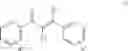
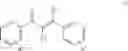
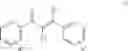
A method for marking a petroleum hydrocarbon, biodiesel fuel or ethanol fuel by adding to the petroleum hydrocarbon, biodiesel fuel or ethanol fuel at least one compound having formula (I)
wherein R1 and R2 independently represent at least one substituent selected from the group consisting of hydrogen, C1-C12 alkyl, C1-C12 alkoxy and nitro; and R3 and R4 independently represent hydrogen, methyl or ethyl.
Inventors:
- George David Green 26 🇺🇸 Cary, IL, United States
- Raymond John Swedo 2 🇺🇸 Mt. Prospect, IL, United States
Assignee:
- ANGUS CHEMICAL COMPANY 67 🇺🇸 Buffalo Grove, IL, United States
Applicant:
Interested in similar patents?
Get notified when new applications in this technology area are published.
Classification:
C10L1/003 » CPC main
Liquid carbonaceous fuels Marking, e.g. coloration by addition of pigments
C10L1/023 » CPC further
Liquid carbonaceous fuels essentially based on components consisting of carbon, hydrogen, and oxygen only for spark ignition
C10L1/026 » CPC further
Liquid carbonaceous fuels essentially based on components consisting of carbon, hydrogen, and oxygen only for compression ignition
C10L1/04 » CPC further
Liquid carbonaceous fuels essentially based on blends of hydrocarbons
C10L1/231 » CPC further
Liquid carbonaceous fuels containing additives; Organic compounds containing nitrogen containing at least one nitrogen-to-oxygen bond, e.g. nitro-compounds, nitrates, nitrites nitro compounds; nitrates; nitrites
C10M129/24 » CPC further
Lubricating compositions characterised by the additive being an organic non-macromolecular compound containing oxygen having a carbon chain of less than 30 atoms Aldehydes; Ketones
C10M133/32 » CPC further
Lubricating compositions characterised by the additive being an organic non-macromolecular compound containing nitrogen having a carbon chain of less than 30 atoms containing a nitrogen-to-oxygen bond containing a nitro group
C10M171/007 » CPC further
Lubricating compositions characterised by purely physical criteria, e.g. containing as base-material, thickener or additive, ingredients which are characterised exclusively by their numerically specified physical properties, i.e. containing ingredients which are physically well-defined but for which the chemical nature is either unspecified or only very vaguely indicated Coloured or dyes-containing lubricant compositions
C10M2207/08 » CPC further
Organic hydrocarbon compounds containing hydrogen, carbon and oxygen as ingredients in lubricant compositions Aldehydes; Ketones
C10M2215/202 » CPC further
Organic compounds containing nitrogen as ingredients in lubricant compositions; Containing nitrogen-to-oxygen bonds containing nitro groups
C10N2040/42 » CPC further
Specified use or application for which the lubricating composition is intended Flashing oils or marking oils
Y02E50/10 » CPC further
Technologies for the production of fuel of non-fossil origin Biofuels, e.g. bio-diesel
Y02E50/10 » CPC further
Technologies for the production of fuel of non-fossil origin Biofuels, e.g. bio-diesel
Y10T436/13 » CPC further
Chemistry: analytical and immunological testing Tracers or tags
Y10T436/21 » CPC further
Chemistry: analytical and immunological testing Hydrocarbon
Y10T436/214 » CPC further
Chemistry: analytical and immunological testing; Hydrocarbon Acyclic [e.g., methane, octane, isoparaffin, etc.]
H01J49/26 IPC
Particle spectrometers or separator tubes Mass spectrometers or separator tubes
C10L1/23 IPC
Liquid carbonaceous fuels containing additives; Organic compounds containing nitrogen containing at least one nitrogen-to-oxygen bond, e.g. nitro-compounds, nitrates, nitrites
C10L1/185 IPC
Liquid carbonaceous fuels containing additives; Organic compounds containing oxygen Ethers; Acetals; Ketals; Aldehydes; Ketones
C10L1/1857 » CPC further
Liquid carbonaceous fuels containing additives; Organic compounds containing oxygen; Ethers; Acetals; Ketals; Aldehydes; Ketones Aldehydes; Ketones
C10L1/19 IPC
Liquid carbonaceous fuels containing additives; Organic compounds containing oxygen Esters ester radical containing compounds; ester ethers; carbonic acid esters
G01N33/24 IPC
Investigating or analysing materials by specific methods not covered by groups - Earth materials
Description
This application claims the benefit of priority under 35 U.S.C. §119(e) of U.S. Provisional Patent Application No. 61/348,778 filed on May 27, 2010.
This invention relates to a method for marking liquid hydrocarbons and other fuels and oils.
Marking of petroleum hydrocarbons and other fuels and oils with various kinds of chemical markers is well known in the art. A variety of compounds have been used for this purpose, as well as numerous techniques for detection of the markers, e.g., absorption spectroscopy and mass spectrometry. For example, U.S. Pub. App. No. 2007/0184555 discloses the use of a variety of organic compounds for use in marking liquid hydrocarbons and other fuels and oils. However, there is always a need for additional marker compounds for these products. Combinations of markers can be used as digital marking systems, with the ratios of amounts forming a code for the marked product. Additional compounds useful as fuel and lubricant markers would be desirable to maximize the available codes. The problem addressed by this invention is to find additional markers useful for marking liquid hydrocarbons and other fuels and oils.
STATEMENT OF INVENTION
The present invention provides a method for marking a petroleum hydrocarbon, biodiesel fuel or ethanol fuel; said method comprising adding to said petroleum hydrocarbon, biodiesel fuel or ethanol fuel at least one compound having formula (I)
wherein R1 and R2 independently represent at least one substituent selected from the group consisting of hydrogen, C1-C12 alkyl, C1-C12 alkoxy and nitro; and R3 and R4 independently represent hydrogen, methyl or ethyl.
DETAILED DESCRIPTION
Percentages are weight percentages (wt %) and temperatures are in ° C., unless specified otherwise. Concentrations are expressed either in parts per million (“ppm”) calculated on a weight/weight basis, or on a weight/volume basis (mg/L); preferably on a weight/volume basis. The term “petroleum hydrocarbon” refers to products having a predominantly hydrocarbon composition, although they may contain minor amounts of oxygen, nitrogen, sulfur or phosphorus; petroleum hydrocarbons include crude oils as well as products derived from petroleum refining processes; they include, for example, crude oil, lubricating oil, hydraulic fluid, brake fluid, gasoline, diesel fuel, kerosene, jet fuel and heating oil. Marker compounds of this invention can be added to a petroleum hydrocarbon, a biodiesel fuel, an ethanol fuel, or a mixture thereof. A biodiesel fuel is a biologically derived fuel containing a mixture of fatty acid alkyl esters, especially methyl esters. Biodiesel fuel typically is produced by transesterification of either virgin or recycled vegetable oils, although animal fats may also be used. An ethanol fuel is any fuel containing ethanol, in pure form, or mixed with petroleum hydrocarbons, e.g., “gasohol.” An “alkyl” group is a substituted or unsubstituted hydrocarbyl group having from one to twenty-two carbon atoms in a linear or branched arrangement. Preferably, the compounds of this invention contain elements in their naturally occurring isotopic proportions.
Each of R1 and R2 may independently represent hydrogen, C1-C12 alkyl, C1-C12 alkoxy and nitro. Each may represent more than one type of substituent and/or more than one substituent within a certain type. Preferably, R1 and R2 may independently represent at least one substituent selected from the group consisting of hydrogen, C1-C4 alkyl, C1-C4 alkoxy and nitro; preferably hydrogen, C1-C2 alkyl, C1-C2 alkoxy and nitro; preferably hydrogen, methyl, methoxy and nitro. Preferably at least one of R1 and R2 represents a substituent other than hydrogen. Preferably, R1 is hydrogen and R2 represents at least one substituent that is not hydrogen, preferably R2 represents one substituent that is not hydrogen. Especially preferred substituents include methoxy and nitro, especially 4-methoxy and 3-nitro. Preferably, R3 and R4 independently represent hydrogen or methyl, preferably one of R3 and R4 represents hydrogen and the other methyl, preferably R4 is hydrogen and R3 is hydrogen or methyl, preferably both R3 and R4 are hydrogen.
In the method of this invention, preferably the minimum amount of each marker is at least 0.01 ppm, preferably at least 0.05 ppm, preferably at least 0.1 ppm, preferably at least 0.2 ppm. Preferably, the maximum amount of each marker is 50 ppm, preferably 20 ppm, preferably 15 ppm, preferably 10 ppm, preferably 5 ppm, preferably 2 ppm, preferably 1 ppm, preferably 0.5 ppm. Preferably, a marker compound is not detectible by visual means in the marked petroleum hydrocarbon, biodiesel fuel or ethanol fuel, i.e., it is not possible to determine by unaided visual observation of color or other characteristics that the petroleum hydrocarbon, biodiesel fuel or ethanol fuel contains a marker compound. Preferably, a marker compound is one that does not occur normally in the petroleum hydrocarbon, biodiesel fuel or ethanol fuel to which it is added, either as a constituent of the petroleum hydrocarbon, biodiesel fuel or ethanol fuel itself, or as an additive used in that petroleum hydrocarbon, biodiesel fuel or ethanol fuel.
Preferably, the marker compounds have a log P value of at least 3, where P is the 1-octanol/water partition coefficient. Preferably, the marker compounds have a log P of at least 4, preferably at least 5. Log P values which have not been experimentally determined and reported in the literature can be estimated using the method disclosed in Meylan, W. M & Howard, P. H., J. Pharm. Sci., vol. 84, pp. 83-92 (1995). Preferably the petroleum hydrocarbon, biodiesel fuel or ethanol fuel is a petroleum hydrocarbon or biodiesel fuel; preferably a petroleum hydrocarbon; preferably crude oil, gasoline, diesel fuel, kerosene, jet fuel or heating oil; preferably gasoline.
In one embodiment of the invention, the marker compounds are detected by at least partially separating them from constituents of the petroleum hydrocarbon, biodiesel fuel or ethanol fuel using a chromatographic technique, e.g., gas chromatography, liquid chromatography, thin-layer chromatography, paper chromatography, adsorption chromatography, affinity chromatography, capillary electrophoresis, ion exchange and molecular exclusion chromatography. Chromatography is followed by at least one of: (i) mass spectral analysis, and (ii) FTIR. Identities of the marker compounds preferably are determined by mass spectral analysis. Preferably, mass spectral analysis is used to detect the marker compounds in the petroleum hydrocarbon, biodiesel fuel or ethanol fuel without performing any separation. Alternatively, marker compounds may be concentrated prior to analysis, e.g., by distilling some of the more volatile components of a petroleum hydrocarbon or ethanol.
Preferably, more than one marker compound is present. Use of multiple marker compounds facilitates incorporation into the petroleum hydrocarbon, biodiesel fuel or ethanol fuel of coded information that may be used to identify the origin and other characteristics of the petroleum hydrocarbon, biodiesel fuel or ethanol fuel. The code comprises the identities and relative amounts, e.g., fixed integer ratios, of the marker compounds. One, two, three or more marker compounds may be used to form the code. Marker compounds according to this invention may be combined with markers of other types, e.g., markers detected by absorption spectrometry, including those disclosed in U.S. Pat. No. 6,811,575; U.S. Pat. App. Pub. No. 2004/0250469 and EP App. Pub. No. 1,479,749. Marker compounds are placed in the petroleum hydrocarbon, biodiesel fuel or ethanol fuel directly, or alternatively, placed in an additives package containing other compounds, e.g., antiwear additives for lubricants, detergents for gasoline, etc., and the additives package is added to the petroleum hydrocarbon, biodiesel fuel or ethanol fuel.
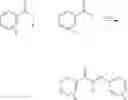
The compounds of this invention are known and are believed to be commercially available. In any event, the compounds may be prepared by methods well known in the art. For example, acetophenones (R3═H) or their higher homologs (R3=methyl, ethyl) may be condensed with benzaldehydes according to the following equation
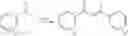
Preferably, an acetophenone is used. Acetophenones or higher homologs may be self-condensed to produce more highly substituted compounds. For example, the following equation illustrates self-condensation of an acetophenone.
EXAMPLES
Example 1
Stability and Extractability of Marker Compounds
The stability and extractability of two markers of formula I (R1=H, R2=4-OCH3; and R1=H, R2=3-NO2) was performed using xylene solutions containing between 100-1000 ppm makers and an equivalent amount of squalene internal reference standard using the following protocols:
Laundering:
Mix 95 parts marked xylenes with 5 parts laundering agent in a 100 mL vial. Mix gently for 8 hours using a magnetic stir bar. Stop mixing and remove a xylene solution aliquot. Analyze by GC and compare marker response to reference (un-laundered) sample.
Laundering Agents:
-
- 1) 5% sulfuric acid
- 2) 98% sulfuric acid
- 3) 5% NaOH solution
- 4) 50% NaOH solution
R1=H, R2=4-OCH3 (Compound Ia)
| internal | |||||
| Sample | marker area | standard area | ratio | marker | % change |
| control | 130123 | 205460 | 0.63 | 100.00 | 0.00 |
| 5% NaOH | 136571 | 212846 | 0.64 | 101.31 | 1.31 |
| 50% NaOH | 136577 | 212973 | 0.64 | 101.26 | 1.26 |
| 5% H2SO4 | 93479 | 211968 | 0.44 | 69.63 | −30.37 |
| 98% H2SO4 | 0 | 213708 | 0.00 | 0.00 | −100.00 |
R1=H, R2=3-NO2 (Compound Ib)
| internal | |||||
| Sample | marker area | standard area | ratio | marker | % change |
| control | 93767 | 200860 | 0.47 | 100.00 | 0.00 |
| 5% NaOH | 93666 | 202256 | 0.46 | 99.20 | −0.80 |
| 50% NaOH | 91328 | 193723 | 0.47 | 100.99 | 0.99 |
| 5% H2SO4 | 58276 | 201231 | 0.29 | 62.04 | −37.96 |
| 98% H2SO4 | 0 | 203517 | 0.00 | 0.00 | −100.00 |
Example 2
Detection of Compounds Ia and Ib in Gasoline
Compounds Ia and Ib were added to separate samples of a commercial gasoline, purchased from a local Marathon station (87 octane), in a concentration of 0.1 ppm. The marked fuel was analyzed by GC/MS using an Agilent DB-35 ms column-15 meters×0.25 mm ID×0.25 μm. The samples were analyzed using a temperature program starting at 100° C. ramping at 20 C/min to 280 C for a 10 minute hold, followed by a 20 C/min ramp to 340 C with a 6 minute hold then finally a 20 C/min ramp to 360 C with a 1 minute hold time. Compound Ia was readily detected with SIM:238 and Compound Ib was readily detected with SIM:253.
Claims
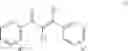
1. A method for marking a petroleum hydrocarbon, biodiesel fuel or ethanol fuel; said method comprising adding to said petroleum hydrocarbon, biodiesel fuel or ethanol fuel at least one compound having formula (I)
wherein R1 and R2 independently represent at least one substituent selected from the group consisting of hydrogen, C1-C12 alkyl, C1-C12 alkoxy and nitro; and R3 and R4 independently represent hydrogen, methyl or ethyl.
2. The method of claim 1 in which R4 is hydrogen and R3 is methyl or hydrogen.
3. The method of claim 2 in which R1 and R2 independently represent at least one substituent selected from the group consisting of hydrogen, C1-C4 alkyl, C1-C4 alkoxy and nitro.
4. The method of claim 3 in which R3 is hydrogen.
5. The method of claim 4 in which each compound of formula (I) is present at a level from 0.05 ppm to 20 ppm.
6. The method of claim 5 in which at least one of R1 and R2 represents a substituent other than hydrogen.
7. The method of claim 6 in which R1 and R2 independently represent at least one substituent selected from the group consisting of hydrogen, C1-C2 alkyl, C1-C2 alkoxy and nitro.
8. The method of claim 7 in which each compound of formula (I) is present at a level from 0.1 ppm to 10 ppm.
9. A method for identifying a petroleum hydrocarbon, biodiesel fuel or ethanol fuel marked with at least one compound having formula (I)
wherein R1 and R2 independently represent at least one substituent selected from the group consisting of hydrogen, C1-C12 alkyl, C1-C12 alkoxy and nitro; and R3 and R4 independently represent hydrogen, methyl or ethyl; wherein each compound of formula (I) is present at a level from 0.05 ppm to 20 ppm; said method comprising separating each compound of formula (I) using a chromatographic method and identifying each compound of formula (I) by mass spectral analysis.
10. The method of claim 9 in which R3 and R4 are hydrogen, at least one of R1 and R2 represents a substituent other than hydrogen and R1 and R2 independently represent at least one substituent selected from the group consisting of hydrogen, C1-C4 alkyl, C1-C4 alkoxy and nitro.
Images & Drawings included:
Sources:
- United States Patent and Trademark Office - verify current appl. status at the USPTO↗
Recent applications in this class:
- » 20240327736 2024-10-03
METHOD OF MARKING A PETROLEUM HYDROCARBON - » 20240199964 2024-06-20
COMPOUNDS FOR MARKING LIQUIDS - » 20230029106 2023-01-26
Method of marking a petroleum hydrocarbon - » 20220298439 2022-09-22
TRACERS AND METHOD OF MARKING LIQUIDS - » 20210292668 2021-09-23
Oil tagging - » 20210163834 2021-06-03
Substituted dibenzofurans as fuel markers - » 20210009910 2021-01-14
Diaryl ethers as fuel markers - » 20210009909 2021-01-14
Xanthenes as fuel markers - » 20200362255 2020-11-19
Compositions and methods and uses relating thereto - » 20190085253 2019-03-21
Marker compositions with nitrogen compounds, and methods for making and using same
Recent applications for this Assignee:
- » 20220135512 2022-05-05
LOW TOXICITY ORGANIC TERTIARY AND QUATERNARY AMINES AND USES THEREOF - » 20200062956 2020-02-27
Ether amine compositions and coatings - » 20190315768 2019-10-17
Nitrated hydrocarbons, derivatives, and processes for their manufacture - » 20180127435 2018-05-10
Nitrated hydrocarbons, derivatives, and processes for their manufacture - » 20170158885 2017-06-08
Low VOC isoxazolidine as open time extenders in water borne paints - » 20160236187 2016-08-18
Method for making anion exchange and chelant resins including aliphatic amino functional groups - » 20160194271 2016-07-07
Process for preparing alkyl pyroglutamic acids - » 20160159970 2016-06-09
High performance extended pot life epoxy hardeners - » 20160046558 2016-02-18
Synthesis of (2-nitro)alkyl (meth)acrylates via transesterification of (meth)acrylate esters - » 20160039843 2016-02-11
Nitrated hydrocarbons, derivatives, and processes for their manufacture