Battery connection topology
US20110293992A1
2011-12-01
12/788,380
2010-05-27
✅ Patent granted
US 8,470,467 B2
2013-06-25
-
-
Jane Rhee
Fraser Clemens Martin & Miller LLC | J. Douglas Miller
2031-05-05
Abstract:
A battery module comprising a plurality of battery cells arranged in a stacked configuration, each of the battery cells including a first terminal disposed on a first end of the battery cell and a second terminal disposed on a second end of the battery cell, wherein the first terminal of at least one of the battery cells is in direct electrical communication with the second terminal of another non-adjacent one of the battery cells.
Inventors:
- Chih-Cheng Hsu 14 🇺🇸 Rochester Hills, MI, United States
- Rebecca S. Ratz 1 🇺🇸 Holly, MI, United States
Assignee:
- GM GLOBAL TECHNOLOGY OPERATIONS LLC 17,253 🇺🇸 Detroit, MI, United States
- GM GLOBAL TECHNOLOGY OPERATIONS, INC. 6,509 🇺🇸 Detroit, MI, United States
Applicant:
Interested in similar patents?
Get notified when new applications in this technology area are published.
Classification:
H01M50/502 » CPC main
Constructional details or processes of manufacture of the non-active parts of electrochemical cells other than fuel cells, e.g. hybrid cells; Current conducting connections for cells or batteries Interconnectors for connecting terminals of adjacent batteries; Interconnectors for connecting cells outside a battery casing
H01M10/42 » CPC further
Secondary cells; Manufacture thereof Methods or arrangements for servicing or maintenance of secondary cells or secondary half-cells
H01M10/0525 » CPC further
Secondary cells; Manufacture thereof; Accumulators with non-aqueous electrolyte; Li-accumulators Rocking-chair batteries, i.e. batteries with lithium insertion or intercalation in both electrodes; Lithium-ion batteries
Y02E60/10 » CPC further
Enabling technologies; Technologies with a potential or indirect contribution to GHG emissions mitigation Energy storage using batteries
Y02E60/10 » CPC further
Enabling technologies; Technologies with a potential or indirect contribution to GHG emissions mitigation Energy storage using batteries
Y02P70/50 » CPC further
Climate change mitigation technologies in the production process for final industrial or consumer products Manufacturing or production processes characterised by the final manufactured product
Y02P70/50 » CPC further
Climate change mitigation technologies in the production process for final industrial or consumer products Manufacturing or production processes characterised by the final manufactured product
H01M6/46 IPC
Primary cells; Manufacture thereof; Grouping of primary cells into batteries of flat cells
H01M10/38 IPC
Secondary cells; Manufacture thereof; Accumulators not provided for in groups - Construction or manufacture
Description
FIELD OF THE INVENTION
The present invention relates generally to a battery cell. In particular, the invention is directed to a battery module including a plurality of the battery cells.
BACKGROUND OF THE INVENTION
A battery cell has been proposed as a clean, efficient and environmentally responsible power source for electric vehicles and various other applications. One type of battery cell is known as the lithium-ion battery. The lithium-ion battery is rechargeable and can be formed into a wide variety of shapes and sizes so as to efficiently fill available space in electric vehicles. A plurality of individual lithium-ion battery cells can be provided in a battery cell module to provide an amount of power sufficient to operate electric vehicles.
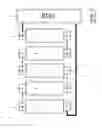
FIG. 1 illustrates an example of a conventional battery module 1 including a plurality of battery cells 2 arranged in a stacked configuration and in electrical communication with an electrical device (e.g. battery disconnect unit (BDU) 4). Each of the battery cells 2 includes a cathode terminal 6 and an anode terminal 7. As shown, the terminals 6, 7 are centered on opposite ends of each of the battery cells 2. To connect the battery cells in a series electrical configuration, the battery cells are stacked with adjacent ones of the battery cells 2 in a flipped orientation relative to each other, wherein the cathode terminal 6 of one of the battery cells 2 is aligned with the anode terminal 7 of an adjacent one of the battery cells 2 and welded together to establish an electrical connection. One of the battery cells 2 disposed at each end of the stack is in electrical communication with the BDU 4 via a bus bar 8. Since one end of the stack is spaced further from the BDU 4 than the other end, at least one of the bus bars 8 must be relatively long. The bus bars 8 consistently generate heat during charging/discharging and are typically spaced from a cooling source.
It would be desirable to develop a battery module including a plurality of battery cells arranged in a stacked configuration, wherein a topology of the stacked battery cells minimizes a length of a bus bar used to connect the battery cells to an electrical device.
SUMMARY OF THE INVENTION
Concordant and consistent with the present invention, a battery module including a plurality of battery cells arranged in a stacked configuration, wherein a topology of the stacked battery cells minimizes a length of a bus bar used to connect the battery cells to a secondary electrical device, has surprisingly been discovered.
In one embodiment, a battery module comprises a plurality of battery cells arranged in a stacked configuration, each of the battery cells including a first terminal disposed on a first end of the battery cell and a second terminal disposed on a second end of the battery cell, wherein the first terminal of at least one of the battery cells is in direct electrical communication with the second terminal of another non-adjacent one of the battery cells.
In another embodiment, a battery module comprises a plurality of battery cells arranged in a stacked configuration, each of the battery cells including a positive terminal disposed on a first end of the battery cell and a negative terminal disposed on a second end of the battery cell, wherein the positive terminal and the negative terminal of at least one of the battery cells are obliquely disposed on opposite ends of the at least one of the battery cells.
In yet another embodiment, a battery assembly comprises: a plurality of battery cells arranged in a stacked configuration, each of the battery cells including a positive terminal disposed on a first end of the battery cell and a negative terminal disposed on a second end of the battery cell; and a battery disconnect unit in electrical communication with a pair of adjacent ones of the battery cells.
BRIEF DESCRIPTION OF THE DRAWINGS
The above, as well as other advantages of the present invention, will become readily apparent to those skilled in the art from the following detailed description of the preferred embodiment when considered in the light of the accompanying drawings in which:
FIG. 1 is a schematic representation of a connection topology for a battery module according to the prior art;
FIG. 2 is schematic representation of a battery module in electrical communication with a battery disconnect unit according to an embodiment of the present invention;
FIG. 3 is a schematic exploded perspective view of a plurality of battery cells of the battery module of FIG. 2;
FIG. 4A is a schematic front elevational view of a battery cell of the battery module of FIG. 2, showing a first orientation;
FIG. 4B is a schematic front elevational view of the battery cell of FIG. 4A, showing a second orientation;
FIG. 4C is a schematic rear elevational view of a battery cell of FIG. 4A, showing a third orientation; and
FIG. 4D is a schematic rear elevational view of the battery cell of FIG. 4B, showing a fourth orientation.
DETAILED DESCRIPTION OF EXEMPLARY EMBODIMENTS OF THE INVENTION
The following detailed description and appended drawings describe and illustrate various embodiments of the invention. The description and drawings serve to enable one skilled in the art to make and use the invention, and are not intended to limit the scope of the invention in any manner.
FIGS. 2-4 illustrate a battery module 10 in electrical communication with a battery disconnect unit 12 (BDU) according to an embodiment of the present invention. It is understood that the battery module 10 may be in electrical communication with other systems and devices. It is further understood that the battery module 10 may be integrated in an electric vehicle.
As more clearly shown in FIG. 3, the battery module 10 includes a plurality of battery cells 14 arranged in a stacked configuration. Each of the battery cells 14 includes a pair of terminals 16, 18 (e.g. tabs). As a non-limiting example, the first terminal 16 (e.g. anode) is associated with a negative electrical charge and the second terminal 18 (e.g. cathode) is associated with a positive electrical charge. As a further non-limiting example, the battery cells 14 are connected to each other in a series electrical configuration. However, other configurations can be used.
In certain embodiments, the first terminal 16 and the second terminal 18 of at least one of the battery cells 14 are disposed on opposite ends 19, 20 of the at least one of the battery cells 14. As a non-limiting example, the first terminal 16 and the second terminal 18 of at least one of the battery cells 14 are obliquely disposed on the opposite ends 19, 20 thereof, wherein the at least one of the battery cells 14 can be arranged in four distinct orientations, as illustrated in FIGS. 4A-40. As a non-limiting example, each of the terminals 16, 18 is disposed adjacent an opposite corner of each of the battery cells 14. It is understood that that the terminals 16, 18 can be spaced from a corner of an associated one of the battery cells 14 or flush with an edge of the associated one of the battery cells 14.
The battery disconnect unit (BDU) 12 is typically a switchable device to selectively provide electrical communication between the battery module 10 and an electrical system (not shown). In certain embodiments the BDU 12 protects the battery module 10 against unexpected discharge and can disconnect the battery module 10 from a connected electrical system in the event of a short circuit or fault condition.
In certain embodiments the BDU 12 is in electrical communication with a pair of adjacent ones of the battery cells 14. As a non-limiting example, at least one of the pair of adjacent ones of the battery cells 14 is disposed on an end of the stack of the battery cells 14. As a further non-limiting example, the battery module 10 is in electrical communication with the BDU 12 via a plurality of bus bars 22. The bus bars 22 are typically formed from a high electrical conductivity material such as copper, aluminum or gold. As a non-limiting example, an exterior surface of at least one of the bus bars 22 is covered with insulating materials (not shown) such as those for electrical cables or plugs to avoid unwanted electrical contact.
In use, each of the battery cells 14 is disposed adjacent another of the battery cells 14 having a different orientation to form a stacked configuration. The terminals 16, 18 of each of the battery cells 14 are electrically coupled to each other in a pre-determined sequence and electrical configuration (e.g. in series). As a non-limiting example, the first terminal 16 (e.g. anode) of at least one of the battery cells 14 is in direct electrical communication with the second terminal 18 (e.g. cathode) of another non-adjacent one of the battery cells 14. As a further non-limiting example, a direct electrical communication can be defined as a current flowing between the first terminal 16 (e.g. anode) of the at least one of the battery cells 14 and the second terminal 18 (e.g. cathode) of the non-adjacent one of the battery cells 14 without intervening electrical contact with another of the battery cells 14.
In certain embodiments, the first terminal 16 of at least one of the battery cells 14 is directly coupled to the second terminal 18 of another non-adjacent one of the battery cells 14 using a welding technique (e.g. ultrasonic) or a mechanical fastener (e.g. a C-channel connector, a J-bar, and the like).
The BDU 12 is then electrically coupled to the stack of the battery cells 14. As a non-limiting example, the BDU 12 is in electrical communication with a pair of adjacent ones of the battery cells 14. As a further non-limiting example, the BDU 12 is in electrical communication with a pair of adjacent ones of the battery cells 14, wherein at least one of the adjacent pair of the battery cells 14 is disposed on an end of the stack of the battery cells 14. Accordingly, the stack of the battery cells 14 generates an electrical voltage for use by the connected electrical system.
The battery module 10 minimizes a bus bar part count and a length of the required bus bars 22, minimizes heat generation from the bus bars 22 during charging and discharging, and localizes a position of the bus bars 22 to maximize thermal management via a strategic position of a cooling system.
From the foregoing description, one ordinarily skilled in the art can easily ascertain the essential characteristics of this invention and, without departing from the spirit and scope thereof, make various changes and modifications to the invention to adapt it to various usages and conditions.
Claims
What is claimed is:1. A battery module comprising a plurality of battery cells arranged in a stacked configuration, each of the battery cells including a first terminal disposed on a first end of the battery cell and a second terminal disposed on a second end of the battery cell, wherein the first terminal of at least one of the battery cells is in direct electrical communication with the second terminal of another non-adjacent one of the battery cells.
2. The battery module according to claim 1, wherein the first terminal and the second terminal of at least one of the battery cells are obliquely disposed on the at least one of the battery cells.
3. The battery module according to claim 1, wherein the first terminal of at least one of the battery cells is coupled directly to the second terminal of another non-adjacent one of the battery cells.
4. The battery module according to claim 1, further comprising a battery disconnect unit in electrical communication with at least one of the battery cells.
5. The battery module according to claim 1, further comprising a battery disconnect unit in electrical communication with at least one of the battery cells with a bus bar.
6. The battery module according to claim 1, further comprising a battery disconnect unit in electrical communication with a pair of adjacent ones of the battery cells.
7. The battery module according to claim 6, wherein one of the pair of adjacent ones of the battery cells is disposed on an end of the stacked configuration of the battery cells.
8. The battery module according to claim 1, wherein each of the battery cells is electrically connected in series.
9. A battery module comprising a plurality of battery cells arranged in a stacked configuration, each of the battery cells including a positive terminal disposed on a first end of the battery cell and a negative terminal disposed on a second end of the battery cell, wherein the positive terminal and the negative terminal of at least one of the battery cells are obliquely disposed on the at least one of the battery cells.
10. The battery module according to claim 9, wherein the positive terminal of at least one of the battery cells is coupled directly to the negative terminal of another non-adjacent one of the battery cells
11. The battery module according to claim 9, further comprising a battery disconnect unit in electrical communication with at least one of the battery cells.
12. The battery module according to claim 9, further comprising a battery disconnect unit in electrical communication with at least one of the battery cells with a bus bar.
13. The battery module according to claim 9, further comprising a battery disconnect unit in electrical communication with a pair of adjacent ones of the battery cells.
14. The battery module according to claim 13, wherein one of the pair of adjacent ones of the battery cells is disposed on an end of the stacked configuration of the battery cells.
15. The battery module according to claim 9, wherein each of the battery cells is electrically connected in series.
16. A battery assembly comprising:
a plurality of battery cells arranged in a stacked configuration, each of the battery cells including a positive terminal disposed on a first end of the battery cell and a negative terminal disposed on a second end of the battery cell; and
a battery disconnect unit in electrical communication with a pair of adjacent ones of the battery cells.
17. The battery module according to claim 16, wherein the positive terminal of at least one of the battery cells is coupled directly to the negative terminal of another non-adjacent one of the battery cells
18. The battery module according to claim 16, wherein the battery disconnect unit is in electrical communication with the at least one of the battery cells with a bus bar.
19. The battery module according to claim 16, wherein one of the pair of adjacent ones of the battery cells is disposed on an end of the stacked configuration of the battery cells.
20. The battery module according to claim 16, wherein each of the battery cells is electrically connected in series.
Images & Drawings included:



Sources:
- United States Patent and Trademark Office - verify current appl. status at the USPTO↗
Recent applications in this class:
- » 20250233270 2025-07-17
FUSE DEVICE FOR JOINING BATTERY CELLS, AND METHOD OF FORMING - » 20250226537 2025-07-10
BATTERY CONFIGURATIONS HAVING THROUGH-PACK FASTENERS - » 20250183487 2025-06-05
Battery Module, Battery Pack Including Same Battery Module, and Automobile Including Same Battery Pack - » 20250015444 2025-01-09
BATTERY AND ELECTRONIC DEVICE - » 20250015443 2025-01-09
BATTERY MODULE WITH FLEXIBLE INTERCONNECTOR - » 20240429563 2024-12-26
POWER STORAGE MODULE - » 20240313360 2024-09-19
BUS BAR AND CELL STACK - » 20240266680 2024-08-08
BATTERY PACK INCLUDING CONNECTION PLATE - » 20240258652 2024-08-01
Battery Module and Battery Pack Comprising Same - » 20240204358 2024-06-20
BATTERY CELL, BATTERY, AND ELECTRICAL DEVICE
Recent applications for this Assignee:
- » 20250293679 2025-09-18
PROGNOSIS AND CONTROL OF POWER MODULE FOR ELECTRIC LOAD - » 20250293365 2025-09-18
FIBER-REINFORCED POLYMER BATTERY ENCLOSURES, COMPOSITE COMPONENTS, AND METHODS WITH INTEGRATED POLYMER SEALS - » 20250293279 2025-09-18
MEMBRANE ELECTRODE ASSEMBLY - » 20250293272 2025-09-18
METAL BEAD SEAL BUCKLING LOAD AND PRESSURE UNIFORMITY WITH AN ENFORCEMENT LAYER - » 20250293270 2025-09-18
METHOD OF SHAPING BIPOLAR PLATES - » 20250289417 2025-09-18
DETERMINATION OF EVASIVE MANEUVER ACTION TO AVOID ONCOMING ROAD HAZARD OF A VEHICLE - » 20250289366 2025-09-18
SYSTEM AND METHOD FOR NOTIFYING PASSENGERS OF NEARBY OBJECTS - » 20250286485 2025-09-11
CONTROL CIRCUIT FOR A DIRECT CURRENT MOTOR - » 20250286331 2025-09-11
ELECTRICAL CONNECTOR MOUNTING - » 20250286096 2025-09-11
MEMBRANE ELECTRODE ASSEMBLY HAVING AN ORGANIC SOLVENT