MOLDED ARTICLE AND METHOD FOR MAKING THE SAME
US20110318591A1
2011-12-29
12/861,904
2010-08-24
Abstract:
A molded article includes a first layer made of soft material, a second layer made of plastic material; and a third layer made of hard material. The first layer and the third layer are respectively joined to the opposite sides of the second layer by injection molding. A method for making the molded article is also disclosed.
Assignee:
- FIH (HONG KONG) LIMITED 1,461 🇭🇰 Kowloon, Hong Kong
Interested in similar patents?
Get notified when new applications in this technology area are published.
Classification:
B29C45/14467 » CPC main
Injection moulding, i.e. forcing the required volume of moulding material through a nozzle into a closed mould; Apparatus therefor incorporating preformed parts or layers, e.g. injection moulding around inserts or for coating articles Joining articles or parts of a single article
B32B1/00 » CPC further
Layered products having a general shape other than plane
B32B7/02 » CPC further
Layered products characterised by the relation between layers; Layered products characterised by the relative orientation of features between layers, or by the relative values of a measurable parameter between layers, i.e. products comprising layers having different physical, chemical or physicochemical properties; Layered products characterised by the interconnection of layers Physical, chemical or physicochemical properties
B32B7/12 » CPC further
Layered products characterised by the relation between layers; Layered products characterised by the relative orientation of features between layers, or by the relative values of a measurable parameter between layers, i.e. products comprising layers having different physical, chemical or physicochemical properties; Layered products characterised by the interconnection of layers; Interconnection of layers using interposed adhesives or interposed materials with bonding properties
B32B9/005 » CPC further
Layered products comprising a layer of a particular substance not covered by groups - comprising one layer of ceramic material, e.g. porcelain, ceramic tile
B32B9/025 » CPC further
Layered products comprising a layer of a particular substance not covered by groups - comprising animal or vegetable substances, e.g. cork, bamboo, starch comprising leather
B32B9/045 » CPC further
Layered products comprising a layer of a particular substance not covered by groups - comprising such substance as the main or only constituent of a layer, next to another layer of a of synthetic resin
B32B15/082 » CPC further
Layered products comprising a layer of metal comprising metal as the main or only constituent of a layer, next to another layer of a of synthetic resin comprising vinyl resins; comprising acrylic resins
B32B15/09 » CPC further
Layered products comprising a layer of metal comprising metal as the main or only constituent of a layer, next to another layer of a of synthetic resin comprising polyesters
B32B27/302 » CPC further
Layered products comprising synthetic resin comprising vinyl (co)polymers; comprising acrylic (co)polymers comprising aromatic vinyl (co)polymers, e.g. styrenic (co)polymers
B32B27/308 » CPC further
Layered products comprising synthetic resin comprising vinyl (co)polymers; comprising acrylic (co)polymers comprising acrylic (co)polymers
B32B27/365 » CPC further
Layered products comprising synthetic resin comprising polyesters comprising polycarbonates
B29C2045/14909 » CPC further
Injection moulding, i.e. forcing the required volume of moulding material through a nozzle into a closed mould; Apparatus therefor incorporating preformed parts or layers, e.g. injection moulding around inserts or for coating articles; Details, accessories and auxiliary operations; Coating a sheet-like insert smaller than the dimensions of the adjacent mould wall the edge of the sheet-like insert being hidden, e.g. in a groove or protruding into the injected material
B32B2250/44 » CPC further
Layers arrangement Number of layers variable across the laminate
B32B2307/50 » CPC further
Properties of the layers or laminate having particular mechanical properties
B32B2307/536 » CPC further
Properties of the layers or laminate having particular mechanical properties Hardness
B32B2307/554 » CPC further
Properties of the layers or laminate having particular mechanical properties Wear resistance
Y10T428/31703 » CPC further
Stock material or miscellaneous articles; Composite [nonstructural laminate]; Of metal Next to cellulosic
B32B15/08 IPC
Layered products comprising a layer of metal comprising metal as the main or only constituent of a layer, next to another layer of a of synthetic resin
B29C45/14 IPC
Injection moulding, i.e. forcing the required volume of moulding material through a nozzle into a closed mould; Apparatus therefor incorporating preformed parts or layers, e.g. injection moulding around inserts or for coating articles
B29C2045/14532 » CPC further
Injection moulding, i.e. forcing the required volume of moulding material through a nozzle into a closed mould; Apparatus therefor incorporating preformed parts or layers, e.g. injection moulding around inserts or for coating articles; Joining articles or parts of a single article injecting between two sheets
Description
CROSS-REFERENCE TO RELATED APPLICATIONS
This application is related to co-pending U.S. patent applications (Attorney Docket No. US34278 and US34279), both entitled “MOLDED ARTICLE AND METHOD FOR MAKING THE SAME”, by Kun-Tsan Wu. Such applications have the same assignee as the present application. The above-identified application is incorporated herein by reference.
BACKGROUND
1. Technical Field
The present disclosure relates to a molded article and a method for making the molded article.
2. Description of Related Art
Molded articles fabricated by injection molding are often painted for aesthetic reasons. However, paint may easily chip, peel, or wear off the molded article.
Therefore, there is room for improvement within the art.
BRIEF DESCRIPTION OF THE DRAWINGS
Many aspects of the present molded article and method for making the same can be better understood with reference to the following drawings. The components in the various drawings are not necessarily drawn to scale, the emphasis instead being placed upon clearly illustrating the principles of the present molded article and method for making the same. Moreover, in the drawings, like reference numerals designate corresponding parts throughout the diagrams.
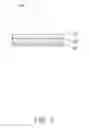
FIG. 1 is a sectional schematic view of part of a molded article according to a first exemplary embodiment.
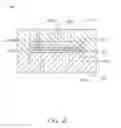
FIG. 2 is a sectional schematic view during molding of the molded article.
FIG. 3 is a sectional schematic view of the molded article.
FIG. 4 is a sectional schematic view of a molded article according to a second exemplary embodiment.
FIG. 5 is a sectional schematic view of a molded article according to a third exemplary embodiment.
DETAILED DESCRIPTION
The disclosed molded article can be a housing of electronic device, such as a mobile phone or personal digital assistant.
FIG. 1 shows a molded article 100 according to a first exemplary embodiment including a first layer 10, a second layer 20 and a third layer 30. For example, the first layer 10 can substantially cover the second layer 20, and the third layer 30 can be embedded into the second layer 20 (shown in FIG. 3).
The first layer 10 may be made of a soft material selected from a group including leather, textile, and film. The soft material should be wear-resistant yet soft. The second layer 20 is made of a plastic material selected from a group including polycarbonate, polymethyl methacrylate, polystyrene, or any desired combination thereof. The third layer 30 is made of a hard material selected from a group including metal, glass, and ceramic. The hard material for the third layer 30 adds mechanical strength. When the third layer 30 is made of metal, it may also function as an antenna.
The molded article 100 can be made by injection molding, that is, molding the first layer 10 and the third layer 30 to the two opposite sides of the second layer 20, respectively, and if needed, reinforcing the bond with adhesive (not shown) placed between the layers. The adhesive can be made of polyurethane, epoxy resin, or a combination of the two.
Referring to FIG. 2, to fabricate the molded article 100, the first layer 10, which can be a decorative film, for example, and the third layer 30, which can be a cooper foil, for example, are assembled into a mold 40. The mold 40 includes a female mold 42 and a male mold 44 engaging with the female mold 42. The female mold 42 defines a cavity 422, first suction holes 424, and a channel 426. The suction holes 424 and the channel 426 run through the female mold 42 and interconnect with the cavity 422. The male mold 44 forms a core 442, second suction holes 444 running through the male mold 44, and the core 442.
The first layer 10 is secured onto the core 442 by a vacuum communicating with the second suction holes 444. The third layer 30 is secured into the cavity 422 by a vacuum communicating with the first suction holes 424. The third layer 30 does not cover the channel 426. The female mold 42 engages with the male mold 44, and the core 442 extends into the cavity 422 to form a chamber 4244. Plastic molding material is injected into the chamber 4244 through the channel 426 and forms the second layer 20. The second layer 12 integrally combines with the first layer 10 and the third layer 20 to form the molded article 100, which can then be removed.
Understandably, a through hole (not shown) can be defined in the third layer 30 for injection of molten plastic into the chamber 4244 when the third layer 30 is substantially attached on the entire bottom of the cavity 422 and covers the channel 426. To increase the combining strength, the first layer 10 and the third layer 30 can be printed with adhesive thereon before molding. The adhesive adheres to the second layer 20.
Referring to FIGS. 4 and 5, to prevent the molded article 100 from separating at the edges thereof, an additional sealing layer 50 can be formed to enclose the edges of the molded article 100 by a second injection molding step. The sealing layer 50 may have an L-shaped cross-section that extends to the first layer 10 and covers the end surface 123 of the molded article 100. During the second injection molding, the molded article 100 is placed into another mold and plastic molding material is injected into the mold to combine the molded article 100 with the sealing layer 50. Accordingly, the edge of the molded article 100 is enclosed by the sealing layer 50.
In FIG. 5, a different sealing layer 64 can be integrally formed with a second layer 62. During the injection molding, the second layer 62 extends to form two branches 642. One branch 642 encloses the periphery of the first layer 10, and the other branch 642 encloses the periphery of the third layer 30.
It is to be understood that the first layer 10 and the third layer 30 both can be made soft material, or both can be made of made of hard material.
It is to be understood that even though numerous characteristics and advantages of the present embodiments have been set forth in the foregoing description, together with details of structures and functions of various embodiments, the disclosure is illustrative only, and changes may be made in detail, especially in matters of shape, size, and arrangement of parts within the principles of the present invention to the full extent indicated by the broad general meaning of the terms in which the appended claims are expressed.
Claims
What is claimed is:1. A molded article, comprising:
a first layer made of soft material;
a second layer made of plastic material; and
a third layer made of hard material; wherein:
the first layer and the third layer are joined to the opposite sides of the second layer by injection molding.
2. The molded article as claimed in claim 1, wherein the soft material of the first layer is leather and the hard material of the third layer is metal.
3. The molded article as claimed in claim 1, wherein the molded article includes a sealing layer, the sealing layer encloses the edges of the molded article, to prevent separating at the edges thereof.
4. The molded article as claimed in claim 3, wherein the sealing layer is formed integrally with the second layer, the second layer extends to form two branches forming the sealing layer, with one branch enclosing the periphery of the first layer, and the other branch enclosing the periphery of the third layer.
5. The molded article as claimed in claim 3, wherein the sealing layer is formed by a second injection molding step.
6. The molded article as claimed in claim 3, wherein the sealing layer has an L-shaped cross-section, the sealing layer extends to the first layer and covers the end surface of the molded article.
7. A molded article, comprising:
a first layer made of soft material;
a third layer made of hard material;
a second layer made of plastic material and arranged between the first layer and third layer, and
a sealing layer made of plastic material; wherein:
the first layer and the third layer are joined to the opposite sides of the second layer by injection molding, the sealing layer encloses the edges of the molded article to prevent separating at the edges thereof.
8. A method for making a molded article, comprising:
providing a mold, the mold including a male mold and a female mold engaging with the male mold, one of the male mold and the female mold defining a cavity, and the other forming a core engaging with the cavity to form a chamber;
placing a first layer on the core and a third layer into the cavity;
engaging the female mold with the male mold, injecting a plastic material into the chamber, the plastic material combining the first layer and the third layer to form a molded article, the plastic material forming a second layer between the first layer and the third layer; the second layer extending to form a sealing layer, the sealing layer enclosing the edges of the molded article;
opening the mold and taking the molded article out.
9. The method for making the molded article as claimed in claim 8, wherein the first layer is leather and the third layer is metal.
10. The method for making the molded article as claimed in claim 8, wherein the second layer extends to form two branches comprising the sealing layer, with one branch enclosing the periphery of the first layer, and the other branch enclosing the periphery of the third layer.
Images & Drawings included:

Sources:
- United States Patent and Trademark Office - verify current appl. status at the USPTO↗
Similar patent applications:
- » 20110183090
Cellulose derivative, process of preparing cellulose derivative, resin composition, molded article, method of making molded article, and housing for electronic equipment - » 20070194485
Method of making molds for making articles and a method of molding articles using such molds - » 20100084363
HIGH-DENSITY POLYETHYLENE COMPOSITIONS, METHOD OF MAKING THE SAME, INJECTION MOLDED ARTICLES MADE THEREFROM, AND METHOD OF MAKING SUCH ARTICLES - » 20210024727
High-density polyethylene compositions, method of making the same, injection molded articles made therefrom, and method of making such articles - » 20160237266
High-density polyethylene compositions, method of making the same, injection molded articles made therefrom, and method of making such articles - » 20190031867
HIGH-DENSITY POLYETHYLENE COMPOSITIONS, METHOD OF MAKING THE SAME, INJECTION MOLDED ARTICLES MADE THEREFROM, AND METHOD OF MAKING SUCH ARTICLES - » 20140087108
EXTRUDABLE COMPOSITION DERIVED FROM RENEWABLE RESOURCES AND METHOD OF MAKING MOLDED ARTICLES UTILIZING THE SAME - » 20160264776
Extrudable polymer composition and method of making molded articles utilizing the same - » 20110177293
Method of making molded articles - » 20050090597
Aggregate for making a molded article and a method of making the aggregate
Recent applications in this class:
- » 20250050557 2025-02-13
METHOD FOR COMBINING HETEROGENEOUS METAL PARTS - » 20240359376 2024-10-31
SELECTIVELY FILLED HOLLOW PROFILES AND METHODS OF PREPARING HOLLOW PROFILES FOR JOINING OPERATIONS - » 20240351253 2024-10-24
ALUMINUM PROFILE INJECTION BONDING METHOD - » 20240149507 2024-05-09
SYSTEM AND METHOD OF MOLDING A HOLLOW ARTICLE - » 20240123661 2024-04-18
METHOD OF MANUFACTURING COVER WINDOW AND METHOD OF MANUFACTURING DISPLAY DEVICE - » 20230191671 2023-06-22
TUBING COUPLER MOLDINGS AND SYSTEMS, AND ASSOCIATED METHODS - » 20230158722 2023-05-25
Manufacturing method and mold for artificial shuttlecock - » 20230075178 2023-03-09
Molded article, electrical product and method for producing molded article - » 20230043893 2023-02-09
Method for injection molding a light module for a lighting device of a motor vehicle - » 20230010708 2023-01-12
METHOD FOR PRODUCING A HOUSING OF AN AIR CONDITIONER
Recent applications for this Assignee:
- » 20220140846 2022-05-05
Antenna structure and wireless communication device using same - » 20220094077 2022-03-24
Antenna structure and wireless communication device using same - » 20220059931 2022-02-24
Antenna structure and wireless communication device - » 20220021116 2022-01-20
Single antenna structure capable of operating in multiple band widths - » 20220010948 2022-01-13
Anti-loosing structure and backlight module - » 20200170133 2020-05-28
Housing, electronic device, and method for manufacturing same - » 20200122194 2020-04-23
Frame and surface treatment method for the frame - » 20200060034 2020-02-20
Housing, method for manufacturing the same, and electronic device having the same - » 20200016805 2020-01-16
Housing, electronic device, and method for manufacturing the same - » 20190368052 2019-12-05
COMPOSITE AND METHOD FOR MAKING SAME