High ionic conductivity electrolytes from poly(siloxanes-co-ethylene oxide)
US20110318649A1
2011-12-29
13/255,092
2010-02-26
✅ Patent granted
US 9,048,507 B2
2015-06-02
WO; PCT/US2010/025680; 20100226
WO; WO2010/101791; 20100910
Margaret Moore
R'Sue Popowich Caron
2030-04-18
Abstract:
Polymer electrolytes offer increased safety and stability as compared to liquid electrolytes, yet there are a number of new challenges that polymer electrolytes introduce. A novel polymer electrolyte, as disclosed herein, is an ionically-conductive polymer with a backbone that is both highly flexible and highly conductive with high conductivity pendant chains attached, thus increasing the concentration of lithium coordination sites and improving ionic conductivity. Previous strategies for comb-type conductive polymers have focused on attaching either conductive pendant chains to a flexible non-conductive backbone or conductive pendant groups to a marginally flexible conductive backbone.
Inventors:
- Hany Basam Eitouni 71 🇺🇸 Oakland, CA, United States
- Bing R. Hsieh 16 🇺🇸 Pleasanton, CA, United States
Assignee:
- SEEO, INC 60 🇺🇸 Hayward, CA, United States
Applicant:
Interested in similar patents?
Get notified when new applications in this technology area are published.
Classification:
C08G65/336 » CPC further
Macromolecular compounds obtained by reactions forming an ether link in the main chain of the macromolecule from cyclic ethers by opening of the heterocyclic ring; Polymers modified by chemical after-treatment with organic compounds containing silicon
Y02E60/10 » CPC further
Enabling technologies; Technologies with a potential or indirect contribution to GHG emissions mitigation Energy storage using batteries
Y02E60/10 » CPC further
Enabling technologies; Technologies with a potential or indirect contribution to GHG emissions mitigation Energy storage using batteries
H01M10/056 IPC
Secondary cells; Manufacture thereof; Accumulators with non-aqueous electrolyte characterised by the materials used as electrolytes, e.g. mixed inorganic/organic electrolytes
C08G77/50 IPC
Macromolecular compounds obtained by reactions forming a linkage containing silicon with or without sulfur, nitrogen, oxygen or carbon in the main chain of the macromolecule in which at least two but not all the silicon atoms are connected by linkages other than oxygen atoms by carbon linkages
H01M10/0565 » CPC main
Secondary cells; Manufacture thereof; Accumulators with non-aqueous electrolyte characterised by the materials used as electrolytes, e.g. mixed inorganic/organic electrolytes the electrolyte being constituted of organic materials only Polymeric materials, e.g. gel-type or solid-type
C08G77/14 » CPC further
Macromolecular compounds obtained by reactions forming a linkage containing silicon with or without sulfur, nitrogen, oxygen or carbon in the main chain of the macromolecule; Polysiloxanes containing silicon bound to oxygen-containing groups
C08G77/46 » CPC further
Macromolecular compounds obtained by reactions forming a linkage containing silicon with or without sulfur, nitrogen, oxygen or carbon in the main chain of the macromolecule; Block-or graft-polymers containing polysiloxane sequences containing polyether sequences
C08K5/5419 » CPC further
Use of organic ingredients; Silicon-containing compounds containing oxygen containing at least one Si—O bond containing at least one Si—C bond
C08G77/26 » CPC further
Macromolecular compounds obtained by reactions forming a linkage containing silicon with or without sulfur, nitrogen, oxygen or carbon in the main chain of the macromolecule; Polysiloxanes containing silicon bound to organic groups containing atoms other than carbon, hydrogen and oxygen nitrogen-containing groups
C08J2383/12 » CPC further
Characterised by the use of macromolecular compounds obtained by reactions forming in the main chain of the macromolecule a linkage containing silicon with or without sulfur, nitrogen, oxygen, or carbon only; Derivatives of such polymers; Block- or graft-copolymers containing polysiloxane sequences containing polyether sequences
H01B1/122 » CPC further
Conductors or conductive bodies characterised by the conductive materials; Selection of materials as conductors mainly consisting of other non-metallic substances organic substances Ionic conductors
H01M2300/0082 » CPC further
Electrolytes; Non-aqueous electrolytes; Solid electrolytes Organic polymers
C08G77/24 » CPC further
Macromolecular compounds obtained by reactions forming a linkage containing silicon with or without sulfur, nitrogen, oxygen or carbon in the main chain of the macromolecule; Polysiloxanes containing silicon bound to organic groups containing atoms other than carbon, hydrogen and oxygen halogen-containing groups
H01M10/052 » CPC further
Secondary cells; Manufacture thereof; Accumulators with non-aqueous electrolyte Li-accumulators
C08J5/20 » CPC further
Manufacture of articles or shaped materials containing macromolecular substances Manufacture of shaped structures of ion-exchange resins
H01B1/12 IPC
Conductors or conductive bodies characterised by the conductive materials; Selection of materials as conductors mainly consisting of other non-metallic substances organic substances
C08G77/12 » CPC further
Macromolecular compounds obtained by reactions forming a linkage containing silicon with or without sulfur, nitrogen, oxygen or carbon in the main chain of the macromolecule; Polysiloxanes containing silicon bound to hydrogen
Description
CROSS-REFERENCE TO RELATED APPLICATIONS
This application claims priority to U.S. Patent Provisional Application 61/158,257, filed Mar. 6, 2009, which is incorporated by reference herein. This application is also related to U.S. Patent Provisional Application 61/158,241, filed Mar. 6, 2009
BACKGROUND OF THE INVENTION
Field of the Invention
This invention relates generally to electrolytes for electrochemical cells, and, more specifically, to polymer electrolytes for lithium batteries.
Polymer electrolytes offer increased safety and stability as compared to liquid electrolytes, yet there are a number of new challenges that polymer electrolytes introduce. The primary limitation is in the ionic conductivity. Polymer chains in the electrolytes solvate ions and provide ion conduction through segmental motion. Thus considerable effort has been devoted to increasing the segmental motion of these solvating polymer chains.
The most common polymer studied for use as an electrolyte is polyethylene oxide (PEO). Although PEO has good conductivity at high temperatures, its conductivity at low temperatures is extremely poor. Three common strategies have been employed with PEO-type polymers for increasing conductivity.
The first strategy is to prevent PEO from crystallizing. This can be done by altering the structure of the polymer to prevent formation of crystalline structures. One way to do this is by introducing heterogenous groups into the PEO chain. Examples of such groups include oxymethylene and propylene oxide groups.
The second method for improving conductivity is to incorporate side or pendant PEO chains that are attached to a polymer backbone. The pendant chains have increased flexibility compared to the original linear PEO backbone, which leads to increased segmental motion and ionic conductivity. Poly (oxyethylene methacrylates) and polyvinylethers are examples of useful pendant-containing polymer electrolytes.
The third common strategy for improving conductivity is to increase the flexibility and segmental motion of a polymer where pendant groups are not present. An example of such a linear system is poly(dimethyl siloxane-co-ethylene oxide) in which the siloxane units increase flexibility while the ethylene oxide units provide coordinating sites for lithium salts.
In all of the approaches used to improve polymer conductivity described above, the polymers are limited in the concentration of lithium ion coordination sites because of backbone segments that are present only for structural reasons or because of potential ion coordination sites that are taken up with bonding to side chains instead. It would be useful to have a polymer with an increased concentration of lithium coordination sites and improved ionic conductivity.
DETAILED DESCRIPTION
The embodiments of the invention are illustrated in the context of electrolytes in a lithium battery. The skilled artisan will readily appreciate, however, that the materials disclosed herein will have application in a number of other contexts where ionic conduction is desirable, particularly where low volatility is important.
Previous strategies for comb-type conductive polymers have focused on either attaching conductive pendant chains to a flexible non-conductive backbone or attaching conductive pendant groups to a marginally flexible conductive backbone. In the embodiments of the invention, as disclosed herein, conductive pendant chains are attached to a backbone that is both flexible and conductive.
Due to high power demands typical for lithium batteries, there is a strong need for polymer electrolyte materials with high ionic conductivity at room temperature. The polymers described herein overcome many of the problems that plague previously-reported polymer electrolytes. Known polymer electrolyte materials with high room temperature ionic conductivity include polysiloxanes and polyphosphazenes having oligomeric ethylene oxide pendant groups. The remarkable room temperature conductivities for these polymers have been ascribed to highly flexible inorganic backbones that produce an amorphous polymer matrix with a very low glass transition temperature (Tg). The backbone however does not coordinate lithium ions itself and thus reduces the total concentration of possible coordination sites. The structure of a polysiloxane with grafted oligomeric ethylene oxide pendant groups is shown as (1) below.
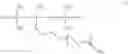
In one embodiment of the invention, the polymer structure shown as (2) below can be used as an electrolyte. The silicon-containing groups are interspersed alternately between oligomeric PEO, but within the alternating sites, the silicon-containing groups are random (e.g., Sa—PEO—Sb—PEO—Sc—PEO—Sd—PEO—SePEO—Sf). There can be any of a variety of R groups associated with each silicon-containing group. In one arrangement, the R groups are one or more of highly polar groups, cyclic carbonates, nitrile groups, N-pyrrolidone groups, and perfluoroalkyl groups. The polymer (2) has a lower Tg than PEO and coordinates lithium ions better than the pure siloxane backbone shown above. Additionally, the polymer shown in (2) is hydrolytically stable compared to linear poly(dimethyl siloxane-co-ethylene oxide), which contains weak Si—O—C bonds. The R groups in (2) represent variations of oligomeric ethylene oxide pendant groups or other coordinating groups such as highly polar groups, cyclic carbonate, nitrile groups, N-pyrrolidone groups, and perfluoroalkyl groups.
In one embodiment, the range of integer m is approximately 1 to 10. In one embodiment, he range of integer n is approximately 10 to 10000, and the range of integer p is approximately 1 to 10. In one embodiment, R1 and R2 groups can be selected from, but are not limited to, the following groups:
-
- —CH3
- —(CH2)3O—(CH2CH2O)o—CH3
- —(CH2)2Si(CH3)2OSi(CH3)2—(CH2)3O—(CH2CH2O)o—CH3
- —(CH2)2Si(CH3)2—(CH2)3O(CH2CH2O)o—CH3
- (CH2)2Si(CH3)2—O—(CH2CH2O)ō—CH3
wherein o is an integer ranging from approximately 1 to 20
In one exemplary embodiment of the invention, the novel polymer (2) is made via a hydrosilylation condensation polymerization as shown in the following scheme:
In one embodiment of the invention, the polymer material (2) described above is combined with an electrolyte salt and is used as the electrolyte between an anode and a cathode in an electrochemical device such as battery cell. In some arrangements, the electrolyte can also be used in the anode and/or in the cathode. Some examples of useful electrolyte salts include AgSO3CF3, NaSCN, NaSO3CF3, KTFSI, NaTFSI, Ba(TFSI)2, Pb(TFSI)2, Ca(TFSI)2, and mixtures thereof. In some arrangements, the electrolyte salt contains lithium. Some examples of useful lithium electrolyte salts include LiSCN, LiN(CN)2, LiClO4, LiBF4, LiAsF6,LiPF6, LiCF3SO3, Li(CF3SO2)2N, Li(CF3SO2)3C, LiN(SO2C2F5)2), lithium alkyl fluorophosphates, lithium oxalatoborate, as well as other lithium bis(chelato)borates having five to seven membered rings, LiPF3(C2F5)3, LiPF3(CF3)3, LiB(C2O4)2, and mixtures thereof.
In another embodiment of the invention, a plurality of battery cells that use the polymer electrolyte described herein can be joined together to form a battery pack.
EXAMPLE
The following example provides details relating to fabrication of novel polymer electrolyte (3) in accordance with embodiments of the present invention. It should be understood the following is representative only, and that the invention is not limited by the detail set forth in the example.
A three-neck round flask was equipped with a magnetic stirrer, two addition funnels, a nitrogen inlet, and a rubber septum. Sodium hydride (60% dispersion in mineral oil) (46 g, 1.15 mol) and then inhibitor-free tetrahydrofuran (500 ml) were added into the flask. Triethylene glycol monomethyl ether (156 ml, 0.976 mol) and allyl bromide (100 ml, 1.155 mol) were placed separately into each of the two addition funnels to await addition into the flask. The mixture was cooled with an ice-water bath, and then the triethylene glycol monomethyl ether was added dropwise from the funnel into the flask. The resulting mixture was stirred at room temperature for at least two hours. The mixture was cooled again with an ice-water bath before the allyl bromide was added dropwise from the funnel into the flask. The resulting mixture was stirred overnight at room temperature. The solid (mostly NaBr) that had formed in the mixture was removed by suction filtration. The solid was rinsed with tetrahydrofuran. The filtrate was concentrated in vacuo (rotavap followed by pump under vacuum) and then vacuum distilled (80-90° C.) to give triethylene glycol allyl methyl ether (4) as a colorless liquid.
A flask was equipped with a magnetic stirrer and an addition funnel. Dichloro-methylsilane (400 ml, 3.84 mol) and toluene (300 ml) were added into the flask. Triethylene glycol allyl methyl ether (1) (81.6 g, 0.4 mol), toluene (100 ml), and platinum divinyltetramethyldisilane catalyst (2.1-2.4% platinum concentration) (0.25 ml) were placed in the addition funnel to await addition into the flask. The disiloxane solution was heated to 40° C., before adding the triethylene glycol allyl methyl ether solution dropwise. The resulting solution was heated to 50° C. for a total of 24 hours, cooled, and then concentrated in vacuo (rotavap followed by pump under vacuum). Under a nitrogen atmosphere, anhydrous tetrahydrofuran (300 ml ) was added to the flask and the solution was cooled to 0° C. Lithium aluminum hydride solution (2 M in THF) was added dropwise and allowed to warm to room temperature. The solution was stirred for 8 hours. The solution was concentrated in vacuo (rotovap followed by pump under vacuum). The product (5) was then abstracted in toluene (200 ml).
A three-neck round flask was equipped with a magnetic stirrer, two addition funnels, a nitrogen inlet, and a rubber septum. Sodium hydride (60% dispersion in mineral oil) (46 g, 1:15 mol) and then inhibitor-free tetrahydrofuran (500 ml) were added into the flask. Tetraethylene glycol (169 ml, 0.976 mol) and allyl bromide (100 ml, 1.155 mol) were placed separately into each of the two addition funnels to await addition into the flask. The mixture was cooled with an ice-water bath, and then the tetraethylene glycol was added dropwise from the funnel into the flask. The resulting mixture was stirred at room temperature for at least two hours. The mixture was cooled again with an ice-water bath before the allyl bromide was added dropwise from the funnel into the flask. The resulting mixture was stirred overnight at room temperature. The solid (mostly NaBr) that had formed in the mixture was removed by suction filtration. The solid was rinsed with tetrahydrofuran. The filtrate (6) was concentrated in vacuo (rotavap followed by pump under vacuum).
A flask was equipped with a magnetic stirrer and an addition funnel. 1,1,3,3-tetramethydisiloxane (40 g, 0.3 mol), 2HSiPEG (2) (75 g, 0.3 mol), and toluene (300 ml) were added into the flask. Tetraethylene glycol diallyl ether (3) (165 g, 0.6 mol), toluene (100 ml), and platinum divinyltetramethyldisilane catalyst (2.1-2.4% platinum concentration) (0.25 ml) were placed in the addition funnel to await addition into the flask. The disiloxane solution was heated to 60-70° C., before adding the tetraethylene glycol diallyl ether solution dropwise. The resulting solution was heated for a total of 24 hours, cooled, and then concentrated in vacuo (rotavap). The resulting polymer (7) was precipitated in hexane.
This invention has been described herein in considerable detail to provide those skilled in the art with information relevant to apply the novel principles and to construct and use such specialized components as are required. However, it is to be understood that the invention can be carried out by different equipment, materials and devices, and that various modifications, both as to the equipment and operating procedures, can be accomplished without departing from the scope of the invention itself.
Claims
We claim:1. A polymer, comprising:
oligomeric ethylene oxide groups and
silicon-based groups distributed in alternating positions between the oligomeric ethylene oxide groups;
wherein at least some of the silicon-based groups have coordinating pendant groups.
2. The polymer of claim 1 wherein the silicon-based groups comprise a first silicon-based group and a second silicon-based group, wherein the first silicon-based group and the second silicon-based group are not the same.
3. The polymer of claim 2 wherein the first silicon-based group and the second silicon-based group are distributed randomly within the alternating positions.
4. The polymer of claim 2 wherein the first silicon-based group and the second silicon-based group are each selected independently from the group consisting of highly polar groups, cyclic carbonates, nitrile groups, N-pyrrolidone groups, and perfluoroalkyl groups.
5. The polymer of claim 2 wherein the first silicon-based group has the following structure:
wherein R1 and R2 are each selected independently selected from the group consisting of:
—CH3
—(CH2)3O—(CH2CH2O)o—CH3
—(CH2)2Si(CH3)2OSi(CH3)2—(CH2)3O—(CH2CH2O)o—CH3
—(CH2)2Si(CH3)2—(CH2)3O—(CH2CH2O)o—CH3 and
—(CH2)2Si(CH3)2—O—(CH2CH2O)ō—CH3
wherein o an integer ranging from approximately 1 to 20.
6. The polymer of claim 2 wherein the second silicon-based group has the following structure:
wherein p is an integer in the range of approximately 1 to 10.
7. A polymer comprising the following structure:
wherein m is an integer ranging from approximately 1 to 10, n is an integer ranging from approximately 10 to 10,000, and p is an integer ranging from approximately 1 to 10; and wherein R1 and R2 are each selected independently from the group consisting of:
—CH3
—(CH2)3O—(CH2CH2O)o—CH3
—(CH2)2Si(CH3)2OSi(CH3)2—(CH2)3O—(CH2CH2O)o—CH3
—(CH2)2Si(CH3)2—(CH2)3O—(CH2CH2O)o—CH3
—(CH2)2Si(CH3)2—O—(CH2CH2O)ō—CH3
wherein o is an integer ranging from approximately 1 to 20.
8. An electrochemical device, comprising an electrolyte wherein the electrolyte comprises a polymer according to claim 1 and an electrolyte salt.
9. The device of claim 8 wherein the electrolyte salt is selected from the group consisting of AgSO3CF3, NaSCN, NaSO3CF3, KTFSI, NaTFSI, Ba(TFSI)2, Pb(TFSI)2, and Ca(TFSI)2.
10. The device of claim 8 wherein the electrolyte salt comprises lithium.
11. The device of claim 10 wherein the electrolyte salt is selected from the group consisting of LiSCN, LiN(CN)2, LiClO4, LiBF4, LiAsF6, LiPF6, LiCF3SO3, Li(CF3SO2)2N, Li(CF3SO2)3C, LiN(SO2C2F5)2), lithium alkyl fluorophosphates, lithium oxalatoborate, as well as other lithium bis(chelato)borates having five to seven membered rings, LiPF3(C2F5)3, LiPF3(CF3)3, LiB(C2O4)2, and mixtures thereof.
Images & Drawings included:


Sources:
- United States Patent and Trademark Office - verify current appl. status at the USPTO↗
Similar patent applications:
Recent applications in this class:
- » 20250293297 2025-09-18
METAL-CONTAINING ELECTROLYTE AND MANUFACTURE METHOD THEREOF - » 20250279471 2025-09-04
POLYMER ELECTROLYTE AND SECONDARY BATTERY - » 20250279470 2025-09-04
CELLULOSIC-PROTEIN IONIC GEL, METHOD OF MANUFACTURE THEREOF AND ARTICLES COMPRISING THE SAME - » 20250273736 2025-08-28
FLEXIBLE BATTERY - » 20250260051 2025-08-14
GEL ELECTROLYTE COMPOSITION, SECONDARY BATTERY, BATTERY MODULE, BATTERY PACK, AND ELECTRICAL DEVICE - » 20250260050 2025-08-14
ELECTROLYTE FOR SECONDARY BATTERY AND SECONDARY BATTERY INCLUDING THE SAME - » 20250260049 2025-08-14
FLUORINATED SULFONAMIDE COMPOUNDS FOR ENHANCING ION CONDUCTIVITY OF POLYMER ELECTROLYTES - » 20250253395 2025-08-07
Gel Polymer Electrolyte And Electrochemical Device Including The Same - » 20250253394 2025-08-07
BI-POLAR ELECTRODE FOR SECONDARY METAL ION BATTERY CELL - » 20250246681 2025-07-31
SECONDARY BATTERY ELECTROLYTE SOLUTION, SECONDARY BATTERY, BATTERY MODULE, BATTERY PACK, AND ELECTRICAL DEVICE
Recent applications for this Assignee:
- » 20200028154 2020-01-23
METHOD FOR DETERMINING STATE OF CHARGE IN LITHIUM BATTERIES THROUGH USE OF A NOVEL ELECTRODE - » 20190319307 2019-10-17
Diester-based polymer electrolytes for high voltage lithium ion batteries - » 20190319306 2019-10-17
Diester-based polymer electrolytes for high voltage lithium ion batteries - » 20190288335 2019-09-19
Polar polysiloxane electrolytes for lithium batteries - » 20190190067 2019-06-20
Poly(ketone)-based polymer electrolytes for high voltage lithium ion batteries - » 20180354976 2018-12-13
Method for synthesis of lithium fluorinated borate salts - » 20180323470 2018-11-08
COPOLYMERS OF PEO AND FLUORINATED POLYMERS AS ELECTROLYTES FOR LITHIUM BATTERIES - » 20180294524 2018-10-11
Block copolymer electrolytes containing polymeric additives - » 20180294523 2018-10-11
Peo-based graft copolymers with pendant fluorinated groups for use as electrolytes - » 20180294521 2018-10-11
Diester-based polymer electrolytes for high voltage lithium ion batteries