Aluminum-plastic composite structure
US20120003444A1
2012-01-05
13/074,134
2011-03-29
✅ Patent granted
US 8,429,807 B2
2013-04-30
-
-
Jermie Cozart | Bayan Salone
Altis Law Group, Inc.
2031-03-29
Abstract:
An aluminum-plastic composite structure includes an aluminum portion and a plastic portion. The aluminum portion defines a plurality of micro grooves by ultraviolet lithography. The plastic portion is integrally formed on the aluminum portion and substantially filling in the micro grooves. A width of each micro groove is in a range from 0.02 millimeters to 0.05 millimeters. A depth of each micro groove is in a range from 0.2 millimeters to 0.25 millimeters.
Assignee:
- HON HAI PRECISION INDUSTRY CO., LTD. 12,833 🇹🇼 Tu-Cheng, Taiwan
- HON HAI PRECISION INDUSTRY CO., LTD. 10,014 🇹🇼 New Taipei, Taiwan
Applicant:
Interested in similar patents?
Get notified when new applications in this technology area are published.
Classification:
B32B3/30 » CPC main
Layered products comprising a layer with external or internal discontinuities or unevennesses, or a layer of non-planar form ; Layered products having particular features of form characterised by a particular shape of the outline of the cross-section of a continuous layer; characterised by a layer with cavities or internal voids ; characterised by an apertured layer characterised by a layer formed with recesses or projections, e.g. hollows, grooves, protuberances, ribs
B32B15/08 » CPC further
Layered products comprising a layer of metal comprising metal as the main or only constituent of a layer, next to another layer of a of synthetic resin
B32B15/20 » CPC further
Layered products comprising a layer of metal comprising aluminium or copper
B32B27/06 » CPC further
Layered products comprising synthetic resin as the main or only constituent of a layer, next to another layer of a
B32B2307/732 » CPC further
Properties of the layers or laminate; Other properties Dimensional properties
B32B2551/00 » CPC further
Optical elements
Y10T29/4998 » CPC further
Metal working; Method of mechanical manufacture Combined manufacture including applying or shaping of fluent material
Y10T29/49982 » CPC further
Metal working; Method of mechanical manufacture; Combined manufacture including applying or shaping of fluent material Coating
Y10T29/49984 » CPC further
Metal working; Method of mechanical manufacture; Combined manufacture including applying or shaping of fluent material; Coating and casting
Y10T428/24537 » CPC further
Stock material or miscellaneous articles; Structurally defined web or sheet [e.g., overall dimension, etc.] including variation in thickness with component conforming to contour of nonplanar surface Parallel ribs and/or grooves
Y10T428/24917 » CPC further
Stock material or miscellaneous articles; Structurally defined web or sheet [e.g., overall dimension, etc.]; Discontinuous or differential coating, impregnation or bond [e.g., artwork, printing, retouched photograph, etc.] including metal layer
B32B3/10 IPC
Layered products comprising a layer with external or internal discontinuities or unevennesses, or a layer of non-planar form ; Layered products having particular features of form characterised by a discontinuous layer, i.e. formed of separate pieces of material
C23F1/04 IPC
Etching metallic material by chemical means; Local etching Chemical milling
B05D5/12 IPC
Processes for applying liquids or other fluent materials to surfaces to obtain special surface effects, finishes or structures to obtain a coating with specific electrical properties
B21D39/00 IPC
Application of procedures in order to connect objects or parts, e.g. coating with sheet metal otherwise than by plating ; Tube expanders
Description
BACKGROUND
1. Technical Field
The present disclosure relates generally to an aluminum-plastic composite structure.
2. Description of Related Art
Many aluminum-plastic composite structures used in electronic devices include a metal member and a plastic member fixed on the metal member. The plastic member is adhered on the metal member by glue. However, strength of the bond formed using the glue will decrease over time, and may result in detachment of the metal from the plastic.
Therefore, there is room for improvement within the art.
BRIEF DESCRIPTION OF THE DRAWINGS
The components in the drawings are not necessarily drawn to scale, the emphasis instead being placed upon clearly illustrating the principles of the present disclosure. Moreover, in the drawings, like reference numerals designate corresponding parts throughout the views.
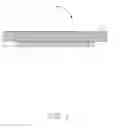
FIG. 1 is a cross section of an embodiment of an aluminum-plastic composite structure.
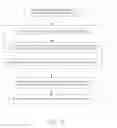
FIG. 2 is a flowchart of a method for making the aluminum-plastic composite structure.
DETAILED DESCRIPTION
Referring to FIG. 1, an embodiment of an aluminum-plastic composite structure 200 includes an aluminum portion 21 and a plastic portion 23 integrally formed on the aluminum portion 21 by insert-molding technology. The aluminum portion 21 includes a joining surface 210. The aluminum portion 21 includes a plurality of micro grooves 211 in the joining surface 210 made by using ultraviolet lithography. A width of each micro groove 211 is in a range from 0.02 millimeters to 0.05 millimeters, and a depth of each micro groove 211 is in a range from 0.2 millimeters to 0.25 millimeters, thus the plastic material can be effectively injected into the micro grooves 211 to enhance strength of the bond formed between the aluminum portion 21 and the plastic portion 23. In this embodiment, a ratio of the depth to the width is equal to or greater than 10. In the illustrated embodiment, the aluminum portion 21 is a sheet, and the depth of the micro grooves 211 is less than 80% of the thickness of the aluminum portion 21 where the micro grooves 211 are defined to maintain bonding strength of the aluminum portion 21 with respect to the plastic portion 23. The aluminum portion 21 may be made of aluminum or aluminum alloy, the micro grooves 211 may be easily defined because of the cubic crystal structure of aluminum.
Also referring to FIG. 2, a method for making aluminum-plastic composite structure follows.
In step 201, an aluminum portion 21 is provided, and the aluminum portion 21 includes a joining surface 210;
In step 202, a plurality of micro grooves 211 are formed in the joining surface 210 by ultraviolet lithography, a width of each micro groove is in a range from 0.05 mm to 0.05 mm; a depth of each micro groove is in a range from 0.2 mm to 0.25 mm. The process of ultraviolet lithography for defining the micro grooves 211 includes the following steps:
(1) Photoresist is covered on the joining surface 210 of the aluminum portion 21.
(2) An optical mask is formed on the joining surface 210 of the aluminum portion 21, and the aluminum portion 21 is placed in an ultraviolet exposure machine for UV exposure.
(3) The aluminum portion 21 is etched in an etching fluid in a cavity to form the micro grooves 211, in which a size of the micro groove is being controlled by adjusting the concentration of the etching fluid and/or an etching duration.
In step 203, the aluminum portion 21 is positioned in a mold, and then the melt plastic material is injected on the aluminum portion 21 to form a plastic portion 23. The plastic material is injected and substantially filling into the micro grooves 211, thus the plastic portion 23 can be bonded or fixed on the joining surface 210 of the aluminum portion 21.
In step 204, the plastic portion 23 is cooled to form the aluminum-plastic composite structure 200.
The aluminum-plastic composite structure 200 defines the micro grooves 211 at the joining surface 210 of the aluminum portion 21 in which the plastic material is embedded, thus firmly fixing or bonding the plastic portion 23 on the aluminum portion 21, and increasing the bond strength between the aluminum portion 21 and the plastic portion 23. The aluminum-plastic composite structure 200 also has a reduced thickness because no latching mechanism is included.
It is believed that the present embodiments and their advantages will be understood from the foregoing description, and it will be apparent that various changes may be made thereto without departing from the spirit and scope of the disclosure or sacrificing all of its material advantages.
Claims
What is claimed is:1. An aluminum-plastic composite structure comprising;
an aluminum portion, the aluminum portion defining a plurality of micro grooves by ultraviolet lithography;
a plastic portion, the plastic portion integrally formed on the aluminum portion and substantially filling in the micro grooves; wherein a width of each micro groove is in a range from 0.02 millimeters to 0.05 millimeters, and a depth of each micro groove is in a range from 0.2 millimeters to 0.25 millimeters.
2. The aluminum-plastic composite structure of claim 1, wherein a ratio of the depth to the width is equal to or greater than 10.
3. The aluminum-plastic composite structure of claim 1, wherein the aluminum portion is a sheet, the depth of each micro groove is equal to or less than 80% of the thickness of the aluminum portion where the micro groove are defined.
4. A method for making an aluminum-plastic composite structure comprising:
providing an aluminum portion and the aluminum portion defining a joining surface;
defining a plurality of micro grooves at the joining surface of the aluminum portion, a width of each micro groove being in a range from 0.02 millimeters to 0.05 millimeters, a depth of each micro groove being in a range from 0.2 millimeters to 0.25 millimeters;
positioning the aluminum portion in a mold, and then injecting plastic material into the mold to form a plastic portion, and a portion of the plastic material being injected and substantially filling in the micro grooves; and
cooling the plastic material.
5. The method for making the aluminum-plastic composite structure of claim 4, wherein a ratio of the depth to the width is equal to or greater than 10.
6. The method for making the aluminum-plastic composite structure of claim 4, wherein the aluminum portion is a sheet, the depth of each micro groove is equal to or less than 80% of a thickness of the aluminum portion where the micro groove are defined.
7. The method for making the aluminum-plastic composite structure of claim 4, wherein defining the micro grooves at the joining surface comprises a first step of covering a photoresist on the joining surface, a second step of forming an optical mask on the joining surface and a third step of etching the aluminum portion in an etching fluid.
Images & Drawings included:

Sources:
- United States Patent and Trademark Office - verify current appl. status at the USPTO↗
Similar patent applications:
- » 20130224441
ALUMINUM-PLASTIC COMPOSITE STRUCTURE
Recent applications in this class:
- » 20250249654 2025-08-07
WINDOW AND ELECTRONIC DEVICE INCLUDING THE SAME - » 20250249653 2025-08-07
MULTI-LAYERED STRUCTURE AND METHOD OF MANUFACTURING THE SAME - » 20250242563 2025-07-31
DECORATIVE SHEET - » 20250222674 2025-07-10
Decorative Substrate, Preparation Method Therefor and Application Thereof - » 20250214315 2025-07-03
VEHICLE INTERIOR MATERIAL - » 20250205991 2025-06-26
DECORATIVE SHEET AND METHOD FOR MANUFACTURING DECORATIVE SHEET - » 20250196467 2025-06-19
LAYERED ARTICLE INCLUDING SYNTHETIC POLYMER FILM HAVING ANTIMICROBIAL AND/OR ANTIVIRAL PROPERTIES, AND METHOD FOR PRODUCING THE SAME - » 20250196466 2025-06-19
BUFFER MATERIAL, EXTERIOR MATERIAL, AND ROBOT COMPONENT - » 20250144910 2025-05-08
STRAND SIDING WITH PEBBLED STUCCO TEXTURE - » 20250128495 2025-04-24
SURFACE MATERIALS AND METHOD OF MANUFACTURE
Recent applications for this Assignee:
- » 20250218287 2025-07-03
METHOD OF GENERATING AND PROMPTING TRAFFIC INFORMATION, AND ROADSIDE DEVICE THEREOF - » 20250178535 2025-06-05
METHOD FOR CONSTRUCTING 3D PANORAMIC VIEW MODEL, VEHICLE-MOUNTED DEVICE, AND STORAGE MEDIUM - » 20250074444 2025-03-06
METHOD FOR EARLY WARNING A BLIND AREA, ELECTRONIC DEVICE AND STORAGE MEDIUM - » 20240416754 2024-12-19
DISPLAY CONTROL DEVICE, DISPLAY EQUIPMENT, AND VEHICLE EMPLOYING DEVICE - » 20240411051 2024-12-12
Light-emitting device array and optical transceiver system having the same - » 20240324114 2024-09-26
DISPLAY CONTROL DEVICE AND VEHICLE EMPLOYING DEVICE - » 20240295957 2024-09-05
METHOD FOR CONTROLLING ELECTRONIC DEVICE, ELECTRONIC DEVICE AND COMPUTER STROAGE MEDIUM EMPLOYING METHOD - » 20240257357 2024-08-01
METHOD FOR DETECTING OBSTACLES, ELECTRONIC DEVICE, AND STORAGE MEDIUM - » 20240203133 2024-06-20
LANE LINE RECOGNITION METHOD, ELECTRONIC DEVICE AND STORAGE MEDIUM - » 20240194999 2024-06-13
Robot using limiting device for locking battery