Crystalline form VI of agomelatine, preparation method and application thereof
US20120004313A1
2012-01-05
13/138,615
2010-03-09
✅ Patent granted
US 8,614,251 B2
2013-12-24
WO; PCT/CN2010/070931; 20100309
WO; WO2010/102554; 20100916
Sarah Pihonak
Hueschen and Sage
2030-08-06
Abstract:
The invention provides a new crystalline form of agomelatine, preparation and use thereof. The X-ray powder diffraction diagram of the agomelatine crystalline form shows main peaks at the diffraction angles 2θ 11.13°, 11.82°, 17.49°, 18.29°, 19.48°, 19.72°, 20.50°, 21.76°, 22.54°, 22.97°, 24.56°, 25.36°, 27.16° and 31.93°. Said new crystalline form is characterized by high purity, stability and good reproducibility, and thus is advantageous for the pharmaceutical formulation. In addition, the stability and solubility of said crystalline form are also superior over the several existing crystalline forms.
Inventors:
- Zhedong Yuan 12 🇨🇳 Shanghai, China
- Peng Zhang 147 🇨🇳 Shanghai, China
- Yu Huang 17 🇨🇳 Shanghai, China
- Xiong Yu 7 🇨🇳 Shanghai, China
- Hanbin Shan 4 🇨🇳 Shanghai, China
- Xudong Jiang 2 🇨🇳 Shanghai, China
- Hubo Wang 3 🇨🇳 Shanghai, China
- Xufeng Cao 2 🇨🇳 Shanghai, China
- Xingdong Cheng 3 🇨🇳 Shanghai, China
Assignee:
- LES LABORATORIES SERVIER 16 🇫🇷 SURESNES CEDEX, France
Applicant:
Interested in similar patents?
Get notified when new applications in this technology area are published.
Classification:
A61P5/00 » CPC further
Drugs for disorders of the endocrine system
A61P25/20 » CPC further
Drugs for disorders of the nervous system Hypnotics; Sedatives
C07C233/18 » CPC further
Carboxylic acid amides having carbon atoms of carboxamide groups bound to hydrogen atoms or to acyclic carbon atoms having the nitrogen atom of at least one of the carboxamide groups bound to a carbon atom of a hydrocarbon radical substituted by singly-bound oxygen atoms with the substituted hydrocarbon radical bound to the nitrogen atom of the carboxamide group by an acyclic carbon atom having the carbon atom of the carboxamide group bound to a hydrogen atom or to a carbon atom of an acyclic saturated carbon skeleton
A61K31/165 » CPC main
Medicinal preparations containing organic active ingredients; Amides, e.g. hydroxamic acids having aromatic rings, e.g. colchicine, atenolol, progabide
C07C231/00 IPC
Preparation of carboxylic acid amides
A61P25/00 » CPC further
Drugs for disorders of the nervous system
A61P1/00 » CPC further
Drugs for disorders of the alimentary tract or the digestive system
A61P25/24 » CPC further
Drugs for disorders of the nervous system Antidepressants
A61P25/18 » CPC further
Drugs for disorders of the nervous system Antipsychotics, i.e. neuroleptics; Drugs for mania or schizophrenia
A61P9/00 » CPC further
Drugs for disorders of the cardiovascular system
C07C233/29 IPC
Carboxylic acid amides having carbon atoms of carboxamide groups bound to hydrogen atoms or to acyclic carbon atoms having the nitrogen atom of at least one of the carboxamide groups bound to a carbon atom of a hydrocarbon radical substituted by singly-bound oxygen atoms with the substituted hydrocarbon radical bound to the nitrogen atom of the carboxamide group by a carbon atom of a six-membered aromatic ring having the carbon atom of the carboxamide group bound to an acyclic carbon atom of a carbon skeleton containing six-membered aromatic rings
A61P25/22 » CPC further
Drugs for disorders of the nervous system Anxiolytics
A01N37/18 IPC
Biocides, pest repellants or attractants, or plant growth regulators containing organic compounds containing a carbon atom having three bonds to hetero atoms with at the most two bonds to halogen, e.g. carboxylic acids containing the group —CO—N<, e.g. carboxylic acid amides or imides; Thio analogues thereof
A61K31/16 IPC
Medicinal preparations containing organic active ingredients Amides, e.g. hydroxamic acids
C07C233/00 IPC
Carboxylic acid amides
C07C235/00 IPC
Carboxylic acid amides, the carbon skeleton of the acid part being further substituted by oxygen atoms
C07C237/00 IPC
Carboxylic acid amides, the carbon skeleton of the acid part being further substituted by amino groups
C07C239/00 IPC
Compounds containing nitrogen-to-halogen bonds; Hydroxylamino compounds or ethers or esters thereof
Description
TECHNICAL FIELD
The invention relates to a crystalline form of agomelatine, N[2-(7-methoxy-1-naphthyl)]acetamide, its preparation and use thereof.
TECHNICAL BACKGROUND
Agomelatine with chemical name N-[2-(7-methoxy-1-naphthyl)ethyl]acetamide and brand name Valdoxan has the following formula:
Agomelatine has dual effects by acting as an agonist of melatoninergic system receptors and as an antagonist of the 5HT2C receptor. Its properties allow it to be active in the central nervous system, especially in the treatment of major depression, seasonal affective disorder, sleep disorder, cardiovascular diseases, diseases of the digestive system, insomnia and fatigue caused by jet lag, appetite disturbance and obesity. Agomelatine is the first melatoninergic antidepressant, and is effective for the treatment of depression, the improvement of sleep parameters and the maintenance of sexual function. The preparation and therapeutic use of agomelatine have been reported in the European patent EP0447285.
In view of the pharmaceutical value of agomelatine, it is critical to obtain the said compound in a highly pure, and stable crystalline form as well as with good reproducibility so that it will be advantageous in pharmaceutical formulations and stable enough for long-term storage without specific requirements regarding temperature, light, humidity or oxygen levels.
Chinese Patents CN200510071611.6, CN200610108396.7, CN200610108394.8 and CN200610108395.2 have respectively disclosed the crystalline forms II, III, IV, V of agomelatine and the preparations thereof.
Among these, crystalline form II is prepared by recrystallization from ethanol and water; crystalline form III is prepared by heating agomelatine at 110° C. until complete melting occurs and then slowly cooling down until formation of the crystal; crystalline form IV is prepared by heating agomelatine at 110° C. until complete melting occurs, followed by rapidly cooling down to 50-70° C. and maintaining at 70° C. for about 5 h until formation of the crystal occurs; crystalline form V is prepared by so-called “high-energy” mechanical grinding of agomelatine.
DESCRIPTION OF THE INVENTION
An objective of the invention is to provide a new crystalline form of agomelatine, i.e. crystalline form VI, which exhibits valuable characteristics in the pharmaceutical formulation.
Another objective of the invention is to provide a process for preparing crystalline form VI of agomelatine, which is simple to implement and easily reproducible.
The crystalline form of agomelatine, wherein the X-ray powder diffraction diagram of the crystalline form of agomelatine shows main peaks at the diffraction angles 2θ 11.13°, 11.82°, 17.49°, 18.29°, 19.48°, 19.72°, 20.50°, 21.76°, 22.54°, 22.97°, 24.56°, 25.36°, 271.6° and 31.93°.
The crystalline form of agomelatine, wherein the main peaks at the diffraction angles 2θ in the X-ray powder diffraction diagram of the crystalline form of agomelatine shows the following relative intensity (in percentages):
| 2θ° | Relative Intensity | |
| 11.13 | 12.4 | |
| 11.82 | 17.8 | |
| 17.49 | 20.7 | |
| 18.29 | 17.9 | |
| 19.48 | 66.8 | |
| 19.72 | 100 | |
| 20.50 | 14.5 | |
| 21.76 | 19.7 | |
| 22.54 | 22.0 | |
| 22.97 | 26.2 | |
| 24.56 | 13.1 | |
| 25.36 | 16.7 | |
| 27.16 | 12.2 | |
| 31.93 | 10.1 | |
A process for preparing the crystalline form of agomelatine, wherein agomelatine is firstly dissolved in acetic acid and then added into 0-25° C. water to precipitate the crystal.
The process for preparing the crystalline form of agomelatine above, wherein the solution of agomelatine in acetic acid is most preferably added slowly to water with continuous stirring to facilitate the precipitation of the crystal. The said gradual addition to water may be achieved by dropwise addition.
The pharmacological studies with crystalline form VI of agomelatine according to the invention showed that the crystalline form VI of agomelatine may be used in the treatment of diseases of the melatoninergic system, sleep disorder, stress, anxiety, seasonal affective disorder or major depression, cardiovascular diseases, diseases of the digestive system, insomnia and fatigue caused by jet lag, schizophrenia, phobia, depression and the like.
The crystalline form VI of agomelatine provided according to the invention may be formulated together with various pharmaceutically acceptable adjuvants or excipients as various dosage forms for oral or injection administration.
According to the invention, the new crystalline form VI is obtained with high purity, stability and good reproducibility, and is advantageous for the pharmaceutical formulation. In addition, the stability and solubility of said crystalline form are also superior over the several existing crystalline forms.
BRIEF DESCRIPTION OF THE DRAWING
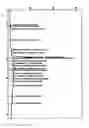
FIG. 1 is an X-ray diffraction diagram of the crystalline form VI obtained from Example 1 of the invention, measured by Bruker D8 ADVANCE instrument under the following settings: Cuka 40Kv 40 mA as light source, step length 0.02°, scan speed: 8°/min, scan range: 3°-80°, room temperature.
SPECIFIC EMBODIMENTS
EXAMPLE 1
1 g of agomelatine was dissolved in 4 ml of acetic acid with stirring, then slowly added dropwise to 80 ml of water. The mixture was maintained at 0° C. with stirring for 3.5 h and filtered. The solid was washed with water 8 ml×2, dried at 55° C. under vacuum until the weight was constant to give 0.91 g of white solid. Purity: 99.6%, melting point: 97-98° C.
EXAMPLE 2
1 g of agomelatine was dissolved in 4 ml of acetic acid with stirring, then slowly added dropwise to 80 ml of water. The mixture was maintained at 5° C. with stirring for 3 h and filtered. The solid was washed with water 8 ml×2, dried at 55° C. under vacuum until the weight was constant to give 0.90 g of white solid. Purity: 99.6%, melting point: 97-98° C.
EXAMPLE 3
2 g of agomelatine was dissolved in 8 ml of acetic acid with stirring, then slowly added dropwise to 160 ml of water. The mixture was maintained at 20° C. with stirring for 3 h and filtered. The solid was washed with water 16 ml×2, dried at 55° C. under vacuum until the weight was constant to give 1.76 g of white solid. Purity: 99.6%, melting point: 97-98° C.
The crystalline form of agomelatine from Example 2 was dried to give a powdery product, whose X-ray diffraction diagram was plotted with interplanar spacing d, Bragg 2θ angle and relative intensity as follows:
| 2θ° | d(A) | Relative Intensity |
| 11.13 | 7.942 | 12.4 |
| 11.82 | 7.481 | 17.8 |
| 17.49 | 5.066 | 20.7 |
| 18.29 | 4.846 | 17.9 |
| 19.48 | 4.553 | 66.8 |
| 19.72 | 4.498 | 100 |
| 20.50 | 4.328 | 14.5 |
| 21.76 | 4.080 | 19.7 |
| 22.54 | 3.941 | 22.0 |
| 22.97 | 3.868 | 26.2 |
| 24.56 | 3.621 | 13.1 |
| 25.36 | 3.509 | 16.7 |
| 27.16 | 3.280 | 12.2 |
| 31.93 | 2.800 | 10.1 |
Tests of Experimental Results
Crystalline forms II, III, IV and VI are respectively placed in a thermostatically controlled container at 40° C. for 20 days. The stability of the said crystalline forms is assessed by high performance liquid chromatography.
1. Purity Measurement of the Sample
Chromatographic conditions: octadecylsilane bonded silica as filler; a mixed solution of 10 mM/L phosphate buffer (adjusted to pH 7.0 by sodium hydroxide) and acetonitrile in 2:7 by volume as mobile phase; column temperature 40° C.; detection wavelength 220 nm. The purity is determined using an internal standard method.
The crystalline forms II, III, IV and VI were formulated with the mobile phase as 1 mg/mL solution. 10 μL of each of the solution was removed and injected into the liquid chromatograph. The chromatograms were recorded.
2. Assay of the Sample
The assay was carried out using an external standard method as described under Purity Measurement of the Sample. The results are as shown in Table I:
| TABLE I | ||||
| Purity of | Purity of | Purity of | Purity of | |
| crystalline | crystalline | crystalline | crystalline | |
| Sample name | form II | form III | form IV | form VI |
| Before storage | 99.79% | 99.77% | 99.82% | 99.60% |
| After storage in the | 99.24% | 99.10% | 99.54% | 99.55% |
| thermostatically | ||||
| controlled containers | ||||
| for 20 days | ||||
3. Solubility Measurement in Water
The measurement was carried out by HPLC using an external standard method. The results are as shown in Table II:
| TABLE II | |||
| Purity of | Purity of | ||
| Sample name | crystalline form II | crystalline form VI | |
| Purity | 99.79% | 99.77% | |
| Solubility (mg/ml) | 1.11 | 1.24 | |
From the above results, it is seen that the new crystalline form VI of agomelatine is superior over the several existing crystalline forms in terms of stability and solubility. With regard to its preparation, the new crystalline form is also of greater value than the existing crystalline forms III, IV and V in terms of industrial application.
Claims
1-6. (canceled)
7. A crystalline form of agomelatine, having a powder X-ray diffraction diagram exhibiting peaks at diffraction angles 2θ 11.13°, 11.82°, 17.49°, 18.29°, 19.48°, 19.72°, 20.20°, 21.76°, 22.54°, 22.97°, 24.56°, 25.36°, 27.16° and 31.93°.
8. The crystalline form of agomelatine according to claim 7, wherein the peaks at the diffraction angles 2θ in the X-ray powder diffraction diagram exhibit the following relative intensities (in percentages):
| 2θ° | Relative Intensity | |
| 11.13 | 12.4 | |
| 11.82 | 17.8 | |
| 17.49 | 20.7 | |
| 18.29 | 17.9 | |
| 19.48 | 66.8 | |
| 19.72 | 100 | |
| 20.50 | 14.5 | |
| 21.76 | 19.7 | |
| 22.54 | 22.0 | |
| 22.97 | 26.2 | |
| 24.56 | 13.1 | |
| 25.36 | 16.7 | |
| 27.16 | 12.2 | |
| 31.93 | 10.1 | |
9. A process for preparing the crystalline form of agomelatine according to claim 7, wherein agomelatine is first dissolved in acetic acid and then added into 0-25° C. water to precipitate the crystalline form.
10. The process according to claim 9, wherein the solution of agomelatine in acetic acid is added slowly to water with continuous stirring to facilitate the precipitation of the crystalline form.
11. A pharmaceutical composition comprising a crystalline form of agomelatine according to claim 7, together with one or more pharmaceutically acceptable adjuvants or excipients.
12. A pharmaceutical composition comprising a crystalline form of agomelatine according to claim 8, together with one or more pharmaceutically acceptable adjuvants or excipients.
13. A method of treating a condition selected from diseases of the melatoninergic system, sleep disorders, stress, anxiety, seasonal affective disorder or major depression, cardiovascular diseases, diseases of the digestive system, insomnia and fatigue caused by jet lag, schizophrenia, phobia, and depression in a subject in need thereof, comprising administration of an effective amount of a crystalline form of agomelatine according to claim 7.
14. A method of treating a condition selected from diseases of the melatoninergic system, sleep disorders, stress, anxiety, seasonal affective disorder or major depression, cardiovascular diseases, diseases of the digestive system, insomnia and fatigue caused by jet lag, schizophrenia, phobia, and depression in a subject in need thereof, comprising administration of an effective amount of a crystalline form of agomelatine according to claim 8.
Images & Drawings included:
Sources:
- United States Patent and Trademark Office - verify current appl. status at the USPTO↗
Recent applications in this class:
- » 20250281433 2025-09-11
NOVEL DERIVATIVE COMPOUND HAVING BIPHENYL GROUP INTRODUCED INTO AMINO-ALKANOIC ACID AND ANTI-INFLAMMATORY COMPOSITION COMPRISING SAME - » 20250248953 2025-08-07
METHOD FOR MODULATING METABOLISM - » 20250228802 2025-07-17
EXTENDED RELEASE MIDODRINE HYDROCHLORIDE COMPOSITIONS AND METHODS OF USE - » 20250228801 2025-07-17
USE OF Galectin-1 INHIBITOR IN PREPARATION OF DRUG FOR TREATING PULMONARY FIBROSIS - » 20250205183 2025-06-26
METHODS OF TREATING MUSCLE CRAMPING AND RELATED COMPOSITIONS - » 20250205182 2025-06-26
COMPOSITIONS AND METHODS FOR IMPROVING GUT PERMEABILITY - » 20250195457 2025-06-19
PHARMACEUTICAL COMPOSITION FOR TREATMENT OF PARKINSON'S DISEASE - » 20250177332 2025-06-05
PHARMACEUTICAL DOSAGE FORM OF LACOSAMIDE - » 20250177331 2025-06-05
METHOD OF TREATMENT AND SELECTION OF PATIENTS BENEFITING FROM AGOMELATINE BASED ON EEG MEASUREMENTS - » 20250170076 2025-05-29
NOVEL KIT OF PHARMACEUTICAL PREPARATIONS FOR THE TREATMENT OF NEURODEGENERATIVE DISEASES
Recent applications for this Assignee:
- » 20140100374 2014-04-10
Synthesis process, and crystalline form of 4-{3-[-hexahydrocyclopenta[]pyrrol-2(1)-yl]propoxy} benzamide hydrochloride and pharmaceutical compositions containing it - » 20140088197 2014-03-27
MIXED CRYSTAL AGOMELATINE (FORM VIII), PREPARATION METHOD AND USE THEREOF AND PHARMACEUTICAL COMPOSITION CONTAINING SAME - » 20130289308 2013-10-31
Process for the synthesis of agomelatine - » 20130267738 2013-10-10
Agomelatine intermediates and preparation method thereof - » 20130211070 2013-08-15
Process for the resolution of enantiomers of (3,4-dimethoxy-bicyclo[4.2.0]octa-1,3,5-trien-7-yl)nitrile and application in the synthesis of ivabradine - » 20130204032 2013-08-08
Process for the resolution of enantiomers of (3,4 dimethoxy-bicyclo[4.2.0]octa-1,3,5-trien-7-yl)nitrile and application in the synthesis of ivabradine - » 20110313198 2011-12-22
Agomelatine hydrohalide complex and preparation method thereof - » 20110130370 2011-06-02
Pharmaceutical composition comprising a strontium salt, vitamin D and A cyclodextrin - » 20110105516 2011-05-05
Polymerized micelles - » 20100240635 2010-09-23
Benzothiadiazepine compounds, a process for their preparation and pharmaceutical compositions containing them