Process for producing compounds comprising nitrile functions
US20120004440A1
2012-01-05
13/123,721
2009-10-05
✅ Patent granted
US 9,174,207 B2
2015-11-03
WO; PCT/EP2009/062896; 20091005
WO; WO2010/046226; 20100429
Robert Havlin
Robert B. Furr, Jr. | Jeffrey A. Freeman
2030-02-07
Abstract:
The present invention relates to a process for producing compounds comprising at least one nitrile function by hydrocyanation of a compound comprising at least one non-conjugated unsaturation.
The invention proposes a process for producing compounds comprising at least one nitrile function by hydrocyanation of an organic compound comprising at least one non-conjugated unsaturation, comprising from 2 to 20 carbon atoms, by reaction with hydrogen cyanide in the presence of a catalytic system comprising a complex of nickel having the oxidation state of zero with at least one organophosphorus ligand chosen from the group comprising organophosphites, organophosphonites, organophosphinites and organosphosphines and a cocatalyst of the Lewis acid type.
Assignee:
- Invista North America S.a.r.l. 425 🇺🇸 Wilmington, DE, United States
Applicant:
Interested in similar patents?
Get notified when new applications in this technology area are published.
Classification:
C07C255/04 » CPC further
Carboxylic acid nitriles having cyano groups bound to acyclic carbon atoms of an acyclic and saturated carbon skeleton containing two cyano groups bound to the carbon skeleton
B01J31/1845 » CPC main
Catalysts comprising hydrides, coordination complexes or organic compounds containing coordination complexes containing nitrogen, phosphorus, arsenic or antimony as complexing atoms, e.g. in pyridine ligands, or in resonance therewith, e.g. in isocyanide ligands C=N-R or as complexed central atoms the ligands containing phosphorus
B01J31/122 » CPC further
Catalysts comprising hydrides, coordination complexes or organic compounds containing organic compounds or metal hydrides containing organo-metallic compounds or metal hydrides Metal aryl or alkyl compounds
B01J31/146 » CPC further
Catalysts comprising hydrides, coordination complexes or organic compounds containing organic compounds or metal hydrides containing organo-metallic compounds or metal hydrides of aluminium or boron of boron
B01J31/185 » CPC further
Catalysts comprising hydrides, coordination complexes or organic compounds containing coordination complexes containing nitrogen, phosphorus, arsenic or antimony as complexing atoms, e.g. in pyridine ligands, or in resonance therewith, e.g. in isocyanide ligands C=N-R or as complexed central atoms the ligands containing phosphorus Phosphites ((RO)3P) , their isomeric phosphonates (R(RO)2P=O) and RO-substitution derivatives thereof
B01J31/2208 » CPC further
Catalysts comprising hydrides, coordination complexes or organic compounds containing coordination complexes; Organic complexes the ligands containing oxygen or sulfur as complexing atoms Oxygen, e.g. acetylacetonates
B01J31/2409 » CPC further
Catalysts comprising hydrides, coordination complexes or organic compounds containing coordination complexes; Phosphines, i.e. phosphorus bonded to only carbon atoms, or to both carbon and hydrogen atoms, including e.g. sp2-hybridised phosphorus compounds such as phosphabenzene, phosphole or anionic phospholide ligands; Cyclic ligands, including e.g. non-condensed polycyclic ligands, the phosphine-P atom being a ring member or a substituent on the ring with more than one complexing phosphine-P atom
C07C253/10 » CPC main
Preparation of carboxylic acid nitriles by addition of hydrogen cyanide or salts thereof to unsaturated compounds to compounds containing carbon-to-carbon double bonds
B01J2231/322 » CPC further
Catalytic reactions performed with catalysts classified in; Addition reactions at carbon centres, i.e. to either C-C or C-X multiple bonds; Addition reactions to C=C or C-C triple bonds Hydrocyanation
B01J2523/305 » CPC further
Constitutive chemical elements of heterogeneous catalysts of Group III (IIIA or IIIB) of the Periodic Table Boron
B01J2523/41 » CPC further
Constitutive chemical elements of heterogeneous catalysts of Group IV (IVA or IVB) of the Periodic Table Silicon
B01J2523/42 » CPC further
Constitutive chemical elements of heterogeneous catalysts of Group IV (IVA or IVB) of the Periodic Table Germanium
B01J2523/43 » CPC further
Constitutive chemical elements of heterogeneous catalysts of Group IV (IVA or IVB) of the Periodic Table Tin
B01J2531/847 » CPC further
Additional information regarding catalytic systems classified in; Complexes comprising metals of Group VIII as the central metal; Metals of the iron group Nickel
B01J31/24 IPC
Catalysts comprising hydrides, coordination complexes or organic compounds containing coordination complexes Phosphines, i.e. phosphorus bonded to only carbon atoms, or to both carbon and hydrogen atoms, including e.g. sp2-hybridised phosphorus compounds such as phosphabenzene, phosphole or anionic phospholide ligands
B01J31/18 IPC
Catalysts comprising hydrides, coordination complexes or organic compounds containing coordination complexes containing nitrogen, phosphorus, arsenic or antimony as complexing atoms, e.g. in pyridine ligands, or in resonance therewith, e.g. in isocyanide ligands C=N-R or as complexed central atoms
B01J31/12 IPC
Catalysts comprising hydrides, coordination complexes or organic compounds containing organic compounds or metal hydrides containing organo-metallic compounds or metal hydrides
B01J31/14 IPC
Catalysts comprising hydrides, coordination complexes or organic compounds containing organic compounds or metal hydrides containing organo-metallic compounds or metal hydrides of aluminium or boron
B01J31/22 IPC
Catalysts comprising hydrides, coordination complexes or organic compounds containing coordination complexes Organic complexes
Description
The present invention relates to a process for producing compounds comprising at least one nitrile function by hydrocyanation of a compound comprising at least one non-conjugated unsaturation.
It relates more particularly to a production process implementing the reaction of hydrogen cyanide with an organic compound comprising a non-conjugated unsaturation in the presence of a catalytic system comprising nickel having the oxidation state of zero (hereinafter referred to as Ni(0)) with at least one organophosphorus ligand and a cocatalyst belonging to the Lewis acid family.
Such processes have been known for many years and are exploited industrially, in particular for the production of a major chemical intermediate, adiponitrile. This compound is in particular used in the production of hexamethylenediamine, which is an important monomer for the production of polyamides and also an intermediate in the synthesis of diisocyanate compounds.
Thus, the company DU PONT DE NEMOURS has developed and exploited a process for producing adiponitrile by double hydrocyanation of butadiene. This reaction is generally catalysed by a catalytic system comprising a complex of nickel(0) with organophosphorus ligands. This system also comprises a cocatalyst, in particular in the second hydrocyanation step, i.e. hydrocyanation of unsaturated compounds comprising a nitrile function, such as pentenenitriles to dinitrile compounds.
Many cocatalysts have been proposed in patents and are generally compounds belonging to the Lewis acid family. One of the roles of this cocatalyst or promoter is to limit the production of by-products and therefore to promote the formation of linear dinitrile compounds compared with the formation of branched dinitriles.
Thus, many metal halides, such as zinc chloride, zinc bromide, stannous chloride or stannous bromide, have already been proposed, for example in U.S. Pat. No. 3,496,217. Zinc chloride is the preferred cocatalyst.
Organic boron compounds such as triphenyl boron or compounds comprising two boron atoms, as described in U.S. Pat. No. 3,864,380 and U.S. Pat. No. 3,496,218, or organic tin compounds as in U.S. Pat. No. 4,874,884, have also been proposed.
These cocatalysts have different properties and make it possible to obtain selectivities for different linear dinitriles such as adiponitrile. Some of these cocatalysts have drawbacks associated with the difficulty in extracting them from the reaction medium or with the possibility and ease of extracting the catalytic system or the nickel(0) ligand in the presence of this cocatalyst, in order to recycle it.
There still exists a need to find new cocatalysts for obtaining selectivities for linear dinitriles that are of acceptable levels and easy to use.
One of the aims of the present invention is to provide a new family of compatible cocatalysts which give adiponitrile-selectivity levels that are suitable in the pentenenitrile hydrocyanation reaction.
To this effect, the invention provides a process for producing compounds comprising at least one nitrile function by hydrocyanation of an organic compound comprising at least one non-conjugated unsaturation, comprising from 2 to 20 carbon atoms, by reaction with hydrogen cyanide in the presence of a catalytic system comprising a complex of nickel having the oxidation state of zero with at least one organophosphorus ligand chosen from the group comprising organophosphites, organophosphonites, organophosphinites and organosphosphines and a cocatalyst, characterized in that the cocatalyst is an organometallic compound corresponding to general formula I:
[(R)a—(X)y—]nM—M1[—(X)z—(R1)a1]n1
-
- in which:
- M, M1, which may be identical or different, represent an element chosen from the group comprising the following elements: B, Si, Ge, Sn, Pb, Mo, Ni, Fe, W and Cr,
- R, R1, which may be identical or different, represent an aliphatic radical or a radical comprising an aromatic or cycloaliphatic ring, which is substituted or unsubstituted, and which may or may not be bridged, or a halide radical,
- X representing an oxygen, nitrogen, sulphur or silicon atom,
- y and z are integers, which may or may not be identical, equal to 0 or 1,
- n and n1 are integers equal to the valency of the elements M, M1 reduced by 1,
- a and a1 are integers, which may or may not identical, equal to the valency of the element X reduced by 1 if y and z are equal to 1, or equal to 1 if y and z are equal to 0.
Advantageously, R and R1, which may be identical or different, represent an aromatic, aliphatic or cycloaliphatic radical, which is substituted or unsubstituted, and which may or may not be bridged, or a halide radical.
In the formula above, the bond between the elements M and M1 is symbolized by a covalent bond. However, said bond may be multiple, depending on the nature of the elements M and M1.
In the formula above, a is equal to the valency of the element X reduced by 1 if y is equal to 1, and a is equal to 1 if y is equal to 0. Similarly, a1 is equal to the valency of the element X reduced by 1 is z is equal to 1, and a1 is equal to 1 if z is equal to 0.
In the formula above, the R radicals may be identical or different. Similarly the R1 radicals may be identical or different.
According to one preferred characteristic of the invention, the cocatalyst is advantageously chosen from the group of the following compounds:
-
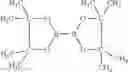
- bis(neopentylglycolato)diboron (RN CAS 201733-56-4)
- bis(hexyleneglycolato)diboron (RN CAS 230299-21-5)
- bis(pinacolato)diboron (RN CAS 73183-34-3)
- tetrakis(pyrrolinido)diboron (RN CAS 158752-98-8)
- hexamethyldisilane (RN CAS 1450-14-2)
- tetraphenyldimethyldisilane (RN CAS 1172-76-5)
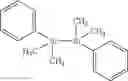
- diphenyltetramethyldisilane (RN CAS 1145-98-8)
- tris(trimethylsilyl)silane (RN CAS 1873-77-4)
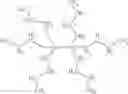
- tetrakis(trimethylsilyl)silane (RN CAS 4098-98-0)
- hexaphenyldisilane (RN CAS 1450-23-3)
- hexamethyldigermane (RN CAS 993-52-2)
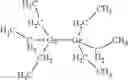
- hexaethyldigermane (RN CAS 993-62-4)
- hexaphenyldigermane (RN CAS 2816-39-9)
- hexamethyldistannane (RN CAS 661-69-8)
- hexbutyldistannane (RN CAS 813-19-4)
- hexaphenyldistannane (RN CAS 1064-10-4)
- triphenylstannyldimethylphenylsilane (RN CAS 210362-76-8)
- triphenylgermanyltriphenylstannane (RN CAS 13904-13-7)
- hexaphenyldilead (RN CAS 3124-01-4)
- cyclopentadienyliron dicarbonyl dimer (RN CAS 38117-54-3)
- cyclopentadienylchromium dicarbonyl dimer (RN CAS 37299-12-0)
- cyclopentadienylnickel carbonyl dimer (RN CAS 12170-92-2)
- cyclopentadienyltungsten tricarbonyl dimer (RN CAS 12566-66-4)
- methylcyclopentadienylmolybdenum tricarbonyl dimer (RN CAS 33056-03-0).
The cocatalysts of the invention are compounds which are described in the literature, as is the process for producing them. The registration number RN CAS is given solely for information purposes. Most of these compounds are commercially available.
In one preferred embodiment of the invention, the catalytic system of the invention contains a cocatalyst in accordance with the invention in a molar ratio of cocatalyst relative to the number of nickel atoms of between 0.01 and 50, and preferably between 0.1 and 10.
The catalytic system of the invention comprises a complex of nickel(0) with at least one organophosphorus compound, preferably a monodentate compound such as triphenylphosphite or tritolylphosphite, described for example in U.S. Pat. No. 3,496,215, DE19953058, FR1529134, FR2069411, U.S. Pat. No. 3,631,191, U.S. Pat. No. 3,766,231 or FR2523974, or a bidentate compound such as the organophosphite compounds described in Patents WO9906355, WO9906356, WO9906357, WO9906358, WO9952632, WO9965506, WO9962855, U.S. Pat. No. 5,693,843, WO961182, WO9622968, U.S. Pat. No. 5,981,772, WO0136429, WO9964155, WO0213964 and U.S. Pat. No. 6,127,567.
It is also possible to use complexes of nickel(0) with monodentate or bidentate organophosphine compounds as described in Patents WO02/30854, WO02/053527, WO03/068729, WO04/007435, WO04/007432, FR2845379 and WO2004/060855, and more particularly the trithienylphosphine described in the unpublished French application no. 0800381 and the DPPX described in Patent WO2003/031392.
Similarly, the catalytic system of the invention may comprise a complex of nickel(0) with monodentate or bidentate organophosphorus compounds belonging to the organophosphonite or organophosphinite family.
It is also possible to use the cocatalysts of the invention with a nickel(0) complex obtained with a mixture of organophosphite monodentate ligand and of bidentate ligand chosen from the families of compounds belonging to the organophosphites, organophosphonites, organophosphinites or organophosphines, as described in Patents WO03/011457 and WO2004/065352.
The description of the hydrocyanation process is given in several patents, including those mentioned above, and also in the articles by C. A. Tolman published in the reviews Organometallics 3 (1984) 33, Advances in Catalysis (1985) 33-1 and Journal of Chemical Education (1986) vol 63, no. 3, pages 199-201.
Briefly, the process for producing compounds comprising at least one nitrile function, and more particularly dinitrile compounds such as adiponitrile, consists in reacting, in a first step, a diolefin such as 1,3-butadiene with hydrogen cyanide, generally in the absence of solvent and in the presence of a catalytic system. The reaction is carried out under pressure so as to be in a liquid medium. The unsaturated nitrile compounds are separated by successive distillations. The linear nitrile compounds, such as pentenenitriles, are fed into a second hydrocyanation step.
Advantageously, the nonlinear unsaturated nitriles obtained in the first step are subjected to an isomerization step in order to convert them to linear unsaturated nitriles, which are also introduced into the second hydrocyanation step.
In the second hydrocyanation step, the linear unsaturated nitriles are reacted with hydrogen cyanide in the presence of a catalytic system.
The dinitrile compounds formed are separated by successive distillations after extraction of the catalytic system from the reaction medium. Several processes for extracting the catalytic system are described, for example, in U.S. Pat. Nos. 3,773,809, 4,082,811, 4,339,395 and 5,847,191. Generally, the catalytic system can be separated from the reaction medium by separation into two phases by settling out, obtained by control of the ratios between the mononitrile compounds and the dinitrile compounds contained in the medium. This separation can be improved by the addition of ammonia. It is also possible to precipitate the catalytic system in order to recover it and recycle it, or to use a nonpolar solvent for extracting the catalytic system and separating it from the nitrile products.
The temperature conditions for these various steps are between 10 and 200° C.
The catalytic systems used in the first and second hydrocyanation steps and also in the isomerization step are generally similar, i.e. they contain an identical nickel(0) complex. However, the ratio between the number of nickel atoms and the number of ligand molecules may be different in each of these steps, and also the concentration of the catalytic system in the medium.
Preferably, the cocatalyst is present only in the catalytic system used for the second hydrocyanation step. However, it may also be present in the isomerization step.
The characteristics and performance levels of the process and therefore of the catalytic system used are determined and illustrated by the degree of conversion (DC) of the compound introduced, in particular of the unsaturated mononitrile introduced in the second step, and by the linearity with respect to linear dinitriles produced, i.e. the number of moles of linear dinitriles relative to the number of moles of dinitriles formed. In the case of the production of adiponitrile, the linearity corresponds to the percentage of moles of adiponitrile (AdN) obtained relative to the numbers of moles of dinitriles formed (AdN+ESN+MGN).
The invention will be illustrated more clearly by means of the examples given below, only by way of indication, relating to the production of adiponitrile by hydrocyanation of 3-pentenenitrile. In these examples, the 3-pentenenitrile used is a compound marketed by Aldrich.
In these examples, the following abbreviations are used:
-
- Cod: cyclooctadiene
- 3PN: 3-pentenenitrile
- AdN: adiponitrile
- ESN: ethylsuccinonitrile
- MGN: methylglutaronitrile
- TTP: tri-para-tolylphosphite
- DPPX: bis(diphenylphosphinomethyl)-1,2-benzene
- DC(Y): degree of conversion of the product to be hydrocyanated Y, corresponding to the ratio of the number of converted moles of Y to the number of initial moles of Y
- linearity (L): ratio of the number of moles of AdN formed to the number of moles of dinitriles formed (sum of the moles of AdN, ESN and MGN)
The compounds of formula I used in the examples below are commercially available.
EXAMPLE 1
Hydrocyanation of 3-PN so as to Give AdN
The general procedure used is the following:
The following are loaded successively, under an argon atmosphere, into a 60 ml glass tube of Schott type, equipped with a septum stopper:
-
- the ligand [5 molar equivalents of ligand per atom of Ni if the ligand is a monodentate such as TTP or trithienylphosphine, or 2.5 molar equivalents of ligand per atom of Ni if the ligand is bidentate, such as DPPX],
- 1.21 g (15 mmol, 30 equivalents) of anhydrous 3PN,
- 138 mg (0.5 mmol, 1 equivalent) of Ni(Cod)2,
- Lewis acid (see the indications in Table I below for the nature and the amount).
The mixture is brought to 70° C. with stirring. Acetone cyanohydrin, an HCN generator, is injected into the reaction medium via a syringe driver with a flow rate of 0.45 ml per hour. After injecting for 3 hours, the syringe driver is stopped. The mixture is cooled to ambient temperature, diluted with acetone and analysed by gas chromatography.
The cocatalysts used in the examples are listed below:
cocatalyst A: bis(pinacolato)diboron (RN CAS: 73183-34-3)
cocatalyst B: hexaethyldigermanium(IV) (RN CAS: 993-62-4)
cocatalyst C: hexabutyldistannane (RN CAS 813-19-4)
cocatalyst D: diphenyltetramethyldisilane (RN CAS 1145-98-8)
The results are given in Table I below.
| TABLE I |
| Examples 1 to 11 which form part of the invention |
| Ni/Lewis | |||||
| Exam- | Lewis | acid | DC | Line- | |
| ple | Ligand | acid | (molar) | (3PN) | arity |
| 1 | TTP | A | 1/1 | 4.8 | 72.8 |
| 2 | TTP | B | 1/1 | 5.7 | 72.4 |
| 3 | TTP | C | 1/1 | 6.2 | 73.2 |
| 4 | TTP | D | 1/0.5 | 1.4 | 67.0 |
| 5 | DPPX | A | 1/0.5 | 17.0 | 93.7 |
| 6 | DPPX | B | 1/0.5 | 19.1 | 74.8 |
| 7 | DPPX | C | 1/0.5 | 21.7 | 82.9 |
| 8 | DPPX | D | 1/0.5 | 22.7 | 79.5 |
| 9 | Tri(2-thienyl)phosphine | A | 1/1 | 14.0 | 69.6 |
| 10 | Tri(2-thienyl)phosphine | B | 1/1 | 17.0 | 76.4 |
| 11 | Tri(2-thienyl)phosphine | C | 1/1 | 32.1 | 82.8 |
Claims
1. A process for producing compounds comprising at least one nitrile function, the process comprising hydrocyanating an organic compound comprising at least one non-conjugated unsaturation, comprising from 2 to 20 carbon atoms, by reaction with hydrogen cyanide in the presence of a catalytic system comprising a complex of nickel having an oxidation state of zero with at least one organophosphorus ligand selected from the group consisting of organophosphites, organophosphonites, organophosphinites and organosphosphines and a cocatalyst, wherein the cocatalyst is an organometallic compound corresponding to general formula I:
[(R)a—(X)y—]nM—M1[—(X)z—(R1)a1]n1
in which:
M, M1, which can be identical or different, represent an element selected from the group consisting of: B, Si, Ge, Sn, Pb, Mo, Ni, Fe, W and Cr,
R, R1, which can be identical or different, represent an aliphatic radical or a radical comprising an aromatic or cycloaliphatic ring, which is substituted or unsubstituted, and can be bridged or not bridged, or a halide radical,
X representing an oxygen, nitrogen, sulphur or silicon atom,
y and z are integers, which can be the same or different, equal to 0 or 1,
n and n1 are integers equal to the valency of the elements M, M1 reduced by 1,
a and a1 are integers, which can be the same or different, equal to the valency of the element X reduced by 1 if y and z are equal to 1, or equal to 1 if y and z are equal to 0.
2. The process according to claim 1, wherein R and R1, which can be the same or different, represent an aromatic, aliphatic or cycloaliphatic radical, which is substituted or unsubstituted, and which can be bridged or not bridged, or a halide radical.
3. The process according to claim 1, wherein the cocatalyst is selected from the group consisting of:
bis(neopentylglycolato)diboron
bis(hexyleneglycolato)diboron
bis(pinacolato)diboron
tetrakis(pyrrolinido)diboron
hexamethyldisilane
tetraphenyldimethyldisilane
diphenyltetramethyldisilane
tris(trimethylsilyl)silane
tetrakis(trimethylsilyl)silane
hexaphenyldisilane
hexamethyldigermane
hexaethyldigermane
hexaphenyldigermane
hexamethyldistannane
hexbutyldistannane
hexaphenyldistannane
triphenylstannyldimethylphenylsilane
triphenylgermanyltriphenylstannane
hexaphenyldilead
cyclopentadienyliron dicarbonyl dimer
cyclopentadienylchromium dicarbonyl dimer
cyclopentadienylnickel carbonyl dimer
cyclopentadienyltungsten tricarbonyl dimer; and
methylcyclopentadienylmolybdenum tricarbonyl dimer.
4. The process according to claim 1, wherein the catalytic system comprises a molar ratio of cocatalyst relative to moles of Ni of between 0.1 and 10.
5. The process according to claim 1, wherein the organophosphorus ligand is selected from the group consisting of monodentate organophosphorous compounds and bidentate organophosphorus compounds.
6. The process according to claim 1, wherein the organic compounds to be converted to dinitrile compounds are pentenenitrile compounds.
7. The process according to claim 6, wherein the compounds comprising at least one nitrile function are adiponitrile, methylglutaronitrile or succinonitrile.
Images & Drawings included:
Sources:
- United States Patent and Trademark Office - verify current appl. status at the USPTO↗
Similar patent applications:
Recent applications in this class:
- » 20240336560 2024-10-10
Use of a Multidentate Phosphite Ligand in the Catalytic Synthesis of Adiponitrile - » 20230135390 2023-05-04
PROCESS FOR MANUFACTURE OF A COMPLEXING AGENT - » 20230035875 2023-02-02
METHOD AND DEVICE FOR PREPARING ADIPONITRILE - » 20160168081 2016-06-16
Separating a solvent from a nickel catalyst by distillation - » 20160009638 2016-01-14
PROCESS FOR PRODUCING COMPOUNDS COMPRISING NITRILE FUNCTIONS - » 20150094481 2015-04-02
METHODS OF MAKING ORGANIC COMPOUNDS BY METATHESIS AND HYDROCYANATION - » 20140378695 2014-12-25
Process for the manufacture of methyl limonitrile - » 20140249327 2014-09-04
Method for producing nitrile compounds from ethylenically unsaturated compounds - » 20130267728 2013-10-10
Process for making nitriles - » 20130211127 2013-08-15
Process for making nitriles
Recent applications for this Assignee:
- » 20210187484 2021-06-24
Heterogeneous catalyst process and nickel catalyst - » 20210131120 2021-05-06
EASY TO INSTALL CERAMIC OR STONE TILE PRODUCT - » 20210129786 2021-05-06
Airbags and methods for production of airbags - » 20210086004 2021-03-25
FLAME RESISTANT, BREATHABLE PROTECTIVE GARMENTS FOR FIRE FIGHTERS AND FIRST RESPONDERS - » 20210024302 2021-01-28
Solids trans-loading - » 20200392279 2020-12-17
POLYOL COMPOSITIONS FOR FOAM INSULATION - » 20200283933 2020-09-10
HIGH LOAD BEARING CAPACITY NYLON STAPLE FIBERS WITH ADDITIVE, AND BLENDED YARNS AND FABRICS THEREOF - » 20200277634 2020-09-03
Methods and materials for the enzymatic conversion of a non-3-enal to azelaic acid - » 20200190733 2020-06-18
PROCESS AND APPARATUS FOR PRODUCTION OF YARN HAVING LONGITUDINALLY VARIABLE DYE UPTAKE - » 20200190718 2020-06-18
CARPET WITH SELF-TWISTED LOOP PILE AND METHODS FOR MAKING THE SAME