Method for the presentation of biometric data of a signature
US20120007881A1
2012-01-12
13/018,440
2011-02-01
Abstract:
In the field of electronics specialized tablets are used to capture signatures, capable of registering, in addition to the shape of the signature, its “biometric data”: the instantaneous speed of the stylus and the instantaneous pressure exerted on the tip.
A human can perfectly see and recognize in minimum details the shape of the signature, but cannot evaluate at the same time also instantaneous speed and pressure data; the method, subject of the present invention, solves the problem due to the presentation at the same time of the shape of the signature, of instantaneous pressure and of instantaneous speed, being based on the creation of a three-dimensional graphical representation of the signature with an immediate optical effect, where the signature appears as a three-dimensional solid. Even for an operator without experience in the graphological field it is easy to achieve a quite reliable judgment about the validity of a signature, by comparing its three-dimensional image with that of a reference signature, also three-dimensional.
Inventors:
- Paolo FORLANI 4 🇮🇹 Milano, Italy
- Antonio Carbonera 2 🇮🇹 Pavia, Italy
- Roberto Garavaglia 1 🇮🇹 Bernate Ticino, Italy
Assignee:
- PRB SRL 2 🇮🇹 Milano, Italy
Interested in similar patents?
Get notified when new applications in this technology area are published.
Classification:
G06F3/04883 » CPC further
Input arrangements for transferring data to be processed into a form capable of being handled by the computer; Output arrangements for transferring data from processing unit to output unit, e.g. interface arrangements; Input arrangements or combined input and output arrangements for interaction between user and computer; Interaction techniques based on graphical user interfaces [GUI] using specific features provided by the input device, e.g. functions controlled by the rotation of a mouse with dual sensing arrangements, or of the nature of the input device, e.g. tap gestures based on pressure sensed by a digitiser using a touch-screen or digitiser, e.g. input of commands through traced gestures for inputting data by handwriting, e.g. gesture or text
G06F21/32 » CPC further
Security arrangements for protecting computers, components thereof, programs or data against unauthorised activity; Authentication, i.e. establishing the identity or authorisation of security principals; User authentication using biometric data, e.g. fingerprints, iris scans or voiceprints
G09G5/00 IPC
Control arrangements or circuits for visual indicators common to cathode-ray tube indicators and other visual indicators
Description
CROSS-REFERENCE TO RELATED APPLICATIONS
Not applicable
STATEMENT REGARDING FEDERALLY SPONSORED RESEARCH OR DEVELOPMENT
Not applicable
REFERENCE TO SEQUENCE LISTING, A TABLE, OR A COMPUTER PROGRAM LISTING COMPACT DISC APPENDIX
Not applicable
BACKGROUND OF THE INVENTION
In the field of electronics for many years graphic tablets have been in use, that allow to capture the drawing or the handwriting made with a stylus on the surface of the tablet, transforming it in digital format.
Also specialized tablets exist for the capture of a signature, that have the capability to record, in addition to the shape of the signature, the instantaneous speed of the stylus and the instantaneous pressure exerted on the tip, also called “biometric data” of the signature.
These biometric data are very difficult to imitate, therefore they are used by expert graphologists to formulate reliable analysis on the validity of digitized signatures.
As an example of present art it is possible to see the patent U.S. Pat. No. 6,307,955 (B1) “Electronic signature management system”.
The technique described above achieves its purpose to give probationary validity to digital signatures, but a problem remains due to the difficulty to read recorded biometric data. As a matter of fact, a human can perfectly see and recognize up to minute details the shape of the signature, but cannot evaluate at the same time also instantaneous speed and pressure data, that are recorded electronically as sequences of numbers. Appropriate visualization techniques have been developed to allow the evaluation of these biometric data during a graphological analysis.
According to one of these techniques, the signature is graphically displayed with a thinner or thicker stroke: where the speed of the pen is lower a thicker stroke is used, and where the speed is higher a thinner stroke is used.
Pressure is displayed similarly, using a thicker stroke where pressure is higher and a thinner stroke where the pressure is lower.
The variable thickness of the stroke mimics the distribution of ink for a signature written on paper: indeed the lower speed of the pen or the higher pressure allow a bigger ink deposition, and vice versa the higher speed of the pen or the lower pressure reduce the ink deposition.
Another technique consists in the reproduction of a speed and pressure diagram in a cartesian coordinate system as a function of time, starting from the moment when signature tracing starts and ending when tracing stops.
The techniques described above enable the graphologist, during the often laborious investigation concerning an analysis, to display and check biometric data of a signature, but do not allow an immediate and easily understandable presentation in a few moments, as is needed by a bank clerk to evaluate, in the presence of the customer, if the signature deposited on the tablet conforms to a previously stored specimen.
BRIEF SUMMARY OF THE INVENTION
The method according to the present invention solves the problem due to the concurrent presentation of the shape of the signature, of instantaneous pressure and of instantaneous speed and allows a quick evaluation of the conformity of the signature with a reference signature, without the need for a laborious graphological verification; on the other side, also for the expert graphologist it is a useful help during detailed verification.
BRIEF DESCRIPTION OF THE SEVERAL VIEWS OF THE DRAWING
The following description refers to the enclosed FIGS. 1 and 2.
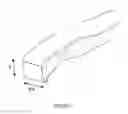
FIG. 1 is the representation of a section of a displayed signature;
FIG. 2 is the representation of a single letter.
DETAILED DESCRIPTION OF THE INVENTION
The method consists in creating a graphical three-dimensional representation of the signature where:
The shape of the signature is reproduced in two dimensions (X and Y), exactly as it is drawn on the plate of the tablet, or as if it were on the surface of the paper for a traditional signature
Instantaneous speed is painted using a variable thickness stroke, as in the technique previously described: larger thickness where speed is lower and vice versa. See FIG. 1, where thickness is schematically referenced as 1/V.
Instantaneous pressure is painted using the third dimension of the graphical space (Z): where pressure is bigger, the depth with which the stroke is represented is taller. See FIG. 1, where depth is schematically represented as P.
The result, an example of which can be seen in FIG. 2, is a representation with an immediate optical effect, where the signature appears as a three-dimensional solid. By using normal and well-known three-dimensional graphical transformation techniques, the image can be rotated in various axes or zoomed to display the hidden or minute parts.
Even for an operator without experience in the graphological field it is easy to reach a quite reliable judgment about the validity of a signature, comparing its three-dimensional image with that of a reference signature, also three-dimensional.
In order to better clarify the method subject of the present invention, in the following text the description of a possible embodiment is given.
The signature device, as with preexisting technology, is a graphic tablet made with a liquid crystal display with a transparent digitizer superimposed. The digitizer can capture, in addition to the shape of the signature in the X,Y coordinates of the tablet plate, also the instantaneous speed of the stylus and the instantaneous pressure exerted on the stylus by the hand of the writer (biometric data); also these features are part of the art before the present invention.
The method, subject of the invention, is used instead, after the completion of the acquisition of the signature, to represent, on the same display of the tablet or optionally in a second display or computer, the three-dimensional image obtained by combining shape, speed and pressure.
Several commands, accessible by means of buttons, allow to rotate and zoom the image; also by means of appropriate commands it is possible to show in the same display or in a second display or computer the image of a reference signature to make a comparison.
By the description and the drawing it is understood that the technique subject of the invention fully achieves its purpose; it is anyway necessary to note that numerous additions and modifications can be made to it without departing from its spirit and from its protection field, as it results by the following claims.
Claims
1. Method to graphically display a digitized signature, characterized by the fact that it shows simultaneously the shape of the signature, the instantaneous speed of the stylus and the instantaneous pressure applied on the stylus.
2. Method according to claim 1, characterized by the fact that it shows the shape of the signature in two dimensions (X and Y), exactly as on the plane of the tablet or as it were on the plane of the paper for a traditional signature.
3. Method according to preceding claims, characterized by the fact that it paints instant speed with a variable width stroke: bigger width where speed is lower and vice versa.
4. Method according to preceding claims, characterized by the fact that it paints instant pressure using the third dimension in the graphical space (Z or height): the bigger the pressure, the taller is the height used to display the stroke.
5. Method according to preceding claims, characterized by the fact that the digitized signature is displayed as a three-dimensional solid.
6. Method according to preceding claims, characterized by the fact that the image can be turned in different axes or zoomed to show hidden or minute parts.
7. Graphic tablet with the possibility to show in its own display, after the acquisition of the signature, the three-dimensional representation of the signature according to the method described in preceding claims.
8. Graphic tablet with the possibility to show the representation of the signature also or alternately in an additional display or computer.
Images & Drawings included:


Sources:
- United States Patent and Trademark Office - verify current appl. status at the USPTO↗
Recent applications in this class:
- » 20220138453 2022-05-05
Handwriting recognition with language modeling - » 20210182532 2021-06-17
METHOD OF TRACKING AN ELEMENT, ASSOCIATED ELECTRONIC DEVICE AND COMPUTER PROGRAM PRODUCT - » 20210165995 2021-06-03
Method and apparatus for processing and generating offline graphic code - » 20210158015 2021-05-27
Classifying digital documents in multi-document transactions based on signatory role analysis - » 20210019500 2021-01-21
Electronic document systems, method and uses - » 20200293749 2020-09-17
Method and apparatus for processing and generating offline graphic code - » 20200143143 2020-05-07
Signature match system and method - » 20200125827 2020-04-23
Classifying digital documents in multi-document transactions based on signatory role analysis - » 20200082153 2020-03-12
Dynamic handwriting verification, handwriting-based user authentication, handwriting data generation, and handwriting data preservation - » 20190087639 2019-03-21
Capturing electronic signatures via captive portal
Recent applications for this Assignee:
- » 20120192099 2012-07-26
Disposition of business process management program elements in a single window