RANGE OF ASEPTICALLY PRODUCED INFANT FOODS HAVING LOW CONCENTRATIONS OF UNDESIRED BY-PRODUCTS AND METHODS FOR MAKING THE SAME
US20120009269A1
2012-01-12
12/672,911
2008-09-05
Abstract:
A range of infant food products wherein each product in the range includes minimal levels of undesired by-products produced during processing as indicated by less than about 15 micrograms furan per kg food product.
Inventors:
- Frank WEBER 3 🇩🇪 Eschborn, Germany
- Nadine KALB 2 🇩🇪 Zimmern O.R., Germany
- Martinas KUSLYS 3 🇨🇭 Grosshochstetten, Switzerland
- Simon Hutschenreuther 1 🇩🇪 Rielasingen, Germany
Interested in similar patents?
Get notified when new applications in this technology area are published.
Classification:
A23L5/21 » CPC main
Preparation or treatment of foods or foodstuffs, in general; Food or foodstuffs obtained thereby; Materials therefor; Removal of unwanted matter, e.g. deodorisation or detoxification by heating without chemical treatment, e.g. steam treatment, cooking
A23L19/09 » CPC further
Products from fruits or vegetables; Preparation or treatment thereof Mashed or comminuted products, e.g. pulp, purée, sauce, or products made therefrom, e.g. snacks
A23L33/40 » CPC further
Modifying nutritive qualities of foods; Dietetic products; Preparation or treatment thereof Complete food formulations for specific consumer groups or specific purposes, e.g. infant formula
A23V2002/00 » CPC further
Food compositions, function of food ingredients or processes for food or foodstuffs
A61K36/00 IPC
Medicinal preparations of undetermined constitution containing material from algae, lichens, fungi or plants, or derivatives thereof, e.g. traditional herbal medicines
A23C9/00 IPC
Dairy products; Processes specially adapted therefor
A23C9/00 IPC
Milk preparations; Milk powder or milk powder preparations
A61P9/00 » CPC further
Drugs for disorders of the cardiovascular system
A61P3/04 » CPC further
Drugs for disorders of the metabolism Anorexiants; Antiobesity agents
A61P3/02 » CPC further
Drugs for disorders of the metabolism Nutrients, e.g. vitamins, minerals
A61P3/10 » CPC further
Drugs for disorders of the metabolism for glucose homeostasis for hyperglycaemia, e.g. antidiabetics
Description
BACKGROUND OF THE INVENTION
1. Field of the Invention
The present invention relates generally to infant food products and particularly to infant food products having low concentrations of undesired by-products produced during processing or packaging.
2. Description of Related Art
It is known that processing of food products can produce undesirable by-products. For example, when food products are roasted, the roasting process can lead to the production of undesirable acrylamide. Alternatively, when food products are subjected to cooking, for example in cans and jars, this can lead to production of undesirable furan.
Furan, like acrylamide, is a substance which is generated naturally during the heating of food products during processing. It is not a synthetic substance added to the food as an ingredient, but occurs in food products as a result of processing.
High concentrations of furan have been shown to be genotoxic and in animal experiments carcinogenic.
Furan is listed in the Department of Health and Human Services list of carcinogens, and considered as possibly carcinogenic by the International Agency for Research on Cancer, based on studies in the laboratory animals at high exposures. Thus, high concentrations of furan are undesirable in food products.
Furan can be generated by heat processing of foods comprising polyunsaturated fatty acids (PUFAs), ascorbic acid (vitamin C), β-carotene, sugars and amino acids.
SUMMARY OF THE INVENTION
It is, therefore, an object of the invention to provide a new range of infant food products that includes a reduced level of undesirable by-products. The level of undesirable by-products can be measured, for example, by reference to furan concentration in a food product.
These and other objects are addressed in one aspect of the invention by providing a range of infant food products wherein each product in the range has less than about 15 micrograms furan per kg food product. The resulting range of infant food products has the advantage that each food product in the range has minimal concentrations of undesirable by products produced during processing. In various embodiments, the components include substantially no furan (eg less than about 5 micrograms/kg furan in the food product) or no furan.
In a further aspect, the invention provides a feeding regime for meeting the nutritional needs of an infant during different stages of development, the regime comprising administering to an infant a range of food products according to the invention.
In a further aspect, the invention provides use of a range of food products according to the invention in the manufacture of one or more medicaments for the prevention or treatment of a nutritionally related disorder.
In another aspect, the invention provides a method of preventing or treating a nutritionally related disorder, comprising administering a range of food products according to the invention.
The nutritionally related disease is optionally selected from obesity, malnutrition, diabetes and heart disease.
Other and further objects, features, and advantages of the present invention will be readily apparent to those skilled in the art.
BRIEF DESCRIPTION OF THE DRAWINGS
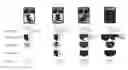
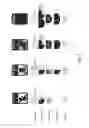
FIG. 1 illustrates a feeding plan according to the invention.
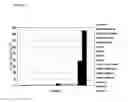
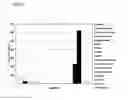
FIGS. 2 and 3 illustrate the results of studies to investigate furan formation was in aqueous model systems at pH7 and pH4 respectively following heat treatment at 121° C. for 25 minutes.
FIG. 4 illustrates the results of a study carried out to investigate the amount of furan formation relative to the addition of ascorbic acid and LC-PUFA derived from fish oil.
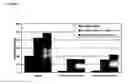
FIGS. 5 and 6 illustrate the results of a study carried out to investigate the concentration of furan formation relative to the sterilization conditions used for processing of the food product. In FIG. 5 the results are shown with regard to a vegetable food product comprising carrot. In FIG. 6 the results are shown with regard to a savoury food product comprising cod and mixed vegetables.
DETAILED DESCRIPTION OF THE INVENTION
Definitions
Within the context of this specification, the term “about” means plus or minus 20%, more preferably plus or minus 10%, even more preferably plus or minus 5%, most preferably plus or minus 2%.
The term “range of infant food products” refers to a plurality of packaged nutritional compositions (eg 2 or more) that, together with milk, provide the nutritional requirements an infant. The range could be interpreted to form a kit of parts.
The term “by-product” refers to a substance present in a food product that is produced during processing of the product.
There are recognized stages of infant development that can be defined, wherein Stage 1 refers to about 4 to about 6 months of age; Stage 2 refers to about 6 to about 8 months of age, Stage 3 refers to about 8 to about 12 months of age, and Stage 4 (also referred to as Junior Stage) refers to about 12 to about 36 months of age. Infants falling within these different developmental stages have different nutritional requirements.
The invention is not limited to the particular methodology, protocols, and reagents described herein because they may vary. Further, the terminology used herein is for the purpose of describing particular embodiments only and is not intended to limit the scope of the present invention. As used herein and in the appended claims, the singular forms “a,” “an,” and “the” include plural reference unless the context clearly dictates otherwise.
Unless defined otherwise, all technical and scientific terms and any acronyms used herein have the same meanings as commonly understood by one of ordinary skill in the art in the field of the invention. Although any methods and materials similar or equivalent to those described herein can be used in the practice of the present invention, the preferred methods, devices, and materials are described herein.
All patents, patent applications, and publications mentioned herein are incorporated herein by reference to the extent allowed by law for the purpose of describing and disclosing the compounds and methodologies reported therein that might be used with the present invention. However, nothing herein is to be construed as an admission that the invention is not entitled to antedate such disclosure by virtue of prior invention.
All percentages for weights expressed herein are by weight of the total food product unless specifically stated otherwise.
Within this specification embodiments have been described in a way which enables a clear and concise specification to be written, but it is intended and will be appreciated that embodiments may be variously combined or separated without parting from the invention
The Invention
In one aspect, the invention provides a range of infant food products wherein each product in the range has less than about 15 micrograms furan per kilogram of food product. In view of the fact that furan concentrations can be used as a good indicator of undesirable by-products formed during processing, a range of food products according to the invention has the advantage that each food product in the range has low levels of undesirable by products.
In a preferred embodiment each product in the range comprises less than about 20 micrograms furan per kilogram of food product. More preferably, each product in the range comprises less than about 10 micrograms furan per kilogram of food product. More preferably, each product in the range comprises less than about 5 micrograms furan per kilogram of food product. Even more preferably, each product in the range comprises less than about 2 micrograms furan per kilogram of food product.
In a preferred embodiment, the components include substantially no furan (eg less than 1 micrograms furan per kilogram of food product) or no measurable furan.
Preferably, the range of products comprises at least one food product suitable for each stage of infant development.
Preferably, the range of products comprises two or more food products suitable for each stage of infant development. More preferably, the range of products comprises at least a vegetable based product and a fruit based product for each stage of infant development. More preferably, the range of products comprises a plurality of vegetable based products and fruit based products for each stage of infant development.
Preferably, the range of products comprises at least a vegetable based product and a fruit based product for stage 1 of infant development.
Preferably, the range of products comprises at least a vegetable based product, a complete meal and a fruit based product for stage 2 of infant development. A complete meal is designed to provide one nutritionally balanced serving—it is not necessary to combine the complete meal with another food product to provide a meal.
Preferably, the range of products comprises at least a vegetable based product, a complete meal and a fruit based product for stage 3 of infant development.
Preferably, the range of products comprises at least a vegetable based product, a complete meal and a fruit based product for stage 4 of infant development.
Preferably, the infant food products for infants from about 4 to about 6 months of age (Stage 1) comprise one or more vegetables selected from artichoke, carrot, cucumber, fennel, French bean, leek, lettuce, parsnip, potato, pumpkin, squash and zucchini.
Preferably, infant food products for infants from about 4 to about 6 months of age (Stage 1) comprise the legume soy.
Preferably, infant food products for infants from about 4 to about 6 months of age (Stage 1) comprise one or more meats selected from beef, veal, chicken, lamb, pork, turkey and duck.
Preferably, infant food products for infants from about 4 to about 6 months of age (Stage 1) comprise one or more fruits selected from apple, apricot, banana, blackberry, blackcurrant, bilberry, cherry, date, grape, gooseberry, guava, lemon, lime, mandarin, mango, melon, nectarine, olive, orange, peach, pear, pineapple, plum, quince, raspberry, redcurrant and watermelon.
Preferably, infant food products for infants from about 4 to about 6 months of age (Stage 1) comprise one or more aromatic herbs and spices selected from anise, balm mint, chamomile, caraway, gherkin, orange blossom and sorrel.
Preferably, infant food products for infants from about 6 to about 8 months of age (Stage 2) comprise one or more vegetables selected from artichoke, carrot, cucumber, fennel, French bean, leek, lettuce, parsnip, potato, pumpkin, squash, zucchini, broccoli, cauliflower, eggplant (aubergine), sweet potato, tomato, pea and spinach.
Preferably, infant food products for infants from about 6 to about 8 months of age (Stage 2) comprise one or more legumes selected from soy, black gram seed, chickpea, cowpea, kidney bean, lentil, mung bean and pigeon pea.
In another embodiment, infant food products for infants from about 6 to about 8 months of age (Stage 2) comprise one or more meats selected from of beef, veal, chicken, lamb, pork, turkey and duck, and/or fish.
Preferably, infant food products for infants from about 6 to about 8 months of age (Stage 2) comprise one or more fruits selected from apple, apricot, banana, blackberry, blackcurrant, bilberry, cherry, date, grape, gooseberry, guava, lemon, lime, mandarin, mango, melon, nectarine, olive, orange, peach, pear, pineapple, plum, quince, raspberry, redcurrant, watermelon, fig, papaya, passionfruit, strawberry and tangerine.
Preferably, infant food products for infants from about 6 to about 8 months of age (Stage 2) comprise one or more aromatic herbs and spices selected from anise, balm mint, chamomile, caraway, gherkin, orange blossom, sorrel, cardamom, chives, cumin, onion, saffron, savory, shallot and thyme.
Preferably, infant food products for infants from about 6 to about 8 months of age (Stage 2) comprise coconut.
Preferably, infant food products for infants from about 8 to about 12 months of age (Stage 3) comprise one or more vegetables selected from artichoke, carrot, cucumber, fennel, French bean, leek, lettuce, parsnip, potato, pumpkin, squash, zucchini, broccoli, cauliflower, eggplant (aubergine), sweet potato, tomato, pea, spinach, asparagus, beet(root), brussel sprout, cabbage, garden pea, radish and turnip.
Preferably, infant food products for infants from about 8 to about 12 months of age (Stage 3) comprise one or more legumes selected from soy, black gram seed, chickpea, cowpea, kidney bean, lentil, mung bean, pigeon pea, lima bean and winged bean.
Preferably, infant food products for infants from about 8 to about 12 months of age (Stage 3) comprise one or more meats selected from beef, veal, chicken, lamb, pork, turkey and duck, and/or fish and/or eggs.
Preferably, infant food products for infants from about 8 to about 12 months of age (Stage 3) comprise one or more fruits selected from apple, apricot, banana, blackberry, blackcurrant, bilberry, cherry, date, grape, gooseberry, guava, lemon, lime, mandarin, mango, melon, nectarine, olive, orange, peach, pear, pineapple, plum, quince, raspberry, redcurrant, watermelon, fig, papaya, passionfruit, strawberry, tangerine and rhubarb.
Preferably, infant food products for infants from about 8 to about 12 months of age (Stage 3) comprise one or more aromatic herbs and spices selected from anise, balm mint, chamomile, caraway, gherkin, orange blossom, sorrel, cardamom, chives, cumin, onion, saffron, savory, shallot, thyme, coriander, curcuma, garden sorrel, garlic, mint and vanilla.
Preferably, infant food products for infants from about 8 to about 12 months of age (Stage 3) comprise coconut and/or cocoa.
Preferably, it is preferred that infant food products for infants from about 12 to about 36 months of age (Stage Junior) comprise one or more vegetables selected from artichoke, carrot, cucumber, fennel, French bean, leek, lettuce, parsnip, potato, pumpkin, squash, zucchini, broccoli, cauliflower, eggplant (aubergine), sweet potato, tomato, pea, spinach, asparagus, beet(root), brussel sprout, cabbage, garden pea, radish, turnip, mushroom and watercress.
Preferably, infant food products for infants from about 12 to about 36 months of age (Stage Junior) comprise one or more legumes selected from soy, black gram seed, chickpea, cowpea, kidney bean, lentil, mung bean, pigeon pea, lima bean and winged bean.
Preferably, infant food products for infants from about 12 to about 36 months of age (Stage Junior) comprise one or more meats selected from beef, veal, chicken, lamb, pork, turkey, duck, and/or fish, and/or eggs and/or crustaceans.
Preferably, infant food products for infants from about 12 to about 36 months of age (Stage Junior) comprise one or more fruits selected from apple, apricot, banana, blackberry, blackcurrant, bilberry, cherry, date, grape, gooseberry, guava, lemon, lime, mandarin, mango, melon, nectarine, olive, orange, peach, pear, pineapple, plum, quince, raspberry, redcurrant, watermelon, fig, papaya, passionfruit, strawberry, tangerine, rhubarb, grapefruit and kiwi.
Preferably, infant food products for infants from about 12 to about 36 months of age (Stage Junior) comprise one or more aromatic herbs and spices selected from anise, balm mint, chamomile, caraway, gherkin, orange blossom, sorrel, cardamom, chives, cumin, onion, saffron, savory, shallot, thyme, coriander, curcuma, garden sorrel, garlic, mint, vanilla, basil, bay laurel, chervil, cinnamon, clove, ginger, liquorice, mace, marjoram, nutmeg, oregano, parsley, pepper, rosemary, sage and terragon.
Preferably, infant food products for infants from about 12 to about 36 months of age (Stage Junior) comprise one or more nuts selected from coconut, cocoa, almond, beechnut, brazil nut, cashew nut, chestnut, hazelnut, macadamia nut, pecan nut, pistachio nut and walnut.
In a further aspect, the invention provides a method for production of the food product which comprises precooking the ingredients separately, mixing the ingredients, subjecting them to UHT treatment and asceptically filling packaging containers. Advantageously, it has been found that food products of the invention produced in this way have reduced levels of by-products including furan compared to similar products processed using conventional retorting.
In a further aspect, the invention provides a feeding regime for meeting the nutritional needs of an infant during different stages of development, the regime comprising administering to an infant a range of food products according to the invention.
In a further aspect, the invention provides use of a range of food products according to the invention in the manufacture of one or more medicaments for the prevention or treatment of a nutritionally related disorder.
In another aspect, the invention provides a method of preventing or treating a nutritionally related disorder, comprising administering a range of food products according to the invention.
The nutritionally related disease is optionally selected from obesity, malnutrition, diabetes and heart disease.
In other aspects, the invention provides the product produced using the method of the invention.
EXAMPLES
This invention can be further illustrated by the following examples although it will be understood that these examples are included merely for purposes of illustration and are not intended to limit the scope of the invention unless otherwise specifically indicated.
Example Products
A daily complementary diet for stage 1 comprised:
-
- (i) 100 g portion of infant cereal;
- (ii) 65 g portion of vegetable dish in accordance with the invention; and
- (iii) 65 g portion of fruit dish in accordance with the invention.
A number of vegetable and fruit dishes were provided in a range of baby food products and were labeled according to their suitability for a stage 1 diet. The feeding plan shown in FIG. 1 was used to determine which meals could make up the daily food intake for stage 1. In this example, the vegetable dish was a pumpkin based dish and the fruit dish was an apple based dish.
| TABLE 1 |
| List of ingredients for vegetable dish |
| Amount per | ||
| Ingredient | 100 g (g) | |
| POTATO FLAKES | 4.000 | |
| Pumpkin frozen | 40.000 | |
| Potato 6 × 6 mm frozen | 10.000 | |
| CARROT | 15.000 | |
| RAPESEED OIL LOW ERUCIC (CANOLA) | 0.400 | |
| SUNFLOWER OIL | 0.400 | |
| WATER | 30.200 | |
| TABLE 2 |
| List of ingredients for fruit dish |
| Amount per | ||
| Ingredient | 100 g (g) | |
| Apple fresh | 99.95 | |
| Vitamin C | 0.05 | |
Each dish provided the following nutritional values:
| TABLE 3 |
| Nutritional values provided by each Stage 1 dish |
| % daily | |||
| kcal/100 g | kcal/serving | energy intake | |
| Cereal Dish | 106.0 for RTE pap | 106.00 | 17.0 |
| 424 for dry powder | |||
| Vegetable Dish | 40.7 | 26.46 | 4.2 |
| Fruit Dish | 53.2 | 34.58 | 5.5 |
The total daily nutritional values provided by the complementary dishes were as follows:
| TABLE 4 |
| Daily nutritional values provided |
| by the Stage 1 complementary dishes |
| E % (daily | |||
| per day | per 100 g | energy intake) | |
| Total Protein (g) | 4.3 | 2.8 | 10.4 | |
| Total Fat (g) | 3.3 | 2.2 | 18.1 | |
| Total CHO (g) | 29.8 | 19.2 | 71.5 | |
| Fibres (g) | 3.1 | 2.0 | — | |
| Sodium (mg) | 38.1 | 24.6 | — | |
| LA (g) | 0.8 | 0.5 | 4.3 | |
| ALA (g) | 0.1 | 0.1 | 0.6 | |
| LA/ALA ratio | 7.1 | — | — | |
| Energy (kcal) | 166.5 | 107.4 | — | |
| (Wherein CHO represents carbohydrate, LA represents linoleic acid and ALA represents alpha-linolenic acid). |
The sum of the daily energy intake provided by the complementary foods was 26.6% (166.5 kcal). The remaining 73.4% (458 kcal) of daily energy intake was provided by milk. This provided a total daily energy intake of 625.04 kcal.
Example 2
A daily complementary diet for stage 2 comprised:
-
- (i) 100 g portion of infant cereal;
- (ii) 100 g portion of vegetable dish in accordance with the invention;
- (iii) 100 g portion of a complete meal in accordance with the invention; and
- (iv) 65 g portion of fruit dish in accordance with the invention.
A number of complete meals, vegetable and fruit dishes were provided in the range of baby food products and were labeled according to their suitability for a stage 2 diet. The feeding plan shown in FIG. 1 was used to determine which meals could make up the daily food intake for stage 2. In this example, the vegetable dish was garden vegetables and corn based, the complete meal was garden vegetables and lamb based and the fruit dish was apple and raspberry based.
| TABLE 5 |
| List of ingredients for vegetable dish |
| Amount per | ||
| Ingredient | 100 g (g) | |
| CARROT | 30.000 | |
| POTATO FLAKES | 3.000 | |
| Sweetcorn frozen | 10.000 | |
| Parsnip frozen | 10.000 | |
| RICE SEMOLINA | 1.000 | |
| RAPESEED OIL LOW ERUCIC (CANOLA) | 0.400 | |
| Fennel frozen | 5.000 | |
| SUNFLOWER OIL | 0.200 | |
| WATER | 40.400 | |
| TABLE 6 |
| List of ingredients for complete meal |
| Amount per | ||
| Ingredient | 100 g (g) | |
| POTATO FLAKES | 4.000 | |
| CARROT | 30.000 | |
| Lamb frozen | 8.500 | |
| RICE SEMOLINA | 2.000 | |
| Parsnip frozen | 5.000 | |
| Sweetcorn frozen | 3.000 | |
| RAPESEED OIL LOW ERUCIC (CANOLA) | 0.600 | |
| SUNFLOWER OIL | 0.400 | |
| Onion 10 mm frozen | 4.000 | |
| WATER | 42.500 | |
| TABLE 7 |
| List of ingredients for fruit dish |
| Amount per | ||
| Ingredient | 100 g (g) | |
| Apple fresh | 79.96 | |
| Raspberry puree | 19.99 | |
| Vitamin C | 0.05 | |
Each dish provided the following nutritional values:
| TABLE 8 |
| Nutritional values provided by each Stage 2 dish |
| % daily | |||
| kcal/100 g | kcal/serving | energy intake | |
| Cereal Dish | 106.0 for RTE pap | 106.00 | 15.8 |
| 424 for dry powder | |||
| Vegetable Dish | 42.6 | 42.6 | 6.4 |
| Complete Meal | 62.6 | 62.6 | 9.3 |
| Fruit Dish | 50.2 | 32.63 | 4.9 |
The total daily nutritional values provided by the complementary dishes were as follows:
| TABLE 9 |
| Daily nutritional values provided |
| by the Stage 2 complementary dishes |
| E % (daily | |||
| per day | per 100 g | energy intake) | |
| Total Protein (g) | 7.8 | 2.7 | 12.9 | |
| Total Fat (g) | 6.2 | 2.1 | 23.1 | |
| Total CHO (g) | 38.5 | 13.3 | 63.9 | |
| Fibres (g) | 5.2 | 1.8 | — | |
| Sodium (mg) | 75.7 | 26.1 | — | |
| LA (g) | 1.2 | 0.4 | 4.6 | |
| ALA (g) | 0.2 | 0.1 | 0.6 | |
| LA/ALA ratio | 7.3 | — | — | |
| Energy (kcal) | 241.1 | 83.1 | — | |
The sum of the daily energy intake provided by the complementary foods was 35.9% (241.1 kcal). The remaining 64.1% (428.93 kcal) of daily energy intake was provided by milk. This provided a total daily energy intake of 670.03 kcal.
Example 3
A daily complementary diet for stage 3 comprised:
-
- (i) 150 g portion of infant cereal;
- (ii) 200 g portion of vegetable dish in accordance with the invention;
- (iii) 200 g portion of a complete meal in accordance with the invention; and
- (iv) 130 g portion of fruit dish in accordance with the invention.
A number of complete meal, vegetable and fruit dishes were provided in the range of baby food products and were labeled according to their suitability for a stage 3 diet. The feeding plan shown in FIG. 1 was used to determine which meals could make up the daily food intake for stage 3. In this example, vegetable dish was garden vegetables and corn based, the complete meal was a pasta, tomato and beef based and the fruit dish was fruit salad based.
| TABLE 10 |
| List of ingredients for vegetable dish |
| Amount per | ||
| Ingredient | 100 g (g) | |
| CARROT | 30.000 | |
| POTATO FLAKES | 3.000 | |
| Sweetcorn frozen | 10.000 | |
| Parsnip frozen | 10.000 | |
| RICE SEMOLINA | 1.000 | |
| RAPESEED OIL LOW ERUCIC (CANOLA) | 0.400 | |
| Fennel frozen | 5.000 | |
| SUNFLOWER OIL | 0.200 | |
| WATER | 40.400 | |
| TABLE 11 |
| List of ingredients for complete meal |
| Amount per | ||
| Ingredient | 100 g (g) | |
| Pasta spaghetti short | 8.000 | |
| Beef frozen 14% fat | 8.000 | |
| CARROT | 20.000 | |
| Tomato puree | 5.000 | |
| RAPESEED OIL LOW ERUCIC (CANOLA) | 0.800 | |
| SUNFLOWER OIL | 0.400 | |
| Bell pepper red 10 mm frozen | 4.000 | |
| Onion 10 mm frozen | 3.000 | |
| Thyme frozen | 0.100 | |
| WATER | 50.700 | |
| TABLE 12 |
| List of ingredients for fruit dish |
| Amount per | ||
| Ingredient | 100 g (g) | |
| Apple fresh | 39.98 | |
| Pear William fresh | 14.9925 | |
| Peach puree | 14.9925 | |
| Banana puree without seeds | 19.990 | |
| Apricot puree | 9.995 | |
| Vitamin C | 0.05 | |
Each dish provided the following nutritional values:
| TABLE 13 |
| Nutritional values provided by each Stage 3 dish |
| % daily | |||
| Kcal/100 g | kcal/serving | energy intake | |
| Cereal Dish | 106.0 | 159.00 | 20.6 |
| Vegetable Dish | 42.6 | 85.2 | 11.1 |
| Complete Meal | 65.9 | 131.8 | 17.1 |
| Fruit Dish | 56.0 | 72.8 | 9.5 |
The total daily nutritional values provided by the complementary dishes were as follows:
| TABLE 14 |
| Daily nutritional values provided |
| by the Stage 3 complementary dishes |
| Per day | per 100 g | E % | |
| Total Protein (g) | 14.8 | 2.6 | 13.2 | |
| Total Fat (g) | 10.9 | 1.9 | 22 | |
| Total CHO (g) | 72.4 | 12.8 | 64.8 | |
| Fibres (g) | 8.4 | 1.5 | — | |
| Sodium (mg) | 142.3 | 25.1 | — | |
| LA (g) | 2.3 | 0.4 | 4.6 | |
| ALA (g) | 0.4 | 0.1 | 0.7 | |
| LA/ALA ratio | 6.5 | — | — | |
| Energy (kcal) | 447.0 | 78.8 | — | |
The sum of the daily energy intake provided by the complementary foods was 58.0% (447.0 kcal). The remaining 42.0% (323.0 kcal) of daily energy intake was provided by milk. This provided a total daily energy intake of 770 kcal.
Example 4
A daily complementary diet for stage 4 comprised:
-
- (i) 350 g portion of infant cereal;
- (ii) 200 g portion of vegetable dish in accordance with the invention;
- (iii) 250 g portion of a complete meal in accordance with the invention; and
- (iv) 130 g portion of fruit dish in accordance with the invention.
A number of complete meals, vegetable and fruit dishes were provided in the range of baby food products and were labeled according to their suitability for a stage 4 diet. The feeding plan shown in FIG. 1 was used to determine which meals could make up the daily food intake for stage 4. In this example, the vegetable dish was a garden vegetables and corn dish, the complete meal was a pasta, tomato and beef dish and the fruit dish was a fruit salad dish.
| TABLE 15 |
| List of ingredients for vegetable dish |
| Amount per | ||
| Ingredient | 100 g (g) | |
| CARROT | 30.000 | |
| POTATO FLAKES | 3.000 | |
| Sweetcorn frozen | 10.000 | |
| Parsnip frozen | 10.000 | |
| RICE SEMOLINA | 1.000 | |
| RAPESEED OIL LOW ERUCIC (CANOLA) | 0.400 | |
| Fennel frozen | 5.000 | |
| SUNFLOWER OIL | 0.200 | |
| WATER | 40.400 | |
| TABLE 16 |
| List of ingredients for complete meal |
| Amount per | ||
| Ingredient | 100 g (g) | |
| Pasta spaghetti short | 8.000 | |
| Beef frozen 14% fat | 8.000 | |
| CARROT | 20.000 | |
| Tomato puree | 5.000 | |
| RAPESEED OIL LOW ERUCIC (CANOLA) | 0.800 | |
| SUNFLOWER OIL | 0.400 | |
| Bell pepper red 10 mm frozen | 4.000 | |
| Onion 10 mm frozen | 3.000 | |
| Thyme frozen | 0.100 | |
| WATER | 50.700 | |
| TABLE 17 |
| List of ingredients for fruit dish |
| Amount per | ||
| Ingredient | 100 g (g) | |
| Apple fresh | 39.98 | |
| Pear William fresh | 14.9925 | |
| Peach puree | 14.9925 | |
| Banana puree without seeds | 19.990 | |
| Apricot puree | 9.995 | |
| Vitamin C | 0.05 | |
Each dish provided the following nutritional values:
| TABLE 18 |
| Nutritional values provided by each Stage 4 dish |
| % daily | |||
| kcal/100 g | kcal/serving | energy intake | |
| Cereal Dish | 106.0 | 371 | 35.7 | |
| Vegetable Dish | 42.6 | 85.2 | 8.2 | |
| Complete Meal | 65.9 | 164.75 | 15.8 | |
| Fruit Dish | 56.0 | 72.8 | 7.0 | |
The daily nutritional values provided by the complementary dishes were as follows:
| TABLE 19 |
| Daily nutritional values provided |
| by the Stage 4 complementary dishes |
| per day | per 100 g | E % | |
| Total Protein (g) | 23.6 | 3.5 | 13.6 | |
| Total Fat (g) | 17.2 | 2.6 | 22.4 | |
| Total CHO (g) | 110.6 | 16.6 | 64.0 | |
| Fibres (g) | 9.8 | 1.5 | — | |
| Sodium (mg) | 215.0 | 32.2 | — | |
| LA (g) | 3.4 | 0.5 | 4.5 | |
| ALA (g) | 0.5 | 0.1 | 0.7 | |
| LA/ALA ratio | 6.8 | — | — | |
| Energy (kcal) | 691.7 | 103.6 | — | |
The sum of the daily energy intake provided by the complementary foods was 66.5% (691.7 kcal). The remaining 33.5% (348.3 kcal) of daily energy intake was provided by milk. This provided a total daily energy intake of 1040 kcal.
Test Results and Data
Furan formation was studied in aqueous model systems at pH7 and pH4 following heat treatment at 121° C. for 25 minutes. The results are shown in FIGS. 2 and 3. The results show that at pH7, the concentration of PUFAs show the highest impact on furan development after heat treatment at 121° C. for 25 minutes.
At pH 4, ascorbic acid plays an important role as a precursor of furan after heat treatment at 121° C. for 25 minutes, but it can be seen that PUFAs still show the highest impact on furan development.
Two further studies were carried out. The first study was carried out to investigate the amount of furan formation relative to the addition of ascorbic acid and LC-PUFA derived from fish oil and the results are shown in FIG. 4. The second study was carried out to investigate the concentration of furan formation relative to the sterilization conditions used for processing of the food product and the results are shown in FIGS. 5 and 6. In FIG. 5 the results are shown with regard to a vegetable food product comprising carrot. In FIG. 6 the results are shown with regard to a savoury food product comprising cod and mixed vegetables. It can be seen that there is about 2 micrograms of furan per kg food product produced as a by-product following processing according to the invention.
The results clearly show that increased levels of fish oil and vitamin C lead to larger levels of furan production. In addition, sterilization of the food product by retorting lead to remarkably larger levels of furan production in the food product compared to sterilization by UHT treatment at F0=100, F0=15 and F0=8. (F0 is a well known indicator of sterility—the F0 value is a known measure of the time required to kill clostridium botulinum bacteria). Indeed, it can clearly be seen that UHT sterilization minimizes the formation of furan by a factor of 2.5 to 5 compared to traditional retorting under normal sterilization conditions. In addition, remarkably, while amplified sterilization conditions resulted in a linear increase of Furan formation in products processed by retorting, furan formation as a result of UHT treatment remained almost constant.
In the specification, there have been disclosed typical preferred embodiments of the invention and, although specific terms are employed, they are used in a generic and descriptive sense only and not for purposes of limitation, the scope of the invention being set forth in the following claims. Obviously many modifications and variations of the present invention are possible in light of the above teachings. It is therefore to be understood that within the scope of the appended claims the invention may be practiced otherwise than as specifically described.
Claims
What is claimed is:1. A range of infant food products wherein each product in the range includes minimal levels of undesired by-products produced during processing as indicated by less than about 15 micrograms furan per kg food product.
2. A range of infant food products according to claim 1 wherein each product in the range comprises less than about 5 micrograms furan per kg food product.
3. A range of infant food products according to claim 1 or 2 wherein each product in the range comprises less than about 2 micrograms furan per kg food product.
4. A range of infant food products according to any preceding claim wherein each product in the range comprises substantially no furan.
5. A range of infant food products according to any preceding claim wherein the range of products comprises at least one food product suitable for each stage of infant development.
6. A range of infant food products according to any preceding claim wherein the range of products comprises two or more food products suitable for each stage of infant development.
7. A range of infant food products according to any preceding claim wherein the range of products comprises at least a vegetable based product and a fruit based product for each stage of infant development.
8. A range of infant food products according to any preceding claim wherein the range of products comprises a plurality of vegetable based products and fruit based products for each stage of infant development.
9. A range of infant food products according to any preceding claim wherein the range of products comprises at least a vegetable based product and a fruit based product for stage 1 of infant development.
10. A range of infant food products according to any preceding claim wherein the range of products comprises at least a vegetable based product, a complete meal and a fruit based product for stage 2 of infant development.
11. A range of infant food products according to any preceding claim wherein the range of products comprises at least a vegetable based product, a complete meal and a fruit based product for stage 3 of infant development.
12. A range of infant food products according to any preceding claim wherein the range of products comprises at least a vegetable based product, a complete meal and a fruit based product for stage 4 of infant development.
13. A feeding regime for meeting the nutritional needs of an infant during different stages of development, the regime comprising administering to an infant a range of food products according to any preceding claim.
14. Use of a range of food products according to any one of claims 1 to 12 in the manufacture of one or more medicaments or functional foods for the prevention or treatment of a nutritionally related disorder.
15. A method of preventing, treating or delaying the onset of a nutritionally related disorder, comprising administering a range of food products according to any one of claims 1 to 12.
16. Use of claim 14 or the method of claim 15 wherein the nutritionally related disease is selected from obesity, malnutrition, diabetes and heart disease.
17. A range of infant food products substantially as described herein.
Images & Drawings included:


Sources:
- United States Patent and Trademark Office - verify current appl. status at the USPTO↗
Similar patent applications:
Recent applications in this class:
- » 20240180210 2024-06-06
PRODUCTION LINE ASSEMBLY AND PRODUCTION LINE FOR LASER WALL BREAKING OF PLANT SPORES - » 20240099339 2024-03-28
PROCESS AND SYSTEM FOR COOKING AGAVE PIÑAS TO PRODUCE DISTILLED BEVERAGES - » 20230413868 2023-12-28
FOOD ADDITIVES AND METHODS FOR PREPARING THE SAME - » 20230404115 2023-12-21
METHOD FOR REMOVING THE STICKINESS OF GLUTINOUS RICE - » 20230354857 2023-11-09
REMOVAL OF UNWANTED MINERAL OIL HYDROCARBONS - » 20230148636 2023-05-18
FOOD COMPOSITION COMPRISING HEAT TREATED ALGAE - » 20220322712 2022-10-13
EVAPORATION MODULE FOR PRODUCING CONCENTRATE, AND LIQUID PRODUCT MANUFACTURING SYSTEM INCLUDING SAME - » 20220142212 2022-05-12
SUGAR REDUCTION OF FOOD PRODUCTS - » 20210401004 2021-12-30
SUPPORTING METHOD, PRODUCING METHOD AND COMPUTER READABLE STORAGE MEDIUM - » 20200359662 2020-11-19
Cooking apparatus for reducing a content of phytic acid and phytate contained in foodstuff