Hybrid vehicle
US20120014815A1
2012-01-19
13/257,329
2009-12-24
✅ Patent granted
US 8,695,743 B2
2014-04-15
WO; PCT/EP2009/009271; 20091224
WO; WO2010/112057; 20101007
John Walters
Gerald E. Hespos | Michael J. Porco | Matthew T. Hespos
2030-02-28
Abstract:
A hybrid vehicle has an internal combustion engine (10) and a hybrid drive (12) that has an electric machine (11) and a transmission (13) having a drive output. During driving under purely internal combustion engine (10) power, only the internal combustion engine provides a drive torque at the drive output. During driving under purely electric motor power, only the electric machine (11) provides a drive torque at the drive output. During hybrid driving, the internal combustion engine (10) and the electric machine (11) each provide a drive torque at the drive output. The hybrid vehicle also has a pump unit (16, 20). The pump unit (16, 20) can be driven by the electric machine (11) of the hybrid drive (12).
Assignee:
- Dr. Ing. h.c.F. Porsche Aktiengesellschaft 542 🇩🇪 Stuttgart, Germany
- Dr. Ing. h.c. F. Porsche Aktiengesellschaft 435 🇩🇪 , Germany
Applicant:
Interested in similar patents?
Get notified when new applications in this technology area are published.
Classification:
B60W20/00 » CPC main
Control systems specially adapted for hybrid vehicles
B60H1/004 » CPC further
Heating, cooling or ventilating [HVAC] devices; Air-conditioning arrangements specially adapted for particular vehicles for vehicles having an electrical drive, e.g. hybrid or fuel cell for vehicles having a combustion engine and electric drive means, e.g. hybrid electric vehicles
B60H1/3222 » CPC further
Heating, cooling or ventilating [HVAC] devices; Cooling devices using compression characterised by the compressor driving arrangements, e.g. clutches, transmissions or multiple drives
B60K6/48 » CPC further
Arrangement or mounting of plural diverse prime-movers for mutual or common propulsion, e.g. hybrid propulsion systems comprising electric motors and internal combustion engines the prime-movers consisting of electric motors and internal combustion engines, e.g. HEVs characterised by the architecture of the hybrid electric vehicle Parallel type
B60W10/02 » CPC further
Conjoint control of vehicle sub-units of different type or different function including control of driveline clutches
B60W10/06 » CPC further
Conjoint control of vehicle sub-units of different type or different function including control of propulsion units including control of combustion engines
B60W10/08 » CPC further
Conjoint control of vehicle sub-units of different type or different function including control of propulsion units including control of electric propulsion units, e.g. motors or generators
B60W10/24 » CPC further
Conjoint control of vehicle sub-units of different type or different function including control of energy storage means
B60W10/30 » CPC further
Conjoint control of vehicle sub-units of different type or different function including control of auxiliary equipment, e.g. air-conditioning compressors or oil pumps
F04B17/00 » CPC further
Pumps characterised by combination with, or adaptation to, specific driving engines or motors
F16H61/0025 » CPC further
Control functions within change-speed- or reversing-gearings for conveying rotary motion; Generation or control of line pressure Supply of control fluid; Pumps therefore
B60K6/12 » CPC further
Arrangement or mounting of plural diverse prime-movers for mutual or common propulsion, e.g. hybrid propulsion systems comprising electric motors and internal combustion engines; Prime-movers comprising combustion engines and mechanical or fluid energy storing means by means of a chargeable fluidic accumulator
B60Y2400/428 » CPC further
Special features of vehicle units; Clutches or brakes Double clutch arrangements; Dual clutches
F16H2061/0034 » CPC further
Control functions within change-speed- or reversing-gearings for conveying rotary motion; Generation or control of line pressure Accumulators for fluid pressure supply; Control thereof
Y02T10/40 » CPC further
Road transport of goods or passengers; Internal combustion engine [ICE] based vehicles Engine management systems
Y02T10/40 » CPC further
Road transport of goods or passengers; Internal combustion engine [ICE] based vehicles Engine management systems
Y02T10/62 » CPC further
Road transport of goods or passengers; Other road transportation technologies with climate change mitigation effect Hybrid vehicles
Y02T10/62 » CPC further
Road transport of goods or passengers; Other road transportation technologies with climate change mitigation effect Hybrid vehicles
F04B49/00 » CPC further
Control, e.g. of pump delivery, or pump pressure of, or safety measures for, machines, pumps, or pumping installations, not otherwise provided for, or of interest apart from, groups -
F04B17/05 IPC
Pumps characterised by combination with, or adaptation to, specific driving engines or motors driven by internal-combustion engines
F04B17/03 IPC
Pumps characterised by combination with, or adaptation to, specific driving engines or motors driven by electric motors
B60K6/38 IPC
Arrangement or mounting of plural diverse prime-movers for mutual or common propulsion, e.g. hybrid propulsion systems comprising electric motors and internal combustion engines the prime-movers consisting of electric motors and internal combustion engines, e.g. HEVs characterised by apparatus, components or means specially adapted for HEVs characterised by the driveline clutches
Description
BACKGROUND OF THE INVENTION
1. Field of the Invention
The invention relates to a hybrid vehicle according to the preamble of patent claim 1.
2. Description of the Related Art
A hybrid vehicle has a hybrid drive composed of an internal combustion engine and an electric machine. The electric machine of the hybrid drive may be operated both as a motor and as a generator. In addition to the hybrid drive, a hybrid vehicle comprises a transmission designed preferably as an automatic shift transmission. During driving of the hybrid vehicle under purely internal combustion engine power, only the internal combustion engine of the hybrid drive provides a drive torque at a drive output of the hybrid vehicle. In contrast, during driving under purely electric motor power, only the electric machine of the hybrid drive provides a drive torque at the drive output of the hybrid vehicle. When the hybrid vehicle is operated in a hybrid driving mode, both the internal combustion engine and also the electric machine of the hybrid drive each provide a drive torque at the drive output of the hybrid vehicle.
Furthermore, it is already known from practice for hybrid vehicles to have at least one pump unit, in particular a hydraulic pump for supplying hydraulic oil to the transmission and/or to auxiliary units. Until now, pump units of said type have been assigned a separate drive, for example a separate electric motor, in order thereby to ensure that the pump unit can be operated even when the internal combustion engine of the hybrid drive is shut down. A separate drive for pump units is however disadvantageous because the separate drives require a relatively large amount of installation space, and also increase the overall weight of the hybrid vehicle.
SUMMARY OF THE INVENTION
The invention is based on the object of providing a hybrid vehicle in which a separate drive for pump units can be dispensed with.
The object is achieved by a hybrid vehicle with a pump unit that can be driven by the electric machine of the hybrid drive.
If, as proposed by the present invention, a pump unit of the hybrid vehicle is driven by the electric machine of the hybrid drive, it is possible to dispense with a separate drive for the pump unit. Even when the internal combustion engine is shut down, the pump unit can then be driven by the electric machine of the hybrid drive.
Refinements of the invention will emerge from the the following description. Exemplary embodiments of the invention will be explained with reference to the drawing, without the invention being restricted to said exemplary embodiments.
BRIEF DESCRIPTION OF THE DRAWINGS
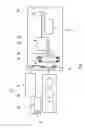
FIG. 1 shows a highly schematic depiction of a hybrid vehicle for illustrating the invention.
FIG. 2 shows a highly schematic depiction of a further hybrid vehicle for illustrating the invention.
DETAILED DESCRIPTION OF THE PREFERRED EMBODIMENTS
FIG. 1 shows a highly schematic depiction of assemblies in the drivetrain of a hybrid vehicle, wherein FIG. 1 shows an internal combustion engine 10 and an electric machine 11, which together form a hybrid drive 12 of a hybrid vehicle.
In addition to the internal combustion engine 10 and the electric machine 11, which together form the hybrid drive 12 of the hybrid vehicle, FIG. 1 also shows a transmission 13 designed as an automatic shift transmission. The transmission 13 of FIG. 1 is a so-called double clutch transmission.
Both the internal combustion engine 10 and also the electric machine 11 of the hybrid drive 12 act on the transmission 13, specifically, in the configuration shown in FIG. 1, in that the internal combustion engine 10 and the electric machine 11 of the hybrid drive 12 are arranged parallel to one another and act in parallel with one another on the transmission 13. The internal combustion engine 10 can be coupled to and decoupled from the transmission 13 by means of a transmission-internal clutch 14. The electric machine 11 can be coupled to and decoupled from the transmission 13 by means of a further transmission-internal clutch 15.
The hybrid vehicle also comprises a pump unit designed as a hydraulic pump 16, wherein in the configuration of FIG. 1, the hydraulic pump 16 is a transmission-internal hydraulic pump 16. In the configuration of FIG. 1, hydraulic oil for at least one transmission-internal assembly 17 can be provided by means of the hydraulic pump 16. Auxiliary units may alternatively or additionally be supplied with hydraulic oil by means of the hydraulic pump 16.
Within the context of the present invention, the hydraulic pump 16, which in the configuration of FIG. 1 is a transmission-internal hydraulic pump, may be driven by the electric machine 11 of the hybrid drive 12, such that accordingly no separate drive is required for the hydraulic pump 16.
In one advantageous refinement of the invention, a clutch 18 is connected between the hydraulic pump 16 and the electric machine 11 of the hybrid drive. When the clutch 18 is closed, the electric machine 11 of the hybrid drive 12 can drive the hydraulic pump 16, specifically when the clutch 15 is additionally closed. In contrast, when the clutch 18 is open, the hydraulic pump 16 is decoupled from the electric machine 11 of the hybrid drive, such that then the electric machine 11 of the hybrid drive 12 does not drive the hydraulic pump 16, specifically even when the clutch 15 is supposed to be closed.
According to FIG. 1, the hydraulic pump 16 is assigned a hydraulic accumulator 19. When a filling level of the hydraulic accumulator 19 is above a limit value, the hydraulic pump 16 does not fill the hydraulic accumulator 19. In contrast, if the filling level of the hydraulic accumulator 19 is below a limit value, the hydraulic accumulator 19 is filled by the hydraulic pump 16. For this purpose, in the configuration of FIG. 1, an approach is taken in which, when the filling level of the hydraulic accumulator 19 is above the corresponding limit value, the clutch 18 is open, such that the hydraulic pump 16 cannot be driven by the electric machine 11 of the hybrid drive 12. In contrast, when the filling level of the hydraulic accumulator 19 is below the corresponding limit value, the clutch 18 is closed, such that the hydraulic pump 16 can then be driven by the electric machine 11 of the hybrid drive 12 in order to fill the hydraulic accumulator 19.
The filling of the hydraulic accumulator 19 by means of the hydraulic pump 16 may be made dependent not only on the filling level of said hydraulic accumulator but also on the efficiency of the overall system. It may thus be provided that the hydraulic pump 16 fills the hydraulic accumulator 19 only when the efficiency of the hybrid vehicle is increased in this way. It may thus be provided, for example, that the hydraulic accumulator 19 is filled by means of the hydraulic pump 16 during braking of the hybrid vehicle, in order thereby to utilize braking energy for filling the hydraulic accumulator 19.
By means of a control device which is not shown, the clutch 18 which is connected between the electric machine 11 of the hybrid drive 12 and the hydraulic pump 16 can be automatically opened or closed, specifically preferably as a function of the filling level of the hydraulic accumulator and/or as a function of the efficiency of the hybrid vehicle 19.
As has already been stated, the hydraulic pump 16 may be a transmission-internal or alternatively a transmission-external hydraulic pump. The hydraulic pump 16 may be designed as a fixed-displacement pump which always provides a constant delivery volume at a defined rotational speed. The hydraulic pump 16 may alternatively also be designed as a variable-displacement pump whose delivery volume at a defined rotational speed can be adjusted or varied. The hydraulic pump 16 may alternatively or additionally be driven by the internal combustion engine 11.
In the configuration of FIG. 1, a pump unit designed as an air-conditioning compressor 20 of an air-conditioning system of the hybrid vehicle can also be driven by means of the electric machine 11 of the hybrid drive 12, wherein a clutch 21 is connected between the electric machine 11 of the hybrid drive 12 and the air-conditioning compressor 20. When the clutch 21 is open, the air-conditioning compressor 20 is decoupled from the electric machine 11 of the hybrid drive 12, wherein then said air-conditioning compressor is not driven by the electric machine 11 of the hybrid drive 12. Only when the clutch 21 is closed can the air-conditioning compressor 20 also be driven by the electric machine 11 of the hybrid drive 12. The air-conditioning compressor 20 can be driven independently of the hydraulic pump 16 by the electric machine 11 of the hybrid drive 12.
The configuration illustrated in FIG. 1, in which the internal combustion engine 10 and the electric machine 11 of the hybrid drive 12 act in parallel on a transmission 13 designed as a double clutch transmission, is merely an example.
In contrast thereto, it is also possible, as shown by the configuration in FIG. 2, for the electric machine 11 of the hybrid drive 12 to act on the transmission 13 coaxially with the internal combustion engine 10. In this case, the arrangement of the clutch 18 connected between the hydraulic pump 16 and the electric machine 11 of the hybrid drive 12 is changed, and the clutch 15 is omitted.
Claims
1. A hybrid vehicle, having an internal combustion engine and having a hybrid drive which comprises an electric machine, having a transmission and having a drive output, wherein during driving under purely internal combustion engine power, only the internal combustion engine provides a drive torque at the drive output, wherein during driving under purely electric motor power, only the electric machine provides a drive torque at the drive output, and wherein during hybrid driving, the internal combustion engine and the electric machine each provide a drive torque at the drive output, and having a pump unit, characterized in that the pump unit can be driven by the electric machine of the hybrid drive.
2. The hybrid vehicle of claim 1, further comprising a clutch is connected between the pump unit and the electric machine of the hybrid drive, wherein, the pump unit can be driven by the electric machine when the clutch is closed, and wherein the pump unit cannot be driven when the clutch is open.
3. The hybrid vehicle of claim 2, wherein the pump unit is a hydraulic pump which serves for supplying hydraulic oil to at least one of the transmission and auxiliary units and wherein the hydraulic pump can be driven by the electric machine of the hybrid drive.
4. The hybrid vehicle of claim 3, further comprising a hydraulic accumulator, wherein the hydraulic pump fills the hydraulic accumulator if a filling level of the hydraulic accumulator is below a limit value, and that the hydraulic pump does not fill the hydraulic accumulator if the filling level of the hydraulic accumulator is above a limit value.
5. The hybrid vehicle of claim 4, wherein if the filling level of the hydraulic accumulator is above the corresponding limit value, the clutch is open, such that the hydraulic pump cannot be driven by the electric machine of the hybrid drive.
6. The hybrid vehicle of claim 4, wherein if the filling level of the hydraulic accumulator is below the corresponding limit value, the clutch is closed, such that the hydraulic pump can be driven by the electric machine of the hybrid drive in order to fill the hydraulic accumulator.
7. The hybrid vehicle of claim 4, further comprising a control device that automatically opens or closes the clutch.
8. The hybrid vehicle of claim 7, wherein the control device automatically opens or closes the clutch as a function of the filling level of the hydraulic accumulator and/or as a function of the efficiency of the hybrid vehicle.
9. The hybrid vehicle of claim 3, wherein the hydraulic pump is a fixed-displacement pump that always provides a constant delivery volume at a defined rotational speed.
10. The hybrid vehicle of claim 3, wherein the hydraulic pump is designed as a variable-displacement pump whose delivery volume at a defined rotational speed is adjustable.
11. The hybrid vehicle of claim 3, wherein the hydraulic pump is a transmission-internal hydraulic pump.
12. The hybrid vehicle of claim 3, wherein the hydraulic pump (16) is a transmission-external hydraulic pump.
13. The hybrid vehicle of claim 3, wherein the hydraulic pump can alternatively or additionally be driven by the internal combustion engine of the hybrid drive.
14. The hybrid vehicle of claim 1, further comprising an air-conditioning compressor that can be driven by the electric machine of the hybrid drive.
Images & Drawings included:


Sources:
- United States Patent and Trademark Office - verify current appl. status at the USPTO↗
Similar patent applications:
- » 20140138172
Indicator apparatus for hybrid vehicle, hybrid vehicle, indicating method for hybrid vehicle - » 20090322503
Indicator apparatus for hybrid vehicle, hybrid vehicle, indicating method for hybrid vehicle - » 20160318502
Indicator apparatus for hybrid vehicle, hybrid vehicle, indicating method for hybrid vehicle - » 20130151052
Control apparatus for hybrid vehicle, hybrid vehicle, and control method for hybrid vehicle - » 20170232958
Control system for hybrid vehicle, hybrid vehicle, and control method for hybrid vehicle - » 20170259805
Control apparatus for hybrid vehicle, hybrid vehicle, and control method for hybrid vehicle - » 20150258986
Control device for hybrid vehicle, hybrid vehicle provided with same, and control method for hybrid vehicle - » 20130079969
Control device for hybrid vehicle, control method for hybrid vehicle, and hybrid vehicle - » 20180099567
Method for recharging an electrical energy storage device of a hybrid vehicle, drive unit for a hybrid vehicle, and hybrid vehicle - » 20140365057
Hybrid vehicle management system, hybrid vehicle control apparatus, and hybrid vehicle control method
Recent applications in this class:
- » 20250249884 2025-08-07
CONTROL DEVICE FOR HYBRID VEHICLE - » 20250136081 2025-05-01
METHOD FOR OPERATING A HYBRID VEHICLE AND HYBRID VEHICLE - » 20250065862 2025-02-27
BATTERY POWER MANAGEMENT APPARATUS AND METHOD FOR ELECTRIC VEHICLES AND/OR HYBRID VEHICLES - » 20240391450 2024-11-28
CONTROL DEVICE FOR HYBRID VEHICLE - » 20240351570 2024-10-24
Power Supply System Having A Shut-Off Circuit - » 20240227771 2024-07-11
MOTOR CONTROL DEVICE, ELECTROMECHANICAL INTEGRATED UNIT, HYBRID SYSTEM, ELECTRIC POWER STEERING SYSTEM, AND MOTOR CONTROL METHOD - » 20240227770 2024-07-11
IN-VEHICLE CONTROLLER - » 20240132045 2024-04-25
IN-VEHICLE CONTROLLER - » 20240025391 2024-01-25
Apparatus for selectively sharing the power of a multidrive unit vehicle - » 20240017711 2024-01-18
VEHICLE, AND CONTROL METHOD OF VEHICLE
Recent applications for this Assignee:
- » 20250266031 2025-08-21
METHOD FOR ANALYZING SOUNDS WITHIN VEHICLE INTERIOR AND TRANSMITTING CORRESPONDING DRUMKIT SOUNDS OVER SPEAKERS OF VEHICLE - » 20250058597 2025-02-20
DAMPING ARRANGEMENT FOR AN AXLE OF A MOTOR VEHICLE AND MOTOR VEHICLE - » 20250058596 2025-02-20
DECOUPLING CARRIER FOR AN ELECTRO-HYDRAULIC UNIT - » 20250018757 2025-01-16
Vibration damper and motor vehicle with active suspension - » 20240416712 2024-12-19
Hydraulic system of an active chassis of a motor vehicle - » 20240416712 2024-12-19
Hydraulic system of an active chassis of a motor vehicle - » 20240416707 2024-12-19
METHOD FOR OPERATING A DAMPER SYSTEM OF A VEHICLE - » 20240416702 2024-12-19
Method for controlling a hydraulic actuator of an active chassis - » 20240387938 2024-11-21
Battery for an electric vehicle - » 20240343314 2024-10-17
ADJUSTABLE LATERAL AIR-DIRECTING WING ARRANGEMENT FOR A MOTOR VEHICLE