IMPLANT COMPONENTS AND METHODS
US20120016486A1
2012-01-19
13/156,241
2011-06-08
Abstract:
Systems, devices, and methods are provided for orthopedic implants. The implants may include a base member, such as an acetabular shell or an augment, that is configured to couple with an augment, flange cup, mounting member, or any other suitable orthopedic attachment. A cup member that fits within an implantable shell and has mounting members that anchor an implant to a patient's bone or soft tissue may be provided. The cup member may fit within the shell and have an exterior surface configured to mate with a corresponding interior surface of the shell to couple the cup member to the shell. The mounting members may be integral with the cup member, or may be adjustable to provide flexibility to accommodate a specific implant or patient anatomy.
Assignee:
- SMITH & NEPHEW, INC. 10 🇺🇸 Cordova, TN, United States
Interested in similar patents?
Get notified when new applications in this technology area are published.
Classification:
A61B17/8066 » CPC further
Surgical instruments, devices or methods, e.g. tourniquets; Surgical instruments or methods for treatment of bones or joints; Devices specially adapted therefor for osteosynthesis, e.g. bone plates, screws, setting implements or the like; Internal fixation devices, including fasteners and spinal fixators, even if a part thereof projects from the skin; Cortical plates, i.e. bone plates; Instruments for holding or positioning cortical plates, or for compressing bones attached to cortical plates specially adapted for particular bones for pelvic reconstruction
A61F2/30734 » CPC further
Filters implantable into blood vessels; Prostheses, i.e. artificial substitutes or replacements for parts of the body; Appliances for connecting them with the body; Devices providing patency to, or preventing collapsing of, tubular structures of the body, e.g. stents; Prostheses implantable into the body; Joints; Accessories Modular inserts, sleeves or augments, e.g. placed on proximal part of stem for fixation purposes or wedges for bridging a bone defect
A61F2/30749 » CPC further
Filters implantable into blood vessels; Prostheses, i.e. artificial substitutes or replacements for parts of the body; Appliances for connecting them with the body; Devices providing patency to, or preventing collapsing of, tubular structures of the body, e.g. stents; Prostheses implantable into the body; Joints; Accessories Fixation appliances for connecting prostheses to the body
A61F2/30771 » CPC further
Filters implantable into blood vessels; Prostheses, i.e. artificial substitutes or replacements for parts of the body; Appliances for connecting them with the body; Devices providing patency to, or preventing collapsing of, tubular structures of the body, e.g. stents; Prostheses implantable into the body; Joints; Special external or bone-contacting surface, e.g. coating for improving bone ingrowth applied in original prostheses, e.g. holes or grooves
A61F2/30965 » CPC further
Filters implantable into blood vessels; Prostheses, i.e. artificial substitutes or replacements for parts of the body; Appliances for connecting them with the body; Devices providing patency to, or preventing collapsing of, tubular structures of the body, e.g. stents; Prostheses implantable into the body; Joints; Designing or manufacturing processes Reinforcing the prosthesis by embedding particles or fibres during moulding or dipping
A61F2/4609 » CPC further
Filters implantable into blood vessels; Prostheses, i.e. artificial substitutes or replacements for parts of the body; Appliances for connecting them with the body; Devices providing patency to, or preventing collapsing of, tubular structures of the body, e.g. stents; Prostheses implantable into the body; Joints; Special tools or methods for implanting or extracting artificial joints, accessories, bone grafts or substitutes, or particular adaptations therefor for insertion or extraction of endoprosthetic joints or of accessories thereof of acetabular cups
G06F9/45533 » CPC further
Arrangements for program control, e.g. control units using stored programs, i.e. using an internal store of processing equipment to receive or retain programs; Arrangements for executing specific programs; Emulation; Interpretation; Software simulation, e.g. virtualisation or emulation of application or operating system execution engines Hypervisors; Virtual machine monitors
A61B17/82 » CPC further
Surgical instruments, devices or methods, e.g. tourniquets; Surgical instruments or methods for treatment of bones or joints; Devices specially adapted therefor for osteosynthesis, e.g. bone plates, screws, setting implements or the like; Internal fixation devices, including fasteners and spinal fixators, even if a part thereof projects from the skin for bone cerclage
A61B17/866 » CPC further
Surgical instruments, devices or methods, e.g. tourniquets; Surgical instruments or methods for treatment of bones or joints; Devices specially adapted therefor for osteosynthesis, e.g. bone plates, screws, setting implements or the like; Internal fixation devices, including fasteners and spinal fixators, even if a part thereof projects from the skin; Fasteners therefor or fasteners being internal fixation devices; Pins or screws or threaded wires; nuts therefor Material or manufacture
A61B17/8685 » CPC further
Surgical instruments, devices or methods, e.g. tourniquets; Surgical instruments or methods for treatment of bones or joints; Devices specially adapted therefor for osteosynthesis, e.g. bone plates, screws, setting implements or the like; Internal fixation devices, including fasteners and spinal fixators, even if a part thereof projects from the skin; Fasteners therefor or fasteners being internal fixation devices; Pins or screws or threaded wires; nuts therefor comprising multiple separate parts
A61F2/30907 » CPC further
Filters implantable into blood vessels; Prostheses, i.e. artificial substitutes or replacements for parts of the body; Appliances for connecting them with the body; Devices providing patency to, or preventing collapsing of, tubular structures of the body, e.g. stents; Prostheses implantable into the body; Joints; Special external or bone-contacting surface, e.g. coating for improving bone ingrowth Nets or sleeves applied to surface of prostheses or in cement
A61F2/30942 » CPC further
Filters implantable into blood vessels; Prostheses, i.e. artificial substitutes or replacements for parts of the body; Appliances for connecting them with the body; Devices providing patency to, or preventing collapsing of, tubular structures of the body, e.g. stents; Prostheses implantable into the body; Joints; Designing or manufacturing processes for designing or making customized prostheses, e.g. using templates, CT or NMR scans, finite-element analysis or CAD-CAM techniques
A61F2002/30011 » CPC further
Filters implantable into blood vessels; Prostheses, i.e. artificial substitutes or replacements for parts of the body; Appliances for connecting them with the body; Devices providing patency to, or preventing collapsing of, tubular structures of the body, e.g. stents; Prostheses implantable into the body; Joints; Additional features of subject-matter classified in , and subgroups thereof; Material related properties of the prosthesis or of a coating on the prosthesis the prosthesis being made from materials having different values of a given property at different locations within the same prosthesis differing in porosity
A61F2002/30326 » CPC further
Filters implantable into blood vessels; Prostheses, i.e. artificial substitutes or replacements for parts of the body; Appliances for connecting them with the body; Devices providing patency to, or preventing collapsing of, tubular structures of the body, e.g. stents; Prostheses implantable into the body; Joints; Additional features of subject-matter classified in , and subgroups thereof; The prosthesis having different structural features at different locations within the same prosthesis; Connections between prosthetic parts; Special structural features of bone or joint prostheses not otherwise provided for; The prosthesis having different structural features at different locations within the same prosthesis differing in height or in length
A61F2002/30331 » CPC further
Filters implantable into blood vessels; Prostheses, i.e. artificial substitutes or replacements for parts of the body; Appliances for connecting them with the body; Devices providing patency to, or preventing collapsing of, tubular structures of the body, e.g. stents; Prostheses implantable into the body; Joints; Additional features of subject-matter classified in , and subgroups thereof; The prosthesis having different structural features at different locations within the same prosthesis; Connections between prosthetic parts; Special structural features of bone or joint prostheses not otherwise provided for; Connections or couplings between prosthetic parts, e.g. between modular parts; Connecting elements made by longitudinally pushing a protrusion into a complementarily-shaped recess, e.g. held by friction fit
A61F2002/30462 » CPC further
Filters implantable into blood vessels; Prostheses, i.e. artificial substitutes or replacements for parts of the body; Appliances for connecting them with the body; Devices providing patency to, or preventing collapsing of, tubular structures of the body, e.g. stents; Prostheses implantable into the body; Joints; Additional features of subject-matter classified in , and subgroups thereof; The prosthesis having different structural features at different locations within the same prosthesis; Connections between prosthetic parts; Special structural features of bone or joint prostheses not otherwise provided for; Connections or couplings between prosthetic parts, e.g. between modular parts; Connecting elements retained or tied with a rope, string, thread, wire or cable
A61F2002/30471 » CPC further
Filters implantable into blood vessels; Prostheses, i.e. artificial substitutes or replacements for parts of the body; Appliances for connecting them with the body; Devices providing patency to, or preventing collapsing of, tubular structures of the body, e.g. stents; Prostheses implantable into the body; Joints; Additional features of subject-matter classified in , and subgroups thereof; The prosthesis having different structural features at different locations within the same prosthesis; Connections between prosthetic parts; Special structural features of bone or joint prostheses not otherwise provided for; Connections or couplings between prosthetic parts, e.g. between modular parts; Connecting elements connected by a hinged linkage mechanism, e.g. of the single-bar or multi-bar linkage type
A61F2002/30474 » CPC further
Filters implantable into blood vessels; Prostheses, i.e. artificial substitutes or replacements for parts of the body; Appliances for connecting them with the body; Devices providing patency to, or preventing collapsing of, tubular structures of the body, e.g. stents; Prostheses implantable into the body; Joints; Additional features of subject-matter classified in , and subgroups thereof; The prosthesis having different structural features at different locations within the same prosthesis; Connections between prosthetic parts; Special structural features of bone or joint prostheses not otherwise provided for; Connections or couplings between prosthetic parts, e.g. between modular parts; Connecting elements using an intermediate sleeve interposed between both prosthetic parts to be coupled
A61F2002/30579 » CPC further
Filters implantable into blood vessels; Prostheses, i.e. artificial substitutes or replacements for parts of the body; Appliances for connecting them with the body; Devices providing patency to, or preventing collapsing of, tubular structures of the body, e.g. stents; Prostheses implantable into the body; Joints; Additional features of subject-matter classified in , and subgroups thereof; The prosthesis having different structural features at different locations within the same prosthesis; Connections between prosthetic parts; Special structural features of bone or joint prostheses not otherwise provided for; Special structural features of bone or joint prostheses not otherwise provided for with mechanically expandable devices, e.g. fixation devices
A61F2002/30604 » CPC further
Filters implantable into blood vessels; Prostheses, i.e. artificial substitutes or replacements for parts of the body; Appliances for connecting them with the body; Devices providing patency to, or preventing collapsing of, tubular structures of the body, e.g. stents; Prostheses implantable into the body; Joints; Additional features of subject-matter classified in , and subgroups thereof; The prosthesis having different structural features at different locations within the same prosthesis; Connections between prosthetic parts; Special structural features of bone or joint prostheses not otherwise provided for; Special structural features of bone or joint prostheses not otherwise provided for modular
A61F2002/30617 » CPC further
Filters implantable into blood vessels; Prostheses, i.e. artificial substitutes or replacements for parts of the body; Appliances for connecting them with the body; Devices providing patency to, or preventing collapsing of, tubular structures of the body, e.g. stents; Prostheses implantable into the body; Joints; Additional features of subject-matter classified in , and subgroups thereof; The prosthesis having different structural features at different locations within the same prosthesis; Connections between prosthetic parts; Special structural features of bone or joint prostheses not otherwise provided for; Special structural features of bone or joint prostheses not otherwise provided for Visible markings for adjusting, locating or measuring
A61F2002/30736 » CPC further
Filters implantable into blood vessels; Prostheses, i.e. artificial substitutes or replacements for parts of the body; Appliances for connecting them with the body; Devices providing patency to, or preventing collapsing of, tubular structures of the body, e.g. stents; Prostheses implantable into the body; Joints; Accessories; Modular inserts, sleeves or augments, e.g. placed on proximal part of stem for fixation purposes or wedges for bridging a bone defect Augments or augmentation pieces, e.g. wedges or blocks for bridging a bone defect
A61F2002/3082 » CPC further
Filters implantable into blood vessels; Prostheses, i.e. artificial substitutes or replacements for parts of the body; Appliances for connecting them with the body; Devices providing patency to, or preventing collapsing of, tubular structures of the body, e.g. stents; Prostheses implantable into the body; Joints; Special external or bone-contacting surface, e.g. coating for improving bone ingrowth applied in original prostheses, e.g. holes or grooves Grooves
A61F2002/30841 » CPC further
Filters implantable into blood vessels; Prostheses, i.e. artificial substitutes or replacements for parts of the body; Appliances for connecting them with the body; Devices providing patency to, or preventing collapsing of, tubular structures of the body, e.g. stents; Prostheses implantable into the body; Joints; Special external or bone-contacting surface, e.g. coating for improving bone ingrowth applied in original prostheses, e.g. holes or grooves Sharp anchoring protrusions for impaction into the bone, e.g. sharp pins, spikes
A61F2002/30891 » CPC further
Filters implantable into blood vessels; Prostheses, i.e. artificial substitutes or replacements for parts of the body; Appliances for connecting them with the body; Devices providing patency to, or preventing collapsing of, tubular structures of the body, e.g. stents; Prostheses implantable into the body; Joints; Special external or bone-contacting surface, e.g. coating for improving bone ingrowth applied in original prostheses, e.g. holes or grooves with non-sharp protrusions, for instance contacting the bone for anchoring, e.g. keels, pegs, pins, posts, shanks, stems, struts Plurality of protrusions
A61F2002/3092 » CPC further
Filters implantable into blood vessels; Prostheses, i.e. artificial substitutes or replacements for parts of the body; Appliances for connecting them with the body; Devices providing patency to, or preventing collapsing of, tubular structures of the body, e.g. stents; Prostheses implantable into the body; Joints; Special external or bone-contacting surface, e.g. coating for improving bone ingrowth having an open-celled or open-pored structure
A61F2002/3093 » CPC further
Filters implantable into blood vessels; Prostheses, i.e. artificial substitutes or replacements for parts of the body; Appliances for connecting them with the body; Devices providing patency to, or preventing collapsing of, tubular structures of the body, e.g. stents; Prostheses implantable into the body; Joints; Special external or bone-contacting surface, e.g. coating for improving bone ingrowth for promoting ingrowth of bone tissue
A61F2002/30952 » CPC further
Filters implantable into blood vessels; Prostheses, i.e. artificial substitutes or replacements for parts of the body; Appliances for connecting them with the body; Devices providing patency to, or preventing collapsing of, tubular structures of the body, e.g. stents; Prostheses implantable into the body; Joints; Designing or manufacturing processes for designing or making customized prostheses, e.g. using templates, CT or NMR scans, finite-element analysis or CAD-CAM techniques using CAD-CAM techniques or NC-techniques
A61F2002/3096 » CPC further
Filters implantable into blood vessels; Prostheses, i.e. artificial substitutes or replacements for parts of the body; Appliances for connecting them with the body; Devices providing patency to, or preventing collapsing of, tubular structures of the body, e.g. stents; Prostheses implantable into the body; Joints; Designing or manufacturing processes for designing or making customized prostheses, e.g. using templates, CT or NMR scans, finite-element analysis or CAD-CAM techniques trimmed or cut to a customised size
A61F2002/30985 » CPC further
Filters implantable into blood vessels; Prostheses, i.e. artificial substitutes or replacements for parts of the body; Appliances for connecting them with the body; Devices providing patency to, or preventing collapsing of, tubular structures of the body, e.g. stents; Prostheses implantable into the body; Joints; Designing or manufacturing processes using three dimensional printing [3DP]
A61F2002/3412 » CPC further
Filters implantable into blood vessels; Prostheses, i.e. artificial substitutes or replacements for parts of the body; Appliances for connecting them with the body; Devices providing patency to, or preventing collapsing of, tubular structures of the body, e.g. stents; Prostheses implantable into the body; Joints for the hip; Acetabular cups with pins or protrusions, e.g. non-sharp pins or protrusions projecting from a shell surface
A61F2002/3429 » CPC further
Filters implantable into blood vessels; Prostheses, i.e. artificial substitutes or replacements for parts of the body; Appliances for connecting them with the body; Devices providing patency to, or preventing collapsing of, tubular structures of the body, e.g. stents; Prostheses implantable into the body; Joints for the hip; Acetabular cups with an integral peripheral collar or flange, e.g. oriented away from the shell centre line
A61F2002/3441 » CPC further
Filters implantable into blood vessels; Prostheses, i.e. artificial substitutes or replacements for parts of the body; Appliances for connecting them with the body; Devices providing patency to, or preventing collapsing of, tubular structures of the body, e.g. stents; Prostheses implantable into the body; Joints for the hip; Acetabular cups the outer shell having an outer surface and an inner insert receiving cavity being angularly inclined with respect to the longitudinal axis of the outer surface
A61F2002/3448 » CPC further
Filters implantable into blood vessels; Prostheses, i.e. artificial substitutes or replacements for parts of the body; Appliances for connecting them with the body; Devices providing patency to, or preventing collapsing of, tubular structures of the body, e.g. stents; Prostheses implantable into the body; Joints for the hip; Acetabular cups having a number of shells different from two Multiple cups made of three or more concentric shells fitted or nested into one another
A61F2002/348 » CPC further
Filters implantable into blood vessels; Prostheses, i.e. artificial substitutes or replacements for parts of the body; Appliances for connecting them with the body; Devices providing patency to, or preventing collapsing of, tubular structures of the body, e.g. stents; Prostheses implantable into the body; Joints for the hip; Acetabular cups Additional features
A61F2002/3487 » CPC further
Filters implantable into blood vessels; Prostheses, i.e. artificial substitutes or replacements for parts of the body; Appliances for connecting them with the body; Devices providing patency to, or preventing collapsing of, tubular structures of the body, e.g. stents; Prostheses implantable into the body; Joints for the hip; Acetabular cups; Additional features Partial acetabular cups, e.g. strips replacing only partially the natural acetabular cartilage
A61F2002/4615 » CPC further
Filters implantable into blood vessels; Prostheses, i.e. artificial substitutes or replacements for parts of the body; Appliances for connecting them with the body; Devices providing patency to, or preventing collapsing of, tubular structures of the body, e.g. stents; Prostheses implantable into the body; Joints; Special tools or methods for implanting or extracting artificial joints, accessories, bone grafts or substitutes, or particular adaptations therefor for insertion or extraction of endoprosthetic joints or of accessories thereof of spacers
A61F2002/4619 » CPC further
Filters implantable into blood vessels; Prostheses, i.e. artificial substitutes or replacements for parts of the body; Appliances for connecting them with the body; Devices providing patency to, or preventing collapsing of, tubular structures of the body, e.g. stents; Prostheses implantable into the body; Joints; Special tools or methods for implanting or extracting artificial joints, accessories, bone grafts or substitutes, or particular adaptations therefor for insertion or extraction of endoprosthetic joints or of accessories thereof for extraction
B33Y80/00 » CPC further
Products made by additive manufacturing
A61F2/34 » CPC main
Filters implantable into blood vessels; Prostheses, i.e. artificial substitutes or replacements for parts of the body; Appliances for connecting them with the body; Devices providing patency to, or preventing collapsing of, tubular structures of the body, e.g. stents; Prostheses implantable into the body; Joints for the hip Acetabular cups
Description
CROSS-REFERENCE TO RELATED APPLICATIONS
This application claims the benefit of U.S. Provisional Patent Application No. 61/352,705, filed Jun. 8, 2010, U.S. Provisional Application No. 61/352,722, filed Jun. 8, 2010, U.S. Provisional Application No. 61/422,903, filed Dec. 14, 2010, and U.S. Provisional Application No. 61/466,817, filed Mar. 23, 2011, which are hereby incorporated by reference herein in their entireties.
BACKGROUND
Joints often undergo degenerative changes due to a variety of reasons. When joint degeneration becomes advanced or irreversible, it may become necessary to replace the natural joint with a prosthetic joint. Artificial implants, including hip joints, shoulder joints, and knee joints are widely used in orthopedic surgery. Specifically, hip joint prostheses are common. The human hip joint acts mechanically as a ball and socket joint, wherein the ball-shaped head of the femur is positioned within the socket-shaped acetabulum of the pelvis. Various degenerative diseases and injuries may require replacement of all or a portion of a hip using synthetic materials, typically metals, ceramics, or plastics.
More particularly, natural hips often undergo degenerative changes, requiring replacement of the hip joint with a prosthetic joint. Often, the hip is replaced with two bearing surfaces between the femoral head and the acetabulum. The first bearing surface is typically a prosthesis shell or acetabular cup, which may be formed of metal, ceramic material, or as otherwise desired. A liner (conventionally formed of polyethylene material such as ultra high molecular weight polyethylene, a ceramic material, or in some cases, even a metal liner) is then fit tightly within the shell to provide an inner bearing surface that receives and cooperates with an artificial femoral head in an articulating relationship to track and accommodate the relative movement between the femur and the acetabulum.
The cup (or a cup and liner assembly) is typically fixed either by placing screws through apertures in the cup or by securing the cup with cement. In some cases, only a liner is cemented in a patient due to poor bone stock. In other cases, a cup having a porous surface may be press fit into the reamed acetabular surface.
It may become necessary to conduct a second or subsequent surgery in order to replace a prosthetic joint with a (often larger) replacement joint. Such surgeries often become necessary due to further degeneration of bone or advancement of a degenerative disease, requiring removal of further bone and replacement of the removed, diseased bone with a larger or enhanced prosthetic joint, often referred to as a revision prosthesis. For example, bone is often lost around the rim of the acetabulum, and this may provide less rim coverage to securely place a press-fit cup. Such surgeries may thus be referred to as revision surgeries.
In acetabular revision surgery, an acetabular prosthesis generally includes additional mounting elements, such as augments, flanges, hooks, plates, or any other attachment or mounting points or members that provide additional support and/or stability for the replacement prosthesis once positioned. These additional mounting or attachment members are often required due to bone degeneration, bone loss, or bone defects in the affected area (in this instance, the hip joint).
Various types of these mounting members (which term is intended to include but not be limited to flanges, blades, plates and/or hooks) may be provided in conjunction with a prosthesis system in order to help the surgeon achieve optimal fixation, non-limiting examples of which include iliac flanges (providing securement and fixation in and against the ilium region of the pelvis), ischial blades (providing securement and fixation in and against the ischium), and obturator hooks (providing securement and inferior fixation by engaging the obturator foramen). Although there have been attempts to provide such mounting attachments with modularity, the solutions to date have generally fallen short of providing true modularity. Instead, they typically provide a few discrete positions at which the mounting members may be positioned, without providing the surgeon a fuller range of decision options.
Additionally, in some primary surgeries and more often in revision surgeries, the acetabulum may have a bone defect or void that the surgeon must fill with bone grafts before inserting a new shell. This can be time consuming and expensive, and may subject the patient to additional health risks. Some techniques use an augment in connection with the acetabular shell, which can be coupled to or otherwise attached to the outer surface of the shell.
With current augments, the surgeon can attach the augment to the bone and then implant the cup. However, many acetabular shells rely on bone screws to achieve proper fixation and the augment often gets in the way of a screw. In short, surgeons need the freedom to place screws in the best location, but this compromises their ability to use augments. With current systems, it also takes an increased amount of time surgical time to trial the component orientation and then try to find good bone fixation for the cup. The surgeon will often have to free-hand the amount of bone removed while estimating the size of augment needed. In the cases where bone is often deficient, surgeons are hesitant to take away any more bone than necessary.
Various additional features and improved features intended for use and application with various types of joint implants are also described herein, such as improved bone screws, improved coatings, and various augment removal and insertion options.
SUMMARY
Disclosed herein are systems, devices, and methods for providing modular orthopedic implants. The implants may include a base member, such as an acetabular shell or an augment, that is configured to couple with an augment, flange cup, mounting member, any other suitable orthopedic attachment, or any combinations thereof. Mounting members include, for example, flanges, blades, hooks, and plates. In some embodiments, the orthopedic attachments may be adjustably positionable about the base member or other attachments thereby providing modularity for assembling and implanting the device. Various securing and/or locking mechanisms may be used between the components of the implant. In certain embodiments, the orthopedic attachments are removably coupled to the base member or other components. In certain embodiments, the orthopedic attachments are integrally provided on the base member or other components, yet may still be adjustably positionable thereabout. In some embodiments, expandable augments, base members, or other bone filling devices are provided. In some embodiments, surface features are provided that create friction and allow for surrounding bone ingrowth at the interface of the implants and a patient's bone.
Systems, devices, and methods described herein provide implants that can include a flange cup. In certain embodiments, an acetabular implant system includes an acetabular shell, a cup member that fits positionably within the acetabular shell, and at least one mounting member coupled to the cup member, where the at least one mounting member has a first portion that is attachable to a patient's bone to thereby anchor to the patient's bone. The mounting member may include a flange that is adjustably positionable about the cup member and has a first end with an attachment portion that anchors to the patient's bone. In some embodiments, the cup member includes a distal tapered end that locks to an attachment site within the acetabular shell. In some embodiments, the attachment site within the acetabular shell is further configured to receive a liner. In some embodiments, the system includes a liner disposed within the cup member. The cup member may be configured as a band or as a full cup such that the liner is fully supported within the cup member. The at least one mounting member may include a flange, hook, or plate, and the at least one mounting member may be removably attached to the cup member. Alternatively, the at least one mounting member is integrally provided on the cup member.
In certain embodiments, a method of forming a surgical implant includes inserting an implant within a patient's acetabulum, providing a cup member, having at least one mounting member, within the inserted implant, aligning the cup member with the implant so that the at least one mounting member aligns with a patient bone site, and attaching the at least one mounting member to the patient's bone. The method may also include adjustably positioning the at least one mounting member about the cup member, wherein the at least one mounting member has a first end with an attachment portion that anchors to the patient's bone, locking a distal tapered end of the cup member to an attachment site within the implant, and disposing a liner within the attachment site. In some embodiments, the method may further include disposing a liner within the cup member, where the cup member is provided as band or a full cup such that the liner is fully supported within the cup member. The at least one mounting member may include a flange, hook, or plate, and the method may further include removably attaching the at least one mounting member to the cup member. Alternatively, the at least one mounting member may be integrally provided on the cup member.
BRIEF DESCRIPTION OF THE DRAWINGS
The foregoing and other objects and advantages will be apparent upon consideration of the following detailed description, taken in conjunction with the accompanying drawings, in which like reference characters refer to like parts throughout, and in which:
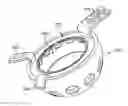
FIG. 1 shows a side elevation view of an illustrative cup member;
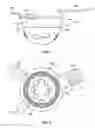
FIG. 2 shows a top plan view of the illustrative cup member of FIG. 1;
FIG. 3 shows an exploded view of an illustrative cup member and acetabular shell with an optional liner therebetween;
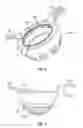
FIG. 4 shows a perspective view of an illustrative cup member and acetabular shell; and
FIG. 5 shows a side elevation view of an illustrative band cup member.
DETAILED DESCRIPTION
To provide an overall understanding of the systems, devices, and methods described herein, certain illustrative embodiments will be described. Although the embodiments and features described herein are specifically described for use in connection with acetabular systems, it will be understood that all the components, connection mechanisms, adjustable systems, fixation methods, manufacturing methods, coatings, and other features outlined below may be combined with one another in any suitable manner and may be adapted and applied to medical devices and implants to be used in other surgical procedures, including, but not limited to: spine arthroplasty, cranio-maxillofacial surgical procedures, knee arthroplasty, shoulder arthroplasty, as well as foot, ankle, hand, and other extremity procedures.
Various implants and other devices described herein in their various embodiments may be used in conjunction with any appropriate reinforcement material, non-limiting examples of which include bone cement, appropriate polymers, resorbable polyurethane, and/or any materials provided by PolyNovo Biomaterials Limited, or any suitable combinations thereof. Further non-limiting examples of potential materials that may be used are described in the following references: U.S. Patent Application Publication No. 2006/0051394, entitled “Biodegradable Polyurethane and Polyurethane Ureas,” U.S. Patent Application Publication No. 2005/0197422, entitled “Biocompatible Polymer Compositions for Dual or Multi Staged Curing,” U.S. Patent Application Publication No. 2005/0238683, entitled “Biodegradable Polyurethane/Urea Compositions,” U.S. Patent Application Publication No. 2007/0225387, entitled “Polymer Compositions for Dual or Multi Staged Curing,” U.S. Patent Application Publication No. 2009/0324675, entitled “Biocompatible Polymer Compositions,” U.S. Patent Application Publication No. 2009/0175921, entitled “Chain Extenders,” and U.S. Patent Application Publication No. 2009/0099600, entitled “High Modulus Polyurethane and Polyurethane/Urea Compositions.” Each of the prior references is incorporated by reference herein in its entirety.
FIGS. 1-4 show a cup member 120 intended for insertion into an acetabular cup 140 (also referred to as an “acetabular shell,” “shell,” “cage,” or “cup”), and in some embodiments, between the acetabular cup 140 and a liner 160 that may be disposed within the cup member 120. The cup member 120 is provided with various mounting members (also referred to as “attachment members”), such as flanges, blades, hooks, or plates, where each respective mounting member may be removably or integrally provided on the cup member. As shown in FIG. 1, for example, cup member 120 includes blade 102, hook 104, and flange 106. The mounting members such as blade 102, hook 104, and flange 106, may be adjustably positionable about the cup member (e.g., about the perimeter of the cup member or about any other suitable location on the cup member). For example, a removable mounting member may be attached to the cup member and then, while still attached, positioned from a first location to a second location along the cup member. Alternatively, the removable mounting member may be removed and then repositioned. As another example, an integral mounting member (e.g., a mounting member that is not removable) may nonetheless be adjustably positionable about the cup member. In some embodiments, an integral mounting member may be rigidly fixed in a first location and may not be adjustably positionable about the cup member.
The portion of the mounting members that is not attached to the cup member may be used to attach or anchor to a patient's bone. For example, as shown in FIG. 1, flange 106 includes a portion 108 attached to the cup member 120 and an attachment portion 110 that is attachable to a patient's bone to thereby anchor to the patient's bone. Attachment portion 110 includes a plurality of screw holes 111 for anchoring flange 106 to the patient's bone, although it will be understood that any suitable attachment mechanism may be used. For example, hook 104 includes a curved end 105 to thereby hook onto a patient's bone. Screw holes 111 may include conventional holes, locking holes, or slots. The holes may be threaded, unthreaded, or partially threaded, and may be fixed or polyaxial. In some embodiments, screw holes 111 may include variable low-profile holes that allow for locking at a variety of angles. Other suitable attachment mechanisms may include bone cement, shape-memory polymer fixation members, expanding screws, any other suitable mechanism for attaching a mounting member to a patient's bone or soft tissue, or any combinations thereof.
FIGS. 1-4 depict some embodiments of a cup member 120 suitable for receiving a polymer, ceramic, or metal liner 160, the cup member 120 having mounting members that extend radially therefrom. The cup member 120 may be placed into an acetabular shell 140, and the mounting members such as blade 102, hook 104, and flange 106 may be disposed around the rim 142 of the shell 140 when the cup member 120 is inserted into and substantially fully seated in the shell 140. As shown in FIG. 1, in some embodiments, the outer portion 116 of the cup member 120 may have a conical taper 112 for frictional locking engagement with a complementary conical taper 114 in an acetabular shell 140. The taper 114 of acetabular shell may be contoured to receive the specific type of conical taper 112 of the cup member 120. In some embodiments, multiple cup members may be available, and each may have a profile similar to conical taper 112 such that they can be interchangeably placed into acetabular shell 140. The complementary conical taper 114 in the acetabular shell 140 may also be used to accept a ceramic liner 162 having a conical taper similar to that of the cup member 120, providing various options during surgery. The ceramic liner 162 may be utilized to allow a cup member 120 to be used with an acetabular shell 140 even when taper 112 of the cup member does not match the taper 114 of the acetabular shell. For example, the inner surface of ceramic liner 162 may be shaped to engage the taper 112 of the cup member 120 while the exterior surface of ceramic liner 162 has a different shape to engage the taper 114 of the acetabular shell 140. Mounting members may be provided as one or more flanges, blades, hooks, or plates which may be rigid or bendable, and which may have any other appropriate features described herein.
In certain embodiments, as shown in FIG. 3, a polyethylene or ceramic liner 160 is placed within the cup member 120 (which may also be referred to as a “flange cup”) to line the inside of the cup member 120. The cup member 120 may comprise integral flanges that rest superiorly of the interior surface that accepts the liner. Alternatively, if metal on metal articulation is desired, a metal liner that incorporates integrally-formed flanges may be used. However, it will be understood that the modular options described herein may also be used. The cup member may contain internal scallops suitable for use with current polyethylene liners such that it may be used with the system, for example, disclosed in the '705 patent application.
When the described cup members 120 are used, the liners 160 may need to be provided slightly smaller than those typically provided within an acetabular shell that does not have a cup member therein in order to provide clearance between the liner and the cup for a taper lock. Alternatively or additionally, smaller femoral heads may be used.
In some embodiments, it may be desirable for a liner to sit in and be fully supported by a cup member such that the liner is not suspended. In some instances, suspended liners can creep or deform. As shown in FIG. 3, the cup member 120 is provided as a full cup rather than just a band with adjustable mounting members so that it can fully support a liner if used. However, in other embodiments, the cup member does not necessarily have to be a full cup, and may not necessarily even have a cup shape. For example, as shown in FIG. 5, a cup member 180 is provided as a band cup having mounting members 182. A liner 164 may be placed within the band cup member 180 such that a portion 168 of the liner 164 is suspended below the band cup.
In some embodiments, an advantage provided by the cup member is that the mounting or attachment members are provided on the separate cup member and not on the acetabular shell. This allows the acetabular shell to be positioned independently of the cup member, providing a greater range of modularity and adjustment options. Another advantage provided by the cup member may be seen during revision surgeries. Rather than having to remove the acetabular shell during revision surgery, a surgeon may remove the liner from within the acetabular shell, insert a cup member having one or more mounting members into the acetabular shell, and then insert a new liner into the cup member.
The foregoing is merely illustrative of the principles of the disclosure, and the systems, devices, and methods can be practiced by other than the described embodiments, which are presented for purposes of illustration and not of limitation. It is to be understood that the systems, devices, and methods disclosed herein, while shown for use in acetabular systems, may be applied to medical devices to be used in other surgical procedures including, but not limited to, spine arthroplasty, cranio-maxillofacial surgical procedures, knee arthroplasty, shoulder arthroplasty, as well as foot, ankle, hand, and extremities procedures.
Variations and modifications will occur to those of skill in the art after reviewing this disclosure. The disclosed features may be implemented, in any combination and subcombinations (including multiple dependent combinations and subcombinations), with one or more other features described herein. The various features described or illustrated above, including any components thereof, may be combined or integrated in other systems. Moreover, certain features may be omitted or not implemented.
Examples of changes, substitutions, and alterations are ascertainable by one skilled in the art and could be made without departing from the scope of the information disclosed herein. All references cited herein are incorporated by reference in their entirety and made part of this application.
Claims
What is claimed is:1. An acetabular implant system comprising:
an acetabular shell;
a cup member that fits positionably within the acetabular shell; and
at least one mounting member coupled to the cup member, wherein the at least one mounting member has a first portion that is attachable to a patient's bone to thereby anchor to the patient's bone.
2. The system of claim 1, wherein the mounting member comprises a flange that is adjustably positionable about the cup member and has a first end with an attachment portion that anchors to the patient's bone.
3. The system of claim 2, wherein the cup member includes a distal tapered end that locks to an attachment site within the acetabular shell.
4. The system of claim 3, wherein the attachment site within the acetabular shell is further configured to receive a liner.
5. The system of claim 1, further comprising a liner disposed within the cup member.
6. The system of claim 5, wherein the cup member is configured as a full cup such that the liner is fully supported within the cup member.
7. The system of claim 5, wherein the cup member is configured as a band.
8. The system of claim 1, wherein the at least one mounting member comprises a flange, hook, or plate.
9. The system of claim 8, wherein the at least one mounting member is removably attached to the cup member.
10. The system of claim 8, wherein the at least one mounting member is integrally provided on the cup member.
11. A method of forming a surgical implant, comprising:
inserting an implant within a patient's acetabulum;
providing a cup member, having at least one mounting member, within the inserted implant;
aligning the cup member with the implant so that the at least one mounting member aligns with a patient bone site; and
attaching the at least one mounting member to the patient's bone.
12. The method of claim 11, further comprising adjustably positioning the at least one mounting member about the cup member, wherein the at least one mounting member has a first end with an attachment portion that anchors to the patient's bone.
13. The method of claim 12, further comprising locking a distal tapered end of the cup member to an attachment site within the implant.
14. The method of claim 13, further comprising disposing a liner within the attachment site.
15. The method of claim 11, further comprising disposing a liner within the cup member.
16. The method of claim 15, wherein the cup member is provided as a full cup such that the liner is fully supported within the cup member.
17. The method of claim 15, wherein the cup member is provided as a band.
18. The method of claim 11, wherein the at least one mounting member comprises a flange, hook, or plate.
19. The method of claim 18, further comprising removably attaching the at least one mounting member to the cup member.
20. The method of claim 18, wherein the at least one mounting member is integrally provided on the cup member.
Images & Drawings included:

Sources:
- United States Patent and Trademark Office - verify current appl. status at the USPTO↗
Similar patent applications:
- » 20130018480
Implant, component set, method of producing an implant and/or a component set and device for producing an implant and/or a component set - » 20130166037
Tibial prosthetic component for a partial or unicondylar bearing knee replacement, method of selecting such a tibial prosthetic component, method of implanting such a tibial prosthetic component and a kit for a surgeon - » 20170119533
Tibial prosthetic component for a partial or unicondylar bearing knee replacement, method of selecting such a tibial prosthetic component, method of implanting such a tibial prosthetic component and a kit for a surgeon - » 20150134069
Tibial prosthetic component for a partial or unicondylar bearing knee replacement, method of selecting such a tibial prosthetic component, method of implanting such a tibial prosthetic component and a kit for a surgeon - » 20090164012
Medical implant component and method for fabricating same - » 20120223705
MAGNETIC RESONANCE SYSTEM WITH IMPLANTABLE COMPONENTS AND METHODS OF USE THEREOF - » 20120083895
IMPLANT COMPONENTS AND METHODS - » 20120016485
IMPLANT COMPONENTS AND METHODS - » 20120022662
Implant components and methods - » 20120016487
IMPLANT COMPONENTS AND METHODS
Recent applications in this class:
- » 20250152367 2025-05-15
HIP JOINT DEVICE AND METHOD - » 20250143886 2025-05-08
Cemented Sheath For Joint Implant - » 20250120817 2025-04-17
ARTIFICIAL HIP JOINT - » 20250090331 2025-03-20
ACETABULAR CUP AND HIP JOINT PROSTHESIS ASSEMBLY - » 20250082475 2025-03-13
DUAL MOBILITY ACETABULAR COMPONENT - » 20250032263 2025-01-30
ARTIFICIAL ACETABULAR CUP AND MANUFACTURING METHOD THEREOF - » 20250017736 2025-01-16
APPARATUS AND METHOD FOR INSTALLING AN ACETABULAR LINER ON AN ACETABULAR CUP - » 20250017735 2025-01-16
NON-IMPINGING DUAL MOBILITY HIP PROSTHESIS - » 20250000658 2025-01-02
ACETABULAR DEVICE AND MODULAR NECK ASSEMBLY - » 20240374392 2024-11-14
ACETABULAR PROSTHESIS WITH ADJUSTABLE ACETABULAR CUP CAGES
Recent applications for this Assignee:
- » 20120089235 2012-04-12
IMPLANT COMPONENTS AND METHODS - » 20120083895 2012-04-05
IMPLANT COMPONENTS AND METHODS - » 20120022663 2012-01-26
Implant components - » 20120022662 2012-01-26
Implant components and methods - » 20120022661 2012-01-26
Containment system for constraining a prosthetic component - » 20120016487 2012-01-19
IMPLANT COMPONENTS AND METHODS - » 20120016485 2012-01-19
IMPLANT COMPONENTS AND METHODS - » 20120000058 2012-01-05
Method of sterilizing an orthopaedic implant - » 20110126403 2011-06-02
Fixing assembly