ELECTRIC IMPLANT TORQUE WRENCH
US20120021377A1
2012-01-26
12/843,111
2010-07-26
Abstract:
An electric implant torque wrench includes a main unit, having a torque generating mechanism for outputting a torque and a control knob for adjusting and setting the torque, a handle having a flexible tube connected to the main unit for receiving the torque outputted by the main unit, and a clutch mechanism connected to the handle for receiving the torque outputted by the main unit for rotating a rotary tip to drive a dental implant into a patient's gum. The clutch mechanism stops the rotary tip from rotation when the torque outputted by the main unit reaches the value set by the control knob during installation of the dental implant.
Interested in similar patents?
Get notified when new applications in this technology area are published.
Classification:
A61C8/0089 » CPC main
Means to be fixed to the jaw-bone for consolidating natural teeth or for fixing dental prostheses thereon; Dental implants; Implanting tools Implanting tools or instruments
A61B17/888 » CPC further
Surgical instruments, devices or methods, e.g. tourniquets; Surgical instruments or methods for treatment of bones or joints; Devices specially adapted therefor for osteosynthesis, e.g. bone plates, screws, setting implements or the like; Methods or means for implanting or extracting internal fixation devices; Screwdrivers, spanners or wrenches characterised by the cross-section of the driver bit the driver bit acting on the central region of the screw head
A61C1/186 » CPC further
Dental machines for boring or cutting ; General features of dental machines or apparatus, e.g. hand-piece design; Machine parts specially adapted for dentistry; Flexible shafts; Clutches or the like; Bearings or lubricating arrangements; Drives or transmissions; Drives or transmissions with torque adjusting or limiting means
A61C1/18 IPC
Dental machines for boring or cutting ; General features of dental machines or apparatus, e.g. hand-piece design; Machine parts specially adapted for dentistry Flexible shafts; Clutches or the like; Bearings or lubricating arrangements; Drives or transmissions
A61C1/06 IPC
Dental machines for boring or cutting ; General features of dental machines or apparatus, e.g. hand-piece design characterised by the drive of the dental tools with electric drive
Description
BACKGROUND OF THE INVENTION
1. Field of the Invention
The present invention relates to dental implant tools and more particularly, to an electric implant torque wrench, which allows adjustment of torque, facilitating accurate installation of an implant in the gum.
2. Description of the Related Art
Conventionally, dental implant surgery is to install an implant in a patient's gum, and then to fasten an abutment to the top side of the implant with a screw, and then install a crown in the abutment after the wound is healed.
Installation of an implant in a patient's gum is the basic step to success in a dental implant surgery. Only after an implant has been accurately installed, the succeeding steps can be started. Therefore, implant installation is the most important part in a dental implant surgery.
Conventionally, a dentist uses a handpiece to perform a dental implant surgery. The handpiece has an implanting tool connected thereto. During operation, the working tip of the implanting tool is inserted into a specifically configured inner hole, for example, hexagonal hole or star-shaped hole on the top side of the implant, and then rotated by a power from the handpiece to drive the implant into the patient's gum. Because a dentist cannot control the torque of the implanting tool of the handpiece used during a dental implant surgery, a dentist can simply visually check the installed position in the gum and then stop the implanting tool by experience. According to this conventional method, an implant may be installed in the gum excessively deep or the installation depth may be insufficient, resulting in a dental implant failure. Therefore, an improvement in this regard is necessary.
SUMMARY OF THE INVENTION
The present invention has been accomplished under the circumstances in view. It is one object of the present invention to provide an electric implant torque wrench, which allows adjustment of torque, facilitating accurate installation of an implant in the gum.
To achieve this and other objects of the present invention, an electric implant torque wrench comprises a main unit, which comprises a torque generating mechanism mounted therein for outputting a torque and a control knob for adjusting and setting the torque; a handle, which is configured for grasping with the hand, having a flexible tube connected to the main unit for transmission of the torque outputted by the main unit to the handle; and a clutch mechanism, which is connected to the handle for receiving the torque outputted by the main unit for rotating a rotary tip that is insertable into a hole on a dental implant for driving the dental implant into a patient's gum. The clutch mechanism stops the rotary tip from rotation when the torque outputted by the main unit reaches the value set by the control knob during installation of the dental implant.
Because the output rotary torque of the main unit can be set by means of the control knob, a dentist can calculate, according to experience, the maximum torque required for enabling the dental implant to be completely driven into the gum. Thus, the clutch mechanism will be stopped from rotating the rotary bit automatically after the rotary bit drives the dental implant into the gum to a suitable depth, increasing the chance of installation success and avoiding improper dental installation depth.
BRIEF DESCRIPTION OF THE DRAWINGS
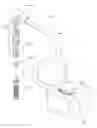
FIG. 1 is an exploded view of an electric implant torque wrench in accordance with the present invention.
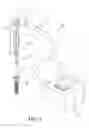
FIG. 2 is a schematic drawing of the present invention, showing the electric implant torque wrench operated and a dental implant driven into the gum.
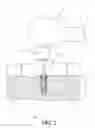
FIG. 3 is a perspective exploded view of the clutch mechanism according to the present invention.
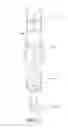
FIG. 4 is a sectional assembly view of the clutch mechanism according to the present invention.
DETAILED DESCRIPTION OF THE PREFERRED EMBODIMENT
Referring to FIGS. 1 and 2, an electric implant torque wrench 10 in accordance with the present invention is shown for driving a dental implant 20 into a patient's gum 30 accurately. The electric implant torque wrench 10 comprises a main unit 11, a handle 12 and a clutch mechanism 13.
The main unit 11 has a torque generating mechanism (pneumatic or mechanical torque generating means, not shown) mounted therein for outputting a rotary torque, a control knob 111 mounted on the top side thereof, and graduations 112 marked on the top wall around the control knob 111. Subject to the indication of the graduations 112, the user can rotate the control knob 111 to adjust and set the rotary torque to be outputted.
The handle 12 is configured for grasping with the hand. According to the present preferred embodiment, the handle 12 has its front part shaped like a sphere and its rear part shaped like a tapered cylinder. Further, a flexible tube 121 extends from the rear side of the handle 12 and connected to the main unit 11 so that the rotary torque outputted by the main unit 11 can be transmitted to the inside of the handle 12.
The clutch mechanism 13 is connected to the handle 12 for receiving the rotary torque outputted by the main unit 11 for rotating a rotary bit 131. The rotary bit 131 has a working tip 132 for insertion into a specifically configured recessed hole 21 on the top side of the dental implant 20 to interfere with the inside wall of the recessed hole 21 for synchronous rotation.
Referring to FIGS. 3 and 4, the clutch mechanism 13 has a rectangular shaft portion 133 located on the top side thereof and insertable into a rectangular hole 122 on the handle 12 for receiving the rotary torque outputted by the main unit 11, and a rectangular axle hole 134 located on the bottom side thereof for receiving the rotary bit 131 for synchronous rotation.
Rotating the rotary bit 131 of the clutch mechanism 13 can drive the dental implant 20 into the gum 30, as shown in FIG. 2. When the torque reaches the value set by the control knob 111 of the main unit 11, the clutch mechanism 13 stops the rotary bit 131 from rotation, finishing the installation of the dental implant 20 in the gum 30.
Because the output rotary torque of the main unit 11 can be set by means of the control knob 111, a dentist can calculate, according to experience, the maximum torque required for enabling the dental implant 20 to be completely driven into the gum 30. Thus, the clutch mechanism 13 will be stopped from rotating the rotary bit 131 automatically after the rotary bit 131 drives the dental implant 20 into the gum 30 to a suitable depth (see “a” in FIG. 2), increasing the chance of installation success and avoiding improper dental installation depth.
Although a particular embodiment of the invention has been described in detail for purposes of illustration, various modifications and enhancements may be made without departing from the spirit and scope of the invention. Accordingly, the invention is not to be limited except as by the appended claims.
Claims
What the invention claimed is:1. An electric rotary torque wrench for dental implant surgery, comprising:
a main unit, said main unit comprising a torque generating mechanism mounted therein for outputting a torque and a control knob for adjusting and setting the torque;
a handle configured for grasping with the hand, said handle having a flexible tube connected to said main unit for transmission of the torque outputted by said main unit to said handle; and
a clutch mechanism connected to said handle for receiving the torque outputted by said main unit for rotating a rotary tip that is insertable into a hole on a dental implant for driving said dental implant into a patient's gum;
wherein said clutch mechanism stops said rotary tip from rotation when the torque outputted by said main unit reaches the value set by said control knob during installation of said dental implant.
2. The electric rotary torque wrench as claimed in claim 1, wherein said handle has a rectangular hole defined therein; said clutch mechanism comprises a rectangular shaft portion located on a top side thereof and fitted into the rectangular hole of said handle and a rectangular axle hole located on a bottom side thereof for receiving said rotary bit for synchronous rotation.
Images & Drawings included:
Sources:
- United States Patent and Trademark Office - verify current appl. status at the USPTO↗
Recent applications in this class:
- » 20250143847 2025-05-08
AUTOGRAFTING TOOL FOR DEEP REACH APPLICATIONS - » 20250127595 2025-04-24
DENTISTRY TOOL - » 20250127594 2025-04-24
DEVICES, INSTRUMENTS, SYSTEMS, AND METHODS FOR PREPARING PROSTHESES - » 20250032226 2025-01-30
Dental Implant Apparatus and Methods - » 20250009481 2025-01-09
Dental Abutment Insert Extraction and Insertion Tool - » 20240398515 2024-12-05
TEMPERATURE CONTROL DRILLING METHOD USING LARGE SURFACE DRILLS MADE OF HIGH THERMAL CONDUCTIVITY MATERIALS - » 20240335265 2024-10-10
OSTEOTOME FOR DENTAL TREATMENT, HOLE FORMATION INSTRUMENT, TEST POST, STOPPER EXTENSION, PERIODONTAL LIGAMENT GUARD, WATER FLOW TUBE, AND MODEL FOR PRE-PROCEDURAL VERIFICATION OF DENTAL TREATMENT PLAN - » 20240285378 2024-08-29
IMPLANT DRILLS, IN PARTICULAR DENTAL IMPLANT DRILLS - » 20240180674 2024-06-06
METHODS FOR PLACING AN IMPLANT ANALOG IN A PHYSICAL MODEL OF THE PATIENT'S MOUTH - » 20240164873 2024-05-23
ADJUSTABLE-ANGLE MULTI-UNIT ABUTMENT