Fluorescent entity, dyeing composition containing at least one fluorescent entity comprising at least one heterocycle, with at least one internal cationic charge, and method for lightening keratin materials using said at least one fluorescent entity
US20120031422A9
2012-02-09
12/293,684
2007-03-23
✅ Patent granted
US 8,070,830 B2
2011-12-06
WO; PCT/FR2007/051005; 20070323
WO; WO2007/110539; 20071004
Eisa B Elhilo
2027-04-02
Abstract:
The invention relates to a dyeing composition containing a thiol/disulphide fluorescent colorant comprising a heterocycle, and to a method for colouring keratin materials, especially keratin fibres, particularly human keratin fibres such as hair, with a lightening effect, using said composition. The invention also relates to novel thiol/disulphide fluorescent colorants and the uses thereof for lightening keratin materials. Said composition produces a lightening effect which is especially tenacious and visible on dark keratin fibres.
Inventors:
- Nicolas DAUBRESSE 26 🇫🇷 La Celles St Cloud, France
- Andrew GREAVES 47 🇫🇷 Montevrain, France
Assignee:
- L'OREAL S.A. 683 🇫🇷 Paris, France
Interested in similar patents?
Get notified when new applications in this technology area are published.
Classification:
A61Q5/065 » CPC main
Preparations for care of the hair; Preparations for styling the hair, e.g. by temporary shaping or colouring Preparations for temporary colouring the hair, e.g. direct dyes
C07D213/38 » CPC further
Heterocyclic compounds containing six-membered rings, not condensed with other rings, with one nitrogen atom as the only ring hetero atom and three or more double bonds between ring members or between ring members and non-ring members having three double bonds between ring members or between ring members and non-ring members having no bond between the ring nitrogen atom and a non-ring member or having only hydrogen or carbon atoms directly attached to the ring nitrogen atom with substituted hydrocarbon radicals attached to ring carbon atoms; Radicals substituted by singly-bound nitrogen atoms having only hydrogen or hydrocarbon radicals attached to the substituent nitrogen atom
A61K2800/434 » CPC further
Properties of cosmetic compositions or active ingredients thereof or formulation aids used therein and process related aspects; Chemical, physico-chemical or functional or structural properties of particular ingredients; Colour properties; Pigments; Dyes Luminescent, Fluorescent; Optical brighteners; Photosensitizers
A61K8/18 IPC
Cosmetics or similar toilet preparations characterised by the composition
C07D401/10 » CPC further
Heterocyclic compounds containing two or more hetero rings, having nitrogen atoms as the only ring hetero atoms, at least one ring being a six-membered ring with only one nitrogen atom containing two hetero rings linked by a carbon chain containing aromatic rings
A45D44/00 IPC
Other cosmetic or personal care articles, e.g. for hairdressers' rooms
A61K8/49 IPC
Cosmetics or similar toilet preparations characterised by the composition containing organic compounds containing heterocyclic compounds
B65D85/00 IPC
Containers, packaging elements or packages, specially adapted for particular articles or materials
C07D401/14 » CPC further
Heterocyclic compounds containing two or more hetero rings, having nitrogen atoms as the only ring hetero atoms, at least one ring being a six-membered ring with only one nitrogen atom containing three or more hetero rings
A61K8/46 » CPC further
Cosmetics or similar toilet preparations characterised by the composition containing organic compounds containing sulfur
A61Q5/10 IPC
Preparations for care of the hair Preparations for permanently dyeing the hair
C07C321/00 IPC
Thiols, sulfides, hydropolysulfides or polysulfides
Description
The invention relates to the dyeing of keratin materials using thiol or disulphide fluorescent dyes comprising a heterocycle.
It is known practice to dye keratin fibres, in particular human keratin fibres, by direct dyeing. The process conventionally used in direct dyeing comprises applying to the keratin fibres direct dyes which are coloured or colouring molecules having an affinity for the fibres, allowing them to diffuse and then rinsing the fibres.
The direct dyes which are conventionally used are, for example, dyes of the nitrobenzene type, anthroquinone dyes, nitropyrridine dyes, or dyes of the azo, xanthene, acridine, azine or triarylmethane type.
The colourings which result from the use of direct dyes are temporary or semipermanent colourings since the nature of the interactions which bind the direct dyes to the keratin fibre and their disorption from the surface and/or from the core of the fibre are responsible for their weak dyeing power and for their poor resistance to washing operations or to perspiration.
Moreover, the colouring of keratin fibres using conventional direct dyes does not make it possible to significantly lighten keratin fibres.
The lightening of the colour of keratin fibres, more particularly dark keratin fibres to lighter shades, by optionally modifying the shade thereof, constitutes an important demand.
Conventionally, in order to obtain a lighter colouring, a chemical bleaching process is used. This process comprises treating the keratin materials, such as keratin fibres, in particular the hair, with a strong oxidizing system, generally composed of hydrogen peroxide, possibly in combination with persalts, generally in an alkaline medium.
This bleaching system has the drawback of damaging keratin materials, in particular keratin fibres, especially human keratin fibres such as the hair, and of detrimentally affecting their cosmetic properties. The fibres in fact have a tendency to become rough, more difficult to disentangle and more brittle. Finally, the lightening or bleaching of keratin fibres using oxidizing agents is incompatible with the treatments for modifying the shape of said fibres, particularly in hair straightening treatments.
Another lightening technique comprises applying fluorescent direct dyes to dark hair. This technique, described in particular in documents FR 2 830 189 and WO 2004/091473, makes it possible to retain the quality of the keratin fibre during the treatment, but the fluorescent dyes used do not exhibit satisfactory resistance to shampooing operations.
In order to increase the fastness of direct dyes, it is known practice to fix direct dyes by covalent bonding to the hair. For example, it is known practice to react dyes comprising reactive groups with the very numerous cystine or cysteine residues in keratin fibres; see, for example, Journal of the Society of Dyers and Colourists, Guise and Stapleton, 91, 259-264 (1975); Journal of Cosmetic Chemistry, 42, 1-17 (1991); CA 2024509.
Furthermore, it is known practice to protect the thiol function(s) contained in a molecule to be grafted to the hair before applying them to said hair, WO 99/51194. However, this application does not mention the use of fluorescent dyes for dyeing or lightening hair.
Other disulphide dyes known for dyeing keratin fibres are disulphide derivatives of aminothiophenol derivatives. Such dyes are described, for example, in patent FR 1156407. These dyes can be used under relatively mild conditions, in the presence of a slightly reducing medium or after a reducing pre-treatment of the hair. However, these dyes can bring about colour changes during application.
Finally, document WO 2005/097051 describes azaimidazolium disulphide dyes for the direct dyeing of keratin fibres.
The aim of the present invention is to provide new systems for dyeing keratin materials, in particular human keratin fibres, especially the hair, which do not have the drawbacks of the existing bleaching processes. In particular, one of the aims of the present invention is to provide direct dyeing systems for obtaining lightening effects, especially on naturally or artificially dark keratin fibres, which are resistant to successive shampooing operations, which do not damage the keratin fibres and which do not detrimentally affect their cosmetic properties.
This aim is achieved with the present invention, a subject of which is a process for dyeing keratin materials, in particular keratin fibres, especially human keratin fibres such as the hair, more particularly dark hair, comprising applying, to the keratin materials, a dye composition comprising, in a cosmetically suitable medium, at least one fluorescent dye, chosen from the dyes of formulae (I) and (II) below:
the organic or mineral acid salts, optical isomers and geometrical isomers thereof, and the solvates such as hydrates; in which formulae (I) and (II):
-
- which may be identical or different, represent a saturated or unsaturated heterocyclic group; in particular a monocyclic group, comprising from 5 to 7 members and containing 1 or two of heteroatoms chosen from nitrogen, oxygen or sulphur atoms, in particular the heteroatom is a nitrogen atom; in particular, the heterocycle is chosen from pyrazolyl, pyrrolidinyl, piperazinyl, homopiperazinyl, piperidinyl, morpholinyl and imidazolyl;
- Rg, R′g, R″g, R′″g, Rh, R′h, R″h and R′″h, which may be identical or different, represent a hydrogen or halogen atom, an amino, (di) (C1-C4)alkylamino, cyano, carboxyl, hydroxyl, trifluoromethyl, acylamino, C1-C4 alkoxy, C2-C4 (poly)hydroxyalkoxy, (C1-C4)alkylcarbonyloxy, (C1-C4)alkoxycarbonyl, (C1-C4)alkylcarbonylamino, acylamino, carbamoyl or (C1-C4)alkylsulphonylamino group, an aminosulphonyl radical, or a (C1-C16)alkyl radical optionally substituted with a group chosen from (C1-C12)alkoxy, hydroxyl, cyano, carboxyl, amino and (di) (C1-C4)alkylamino, or else the two alkyl radicals borne by the nitrogen atom of the amino group form a heterocycle comprising from 5 to 7 members and optionally comprising another heteroatom identical to or different from that of the nitrogen atom; in particular, Rg, R′g, R″g, R′″g, Rh, R′h, R″h and R′″h represent a hydrogen atom or a (C1-C4)alkyl group;
- Ri, R′i, R″i and R′″i, which may be identical or different, represent a hydrogen atom or a (C1-C4) alkyl group; in particular, Ri, R′i, R″i and R′″i represent a hydrogen atom;
- R1, R′1, R2, R′2, R3, R′3, R4 and R′4, which may be identical or different, represent a hydrogen atom or a (C1-C4)alkyl, (C1-C4)alkoxy, hydroxyl, cyano, carboxyl, amino, (C1-C4)alkylamino or (C1-C4) dialkylamino group, it being possible for said alkyl radicals to form, with the nitrogen atom which bears them, a heterocycle comprising from 5 to 7 members, optionally comprising another heteroatom which may or may not be different from nitrogen; in particular, R1, R′1, R2, R′2, R3, R′3/R4 and R′4 are hydrogen atoms or an amino group; in particular, R1, R′1, R2, R′2, R3, R′3, R4 and R′4 represent a hydrogen atom;
- Ta and Tb, which may be identical or different, represent:
- i) either a σ covalent bond;
- ii) or one or more radicals or combinations thereof chosen from —SO2—, —O—, —S—, —N(R)—, —N+(R)(Ro)— and —C(O)—, with R and Ro, which may be identical or different, representing a hydrogen atom, a C1-C4 alkyl radical, a C1-C4 hydroxyalkyl radical or an aryl(C1-C4)alkyl; in particular, Ta is identical to Tb and they represent a σ covalent bond or a group chosen from —N(R)—, —C(O)—, —C(O)—N(R)—, —N(R)—C(O)—, —C(O)—N(R)—C(O)—, —O—C(O)—, —C(O)—O— and —N+(R)(Ro)—, with R and Ro, which may be identical or different, representing a hydrogen atom or a (C1-C4) alkyl group; in particular, Ta and Tb represent a σ bond; iii) or a preferably monocyclic, cationic or noncationic heterocycloalkyl or heteroaryl containing especially two heteroatoms, in particular two nitrogen atoms, and comprising in particular from 5 to 7 members, such as imidazolium, piperazyl, piperazinium, homopiperazyl or homopiperazinium, optionally substituted with a (C1-C4) alkyl group such as methyl;
- m, m′, n and n′, which may be identical or different, represent an integer between 0 and 6 inclusive, with m+n and m′+n′, which may be identical or different, representing an integer between 1 and 10 inclusive; in particular, the sum m+n=m′+n′=an integer between 2 and 4 inclusive; preferably, m+n=m′+n′=2;
- M′ represents an anionic counterion; and
- Y represents: i) a hydrogen atom; ii) an alkali metal; iii) an alkaline earth metal; iv) an ammonium group: N+RαRβRγRδ or a phosphonium group: P+RαRβRγRδ with Rα, Rβ, Rγ and Rδ, which may be identical or different, representing a hydrogen atom or a (C1-C4)alkyl group; or v) a thiol-function-protecting group;
it being understood that: - when the compound of formula (I) or (II) contains other cationic parts, it is associated with one or more anionic counterions allowing formula (I) or (II) to achieve electroneutrality.
Another subject of the invention is a dye composition comprising, in a suitable cosmetic medium, at least one fluorescent dye of formula (I) or (II) as defined above, and optionally a reducing agent.
A subject of the invention is also novel fluorescent dyes of formula (I) or (II) as defined above.
The dyeing process according to the invention makes it possible to visibly colour dark keratin materials, in particular dark human keratin fibres, especially dark hair.
Furthermore, the process of the invention makes it possible to obtain colouring of keratin materials, in particular human keratin fibres, especially the hair, without damaging said material, which is persistent with respect to shampooing operations, common attacks (sunlight, perspiration), and other hair treatments. The process of the invention also makes it possible to obtain lightening of keratin materials such as keratin fibres, in particular dark keratin fibres, and more particular dark hair.
For the purpose of the invention, the term “dark keratin material” is intended to mean that which exhibits a lightness of L* measured in the C.I.E. L*a*b* system of less than or equal to 45, and preferably less than or equal to 40, given that, moreover, L*=0 is equivalent to black and L*=100 is equivalent to white.
For the purpose of the invention, the expression “naturally or artificially dark hair” is intended to mean hair whose tone height is less than or equal to 6 (dark blonde) and preferably less than or equal to 4 (chestnut-brown).
The lightening of the hair is evaluated by the variation in “tone height” before or after application of the compound of formula (I) or (II).
The notion of “tone” is based on the classification of the natural shades, one tone separating each shade from the shade immediately following or preceding it. This definition and the classification of the natural shades are well known to hair styling professionals and are published in the book “Science des traitement capillaires” [Hair treatment sciences], by Charles Zviak 1988, published by Masson, pp. 215 and 278.
The tone heights range from 1 (black) to 10 (very light blonde), one unit corresponding to one tone; the higher the figure, the lighter the shade.
An artificially coloured hair is a hair whose colour has been modified by a dyeing treatment, for example dyeing with direct dyes or oxidation dyes.
Preferably, the composition should, after application to hair, for example chestnut-brown hair, lead to the results below.
-
- Interest is focussed on the reflectance performance levels of the hair when it is irradiated with visible light in the wavelength range from 400 to 700 nanometres.
- The curves of reflectance as a function of wavelength, of hair treated with the composition of the invention and of untreated hair, are then compared.
- The curve corresponding to the treated hair should show a reflectance in the wavelength range of from 500 to 700 nanometres which is higher than the curve corresponding to the untreated hair.
- This means that, in the wavelength range from 540 to 700 nanometres, there is at least one range where the reflectance curve corresponding to the treated hair is higher than the reflectance curve corresponding to the untreated hair. The term “higher” is intended to mean a difference of at least 0.05% in reflectance, preferably of at least 0.1%. All the same, there may be, in the wavelength range of from 540 to 700 nanometres, at least one range where the reflectance curve corresponding to the treated hair is superimposable or lower than the reflectance curve corresponding to the untreated hair.
Preferably, the wavelength where the difference is at a maximum between the reflectance curve of the treated hair and that of the untreated hair is within the wavelength range of from 500 to 650 nanometres, and preferably within the wavelength range of from 550 to 620 nanometres.
For the purpose of the present invention, and unless otherwise indicated:
-
- the “aryl” or “heteroaryl” radicals or the aryl or heteroaryl part of a radical may be substituted with at least one substituent borne by a carbon atom, chosen from:
- a C1-C16/preferably C1-C8, alkyl radical optionally substituted with one or more radicals chosen from the radicals: hydroxyl, C1-C2 alkoxy, C2-C4(poly)hydroxyalkoxy, acylamino and amino substituted with two C1-C4 alkyl radicals, which may be identical or different, optionally bearing at least one hydroxyl group, or the two radicals possibly forming, with the nitrogen atom to which they are attached, a heterocycle comprising from 5 to 7 members, preferably 5 or 6 members, which is saturated or unsaturated, which is optionally substituted, and which optionally comprises another heteroatom which may be identical or different from the nitrogen;
- a halogen atom such as chlorine, fluorine or bromine;
- a hydroxyl group;
- a C1-C2 alkoxy radical;
- C1-C2 alkylthio radical;
- a C2-C4 (poly)hydroxyalkoxy radical;
- an amino radical;
- a 5- or 6-membered heterocycloalkyl radical;
- an optionally cationic 5- or 6-membered heteroaryl radical, preferably imidazolium, optionally substituted with a C1-C4 alkyl radical, preferably methyl;
- an amino radical substituted with one or two C1-C6 alkyl radicals, which may be identical or different, optionally bearing at least:
- i) one hydroxyl group,
- ii) one amino group optionally substituted with one or two optionally substituted C1-C3 alkyl radicals, said alkyl radicals possibly forming, with the nitrogen atom to which they are attached, a heterocycle comprising from 5 to 7 members, which is saturated or unsaturated, which is optionally substituted, and which optionally comprises at least one heteroatom which may or may not be different from nitrogen,
- —NR—COR′ in which the R radical is a hydrogen atom or a C1-C4 alkyl radical optionally bearing at least one hydroxyl group, and the R′ radical is a a C1-C2 alkyl radical;
- (R)2N—CO— in which the R radicals, which may or may not be identical, represent a hydrogen atom, or a C1-C4 alkyl radical optionally bearing at least one hydroxyl group;
- R′SO2—NR— in which the R radical represents a hydrogen atom or a C1-C4 alkyl radical optionally bearing at least one hydroxyl group, and the R′ radical represents a C1-C4 alkyl radical or a phenyl radical;
- (R)2N—SO2— in which the R radicals, which may or may not be identical, represent a hydrogen atom or a C1-C4 alkyl radical optionally bearing at least one hydroxyl group,
- a carboxylic radical in acid or salified form (preferably with an alkali metal or an ammonium, which is substituted or unsubstituted);
- a cyano group;
- a polyhaloalkyl group containing from 1 to 6 carbon atoms and from 1 to 6 halogen atoms, which may be identical or different; the polyhaloalkyl group is, for example, trifluoromethyl;
- the cyclic or heterocyclic part of a nonaromatic radical may be substituted with at least one substituent borne by a carbon atom, chosen from the groups:
- hydroxyl;
- C1-C4 alkoxy;
- C2-C4 (poly)hydroxyalkoxy;
- a C1-C2 alkylthio radical;
- RCO—NR′— in which the R′ radical is a hydrogen atom or a C1-C4 alkyl radical optionally bearing at least one hydroxyl group, and the R radical is a C1-C2 alkyl radical or an amino radical substituted with two C1-C4 alkyl groups, which may be identical or different, optionally bearing at least one hydroxyl group;
- RCO—O— in which the R radical is a C1-C4 alkyl radical or an amino radical substituted with one or two C1-C4 alkyl groups, which may be identical or different, optionally bearing at least one hydroxyl group, said alkyl radicals possibly forming, with the nitrogen atom to which they are attached, a heterocycle comprising from 5 to 7 members, which is saturated or unsaturated, which is optionally substituted, and which optionally comprises at least one other heteroatom which may or may not be different from nitrogen;
- RO—CO— in which the R radical is a C1-C4 alkyl radical optionally bearing at least one hydroxyl group;
- a cyclic or heterocyclic radical or a nonaromatic part of an aryl or heteroaryl radical may also be substituted with one or more oxo or thioxo groups;
- an “aryl” radical represents a condensed or noncondensed, monocyclic or polycyclic group containing from 6 to 22 carbon atoms, and at least one ring of which is aromatic; preferably, the aryl radical is a phenyl, biphenyl, naphthyl, indenyl, anthracenyl or tetrahydronaphthyl;
- a “diarylalkyl” radical represents a group comprising, on the same carbon atom of an alkyl group, two aryl groups, which may be identical or different, such as diphenylmethyl or 1,1-diphenylethyl;
- a “heteroaryl radical” represents an optionally cationic, condensed or noncondensed, monocyclic or polycyclic group comprising from 5 to 22 members and from 1 to 6 heteroatoms chosen from a nitrogen, oxygen, sulphur and selenium atom, and at least one ring of which is aromatic; preferably, a heteroaryl radical is chosen from acridinyl, benzimidazolyl, benzobistriazolyl, benzopyrazolyl, benzopyridazinyl, benzoquinolyl, benzothiazolyl, benzotriazolyl, benzoxazolyl, pyridinyl, tetrazolyl, dihydrothiazolyl, imidazopyridinyl, imidazolyl, indolyl, isoquinolyl, naphthoimidazolyl, naphthooxazolyl, naphthopyrazolyl, oxadiazolyl, oxazolyl, oxazolopyridyl, phenazinyl, phenooxazolyl, pyrazinyl, pyrazolyl, pyrilyl, pyrazoyltriazyl, pyridyl, pyridinoimidazolyl, pyrrolyl, quinolyl, tetrazolyl, thiadiazolyl, thiazolyl, thiazolopyridinyl, thiazoylimidazolyl, thiopyrylyl, triazolyl, xanthylyl and its ammonium salt;
- a “diheteroarylalkyl” radical represents a group comprising, on the same carbon atom of an alkyl group, two heteroaryl groups, which may be identical or different, such as difurylmethyl, 1,1-difurylethyl, dipyrrolylmethyl or dithienylmethyl;
- a “cyclic radical” is a condensed or noncondensed, monocyclic or polycyclic, nonaromatic cycloalkyl radical containing from 5 to 22 carbon atoms, possibly comprising one or more unsaturations; in particular, the cyclic radical is a cyclohexyl;
- a “sterically hindered cyclic” radical is a substituted or unsubstituted, aromatic or nonaromatic, cyclic radical hindered by steric effect or constraint, comprising from 6 to 14 members, which may be bridged; by way of sterically hindered radicals, mention may be made of bicyclo[1.1.0]butane, mesityls such as 1,3,5-trimethylphenyl, 1,3,5-tri-tert-butylphenyl, 1,3,5-isobutylphenyl, 1,3,5-trimethylsilylphenyl and adamantyl;
- a “heterocyclic radical or heterocycle” is a condensed or noncondensed, monocyclic or polycyclic, nonaromatic radical containing from 5 to 22 members, comprising from 1 to 6 heteroatoms chosen from nitrogen, oxygen, sulphur and selenium;
- an “alkyl radical” is a linear or branched, C1-C16, preferably C1-C8, hydrocarbon-based radical;
- the expression “optionally substituted” assigned to the alkyl radical implies that said alkyl radical may be substituted with one or more radicals chosen from the radicals: i) hydroxyl; ii) C1-C4 alkoxy; iii) acylamino; iv) amino optionally substituted with one or two C1-C4 alkyl radicals, which may be identical or different, said alkyl radicals possibly forming, with the nitrogen atom which bears them, a heterocycle comprising from 5 to 7 members, optionally comprising another heteroatom which may or may not be different from nitrogen; v) or a quaternary ammonium group —N+R′R″R′″, M− for which R′, R″, R′″, which may be identical or different, represent a hydrogen atom or a C1-C4 alkyl group, or else —N+R′R″R′″ forms a heteroaryl such as imidazolium optionally substituted with a C1-C4 alkyl group, and M− represents the counterion of the corresponding organic acid, mineral acid or halide;
- an “alkoxy radical” is an alkyloxy or alkyl-O— radical for which the alkyl radical is a linear or branched, C1-C16, preferably C1-C8, hydrocarbon-based radical;
- an “alkylthio radical” is an alkyl-S— radical for which the alkyl radical is a linear or branched, C1-C16, preferably C1-C8, hydrocarbon-based radical; when the alkylthio group is optionally substituted, this implies that the alkyl group is optionally substituted as defined above;
- the limits delimiting the extent of the range of values are included in this range of values;
- an “organic or mineral acid salt” is more particularly chosen from a salt derived: i) from hydrochloric acid HCl; ii) from hydrobromic acid HBr; iii) from sulphuric acid H2SO4; iv) from alkylsulphonic acids: Alk-S(O)2OH such as methylsulphonic acid and ethylsulphonic acid; v) from arylsulphonic acids: Ar-(O)2OH such as from benzenesulphonic acid and from toluenesulphonic acid; vi) from citric acid; vii) from succinic acid; viii) from tartaric acid; ix) from lactic acid; x) from alkoxysulphinic acids: Alk-O—S(O)OH such as from methoxysulphinic acid and from ethoxysulphinic acid; xi) from aryloxysulphinic acids such as from tolueneoxysulphinic acid and from phenoxysulphinic acid; xii) from phosphoric acid H3PO4; xiii) from acetic acid CH3COOH; xiv) from triflic acid CF3SO3H and xv) from tetrafluoroboric acid HBF4;
- an “anionic counterion” is an anion or an anionic group associated with the cationic charge of the dye; more particularly, the anionic counterion is chosen from: i) halides such as chloride or bromide; ii) nitrates; iii) sulphonates, among which are C1-C6 alkyl sulphonates: Alk-S(O)2O− such as methyl sulphonate or mesylate and ethyl sulphonate; iv) aryl sulphonates: Ar-S(O)2O− such as benzene sulphonate and toluenesulphonate or tosylate; v) citrate; vi) succinate; vii) tartrate; viii) lactate; ix) alkyl sulphates: Alk-O—S(O)O− such as methyl sulphate and ethyl sulphate; x) arylsulphates: Ar-O—S(O)O− such as benzenesulphate and toluenesulphate; xi) alkoxysulphates: Alk-O—S(O)2O− such as methoxy sulphate and ethoxy sulphate; xii) aryloxysulphates: Ar-O—S(O)2O−; xiii) phosphate; xiv) acetate; xv) triflate; and xvi) borates such as tetrafluoroborate.
- the “aryl” or “heteroaryl” radicals or the aryl or heteroaryl part of a radical may be substituted with at least one substituent borne by a carbon atom, chosen from:
The fluorescent dyes of formula (I) or (II) are compounds capable of absorbing in the UV radiation or visible range at a wavelength λabs of between 250 and 800 nm and capable of re-emitting in the visible range at an emission wavelength λem of between 400 and 800 nm.
Preferably, the fluorescent compounds of the invention are dyes capable of absorbing in the visible range λabs of between 400 and 800 nm and of re-emitting in the visible range λem of between 400 and 800 nm. More preferably, the fluorescent dyes comprising a heterocyclic group of formula (I) or (II) are dyes capable of absorbing at a λabs of between 420 nm and 550 nm and of re-emitting in the visible range at a λem of between 470 and 600 nm.
The fluorescent compounds of formula (II) which contain an SY function which may be in the covalent form —S—Y or ionic form —S−Y+ depending on the nature of Y and on the pH of the medium.
A specific embodiment relates to the thiol fluorescent dyes comprising a group of formula (II) comprising an SY function where Y represents a hydrogen atom or an alkali metal. Advantageously, Y represents a hydrogen atom.
In accordance with another specific embodiment of the invention, in the abovementioned formula (II), Y is a protecting group known to those skilled in the art, for instance those described in the books “Protective Groups in Organic Synthesis”, T. W. Greene, John Willey & Sons publisher, NY, 1981, pp. 193-217; “Protecting Groups”, P. Kocienski, Thieme, 3rd ed., 2005, chap. 5.
Particularly when Y represents a thiol-function-protecting group, Y is chosen from the following radicals:
-
- (C1-C4) alkylcarbonyl;
- (C1-C4)alkylthiocarbonyl;
- (C1-C4) alkoxycarbonyl;
- (C1-C4)alkoxythiocarbonyl;
- (C1-C4) alkylthiothiocarbonyl;
- (di) (C1-C4)(alkyl)aminocarbonyl;
- (di) (C1-C4)(alkyl)aminothiocarbonyl;
- arylcarbonyl such as phenylcarbonyl;
- aryloxycarbonyl;
- aryl(C1-C4)alkoxycarbonyl;
- (di) (C1-C4) (alkyl)aminocarbonyl such as dimethyl-aminocarbonyl;
- (C1-C4) (alkyl)arylaminocarbonyl;
- carboxyl;
- SO3, M+ with M+ representing an alkali metal such as sodium or potassium, or else M′ of formula (II) and M+ are absent;
- optionally substituted aryl such as phenyl, dibenzosuberyl or 1,3,5-cycloheptatrienyl,
- optionally substituted heteroaryl; including in particular the cationic or noncationic heteroaryl comprising from 1 to 4 heteroatoms below:
- i) monocyclic comprising 5, 6 or 7 members, such as furanyl or furyl, pyrrolyl or pyrryl, thiophenyl or thienyl, pyrazolyl, oxazolyl, oxazolium, isoxazolyl, isoxazolium, thiazolyl, thiazolium, isothiazolyl, isothiazolium, 1,2,4-triazolyl, 1,2,4-triazolium, 1,2,3-triazolyl, 1,2,3-triazolium, 1,2,4-oxazolyl, 1,2,4-oxazolium, 1,2,4-thiadiazolyl, 1,2,4-thiadiazolium, pyrylium, thiopyridyl, pyridinium, pyrimidinyl, pyrimidinium, pyrazinyl, pyrazinium, pyridazinyl, pyridazinium, triazinyl, triazinium, tetrazinyl, tetrazinium, azepine, azepinium, oxazepinyl, oxazepinium, thiepinyl, thiepinium, imidazolyl, imidazolium;
- ii) bicyclic comprising 8 to 11 members, such as indolyl, indolinium, benzoimidazolyl, benzoimidazolium, benzoxazolyl, benzoxazolium, dihydrobenzoxazolinyl, benzothiazolyl, benzothiazolium, pyridoimidazolyl, pyridoimidazolium, thienocycloheptadienyl, these monocyclic or bicyclic groups being optionally substituted with one or more groups such as (C1-C4)alkyl, for instance methyl, or polyhalo(C1-C4)alkyl, for instance trifluoromethyl; iii) or tricyclic ABC below:
in which the two rings A, C optionally comprise a heteroatom, and the ring B is a 5-, 6- or 7-membered, particularly 6-membered ring and contains at least one heteroatom, for instance piperidyl or pyranyl;
-
- optionally cationic, optionally substituted heterocycloalkyl, the heterocycloalkyl group represents in particular a saturated or partially saturated, 5-, 6- or 7-membered monocyclic group comprising from 1 to 4 heteroatoms chosen from oxygen, sulphur and nitrogen, such as di/tetrahydrofuranyl, di/tetrahydrothiophenyl, di/tetrahydropyrrolyl, di/tetrahydropyranyl, di/tetra/hexahydrothiopyranyl, dihydropyridyl, piperazinyl, piperidinyl, tetramethylpiperidinyl, morpholinyl, di/tetra/hexahydroazepinyl or di/tetrahydropyrimidinyl, these groups being optionally substituted with one or more groups such as (C1-C4) alkyl, oxo or thioxo; or the heterocycle represents the following group:
in which R′c, R′d, R′3, R′f, R′g and R′h, which may be identical or different, represent a hydrogen atom or a (C1-C4) alkyl group, or else two groups R′g with R′h, and/or R′e with R′f, form an oxo or thioxo group, or else R′g with R′e together form a cycloalkyl; and v represents an integer between 1 and 3 inclusive; preferably, R′c to R′h represent a hydrogen atom; and An− represents a counterion;
-
- isothiouronium —C(NR′cR′d)═N+R′eR′f; An− with R′c, R′d, R′e and R′f, which may be identical or different, represent a hydrogen atom or a (C1-C4)alkyl group; preferably, R′c to R′f represent a hydrogen atom; and An− represents a counterion;
- isothiourea —C(NR′cR′d)═NR′e; with R′c, R′d, and R′e as defined above;
- optionally substituted (di)aryl(C1-C4)alkyl, such as 9-anthracenylmethyl, phenylmethyl or diphenylmethyl optionally substituted with one or more groups in particular chosen from (C1-C4) alkyl, (C1-C4) alkoxy such as methoxy, hydroxyl, (C1-C4)alkylcarbonyl and (di)(C1-C4)(alkyl)amino such as dimethylamino;
- optionally substituted (di)heteroaryl(C1-C4)alkyl, the heteroaryl group is in particular cationic or noncationic, and monocyclic, comprising 5 or 6 members and from 1 to 4 heteroatoms chosen from nitrogen, oxygen and sulphur, such as the groups pyrrolyl, furanyl, thiophenyl, pyridyl, pyridyl N-oxide such as 4-pyridyl or 2-pyridyl N-oxide, pyrylium, pyridinium or triazinyl, optionally substituted with one or more groups such as alkyl, particularly methyl, advantageously the (di)heteroaryl(C1-C4)alkyl is (di)heteroarylmethyl or (di)heteroarylethyl;
- CR1R2R3 with R1, R2 and R3, which may be identical or different, representing a halogen atom or a group chosen from:
- —(C1-C4) alkyl;
- (C1-C4) alkoxy;
- optionally substituted aryl, such as phenyl optionally substituted with one or more groups such as (C1-C4)alkyl, (C1-C4)alkoxy or hydroxyl;
- optionally substituted heteroaryl, such as thiophenyl, furanyl, pyrrolyl, pyranyl or pyridyl, optionally substituted with a (C1-C4) alkyl group;
- P(Z1)R′1R′2R′3 with R′1 and R′2, which may be identical or different, representing a hydroxyl, (C1-C4)alkoxy or alkyl group, R′3 representing a hydroxyl or (C1-C4)alkoxy group and Z1 representing an oxygen or sulphur atom;
- a sterically hindered cyclic group such as the adamantyl group; and
- optionally substituted alkoxy(C1-C4)alkyl, such as methoxymethyl (MOM), ethoxyethyl (EOM) or isobutoxymethyl.
According to a specific embodiment, the protected thiol fluorescent dyes comprising a heterocyclic group of formula (II) comprising a group Y i) which is a cationic, aromatic 5- or 6-membered monocyclic heteroaryl group comprising from 1 to 4 heteroatoms chosen from oxygen, sulphur and nitrogen, such as oxazolium, isoxazolium, thiazolium, isothiazolium, 1,2,4-triazolium, 1,2,3-triazolium, 1,2,4-oxazolium, 1,2,4-thiadiazolium, pyrylium, pyridinium, pyrimidinium, pyrazinyl, pyrazinium, pyridazinium, triazinium, tetrazinium, oxazepinium, thiepinyl, thiepinium or imidazolium; ii) cationic 8- to 11-membered bicyclic heteroaryl group, such as indolinium, benzoimidazolium, benzoxazolium or benzothiazolium, these monocyclic or bicyclic heteroaryl groups being optionally substituted with one or more groups such as alkyl, for instance methyl, or polyhalo(C1-C4)alkyl, for instance trifluoromethyl; iii) or heterocyclic group below:
in which R′c and R′d, which may be identical or different, represent a hydrogen atom or a (C1-C4)alkyl group; preferably, R′c to R′d represent a (C1-C4)alkyl group such as methyl; and An− represents a counterion.
In particular, Y represents a group chosen from oxazolium, isoxazolium, thiazolium, isothiazolium, 1,2,4-triazolium, 1,2,3-triazolium, 1,2,4-oxazolium, 1,2,4-thiadiazolium, pyrylium, pyridinium, pyrimidinium, pyrazinium, pyridazinium, triazinium, imidazolium, benzoimidazolium, benzoxazolium and benzothiazolium, these groups being optionally substituted with one or more (C1-C4) alkyl groups, in particular methyl.
In particular, Y represents an alkali metal or a protecting group such as:
-
- (C1-C4)alkylcarbonyl, such as methylcarbonyl or ethylcarbonyl;
- arylcarbonyl such as phenylcarbonyl;
- (C1-C4)alkoxycarbonyl;
- aryloxycarbonyl;
- aryl(C1-C4)alkoxycarbonyl;
- (di)(C1-C4)(alkyl)aminocarbonyl such as dimethyl-aminocarbonyl;
- (C1-C4)(alkyl)arylaminocarbonyl;
- optionally substituted aryl, such as phenyl;
- 5- or 6-membered monocyclic heteroaryl, such as imidazolyl or pyridyl;
- 5- or 6-membered cationic monocyclic heteroaryl, such as pyrylium, pyridinium, pyrimidinium, pyrazinium, pyridazinium, triazinium or imidazolium; these groups being optionally substituted with one or more identical or different (C1-C4)alkyl groups, such as methyl;
- 8- to 11-membered cationic bicyclic heteroaryl, such as benzoimidazolium or benzoxazolium; these groups being optionally substituted with one or more identical or different (C1-C4)alkyl groups, such as methyl;
- cationic heterocycle of formula below:
-
- isothiouronium —C(NH2)═N+H2; An−;
- isothiourea —C(NH2)═NH
- SO3−, M+ with M+ representing an alkali metal such as sodium or potassium, or else M′ of formula (I) and M+ are absent.
According to a specific embodiment of the invention, the dyes of the invention belong to one of the two formulae (Ia) and (IIa) which have the ethylene group linking the pyridinium part to the phenyl at the ortho- or para-position, i.e. at the 2-4′, 4-2′, 4-4′ positions:
in which formulae (Ia) or (IIa):
-
- which may be identical or different, preferably identical, represent a monocyclic, saturated or unsaturated heterocyclic group comprising from 5 to 7 members and containing 1 or 2 heteroatoms chosen from nitrogen, oxygen and sulphur atoms, in particular the heteroatom is a nitrogen atom; in particular, the heterocycle is chosen from pyrazolyl, piperazinyl, piperidinyl, morpholinyl and imidazolyl;
- Ri, R′i, R″i, and R′″i, which may be identical or different, represent a hydrogen atom or a (C1-C4)alkyl group; in particular, Ri, R′i, R″i, and R′″i represent a hydrogen atom;
- Rg, R′g, R″g, R′″g, Rh, R′h, R″h and R′″h, which may be identical or different, represent a hydrogen atom or a C1-C4)alkyl group, in particular the Rh and R′h, R″h and R′″h groups are in the ortho-position with respect to the pyridinium and represent a (C1-C4)alkyl group, and Rg, R′g, R″g and R′″g represent a hydrogen atom;
- Ta and Tb represent a σ covalent bond or a group chosen from: —N(R)—, —C(O)—N(R)—, —N(R)—C(O)—, —O—C(O)—, —C(O)—O— and —N+(R)(Ro)—, with R and Ro, which may be identical or different, representing a hydrogen atom or a C1-C4 alkyl group; in particular, Ta and Tb represent a σ bond;
- m, m′, n and n′, which may be identical or different, represent an integer between 0 and 6 inclusive, with m+n and m′+n′ preferably identical, the sum m+n=m′+n′=an integer between 2 and 6 inclusive; preferably, m+n=m′+n′ is an integer equal to 2;
- M′ represents an anionic counterion; and
- Y is as defined above;
- it being understood that:
- the function SY of the dye of formula (IIa) may be in the covalent form —S—Y or in the ionic form —S—Y+ depending on the nature of Y and on the pH of the medium, and
- when the compound of formula (Ia) or (IIa) contains other cationic parts, it is associated with one or more anionic counterions which allow the formula (Ia) or (IIa) to achieve electroneutrality.
Advantageously, the dyes of formulae (Ia) and (IIa) have the formula
group in the para-position with respect to the phenyl linked to the ethylene, i.e. in the 1′-position with respect to the phenyl radical, the ethylene being linked to the same phenyl radical in the 4′-position.
By way of example of thiol fluorescent dyes, mention may in particular be made of the following compounds:
with M′ representing an anionic counterion.
The protected thiol dyes of formula (II″) can be synthesized in two stages. The first stage consists in preparing the nonprotected thiol dye (II′) according to the methods known to those skilled in the art, for instance “Thiols and organic Sulfides”, “Thiocyanates and Isothiocyanates, organic”, Ullmann's Encyclopaedia, Wiley-VCH, Weinheim, 2005. In addition, the second stage consists in protecting the thiol function according to the conventional methods known to those skilled in the art for producing protected thiol dyes of formula (II″). By way of example for protecting the thiol function —SH of the thiol dye, use may be made of the methods in the books “Protective Groups in Organic Synthesis”, T. W. Greene, John Willey & Sons ed., NY, 1981, pp. 193-217; “Protecting Groups”, P. Kocienski, Thieme, 3rd ed., 2005, chap. 5.
This method can be illustrated by means of the method consisting i) in generating thiol fluorescent dyes of formula (II-H) by reduction of a two-chromophore, heterocyclic, fluorescent dye bearing a disulphide function —S—S— (I′) and ii) in protecting, according to the conventional methods, said thiol function of (II-H) with the reactant 7 Y′R in order to obtain the protected thiol fluorescent dyes of formula (II′). The thiol compound 6 can also be metallated with an alkali metal or alkaline earth metal Met* so as to produce the thiolate fluorescent dye of formula (II″).
with Y′ representing a thiol-function-protecting group; Met* representing an alkali metal or an alkaline earth metal, particularly sodium or potassium, it being understood that, when the metal is an alkaline earth metal, 2 chromophores comprising a thiolate function S− can be associated with one metal2+;
with R1, R2, R3, R4, Rg, R′g, Rh, R′h, Ri, R′i, m, n, het and M′ being as defined above; Y′ represents a thiol-function-protecting group; and R represents a nucleofuge leaving group, for instance mesylate, tosylate, triflate or halide.
According to another possibility, a protected thiol compound (b) protected with a protecting group Y′ as defined above, prepared according to one of the procedures described in the books mentioned above, said protected thiol compound comprising at least one nucleophilic function, can be reacted with a sufficient, preferably equimolar, amount of a “reactive fluorescent chromophore” or a compound comprising such a “reactive fluorescent chromophore” (a). In other words, (a) comprises an electrophilic function for forming a Σ covalent bond, as can be illustrated schematically below in the preparation of fluorescent dyes of formula (II′″):
with R1, R2, R3, R4, Rg, R′g, Rh, R′h, Ri, R′i, m, n, het, Y′ and M′ as defined above; Nu representing a nucleophilic group; E representing an electrophilic group; and Σ the bond generated after attack by the nucleophile on the electrophile.
By way of example, the Σ covalent bonds that can be generated are listed in the table below based on condensation of electrophiles with nucleophiles:
| Electrophiles E | Nucleophiles Nu | Σ covalent bonds | |
| Activated esters* | Amines | Carboxamides | |
| Acyl azides** | Amines | Carboxamides | |
| Acyl halides | Amines | Carboxamides | |
| Acyl halides | Alcohols | Esters | |
| Acyl cyanides | Alcohols | Esters | |
| Acyl cyanides | Amines | Carboxamides | |
| Alkyl halides | Amines | Alkylamines | |
| Alkyl halides | Carboxylic acids | Esters | |
| Alkyl halides | Thiols | Thioesters | |
| Alkyl halides | Alcohols | Ethers | |
| Sulphonic acids and | Thiols | Thioethers | |
| salts thereof | |||
| Sulphonic acids and | Carboxylic acids | Esters | |
| salts thereof | |||
| Sulphonic acids and | Alcohols | Ethers | |
| salts thereof | |||
| Anhydrides | Alcohols | Esters | |
| Anhydrides | Amines | Carboxamides | |
| Aryl halides | Thiols | Thioethers | |
| Aryl halides | Amines | Arylamines | |
| Aziridines | Thiols | Thioethers | |
| Carboxylic acids | Amines | Carboxamides | |
| Carboxylic acids | Alcohols | Esters | |
| Carbodiimides | Carboxylic acids | N-acylureas or | |
| anhydrides | |||
| Diazoalkanes | Carboxylic acids | Esters | |
| Epoxides | Thiols | Thioethers | |
| Haloacetamides | Thiols | Thioethers | |
| Imide esters | Amines | Amidines | |
| Isocyanates | Amines | Ureas | |
| Isocyanates | Alcools | Urethanes | |
| Isothiocyanates | Amines | Thioureas | |
| Maleimides | Thiols | Thioethers | |
| Sulphonic esters | Amines | Alkylamines | |
| Sulphonic esters | Thiols | Thioethers | |
| Sulphonic esters | Carboxylic acids | Esters | |
| Sulphonic esters | Alcohols | Ethers | |
| Sulphonyl halides | Amines | Sulphonamides | |
| *the activated esters of general formula —CO-Part with Part representing a leaving group such as oxysuccinimidyl, oxybenzotriazolyl, aryloxy which is optionally substituted; | |||
| **the acyl azides may rearrange to give isocyanates. |
A variant of this process is to use a fluorescent chromophore having an electrophilic acrylate function (—OCO—C═C—) on which is carried out an addition reaction which will generate a Σ bond.
Use may also be made of a thiol reactant Y′—SH comprising a Y′ group as defined above, the nucleophilic SH function of which can react with the carbon atom in the alpha-position with respect to the halogen atom borne by the fluorescent chromophore (a′) so as to give the protected thiol fluorescent dye of formula (II′):
with R1, R2, R3, R4, Rg, R′g, Rh, R′h, Ta, Ri, R′i, m, n, het, Y′, (II′) and M′ being as defined above, and Hal representing a nucleofuge halogen atom such as bromine, iodine or chlorine.
More particularly, a nucleofuge leaving group may be substituted with a thiourea group (S═C(NRR)NRR) so as to generate the isothiouroniums. For example, if the thiourea group is a thioimidazolinium (β), the reaction scheme is the following:
with R′c, R′d, Rg, R′g, Rh, Ri, R′i, m, n, het, Hal, An and M′ being as defined above.
According to another variant, it is possible to generate an imidazoline intermediate from the halide comprising the fluorescent chromophore (a′) and a thioimidazoline (b′), so as to give, after alkylation with a reactant R-Lg with R representing an alkyl group and Lg a leaving group such as a halide, for instance chlorine, bromine or iodine, or a mesylate or tosylate group.
A variant is to use, in place of the halide comprising the fluorescent chromophore (a′), a chromophore comprising another type of nucleofuge such as tosylate or mesylate.
In accordance with another possibility, certain protective thiol fluorescent dyes (II′″) may be obtained by reacting a protected thiol compound with a compound bearing two carboxylic acid functions which are activated, according to the conventional methods (for example, reaction with a carbodiimide or with thionyl chloride). The resulting product (d) is subsequently reacted with a fluorescent chromophore bearing a nucleophilic function (c), for example of primary or secondary amine type, or of aliphatic alcohol type.
with R1, R2, R3, R4, Rg, R′g, Rh, R′h, Ri, het, Ta, Y′, m, n, M′, E, Nu and (II′″) as defined above.
Another variant is to use a thiolactone as described below:
A synthesis variant is to combine the above pathway with the first pathway, i.e., using two equivalents of the nucleophilic reactant (c) with a dielectrophilic disulphide reactant (j), it is possible to generate, after condensation, the dichromophoric disulphide dye (I″), it being possible for the latter to undergo a reduction so as to form the heterocyclic fluorescent thiol dye which, in turn, can be either protected so as to form the protected thiol fluorescent dye (II′″) or be metallated with an alkali metal so as to give the metallated heterocyclic thiol fluorescent dye (II′″metal):
In accordance with another possibility, the protected thiol fluorescent dyes of formula (II′″) can be obtained by reaction of a compound comprising a thiol group protected with a Y′ group, and a hydroxyl group activated beforehand to a nucleofuge leaving group (d′), for instance mesylate, tosylate, triflate or halide, with a styrylpyridine chromophore (c′).
With R1, R2, R3, R4, Rg, R′g, Rh, R′h, Ri, R′i, het, Ta, Y′, m, n, (II′″) and E as defined above.
By way of example, a compound containing a protected thiol group contains a nucleofuge leaving group R, for instance mesylate, tosylate or triflate, which can undergo nucleophilic attack from the amine borne by the styryl fluorescent chromophore:
Another alternative comes from the use of halides as nucleofuge leaving group on a thiol compound that may be substituted with a primary amine function, for example, borne by a styryl fluorescent chromophore:
In accordance with another possibility, the thiol fluorescent dyes of formula (I) according to the invention may be obtained by reaction of a compound comprising a thiol group Y as defined above and an electrophilic group (f) with a pyridinium compound comprising a nucleophilic group. By way of example, an aldehyde, ketone or thioaldehyde, or a thioketone when G′ represents an oxygen or sulphur atom, may be condensed with an “activated methylene” such as alkylpyridinium (e) so as to generate a >C═C< ethylene bond. This reaction is commonly known as “Knoevenagel” condensation. The term “activated methylenes” is intended to mean those which preferentially comprise, in the 2- or 4-position with respect to the pyridinium group, a methylene group Ri—CH2—:
with R1, R2, R3, R4, Ra, Rb, Rg, R′g, Rh, R′h, Ri, R′1, Ta, het, m, n, Y and M′ as defined above and G representing an oxygen or sulphur atom.
Reference may be made to the book Advanced Organic Chemistry, “Reactions, Mechanisms and Structures”, J. March, 4th ed. John Willey & Sons, 1992 or T. W. Greene “Protective Groups in Organic Synthesis”, for further details on the operating conditions used for the processes mentioned above.
The thiol fluorescent dyes formed may be converted to —SY′ protected thiol fluorescent dyes by protection of the —SH thiol using conventional protecting groups. The thiol fluorescent dyes are metallated by also using the conventional methods known to those skilled in the art, such as those described in Advanced Organic Chemistry, “Reactions, Mechanisms and Structures”, J. March, 4th ed. John Willey & Sons, NY, 1992.
The protected thiol dyes can be deprotected by conventional routes such as those described in the books “Protective Groups in Organic Synthesis”, T. W. Greene, John Willey & Sons ed., NY, 1981; “Protecting Groups”, P. Kocienski, Thieme, 3rd ed., 2005.
The starting reactants are commercially available or accessible by conventional methods known to those skilled in the art. By way of example, it is possible to synthesize the reactant (I′) using 2 equivalents of pyridine derivative 1 and one equivalent of disulphide reactant comprising two leaving groups Gp, so as to give the dipyridinium disulphide salt 3 which can in turn be condensed with two equivalents of aryl compound comprising an aldehyde/thioaldehyde group, f, to give I′.
with Lg representing a nucleofuge leaving group, for instance mesylate, tosylate, triflate or halide. The Lg− counterions of the compounds (I′), above, can be replaced with M′ counterions of other natures, using methods known to those skilled in the art, in particular by ion exchange resin.
The disymmetrical disulphide dyes of formula (I) can be synthesized in a single stage by reacting a nonprotected thiol fluorescent dye with a thiol fluorescent dye protected by Y′, so as to form the disulphide dye of formula (I)
with Rg, R′g, R″g, R′″g, Rh, R′h, R″h, R′″h, Ri, R′i, R″i, R′″Ri, R1, R′1, R2, R′2, R3, R′3, R4, R′4, m, m′, n, n′, Ta, Tb, het, het′ and M′ as defined above; Y′ represents a thiol-function-protecting group.
Reference may be made to the book Advanced Organic Chemistry, “Reactions, Mechanisms and Structures”, J. March, 4th ed. John Willey & Sons, 1992 or T. W. Greene “Protective Groups in Organic Synthesis”, for further details on the operating conditions used for the processes mentioned above.
The thiol fluorescent dyes formed can be converted to —SY′ protected thiol fluorescent dyes by protection of the —SH thiol using conventional protecting groups. The thiol fluorescent dyes are metallated by also using the conventional methods known to those skilled in the art, such as those described in Advanced Organic Chemistry, “Reactions, Mechanisms and Structures”, J. March, 4th ed. John Willey & Sons, NY, 1992.
The protected thiol dyes can be deprotected by conventional routes such as those described in the books “Protective Groups in Organic Synthesis”, T. W. Greene, John Willey & Sons ed., NY, 1981; “Protecting Groups”, P. Kocienski, Thieme, 3rd ed., 2005.
The composition of the invention contains at least one fluorescent dye of formula (I) or (II). In addition to the presence of at least one fluorescent dye of formula (I) or (II), the composition of the invention may also contain a reducing agent. This reducing agent may be chosen from thiols, for example cysteine, homocysteine or thiolactic acid, the salts of these thiols, the phosphines, the bisulphite, the sulphites, thioglycolic acid, and also its esters, in particular glycerol monothioglycolate, and thioglycerol. This reducing agent may also be chosen from borohydrides and derivatives thereof, for instance the salts of borohydride, of cyanoborohydride, or triacetoxy-borohydride or of trimethoxyborohydride: sodium salts, lithium salts, potassium salts, calcium salts, quaternary ammonium (tetramethylammonium, tetra-ethylammonium, tetra-n-butylammonium or benzyltriethyl-ammonium) salts; catechol borane.
The dye composition that can be used in the invention generally contains an amount of fluorescent dye of formula (I) or (II) of between 0.001% and 50% relative to the total weight of the composition. Preferably, this amount is between 0.005% and 20% by weight, and even more preferably between 0.01% and 5% by weight, relative to the total weight of the composition.
The dye composition may also contain additional direct dyes. These direct dyes are, for example, chosen from neutral, acidic or cationic nitrobenzene direct dyes, neutral, acidic or cationic azo direct dyes, tetraazapentamethine dyes, neutral, acidic or cationic quinone, in particular anthraquinone dyes, azine direct dyes, triarylmethane direct dyes, indoamine direct dyes and natural direct dyes.
Among the natural direct dyes, mention may be made of lawsone, juglone, alizarin, purpurin, carminic acid, kermesic acid, purpurogallin, protocatechaldehyde, indigo, isatin, curcumin, spinulosin and apigenindin. Extracts or decoctions containing these natural dyes, and in particular poultices or henna-based extracts, may also be used.
The dye composition may contain one or more oxidation bases and/or one or more couplers conventionally used for dyeing keratin fibres.
Among the oxidation bases, mention may be made of para-phenylenediamines, bisphenylalkylenediamines, para-aminophenols, bis-para-aminophenols, ortho-amino-phenols, heterocyclic bases, and addition salts thereof.
Among these couplers, mention may in particular be made of meta-phenylenediamines, meta-aminophenols, meta-diphenols, naphthalene couplers, heterocyclic couplers, and addition salts thereof.
The coupler(s) is (are) each generally present in an amount of between 0.001% and 10% by weight of the total weight of the dye composition, preferably between 0.005% and 6%.
The oxidation base(s) present in the dye composition is (are) in general each present in an amount of between 0.001% and 10% by weight of the total weight of the dye composition, preferably between 0.005% and 6% by weight.
In general, the addition salts of the oxidation bases and of the couplers that can be used in the context of the invention are in particular chosen from addition salts with an acid, such as hydrochlorides, hydrobromides, sulphates, citrates, succinates, tartrates, lactates, tosylates, benzenesulphonates, phosphates and acetates, and addition salts with a base, such as hydroxides of an alkali metal such as sodium or potassium, aqueous ammonia, amines or alkanolamines.
The medium suitable for dyeing, also called dye support, is a cosmetic medium generally constituted of water or of a mixture of water and at least one organic solvent. By way of organic solvent, mention may, for example, be made of C1-C4 lower alkanols, such as ethanol and isopropanol; polyols and polyol ethers, such as 2-butoxyethanol, propylene glycol, propylene glycol monomethyl ether, diethylene glycol monoethyl ether and diethylene glycol monomethyl ether, and also aromatic alcohols such as benzyl alcohol or phenoxyethanol, and mixtures thereof.
The solvents, when they are present, are preferably present in proportions of preferably between 1% and 40% by weight approximately, relative to the total weight of the dye composition, and even more preferably between 5% and 30% by weight approximately.
According to one variant, the invention contains a reducing agent capable of reducing the disulphide bonds of keratin and/or of the fluorescent dye of formula (I). This reducing agent is as defined above.
The dye composition may also contain various adjuvants conventionally used in hair-dyeing compositions, such as anionic, cationic, nonionic, amphoteric or zwitterionic surfactants or mixtures thereof, anionic, cationic, nonionic, amphoteric or zwitterionic polymers, or blends thereof, mineral or organic thickeners, and in particular anionic, cationic, nonionic and amphoteric associative polymer thickeners, antioxidants, penetrating agents, sequestering agents, fragrances, buffers, dispersing agents, conditioning agents such as, for example, modified or unmodified, volatile or non-volatile silicones, such as amino silicones, film-forming agents, ceramides, preservatives, opacifiers or conductive polymers.
The above adjuvants are in general present in an amount, for each of them, of between 0.01% and 20% by weight relative to the weight of the composition.
Of course, those skilled in the art will take care to select this or these possible additional compounds in such a way that the advantageous properties intrinsically associated with the dye composition in accordance with the invention are not, or are not substantially, impaired by the addition(s) envisaged.
The pH of the dye composition is generally between 4 and 14 approximately, and preferably between 5 and 11 approximately. It may be adjusted to the desired value by means of acidifying or basifying agents normally used in the dyeing of keratin fibres or else by means of conventional buffer systems.
Among the acidifying agents, mention may, by way of example, be made of mineral or organic acids, such as hydrochloric acid, orthophosphoric acid, sulphuric acid, carboxylic acids, for instance acetic acid, tartaric acid, citric acid or lactic acid, or sulphonic acids.
Among the basifying agents, mention may, by way of example, be made of aqueous ammonia, alkali carbonates, alkanolamines such as mono-, di- and triethanolamines, and also derivatives thereof, sodium hydroxide or potassium hydroxide and the compounds of formula (γ) below:
in which Wa is a propylene residue optionally substituted with a hydroxyl group or a C1-C4 alkyl radical; Ra1, Ra2, Ra3 and Ra4, which may be identical or different, represent a hydrogen atom, a C1-C4 alkyl radical or a C1-C4 hydroxyalkyl radical.
The dye composition may be in various forms, such as in the form of a liquid, a cream or a gel, or in any other form suitable for dyeing keratin fibres, and in particular the hair.
According to a specific embodiment in the process of the invention, a reducing agent may be applied as a pretreatment before the application of the composition containing at least one heterocyclic fluorescent dye of formula (I) or (II).
This reducing agent may be chosen from thiols, for example cysteine, homocysteine or thiolactic acid, the salts of these thiols, the phosphines, the bisulphite, the sulphites, thioglycolic acid, and also its esters, in particular glyceryl monothioglycolate, and thioglycerol. This reducing agent may also be chosen from borohydrides and derivatives thereof, for instance the salts of borohydride, of cyanoborohydride, of triacetoxyborohydride or of trimethoxyborohydride: sodium salts, lithium salts, potassium salts, calcium salts, quaternary ammonium (tetramethylammonium, tetra-ethylammonium, tetra-n-butylammonium, benzyltriethyl-ammonium) salts; catechol borane.
This pretreatment may be of short duration, in particular from 0.1 second to 30 minutes, preferably from 1 minute to 15 minutes, with a reducing agent as mentioned above.
According to another process, the composition comprising at least one fluorescent dye of formula (I) or (II) also contains at least one reducing agent as defined above. This composition is then applied to the hair.
According to another variant, the reducing agent is applied as a post-treatment, after the application of the composition containing at least one thiol fluorescent dye (I). The duration of the post-treatment with the reducing agent may be short, for example from 0.1 second to 30 minutes, preferably from 1 minute to 15 minutes, with a reducing agent as described above. According to a specific embodiment, the reducing agent is an agent of thiol or borohydride type as described above.
When the thiol fluorescent dye of formula (II) comprises a thiol-function-protecting group Y, the process of the invention may be preceded by a deprotection step aimed at restoring the SH function in situ.
By way of example, it is possible to deprotect the S—Y function with a Y protecting group by adjusting the pH as follows:
| Y: Protecting group | Deprotection | |
| alkylcarbonyl | pH > 9 | |
| arylcarbonyl | pH > 9 | |
| alkoxycarbonyl | pH > 9 | |
| aryloxycarbonyl | pH > 9 | |
| arylalkoxycarbonyl | pH > 9 | |
| (di)(alkyl)aminocarbonyl | pH > 9 | |
| (alkyl)arylaminocarbonyl | pH > 9 | |
| optionally substituted aryl, such as phenyl | pH > 9 | |
| 5-, 6- or 7-membered monocyclic heteroaryl | pH > 9 | |
| such as oxazolium | ||
| 8- to 11-membered bicyclic heteroaryl, such | pH > 9 | |
| as benzoimidazolium or benzoxazolium | ||
The deprotection step can also be carried out during a hair pretreatment step, for instance reducing pretreatment of the hair.
According to one variant, the reducing agent is added to the dye composition containing at least one fluorescent dye of formula (I) or (II) at the time of use.
A specific embodiment of the invention relates to a process in which the fluorescent dye of formula (I) or (II) can be applied directly to the hair without reducing agents, free of reducing pretreatment or reducing post-treatment.
A treatment with an oxidizing agent may optionally be combined. Any type of oxidant conventional in the field may be used. Thus, it may be chosen from hydrogen peroxide, urea peroxide, alkali metal bromates, persalts such as perborates and persulphates, and also enzymes, among which mention may be made of peroxidases, 2-electron oxidoreductases such as uricases and 4-electron oxygenases such as laccases. The use of hydrogen peroxide is particularly preferred.
This oxidizing agent can be applied to the fibres before or after the application of the composition containing at least one fluorescent dye of formula (I) or (II).
The application of the dye composition according to the invention is generally carried out at ambient temperature. It may, however, be carried out at temperatures ranging from 20 to 180° C.
A subject of the invention is also a multicompartment device or dyeing kit in which a first compartment contains a dye composition comprising at least one fluorescent dye of formula (I) or (II) and a second compartment contains a reducing agent capable of reducing the disulphide functions of keratin materials and/or the fluorescent dye of formula (I).
One of these compartments may also contain one or more other dyes of direct dye or oxidation dye type.
The invention also relates to a multicompartment device in which a first compartment contains a dye composition comprising at least one fluorescent dye of formula (I) or (II); a second compartment contains a reducing agent capable of reducing the disulphide bond of keratin materials and/or the fluorescent dye of formula (I); and a third compartment contains an oxidizing agent.
Alternatively, the dyeing device contains a first compartment containing a dye composition which comprises at least one protected thiol fluorescent dye of formula (II) and a second compartment containing an agent capable of deprotecting the protected thiol so as to free the thiol.
Each of the devices mentioned above may be equipped with a means for delivering the desired mixture to the hair, for example such as the devices described in patent FR 2 586 913.
The examples which follow serve to illustrate the invention without, however, being limiting in nature. The fluorescent dyes of the examples hereinafter have been entirely characterized by conventional spectroscopic and spectrometric methods.
EXAMPLES
Synthesis Examples
Example 1
Synthesis of 1,1′-(disulphanediyldiethane-2,1-diyl)bis{4-[(E)-2-(4-pyrrolidin-1-ylphenyl)vinyl]-pyridinium}dimethane sulphonate [1]
Synthesis Scheme
Stage 1: Synthesis of disulphanediyldiethane-2,1-diyl dimethane sulphonate
10 g of 2,2′-dithiodiethanol and 14.44 g of triethylamine (TEA) are diluted in 100 ml of ethyl acetate (EtOAc). At 0° C., 16.35 g of methanesulphonyl chloride diluted in 35 ml of EtOAc are added dropwise to the reaction medium with rapid stirring. 7.22 g of TEA are introduced, and the stirring is continued at ambient temperature for 4 h 30. 8.2 g of methanesulphonyl chloride are added dropwise at 15° C., and then the stirring is maintained at ambient temperature for 17 h. The precipitate is filtered off and washed with 3 times 50 ml of EtOAc. The organic phases are extracted with 100 ml of ice-cold water, 100 ml of water, 3 times 50 ml of a saturated solution of sodium bicarbonate (NaHCO3), with twice 20 ml of a saturated solution of sodium chloride (NaCl), and are then dried over anhydrous sodium sulphate (Na2SO4). The EtOAc is evaporated off, and 17.49 g of pale yellow translucent oil are recovered and stored at −25° C. The analyses indicate that the product is in conformity and pure.
Stage 2: Synthesis of 1,1′-(disulphanediyldiethane-2,1-diyl)bis(4-methylpyridinium)dimethane sulphonate
3.51 g of picoline and 5 g of disulphanediyldiethane-2,1-diyl dimethane sulphonate are diluted in 5 ml of N-methylpyrrolidinone (NMP) and then heated at 80° C. for 2 h with stirring. The stirring is maintained at ambient temperature for 17 h. The reaction medium is made up with 50 ml of EtOAc, and then filtered, washed with 3 times 100 ml of EtOAc, and dried under vacuum in the presence of P2O5. 7.29 g of brown powder are recovered. The analyses indicate that the product is in conformity and pure.
Stage 3: Synthesis of 1,1′-(disulfanediyldiéthane-2,1-diyl)-bis{4-[(E)-2-(4-pyrrolidin-1-ylphenyl)vinyl]-pyridinium}dimethane sulphonate [1]
3.42 g of 4-(1-pyrrolidino)benzaldehyde, 10 ml of isopropanol (iPrOH) and 1.69 ml of pyrrolidine are mixed for 10 minutes with stirring. 1.18 ml of acetic acid are added and the mixture is stirred at ambient temperature for 20 minutes. 5 g of 1,1′-(disulphane-diyldiethane-2,1-diyl)bis(4-methylpyridinium)dimethane sulphonate in suspension in 7 ml of iPrOH and 2 ml of methanol are added. The reaction mixture is kept stirring for 24 h at ambient temperature. The precipitate obtained is filtered off, washed with 100 ml of acetone and then dried. 7.24 g of powder are recovered. The analyses indicate that the product is in conformity and pure. 1H NMR (400 MHz, MeOH-d4) 2.03-2.06 (m, 8H), 2.71 (s, 6H), 3.3-3.4 (m, 12H), 4.7 (t, 4H), 6.6 (d, 4H), 6.99 (d, 2H), 7.57 (d, 4H), 7.8 (d, 2H), 7.93 (d, 4H), 8.53 (d, 4H).
Example 2
Synthesis of 1,1′-(disulphanediyldiethane-2,1-diyl)bis{4-[(E)-2-(4-piperazin-1-ylphenyl)vinyl]pyridinium}dimethanesulphonate [2]
Synthesis Scheme
Synthesis of 1,1′-(disulphanediyldiethane-2,1-diyl)bis{4-[(E)-2-(4-piperazin-1-ylphenyl)vinyl]-pyridinium}dimethanesulphonate [2]
2.5 g of 4-piperazin-1-yl-benzaldehyde, 10 ml of iPrOH, and 1.06 ml of pyrrolidine are mixed for 10 minutes with stirring. 0.74 ml of acetic acid are added and the mixture is stirred at ambient temperature for 20 minutes. 3.22 g of 1,1′-(disulphanediyldiethane-2,1-diyl)bis(4-methylpyridinium)dimethanesulphonate in suspension in 7 ml of iPrOH and 2 ml of methanol are added. The reaction mixture is kept stirring for 24 h at ambient temperature. 100 μl of pyrrolidine and 70 μl of acetic acid are added, the stirring is maintained at ambient temperature for 48 h. The precipitate obtained is filtered off, washed with 100 ml of acetone and then dried. 516 mg of powder are recovered. The analyses indicate that the product is in conformity and pure. 1H NMR (400 MHz, MeOH-d4) 3.17 (m, 8H), 3.4 (t, 4H), 3.46 (m, 8H), 4.81 (t, 4H), 7.04 (d, 4H), 7.21 (d, 2 H), 7.67 (d, 4H), 7.88 (d, 2H), 8.08 (d, 4H), 8.69 (d, 4H)
Example 3
Synthesis of 1,1′-(disulphanediyldiethane-2,1-diyl)bis{2-[(E)-2-(4-pyrrolidin-1-ylphenyl)vinyl]pyridinium}dibromide [3]
Synthesis Scheme
Stage 1: Synthesis of 1,1′-(disulphanediyldiethane-2,1-diyl)bis(2-methylpyridinium)dibromide
A mixture of 56 g of 1-bromo-2-[(2-bromoethyl)-disulphanyl]ethane and 15 ml of N-methylpyrrolidone (NMP) is poured dropwise onto 35 g of 2-picoline with stirring, at 80° C. The mixture (white suspension) is kept stirring at 80° C. for 30 min, 100 ml of acetonitrile (ACN) are added, and the stirring is maintained at 80° C. for 90 min. After cooling, the solid obtained is filtered off, washed with 100 ml of ACN and then dried. 56.2 g of brown powder are recovered. 45 g of this powder are suspended in 300 ml of isopropanol (iPrOH), at reflux. Once the temperature has dropped to 40° C., the solid is filtered off, washed with 3 times 100 ml of iPrOH and dried under vacuum. 40.56 g of a light beige product are obtained. The analyses are in conformity with the expected structure.
Stage 2: Synthesis of 1,1′-(disulphanediyldiethane-2,1-diyl)bis{2-[(E)-2-(4-pyrrolidin-1-ylphenyl)-vinyl]pyridinium}dibromide [3]
2 g of 4-pyrrolidin-1-yl-benzaldehyde solubilized in 4 ml of iPrOH and 0.93 ml of pyrrolidine are stirred at ambient temperature for 10 min. 0.65 ml of acetic acid are added to the reaction medium, which is kept stirring at ambient temperature for 20 min. 2.65 g of 1,1′-(disulphanediyldiethane-2,1-diyl)bis(2-methyl-pyridinium)dibromide previously solubilized in 5 ml of iPrOH and 2 ml of methanol are introduced into the medium. The stirring is maintained at 20° C. for 17 h. 20 ml of iPrOH are added and the stirring is maintained at ambient temperature for 4 days. The precipitate is filtered off, and the red powder obtained is solubilized with 50 ml of iPrOH under hot conditions and with stirring. The precipitate obtained is filtered off under hot conditions and then dried. 2.20 g of red powder are recovered. The analyses indicate that the product is in conformity and pure. 1H NMR (400 MHz, DMSO-d6) 1.93 (m, 8H), 3.15 (t, 4H), 3.22 (m, 8H), 4.89 (t, 4H), 6.48 (d, 4H), 7.05 (d, 2H), 7.51-7.56 (dd and d, 6H), 7.69 (d, 2H), 8.16-8.25 (d and dd, 4H), 8.5 (d, 2H).
Example 4
Synthesis of 1,1′-{disulphanediylbis[ethane-2,1-diylimino(2-oxoethane-2,1-diyl)]}bis{4-[(E)-2-(4-pyrrolidin-1-ylphenyl)vinyl]pyridinium}dichloride [4]
Synthesis Scheme
Stage 1: Synthesis of N,N′-(disulphanediyldiethane-2,1-diyl)bis(2-chloroacetamide)
40.3 g of cystamine dihydrochloride are dissolved in 100 ml of water, 32 ml of sodium hydroxide at 35% are added (pH 9.7) and the temperature is reduced to 5° C. 33.5 ml of chloroacetyl chloride are introduced dropwise, while maintaining the temperature at below 10° C. and maintaining the pH between 7.9 and 9.3 by adding sodium hydroxide. The medium is kept stirring at ambient temperature for 2 h. The precipitate is filtered off, washed with 5×150 ml of water, and then dried under vacuum in the presence of P2O5. 35.3 g of white powder are recovered. The analyses indicate that the product is in conformity.
Stage 2: Synthesis of 1,1′-{disulphanediylbis[ethane-2,1-diylimino(2-oxoethane-2,1-diyl)]}bis(4-methyl-pyridinium)dichloride
6.1 g of N,N′-(disulphanediyldiethane-2,1-diyl)bis(2-chloroacetamide) and 4.5 g of 4-picoline are dissolved in 50 ml of NMP and brought to 80° C. for 19 h. After cooling of the mixture via successive precipitations in acetone and drying under vacuum, 9.2 g of salts are recovered. The analyses show that the product is in conformity. 1H NMR (400 MHz, D2O): 2.61 (s, 6H), 2.82 (t, 4H), 3.56 (t, 4H), 5.31 (s, 4H), 7.85 (d, 4H), 8.51 (d, 4H).
Stage 3: Synthesis of 1,1′-{disulphanediylbis[ethane-2,1-diylimino(2-oxoethane-2,1-diyl)]}bis{4-[(E)-2-(4-pyrrolidin-1-ylphenyl)vinyl]pyridinium}dichloride [4]
700 mg of 4-pyrrolidin-1-ylbenzaldehyde, 328 μl of pyrrolidine, 232 μl of acetic acid and 490 mg of 1,1′-{disulphanediylbis[ethane-2,1-diylimino-(2-oxoethane-2,1-diyl)]}bis(4-methylpyridinium)dichloride are solubilized in 10 ml of isopropanol and kept stirring at ambient temperature for 3 h 30 min. The mixture is poured into 50 ml of 1:1 dichloromethane/acetone solution. A solid precipitates. It is filtered off, washed with three times 20 ml of acetone and dried under vacuum. 620 mg of black powder are recovered. The analyses show that the product is in conformity (LCMS: 100%; mass peak m/z=367, corresponding to the dication).
Example 5
Synthesis of 4-[(E)-2-(4-pyrrolidin-1-yl-phenyl)vinyl]-1-(2-sulphanylethyl)pyridinium methane-sulphonate [5]
Synthesis of the 4-[(E)-2-(4-pyrrolidin-1-ylphenyl)vinyl]-1-(2-sulphanylethyl)pyridinium salt [5]
Synthesis Scheme
81 mg of compound [2] are dissolved in 10 ml of water/ethanol mixture (1/1). 60 mg (2 eq.) of 3-[bis(2-carboxyethyl)phosphino]propanoic acid hydrochloride hydrate in solution in 1 ml of water and 21 mg (4 eq.) of sodium bicarbonate in solution in 1 ml of water are added to the mixture. After stirring at 40° C. for 30 minutes under an inert atmosphere, the analyses indicate that the mixture contains very predominantly the expected product [5].
LC-MS analysis: LC-DAD (400-700 nm)
Column: Waters XTerra MS C18 5 μm (4.6×50) mm
Mobile phase: A: water+0.1% formic acid/B: acetonitrile
Linear gradient: T (min) A %/B %: 0 min 95/5; 8 min 0/100
Flow rate: 1 ml/min
Detection: UV diode array λ=400-700 nm
Retention time t=4.9 min
Relative purity>95%
MS (ESI+) m/z=311 corresponds to the mass peak for the monocation of the expected product [5]
Dyeing Example
Dyeing Process—Compounds [1] to [3]
Preparation of a Composition A
| Disulphide dye from [1] to [3] | 10−3 mol % | |
| Benzyl alcohol | 4 g | ||
| Polyethylene glycol 60 EO | 6 g | ||
| Hydroxyethylcellulose | 0.7 g | ||
| Alkylpolyglucoside in an | 4.5 g | ||
| aqueous solution containing 65% AM | |||
| Demineralized water | qs 100 g | ||
Preparation of a Composition B
| Thioglycolic acid | 1M | |
| Sodium hydroxide | qs pH 8.5 | |
| Demineralized water | qs 100 g | |
At the time of use, compositions A (9 ml) and B (1 ml) are mixed, then the mixture obtained is applied to a lock of 1 g of dark hair (tone height 4) for 30 minutes at ambient temperature (the locks are turned over and reimpregnated after 15 minutes).
After rinsing with running water and drying, lightening of the hair thus treated is observed: the lock of tone height 4 has become visually lighter than untreated control locks.
Dyeing Process—Compound [5]
10 ml of fresh solution of compound [5] of synthesis example [5] are applied to a lock of 1 g of hair of tone height 4 placed at the bottom of the same bowl for 30 minutes at ambient temperature (the locks are turned over and reimpregnated after 15 minutes).
The locks are subsequently rinsed with running water and dried.
After dyeing, the lock of tone height 4 has become visually lighter than untreated control locks.
Remanence with Respect to Successive Shampooing Operations:
The locks thus treated are divided into two, half are subjected to 5 successive shampooing operations according to a cycle which comprises wetting the locks with water, washing with a conventional shampoo, rinsing with water, followed by drying.
Visual Observations
During the shampooing operations, there is no visible bleeding, the shampoo foam and the rinsing water are not coloured.
The lightening effect remains visible on the hair of tone height 4 thus treated.
Results in the L*a*b* System:
The colour of the locks before and after the 5 washes was evaluated in the L*a*b* system by means of a KONICA MINOLTA® CM 2600D spectrophotometer, (illuminant D65).
In this L*a*b* system, L* represents the colour intensity, a* indicates the green/red colour axis and b* the blue/yellow colour axis. The higher the value of L, the lighter or weaker a colour, conversely, the lower the value of L, the darker or much stronger the colour. The higher the value of a*, the redder the shade, and the higher the value of b*, the more yellow the shade.
The variation in colouring between the TH4 locks of hair and the locks of hair after treatment (dyeing, or dyeing and successive washing operations) is measured by (ΔE) according to the following equation:
ΔE=√{square root over ((L*−L0*)2+(a*−a0*)2+(b*−b0*)2)}{square root over ((L*−L0*)2+(a*−a0*)2+(b*−b0*)2)}{square root over ((L*−L0*)2+(a*−a0*)2+(b*−b0*)2)}
In this equation, L*, a* and b* represent the values measured before dyeing, and L0*, a0* and b0* represent the values measured after treatment (dyeing, or dyeing and successive washing operations).
The greater the value of ΔE, the greater the difference in colour between TH4 locks and the coloured locks.
| Treatment with the fluorescent dye on the TH4 | ||
| locks | ΔE | |
| After application of compound 1 according to the | 4.13 | |
| invention | ||
| After application of compound 1 according to the | 4.30 | |
| invention and after 5 successive shampooing | ||
| operations | ||
| After application of compound 2 according to the | 5.09 | |
| invention | ||
| After application of compound 2 according to the | 6.32 | |
| invention and after 5 successive shampooing | ||
| operations | ||
| After application of compound 3 according to the | 6.23 | |
| invention | ||
| After application of compound 3 according to the | 6.02 | |
| invention and after 5 successive shampooing | ||
| operations | ||
| After application of compound 5 according to the | 3.02 | |
| invention | ||
| After application of compound 5 according to the | 4.64 | |
| invention and after 5 successive shampooing | ||
| operations | ||
The results in the table show that there is no significant difference in colour variation even after 5 shampooing operations. Thus, the coloring and the lightening effect on the hair remains virtually unchanged, which shows a very good resistance to shampooing of the dyes of the invention.
Reflectance Results:
The lightening effectiveness of the compositions in accordance with the invention and the remanance of said compositions with respect to successive shampooing operations were expressed as a function of the reflectance of the hair. These reflectances are compared with the reflectance of a lock of untreated hair of tone height TH4.
The reflectance is measured by means of a KONIKA-MINOLTA® CM 2600d spectrophotocolorimeter apparatus and after irradiation of the hair with visible light in the wavelength range of from 400 to 700 nanometres.
It can first of all be seen from FIGS. 1 and 2 that the reflectance of a lock of hair treated with a composition according to the invention is greater than that of the untreated hair. The treated locks therefore appear to be lighter.
Furthermore, according to the results, FIGS. 1 and 2 show that the reflectance of the locks of hair of tone height 4, treated with the composition of the invention, change very little even after 5 shampooing operations. Thus, the colouring and the lightening effect on the hair remain virtually unchanged, which shows a very good resistance of the dyes of the invention to shampooing operations.
Claims
1-23. (canceled)
24. At least one fluorescent entity chosen from those of formula (I) and (II):
the organic and mineral acid salts, optical isomers and geometrical isomers, and the solvates thereof;
wherein:
which may be identical or different, represent a saturated or unsaturated heterocyclic group;
Rg, R′g, R″g, R′″g, Rh, R′h, R″h and R′″h, which may be identical or different, represent a hydrogen or halogen atom, an amino, (di)(C1-C4)alkylamino, cyano, carboxyl, hydroxyl, trifluoromethyl, acylamino, C1-C4 alkoxy, C2-C4 (poly)hydroxyalkoxy, (C1-C4)alkylcarbonyloxy, (C1-C4)alkoxycarbonyl, (C1-C4)alkylcarbonylamino, acylamino, carbamoyl or (C1-C4)alkylsulphonylamino group, an aminosulphonyl radical, or a (C1-C16)alkyl radical optionally substituted with a group chosen from (C1-C12)alkoxy, hydroxyl, cyano, carboxyl, amino and (di)(C1-C4)alkylamino, or else the two alkyl radicals borne by the nitrogen atom of the amino group form a heterocycle comprising from 5 to 7 members and optionally comprising another heteroatom identical to or different from that of the nitrogen atom;
R′i, R′″i, and R″″i, which may be identical or different, represent a hydrogen atom or a (C1-C4) alkyl group;
R1, R′1, R2, R′2, R3, R′3, R4 and R′4, which may be identical or different, represent a hydrogen atom or a (C1-C4)alkyl, (C1-C4)alkoxy, hydroxyl, cyano, carboxyl, amino, (C1-C4)alkylamino or (C1-C4) dialkylamino group, it being possible for said alkyl radicals to form, with the nitrogen atom which bears them, a heterocycle comprising from 5 to 7 members, optionally comprising another heteroatom which may or may not be different from nitrogen;
Ta and Tb, which may be identical or different, represent:
a σ covalent bond;
at least one radical chosen from —SO2—, —O—, —S—, —N(R)—, —N+(R)(Ro)— and —C(O)—, wherein R and Ro, which may be identical or different, represent a hydrogen atom, a C1-C4 alkyl radical, a C1-C4 hydroxyalkyl radical or an aryl(C1-C4)alkyl; or
at least one cationic or noncationic, heterocycloalkyl or heteroaryl radical;
m, m′, n and n′, which may be identical or different, represent an integer ranging from 0 to 6, wherein m+n and m′+n′, which may be identical or different, represent an integer ranging from 1 to 10;
M′ represents an anionic counterion; and
Y represents: i) a hydrogen atom; ii) an alkali metal; iii) an alkaline earth metal; iv) an ammonium group: N+RαRβRγRδ or a phosphonium group: P+RαRβRγRδ with Rα, Rβ, Rγ and Rδ, which may be identical or different, representing a hydrogen atom or a (C1-C4)alkyl group; or v) a thiol-function-protecting group;
it being understood that when the at least one entity chosen from those of formulae (I) and (II) contains other cationic parts, it is associated with at least one anionic counterion allowing the at least one entity chosen from those of formulae (I) and (II) to achieve electroneutrality.
25. The at least one fluorescent entity of formula (II) according to claim 24, wherein Y represents a hydrogen atom or an alkali metal.
26. The at least one fluorescent entity of formula (II) according to claim 24, wherein Y represents a protecting group.
27. The at least one fluorescent entity of formula (II) according to claim 26, wherein Y represents a protecting group chosen from the following radicals:
(C1-C4)alkylcarbonyl;
(C1-C4)alkylthiocarbonyl;
(C1-C4)alkoxycarbonyl;
(C1-C4)alkoxythiocarbonyl;
(C1-C4)alkylthiothiocarbonyl;
(di)(C1-C4)(alkyl)aminocarbonyl;
(di)(C1-C4)(alkyl)aminothiocarbonyl;
arylcarbonyl;
aryloxycarbonyl;
aryl(C1-C4)alkoxycarbonyl;
(di)(C1-C4)(alkyl)aminocarbonyl;
(C1-C4)(alkyl)arylaminocarbonyl;
carboxyl;
SO3−M+ with M+ representing an alkali metal or alternatively SO3−M′ with M′ representing an anionic counterion;
optionally substituted aryl;
optionally substituted heteroaryl;
optionally cationic, optionally substituted heterocycloalkyl;
a heterocycle:
wherein R′c, R′d, R′e, R′f, R′g and R′h, which may be identical or different, represent a hydrogen atom or a (C1-C4) alkyl group, or else two groups R′g with R′h, and/or R′e with R′f, form an oxo or thioxo group, or else R′g with R′e together form a cycloalkyl; and v represents an integer ranging from 1 to 3;
isothiouronium —C(NR′cR′d)═N+R′eR′f; An− wherein R′c, R′d, R′e and R′f, which may be identical or different, represent a hydrogen atom or a (C1-C4)alkyl group; and An− represents a counterion;
isothiourea —C(NR′cR′d)═NR′e; wherein R′c, R′d and R′e, which may be identical or different, represent a hydrogen atom or a (C1-C4)alkyl group;
optionally substituted (di)aryl(C1-C4)alkyl;
optionally substituted (di)heteroaryl(C1-C4)alkyl;
CR1R2R3 with R1, R2 and R3, which may be identical or different, representing a halogen atom or a group chosen from:
(C1-C4)alkyl;
(C1-C4)alkoxy;
optionally substituted aryl;
optionally substituted heteroaryl;
P(Z1)R′1R′2R′3 with R′1 and R′2, which may be identical or different, representing a hydroxyl, (C1-C4)alkoxy or alkyl group, R′3 representing a hydroxyl or (C1-C4)alkoxy group and Z1 representing an oxygen or sulphur atom;
a sterically hindered cyclic group; or
optionally substituted alkoxy(C1-C4)alkyl.
28. The at least one fluorescent entity of formula (II) according to claim 24, wherein Y represents an alkali metal or a protecting group chosen from:
(C1-C4)alkylcarbonyl;
arylcarbonyl;
(C1-C4)alkoxycarbonyl;
aryloxycarbonyl;
aryl(C1-C4)alkoxycarbonyl;
(di)(C1-C4)(alkyl)aminocarbonyl;
(C1-C4)(alkyl)arylaminocarbonyl;
optionally aryl;
5- or 6-membered cationic monocyclic heteroaryl;
8- to 11-membered cationic bicyclic heteroaryl;
cationic heterocycle of formula:
isothiouronium —C(NH2)═N+H2; An−;
isothiourea —C(NH2)═NH; and
SO3−; M+ with M+ representing an alkali metal or alternatively SO3-M′ with M′ representing an anionic counterion.
29. The at least one fluorescent entity according to claim 24, chosen from those of formula (Ia) and (IIb):
wherein:
which may be identical or different, represent a monocyclic, saturated or unsaturated heterocyclic group comprising from 5 to 7 members and containing one or two heteroatoms chosen from nitrogen, oxygen and sulphur atoms;
Ri, R′1, R″i; and R′″i which may be identical or different, represent a hydrogen atom or a (C1-C4) alkyl group;
Rg, R′g, R″g, R′″g, Rh, R′h, R″h and R′″h, which may be identical or different, represent a hydrogen atom or a (C1-C4)alkyl group;
Ta and Tb, represent a σ covalent bond or a group chosen from: —N(R)—, —C(O)—N(R)—, —N(R)—C(O)—, —O—C(O)—, —C(O)—O— and —N+(R)(Ro—, wherein R and Ro which may be identical or different, represent a hydrogen atom or a C1-C4 alkyl group;
m, m′, n and n′, which may be identical or different, represent an integer ranging from 0 to 6, wherein the sums m+n and m′+n′ are integers ranging from 2 to 4;
M′ represents an anionic counterion; and
Y represents: i) a hydrogen atom; ii) an alkali metal; iii) an alkaline earth metal; iv) an ammonium group: N+RαRβRγRδ or a phosphonium group: P+RαRβRγRδ with Rα, Rβ, Rγ and Rδ, which may be identical or different, representing a hydrogen atom or a (C1-C4)alkyl group; or v) a thiol-function-protecting group;
it being understood that: when the compound of formula (Ia) or (IIb) contains other cationic parts, it is associated with at least one anionic counterion which allows formula (Ia) or (IIa) to achieve electroneutrality.
30. The at least one fluorescent entity according claim 29 belonging to formula (Ia) or (IIb) having the
groups in the 1′-position with respect to the phenyl, the ethylene being linked to the same phenyl in the 4′-position.
31. The at least one fluorescent entity according to claim 24, chosen from those of formulae 1-16:
wherein M′ represents an anionic counterion.
32. A dye composition comprising, in a suitable cosmetic medium, at least one fluorescent entity chosen from those of formulae (I) and (II)
the organic and mineral acid salts, optical isomers and geometrical isomers, and the solvates thereof;
wherein:
which may be identical or different, represent a saturated or unsaturated heterocyclic group;
Rg, R′g, R″g, R′″g, Rh, R′h, R″h and R′″h, which may be identical or different, represent a hydrogen or halogen atom, an amino, (di)(C1-C4)alkylamino, cyano, carboxyl, hydroxyl, trifluoromethyl, acylamino, C1-C4 alkoxy, C2-C4 (poly)hydroxyalkoxy, (C1-C4)alkylcarbonyloxy, (C1-C4)alkoxycarbonyl, (C1-C4)alkylcarbonylamino, acylamino, carbamoyl or (C1-C4)alkylsulphonylamino group, an aminosulphonyl radical, or a (C1-C16)alkyl radical optionally substituted with a group chosen from (C1-C12)alkoxy, hydroxyl, cyano, carboxyl, amino and (di)(C1-C4)alkylamino, or else the two alkyl radicals borne by the nitrogen atom of the amino group form a heterocycle comprising from 5 to 7 members and optionally comprising another heteroatom identical to or different from that of the nitrogen atom;
Ri, R′i, R′″i, and R″″i which may be identical or different, represent a hydrogen atom or a (C1-C4) alkyl group;
R1, R′1, R2, R′2, R3, R′3, R4 and R′4, which may be identical or different, represent a hydrogen atom or a (C1-C4)alkyl, (C1-C4)alkoxy, hydroxyl, cyano, carboxyl, amino, (C1-C4)alkylamino or (C1-C4) dialkylamino group, it being possible for said alkyl radicals to form, with the nitrogen atom which bears them, a heterocycle comprising from 5 to 7 members, optionally comprising another heteroatom which may or may not be different from nitrogen;
Ta and Tb, which may be identical or different, represent:
a σ covalent bond;
at least one radical chosen from —SO2—, —O—, —S—, —N(R)—, —N+(R)(Ro)— and —C(O)—, wherein R and Ro, which may be identical or different, represent a hydrogen atom, a C1-C4 alkyl radical, a C1-C4 hydroxyalkyl radical or an aryl(C1-C4)alkyl; or
at least one cationic or noncationic, heterocycloalkyl or heteroaryl radical;
m, m′, n and n′, which may be identical or different, represent an integer ranging from 0 to 6, wherein m+n and m′+n′, which may be identical or different, represent an integer ranging from 1 to 10;
M′ represents an anionic counterion; and
Y represents: i) a hydrogen atom; ii) an alkali metal; iii) an alkaline earth metal; iv) an ammonium group: N+RαRβRγRδ or a phosphonium group: P+RαRβRγRδ with Rα, Rβ, Rγ and Rδ, which may be identical or different, representing a hydrogen atom or a (C1-C4)alkyl group; or v) a thiol-function-protecting group;
it being understood that when the at least one entity chosen from those of formulae (I) and (II) contains other cationic parts, it is associated with at least one anionic counterion allowing the at least one entity chosen from those of formulae (I) and (II) to achieve electroneutrality.
33. The dye composition of claim 32, further comprising at least one reducing agent.
34. The dye composition according to claim 33, wherein the at least one reducing agent is chosen from cysteine and salts thereof, homocysteine and salts thereof, thiolactic acid and salts thereof, phosphines, bisulphite, sulphites, thioglycolic acid and its esters, borohydrides and derivatives thereof, sodium salts, lithium salts, potassium salts, calcium salts, quaternary ammonium salts, and catechol borane.
35. The dye composition according to claim 32, wherein the at least one fluorescent entity is present in an amount ranging from 0.001% to 50% by weight, relative to the total weight of the composition.
36. A process for dyeing keratin materials, comprising:
applying to the keratin materials at least one dye composition comprising, in a suitable cosmetic medium, at least one fluorescent entity chosen from formulae (I) and (II)
the organic and mineral acid salts, optical isomers and geometrical isomers, and the solvates thereof;
wherein:
which may be identical or different, represent a saturated or unsaturated heterocyclic group;
Rg, R′g, R″g, R′″g, Rh, R′h, R″h and R′″h, which may be identical or different, represent a hydrogen or halogen atom, an amino, (di)(C1-C4)alkylamino, cyano, carboxyl, hydroxyl, trifluoromethyl, acylamino, C1-C4 alkoxy, C2-C4 (poly)hydroxyalkoxy, (C1-C4)alkylcarbonyloxy, (C1-C4)alkoxycarbonyl, (C1-C4)alkylcarbonylamino, acylamino, carbamoyl or (C1-C4)alkylsulphonylamino group, an aminosulphonyl radical, or a (C1-C16)alkyl radical optionally substituted with a group chosen from (C1-C12)alkoxy, hydroxyl, cyano, carboxyl, amino and (di)(C1-C4)alkylamino, or else the two alkyl radicals borne by the nitrogen atom of the amino group form a heterocycle comprising from 5 to 7 members and optionally comprising another heteroatom identical to or different from that of the nitrogen atom;
Ri, R′i, R′″i, and R″″i, which may be identical or different, represent a hydrogen atom or a (C1-C4) alkyl group;
R1, R′1, R2, R′2, R3, R′3, R4 and R′4, which may be identical or different, represent a hydrogen atom or a (C1-C4)alkyl, (C1-C4)alkoxy, hydroxyl, cyano, carboxyl, amino, (C1-C4)alkylamino or (C1-C4) dialkylamino group, it being possible for said alkyl radicals to form, with the nitrogen atom which bears them, a heterocycle comprising from 5 to 7 members, optionally comprising another heteroatom which may or may not be different from nitrogen;
Ta and Tb, which may be identical or different, represent:
a σ covalent bond;
at least one radical chosen from —SO2—, —O—, —S—, —N(R)—, —N+(R)(Ro)— and —C(O)—, wherein R and Ro, which may be identical or different, represent a hydrogen atom, a C1-C4 alkyl radical, a C1-C4 hydroxyalkyl radical or an aryl(C1-C4)alkyl; or
at least one cationic or noncationic, heterocycloalkyl or heteroaryl radical;
m, m′, n and n′, which may be identical or different, represent an integer ranging from 0 to 6, wherein m+n and m′+n′, which may be identical or different, represent an integer ranging from 1 to 10;
M′ represents an anionic counterion; and
Y represents: i) a hydrogen atom; ii) an alkali metal; iii) an alkaline earth metal; iv) an ammonium group: N+RαRβRγRδ or a phosphonium group: P+RαRβRγRδ with Rα, Rβ, Rγ and Rδ, which may be identical or different, representing a hydrogen atom or a (C1-C4)alkyl group; or v) a thiol-function-protecting group;
it being understood that when the at least one entity chosen from those of formulae (I) and (II) contains other cationic parts, it is associated with at least one anionic counterion allowing the at least one entity chosen from those of formulae (I) and (II) to achieve electroneutrality; and
optionally applying at least one reducing agent.
37. The dyeing process according to claim 36, wherein, when the at least one fluorescent entity of formula (II) comprises a protecting group Y, the application is preceded by a deprotection step.
38. The dyeing process according to claim 36, wherein the keratin materials are dark keratin fibers.
39. The dyeing process according to claim 38, wherein the keratin materials are dark keratin fibers having a tone height of less than or equal to 6.
40. The dyeing process according to claim 36, comprising applying at least one reducing agent before or after applying the composition comprising at least one fluorescent entity.
41. The dyeing process according to claim 36, wherein the composition further comprises at least one oxidizing agent.
42. The dyeing process according to claim 36, further comprising applying at least one oxidizing agent to the keratin fibers.
43. A multicompartment device comprising
at least one first compartment comprising a dye composition comprising at least one fluorescent entity chosen from formulae (I) and (II)
the organic and mineral acid salts, optical isomers and geometrical isomers, and the solvates thereof;
wherein:
which may be identical or different, represent a saturated or unsaturated heterocyclic group;
Rg, R′g, R″g, R′″g, Rh, R′h, R″h and R′″h, which may be identical or different, represent a hydrogen or halogen atom, an amino, (di)(C1-C4)alkylamino, cyano, carboxyl, hydroxyl, trifluoromethyl, acylamino, C1-C4 alkoxy, C2-C4 (poly)hydroxyalkoxy, (C1-C4)alkylcarbonyloxy, (C1-C4)alkoxycarbonyl, (C1-C4)alkylcarbonylamino, acylamino, carbamoyl or (C1-C4)alkylsulphonylamino group, an aminosulphonyl radical, or a (C1-C16)alkyl radical optionally substituted with a group chosen from (C1-C12)alkoxy, hydroxyl, cyano, carboxyl, amino and (di)(C1-C4)alkylamino, or else the two alkyl radicals borne by the nitrogen atom of the amino group form a heterocycle comprising from 5 to 7 members and optionally comprising another heteroatom identical to or different from that of the nitrogen atom;
Ri, R′i, R′″i, and R″″i, which may be identical or different, represent a hydrogen atom or a (C1-C4) alkyl group;
R1, R′1, R2, R′2, R3, R′3, R4 and R′4, which may be identical or different, represent a hydrogen atom or a (C1-C4)alkyl, (C1-C4)alkoxy, hydroxyl, cyano, carboxyl, amino, (C1-C4)alkylamino or (C1-C4) dialkylamino group, it being possible for said alkyl radicals to form, with the nitrogen atom which bears them, a heterocycle comprising from 5 to 7 members, optionally comprising another heteroatom which may or may not be different from nitrogen;
Ta and Tb, which may be identical or different, represent:
a σ covalent bond;
at least one radical chosen from —SO2—, —O—, —S—, —N(R)—, —N+(R)(Ro)— and —C(O)—, wherein R and Ro, which may be identical or different, represent a hydrogen atom, a C1-C4 alkyl radical, a C1-C4 hydroxyalkyl radical or an aryl(C1-C4)alkyl; or
at least one cationic or noncationic, heterocycloalkyl or heteroaryl radical;
m, m′, n and n′, which may be identical or different, represent an integer ranging from 0 to 6, wherein m+n and m′+n′, which may be identical or different, represent an integer ranging from 1 to 10;
M′ represents an anionic counterion; and
Y represents: i) a hydrogen atom; ii) an alkali metal; iii) an alkaline earth metal; iv) an ammonium group: N+RαRβRγRδ or a phosphonium group: P+RαRβRγRδ with Rα, Rβ, Rγ and Rδ, which may be identical or different, representing a hydrogen atom or a (C1-C4)alkyl group; or v) a thiol-function-protecting group;
it being understood that when the at least one entity chosen from those of formulae (I) and (II) contains other cationic parts, it is associated with at least one anionic counterion allowing the at least one entity chosen from those of formulae (I) and (II) to achieve electroneutrality; and
at least one second compartment comprising at least one reducing agent.
44. The multicompartment device according to the claim 43, further comprising a least one third compartment comprising at least one oxidizing agent.
45. A process for lightening dark keratin fibers comprising,
applying to dark keratin fibers at least one fluorescent entity chosen from formulae (I) and (II)
the organic and mineral acid salts, optical isomers and geometrical isomers, and the solvates hereof;
wherein:
which may be identical or different, represent a saturated or unsaturated heterocyclic group;
Rg, R′g, R″g, R′″g, Rh, R′h, R″h and R′″h, which may be identical or different, represent a hydrogen or halogen atom, an amino, (di)(C1-C4)alkylamino, cyano, carboxyl, hydroxyl, trifluoromethyl, acylamino, C1-C4 alkoxy, C2-C4 (poly)hydroxyalkoxy, (CiC4)alkylcarbonyloxy, (C1-C4)alkoxycarbonyl, (C1-C4)alkylcarbonylamino, acylamino, carbamoyl or (C1-C4)alkylsulphonylamino group, an aminosulphonyl radical, or a (C1-C16)alkyl radical optionally substituted with a group chosen from (C1-C12)alkoxy, hydroxyl, cyano, carboxyl, amino and (di)(C1-C4)alkylamino, or else the two alkyl radicals borne by the nitrogen atom of the amino group form a heterocycle comprising from 5 to 7 members and optionally comprising another heteroatom identical to or different from that of the nitrogen atom;
Ri, R′i, R′″i, and R″″i, which may be identical or different, represent a hydrogen atom or a (C1-C4) alkyl group;
R1, R′1, R2, R′2, R3, R′3, R4 and R′4, which may be identical or different, represent a hydrogen atom or a (C1-C4)alkyl, (C1-C4)alkoxy, hydroxyl, cyano, carboxyl, amino, (C1-C4)alkylamino or (C1-C4) dialkylamino group, it being possible for said alkyl radicals to form, with the nitrogen atom which bears them, a heterocycle comprising from 5 to 7 members, optionally comprising another heteroatom which may or may not be different from nitrogen;
Ta and Tb, which may be identical or different, represent:
a σ covalent bond;
at least one radical chosen from —SO2—, —O—, —S—, —N(R)—, —N+(R)(Ro)— and —C(O)—, wherein R and Ro, which may be identical or different, represent a hydrogen atom, a C1-C4 alkyl radical, a C1-C4 hydroxyalkyl radical or an aryl(C1-C4)alkyl; or
at least one cationic or noncationic, heterocycloalkyl or heteroaryl radical;
m, m′, n and n′, which may be identical or different, represent an integer ranging from 0 to 6, wherein m+n and m′+n′, which may be identical or different, represent an integer ranging from 1 to 10;
M′ represents an anionic counterion; and
Y represents: i) a hydrogen atom; ii) an alkali metal; iii) an alkaline earth metal; iv) an ammonium group: N+RαRβRγRδ or a phosphonium group: P+RαRβRγRδ with Rα, Rβ, Rγ and Rδ, which may be identical or different, representing a hydrogen atom or a (C1-C4)alkyl group; or v) a thiol-function-protecting group;
it being understood that when the at least one entity chosen from those of formulae (I) and (II) contains other cationic parts, it is associated with at least one anionic counterion allowing the at least one entity chosen from those of formulae (I) and (II) to achieve electroneutrality, and
optionally applying at least one reducing agent.
Images & Drawings included:
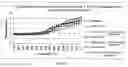
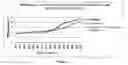
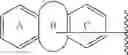
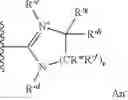
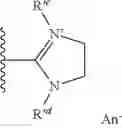
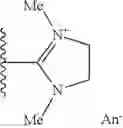
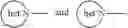
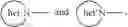



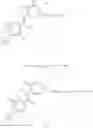
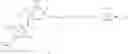
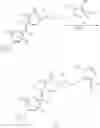

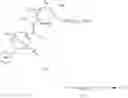



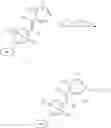
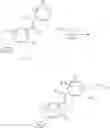
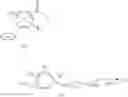
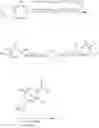


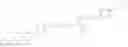

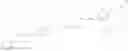
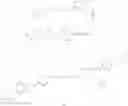
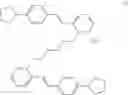






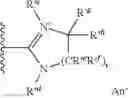
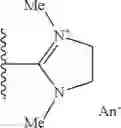


Sources:
- United States Patent and Trademark Office - verify current appl. status at the USPTO↗
Recent applications in this class:
- » 20230233881 2023-07-27
Agent for dyeing keratinous material, in particular human hair, comprising aminosilicones, pigments and alkylpolyglycosides - » 20220280816 2022-09-08
Method for dyeing keratin material, comprising the use of an organic C-C-alkoxy-silane and an alkalising agent - » 20210046333 2021-02-18
Process for treating keratin fibers using a packaging article comprising an envelope and an anhydrous composition comprising an oxidizing agent - » 20190269945 2019-09-05
METHOD FOR COLORING HAIR FIBERS INTO A FIRST AND A SECOND PATTERNS - » 20190001163 2019-01-03
COMPOSITIONS CONTAINING POLYCARBODIIMIDE COMPOUNDS AND ACIDS - » 20180111011 2018-04-26
Hair dyeing composition - » 20170296847 2017-10-19
Agents for dyeing keratin fibres, containing at least one dimeric, dicationic azo dye and at least one non-ionic surfactant - » 20170266469 2017-09-21
Agents for dyeing keratin fibers, containing at least one dimeric, dicationic azo dye and at least one anionic surfactant - » 20170266468 2017-09-21
Agents for dyeing keratin fibers, containing at least one dimeric, ring-bridged azo dye - » 20170007856 2017-01-12
PROCESS FOR TREATING KERATIN FIBERS USING A PACKAGING ARTICLE COMPRISING AN ENVELOPE AND AN ANHYDROUS COMPOSITION COMPRISING AN OXIDIZING AGENT
Recent applications for this Assignee:
- » 20250032564 2025-01-30
STRAINS, COMPOSITIONS AND METHODS OF USE - » 20220110986 2022-04-14
Strains, composition and method of use - » 20220000948 2022-01-06
Method for reducing the transfer of pathogenic microorganisms - » 20210045521 2021-02-18
Cleansing brushhead for a facial skin cleansing appliance - » 20190311191 2019-10-10
Hierarchical differential image filters for skin analysis - » 20150152486 2015-06-04
METHOD OF IN VITRO DIAGNOSING A PELLICULAR STATE IN A SUBJECT AND RELATED APPLICATIONS - » 20140142175 2014-05-22
ANHYDROUS COSMETIC COMPOSITIONS CONTAINING ASCORBIC ACID - » 20140140945 2014-05-22
Cosmetic compositions having long lasting shine - » 20140135665 2014-05-15
System for treatment of skin conditions using at least one narrow band light source in a skin brush having an oscillating brushhead - » 20140107059 2014-04-17
Compositions containing adenosine and the hydrotropes caffeine and nicotinamide for cosmetic use