Inorganic oxide powder
US20120031801A1
2012-02-09
13/166,042
2011-06-22
✅ Patent granted
US 9,045,645 B2
2015-06-02
-
-
Pegah Parvini
Daniel Zamudio
2033-05-20
Abstract:
A chemical compound of Black Iron Oxide particles coated with aluminum oxide particles and magnesium sulfate particles. The coated compound is protected from contact with the oxygen molecules in the surrounding atmosphere and thereby is less prone to self-heating and combustion.
Assignee:
- Cathay Pigments USA Inc. 1 🇺🇸 Valparaiso, IN, United States
Applicant:
Interested in similar patents?
Get notified when new applications in this technology area are published.
Classification:
B65D85/00 IPC
Containers, packaging elements or packages, specially adapted for particular articles or materials
B05D5/00 IPC
Processes for applying liquids or other fluent materials to surfaces to obtain special surface effects, finishes or structures
B05D3/00 IPC
Pretreatment of surfaces to which liquids or other fluent materials are to be applied; After-treatment of applied coatings, e.g. intermediate treating of an applied coating preparatory to subsequent applications of liquids or other fluent materials
C04B14/36 IPC
Use of inorganic materials as fillers, e.g. pigments, for mortars, concrete or artificial stone; Treatment of inorganic materials specially adapted to enhance their filling properties in mortars, concrete or artificial stone; Granular materials, e.g. microballoons Inorganic materials not provided for in groups and -
B05D7/00 IPC
Processes, other than flocking, specially adapted for applying liquids or other fluent materials to particular surfaces or for applying particular liquids or other fluent materials
B65D2213/00 » CPC further
Safety means
C09C1/24 » CPC main
Treatment of specific inorganic materials other than fibrous fillers ; Preparation of carbon black; Compounds of iron Oxides of iron
C04B14/308 » CPC further
Use of inorganic materials as fillers, e.g. pigments, for mortars, concrete or artificial stone; Treatment of inorganic materials specially adapted to enhance their filling properties in mortars, concrete or artificial stone; Granular materials, e.g. microballoons; Oxides other than silica Iron oxide
C04B20/1066 » CPC further
Use of materials as fillers for mortars, concrete or artificial stone according to more than one of groups - and characterised by shape or grain distribution; Treatment of materials according to more than one of the groups - specially adapted to enhance their filling properties in mortars, concrete or artificial stone; Expanding or defibrillating materials; Coating or impregnating with inorganic materials Oxides, Hydroxides
C04B2103/54 » CPC further
Function or property of ingredients for mortars, concrete or artificial stone Pigments; Dyes
C09C1/0081 » CPC further
Treatment of specific inorganic materials other than fibrous fillers ; Preparation of carbon black Composite particulate pigments or fillers, i.e. containing at least two solid phases, except those consisting of coated particles of one compound
C09C1/62 IPC
Treatment of specific inorganic materials other than fibrous fillers ; Preparation of carbon black Metallic pigments or fillers
C09C1/40 IPC
Treatment of specific inorganic materials other than fibrous fillers ; Preparation of carbon black Compounds of aluminium
C04B14/30 IPC
Use of inorganic materials as fillers, e.g. pigments, for mortars, concrete or artificial stone; Treatment of inorganic materials specially adapted to enhance their filling properties in mortars, concrete or artificial stone; Granular materials, e.g. microballoons Oxides other than silica
C04B20/10 IPC
Use of materials as fillers for mortars, concrete or artificial stone according to more than one of groups - and characterised by shape or grain distribution; Treatment of materials according to more than one of the groups - specially adapted to enhance their filling properties in mortars, concrete or artificial stone; Expanding or defibrillating materials Coating or impregnating
C09C1/00 IPC
Treatment of specific inorganic materials other than fibrous fillers ; Preparation of carbon black
Description
CROSS-REFERENCE TO RELATED APPLICATIONS
This application claims the benefit of U.S. Provisional Application No. 61/370,986, filed Aug. 5, 2010.
STATEMENT REGARDING FEDERALLY SPONSORED RESEARCH OR DEVELOPMENT
Not applicable.
REFERENCE TO SEQUENCE LISTING, A TABLE, OR A COMPUTER PROGRAM LISTING COMPACT DISC APPENDIX
Not applicable.
BACKGROUND
The natural world around us abounds in colors. Manmade things, too, are full of colors. Manufacturers of these manmade things use pigments in the manufacturing process to add colors. Pigments are powders that, when mixed with a liquid, make a paint or ink. Black iron oxide is an inorganic pigment that is used extensively in many industries, such as the coating, asphalt, construction, food, cosmetics, data recording and plastics industries. Black iron oxide is shipped to manufacturers all across the country in large quantities, often in the thousands of pounds.
Black iron oxide contains iron molecules in a +2 oxidation state. The iron in such an oxidation state is thermodynamically unstable and will oxidize when exposed to an oxidizing environment, such as air. When oxidized, black iron oxide turns reddish brown, what many people recognize as a rust color, and is expressed by the chemical equation 4Fe3O4+O2 6Fe2O3+Heat.
It is well known in the pigments industry that oxidation of black iron oxide is an exothermic reaction and liberates heat, a process known as self-heating. During self-heating, spontaneous combustion of black iron oxide is common.
The United States Department of Transportation and the United Nations use a particular testing procedure to classify self-heating substances for transport identification purposes. In the test, a dry sample of a substance to be tested is placed in a sample container. The sample container containing the dry sample is then placed in an oven and subjected to an oven temperature of approximately 140 degrees celsius. The dry sample temperature is monitored continuously over a 24 hour period by use of a thermocouple placed at the center of the dry sample and another thermocouple placed between the sample container and the oven wall. Monitoring thus, provides a measure of the temperature rise, if any, of the dry sample relative to the oven temperature. An approximate 60 degree celsius rise in the dry sample temperature as compared to the oven temperature indicates problematic self-heating that can cause spontaneous combustion of the dry sample, such as a sample of black iron oxide.
The problem of black iron oxides tending toward spontaneous combustion is complicated when the pigment is packaged in large quantities, particularly during storage and transportation. To prevent such spontaneous combustion of black iron oxide, it has become necessary to package the pigment in small quantities using many small containers, such as thick paper sacks to name one example, to accommodate large orders. Such packaging requires that a United Nations certificate be affixed thereto in order to comply with transport regulations. Because such packaging increases the cost of shipping, a better solution to prevent spontaneous combustion of black iron oxide is needed.
Attempts have been made at coating the black iron oxide sufficiently enough to shield the black iron oxide from an oxidizing environment, such as air, and thereby minimize self-heating. Information relevant to attempts to address these problems can be found in U.S. Pat. Nos. 4,382,982, 4,491,619, 5,039,553, 5,188,898, 5,449,565, 5,650,194, 5,714,299, 6,179,907 and 3,869,298. However, each one of these references suffers minimally from one or more of the following disadvantages: 1) use of Boron as a coating, 2) use of silicates as a coating and 3) use of non-aluminum coating.
For the foregoing reasons there is a need in the industry for a simple means to coat black iron oxide sufficiently enough to shield the black iron oxide from an oxidizing environment and thereby improve the heat stability of black iron oxide. Such a solution to the problems described would eliminate the need for the use of United Nations certification and facilitate the storage and transportation to manufacturers of large quantities of black iron oxide pigments for coloring the manmade things that humans use.
SUMMARY
One embodiment of the present invention is directed to a chemical compound and method for making that chemical compound that satisfies this need. The chemical compound comprises an inorganic oxide powder, at least made up from a plurality of iron oxide particles and a plurality of aluminum oxide particles and a plurality of magnesium sulfate particles. The aluminum oxide particles mix with the magnesium sulfate particles and form a coat of comprising those particles. The coating sufficiently surrounds the iron oxide particles such that contact between the iron oxide particles and an oxidizing environment is reduced. The inventor has discovered an embodiment containing about 99.3% iron oxide particles, 0.67% aluminum oxide particles, and about 0.2% magnesium sulfate particles works sufficiently well to solve the problem of heat stability.
Another example of the present invention is a containment system to contain an inorganic oxide powder for use as a pigment, comprising a plurality of iron oxide particles, a plurality of aluminum oxide particles, a plurality of magnesium sulfate particles, the aluminum oxide particles mixing with the magnesium sulfate particles thereby forming a coating surrounding the iron oxide particles thereby reducing contact between the iron oxide particles and an oxidizing environment, a container containing no more than about 450 liters of the inorganic oxide powder and being sealed and easily transportable.
One example of a method for making an embodiment of the inventive chemical compound comprises obtaining and measuring an amount of black iron oxide pigment particles and, in a container, mixing the particles with water to create a slurry. Heating the slurry to at least about 50 degrees celsius. Measuring the slurry's pH and, if necessary, adjusting the pH of the slurry to about 6.5 using sufficient amounts of any acid, such as hydrochloric acid or sulfuric acid. Creating a first mixture by adding an aluminum salt solution comprising aluminum in an amount of between about 0.1% and about 2% of the iron oxide pigment particles by weight. Placing the first mixture under constantly changing physical conditions, such as agitation, until mixed. Measuring the first mixture's pH and adjusting the pH of the first mixture to approximately 8.4 by adding any acid neutralizer, such as ammonia or an alkali metal hydroxide, thereby creating a second mixture. Placing the second mixture under constantly changing physical conditions, such as agitation, until mixed, measuring the second mixture's pH and adding, as needed, sufficient quantities of base to maintain the second mixture's pH at or above 8.0. Creating a third mixture by adding magnesium sulfate to the second mixture and placing the third mixture under constantly changing physical conditions, such as agitation, until mixed. Filtering the third mixture and washing it with water until its conductivity is less than about 500 micro-siemens. Drying at a temperature between about 45 degrees celsius and about 175 degrees celsius to produce an aluminum coated iron oxide powder for use as a pigment. The mixing in the above steps can be done for various amounts of time as determined by the mixer.
BRIEF DESCRIPTION OF THE SEVERAL VIEWS OF THE DRAWING
These and other features, aspects and advantages of the present invention will become better understood with regard to the following description, appended claims, and accompanying drawings where:
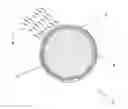
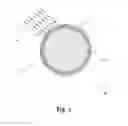
FIG. 1 shows a first embodiment according to the present invention, illustrating a powder mixture with low hazard of spontaneous combustibility.
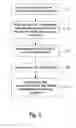
FIG. 2 shows a method embodiment according to the present invention, illustrating a process for making a powder mixture with low hazard of spontaneous combustibility.
DETAILED DESCRIPTION OF THE INVENTION
A first embodiment of the invention is shown in FIG. 1 wherein FIG. 1 is view of a first embodiment according to the present invention, illustrating a powder mixture with low hazard of spontaneous combustibility.
As shown in FIG. 1 generally, a powder mixture with low hazard of spontaneous combustibility 3 has a metal oxide substance 2 that is surrounded by an aluminum substance 1 containing a plurality of aluminum molecules 5. The oxide substance 2 is prevented from contacting air 4 by the surrounding aluminum substance 1.
A method embodiment of the invention is shown in FIG. 2 wherein FIG. 2 is a method embodiment according to the present invention, illustrating a process for making a powder mixture with low hazard of spontaneous combustibility.
As shown in FIG. 2 generally, an inventive method embodiment for making a powder mixture with low hazard of spontaneous combustibility shows the steps of obtaining an oxide slurry 11, adding a metal containing compound to the slurry 12, increasing the hydrogen ion concentration of the mixture 13, decreasing the thixotropy of the mixture 14, and decreasing the quantity of metal containing compound in the mixture 15.
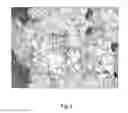
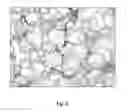
An embodiment of the inventive Black Iron Oxide has, as is illustrated in the photograph of FIG. 4 taken under a scanning electron microscope, a surface area that is not smooth. As is apparent from comparison of this surface area with that of uncoated Black Iron Oxide, shown in FIG. 3, they differ greatly from each other with respect to the surface area that is exposed to the surrounding atmosphere.
Claims
What is claimed is:1. An inorganic oxide powder for use as a pigment, comprising:
(a) a plurality of iron oxide particles;
(b) a plurality of aluminum oxide particles;
(c) a plurality of magnesium sulfate particles;
(d) the aluminum oxide particles mixing with the magnesium sulfate particles thereby forming a coating;
(e) the coating surrounding the iron oxide particles thereby reducing contact between the iron oxide particles and an oxidizing environment.
2. The inorganic oxide powder of claim 1, further comprising:
(a) 99.30% iron oxide particles;
(b) 0.67% aluminum oxide particles;
(c) 0.20% magnesium sulfate particles.
3. A containment system to contain an inorganic oxide powder for use as a pigment, comprising:
(d) a plurality of iron oxide particles;
(e) a plurality of aluminum oxide particles;
(f) a plurality of magnesium sulfate particles;
(g) the aluminum oxide particles mixing with the magnesium sulfate particles thereby forming a coating;
(h) the coating surrounding the iron oxide particles thereby reducing contact between the iron oxide particles and an oxidizing environment;
(i) a container;
(j) the container containing no more than about 450 liters of the inorganic oxide powder;
(k) the container being sealed;
(l) the container being easily transportable.
4. A method of coating an inorganic oxide powder for use as a pigment, comprising:
(a) Obtaining and measuring an amount of black iron oxide pigment particles and, in a container, mixing the particles with water to create a slurry;
(b) Heating the slurry to at least about 50 degrees celsius;
(c) Measuring the slurry's pH and, if necessary, adjusting the pH of the slurry to about 6.5 using sufficient amounts of any acid;
(d) Creating a first mixture by adding an aluminum salt solution comprising aluminum in an amount of between about 0.1% and about 2% of the iron oxide pigment particles by weight;
(e) Placing the first mixture under constantly changing physical conditions, such as agitation, until mixed;
(f) Measuring the first mixture's pH and adjusting the pH of the first mixture to approximately 8.4 by adding any acid neutralizer thereby creating a second mixture;
(g) Placing the second mixture under constantly changing physical conditions, such as agitation, until mixed, measuring the second mixture's pH and adding, as needed, sufficient quantities of base to maintain the second mixture's pH at or above 8.0;
(h) Creating a third mixture by adding magnesium sulfate to the second mixture and placing the third mixture under constantly changing physical conditions, such as agitation, until mixed;
(i) Filtering the third mixture and washing it with water until its conductivity is less than about 500 micro-siemens;
(j) Drying at a temperature between about 45 degrees celsius and about 175 degrees celsius to produce an aluminum coated iron oxide powder for use as a pigment.
5. The method claim of claim 4 wherein any acid is hydrochloric acid or sulfuric acid.
6. The method claim of claim 4 wherein any acid neutralizer is ammonia or an alkali metal hydroxide.
7. The method of claim 4, wherein the mixing in step (e) is done for about 20 minutes, the mixing in step (g) is done for about 15 minutes, and the mixing in step (h) is done for about 30 minutes.
Images & Drawings included:
Sources:
- United States Patent and Trademark Office - verify current appl. status at the USPTO↗
Similar patent applications:
- » 20150004465
Inorganic oxide powder, inorganic oxide-containing slurry, lithium ion secondary battery using said slurry, and production method therefor - » 20110206963
INORGANIC OXIDE POWDER AND INORGANIC OXIDE-CONTAINING SLURRY, AND LITHIUM ION SECONDARY BATTERY USING THE SAME SLURRY AND METHOD OF PRODUCING THE SAME - » 20050203214
Surface modified inorganic oxide powder and its use - » 20060127669
Surface modification method for inorganic oxide powder, powder produced by the method and use of the powder - » 20240239682
INORGANIC OXIDE POWDER, METHOD FOR PRODUCING SAME, AND RESIN COMPOSITION - » 10176547
Surface-modified inorganic oxide powder, process for producing the same, and use thereof - » 9840917
Method for producing an inorganic oxide powder - » 20160181645
Inorganic oxide powder and electrolyte comprising sintered body of the same - » 20170054122
Inorganic oxide powder, slurry containing same, nonaqueous electrolyte secondary battery, and method for manufacturing nonaqueous electrolyte secondary battery - » 20180277814
INORGANIC OXIDE POWDER, SLURRY CONTAINING SAME, NONAQUEOUS ELECTROLYTE SECONDARY BATTERY, AND METHOD FOR MANUFACTURING NONAQUEOUS ELECTROLYTE SECONDARY BATTERY
Recent applications in this class:
- » 20250066612 2025-02-27
METHOD FOR PRODUCING IRON OXIDE PIGMENTS - » 20210301142 2021-09-30
Method for mechanochemical preparation of high-performance iron red/clay mineral hybrid pigment - » 20200299515 2020-09-24
Preparation of red iron oxide pigment - » 20190338137 2019-11-07
Method for producing oxide particles with controlled color characteristics, oxide particles, and coating or film-like composition comprising the same - » 20190276674 2019-09-12
METAL NANOPARTICLE SURFACE LIGAND REPLACEMENT METHOD - » 20190276673 2019-09-12
METHOD OF MAKING AND SYNTHESIZING DIELECTRIC NANOFLUIDS - » 20190136068 2019-05-09
Method of manufacturing colored chalk - » 20180223105 2018-08-09
Thermally stable color pigments with nanofiber coating - » 20180179390 2018-06-28
Iron oxide dispersion for ink jet recording, method of manufacturing the same, and ink jet recording method - » 20180171150 2018-06-21
Method for producing oxide particles with controlled color characteristics, oxide particles, and coating or film-like composition comprising the same