Bag comprising machine direction oriented film
US20120033901A1
2012-02-09
13/136,036
2011-07-21
Abstract:
A packaging container comprising an outer layer of machine direction oriented polyethylene (1) bonded to an inner layer of polyethylene (2) by a bonding layer such as adhesive (3). The machine direction oriented polyethylene (1) serves to stiffen the package and provide resistance to heat when the inner sealant layers of polyethylene (2) are heat sealed together. The resulting package (4) simplifies recycling due to the substantial polyethylene composition. Further, additions of degradable additive may be combined with the machine direction oriented polyethylene (1) and polyethylene (2) to enhance degradation.
Interested in similar patents?
Get notified when new applications in this technology area are published.
Classification:
B65D31/02 » CPC main
Bags or like containers made of paper and having structural provision for thickness of contents with laminated walls
B32B7/02 » CPC further
Layered products characterised by the relation between layers; Layered products characterised by the relative orientation of features between layers, or by the relative values of a measurable parameter between layers, i.e. products comprising layers having different physical, chemical or physicochemical properties; Layered products characterised by the interconnection of layers Physical, chemical or physicochemical properties
B32B27/32 » CPC further
Layered products comprising synthetic resin comprising polyolefins
B32B2250/02 » CPC further
Layers arrangement 2 layers
B32B2250/242 » CPC further
Layers arrangement; All layers being polymeric All polymers belonging to those covered by group
B32B2307/306 » CPC further
Properties of the layers or laminate having particular thermal properties Resistant to heat
B32B2307/516 » CPC further
Properties of the layers or laminate having particular mechanical properties; Oriented mono-axially
B32B2307/558 » CPC further
Properties of the layers or laminate having particular mechanical properties Impact strength, toughness
B32B2439/00 » CPC further
Containers; Receptacles
Description
CROSS REFERENCE TO RELATED APPLICATIONS: This application claims the benefit of provisional patent application Ser. No. 61/400,886, filed 2010 Aug. 4 by the present inventor.
FEDERALLY SPONSORED RESEARCH
None
BACKGROUND
1. Field
This invention relates to flexible bags having a polyethylene, machine direction oriented polyethylene wall structure.
2. Prior Art
Flexible packaging has played an increasing role in containing a wide variety of products ranging from liquid and dry chemicals to food products. Due to this wide variety of products, the flexible packaging industry is constantly changing the characteristics of the bag structures to meet the changing needs of the packers and consumers. Desired bag characteristics include optical clarity, rigidity, toughness, heat resistance, and recyclability.
Free standing, or stand-up pouches, offer better retail presentation since the printed front panel of the pouch is directly in front of the consumer when either hanging from a store rack or sitting on a store shelf. Stand-up pouches, like the one disclosed in U.S. Pat. No. 3,738,565 to Ackley (1973) demonstrate the need for free standing bags. Stand-up pouches often rely on a lamination of polyester, nylon, or polypropylene to polyethylene. The polyester, nylon, or polypropylene offer good clarity, rigidity, and heat resistance while the polyethylene offers a sealant layer to seal the bag closed using heat and pressure. The heat resistance on the outer layer is used to resist sticking to the high temperature sealing jaws of the packer machine. A sealant layer of polyethylene, although needed to seal the bag closed, does not have the rigidity desired in many packaging applications to stand up on a display shelf. A polyethylene to non-polyethylene lamination, however, is problematic for recycling due to the incompatible materials found in the bag.
Other modifications to the bag film structure have been made in the past to achieve different bag characteristics. U.S. Pat. No. 5,827,586 to Yamashita (1998) and U.S. Pat. No. 6,306,472 to Buelow (2001) are examples of film modifications that were needed. Neither of these address the rigidity and recyclability concerns of today's stand-up pouches.
Machine Direction Oriented film or MDO is polyethylene having more heat resistance and rigidity than standard polyethylene film. MDO film is sometimes sold as a sealant layer to packaging facilities to laminate to more rigid plastic films such as the previously mentioned polyester or polypropylene. By laminating MDO film to polyethylene, the entire package can be made of compatible plastics for recycling and still have the desired rigidity and heat resistance of other commonly used laminations.
The preferred embodiment of this invention uses MDO film on the outer wall and a standard polyethylene film on the inside wall of the flexible package.
DRAWINGS
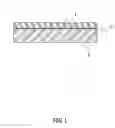
FIG. 1 is an enlarged cross sectional view of the laminate components of the preferred embodiment.
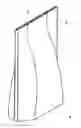
FIG. 2 is a view of a stand-up pouch.
FIG. 3 is an enlarged view of the top of a stand-up pouch in accordance with one embodiment.
FIG. 4 is an enlarged view of the top of a stand-up pouch showing the polyethylene sealant layer heat sealed closed in accordance with one embodiment.
DRAWINGS—REFERENCE NUMERALS
1 Machine direction oriented polyethylene layer
2 Polyethylene sealant layer
3 Adhesive layer
4 Stand-up pouch
DETAILED DESCRIPTION
The laminated film of the preferred embodiment of the present invention is shown in FIG. 1. Machine direction oriented polyethylene film (1) is laminated with a substantially thin layer of adhesive (3) or tie layer to a polyethylene sealant layer (2). When the laminated film is formed to make a stand-up pouch (4) or flat bag, the machine direction oriented polyethylene (1) serves to stiffen the package, a trait desired in stand-up pouches. The machine direction oriented polyethylene (1) also has a slightly higher melt temperature and therefore provides heat resistance when the inner sealant layers of polyethylene (2) are heat sealed together. A stand-up pouch (4) is shown in FIG. 2.
FIG. 3 illustrates the desired MDO (1) and polyethylene (2) films of the stand-up pouch (4) in FIG. 2. Although the adhesive (3) or tie layer may be used, this illustration is not meant to limit the scope of the invention. The polyethylene layer (2) may be co-extruded with the MDO layer (1) and thus eliminate the adhesive layer (3). One disadvantage of co-extruding MDO (1) and polyethylene (2) is the ability to print on the inside of the structure. If the film is laminated instead of co-extruded, the MDO (1) can be printed and the ink can be sandwiched between the MDO (1) and polyethylene (2) layers in the laminating process. This helps protect the printed graphics and also keeps the ink from coming into contact with the contents of the package.
FIG. 4 shows an enlarged view of the stand-up pouch (4) with the polyethylene sealant layers (2) fused together following the application of heat and pressure with the sealing jaws of a typical bag making machine.
The resulting package simplifies recycling due to the substantial polyethylene (2) and machine direction oriented polyethylene (1) composition. Further, additions of degradable additive may be combined with the machine direction oriented polyethylene (1) and polyethylene (2) to enhance degradation.
Claims
1. A flexible packaging container comprising:
a. an outer layer of substantially machine direction oriented polyethylene,
b. a middle bonding layer of material found in the category containing adhesive,
c. an inner layer of polyethylene,
whereby said outer layer of said machine direction oriented polyethylene stiffens said flexible packaging container and said inner layer of polyethylene facilitates heat sealing to a corresponding inner layer of polyethylene of said flexible packaging container side wall.
Images & Drawings included:


Sources:
- United States Patent and Trademark Office - verify current appl. status at the USPTO↗
Recent applications in this class:
- » 20250153904 2025-05-15
GAS BARRIER LAMINATE, METHOD FOR MANUFACTURING SAME, AND PACKAGING BAG - » 20250074659 2025-03-06
BAG WITH HIGH WATER VAPOR PROTECTION - » 20250019122 2025-01-16
Flap Bag With C-Fold - » 20240300698 2024-09-12
CUSHION SHEET PRODUCTION MODULE AND PRODUCTION METHOD, PACKAGING BAG PRODUCTION DEVICE AND PRODUCTION MEHOD THEREOF - » 20240228118 2024-07-11
MULTIWALL PAPER-BASED PACKAGING STRUCTURES - » 20240182207 2024-06-06
CONSUMER PRODUCT, RECLOSABLE FLEXIBLE CONTAINER AND MULTI-LAYER COMPOSITE SHEET - » 20240132252 2024-04-25
MULTIWALL PAPER-BASED PACKAGING STRUCTURES - » 20230322445 2023-10-12
Cushion pad and packaging bag thereof - » 20230099868 2023-03-30
Multiwall paper packaging structures - » 20220363444 2022-11-17
PACKAGING MATERIAL AND A MANUFACTURING PROCESS THEREOF