Fire resistant flexible ceramic resin blend and composite products formed therefrom
US20120034428A1
2012-02-09
13/068,762
2011-05-19
✅ Patent granted
US 8,309,213 B2
2012-11-13
-
-
N. Edwards
2031-07-14
Abstract:
A high-temperature heat resistant elastic composite comprising a porous high molecular-weight silicon polymer and a reinforcing material wherein the silicon polymer comprises a silicon resin, silica and boron oxide catalyzed by the boron oxide to form a reaction mass that is polymerized in acetone and to which the silica and boron nitride are added and wherein pores of silicone polymer are filled with a densification resin blend.
Assignee:
- FLEXIBLE CERAMICS, INC. 4 🇺🇸 Palm Springs, CA, United States
Interested in similar patents?
Get notified when new applications in this technology area are published.
Classification:
D04H1/00 IPC
Non-woven fabrics formed wholly or mainly of staple fibres or like relatively short fibres
C04B35/571 » CPC main
Shaped ceramic products characterised by their composition ; Ceramics compositions ; Processing powders of inorganic compounds preparatory to the manufacturing of ceramic products based on non-oxide ceramics based on carbides or oxycarbides based on silicon carbide obtained from polymer precursors
B32B5/26 » CPC further
Layered products characterised by the non- homogeneity or physical structure, i.e. comprising a fibrous, filamentary, particulate or foam layer; Layered products characterised by having a layer differing constitutionally or physically in different parts characterised by the presence of two or more layers which are next to each other and are fibrous, filamentary, formed of particles or foamed one layer being a fibrous or filamentary layer another layer also being fibrous or filamentary
C04B35/6269 » CPC further
Shaped ceramic products characterised by their composition ; Ceramics compositions ; Processing powders of inorganic compounds preparatory to the manufacturing of ceramic products; Forming processes; Processing powders of inorganic compounds preparatory to the manufacturing of ceramic products; Preparing or treating the powders individually or as batches ; preparing or treating macroscopic reinforcing agents for ceramic products, e.g. fibres; mechanical aspects section; Treating the starting powders individually or as mixtures Curing of mixtures
C04B35/80 » CPC further
Shaped ceramic products characterised by their composition ; Ceramics compositions ; Processing powders of inorganic compounds preparatory to the manufacturing of ceramic products; Ceramic products containing macroscopic reinforcing agents containing non-metallic materials Fibres, filaments, whiskers, platelets, or the like
C04B35/82 » CPC further
Shaped ceramic products characterised by their composition ; Ceramics compositions ; Processing powders of inorganic compounds preparatory to the manufacturing of ceramic products; Ceramic products containing macroscopic reinforcing agents containing non-metallic materials; Fibres, filaments, whiskers, platelets, or the like Asbestos; Glass; Fused silica
B32B2260/023 » CPC further
Layered product comprising an impregnated, embedded, or bonded layer wherein the layer comprises an impregnation, embedding, or binder material; Composition of the impregnated, bonded or embedded layer; Fibrous or filamentary layer Two or more layers
B32B2260/046 » CPC further
Layered product comprising an impregnated, embedded, or bonded layer wherein the layer comprises an impregnation, embedding, or binder material; Impregnation, embedding, or binder material Synthetic resin
B32B2260/048 » CPC further
Layered product comprising an impregnated, embedded, or bonded layer wherein the layer comprises an impregnation, embedding, or binder material; Impregnation, embedding, or binder material Natural or synthetic rubber
B32B2262/0261 » CPC further
Composition or structural features of fibres which form a fibrous or filamentary layer or are present as additives; Synthetic macromolecular fibres Polyamide fibres
B32B2262/101 » CPC further
Composition or structural features of fibres which form a fibrous or filamentary layer or are present as additives; Inorganic fibres Glass fibres
B32B2264/102 » CPC further
Composition or properties of particles which form a particulate layer or are present as additives; Inorganic particles Oxide or hydroxide
B32B2307/306 » CPC further
Properties of the layers or laminate having particular thermal properties Resistant to heat
B32B2307/51 » CPC further
Properties of the layers or laminate having particular mechanical properties Elastic
B32B2581/00 » CPC further
Seals; Sealing equipment; Gaskets
C04B2235/3409 » CPC further
Aspects relating to ceramic starting mixtures or sintered ceramic products; Composition of constituents of the starting material or of secondary phases of the final product; Constituents and secondary phases not being of a fibrous nature; Non-metal oxides, non-metal mixed oxides, or salts thereof that form the non-metal oxides upon heating, e.g. carbonates, nitrates, (oxy)hydroxides, chlorides Boron oxide, borates, boric acids, or oxide forming salts thereof, e.g. borax
C04B2235/3418 » CPC further
Aspects relating to ceramic starting mixtures or sintered ceramic products; Composition of constituents of the starting material or of secondary phases of the final product; Constituents and secondary phases not being of a fibrous nature; Non-metal oxides, non-metal mixed oxides, or salts thereof that form the non-metal oxides upon heating, e.g. carbonates, nitrates, (oxy)hydroxides, chlorides Silicon oxide, silicic acids, or oxide forming salts thereof, e.g. silica sol, fused silica, silica fume, cristobalite, quartz or flint
C04B2235/3826 » CPC further
Aspects relating to ceramic starting mixtures or sintered ceramic products; Composition of constituents of the starting material or of secondary phases of the final product; Constituents and secondary phases not being of a fibrous nature; Non-oxide ceramic constituents or additives; Carbides Silicon carbides
C04B2235/386 » CPC further
Aspects relating to ceramic starting mixtures or sintered ceramic products; Composition of constituents of the starting material or of secondary phases of the final product; Constituents and secondary phases not being of a fibrous nature; Non-oxide ceramic constituents or additives; Nitrides, e.g. oxynitrides, carbonitrides, oxycarbonitrides, lithium nitride, magnesium nitride Boron nitrides
C04B2235/616 » CPC further
Aspects relating to ceramic starting mixtures or sintered ceramic products; Aspects relating to the preparation, properties or mechanical treatment of green bodies or pre-forms Liquid infiltration of green bodies or pre-forms
C04B2237/365 » CPC further
Aspects relating to ceramic laminates or to joining of ceramic articles with other articles by heating; Composition of layers of ceramic laminates or of ceramic or metallic articles to be joined by heating, e.g. Si substrates; Ceramic; Non-oxidic Silicon carbide
C04B2237/38 » CPC further
Aspects relating to ceramic laminates or to joining of ceramic articles with other articles by heating; Composition of layers of ceramic laminates or of ceramic or metallic articles to be joined by heating, e.g. Si substrates; Ceramic Fiber or whisker reinforced
Y10T428/24785 » CPC further
Stock material or miscellaneous articles; Structurally defined web or sheet [e.g., overall dimension, etc.]; Edge feature including layer embodying mechanically interengaged strands, strand portions or strand-like strips [e.g., weave, knit, etc.]
Y10T428/24802 » CPC further
Stock material or miscellaneous articles; Structurally defined web or sheet [e.g., overall dimension, etc.] Discontinuous or differential coating, impregnation or bond [e.g., artwork, printing, retouched photograph, etc.]
Y10T428/24983 » CPC further
Stock material or miscellaneous articles; Structurally defined web or sheet [e.g., overall dimension, etc.] including components having same physical characteristic in differing degree Hardness
Y10T428/249924 » CPC further
Stock material or miscellaneous articles; Web or sheet containing structurally defined element or component Noninterengaged fiber-containing paper-free web or sheet which is not of specified porosity
Y10T428/249928 » CPC further
Stock material or miscellaneous articles; Web or sheet containing structurally defined element or component; Noninterengaged fiber-containing paper-free web or sheet which is not of specified porosity Fiber embedded in a ceramic, glass, or carbon matrix
Y10T442/2664 » CPC further
Fabric [woven, knitted, or nonwoven textile or cloth, etc.]; Coated or impregnated woven, knit, or nonwoven fabric which is not [a] associated with another preformed layer or fiber layer or, [b] with respect to woven and knit, characterized, respectively, by a particular or differential weave or knit, wherein the coating or impregnation is neither a foamed material nor a free metal or alloy layer; Coating or impregnation provides heat or fire protection Boron containing
C08K3/36 » CPC further
Use of inorganic substances as compounding ingredients; Silicon-containing compounds Silica
C08K3/38 » CPC further
Use of inorganic substances as compounding ingredients Boron-containing compounds
C08L83/04 » CPC further
Compositions of macromolecular compounds obtained by reactions forming in the main chain of the macromolecule a linkage containing silicon with or without sulfur, nitrogen, oxygen or carbon only; Compositions of derivatives of such polymers Polysiloxanes
B32B5/14 IPC
Layered products characterised by the non- homogeneity or physical structure, i.e. comprising a fibrous, filamentary, particulate or foam layer; Layered products characterised by having a layer differing constitutionally or physically in different parts characterised by a layer differing constitutionally or physically in different parts, e.g. denser near its faces
C08L83/00 IPC
Compositions of macromolecular compounds obtained by reactions forming in the main chain of the macromolecule a linkage containing silicon with or without sulfur, nitrogen, oxygen or carbon only; Compositions of derivatives of such polymers
B32B18/00 » CPC further
Layered products essentially comprising ceramics, e.g. refractory products
B32B27/04 IPC
Layered products comprising synthetic resin as impregnant, bonding, or embedding substance
B32B3/30 IPC
Layered products comprising a layer with external or internal discontinuities or unevennesses, or a layer of non-planar form ; Layered products having particular features of form characterised by a particular shape of the outline of the cross-section of a continuous layer; characterised by a layer with cavities or internal voids ; characterised by an apertured layer characterised by a layer formed with recesses or projections, e.g. hollows, grooves, protuberances, ribs
Description
RELATED APPLICATION DATA
The present patent application is a Continuation-in-Part of U.S. patent application Ser. No. 12/734,305 filed Aug. 7, 2010 and claims benefit from commonly owned, co-pending U.S. Application for Provisional Patent, Application No. 60/999,918 filed Oct. 22, 2007. The present patent application also is related to commonly owned co-pending U.S. patent applications each filed on Dec. 19, 2009, namely Ser. No. 12/665,715 for Silicone Resin Composites for High Temperature Durable Elastic Composite Applications and Methods for Fabricating Same (“Clarke application no. 1”), Ser. No. 12/665,716 for “Red Heat” Exhaust System Silicone Composite 0-Ring Gaskets and Method for Fabricating Same (“Clarke application no. 2”), and Ser. No. 12/665,717 for Internal Combustion (IC) Engine Head Assembly Combustion Chamber Multiple Spark Ignition (MSI) Fuel Savings Device and Methods of Fabrication Thereof (“Clarke application no. 3”), each of which is incorporated herein by reference
BACKGROUND OF THE INVENTION
1. Field of the Invention
This invention relates to the commercial application of flammable organic polymer matrix composites where fire is of concern to workers and passengers in industry, transportation, military, petroleum, powerhouse and aircraft.
2. Description of the Related Art
The current use of flammable organic polymer matrix fiber-reinforced composites in the manufacture of aircraft interiors (e.g., phenolic polymers) and structural applications (e.g., epoxy polymers) limits passenger safety where fire hazard is an important design consideration. In-flight fire is ranked as the fourth highest known contributing cause of fatalities arising from accidents involving commercial jet aircraft (Ref. 1). The Federal Aviation Administration (FAA) believes that if aircraft accident rates continue at a constant rate, then death due to fire will increase at 4% per annum in-line with the growth in air passenger traffic (Ref. 2). This condition becomes even more hazardous with the planned commercial development of multi-tier 600 passenger aircraft.
Prior art in silicone resin development demonstrated ten years ago (Ref. 3) the development of essentially non-burning methyl silicone resin composite materials for use in aircraft cabin interiors. Even in the absence of halogenated or other fire retardants, the fire performance was superior to the phenolic resins currently used in aircraft interiors. Also, the heat release, CO and smoke yield of the developed methyl silicone resins were demonstrated as superior to phenolic resins (Ref. 3).
The Beckley patent, U.S. Pat. No. 5,552,466 is specific to teach methods of producing processable resin blends that produce high density silica ceramics in the red heat (600 to 1000° C.) zone. The preferred catalyst, zinc hexanoic acid produces a high cross-link density polymer by the Beckley methods of processing that favor the formation of high yield ceramic composites compared the high temperature elastic silicone polymers produced by the Clarke methods of using boron nitride, silica and a preferred boron oxide catalyst. No mention is made of compression-recovery properties common to Clarke related composites.
The Chao, Sarmah, Burns and Katsoulis, Non-Burning Silicone Resin Composite Laminates Central R&D, Dow Corning Corporation, Midland Mich. 48686, 7-14-99 paper refers to silanol-silanol condensation cured methyl silicone resins enabling the fabrication of non-burning composites with lower CO and smoke yields than laminates made with organic laminates. The paper also reveals in FIGS. 1 to 4 that the methyl silicone resin and composites made therefrom were superior in fire resistant performance to phenolic resin and composites commonly used in aircraft interiors. No mention is made of producing a high temperature elastic methyl and or phenyl silicone resin containing boron nitride, silica and boron oxide to produce an elastic fire resistant silicone laminate that slowly transforms into a flexible ceramic fire barrier then ceramic with 80 to 100% strength retention and instant self extinguishing capability after FAA Fire Penetration testing (FAR 25.853) at 20000F for 15 minutes with greater endurance capability.
The Boisvert, et al patent, U.S. Pat. No. 5,972,512 is specific to teach silanol-silanol condensation cured methylsilsesquioxane resins enabling the fabrication of non-burning composites with superior performance than organic laminates. No mention is made of producing a high temperature elastic silicone containing boron nitride, silica and boron oxide to produce an elastic fire protective silicone laminate that slowly transforms into a flexible ceramic then ceramic with no burn through at 20000F after 15 minutes. Also, the fire resistance is specific to methyl resins overlooking the high thermal advantages of phenyl resins even when used sparingly. Also, elastic composites have dissimilar materials joining advantages not mentioned in the Boisvert patent.
The Clarke patent, U.S. Pat. No. 6,093,763 is specific to teach the use of the zinc hexanoic acid catalyst for a specific ratio of 2:1 for two specific silicon resins with boron nitride as filler. The zinc hexanoic acid catalyst produces a different high cross-link density polymer than the preferred elastic composite produced from a reaction mixture of boron nitride, silica and boron oxide and controlled reaction methods. The amount of zinc catalyst required to enable the sealant to perform is also excessive in comparison to the boron oxide catalyst which is sparingly used to favor a slow reaction for producing elastic composites.
The Clarke patent, U.S. Pat. No. 6,161,520 is specific to teach that the gasket materials derived from Clarke's copending U.S. patent applications Ser. Nos. 08/962,782; 08/962,783 and 09/185,282, all disclose the use of boron nitride as the catalyst for condensation polymerization of the resin blend needed to produce the gaskets. However, boron nitride is not a catalyst as incorrectly disclosed therein. The certainty that boron nitride is not a catalyst has been shown by attempting to repeat the Clarke U.S. Pat. No. 6,183,873 patent's FIG. 1 “gel” curve at 177° C. using the preferred CERAC, Inc. item #B-1084-99.5% pure boron nitride. Other research associates have also confirmed the certainty that boron nitride is not a silicone condensation catalyst. Numerous possible contaminates would need to be investigated to find the actual catalyst or combination of catalysts including the possibility of humidity. No prior mention has been made of using boron nitride, silica and boron oxide as a reaction mixture processed in a rotating cylinder at ambient temperature to favor the production of a high temperature elastic composite. Neither is boron oxide mentioned as catalyst with boron nitride cost advantage addressed when boron oxide is used as a residual from the chemical processing (Ref. 5, 6) of boron nitride.
The Clarke patent, U.S. Pat. No. 6,183,873 B1 is specific to teach the use of boron nitride as the catalyst in producing polysiloxane resin formulations for hot melt or wet impregnation of ceramic reinforcements. As stated above, boron nitride is not a catalyst as incorrectly claimed. The more costly and toxic hot melt and wet processing methods of the '873 patent are eliminated with the superior ambient temperature methods now addressed by the inventor. No resin formulations using boron oxide as the catalyst (see Table 6 of Clarke application no. 1) are mentioned. Additionally, the methods of producing “flexible ceramic” high temperature elastic laminates are not addressed. Also, the use of laser processing (up to 16,5000 C) to increase the tensile strength by 25% and form ceramic sealed edges eliminating the need for costly end closures is not addressed. The boron nitride cost savings in reducing the boron oxide leaching operations in the commercial production of boron nitride and fire resistant advantage of using residual boron oxide contained in boron nitride as a source for the catalyst addition are not mentioned.
The Clarke SAE 2002-01-0332 paper (Ref. 7) refers to high purity boron oxide as a Lewis acid catalyst with silica mentioned as an unobvious inhibitor for these silicone condensation polymerization catalysts. High cost boron nitride and boron oxide are added separately. No mention is made of producing resin formulations using boron nitride containing boron oxide residues as a source of boron oxide catalyst and cost savings advantage. Additionally, the methods of producing “flexible-ceramic” laminates capable of high-temperature elastic recovery (FIG. 1 of Clarke application no. 1) are not addressed. Also, the use of laser processing (up to 16,500 C) to increase the tensile strength by up to 25% and forming ceramic sealed edges is not addressed. The “self extinguishing” property of the elastic composite when heat is removed is also not mentioned. This is an essential requirement to prevent combustion pre-ignition in superior fuel saving flexible ceramic composite ignition devices.
REFERENCES CITED
U.S. Patent Documents
U.S. Pat. No. 5,552,466 U.S. Ser. No. 09/03/1996 Beckley et al.
U.S. Pat. No. 5,972,512 U.S. Ser. No. 10/26/1999 Boisvert et al.
U.S. Pat. No. 6,093,763 U.S. Ser. No. 07/25/2000 Clarke
U.S. Pat. No. 6,161,520 U.S. Ser. No. 12/19/2000 Clarke
U.S. Pat. No. 6,183,873 U.S. Ser. No. 02/06/2001 Clarke
PUBLISHED REFERENCES
1. Boeing 2005, Statistical summary of commercial jet airplane accidents—worldwide operations 1959-2004, Seattle, Wash., US, p. 18 [This report excludes airplanes manufactured in the Confederation of Independent States—in the former Soviet Union]
2. Federal Aviation Administration (US) website <http://www.fire.tc.faa.gov/research/summarv.stm> viewed 10 Apr. 2006.
3. Chao, Sarmah, Burns and Katsoulis, Non-Burning Silicone Resin Composite Laminates Central R&D, Dow Coming Corporation, Midland Mich. 48686, 7-14-99.
4. Mouritz, A. P., Fire Safety of Advance composites for Aircraft, ATSB Research and Analysis Report Aviation Safety Research Grant B2004/0046, April 2006.
5. Lenonis, D. A.; Tereshko, J. and C. M. Andersen, Boron Nitride Powder-A High-Performance Alternative for Solid Lubrication, Advanced Ceramics Corporation, A Sterling Publication (1994).
6. Thompson, Raymond, The Chemistry of Metal Borides and Related Compounds, reprinted from PROGRESS IN BORON CHEMISTRY, Vol. 2, Pergamon Press, (1969) p. 200.
7. Clarke, W. A.; Azzazy, M and West, R, Reinventing the Internal Combustion Engine Head and Exhaust Gaskets, Clarke & Associates, SAE PAPER, 2002-01-0332, (Mar. 4, 2002).
8. Thompson, ibid, pp 212-213.
9. Sorenson W. R. and W. T. Campbell, Preparative Methods of Polymer Chemistry, John Wiley & Sons, (1968) p. 387.
10. Rochow, E. G., Chemistry of the Silicones, Second Edition, Wiley (1951).
SUMMARY OF THE INVENTION
Objectives of the Invention
The inventor has evaluated (Ref. 7) ceramic oxide catalysts (see Table 1) and found boron and aluminum oxide to be Lewis acid catalysts for ambient temperature activating silicone reactions with the unexpected inhibiting capability of submicron silica. Also, boron oxide is a common contaminant of boron nitride commercial production requiring costly leaching stages to remove it. Because of this significant cost savings advantage, it is the objective of this discovery to exploit the use of lower cost boron nitride containing residual boron oxide for catalyzing the resin reaction mixtures.
| TABLE 1 |
| Silicone Resin “Gel” Times Taken at 177° C. When |
| Catalyzed By B2O3 or Al2O3 and Inhibited by SiO2. |
| In Parts by Weight |
| Silicone | Gel Time @ | |||
| Resin | B2O3 | Al2O3 | SiO2 | 177° C. Minutes |
| 100 | 0.25 | — | — | 2.5 |
| 100 | 0.10 | — | — | 4.5 |
| 100 | 0.25 | 0 | 5 | 4.5 |
| 100 | 0.25 | 0 | 10 | 9.5 |
| 100 | 0 | 0.10 | 0 | 2.0 |
| 100 | 0 | 0.05 | 0 | 4.5 |
| 100 | 0 | 0.50 | 5 | 7.0 |
| 100 | 0 | 1.00 | 10 | 7.0 |
Both B2O3 and Al2O3 behave as Lewis Acids in facilitating the condensation reaction of the selected silicone resin formulation. The Al2O3 is twice as effective on a weight basis.
It is the further objective of this discovery to exploit the multipurpose advantages of boron oxide throughout all phase transformations of the resin blend from initial condensation polymerization to cured, pyrolyzed and ceramitized composite articles. Where boron oxide initially ‘is used for dehydrating the silanol-silanol condensation reactions. The boron nitride also serves as a source (Ref. 6) for boron oxide when it forms a stable oxidation protective boron oxide film at approximately 500+50° C. which is stable at red heat (600 to 1000° C.) until the vapor pressure of boron oxide becomes appreciable (Ref. 8) above 1200° C. The rate controlling step is at most temperatures, the diffusion of oxygen through the boric oxide surface film (Ref. 8). The hot surface is “self extinguishing” when heat is removed—a significant advantage in preventing combustion engine chamber preignition. Boron oxide is also used in combination with alumina which is a more effective catalyst on a weight basis and silica which inhibits both catalysts allowing them to be used in greater quantities than would otherwise be possible.
It is the further objective of this discovery to design and prepare flexible and resilient composite materials which will perform at 500° C. temperatures, i.e., 200° C. higher than those encountered (Ref. 9) in the past while still retaining low temperature elastic sealing advantages. These materials are at the same time “preceramic” capable of producing high yield ceramics upon being pyrolyzed to 1000° C.
It is the further objective of this discovery to design and prepare “flexible ceramic” composite laminates from the above elastic composite structures, where “flexible ceramics” are flexible elastic composite structures heat processed in localized regions of the structure to create part ceramic and part flexible elastic “hybrid” composite structures.
This same approach is also achieved in reverse by vacuum filling the less elastic high temperature porous elastic composites (see FIG. 4) with the elastic resin blend then heat curing the resin to 150° C. to assure the formation of a highly elastic resin within the less elastic matrix producing a set of hybrid elastic matrices composites capable (as revealed in FIG. 4) of making elastic composites with highly durable % recovery of the higher heat cured porous composites.
It is the further objective of this discovery to produce essentially nontoxic, solventless resin blends from silicone condensation polymerization carried out at ambient temperature in equipment designed to allow the polymerization to start in excess acetone (sufficient to dissolve the flake resin) while continuously co-mingling the solid additives (boron nitride, silica and boron oxide) within the polymerizing resin reaction mass, thereby producing a thermally stable elastic resin blend for producing high temperature cured elastic composites.
It is the further objective of this discovery to provide a practical method of utilizing the cured polymer porosity (see FIG. 4) for providing a secondary sealant application as the composite silicone polymer material is compressed up to 15% of its thickness releasing the sealant as required at the sealing surface. The method discovered for filling the porosity in one operation is a thermal quench reducing the porosity from up to 12% to less than 1% in one operation.
It is the further objective of this discovery to provide a matrix resin densification method (see FIG. 4) for filling the porosity produced when the organic material the polysiloxane resins is pyrolyzed away at temperatures greater than 300° C. High temperature cured composites will typically have porosity from 10 to 20% when pyrolyzed from 300 to 1000° C. which provides an opportunity to form hybrid elastic matrices and produce elastic composites such as shown in FIG. 6 with high elastic capability depending on the desired final composite required performance temperature.
It is the further objective of this discovery to provide elastic composites with different ceramic sealed edges by selecting different composite reinforcements for laser cutting fabrication of the preferred ceramic edge.
It is the further objective of this discovery to enable the fabrication of composite polysiloxane flexible ceramic gaskets that can complete up to 325,000 miles endurance testing (150,000 mile requirement) in cab fleets (all testing undertaken under confidentiality agreement).
It is the objective of this discovery to enable the fabrication of discontinuous chopped fiber filled high temperature (up to 500° C.) “liquid” gaskets that can perform up to 6,640 hours (testing undertaken under confidentiality agreement) on 460 V8 truck engine dynamometer testing. Similarly, helical overlapping “O” rings can be made.
It is the further objective of this discovery to enable IC engine ignition devices to be prepared as flexible ceramic structures embedded with electric circuits that enable multiple spark ignition combustion per chamber with up to 33% fuel savings (testing under confidentiality agreement).
This invention extends the elastic range of silicone composite materials from the typically −40 to 300° C. to temperatures within the “red heat”, i.e., up to 600 to 1000° C. range of applications. The polymer matrix composite comprises a matrix of cured high, intermediate and optionally low molecular weight silicone resins including boron nitride and silica additives and reinforcing material. When the resin blend is combined with reinforcement to make composites and heat cured from 200 to 1000° C. the % recovery from 15% compression fatigue (ASTM-F-36 Rev. 95) cycle testing for 10,000,000 cycles, drops off with increasing cure temperature above 500° C. Conversely, these same porous composites (heat cured up to 750° C.) when “densification” processed with the resin blend; unexpectedly endure the same 10,000,000 fatigue cycles with greater than 95% recovery (see FIG. 1). The composites have endured over 4 years internal combustion (IC) engine pressurized severe exhaust manifold temperatures without seal leakage or burn through from exhaust gas at sustained and spike temperatures approaching 1000° C. The composites have passed FAA fire penetration, burn through, heat release (<10 kW/m2), smoke density and Boeing toxicity testing per BSS 7239.
Boron oxide is a multipurpose additive. The boron oxide dehydrates the silanol-silanol condensation reaction to produce elastic polymers with high thermal properties, while simultaneously, the boron nitride part of the additive reaction mixture combined with silica, enables the formation of a superior flexible elastic matrix within the reinforced polysiloxane composites which is not possible with silica alone or boron nitride alone up to 1000° C. (see FIG. 2). From 300 to 1000° C. the burn off of the organic matter of the precursor silicone resins affords the opportunity to create new elastic composites with hybrid elastic matrices made by densification processing the 10 to 20% porosity of the high temperature cured composites with the resin blend as shown in FIG. 4.
When the composites are heat treated in localized regions of their structures, the heated regions become high yield (>90%) ceramic while the nonheated areas remain flexible. The pyrolyzed preceramic and ceramic regions’ porosity has been filled in a rapid thermal quench with the high temperature elastic matrix impregnant and cured to the desired elastic's performance temperature. Alternatively, laser cut ceramic or refractory fiber reinforced elastic laminates produce flexible composites with ceramic sealed edges, called Flexible Ceramics™. Varying the ceramic fibers produces different ceramic sealed edges.
The multifunctional catalyst used throughout is boron oxide which can be supplied as a residual constituent of commercial reaction produced boron nitride. This approach provides a significant cost savings in eliminating the costly leaching operations needed to remove the boron oxide.
The resin blend's processing capabilities include ambient temperature solventless prepreg processing, heat barrier material enabling multiplaten press “book stack” laminated parts to be laser cut in multiple stacks in one multiple part cost advantaged operafion, thermal quench impregnating, laser cutting formation of ceramic sealed laminate edges, and resin infusion mold processing of large structures, silk screening multiple parts with raised coatings and identification marking.
Additionally, the resin blend's products include “O” rings, micro-rod filled sealants that can be “pyroformed” into high-temperature viscoelastic engineering gaskets, adhesives, surface and subsurface wear protective coatings, oxidation protective coatings, porosity stored compliant coatings, pressure activated fastener thread high temperature adhesives, Pyrex™ glass adhesives, high temperature computer boards and fasteners, electrical and heat insulators, and affordable up to 33% fuel saving devices.
Many prototype parts have been made which demonstrate (under confidentiality agreement testing) that most engine components of diesel, internal combustion (IC) and turbine engines that operate up to 1000C can be made into fiber reinforced superior high temperature elastic composites made with the resin blend. Examples include engine blocks, cylinder heads, engine gaskets, push rods, valves, pistons, brakes, multiple ignition fuel saving devices, turbine engine combustion liners, compression blades, diesel engine head and exhaust gaskets and rocket motors, fire walls, and high-temperature viscoelastic exhaust manifold, pipe, catalytic converter gaskets and sealants.
The objectives of the present invention are to provide superior fire resistant performance composite materials and more cost effective fabrication methods than are currently used in aircraft interior (e.g., phenolic composites) and exterior composites manufacturing (e.g., epoxy composites). Included with the silicone composite materials objectives are methods of increasing the composite materials' light weight, cost savings, flexibility fatigue endurance, post fire composite strength retention and self-extinguishing and corrosion resistance performance capabilities.
It is the further objective of the present invention to enable the resin blend's processing capabilities to significantly reduce processing costs by developing ambient temperature solventless, odorless, essentially nontoxic prepreg processing, also enabling multiplaten press “book stack” laminated parts to be laser cut in multiple stacks in one simple multiple part cost savings operation by discovering a laser cutting heat barrier material, also developing cost efficient impregnation operations by developing rapid thermal quench impregnating systems, and eliminating costly “composite end closure” operations by developing laser cutting formation of ceramic sealed laminate edges, and enabling cost saving efficient silk screening multiple parts operations with raised surface coatings and multiple part identification marking capabilities.
It is the further objective of the present invention to produce liquid caulking sealants that will transform to solid elastic seals retaining hot exhaust gas at sustained 815° C. temperatures under sustained 30 psi gas pressures (tested for 4.5 years cab fleet durability under confidentiality agreement).
It is the further objective of the present invention to produce fire resistant fastener silicone adhesives that exceed current fastener and gasket peak temperature (e.g., Loctite's advertised liquid gasket peak temperature of 335° C.) and torque retention capabilities. Torque testing of stainless steel bolts fired at 435° C. revealed the fire resistant silicone fastener adhesive was superior in torque retention after one hour heat soak essentially performing without smoke in comparison to the heavy smoke generated by the Loctite organic adhesive fired at 435° C.
It is the further objective of the present invention to provide light weight style 108 fabric reinforced silicone composite laminate with optional use of hollow sphere filled silicone coating that will increase the thermal insulation of the composite for passing FAA fire burn through testing at light weight.
It is the further objective of the present invention to exploit the multipurpose advantages of boron oxide throughout all phase transformations of the resin blend from initial condensation polymerization to cured, pyrolyzed and ceramitized composite articles. Where boron oxide initially is used for dehydrating the silanol-silanol condensation reactions as a residual byproduct of commercial boron nitride production (Ref. 5, 6). The boron nitride also serves as a source (Ref. 8) for boron oxide when it begins to oxidize in air at about 770° C. which is stable at red heat (600 to 1000° C.) until the vapor pressure of boron oxide becomes appreciable (Ref. 8) above 1200° C.
It is the further objective of the present invention to design and prepare flexible and resilient composite materials which will perform at 700° C. temperatures, i.e., 400° C. higher than those encountered (Ref. 9) in the past while still retaining low temperature elastic sealing advantages. These materials are at the same time “preceramic” capable of producing high yield (>90%) ceramics upon being pyrolyzed to 1000° C.
It is the further objective of the present invention to design and prepare “flexible ceramic” composite laminates from the above elastic composite structures, where “flexible ceramics” are flexible elastic composite structures heat processed in localized regions of the structure to create part ceramic and part flexible elastic “hybrid” composite structures.
This same approach is also achieved in reverse by vacuum filling the less elastic high temperature porous elastic composites (FIG. 1, Clarke application no. 1) with the elastic resin blend then heat curing the resin to 177° C. followed by an hour post cure at 260° C. to assure the formation of a highly elastic resin within the less elastic matrix producing a set of hybrid elastic matrices composites capable (FIG. 1, Clarke application no. 1) of making elastic composites with highly durable % recovery of the higher heat cured porous composites.
It is the further objective of the present invention to produce essentially nontoxic, solventless resin blends from silicone condensation polymerization carried out at ambient temperature in equipment designed to allow the polymerization to start in excess acetone (sufficient to dissolve the solid flake or powder silicone resins) while continuously co-mingling the solid additives (boron nitride, silica and boron oxide) within the polymerizing resin reaction mass, thereby producing a thermally stable elastic resin blend for producing high temperature cured elastic silicone composites.
It is the further objective of the present invention to provide a matrix resin densification method (FIG. 4, Clarke application no. 1) for filling the porosity produced when the organic material within the polysiloxane resins is pyrolyzed away at temperatures greater than 300° C. High temperature cured composites will typically have porosity from 10 to 20% when pyrolyzed from 300 to 700° C. which provides an opportunity to form hybrid elastic matrices and produce elastic composites (FIG. 1, Clarke application no. 1) with high elastic capability depending on the desired final composite required performance temperature. The method discovered for filling the porosity in one operation is a thermal quench reducing the porosity from up to 20% to less than 1% in one operation.
It is the further objective of the present invention to provide elastic composites with different ceramic sealed edges by selecting different composite reinforcements for laser cutting fabrication of the preferred ceramic edge, e.g., S-glass fabric reinforced composites, when laser cut, form an aluminum oxide ceramic edge.
It is the objective of the present invention to enable the fabrication of discontinuous chopped fiber filled high temperature (up to 850° C.) “liquid” gaskets that can perform up to 6,640 hours retaining 30 psi hot exhaust engine gas.
It is the further objective of the present invention to enable silicone composites in aircraft interior and exterior to be prepared as fire resistant flexible ceramic structures embedded with electric circuits to be used in passenger electronics and telecommunications equipment.
It is the further objective of the present invention to provide composites that have passed (FAR 25.853) FAA fire penetration, burn through, heat release (<10 kW/im), smoke density and Boeing toxicity testing per BSS 7239 with superior capability than phenolic matrix composites with higher strength retention after FAA fire penetration testing and self extinguishing performance.
SUMMARY OF THE CLAIMS
The present invention relates to the discovery of high heat resistant elastic composite laminates, sealants, adhesives and coatings developed from the resin blend discovery cited in Clarke application no. 1. The present invention advantageously finds utility in new fire resistant elastic silicone composite materials and methods of fabrication to address the increasing demands for cost saving light weight fire resistant solutions for aircraft fire hazards.
The resin blend is made up of methyl and (optionally) phenyl silsequioxane resins selected to produce silanol-silanol condensation silicone polymers formed in a slowly evolving reaction mass containing submicron boron nitride, silica and boron oxide fillers. The required weight ratio of submicron boron nitride to silica has been discovered (10/6 to 20/6) for assuring the formation of a high temperature resistant elastic composite blend that will form intermediate flexible ceramic products up to 600° C., then continue to form preceramic then dense ceramic products upon entering the “red heat” (600 to 1000° C.) zone. The thermal yield of the composite is generally greater than 90 wt. % at 1000° C.
The present invention also provides methods of cost effectively fabricating the elastic fire protective composite laminates (including honeycomb structures), sealants (including gaskets and liquid gaskets), adhesives and specialty thermo-insulating fire protective coatings also made from the resin blend.
This invention provides methyl and/or phenyl silicone affordable resin blends containing high temperature interactive submicron ceramic additives and methods of cost effective composite fabrication for producing elastic fire-protective composite aircraft interiors and exteriors. Most current organic polymers used for this purpose (Ref. 4) ignite and burn rapidly under fuel fire exposure conditions. This invention solves this flammable organic polymer matrix problem with the development of affordable silicone resin blends that enable the cost effective fabrication of fabric reinforced high temperature elastic silicone composites that are transformed into “flexible-ceramic” fire barriers when subjected to fuel fire exposure conditions. After FAA fire penetration testing these composites retain 80 to 100% of their strength and instantly self extinguish at fire contact surfaces not possible with phenolic resins or charred epoxy composites.
BRIEF DESCRIPTION OF THE DRAWING
FIG. 1 is a graph of laminate thickness recovery as a function of cure temperature;
FIG. 2 is a thermogravimetric scan of glass fiber filled polysiloxane laminate;
FIG. 3 is graph of percent porosity as a function of post cure temperature;
FIG. 4 is a process for a silicone resin densification cycle; and
FIG. 5 is a graph illustrating pressure decay curves for flexible ceramic and multilayer steel gaskets.
FIG. 6A is a fire resistant composite laminate constructed according to the principles of the present invention;
FIG. 6B shows a resin matrix of a ply of FIG. 6A; and
FIG. 6C is an enlarged detail of a boron nitride particle of FIG. 6B.
DESCRIPTION OF THE PREFERRED EMBODIMENTS
Durability testing (under confidentiality agreement) of “flexible ceramic” internal combustion engine exhaust manifold gaskets has revealed that they can perform up to and exceeding 350,000 miles cab fleet durability testing (typical automotive requirement is 150,000 miles) with “spike” temperatures up to 500° C. (932° F.). FIG. 1 shows the percent compression recovery is approximately 87% at 200C and 63% at 400C which is the exhaust gasket's clamping surface performance temperature.
To accomplish the above product performance, the resin blend additive materials are selected with high flexible and thermal resistant properties. The unique resin blend is typically mixed from three silicone resins and two or more ceramic additives. To accomplish the elastic compression recovery performance (see FIG. 1) of composites made from the resin blend's “prepreg” several different composite elements are utilized, the most important being the resin blend composition and methods of processing. The resin blend is formulated from a high-molecular-weight “flake resin” and intermediate liquid silicone resin precursor and optionally a lower molecular weight silicone resin. These resins are selected to have different functionality such as listed in Table 2.
| TABLE 2 |
| (Ref. 10) |
| Organosilicon preferred functionalities (where R = methyl or phenyl): |
| (RSiO3/2)n, silsesquioxane polymers, e.g., methylphenylsesquisiloxane |
| R2Si—OH, silanol(hydroxyl)terminated, polydimethylsiloxane, e.g., |
| HOSiMe2O—(SiMe2O)n—SiMe2OH, and Me3SiO—, |
| trimethylsilyl terminated, e.g., Me3SiO—(SiMe2O)n—SiMe3, or |
| Dimethylpolysiloxane polymers containing methyl or phenyl |
| silsesquioxanes, with optional methoxy-termination, e.g., |
| CH3O—(SiMe2O)n— |
A variety of polysiloxane oligomers are well known in the art that exhibit similar functionality; however, the discovery's most preferred organic groups are the methyl or phenyl because of their high thermal stability.
A typical resin blend with the preferred additive systems is given in Table 3
| TABLE 3 |
| Typical Resin Blend |
| Parts by Weight |
| Resin Blend Formulation | In General | Preferred |
| (1) | Dimethylsiloxane polymers | 40-70 | 65 |
| containing phenyl silsesquioxanes | |||
| (2) | Dimethylsiloxane polymers | 5-25 | 10 |
| containing methyl silsesequioxanes. | |||
| (3) | silanol terminated, poly- | 5-25 | 25 |
| dimethylsiloxane | |||
| (4) | boron nitride & residual boron oxide | 5-40 | 20 |
| (5) | boron oxide content of (4) | 0.1-1.2 | 0.40 |
| (6) | silica or other filler such as | 3-15 | 6 |
| silica gel or silicon carbide or | 3-15 | ||
| alumina or silica fiber | 15-25 | ||
| reinforced polysiloxane rods | 15-25 | ||
In Table 4, the formulation using preferred commercially available resins is set forth.
| TABLE 4 |
| Preferred Commercially Available Resins |
| Parts by Weight |
| GE Silicones | Dow Corning |
| Formulations Using | In | In | ||
| Commercial Resins | General | Preferred | General | Preferred |
| (1) | Dimethyl | 40-70 | 65 (SR 355) | 40-70 | 65 (233) |
| polymers w/ | (or 249) | ||||
| phenyl silses- | |||||
| quioxanes, | |||||
| high MW | |||||
| (2) | Dimethyl | 5-25 | 10 (TPR-179) | 10-60 | 35 (3037) |
| polymers w/ | covers items | ||||
| methyl silses- | (2) and (3) | ||||
| quioxanes, | |||||
| methoxy | |||||
| terminated | |||||
| (3) | Silanol | 5-25 | 25 (TPR-178) | ||
| terminated | |||||
| Polymethyl- | |||||
| siloxane | |||||
Additives
The preferred resin blend additives are silica and boron nitride retaining 2+1.0 wt % residual boron oxide. These additives provide high thermal capabilities.
Silica/Boron Nitride:
Silica was discovered by Clarke (Ref. 7) to slow down the time it takes for the silicone resin reaction mass catalyzed by boron oxide to reach “gel” at 177° C. (Tablet). Using this capability, the silicone reaction mass is slowly polymerized at ambient temperature in excess acetone favoring the formation of high molecular weight silicone polymers with high elastic increased linear chain (Si—O—Si) growth. Additionally, a mixture of silica and boron nitride added to the silicone resin reaction mass produces a superior flexible elastic polymer with high-temperature elastic properties than can not be produced using silica or boron nitride alone.
Silica alone will increase the polymer modulus causing it to become nonelastic above 300° C. Boron nitride alone at the suggested 16 wt % will produce an excessively plasticized soft low modulus weak polymer that will fail in interlaminar shear loading as a gasket. But when boron nitride and silica are in a 10/6 to 20/6 parts by weight ratio with 100 parts resin blend (Table 5) the elastic polymer produced by the boron oxide processing will become a thermally stable high-temperature flexible elastic polymer up to 500° C. because the silica is increasing the modulus to compensate for the plasticizing effect of the boron nitride which is thermally stable as a lubricant to 850° C. (Ref. 8).
Boron Nitride and Residual Boron Oxide
Boron nitride retaining 2.0+1.0 wt. % boron oxide is available from the Momentive Performance Materials (grade SAM-140) and ZYP Coating (grade ZPG-18 and -19) Companies who can selectively provide this preferred residual boron oxide and within the boron nitride from their commercial synthesis and leaching production operations. This aggregate boron nitride retaining 2% residual boron oxide is superior to high purity boron nitride (requiring a separate catalyst addition) in processing efficiency and cost advantage.
The residual boron nitride containing the residual boron oxide is typically added up to 20 parts by weight for every 100 parts resin as shown in Table 3. The submicron boron nitride containing residual boron oxide is then about 16 wt. % of the resin blend and silica is added at 4.8 wt. %.
Boron nitride is subject to hydrolysis which is negligible (Ref. 7) from ambient to less than 100° C., but when the temperature exceeds 1000C; particularly in autoclave processing, the hydrolysis of boron nitride readily produces noxious ammonia which was observed by the inventor.
The hydrolysis of boron nitride is controlled by the following processing procedures:
-
- (1) The boron nitride containing the residual boron oxide is purchased free of moisture or ammonia and sealed in containers with appropriate desiccant, typically CaCl2.
- (2) The polymer reaction is staged under vacuum soak, so the press heat is restricted to less than the boiling point of water until the evolution of water is negligible, then the temperature is allowed to rise to 150° C. where full pressure is applied.
Additionally, silica and boron nitride have been observed to unobviously heat stabilize the elastic phase of the resin blend when used in formulations such as shown in Table 5.
| TABLE 5 |
| Heat Evaluation of Elastic Resin Blend Formulations |
| Parts by Wt. | Accumulated |
| Resin Blend | 1 Hour Soak | Parts by Weight Additive Formulations |
| Components | Temperatures | 10BN/6SiO2/0.25B2O3 | 20BN/6SiO2/0.4B2O3 | 6SiO2/0.5B2O3 |
| 100 TPR 179 | @185° C. | Viscous liquid | Viscous liquid | ½ Liquid |
| (365° F.) | ½ Solid | |||
| @260° C. | Viscous liquid | Gelatinous | Non rubber solid | |
| (500° F.) | ||||
| @330° C. | Elastic recovery | Elastic recovery | Eliminated | |
| (625° F.) | (See FIG. 1) | (See FIG. 1) | ||
| @400° C. | Solid rubber w/ | Solid rubber w/ | Eliminated | |
| (750° F.) | compression recovery | compression recovery | ||
| 100 TPR 178 | @185° C. | Viscous liquid | Viscous liquid | Brittle foam |
| (365° F.) | elastic recovery | |||
| @260° C. | Elastic recovery | Brittle foam elastic | Non rubber solid | |
| (500° F.) | Rubber | recovery | ||
| @330° C. | Foaming solid rubber | Brittle foam | Eliminated | |
| (625° F.) | ||||
| 100 Parts | @185° C. | Elastic recovery | Rubber agglomerates | Brittle foam |
| 2:1 Ratio | (365° F.) | Rubber | rubber | |
| 178:179 | ||||
| @260° C. | Brittle foam rubber | Completely solid | Eliminated | |
| (500° F.) | non rubber | |||
Unique Blending Method, Mixing with Acetone then Stripping the Acetone
A unique method of mixing the resin formulation has been discovered. The method incorporates the least amount of anhydrous acetone necessary to dissolve the flake resin which is typically 25 parts added to the preferred formulation shown in Table 4. The method uses additive co-mingling and acetone stripping equipment (capable of recovering the acetone) combined together to assure the initial polymerization of the resin precursors incorporates the solid submicron additives uniformly throughout as the resin blend is slowly produced at ambient temperature.
This specialized equipment assures that the boron oxide catalyst contained in the boron nitride particulate can uniformly activate the dehydration of the Si-OH groups to form long chain siloxane bonds, Si—O—Si as the acetone is stripped away. In this process, dehydration probably takes place between the Si—OH groups on the silanol-terminated polysiloxane and residual Si—OH groups on the silsequioxane polymer, leading to polycondensation and the formation of an interpenetrating network The acetone at 16% of the mixture is removed during the mixing down to approximately 1%.
During the resin blend mixing and stripping of acetone, it is checked for the “gel” reaction time which generally ranges from 2 to 10 minutes at 177° C. Adjustments can be made by adding boron oxide or silica as required, generally this is not necessary.
Prepreg
It is common practice in the art to calculate the values given in Tables 7a and 7b before setting up an impregnation production run to assure the prepreg produced will have the necessary composition needed to mold the final parts accurately to the desired molded finish laminate thickness. Excel spread sheets are commonly used for producing the Table 8 calculations revealing the range of laminate properties. Tables 7a and 7b provide examples of the calculated prepreg and molded laminate properties for two different fiber glass and ceramic fabrics common to the automotive and aerospace industries.
Tables 7a and 7b accurately predict the fabric reinforced polysiloxane composite cure ply thicknesses, to calculated for S-glass 6781 and E-glass 1583 reinforcement of the resin blend's polysiloxane cured laminates. These tables also predict the cured laminate cure ply thickness, tL, at different levels of reinforcement composition as well as the required prepreg composition and weight, Wp, necessary to produce each laminate thickness.
The entire impregnation is carried out cost effectively at ambient temperature not requiring solvents or heat. Standard metering blade “over-roll” or high speed “reverse roll” impregnating equipment are used to impregnate the fabric. The fabrics can be any of the glass (E-glass, S-glass, quartz or chemically altered variations of these), Nextel® or refractory (e.g., zirconia) high temperature fibers or advanced composite graphite or pitch fiber weaves or styles provided by the textile industry. When using graphite or pitch fabrics, electro-less metal (such as nickel or aluminum) coated fibers are preferred for producing these advance composite polysiloxane matrix composites with high performance mechanical properties. Nickel oxide activates the silicone resin blends just as aluminum oxide assuring increased bond strength.
| TABLE 7a |
| Laminate and Prepreg Material Composition of S-Glass, |
| 6781 8HS Fabric Reinforced Polysiloxane Composites |
| Resin Properties |
| Fabric and Filler Properties | Resin | Parts by | Density |
| Properties | Data | Blend | Weight | (g/cm3) |
| Fabric Areal Weight (g/m2) | 300.07 | SR 355 | 65 | 1 |
| Fiber Density (g/cm3) | 2.48 | TPR 178 | 25 | 0.98 |
| Cured Resin & Filler Density | 1.33 | TPR 179 | 10 | 0.95 |
| (g/cm3) | ||||
| Fabric Thickness inches | 0.0090 | BN | 20 | 2.25 |
| (mm) | (0.229) | |||
| Laminate Porosity | 1% | SiO2 | 6 | 2.4 |
| Nomenclature | ||||
| tL Cure Ply Thickness | ||||
| VF Fiber Volume | ||||
| VF+f Fiber + Filler Volume | ||||
| VR+f Resin + Filler Volume | ||||
| WF Fiber Weight | ||||
| WR+f Resin + Filler Weight | ||||
| Wp Prepreg Fabric Weight of 4″ × 4″ = 16 in 2(103.23 cm2) | ||||
| Test Sample |
| TABLE 7b |
| Laminate and Prepreg Material Composition of E-Glass, 1583 8 HS Fabric |
| Reinforced Polysiloxane Composites |
| Laminate Properties |
| tL | Prepreg Properties |
| Inches | VF | VR+f | VF+f | WF | WR+f | Wp |
| (mm) | % | % | % | % | % | gm |
| 0.0080 | 59.55 | 39.45 | 64.64 | 74.11 | 25.89 | 4.18 | |
| (0.203) | |||||||
| 0.0085 | 56.04 | 42.96 | 61.58 | 71.23 | 28.77 | 4.35 | |
| (0.216) | |||||||
| 0.0090 | 52.93 | 46.07 | 58.87 | 68.58 | 31.42 | 4.52 | |
| (0.229) | |||||||
| 0.0095 | 50.14 | 48.86 | 56.44 | 66.12 | 33.88 | 4.68 | |
| (0.241) | |||||||
| 0.0100 | 47.64 | 51.36 | 54.27 | 63.85 | 36.15 | 4.85 | |
| (0.254) | |||||||
| 0.0105 | 45.37 | 53.63 | 52.29 | 61.72 | 38.28 | 5.01 | |
| (0.267) | |||||||
| 0.0011 | 43.31 | 55.69 | 50.49 | 59.74 | 40.26 | 5.18 | |
| (0.279) | |||||||
| 0.0115 | 41.42 | 57.58 | 48.85 | 57.87 | 42.13 | 5.35 | |
| (0.292) | |||||||
| 0.0120 | 39.70 | 59.30 | 47.35 | 56.14 | 43.86 | 5.52 | |
| (0.305) | |||||||
| Resin Properties |
| Fabric and Filler Properties | Parts by | Density |
| Properties | Data | Resin Blend | Weight | (g/cm3) |
| Fabric Areal | 560.80 | Dow Corning 249 | 35 | 1.07 |
| Wt. (g/m2) | ||||
| Fiber Density | 2.585 | Dow Coming 233 | 30 | 1.32 |
| (g/cm3) | ||||
| Resin & Filler | 1.27 | Dow Coming 3037 | 25 | 1.07 |
| Density (g/cm3) | ||||
| Fabric Thickness | 0.0179 | Dow Coming MR2404 | 10 | 1.11 |
| inches(mm) | (0.455) | |||
| Laminate | 1% | BN | 20 | 2.25 |
| Porosity | ||||
| SiO2 | 6 | 2.4 | ||
For Nomenclature, please see Table 7a.
| TABLE 8 |
| Volume and Mass Calculations Forecasting Table 8 Press Cured Laminate |
| Properties from Prepreg Formulations |
| Density of Prepreg | |
| Laminate Properties | Resin and Additives |
| tL | VF | VR+f | VF+f | WF | WR+f | Wp |
| In. (mm) | % | % | % | % | % | gm |
| 0.0140 | 61.00 | 38.0 | 66.36 | 76.86 | 23.14 | 7.53 |
| (0.356) | ||||||
| 0.0145 | 58.90 | 40.10 | 64.51 | 75.25 | 24.75 | 7.69 |
| (0.368) | ||||||
| 0.0150 | 56.93 | 42.07 | 62.76 | 73.7 | 26.3 | 7.85 |
| (0.381) | ||||||
| 0.0155 | 55.10 | 43.90 | 61.14 | 72.2 | 27.8 | 8.02 |
| (0.394) | ||||||
| 0.0160 | 55.38 | 45.62 | 59.62 | 70.8 | 29.2 | 8.18 |
| (0.406) | ||||||
| 0.0165 | 51.76 | 47.24 | 58.19 | 69.4 | 30.6 | 8.34 |
| (0.419) | ||||||
| 0.0170 | 50.24 | 48.76 | 56.84 | 68.2 | 31.9 | 8.49 |
| (0.432) | ||||||
| 0.0175 | 48.80 | 50.20 | 55.56 | 66.9 | 33.1 | 8.65 |
| (0.445) | ||||||
| 0.0180 | 47.44 | 51.56 | 54.36 | 65.7 | 34.3 | 8.81 |
| (0.457) | ||||||
| 0.0185 | 46.16 | 52.84 | 53.23 | 64.5 | 35.5 | 8.98 |
| (0.470) | ||||||
| 0.0190 | 44.95 | 54.05 | 52.16 | 63.4 | 36.6 | 9.13 |
| (0.483) | ||||||
| Nomenclature |
| tF | Cure ply thickness of fabric |
| tL | Cure ply thickness of laminate |
| Aw | Areal weight of fabric |
| AF | Area of fabric |
| AL | Area of laminate |
| Ap | Area of prepreg |
| VF | Volume of fibers |
| VR+f | Volume of resin + filler |
| Vf | Volume of filler |
| Vo | Volume of voids |
| VL | Volume of laminate |
| VF+f | Volume of fiber + filler |
| WR | Weight of resin |
| Wf | Weight of filler |
| WBN | Weight of boron nitride |
| WSiO2 | Weight of silicon dioxide |
| WL | Weight of laminate |
| Wf | Weight of fiber |
| Wp | Weight of prepreg |
| WF+f | Weight of fiber + filler |
| ρBN | Density of boron nitride |
| ρSiO2 | Density of silicon dioxide |
| ρR+f | Density of resin + filler |
| ρp | Density of fiber |
| Procedure and Calculations: |
| (1) tF = AW/ρF |
| (2) VF % = (tF/tL) · 100%, where VL % = 100% for VF = (tF/tL) · |
| VL from AF = AL(premise) |
| (3) VR+f % = (VL − VF − Vo) · 100%, where VL % = 100% and Vo % = 1% |
| (4) VF+f % = [(VF + Vr)/VJ] · 100%, where VR+f = (WR + Wf)/ρR+f, |
| then VL = VR+f/(VR+f %/100%), VF = VL − VR+f and Vf = WBN/ρBN + |
| WSiO2/ρSiO2 |
| (5) WF % = (WF/WL) · 100%, where WF = VF · ρF and WL = |
| WF + Wf + WR |
| (6) WF+f % = [(WF + Wf)/WL)] · 100%, where Wf = WBN + WSi02 |
| (7) Wp = WF/(WF %/100%), where WF = Aw · Ap |
Nylon Fabric Thermo-Vaporization Heat Barrier for Multiple Stack Laser Cutting
The prepreg is processed into stacks of laminates (called “books”) separated by unobvious layers of nylon fabric (e.g., style P2220 made by Cramer Fabrics, Inc.) peel ply which the inventor discovered through extensive laser testing will provide a thermo-barrier for multiple stack laser cutting. This allows multiple parts to be cut in one laser cutting operation without thermo-vaporizing the flammable top and edge of each stacked laminate at significant cost advantage.
Lamination Processing of Stacked Fiber Reinforced Polvsiloxane Prepreg.
Each ply of each prepreg layer is typically molded in a balanced architecture, e.g., 4-ply laminates for gaskets 1 mm thick are molded with a (0°, +60°, −60°, 90°) balanced architecture (Ref. 7), where the warp yarns are arbitrarily selected as the 0° primary reference.
A typical multiple platen stacked laminate press molding cycle consists of an ambient applied preload, followed by a 10 minute vacuum soak, followed by a 30 minute heat cycle to 95° C. which is held until the loss of water from the condensation reaction is negligible, then the heat cycle is continued to 150° C. where full pressure of 200 psi is applied, followed by a 190° C. cure for 2 hours. The laminates are cooled down under pressure to 37° C., and then the platen pressure is reduced to preload, then ambient. After sufficient cooling, the book stacks are removed for multiple part laser cutting.
It has been observed by the inventor that the thickness of the composite laminate is the major cost and performance driver in making such products as automotive or aerospace gaskets. The laminate uniform thickness is the most critical quality control capability requirement for assuring high durability sealing of exhaust manifold gaskets operating at “spike” exhaust gas temperatures of 927° C. Pressure decay testing (Table 9) of laminate gaskets reveals the maximum thickness standard deviation should not be greater than ±0.45×10° inches to assure extended durability. Laminates made to Table 7a composition requirements and molded to the above thickness standard deviation limits have performed well over 4 years in cab fleet testing (under confidentiality agreement) up to 325,000 miles (exceeding 150,000 mile test requirement).
| TABLE 9 |
| Decay in Exhaust Gas Pressure from 30 psi (measured in minutes) |
| Decay in | Average | |||
| pressure | Time | thickness | Standard. | |
| Sample# | (psi) | (minutes) | (inches) × 10−3 | Deviation × 10−3 |
| T-1 | 29.4 | 40 | 30.83 | ±0.41 |
| T-2 | 27.2 | 40 | 31.70 | ±0.45 |
| T-3 | 27.0 | 40 | 31.25 | ±0.52 |
| T-4 | 25.0 | 0.83 | 31.50 | ±0.55 |
| T-5 | 25.0 | 1.17 | 31.50 | ±0.78 |
Laser Cutting of Cured Laminate Book Stacks
The laser cutting procedure uses a carbon dioxide laser with nitrogen purge that produces a ceramic sealed cut edge depending upon which ceramic fiber is used for the laminate reinforcement and the laser cut parts have up to 25% higher tensile strength compared to mechanically sheared parts. The following preferred carbon dioxide power settings are used to cut multiple stack laminates with up to 16,500° C. focus point to vaporize the laminate's cut edge. The typical power set up for laser cutting book stacks of multiple laminate is:
Carbon Dioxide Production Laser Cutting Set Up:
| Focal length | 7 inches (17.78 cm) | |
| Beam diameter | 0.6 inches (1.52 cm) | |
| Laser wavelength | 10.6 micron | |
| Focal point diameter | 0.124 inches (0.0315 cm) | |
| Laser power | 3500 watt | |
| Laser Power/Area | 4.5 × 10⁹ watt/m2 | |
| Temperature at focus | 16,785 K (16,510 C.) | |
The multiple stack laminate laser cutting is achieved for significant cost advantage by using the following unobvious materials and processes:
-
- (1) A heat barrier nylon fabric is initially placed between laminates molded together in “book stacks”enabling the multiple laminates to be protected from interface thermo- vaporization.
- (2) A nitrogen purge is applied to cover the cutting focus point at a 1.5 mm nozzle gap expelling nitrogen gas at 142 psi from a 2 mm nozzle orifice, and
- (3) the preferred carbon dioxide power settings (shown above) are used to cut multiple stack laminates with a up to 16,500° C. focus point that vaporizes the laminate stack as it is cut, but not the laminate interface protected by the heat protected nylon fabric separator peel plies. The power set up enables book stacks of 10 to 20 laminates to be laser cut at a time with higher cutting capacity if needed.
Compression—Recovery Fatigue Testing
When the laminates made from the resin blend are compressed under standard gasket bolt torque requirements they will typically compress 10% of their initial thickness. When surface coatings are added, the compressed thickness will increase to 12 to 15% depending on the type of surface coating. Table 7a reveals for an uncompressed cure ply thickness, tL of 0.267 mm, a 10% compression to a tL of 0.241 mm will change the cured laminate reinforcement volume, VF+f, from 52% to 56% realizing a higher composite fiber restraining capability for mechanically assisted elastic recovery. The change in volume is primarily due to the collapse of the matrix and surface coating porosity from the applied bolt torque compression causing the matrix thickness change. This compressed reinforcement is responsible for restraining the compression load until the applied load is released.
The following mechanical properties are found for Table 7a laminates cured at 315° C.:
| ASTM-F-36; | Pulse Compression | Thickness | Recovery | Compression |
| Fatigue 40 Hz for | ||||
| Procedure A | 10,000,000 cycles | 1.05 mm | 73.4% | 15.2% |
| for 315° C. post | ||||
| cure with a load of | ||||
| 5.9 kN to 14.5 kN | ||||
FIG. 1 reveals the laminate thickness recovery after 15% compression and 10,000,000 compression recovery cycles at different temperatures, e.g., at 200° C. there is 87% recovery and approximately 63% recovery at 400° C. Also, the hotter the steel bolted aluminum clamped laminate joint becomes, the greater the anisotropic thermal expansion sealing pressure exerted by the trapped polysiloxane matrix. In contrast, at the minimum automotive engine design operating temperature of −40° C., the elastic recovery of the matrix prevents cold start blow outs. Deep thermo-shock testing under pressures higher than exhaust manifold pressures is utilized to verify the thermal cycling capability.
Porosity Advantages
An important consideration revealed by FIG. 3 and Table 7 is the important role that porosity plays in the performance of the flexible laminates. When the gaskets are initially molded an allowance of 1% porosity provides a fiber volume %, VF %, of 50.2% for a cure ply thickness, tL, of 0.0095 inches. Since there are 4 plies in a standard gasket which is 1 mm or 0.039 inches thick, the desired as compressed thickness is 0.039/4=0.010 inches. Allowing for 10% compression, the initial as molded thickness needs to be 0.039/0.90=0.043 with a ti, =0.043/4=0.011 inches.
FIG. 3 reveals the porosity created when the gaskets are cured at different temperatures. When first molded the cure temperature is 177° C. with approximately 1% porosity, but after post cure at 400° C., the porosity is approximately 11%. The fiber+filler volume is approximately constant because the compression at 10% is absorbed by the 11% porosity minimizing lateral displacement of the matrix. Also, the porosity is produced in the cured polymer matrix and surface coatings. Table 7 reveals that the fiber+filler volume %, VF+f %, at tL of 0.011 inches is 54.9%. Table 10 reveals the unobvious discovery of using the porosity to store sealing surface sealant until the laminate is compressed 10% reducing the porosity from 11% to 1%. The porosity also reduces the degree of lateral displacement that would occur in the matrix if the porosity were not free to absorb the compression (see Table 10).
The porosity is filled with the densification resin blend made with Dow Coming 233 flake resin at 65 parts by weight added to 35 parts Dow Coming 3037 intermediate liquid resin to make up the 100 parts resin to which 20 parts boron nitride and 6 parts silica are added and mixed with the 25 parts acetone. FIG. 4 reveals how this deep penetrating resin blend is used for densification.
| TABLE 10 |
| Porosity Absorbed Compression |
| Cure | tL | Porosity, | |||
| Comment | Temp. ° C. | (inches) | VF+f % | VR % | Vo % |
| as molded | 150 | 0.011 | 54.9 | 44.1 | 1 |
| post cure | 400 | 0.011 | 54.9 | 34.1 | 11* |
| 10% | Ambient | 0.010 | 54/.90 = 61 | 38 | 1 |
| compression | |||||
| *The porosity of 11% is filled with resin blend by thermally quenching the hot laminate from 200° C. to ambient in the presence of resin blend in one operation, reducing the porosity to 1%. When the laminate is compressed the resin blend is displaced as clamping surface sealant. See Table 8 for tL, VF + f > VR and V0 Nomenclature. |
Thermo-Ouench Processing
Additionally, fast thermal quench heat treat processes are used to impregnate pyrolyzed porous polymer or ceramic products, e.g., 12% porosity can be brought to less than 1% in one operation. This same thermal quench process is used to fast impregnate braid and twisted yarn rolls in one operation for producing rod reinforcement for high temperature liquid sealants or “O” ring seals. Essentially all Table 6 resin formulations can be thermal quenched from the last laminate cure temperature. The exception is when using rod filled resins for making “pyroformed” viscoelastic gasket type products.
Prototype Parts
Many prototype parts have been made (under confidentiality agreement) which demonstrate that most engine components of diesel, internal combustion (IC) and turbine engines that operate from 500 to 1000C can be made with fiber reinforced composites made with the resin blend. Examples include engine gaskets, push rods, valves, pistons, brakes, multiple ignition fuel saving devices, turbine engine combustion liners, compression blades, diesel engine head and exhaust gaskets and rocket motors, fire walls, and liquid exhaust gaskets and high temperature sealants.
Testing
Testing (under confidentiality agreement) has been extensive on IC engine dynamometers including cab fleet testing and deep thermal shock, steam testing of head gaskets and multispark ignition prototypes. Automotive, coolant, oil and combustion gas sealing has been tested and reviewed with major automotive companies (under confidentiality agreement) including fleet testing. Liquid exhaust gaskets and multiple ignition composite devices are recent developments which solves current costly pollution and fuel burning efficiency automotive IC engine CAFE standards capability requirements.
Fire protective testing of the inventions under FAA typical tests has proven the superior performance of the discoveries to pass the FAA major testing requirements for aircraft interior, cargo container, fire blankets and fire wall requirements. The composites have passed FAA fire penetration, burn through, heat release (<10 kW/m2), smoke density and Boeing toxicity testing per BSS 7239.
Ford Crown Victoria 4.6 liter V8 engine FC and MLS exhaust manifold gaskets were comparison tested (under confidentiality agreement) using pressure decay measured from an initial 30 psi applied pressure with the gaskets bolted between aluminum and iron sealing surfaces using standard studs and lock nuts and placed within an oven at 350° C. The pressure decay curves shown in FIG. 5 reveal that FC gaskets had essentially no leakage compared to the MLS gaskets which leaked severely. The FC exhaust gasket matrix material when used as an exhaust manifold sealant was also evaluated for a year (under confidentiality agreement) on Jasper Engine Company Generators powered with Ford 460 V8 truck engines. All engines performed without a problem for 6640 hours which is equivalent to 400,000 miles of truck engine durability. Cab fleet testing has confirmed the durability in performing over 350,000 miles in Crown Victoria 4.6 liter V8 engine exhaust manifold composite gasket testing.
Fire resistance testing (as specified in FAR 25.853) of the invention's composite laminates have passed FAA fire penetration testing certified by National Technical Systems (NTS) Fullerton, Calif. at 2000° F. for 15 minutes with 80% strength retention and greater durability capability and FAA heat release (peak<10 kW/m2 and total heat release of 1.5 kW/m2 with pass requirement of 65 for both heat release rates and total heat release) and with minimal smoke density fire testing and minimum Boeing BSS 7239 toxicity testing certified by TestCorp, Mission Viejo, Calif.
Heat resistance cab fleet durability testing (under confidentiality agreement) of the invention's composite seals and sealants have endured over 4 years internal combustion (IC) engine pressurized severe exhaust manifold temperatures without a loss in seal performance or burn through from exhaust gas at sustained and spike temperatures approaching 1000° C.
To accomplish the above product performance, the resin blend additive materials are selected with high flexible and thermal resistant properties. The unique resin blend is typically mixed from three silicone resins and two or more ceramic additives. To accomplish the elastic compression recovery performance (FIG. 1 Clarke application no. 1) of composites made from the resin blend's “prepreg” several different composite elements are utilized, the most important being the resin blend composition and methods of processing. The resin blend is formulated from a high-molecular-weight “flake resin” and intermediate liquid silicone resin precursor and optionally a lower molecular weight silicone resin. These resins are selected to have different functionality such as listed in Table 2 of Clarke application no. 1.
A variety of polysiloxane oligomers are well known in the art that exhibit similar functionality; however, the discovery's most preferred organic groups are the methyl or phenyl because of their high thermal stability. A typical resin blend with the preferred additive systems is given in Table 3 of Clarke application no. 1 and the formulation using preferred commercially available resins is set forth in Table 4 of Clarke application no. 1.
The preferred resin blend additives are silica and boron nitride retaining 2+1.0 wt % residual boron oxide. These additives interact with the resin reaction mass producing an elastic resin blend with high thermal fire resistant capabilities.
Silica was discovered by Clarke (Ref. 7) to slow down the time it takes for the silicone resin reaction mass catalyzed by boron oxide to reach “gel” at 177° C. (Table 1 of Ref. 7). Using this capability, the silicone reaction mass is slowly polymerized at ambient temperature in excess acetone favoring the formation of high molecular weight silicone polymers with high elastic increased linear chain (Si—O—Si) growth. Additionally, a mixture of silica and boron nitride added to the silicone resin reaction mass produces a superior flexible elastic polymer with high-temperature elastic properties that cannot be produced using silica or boron nitride alone.
Silica alone will increase the polymer modulus causing it to become nonelastic above 3000C. Boron nitride alone at the suggested 16 wt % will produce an excessively plasticized soft low modulus weak polymer that will fail in interlaminar shear loading as a gasket. But when boron nitride and silica are in a 10/6 to 20/6 parts by weight ratio with 100 parts resin blend (Table 5 of Clarke application no. 1) the elastic polymer produced by the boron oxide processing will become a thermally stable high-temperature flexible elastic polymer up to 5000C because the silica is increasing the modulus to compensate for the plasticizing effect of the boron nitride which is thermally stable as a lubricant to 850° C. (Ref. 8).
Boron nitride retaining 2.0+1.0 wt % boron oxide is available from the Momentive Performance Materials (grade SAM-140) and ZYP Coating (grade ZPG-18 and -19) Companies who can selectively provide this preferred residual boron oxide and within the boron nitride from their commercial synthesis and leaching production operations. This aggregate boron nitride retaining 2% residual boron oxide is superior to high purity boron nitride (requiring a separate catalyst addition) in processing efficiency and cost advantage. The boron nitride containing the residual boron oxide is typically added up to 20 parts by weight for every 100 parts resin as shown in Table 3 of Clarke application no. 1. The submicron boron nitride containing residual boron oxide is then about 16 wt. % of the resin blend and silica is added at 4.8 wt %.
Boron oxide is a multipurpose additive. The boron oxide dehydrates the silanol-silanol condensation reaction to produce elastic polymers with high thermal properties, while simultaneously, the boron nitride part of the additive reaction mixture combined with silica, enables the formation of a superior flexible elastic matrix within the reinforced polysiloxane composites which is not possible with silica alone nor boron nitride alone up to 1000° C. (Clarke application no. 1). From 300 to 1000° C. the burn off of the organic matter of the precursor silicone resins affords the opportunity to create new elastic composites with hybrid elastic matrices made by densification processing the 10 to 20% porosity of the high temperature cured composites with the resin blend (FIG. 4 Clarke application no. 1).
When the composites are heat treated in localized regions of their structures, the heated regions become high yield (>90%) ceramic while the nonheated areas remain flexible. The pyrolyzed preceramic and ceramic regions' porosity has been filled in a rapid thermal quench with the high temperature elastic matrix impregnant and cured to the desired elastic's performance temperature. Alternatively, laser cut ceramic or refractory fiber reinforced elastic laminates produce flexible composites with ceramic sealed edges, called Flexible Ceramics™. Varying the ceramic fibers produces different ceramic sealed edges. The multifunctional catalyst used throughout is boron oxide which can be supplied as a residual constituent of commercial reaction produced boron nitride. This approach provides a significant cost savings in eliminating the costly leaching operations needed to remove the boron oxide.
A unique method of mixing the resin formulation has been discovered. The method incorporates the least amount of anhydrous acetone necessary to dissolve the flake resin which is typically 25 parts added to a preferred formulation (Table 4 Clarke application no. 1). The method uses additive co-mingling and acetone stripping equipment (capable of recovering the acetone) combined together to assure the initial polymerization of the resin precursors incorporates the solid submicron additives uniformly throughout as the resin blend is slowly produced at ambient temperature.
This specialized equipment assures that the boron oxide catalyst contained in the boron nitride particulate can uniformly activate the dehydration of the Si—OH groups to form long chain siloxane bonds, Si—O—Si as the acetone is stripped away. In this process, dehydration probably takes place (Ref. 10) between the Si—OH groups on the silanol-terminated polysiloxane and residual Si—OH groups on the silsequioxane polymer, leading to polycondensation and the formation of an interpenetrating network The acetone at 16% of the mixture is removed during the mixing down to approximately 1%.
During the resin blend mixing and stripping of acetone, it is checked for the “gel” reaction time which generally ranges from 2 to 10 minutes at 177° C. Adjustments can be made by adding boron oxide or silica as required, generally this is not necessary.
The stripped resin blend impregnation of fabric or fiber structures is carried out cost effectively at ambient temperature not requiring solvents or heat. Standard metering blade “over-roll” or high speed “reverse roll” impregnating equipment are used to impregnate the fabric. The fabrics can be any of the glass (E-glass, S-glass, quartz or chemically altered variations of these), Nextel® or refractory (e.g., zirconia) high temperature fibers or advanced composite graphite or pitch fiber weaves or styles provided by the textile industry. When using graphite or pitch fabrics, electro-less metal (such as nickel or aluminum) coated fibers are preferred for producing these advance composite polysiloxane matrix composites with high performance mechanical properties. Nickel oxide activates the silicone resin blends just as aluminum oxide assuring increased bond strength.
The prepreg is processed into stacks of laminates (called “books”) separated by unobvious layers of nylon fabric (e.g., style P2220 made by Cramer Fabrics, Inc.) peel ply which the inventor discovered through extensive laser testing will provide a thermo-barrier for multiple stack laser cutting. This allows multiple parts to be cut in one laser cutting operation without thermo-vaporizing the flammable top and edge of each stacked laminate at significant cost advantage.
Each ply of each prepreg layer is typically molded in a balanced architecture, e.g., 3-ply laminate for composites 1 1 mm thick are molded with a (0°, +60° C., −60° C.) balanced architecture (Ref. 7), where the warp yarns are arbitrarily selected as the O-primary reference. A typical multiple platen stacked laminate press molding cycle consists of an ambient applied preload, followed by a 10 minute vacuum soak, followed by a 30 minute heat cycle to 95° C. which is held until the loss of water from the condensation reaction is negligible, then the heat cycle is continued to 150° C. where full pressure of 200 psi is applied, followed by a 190° C. cure for 2 hours. The laminates are cooled down under pressure to 37° C., and then the platen pressure is reduced to preload, then ambient. After sufficient cooling, the book stacks are removed for multiple part laser cutting.
The laser cutting procedure uses a carbon dioxide laser with nitrogen purge that produces a ceramic sealed cut edge depending upon which ceramic fiber is used for the laminate reinforcement and the laser cut parts have up to 25% higher tensile strength compared to mechanically sheared parts. The following preferred carbon dioxide power settings are used to cut multiple stack laminates with up to 16,500° C. focus point to vaporize the laminate's cut edge.
The typical power set up for laser cutting book stacks of multiple laminate is:
Carbon dioxide production laser cutting set up:
Focal length 7 inches (17.78 cm)
Beam diameter 0.6 inches (1.52 cm)
Laser wavelength 10.6 micron Focal point diameter 0.124 inches (0.0315 cm)
Laser power 3500 watt
Laser Power/Area 4.5×10 9 watt/m2
Temperature at focus 16,785 K (16,51OC)
The multiple stack laminate laser cutting is achieved for significant cost advantage by using the following unobvious materials and processes:
(1) A heat barrier nylon fabric is initially placed between laminates molded together in “book stacks”enabling the multiple laminates to be protected from interface thermovaporization.
(2) A nitrogen purge is applied to cover the cutting focus point at a 1.5 mm nozzle gap expelling nitrogen gas at 142 psi from a 2 mm nozzle orifice, and
(3) the preferred carbon dioxide power settings (shown above) are used to cut multiple stack laminates with a up to 16,5000C focus point that vaporizes the laminate stack as it is cut, but not the laminate interface protected by the heat protected nylon fabric separator peel plies. The power set up enables book stacks of 10 to 20 laminates to be laser cut at a time with higher cutting capacity if needed.
Additionally, fast thermal quench heat treat processes are used to impregnate pyrolyzed porous polymer or ceramic products, e.g., 12% porosity can be brought to less than 1% in one operation. This same thermal quench process is used to fast impregnate braid and twisted yarn in one operation for producing fiber reinforced high temperature liquid sealants or “O” ring seals.
Ford Crown Victoria 4.6 liter V8 engine Flexible Ceramic™ (FC) and multi-layer steel (MLS) exhaust manifold gaskets were comparison tested (under confidentiality agreement) using pressure decay measured from an initial 30 psi applied pressure with the gaskets bolted between aluminum and iron sealing surfaces using standard studs and lock nuts and placed within an oven at 350° C. The pressure decay curves shown in FIG. 5 of the Clarke application No. 1 reveal that FC gaskets had essentially no leakage compared to the MLS gaskets which leaked severely.
The FC exhaust gasket matrix material when used as an exhaust manifold sealant was also evaluated for a year (under confidentiality agreement) on Jasper Engine Company Generators powered with Ford 460 V8 truck engines. All engines performed without a problem for 6640 hours which is equivalent to 400,000 miles of truck engine durability. Cab fleet testing has confirmed the durability in performing over 350,000 miles in Crown Victoria 4.6 liter V8 engine exhaust manifold composite gasket testing.
Laminates have been invented using the resin blend that passed FAA fireproof testing (as specified in FAR 25.853) certified by National Testing Systems, Fullerton, Calif. The laminates were invented by using inexpensive E-glass style 1583 8HS fabric reinforced resin blend impregnated prepreg. A tri-axial architecture was utilized (but is not the only architecture that could have been selected including the use of pressed molded SMC composites). A three ply compression molded laminate cured at 1250C and 200 psi pressure was vacuum press molded as a 1.1 mm thick laminate which was post cured at 2000C. The laminate was filmed throughout the testing revealing no smoke nor ignition and no change in the elastic laminate back surface appearance. When the 2000C flame was removed from the front surface of the laminate, the fired surface immediately self extinguished with no smoke or burning revealed over the ceramic fire barrier exterior. The interior flexible ceramic middle ply had no burn through as well as the back surface which retained elastic properties with good ignition and smoke free appearance. Table 11 reveals an 80 to 100% tensile strength retention as demonstrated for the above described fire tested panel.
Comparison of Ultimate Strength (psi)
For FAA Fire Penetration Test Panels
Per ASTM D-638-3
| TABLE 11 | ||
| Before Fire Testing | After Fire Testing | |
| 8,180 | 6,650 | ||
| 6,460 | 10,440 | ||
| 8,880 | 6,490 | ||
| 7,180 | 5,230 | ||
| 9,220 | 10,150 | ||
| Average | 7,980 | 7,790 | |
| Standard Deviation | 1,155 | 2,352 | |
Table 11 Reveals a 98% average Strength Retention with 80 to 100% Strength Retention Range.
The same invented laminates also passed the FAA Heat Release testing (as specified by FAR 25.853) certified by TestCorp, Mission Viejo, Calif. The laminates were post cured at 200° C. before testing. The laminates were invented primarily from condensation cured methyl (and optionally phenyl) silicone resins, e.g., methyl silsesquioxanes, had peak heat release rates below 10 kW/m2 and total heat release of 1.5 kWMin./m2 with a pass requirement of 65 for both heat release rates and total heat release. This heat release rate can be further driven down as the laminate is cured at higher temperatures, since a typical TGA of the laminate (FIG. 2 Clarke application no. 1) reveals a 88% yield at 1000° C. and no weight loss from 700 to 1000° C. Consequently, by controlling the degree of cure the heat release can be reduced to zero if desired.
The same invented laminates also passed the FAA Smoke Density testing (as specified by FAR 25.853) certified by TestCorp, Mission Viejo, Calif. The laminates were post cured at 200° C. before testing. The laminates invented chiefly from condensation cured methyl silicone resins, e.g., methyl silsesquioxanes, had a specific optical density average of 0.5 with a maximum 200 in 4 minutes allowed.
The same invented laminates also passed toxicity testing per Boeing BSS 7239 test requirements certified by TestCorp, Mission Viejo, Calif. The laminates were post cured at 200° C. before testing. The laminates invented primarily from condensation cured methyl and phenyl silicone resins, e.g., methyl silsesquioxanes, tested for 4 toxic gases at less than 3 with a maximum allowance of 100 to 500 with less than 8 for the fifth toxic gas. Again, an increase in cure temperature would reduce these numbers to zero.
A preliminary FAA fire blanket burn through test was performed by Mexmil Company in Irvine, Calif. to test a light weight thin 6 mm single ply of the above laminate that has passed all the above FAA and Boeing tests. This same ply was also be tested by Flexible Ceramics Inc. with a thermo-insulation coating invented to reduce the heat transfer through the light weight thin ply. The FAA burn-through at 2000F test must not burn through in less than 4 minutes or register a heat level higher than allowed by FAA requirements when measured 4 inches back from the flame surface. The objectives of this test are to succeed with an affordable material, light weight without smoke, toxicity or heat release greater than currently demonstrated by our above inventions. Initial burn through evaluations of the sample materials had no burn through at 5.5 minutes. Certified testing is currently being undertaken.
Additional testing of the fire protective resin blend inventions have included fastener adhesives that bond stainless steel bolts at 550 to 1000° C. exceeding Loctite's liquid gasket peak temperature and torque retention capabilities.
The above same laminate at the same 1.1 mm thickness has been tested for 4.5 years in Ford cab fleet testing going for over 350,000 miles (150,000 mile requirement) as exhaust manifold sealing gaskets cut at 16,500C and sealing exhaust gas at 815C sustained temperatures under 30 psi sustained engine exhaust gas pressure.
The capability to instantly form a ceramic protective skin was demonstrated as the above gaskets were laser cut at 16,500° C. from the above elastic laminates without ignition or fire problems.
The laminates capacity to immediately self extinguish is also valued in producing ignition chamber products where this invention does not cause preignition because of its unique self extinguishing property.
The same advantage is achieved when a caulking sealant invention is used with a mixture of the resin blend and chopped cured twisted or braided E-glass yarn rods applied to an exhaust manifold eliminating the need for a gasket. This invention uses the resin blend as a liquid gasket. This invention was tested for over 6000 hours on Ford truck engines under confidentiality agreement and resulted in no failures with the exhaust gas running at 100 degrees hotter than fossil fuel fired engines approaching 1,000° C. because the test was run with methane gas.
Referring now to FIGS. 6A and 6B, there is shown an exemplary three ply composite laminate panel 10 as described above. In FIG. 6A, the laminate 10 includes a first ply 12, a second ply 14 and a third ply 16. An edge 18 is laser cut to ceramiticize the edge 18 as described above.
When used as a heat or fire resistant laminate, an upper surface 20 of the first ply 12, has heat applied there to in normal use. For example, 20000F fire penetration as specified in FAR 25.853 will form a ceramic fire barrier on the top surface 20. Under these conditions, the middle ply 14 will form a flexible preceramic in transition from rubber to ceramic. And the lower ply 16 will remain in an unburned elastomeric state. These conditions may be observed using 1.1 mm thick composite laminate reiforced with Style 1583 8HS E-glass fabric laminated with methyl and phenyl silesquioxane resin blended with boron nitride, silica and boron oxide additives.
With reference to FIG. 6B, the resin matrix of the laminate of FIG. 6A includes a fiber reinforcement 22 and a filler system of boron nitride and silica particulate 24. The surface 26, as described above, is a methyl and/or phenyl silsesquisiloxane. In FIG. 6C, and enlarged detail of a borine nitride particle 24 shows boron oxide particles 28 therein.
There has been described herein above novel apparatus, methods, compositions of matter and techniques. Those skilled in the art may now make numerous uses of and modifications to the above described embodiments without departing from the inventive concepts described herein. Accordingly, the present invention is to be defined solely by the lawfully permitted scope of the appended Claims.
Claims
1. A high-temperature heat resistant elastic composite, comprising:
a matrix comprising a silicone resin in about 100 parts by weight, boron nitride in about 4 to 40 parts by weight, silica in about 3 to 15 parts by weight and boron oxide in about 0.1 to 1.2 parts by weight, wherein the silicone resin is catalyzed by the boron oxide to form a silicone reaction mass that is polymerized in acetone at ambient temperature to form a porous high molecular-weight silicone polymer to which the silica and boron nitride are added and a densification resin blend filling pores in the porous silicone polymer comprising a high molecular weight dimethyl polymer with phenyl silsesquioxane at about 40 to about 70 parts by weight, and at about 10 to 60 parts by weight methoxy terminated dimethyl polymer with methoxy terminated silsesquioxane and a silanol terminated polymethyl siloxane, to which about 20 parts by weight boron nitride and about 6 parts by weight silica are added and mixed with about 25 parts by weight acetone; and
a reinforcing material for the porous silicone polymer.
2. The elastic composite of claim 1 wherein the boron oxide is added as part of the boron nitride.
3. The elastic composite of any one of claims 1 and 2 wherein the reinforcing material comprises a fabric structure impregnated by the resin or resin and densification blends to form a pre-preg laminate.
4. The elastic composite of claim 3 wherein the reinforcing material comprises a fabric structure impregnated by the resin and densification blends to form a stack of pre-preg laminates
5. The elastic composite of claim 4 wherein the pre-preg laminates comprise a stack of at least first, second and third laminates separated by layers of a nylon fabric, the first laminate forming a fire barrier on its upper surface while the second laminate forms a flexible pre-ceramic in transition from a rubber to a ceramic and while the third laminate remains in an elastomeric state in response to the application to fire to the upper surface at about 2000° F.
6. The elastic composite of claim 5 wherein edges of the stack of pre-preg laminates are cut to form ceramic edges.
7. The elastic composite of claim 3 formed into an exhaust manifold sealing gasket.
8. The elastic composite of claim 3 formed into a fastener adhesive for stainless steel bolts.
9. The elastic composite of claim 3 forming a caulking sealant when combined with chopped cured twisted or braided E-glass yarn rods.
10. The elastic composite of claim 3 wherein the resin blend comprises a silicone resin in about 100 parts by weight, boron nitride in about 20 parts by weight, silica in about 6 parts by weight, and boron oxide in about 0.4 parts by weight.
11. The elastic composite of claim 10 wherein the silicone resin is a blend of dimethylsiloxane polymers containing phenyl silsesquioxanes, dimethylsiloxane polymers containing methyl silsesquioxanes and silanol terminated poly-dimethylsiloxane.
12. The elastic composite of claim 11 wherein the dimethylsiloxane polymers containing phenyl silsesquioxanes are present in 40 to 70 parts by weight, the dimethylsiloxane polymers containing methyl silsesquioxanes are present in 5 to 25 parts by weight and the silanol terminated poly-dimethylsiloxane is present in 5 to 25 parts by weight.
13. The elastic composite of claim 12 wherein the dimethylsiloxane polymers containing phenyl silsesquioxanes are present in about 65 parts by weight, the dimethylsiloxane polymers containing methyl silsesquioxanes are present in 10 parts by weight and the silanol terminated poly-dimethylsiloxane is present in 25 parts by weight.
14. The elastic composite of claim 13 wherein the boron nitride is present in about 20 parts by weight, the silica is present in about 6 parts by weight and the boron oxide is present in about 0.4 parts by weight.
15. The elastic composite of claim 3 wherein the silicone resin is a blend selected from a high molecular-weight “flake resin” and an intermediate molecular weight resin precusor or intermediate molecular weight resin precusor and a low molecular weight resin.
16. The elastic composite of claim 15 wherein the silicone resin is a blend selected from organosilicone precursors selected from silsesquioxane polymers, silanol (hydroxyl) terminated polydimethylsiloxane, trimethylsilyl terminated silanol, dimethylpolysiloxane polymers containing methyl silsesquioxanes, dimethylpolysiloxane polymers containing phenyl silsesquioxanes, dimethylpolysiloxane polymers containing methyl silsesquioxanes with methoxy-termination and methylpolysiloxane polymers containing phenyl silsesquioxanes with methoxy-termination.
17. The elastic composite of claim 16 wherein the silicone resin is catalyzed by the boron oxide to form a silicone reaction mass that is slowly polymerized at ambient temperature in acetone favoring the formation of high molecular-weight silicone polymers with high elastic linear chain growth and adding a mixture of the silica and the boron nitride to the reaction mass to produce a flexible elastic polymer with high-temperature elastic properties up to at least 500° C.
18. The elastic composite of claim 17 wherein the boron nitride and silica are in about 10/6 to 20/6 parts by weight ration with about 100 parts resin blend.
19. The elastic composite of claim 18 wherein the boron nitride contains about 2% residual boron oxide which is added up to about 20 parts by weight to about 100 parts per weight resin.
20. The elastic composite of claim 18 wherein the resin blend comprises a high molecular weight “flake resin” that is dissolved by the acetone during mixing
21. The elastic composite of claim 20 wherein the acetone is present at about 25 parts by weight and during mixing is reduced to about 1%.
22. The elastic composite of any one of claims 1, 5, 14, 16 and 17 wherein localized regions within the elastic composites are heat treated to become ceramic and are filled by vacuum impregnation with the densification resin while non-heated regions of the elastic composites remain flexible.
Images & Drawings included:
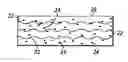
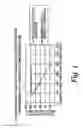
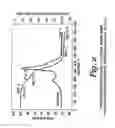
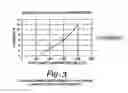
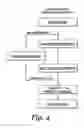
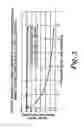
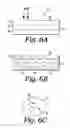
Sources:
- United States Patent and Trademark Office - verify current appl. status at the USPTO↗
Similar patent applications:
Recent applications in this class:
- » 20250236561 2025-07-24
PRECERAMIC RESINS AND POROUS POLYMER-DERIVED CERAMICS - » 20250197298 2025-06-19
PRECERAMIC RESINS AND POLYMER-DERIVED CERAMICS - » 20250178970 2025-06-05
Methods of Making SiC Boules and Wafers - » 20250109075 2025-04-03
PRECERAMIC POLYMER PRINTING BINDERS FOR ADVANCED CERAMICS - » 20250091958 2025-03-20
REFRACTORY MATERIALS - » 20250042820 2025-02-06
METHOD FOR MANUFACTURING A PART OF SIC/SIC COMPOSITE MATERIAL - » 20250034048 2025-01-30
RESIN FORMULATIONS AND RELATED ARTICLES AND METHODS - » 20240425418 2024-12-26
Extruded Ceramic Nanofibers and Derived Materials - » 20240300860 2024-09-12
REFRACTORY MATERIALS - » 20240190775 2024-06-13
PRECERAMIC 3D-PRINTING MONOMER AND POLYMER FORMULATIONS
Recent applications for this Assignee:
- » 20100324187 2010-12-23
Silicone resin composites for high temperature durable elastic composite applications and methods for fabricating same - » 20100320700 2010-12-23
Red Heat Exhaust System Silicone Composite O-Ring Gaskets and Method for Fabricating Same - » 20100319656 2010-12-23
Internal combustion (IC) engine head assembly combustion chamber multiple spark ignition (MSI) fuel savings device and methods of fabrication thereof