MICROBE MITIGATING ARCHITECTURAL BARRIERS, COMPOSITIONS FOR FORMING SUCH BARRIERS AND RELATED METHODS
US20120039977A1
2012-02-16
13/028,476
2011-02-16
Abstract:
The invention includes a microbe-mitigating architectural barrier that includes a barrier forming material, and at least one biocide. The barrier forming material may be a bitumen product, an elastomeric polymer and combinations thereof. The microbe-mitigating architectural barrier may be formed by applying an emulsion composition directly to an architectural surface, or it may be preformed and adhered or otherwise secured to the architectural surface in the form of a sheet or film.
The invention also includes architectural assemblies and/or building envelopes that include the microbe-mitigating barrier. Related methods are encompassed within the scope of the invention. Such methods include a method of preparing an architectural barrier that includes: (a) preparing an emulsion that comprises a barrier forming material chosen from a bitumen product, an elastomeric polymer and combinations thereof, and at least one biocide, (b) applying the emulsion to at least one architectural surface, and (c) drying and/and or curing the emulsion to form a barrier.
Inventors:
- John Dracopoulos 2 🇨🇦 Pierrefonds, Canada
- Lionel Borenstein 3 🇨🇦 Laval, Canada
- Shawn Melancon 2 🇨🇦 St-Jean-Sur-Richelieu, Canada
Interested in similar patents?
Get notified when new applications in this technology area are published.
Classification:
C09D5/14 » CPC main
Coating compositions, e.g. paints, varnishes or lacquers, characterised by their physical nature or the effects produced ; Filling pastes Paints containing biocides, e.g. fungicides, insecticides or pesticides
B32B7/12 » CPC further
Layered products characterised by the relation between layers; Layered products characterised by the relative orientation of features between layers, or by the relative values of a measurable parameter between layers, i.e. products comprising layers having different physical, chemical or physicochemical properties; Layered products characterised by the interconnection of layers; Interconnection of layers using interposed adhesives or interposed materials with bonding properties
B32B9/002 » CPC further
Layered products comprising a layer of a particular substance not covered by groups - comprising natural stone or artificial stone
B32B9/005 » CPC further
Layered products comprising a layer of a particular substance not covered by groups - comprising one layer of ceramic material, e.g. porcelain, ceramic tile
B32B9/043 » CPC further
Layered products comprising a layer of a particular substance not covered by groups - comprising such substance as the main or only constituent of a layer, next to another layer of a of natural rubber or synthetic rubber
B32B11/02 » CPC further
Layered products comprising a layer of bituminous or tarry substances with fibres or particles being present as additives in the layer
B32B11/042 » CPC further
Layered products comprising a layer of bituminous or tarry substances comprising such substance as the main or only constituent of a layer, next to another layer of a of wood
B32B11/046 » CPC further
Layered products comprising a layer of bituminous or tarry substances comprising such substance as the main or only constituent of a layer, next to another layer of a of synthetic resin
B32B11/10 » CPC further
Layered products comprising a layer of bituminous or tarry substances next to a fibrous or filamentary layer
B32B13/042 » CPC further
Layered products comprising a a layer of water-setting substance, e.g. concrete, plaster, asbestos cement, or like builders' material comprising such substance as the main or only constituent of a layer, next to another layer of a of natural rubber or synthetic rubber
B32B21/045 » CPC further
Layered products comprising a layer of wood, e.g. wood board, veneer, wood particle board comprising wood as the main or only constituent of a layer, next to another layer of a of natural rubber or synthetic rubber
B32B25/02 » CPC further
Layered products comprising natural or synthetic rubber with fibres or particles being present as additives in the layer
B32B25/10 » CPC further
Layered products comprising natural or synthetic rubber next to a fibrous or filamentary layer
B32B25/14 » CPC further
Layered products comprising natural or synthetic rubber comprising synthetic rubber copolymers
A01N25/24 » CPC further
Biocides, pest repellants or attractants, or plant growth regulators, characterised by their forms, or by their non-active ingredients or by their methods of application, e.g. seed treatment or sequential application ; Substances for reducing the noxious effect of the active ingredients to organisms other than pests containing ingredients to enhance the sticking of the active ingredients
A01N25/10 » CPC further
Biocides, pest repellants or attractants, or plant growth regulators, characterised by their forms, or by their non-active ingredients or by their methods of application, e.g. seed treatment or sequential application ; Substances for reducing the noxious effect of the active ingredients to organisms other than pests containing solids as carriers or diluents Macromolecular compounds
A01N25/34 » CPC further
Biocides, pest repellants or attractants, or plant growth regulators, characterised by their forms, or by their non-active ingredients or by their methods of application, e.g. seed treatment or sequential application ; Substances for reducing the noxious effect of the active ingredients to organisms other than pests Shaped forms, e.g. sheets, not provided for in any other sub-group of this main group
B32B27/08 » CPC further
Layered products comprising synthetic resin as the main or only constituent of a layer, next to another layer of a of synthetic resin
B32B27/18 » CPC further
Layered products comprising synthetic resin characterised by the use of special additives
C09D133/08 » CPC further
Coating compositions based on homopolymers or copolymers of compounds having one or more unsaturated aliphatic radicals, each having only one carbon-to-carbon double bond, and at least one being terminated by only one carboxyl radical, or of salts, anhydrides, esters, amides, imides, or nitriles thereof; Coating compositions based on derivatives of such polymers; Homopolymers or copolymers of esters of esters containing only carbon, hydrogen and oxygen, the oxygen atom being present only as part of the carboxyl radical Homopolymers or copolymers of acrylic acid esters
C09D133/10 » CPC further
Coating compositions based on homopolymers or copolymers of compounds having one or more unsaturated aliphatic radicals, each having only one carbon-to-carbon double bond, and at least one being terminated by only one carboxyl radical, or of salts, anhydrides, esters, amides, imides, or nitriles thereof; Coating compositions based on derivatives of such polymers; Homopolymers or copolymers of esters of esters containing only carbon, hydrogen and oxygen, the oxygen atom being present only as part of the carboxyl radical Homopolymers or copolymers of methacrylic acid esters
C09D133/20 » CPC further
Coating compositions based on homopolymers or copolymers of compounds having one or more unsaturated aliphatic radicals, each having only one carbon-to-carbon double bond, and at least one being terminated by only one carboxyl radical, or of salts, anhydrides, esters, amides, imides, or nitriles thereof; Coating compositions based on derivatives of such polymers; Homopolymers or copolymers of nitriles Homopolymers or copolymers of acrylonitrile
C09D133/26 » CPC further
Coating compositions based on homopolymers or copolymers of compounds having one or more unsaturated aliphatic radicals, each having only one carbon-to-carbon double bond, and at least one being terminated by only one carboxyl radical, or of salts, anhydrides, esters, amides, imides, or nitriles thereof; Coating compositions based on derivatives of such polymers; Homopolymers or copolymers of amides or imides Homopolymers or copolymers of acrylamide or methacrylamide
E04B1/66 » CPC further
Constructions in general; Structures which are not restricted either to walls, e.g. partitions, or floors or ceilings or roofs; Insulation or other protection; Elements or use of specified material therefor Sealings
B32B2262/062 » CPC further
Composition or structural features of fibres which form a fibrous or filamentary layer or are present as additives; Vegetal fibres Cellulose fibres, e.g. cotton
B32B2262/101 » CPC further
Composition or structural features of fibres which form a fibrous or filamentary layer or are present as additives; Inorganic fibres Glass fibres
B32B2264/0207 » CPC further
Composition or properties of particles which form a particulate layer or are present as additives; Synthetic macromolecular particles Particles made of materials belonging to
B32B2264/062 » CPC further
Composition or properties of particles which form a particulate layer or are present as additives; Vegetal particles Cellulose particles, e.g. cotton
B32B2264/10 » CPC further
Composition or properties of particles which form a particulate layer or are present as additives Inorganic particles
B32B2264/102 » CPC further
Composition or properties of particles which form a particulate layer or are present as additives; Inorganic particles Oxide or hydroxide
B32B2264/104 » CPC further
Composition or properties of particles which form a particulate layer or are present as additives; Inorganic particles Oxysalt, e.g. carbonate, sulfate, phosphate or nitrate particles
B32B2264/108 » CPC further
Composition or properties of particles which form a particulate layer or are present as additives; Inorganic particles; Ceramic Carbon, e.g. graphite particles
B32B2270/00 » CPC further
Resin or rubber layer containing a blend of at least two different polymers
B32B2307/7145 » CPC further
Properties of the layers or laminate; Other properties; Inert, i.e. inert to chemical degradation, corrosion Rot proof, resistant to bacteria, mildew, mould, fungi
B32B2307/724 » CPC further
Properties of the layers or laminate; Other properties Permeability to gases, adsorption
B32B2307/7242 » CPC further
Properties of the layers or laminate; Other properties; Permeability to gases, adsorption Non-permeable
B32B2307/726 » CPC further
Properties of the layers or laminate; Other properties Permeability to liquids, absorption
B32B2307/7265 » CPC further
Properties of the layers or laminate; Other properties; Permeability to liquids, absorption Non-permeable
B32B2419/04 » CPC further
Buildings or parts thereof Tiles for floors or walls
B32B2607/00 » CPC further
Walls, panels
E04B1/665 » CPC further
Constructions in general; Structures which are not restricted either to walls, e.g. partitions, or floors or ceilings or roofs; Insulation or other protection; Elements or use of specified material therefor; Sealings Sheets or foils impervious to water and water vapor
A01N43/40 » CPC further
Biocides, pest repellants or attractants, or plant growth regulators containing heterocyclic compounds having rings with one nitrogen atom as the only ring hetero atom six-membered rings
A01N47/12 » CPC further
Biocides, pest repellants or attractants, or plant growth regulators containing organic compounds containing a carbon atom not being member of a ring and having no bond to a carbon or hydrogen atom, e.g. derivatives of carbonic acid the carbon atom having one or more single bonds to nitrogen atoms; Carbamic acid derivatives, i.e. containing the group —O—CO—N<; Thio analogues thereof containing a —O—CO—N< group, or a thio analogue thereof, neither directly attached to a ring nor the nitrogen atom being a member of a heterocyclic ring
A01N59/20 IPC
Biocides, pest repellants or attractants, or plant growth regulators containing elements or inorganic compounds; Heavy metals; Compounds thereof Copper
A01N59/06 IPC
Biocides, pest repellants or attractants, or plant growth regulators containing elements or inorganic compounds Aluminium; Calcium; Magnesium; Compounds thereof
A01N47/10 IPC
Biocides, pest repellants or attractants, or plant growth regulators containing organic compounds containing a carbon atom not being member of a ring and having no bond to a carbon or hydrogen atom, e.g. derivatives of carbonic acid the carbon atom having one or more single bonds to nitrogen atoms Carbamic acid derivatives, i.e. containing the group —O—CO—N<; Thio analogues thereof
A01N31/16 IPC
Biocides, pest repellants or attractants, or plant growth regulators containing organic oxygen or sulfur compounds; Oxygen or sulfur directly attached to an aromatic ring system with two or more oxygen or sulfur atoms directly attached to the same aromatic ring system
A01P1/00 IPC
Disinfectants; Antimicrobial compounds or mixtures thereof
A01N55/02 IPC
Biocides, pest repellants or attractants, or plant growth regulators, containing organic compounds containing elements other than carbon, hydrogen, halogen, oxygen, nitrogen and sulfur containing metal atoms
A01N37/34 » CPC further
Biocides, pest repellants or attractants, or plant growth regulators containing organic compounds containing a carbon atom having three bonds to hetero atoms with at the most two bonds to halogen, e.g. carboxylic acids Nitriles
A01N25/08 IPC
Biocides, pest repellants or attractants, or plant growth regulators, characterised by their forms, or by their non-active ingredients or by their methods of application, e.g. seed treatment or sequential application ; Substances for reducing the noxious effect of the active ingredients to organisms other than pests containing solids as carriers or diluents
A01P3/00 IPC
Fungicides
A01N59/16 » CPC further
Biocides, pest repellants or attractants, or plant growth regulators containing elements or inorganic compounds Heavy metals; Compounds thereof
A01N43/00 IPC
Biocides, pest repellants or attractants, or plant growth regulators containing heterocyclic compounds
Description
CROSS REFERENCE TO RELATED APPLICATION
This patent application claims the benefit under 35 U.S.C. §119(e) of U.S. provisional patent application No. 61/305,402, filed Feb. 17, 2010, the entire disclosure of which is incorporated herein by reference.
BACKGROUND OF THE INVENTION
Often the walls or architectural elements of a building are exposed to moisture. Moisture and water or water vapor can collect on surfaces. Such moisture has several origins, such as, for example, water vapor diffusion and air leakage from the interior or exterior. Trapped or collected moisture within walls or other elements may bring adverse effects, including corrosion of the element or nearby structures, erosion of structural integrity and/or growth of mold or other microbes. The building industry has recognized that one means of reducing moisture collection is to control air leakage, i.e., to control the movement of air and water vapor through the building envelope. Under ordinary circumstances, the movement of air into a building (infiltration) and out of a building (exfiltration) may be caused by pressure differences produced by wind, stack or chimney effect and fan pressurization. Air leakage may follow such paths as holes or openings through the envelope, for example, cracks or joints between infill components and structural elements or through porous materials such as concrete block and porous insulation materials. Various formulations for barrier and films that serve to control air flow have been developed and have helped to reduce the moisture collection and associated problems to some degree.
Nonetheless, growth of mold and other microbes remains a problem, especially in humid geographies. However, no conventional architectural barriers have been formulated to address this problem. Thus, there remains a need in the art for an architectural barrier that functions to control air flow and simultaneously to reduce the growth of mold and/or other microbes.
BRIEF SUMMARY OF THE INVENTION
The invention includes a microbe-mitigating architectural barrier that includes a barrier forming material, and at least one biocide. The barrier forming material may be a bitumen product, an elastomeric polymer and combinations thereof. The microbe-mitigating architectural barrier may be formed by applying an emulsion composition directly to an architectural surface, or it may be preformed and adhered or otherwise secured to the architectural surface in the form of a sheet or film.
The invention also includes architectural assemblies and/or building envelopes that include the microbe-mitigating barrier. Related methods are encompassed within the scope of the invention. Such methods include a method of preparing an architectural barrier that includes: (a) preparing an emulsion that comprises a barrier forming material chosen from a bitumen product, an elastomeric polymer and combinations thereof, and at least one biocide, (b) applying the emulsion to at least one architectural surface, and (c) drying and/and or curing the emulsion to form a barrier.
Also included are methods of preparing an architectural assembly that includes an architectural element coated with the barrier of the invention.
The invention further provides an emulsion for use in the preparation of a microbe mitigating architectural barrier including water, a barrier forming material, and at least one biocide. In the emulsion, the barrier forming material may be a bitumen product, an elastomeric polymer and combinations thereof.
BRIEF DESCRIPTION OF THE SEVERAL VIEWS OF THE DRAWING(S)
The foregoing summary as well as the following detailed description of the invention, may be better understood when read in conjunction with the appended drawings. It should be understood that the invention is not limited to the precise arrangements and instrumentalities shown. In the drawings:
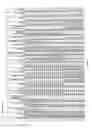
FIG. 1 is a Table of showing each of the compositions of Compositions 1-30 which were evaluated as described in Example 1; and
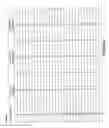
FIG. 2 is a Table showing data collected in the evaluation tests of the Compositions 1-30 shown in FIG. 1.
DETAILED DESCRIPTION OF THE INVENTION
The invention described herein includes architectural air barriers formulated to mitigate and/or substantially prevent microbe growth on or within an architectural structure, such as a wallboard, wall, joist or other structure. The invention also includes building envelopes and building assemblies that include the air barrier described herein, methods of preparing and using such barriers, and the emulsions that are used to prepare the barriers.
By “microbe mitigating”, it is meant that the emulsion and/or air barrier reduces a microbe population by direct cidal action, by substantial arrest of cell division or cellular respiration and/or any other mechanism of action; reduces the rate of proliferation of a microbe population; and/or substantially prevents the establishment of a microbe population on a surface to which the barrier or emulsion is applied; as compared to the same activity(ies) or a surface that does not bear the emulsion or barrier of the invention.
By “microbe” it is meant any of one or more prokaryotic or eukaryotic single or multi-celled organisms, including, for example, bacteria, molds, lichens, algaes, organisms of kingdom fungi (including yeasts), organisms conventionally regarded as protists, organisms of the kingdom formerly know as Monera, viruses, and amoebae.
By “effective amount,” it is meant an amount sufficient to prevent, eliminate, and/or reduce growth of a microbe population on a surface.
The barriers and emulsions of the invention include a barrier forming material. Any material that can be applied to a surface a form a barrier (permeable or impermeable, continuous or discontinuous) may be used. It may be preferred that the barrier forming material is a polymer (such term, when used herein, including both polymer of homogenous monomers and heterogeneous monomers (the latter often referred to as “copolymer”)), bitumen products, polymer modified bitumens (e.g., bitumens into which polymers are dispersed and reside within the bitumen matrix), and/or combinations of both.
If the selected barrier forming material includes a polymer, such polymers may be any known or developed in the art. Suitable examples may include any elastomeric polymers. Other examples may include polymers and/or copolymers of acrylates, methacrylates, acrylonitrile, acrylamides, methacrylamides, styrene-butadiene-styrene and mixtures thereof. In some embodiments, it may be preferred that polymer contains at least one functional group, such as, without limitation a vinyl group, a styrene group and/or urethane, olefin, hydroxyl, carboxyl, and acrylic.
Bitumen products may include, for example, an asphalt, tars, polymer modified bitumen and mixtures of the same. If an asphalt is included in the barrier or emulsion of the invention, it may be preferred that the asphalt has a penetration grade (“pen grade”) at 25° C., when tested according to ASTM method D 5, of about 0.5 to about 30, alternatively about 1 to about 20, or about 3 to about 15 (all at 25° C.). Similarly, it may be desirable that the selected asphalt has a softening point of about 62° C. to about 95° C.
Suitable polymer-modified bitumens may include, without limitation SBS-modified bitumens, and other polymer-modified bitumens, such as those modified by SIS, SEBS, SP and PB.
The emulsions and/or barriers of the invention additionally contain at least one biocide. Such biocide may be any known or developed in the art and may accomplish its cidal activity through any mechanical and/or cellular mechanism. For example, the selected biocide may mechanically or biochemically disrupt the cellular membrane or protein coating of the microbe, thereby killing it or restricting its ability to reproduce. Alternatively, the biocide(s) selected my inhibit the cellular respiration of one or more of the target microbes.
Exemplary biocides may include, without limitation silver-containing materials, gold-containing materials, aluminum-containing materials, copper-containing materials, fungicides, antimycotics, bactericides, viricides, carbamates, triclosan, or mixtures of the same. Commercially available fungicides include the POLYPHASE® series from Troy Chemical Corporation, Newark, N.J.; and the NUOCIDE® series available from International Specialty Products, Cranbury, N.J.
Depending on the end use of the barrier and/or emulsion, the specific biocide used may be targeted to the organisms that are likely to be encountered in the end use environment. For example, if the barrier is to be used as an architectural barrier or in part of a building envelope in a residentially or commercial building, the selected biocide(s) may include a fungicide or other antimycotic. If the barrier is to be used in a building that houses a food processing or storage facility or medical facility, the selected biocide(s) may include bactericides and/or viricides.
Regardless of the specific barrier forming material(s) and biocide(s) used in a given barrier or emulsions, the biocide should be present in the emulsion in an amount sufficient to exhibit a level of microbe mitigating activity when such emulsion is formed into an air barrier. As appreciated by one of ordinary skill in the art, such amount will necessarily be variable depending on numerous factors, such as the nature and number of other components present in the emulsion, the specific biocide(s) used, and the level of microbe mitigating activity desired in the end product.
However, in some circumstances, it may be desirable that the weight ratio of the barrier forming material(s) to the biocide(s) in the barrier is about 30 parts to about 1 part, about 40 parts to about 1 part, about 50 parts to about 1 part, about 60 parts to about 1 part, about 70 parts to about 1 part, about 80 parts to about 1 part, by weight. In some embodiments, it may be preferred that the ratio is from about 1:about 200 to about 1:about 2.
The barrier and or emulsion may include one or more additional additives. Additives may include water, other solvents, crumb rubber, latex, calcium carbonate, carbon black, bentonite, laponite, clay, quartz, silica, titanium dioxide, cellulose, and mixtures thereof. Other exemplary additives may include a flame retardant, adhesives, a colorant, a pigment, an odorant, petroleum distillates, styrene-butadiene-styrene (or other polymers), organotitantes, waxes, stabilizers, organic titanium compounds, organic zirconium compounds, and rheology modifiers.
Also included within the scope of the invention are building envelopes that include the microbe-mitigating barrier of the invention. Such envelopes can include those for residential structures, commercial structures, industrial structures and the like.
Architectural assemblies that include at least one architectural element that is coated with the microbe-mitigating barrier of the invention are also included. Architectural elements can include, without limitation, wallboard (inner and/or outer surfaces), stone, cement, frame wood structures, bricks or slabs, fiberglass, insulation, oriented strand boards, sheet rock, composite board, plywood, wood, tile, polymer sheets or films, doors, glass and ceramics.
An emulsion for use in the preparation of a microbe mitigating architectural barrier may include water (or other carrier), a barrier forming material as described above, and at least one biocide. Other additives, as described above, may be included. These emulsions may be prepared by any means known in the art and include incorporating the desired amounts of barrier forming material(s), biocide(s), a carrier (such as water) and, optionally, any other components together by agitation or mixing.
The above described barriers, assemblies and envelopes may be prepared by various procedures. For example, a barrier may be prepared by mixing an emulsion that comprises a barrier forming material and at least one biocide, as described above. The emulsion is applied to at least one architectural surface and permitted to dry or cure to form a barrier. Such application may be accomplished by any mechanism, including spraying; wiping; painting; blotting; and/or dip; brushing, immersion; or float coating. For example, the emulsion may be dried to form a barrier under ambient conditions or may be dried under heat (e.g., 30° C. or greater) and/or by application of air current (fanning or blowing). Architectural surfaces include any surface of any architectural element used in the fabrication of a building or structure (including exterior and interior elements), such as, for example, surfaces of wallboard, struts, frames, doors, window frames, stone or concrete blocks, wood, pipes, tubing, fiberboard, composite board, and the like.
Alternatively, the barrier may be prepared by applying (as described above) the emulsion to a detachable base substrate. Such substrate may be any material from which the barrier, once cured or dried may be detached, either mechanically or chemically. Examples of such substrates include for example, plates, rolls, foils, sheets, or slabs of fiberglass, wood, composite, stone, metal or paper. Optionally, the substrate may bear a pattern (such that the barrier prepared bears an embossed design, such as the manufacturer's trademark) and/or pre-coated with a material that facilitates detachment. Such materials may include, for example, oils, solvents, waxes, and non-stick polymers.
In another embodiment, the emulsion is prepared to have sufficient rhelogical properties such that the barrier sheets may be formed by rolling portions of the emulsion material into sheets and/or extruding the emulsion material into sheet, strip, or film.
Once the barrier sheet or film is prepared, it may be applied to the architectural surface by any means. For example, it may be staple, glued, heat or energy fused, tacked, and/or nailed. If desired, an adhesive layer may be applied to at least one surface of the barrier sheet or film prior to application, so that the barrier is self-adhering.
Example I
Compositions of the invention were evaluated to test the barriers' ability to resist and/or ameliorate growth of three types of fungi:
-
- (1) Aspergillus niger;
- (2) Penicillium citrinum; and
- (3) Averobasidium pullulans.
The evaluation was preformed using ASTM D3273 (2000) “Standard Test Method for the Resistance to Growth of Mold on the Surface of Interior Coatings In an Environmental Chamber,” §§7.1 to 7.3, attached hereto and the contents of which are incorporated hereby by reference. Panels measuring approximately 3″×4″ were prepared by brush coating Compositions 1-30 having the components shown in Table I.
As can be seen from Table I (shown in FIG. 1), three types of biocide were tested at 3 load levels:
-
- (i) Zinc Omadine®, a GRAS zinc complex of pyrithione, available from ARCH Chemicals, Inc. Norwalk, Conn. USA;
- (ii) TROYSAR® p-20t, a carbamate fungicide available from Troy Corporation, Florham Park, N.J., USA;
- (iii) Nuocide®, a form of tetrachloroisophthalonitrile, available from ISP, Cranbury N.J., USA.
Positive control specimen panels were prepared by inoculating the panels surfaces with (1) 1.0×10⁵ cfu/ml, Aspergillus niger, (2) 1.0×10⁵ cfu/ml Peniclliun citrinum, or (3) 1.0×10⁵ cfu/ml, Averobasidium pullulans.
Mold spores were prepared on slants using 25% non-ionic surfactant. Spores were broken up and placed in solution. The solution was poured over the soil and the mold was permitted to grow for two weeks. Controls were taken to verify the mold growth.
Specimen panels were brought to condition at 23° C.+/−2° C. with 50%+/−5% relative humidity for four days prior to testing. Specimen panels were hung above the soil mixtures containing the mold spores. The positive and negative specimens were also hung in the chamber. Specimen panels and controls were hung for 4 weeks and were periodically checked for growth during the incubation period.
After 4 weeks, a growth rating scale of 0-10 based on ASTM D3273 is taken. “0” indicated complete mold coverage; “10” indicates substantially no visible growth. The results are shown in Table 2 (FIG. 2).
Claims
We claim:1. A microbe-mitigating architectural barrier comprising:
a. a barrier forming material, and
b. at least one biocide, in an amount effective to mitigate microbes,
wherein the barrier forming material is chosen from a bitumen product, an elastomeric polymer and combinations thereof.
2. The barrier of claim 1, wherein the bitumen product is chosen from an asphalt, a tar and a polymer modified bitumen.
3. The barrier of claim 1, wherein the elastomeric polymer is an acrylic polymer.
4. The barrier of claim 1, wherein the elastomeric polymer is chosen from polymers of materials chosen from acrylates, methacrylates, acrylonitrile, acrylamides, methacrylamides, and mixtures thereof.
5. The barrier of claim 4, wherein the elastomeric polymer contains at least one functional group selected from a vinyl group, a styrene group and an olefin.
6. The barrier of claim 1, wherein the at least one biocide is chosen from silver-containing materials, gold-containing materials, aluminum-containing materials, carbamates, copper-containing materials, antimycotics, bacteriosides, virocides, triclosan, fungicides, and/or azoles.
7. The barrier of claim 1, wherein the at least one biocide is chosen from apyrithione complex and therachloro-isophthalonitrile.
8. The barrier of claim 1, wherein the weight ratio of barrier forming material to biocide is about 1:about 200 to about 1:about 2.
9. The barrier of claim 1, further comprising a component selected from crumb rubber, calcium carbonate, carbon black, bentonite, laponite, clay, quartz, silica, titanium dioxide, cellulose, and mixtures thereof.
10. The barrier of claim 1, further comprising a flame retardant, a colorant, a pigment, an odorant, petroleum distillates, and rheology modifiers.
11. The barrier of claim 1, further comprising styrene-butadiene-styrene.
12. The barrier of claim 1, wherein the barrier is pre-formed into a film or sheet prior to application to an architectural surface.
13. The barrier of claim 12, wherein the barrier film or sheet further comprises an adhesive layer.
14. The barrier of any of claim 1, wherein the barrier formed by application of an emulsion to the architectural surface and cured and/or dried.
15. The barrier of claim 1, wherein the barrier is permeable.
16. The barrier of claim 1, wherein the barrier is impermeable.
17. A building envelope comprising the architectural barrier of claim 1.
18. An architectural assembly comprising an architectural element coated with the architectural barrier of claim 1.
19. The assembly of claim 18, wherein the assembly is a wallboard.
20. The assembly of claim 20, wherein the wallboard is chosen from sheet rock, oriented strand board, and composite board.
21. A method of preparing an architectural barrier comprising:
a. preparing an emulsion that comprises a barrier forming material chosen from a bitumen product, an elastomeric polymer and combinations thereof, and at least one biocide,
b. applying the emulsion to at least one architectural surface, and
c. drying and/and or curing the emulsion to form a barrier.
22. A method of preparing an architectural barrier comprising:
a. preparing an emulsion that comprises a barrier forming material chosen from a bitumen product, an elastomeric polymer and combinations thereof, and at least one biocide,
b. applying the emulsion to a substrate.
23. The method of claim 22, wherein the substrate is an architectural surface.
24. The method of claim 22, wherein the substrate is a detachable base substrate and the method further includes applying the emulsion to the detachable base substrate to form a film or sheet for application to an architectural surface and detaching the film or sheet from the substrate.
25. The method of claim 24, further comprising applying an adhesive layer to the film or sheet.
26. The method of claim 22, wherein the bitumen product is chosen from an asphalt, tar and polymer modified bitumen.
27. The method of claim 22, wherein the elastomeric polymer is an acrylic polymer.
28. The method of claim 22, wherein the elastomeric polymer is chosen from polymers of materials chosen from acrylates, methacrylates, acrylonitrile, acrylamides, methacrylamides, and mixtures thereof.
29. The method of claim 22, wherein the elastomeric polymer contains at least one functional group selected from a vinyl group, a styrene group and an olefin.
30. The methods of claim 22, wherein the at least one biocide is chosen from silver-containing materials, gold-containing materials, aluminum-containing materials, carbamates, copper-containing materials, antimycotics, bacteriosides, virocides, triclosan, fungicides.
31. The method of claim 22, wherein the weight ratio of BFM to biocide is about 1:about 200 to about 1:about 2.
32. The method of claim 22, wherein the emulsion further comprises a component selected from crumb rubber, calcium carbonate, carbon black, bentonite, laponite, clay, quartz, silica, titanium dioxide, cellulose, and mixtures thereof.
33. The methods of claim 22, wherein the emulsion further comprises a flame retardant, a colorant, a pigment, an odorant, petroleum distillates, and rheology modifiers.
34. The method of claim 22, wherein the emulsion further comprises SBS.
35. An emulsion for use in the preparation of a microbe mitigating architectural barrier comprising:
a. water,
b. a barrier forming material, and
c. at least one biocide,
wherein the barrier forming material is chosen from a bitumen product, an elastomeric polymer and combinations thereof.
36. The emulsion of claim 35, wherein water is present in an amount of about 50% or less, the barrier forming material is present in an amount of about 20% to about 90%, and biocide in an amount of about 0.01 to about 1%.
37. The emulsion of claim 35, wherein the bitumen product is chosen from an asphalt, tar and polymer modified bitumen.
38. The emulsion of claim 35, wherein the elastomeric polymer is an acrylic polymer.
39. The emulsion of claim 35, wherein the elastomeric polymer is chosen from polymers of materials chosen from acrylates, methacrylates, acrylonitrile, acrylamides, methacrylamides, and mixtures thereof.
40. The emulsion of claim 35, wherein the elastomeric polymer contains at least one functional group selected from a vinyl group, a styrene group, and an olefin.
41. The emulsion of claim 35, wherein the at least one biocide is chosen from silver-containing materials, gold-containing materials, aluminum-containing materials, carbamates, copper-containing materials, antimycotics, bacteriosides, virocides, triclosan, fungicides, and/or azoles.
42. The emulsion of claim 35, further comprising a component selected from crumb rubber, calcium carbonate, carbon black, bentonite, laponite, clay, quartz, silica, titanium dioxide, cellulose, and mixtures thereof.
43. The emulsion of claim 35, further comprising a flame retardant, a colorant, a pigment, an odorant, petroleum distillates, and rheology modifiers.
44. The emulsion of claim 35, further comprising SBS.
Images & Drawings included:
Sources:
- United States Patent and Trademark Office - verify current appl. status at the USPTO↗
Similar patent applications:
Recent applications in this class:
- » 20250136826 2025-05-01
ANTIVIRAL COATING COMPOSITION, COATING FILM, AND ARTICLE - » 20250136825 2025-05-01
METHOD FOR PREPARING ANTIBACTERIAL AND FRESH-KEEPING FRUIT-PACKAGING MATERIAL THROUGH THREE-DIMENSIONAL PRINTING - » 20250084255 2025-03-13
ANTI-MICROBIAL SURFACES AND RELATED METHODS - » 20250066620 2025-02-27
WATER-BORNE HYBRID VARNISH AND THE METHOD OF ITS PREPARATION - » 20250059383 2025-02-20
ANTIMICROBIAL SURFACE WITH CONDUCTIVE PARTICLES - » 20240425707 2024-12-26
HYDROPHOBIC BIOCIDAL LAYER - » 20240417571 2024-12-19
AIR PURIFYING COATING SYSTEM AND METHOD FOR MAKING SAME - » 20240400839 2024-12-05
Textile coating composition that reduces and/or prevents microbial growth and/or control odor(s) for prolonged time periods - » 20240384112 2024-11-21
Composition With Antimicrobial Properties, In Particular Biocidal Properties, for Surface Coatings of Wood-Based Panels - » 20240376324 2024-11-14
ANTIBACTERIAL COATING AND USE THEREOF