Phytophthora Nejat-Spina
US20120042423P1
2012-02-16
12/931,128
2011-01-24
Abstract:
This project is related to the inventor, Najmeh (Setareh) Nejat, Master of Science thesis. During the research, Phytophthora Nejat-Spina was discovered as a new species in the kingdom of Stramenopila, phylum of Oomycota, class of Pythiales, genus of Phytophthora, and belong to the family of Pythiaceae. Phytophthora Nejat-Spina is a plant symptoms, detected as a root rot in sapling of Ziziphus spina-christi, a plant that is growing up in a small town “Kazeroon” in state of Fars in Iran. Phytophthora Nejat-Spina has genome sequence similarities with Phytophthora arecae and Phytophthora palmivora, and has morphological similarities with spices Phytophthora Porri, Phytophthora Sojae, and Phytophthora Megasperma, but the microbiology results showed a lots of differences with them, a comparison charts are also provided in the upcoming pages.
Assignee:
- Najmeh Nejat 1 🇺🇸 Los Angeles, CA, United States
Interested in similar patents?
Get notified when new applications in this technology area are published.
Classification:
A01H15/00 IPC
Fungi; Lichens
Description
CHAPTER 1
Introduction
1.1 Definition of Phytophthora Nejat-Spina
Phytophthora Nejat-Spina is a plant symptoms, detected as a root rot in sapling of Ziziphus spina-christi, a plant that is growing up in a small town “Kazeroon” in state of Fars in Iran. Phytophthora Nejat-Spina was discovered as a new species in the kingdom of Stramenopila, phylum of Oomycota, class of Pythiales, genus of Phytophthora, and belong to the family of Pythiaceae.
1.2 Microbiological Characteristics
Sporangium
-
- papilla
- Sporangium papilla is long papilla and Positive and varies from 2.87 to 12 μm.
- shape
- varying form, ovoid to broadly ellipsoid, ovoid-sphericale. One apex. Caducous sporangia.
- size
- The length changes from 34 to 58.88 μm and the width changes from 19.62 to 36.37 μm.
Sporangiophore
-
- Sporangiophore is simple sympodium, external proliferation, un-branched, and sometimes botryose clump Sporangiophore.
Chlamydospores
-
- Production
- They are terminal Chlamydospores.
- size
- Varying from 20.92 to 38.58 μm.
- wall thickness
- There is no data
Sex Organs
-
- This Spices is homotallic. Oogonia are small globose with tapered base. The antheridia are amphigynous and average 10.36 to 16.38 μm. Also anthridia are paragunous and average 7.99 to 9.82 μm with club shaped for paragynous and spherical shapes for amphigynous.
1.3 Special Characteristics
Multi antherudia
-
- it is very unique.
Oospores
-
- Range from 29.42×31.54 μm. The Oospores for this species is aplerotic.
| TABLE 1.1 |
| Diseases caused by Phytophthora Nejat-Spina; positive |
| means occupance and negative means not occupance |
| Range of hosts | Disease | |
| Malus Domestica | Negative | |
| Juglans regia | Negative | |
| Prunus Sp | Negative | |
| Prunus dulcis | Negative | |
| Lycopesicum esculentum | Positive | |
| Pistacia vera | Positive | |
| Citrus aurantum | Positive | |
| Mespilus germanica | Positive | |
| Vicia Sativa | Positive | |
| Cucurbita pepo | Positive | |
| Solanum melongena | Positive | |
| Solanum tuberosum (potato) | Positive | |
| Cucamis Sativas (Cucamber) | Positive | |
1.4 Symptoms Indications in Some Plants
In the table 1.1 the occupance of Phytophthora Nejat-Spina has been investigated and were shown. Sporangiophore is simple sympodium, external proliferation, un-branched, and sometimes botryose clump Sporangiophore.
Sporangium
-
- papilla
- Sporangium papilla is long papilla and Positive and varies from 2.87 to 12 μm.
- shape
- varying form, ovoid to broadly ellipsoid, ovoid-sphericale. One apex. Caducous sporangia.
- size
- The length changes from 34 to 58.88 μm and the width changes from 19.62 to 36.37 μm.
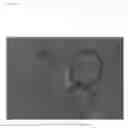
Picture scale 400 times of real size. Range from 29.42×31.54 μm. The Oospores for this species is aplerotic.
1.5 Comparison
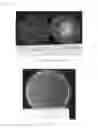
In the FIG. 2.1, the Phytophthora Nejat-Spina is compared with two other spices Phytophthora arecae and Phytophthora palmivora. In the FIG. 2.2, the Phytophthora Nejat-Spina is compared with three other spices Phytophthora Porri, Phytophthora Sojae, and Phytophthora Megasperma.
LIST OF FIGURES
2.1 Comparing the Phytophthora Nejat-Spina with two other spices Phytophthora arecae and Phytophthora palmivora.
2.2 Comparing the Phytophthora Nejat-Spina with three other spices Phytophthora Porri, Phytophthora Sojae, and Phytophthora Megasperma.
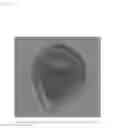
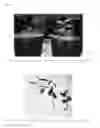
3.1 Sporangium with medium pedicle in solid media, picture scale 400 times of real size.
3.2 Illustration of sporangium in sterile water with cannabis.
3.3 Illustration of sporangium in sterile water with cannabis.
3.4 Illustration of sporangium in sterile water with cannabis.
3.5 Illustration of Long papilla sporangium in sterile water with cannabis.
3.6 Illustration of Sporangium with medium pedicle in solid media with chlamidospore.
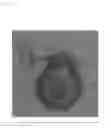
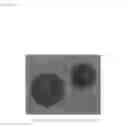
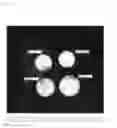
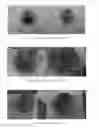
4.1 Illustration of Oospores with amphigynous antheridium in Carrot Agar media.
4.2 Illustration of chlamidospore with hyphal swelling at the bottom).
4.3 Illustration of Oogonia with tapered base.
4.4 Illustration of Oospor with paragynous antheridium.
4.5 Illustration of Aplerotic Oospores.
4.6 Illustration of Oospor with multi paragynous antheridium (that is very unique between Phytophthora's species).
4.7 Illustration of Oospor with paragynous antheridium.
4.8 Illustration of Oospor with multi paragynous antheridium (that is very unique between Phytophthora's species).
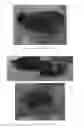
5.1 Illustration of terminal chlamidospore.
5.2 Illustration of terminal chlamidospore.
5.3 Illustration of terminal chlamidospore.
5.4 Illustration of chlamidospore and sporangium that observed in hem seed agar together.
5.5 Illustration of hyphal swelling.
5.6 Illustration of hyphal swelling.
5.7 Illustration of hyphal swelling.
5.8 Illustration of mycelium.
5.9 Illustration of mycelium.
5.10 Illustration of mycelium.
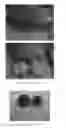
6.1 Illustration of cultivation samples.
6.2 Illustration of cultivation sample.
6.3 Illustration of cultivation samples, from left: 1—hemp seed agar, 2—carrot agar, 3—water agar.
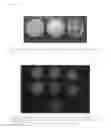
6.4 Illustration of cultivation samples, from up left: CMA (CORN MEDIA AGAR), CA (CARROT AGAR), PCA (POTATO CARROT AGAR), HAS (HEMP SEED AGR), WA (WATER AGAR), PARP-CMA, PDA (POTATO AGAR).
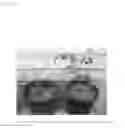
6.5 Illustration of affects of Phytophthora Nejat-Spina on Zucchini, in above pictures the upright is a healthy Zucchini and the rest of them are affected by Phytophthora Nejat Spina.
6.6 Illustration of affects of Phytophthora Nejat-Spina on eggplant.
6.7 Illustration of affects of Phytophthora Nejat-Spina on potato.
6.8 Illustration of affects of Phytophthora Nejat-Spina on tomato plant.
6.9 Illustration of affects of Phytophthora Nejat-Spina on tomato plant.
6.10 Illustration of affects of Phytophthora Nejat-Spina on tomato plant.
6.11 Illustration of affects of Phytophthora Nejat-Spina on Mespilus germanica plant.
6.12 Illustration of affects of Phytophthora Nejat-Spina on Christ-thorn plant.
6.13 Illustration of before of affects of Phytophthora Nejat-Spina on Christ-thorn plant, they are healthy.
6.14 Illustration of affects of Phytophthora Nejat-Spina on Christ-thorn plant.
6.15 Illustration of affects of Phytophthora Nejat-Spina on Christ-thorn plant.
6.16 Illustration of affects of Phytophthora Nejat-Spina on Christ-thorn plant.
6.17 Illustration of affects of Phytophthora Nejat-Spina on Christ-thorn plant.
6.18 Illustration of affects of Phytophthora Nejat-Spina on pistachio plant.
Claims
1. Phytophthora Nejat-Spina
Images & Drawings included:



























Sources:
- United States Patent and Trademark Office - verify current appl. status at the USPTO↗
Recent applications in this class:
- » 20240292771 2024-08-29
Campanula plant named 'Twilight' - » 20240251691 2024-07-25
HYDRANGEA PLANT NAMED 'HYLV17520' - » 20240251690 2024-07-25
Vaccinium Plant Named 'BWPBLUE02' - » 20240251689 2024-07-25
BLUEBERRY PLANT NAMED 'FC13-113' - » 20240251688 2024-07-25
BLUEBERRY PLANT NAMED 'FCM14-057' - » 20240237567 2024-07-11
PONGAMIA VARIETIES - » 20240224827 2024-07-04
PELARGONIUM PLANT NAMED 'PEQZ0103' - » 20240215470 2024-06-27
Agapanthus plant named 'Monsapho' - » 20240215469 2024-06-27
plant named ‘LOCORA3519’ - » 20240206359 2024-06-20
CORYLUS PLANT NAMED 'BWM01'