Device and method for automatically connecting two workpieces
US20120055009A1
2012-03-08
13/263,095
2010-04-07
✅ Patent granted
US 8,776,354 B2
2014-07-15
WO; PCT/DE2010/000395; 20100407
WO; WO2010/115411; 20101014
Alexander P Taousakis | Matthew P Travers
Collard & Roe, P.C.
2030-09-17
Abstract:
The invention relates to a device and a method for automatically connecting two workpieces by means of fasteners, the device having a magazine for receiving the fasteners. In order to improve a device for automatically connecting two workpieces to the effect that supplying the fasteners is less personnel- and cost-intensive, the invention proposes that a fastener nest (7) be provided whose lower side can be coupled to the upper side of the magazine, the fastener nest comprising openings for inserting the fasteners and the openings being blockable and unblockable at their lower ends. Compared to the prior art, this solution is more economical and reduces cycle time.
Inventors:
- Armin Herrmann 3 🇩🇪 Riegelsberg, Germany
- Christian BRACH 2 🇫🇷 Wiesviller, France
- Brian Berry 1 🇩🇪 Saarbruecken, Germany
- Sacha Arend 1 🇫🇷 Dalem, France
Assignee:
- DUERR ASSEMBLY PRODUCTS GMBH 2 🇩🇪 Puettlingen, Germany
Applicant:
Interested in similar patents?
Get notified when new applications in this technology area are published.
Classification:
B23P19/001 » CPC main
Machines for simply fitting together or separating metal parts or objects, or metal and non-metal parts, whether or not involving some deformation ; Tools or devices therefor so far as not provided for in other classes Article feeders for assembling machines
B21J15/32 » CPC further
Riveting; Riveting machines; Particular elements, e.g. supports; Suspension equipment specially adapted for portable riveters Devices for inserting or holding rivets in position with or without feeding arrangements
B23P19/006 » CPC further
Machines for simply fitting together or separating metal parts or objects, or metal and non-metal parts, whether or not involving some deformation ; Tools or devices therefor so far as not provided for in other classes; Article feeders for assembling machines Holding or positioning the article in front of the applying tool
Y10T29/49947 » CPC further
Metal working; Method of mechanical manufacture; Assembling or joining by applying separate fastener
Y10T29/49963 » CPC further
Metal working; Method of mechanical manufacture; Assembling or joining by applying separate fastener Threaded fastener
Y10T29/53 » CPC further
Metal working Means to assemble or disassemble
Y10T29/53478 » CPC further
Metal working; Means to assemble or disassemble with magazine supply
B23P17/00 IPC
Metal-working operations, not covered by a single other subclass or another group in this subclass
B23P19/00 IPC
Machines for simply fitting together or separating metal parts or objects, or metal and non-metal parts, whether or not involving some deformation ; Tools or devices therefor so far as not provided for in other classes
B23P19/06 » CPC further
Machines for simply fitting together or separating metal parts or objects, or metal and non-metal parts, whether or not involving some deformation ; Tools or devices therefor so far as not provided for in other classes for assembling or disassembling parts Screw or nut setting or loosening machines
B23P11/00 IPC
Connecting or disconnecting metal parts or objects by metal-working techniques not otherwise provided for
B23Q7/10 IPC
Arrangements for handling work specially combined with or arranged in, or specially adapted for use in connection with, machine tools, e.g. for conveying, loading, positioning, discharging, sorting by means of magazines
Description
The invention relates to a device and a method for automatically connecting two workpieces by means of fasteners, said device having a magazine for receiving the fasteners.
Devices of this kind are used in motor-vehicle production, for example during “marriage” operations involving the bolting together of body and chassis. The invention is described below on the basis of this typical application, to which, however, it is not restricted. On the contrary, it may be used in all areas in which two workpieces are joined automatically by means of fasteners.
For bolting purposes, it is familiar practice to use extension spindles in a bolting station. The bolts are inserted into the extension spindles in advance by workers while setting up the equipment. This procedure, however, necessitates providing pallets with an extension spindle for every bolting point, incurring high pallet costs. The total number of extension spindles increases with the number of pallets in the marriage system, in turn pushing up the cost of the overall system. With mixed-type operations involving the use of different bolts, the complexity of the pallets increases. This increase in pallet complexity may, in turn, necessitate use of a pallet-switching system with conveying and pallet storage means. An additional vehicle type also necessitates new pallets, which incurs costs and is time-consuming.
According to alternative prior art, workers setting up the equipment screw the bolts into a stationary “pallet nest” provided with threaded holes. In the bolting station, a robotic tool unscrews the bolts one after the other and inserts them into the body. Here too, workers setting up the equipment have to screw the bolts into the pallet nest, a repetitive task which is also relatively time-consuming. Moreover, the robotic tool then has to unscrew the bolts again from the pallet nest, requiring a certain degree of cycle time.
The object of this invention is to improve a device and a method for automatically connecting two workpieces to the effect that supplying the fasteners is less personnel- and cost-intensive.
This object is established according to the invention for a device according to the preamble by provision of a fastener nest whose lower side can be coupled with the upper side of the magazine, the fastener nest comprising openings for inserting the fasteners and said openings being blockable and unblockable at their lower ends.
With this device, it is merely necessary to insert the fasteners into the openings of the fastener nest and then to transfer them to the magazine by unblocking the openings. The invention offers a multiplicity of advantages over the prior art, in particular the following:
-
- A shorter cycle time is needed than when the fasteners are screwed into and out of the nest, since now all the fasteners can be transferred in one operation,
- The bolts are sorted at the same time as the equipment moves to the respective bolting position, again reducing cycle time,
- Pallet complexity is reduced and the extension spindles on the pallets are superfluous, enhancing flexibility and cutting costs,
- The fastener nest may be positioned on the pallet or at the bolting station, enhancing flexibility and cutting costs, and
- The device may be used to connect two workpieces positioned arbitrarily in space.
According to the invention, the fasteners may be screws, bolts, pins, nuts or rivets.
A preferred embodiment of the invention consists in that, for coupling the fastener nest to the magazine, the magazine is provided with a pin that corresponds to a central opening in the fastener nest.
An alternative method of coupling the fastener nest to the magazine may consist in providing the fastener nest with a pin that corresponds to a central opening in the magazine.
It is within the scope of the invention that means are provided for supplying the fastener nest automatically with fasteners.
The nest may be supplied not only manually but also automatically, which may enhance flexibility and reduce unit cost.
The scope of the invention also includes a method for automatically connecting two workpieces by means of fasteners, involving the following steps:
-
- Inserting the fasteners into a fastener nest, the fastener nest having, for insertion of the fasteners, openings that can be blocked and unblocked at their lower ends,
- Coupling the fastener nest to a magazine for receiving the fasteners,
- Unblocking the openings in the fastener nest and thereby transferring the fasteners to the magazine.
A refinement of the invention consists in the following additional step:
-
- Clamping and positioning the fasteners in the magazine.
An embodiment of the invention is described below by reference to drawings.
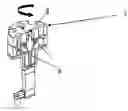
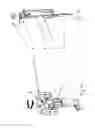
FIG. 1a and FIG. 1b show an overall and a detailed view of the device according to the invention
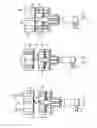
FIG. 2a, FIG. 2b and FIG. 2c show an automatic bolting process using a device according to the invention.
As is evident from FIG. 1a, a device according to the invention has a rotatable magazine 1 for fasteners, under which a screw spindle 2 is positioned. The latter can be aligned at any one time with an opening 3 in the magazine 1. FIG. 1a also shows a lifting unit 4 and the fastening (here bolting) tool 5. In the example shown here, the magazine 1 has four openings 3 into which fasteners 6 (here bolts) can be received, clamped and positioned.
A fastener nest 7 is also shown, which can be coupled to the magazine 1. In this example, the fastener nest 7 is coupled to the magazine 1 by means of a pin 8 in the magazine 1. The pin 8 engages a central opening 9 in the fastener nest 7. The fastener nest 7 preferably has the same number of openings 10 as the magazine 1.
FIGS. 2a to 2c show the individual steps involved. As is evident from FIGS. 2a and 2b, the fasteners 6, in this case bolts, are inserted manually or automatically into the openings 10 of the fastener nest 7. To start with, the openings 10 in the fastener nest 7 are blocked at the bottom.
As shown in FIG. 2c, the openings in the fastener nest 7 are then unblocked at the bottom of the fastener nest 7, allowing the fasteners 6 to slide into the magazine 1, where they are clamped and positioned, As the equipment moves to the respective bolting position, the fasteners 6 are sorted and supplied to the bolting tool 5, which then executes the respective bolted connection.
Claims
1: Device for automatically connecting two workpieces by means of fasteners (6), said device having a magazine (1) for receiving the fasteners (6), wherein a fastener nest (7) is provided whose lower side can be coupled to the upper side of the magazine (1), the fastener nest (7) comprising openings (10) for inserting the fasteners (6) and said openings (10) being blockable and unblockable at their lower ends.
2: Device according to claim 1, wherein the fasteners (6) are screws, bolts, pins, nuts or rivets.
3: Device according to claim 1, wherein, for coupling the fastener nest (7) to the magazine (1), the magazine (1) is provided with a pin (8) that corresponds to a central opening (9) in the fastener nest (7).
4: Device according to claim 1, wherein, for coupling the fastener nest (7) to the magazine (1), the fastener nest (7) is provided with a pin (8) that corresponds to a central opening (9) in the magazine (1).
5: Device according to claim 1, wherein means are provided for supplying the fastener nest (7) automatically with fasteners.
6: Method for automatically connecting two workpieces by means of fasteners (6), comprising the following steps:
Inserting the fasteners (6) into a fastener nest (7), the fastener nest (7) having, for insertion of the fasteners (6), openings (10) that can be blocked and unblocked at their lower ends,
Coupling the fastener nest (7) to a magazine (1) for receiving the fasteners (6),
Unblocking the openings in the fastener nest (7) and thereby transferring the fasteners (6) to the magazine (1).
7: Method according to claim 6, comprising the following additional step:
Clamping and positioning the fasteners (6) in the magazine (1).
Images & Drawings included:
Sources:
- United States Patent and Trademark Office - verify current appl. status at the USPTO↗
Recent applications in this class:
- » 20250153288 2025-05-15
AUTOMATIC SUPPLY AND ASSEMBLY DEVICE FOR FASTENERS - » 20240181579 2024-06-06
FASTENER DELIVERY SYSTEM - » 20240139893 2024-05-02
AUTO FEED FASTENER TOOL - » 20230294222 2023-09-21
Article selection and placement assembly - » 20220234152 2022-07-28
Device for distributing clip-type components - » 20220193838 2022-06-23
Automation cell which can be loaded automatically and manually - » 20210237213 2021-08-05
Article selection and placement assembly and method - » 20200406407 2020-12-31
Automated electromagnetic fastener delivery system - » 20200282498 2020-09-10
Full-automatic storage shelf assembly production line and operation method thereof - » 20200206852 2020-07-02
Method and device for furnishing screws
Recent applications for this Assignee:
- » 20110271749 2011-11-10
Device and method for determining and adjusting the chassis geometry of a vehicle