Device for feces collection
US20120073038A1
2012-03-29
12/924,520
2010-09-29
✅ Patent granted
US 8,136,175 B1
2012-03-20
-
-
Huyen Le | Erin Deery
2030-09-29
Abstract:
A device for the collection of feces samples for laboratory diagnostic tests includes an upper layer and a lower layer, both with a semicircular or rectangular front end, and a rectilinear extension that extends toward the rear end. The upper layer has a round opening close to the front end. The lower layer has a plurality of small holes concentric to the round opening in the upper layer.
Interested in similar patents?
Get notified when new applications in this technology area are published.
Classification:
A61B10/0038 » CPC main
Other methods or instruments for diagnosis, e.g. instruments for taking a cell sample, for biopsy, for vaccination diagnosis ; Sex determination; Ovulation-period determination ; Throat striking implements Devices for taking faeces samples; Faecal examination devices
A47K11/00 IPC
Closets without flushing ; Urinals without flushing ; Chamber pots; Chairs with toilet conveniences or specially adapted for use with toilets
A61M1/00 IPC
Suction or pumping devices for medical purposes; Devices for carrying-off, for treatment of, or for carrying-over, body-liquids; Drainage systems
A47K11/06 IPC
Closets without flushing ; Urinals without flushing ; Chamber pots; Chairs with toilet conveniences or specially adapted for use with toilets Chamber-pots
G01N15/06 IPC
Investigating characteristics of particles; Investigating permeability, pore-volume, or surface-area of porous materials Investigating concentration of particle suspensions
A47K11/04 IPC
Closets without flushing ; Urinals without flushing ; Chamber pots; Chairs with toilet conveniences or specially adapted for use with toilets Room closets; Chairs with toilet conveniences or specially adapted for use with toilets, e.g. night chairs ; Closets for children, also with signalling means, e.g. with a music box, or the like
Description
The following application refers to a constructive apparatus applied to an auxiliary device for the collection of feces samples for laboratory diagnostic tests.
The referred invention is destined to users of clinical analysis laboratories, health centers, hospitals, geriatric or pediatric clinics, in addition to be a disposable and biodegradable product. It was conceived to complement the collection of individuals with special needs who, for some reason, face difficulties and discomfort at the moment of collection, especially the elders, children and the physically disabled.
It provides comfort and hygiene, avoiding embarrassing situations and mainly contamination of collected residues.
PRIOR ART
The collectors currently used consist mainly of a sterilized container, in which the patient must dispose the feces sample to be submitted to laboratorial analysis, and there is also a lack of adequate auxiliary means to help the patient to collect the material safely, without contaminating the sample to be analyzed. The inconvenient is aggravated with children, the elders and the physically disabled that face difficulties as they need to assume uncomfortable positions.
In face of these inconveniences, the present invention was developed to help the patient at the moment of collection.
BRIEF DESCRIPTION OF THE DRAWINGS
The present invention will be further explained in details with the accompanying drawings, where:
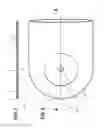
FIG. 1 illustrates a cross sectional view of the auxiliary device for collection (1), object of the present invention;
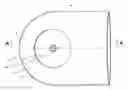
FIG. 2 illustrates a top view of the auxiliary device for collection (1) of the present invention;
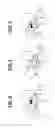
FIG. 3 illustrates a schematic perspective view, showing the placing of the auxiliary device for collection (1) in the toilet seat;
FIG. 4 illustrates a schematic perspective view, showing the collection of the sample by the user, removed with the auxiliary device for collection (1);
FIG. 5 illustrates a schematic perspective view, showing the removal of the auxiliary device for collection (1) of the toilet seat.
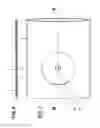
FIG. 6 illustrates a schematic a cross sectional view, showing a preferred construction of the auxiliary device for collection, according to this application; and
FIG. 7 illustrates a top view of a variation of a preferred construction of the auxiliary device for collection (1), according to this application.
DETAILED DESCRIPTION OF THE INVENTION
According to FIGS. 1 and 2, the auxiliary device for collection (1) includes an upper layer (2) of semicircular format in its front end (3) with a rectilinear extension (4) that extends toward the rear end (5) of the auxiliary device (1). The said auxiliary device (1) presents a round opening (6) in the upper layer (2) close to the semicircular front end (3).
In the lower part of the auxiliary device (1), there is a lower layer (7) identical to the upper layer (2), comprising a small holes (61) concentric to the round opening (6) in the upper layer (2), except for the fact that this lower layer (7) does not present the opening (6).
The material preferably employed for the manufacture of the auxiliary device for collection (1) is high-density polyethylene (HDPE), however, other materials with similar characteristics may be used. The upper layer (2) is attached to the lower layer (7) by their outer peripheral edges, through conventional processes of welding. The rear end edges (5) of both layers are not attached by welding. This way, a covering with a rounded front end (3) with a rectilinear extension (4) in the rear part and with an opening in the rear end (5), which consists in the auxiliary device for collection of feces (1), is obtained.
The use of the auxiliary device for collection (1) consists of covering the toilet seat with the device through the opening of the rear end (5), in a way that the opening (6) faces the upper part of the toilet seat (FIG. 3). This allows the individual, in a practical way to comfortably use the auxiliary device for collection (1), as the material to be collected for further analysis will be deposited over upper layer (2) without the liquid, that flows away through the small holes (61) disposed in a way to allow the excess o liquid to be drained off, thus letting the collection of a small sample through the opening (6), by means of a spatula or spoon provided with the universal collecting container destined to retain the sample for analysis (FIG. 4).
In a functional way, the remaining feces can be discarded in the toilet or removed with the auxiliary device (1) that will be thrown away or discarded in an appropriate excrement collecting container (FIG. 5).
According to FIGS. 6 and 7, in an alternative construction, the auxiliary device for collection (1) comprehends a upper layer (2′) attached to the lower layer (7′), both in a rectangular shape, by their outer peripheral edges (4′), through conventional processes of welding, excepting the rear end edges (5) of both layers (2′ and 7′).
It is evident that the auxiliary device for collection (1) proposed in the present invention provides a better application both in its use and manufacture, as it is an easy-to-use and low cost article. In addition, the auxiliary device for collection (1) is provided after sterilization, which will certainly allow the collection of samples free from contaminants that could interfere with the tests outcomes.
Claims
1-2. (canceled)
3. A device for feces collection, comprising:
an upper layer with a semicircular front end, a rectilinear extension that extends toward a rear edge, and a round opening adjacent the semicircular front end;
a lower layer having a semicircular front end, a rectilinear extension that extends toward a rear edge and a plurality of holes concentric to the round opening in the upper layer,
wherein the upper layer is attached to the lower layer by their outer peripheral edges through welding, and wherein the rear edges of both layers remain unattached.
4. A device for feces collection, comprising:
a rectangular upper layer having a front end, a rear edge and a round opening adjacent the front end;
a rectangular lower layer having a front end, a rear edge and a plurality of holes concentric to the round opening in the upper layer,
wherein the upper layer is attached to the lower layer by their outer peripheral edges through welding, and wherein the rear edges of both layers remain unattached.
Images & Drawings included:
Sources:
- United States Patent and Trademark Office - verify current appl. status at the USPTO↗
Similar patent applications:
- » 10947502
Animal feces collection device - » 12797809
Pet feces collection device - » 13030664
Animal feces collection device - » 15156461
Dog feces collection device - » 20060213456
Animal feces collecting device - » 20140238315
PET FECES COLLECTION DEVICE - » 20160128304
Dog feces collecting device - » 20180332824
Feces collection device - » 20110057463
Dog feces collecting device and method of use thereof - » 20100072765
Portable collection device for collecting pet feces
Recent applications in this class:
- » 20250228531 2025-07-17
AUTOMATED SYSTEM FOR QUANTITATIVE COLLECTION AND EXTRACTION OF A FECAL SAMPLE - » 20250213232 2025-07-03
SYSTEMS AND METHODS FOR CALCULATING VOLUMES OF EXCRETED URINE AND STOOL - » 20250213231 2025-07-03
BOWEL TRACKER SYSTEM FOR PASSIVE MONITORING OF BOWEL HABITS - » 20250195043 2025-06-19
BIOMONITORING DEVICES, METHODS, AND SYSTEMS FOR USE IN A BATHROOM SETTING - » 20250143678 2025-05-08
Collection Device and Method - » 20250127494 2025-04-24
STOOL COLLECTION AND EXTRACTION SYSTEM FOR HUMAN MICROBIOM ANALYSIS - » 20250082310 2025-03-13
FECES COLOR DETECTION DEVICE - » 20240407766 2024-12-12
SAMPLE COLLECTION DEVICE - » 20240366193 2024-11-07
SYSTEMS AND METHODS FOR STOOL CHARACTERIZATION AS NON-INVASIVE MEASURES OF DISEASE ACTIVITY - » 20240225615 2024-07-11
FAECAL SAMPLING DEVICE AND METHOD