METHOD AND SYSTEM FOR SURFACE MODIFICATION OF SUPERADSORBENT MATERIAL FOR IMPROVED ENVIRONMENTAL AND URBAN AIR SAMPLING APPLICATIONS
US20120073360A1
2012-03-29
13/183,492
2011-07-15
Abstract:
A method for providing superadsorption of polar organic compounds using a material system comprising the steps of enhancing adsorption by means of using high surface area and mass transfer rates and decreased reactivity at surface sites attractive to the polar compounds and employing consequence management by maintaining a high rate of adsorptivity combined with high fidelity and accuracy of the material system.
Inventors:
- Michael J. Bowers, II 9 🇺🇸 Sykesville, MD, United States
- Deborah E. Hunka 2 🇺🇸 Belcamp, MD, United States
- Christopher L. Rector 2 🇺🇸 Lee's Summit, MO, United States
Assignee:
- BAE Systems Information and Electronic Systems Integration Inc. 1,401 🇺🇸 Nashua, NH, United States
Interested in similar patents?
Get notified when new applications in this technology area are published.
Classification:
G01N1/405 » CPC main
Sampling; Preparing specimens for investigation; Preparing specimens for investigation including physical details of (bio-)chemical methods covered elsewhere, e.g. ,; Concentrating samples by adsorption or absorption
B01D53/02 » CPC further
Separation of gases or vapours; Recovering vapours of volatile solvents from gases; Chemical or biological purification of waste gases, e.g. engine exhaust gases, smoke, fumes, flue gases, aerosols, by adsorption, e.g. preparative gas chromatography
B01J20/20 » CPC further
Solid sorbent compositions or filter aid compositions; Sorbents for chromatography; Processes for preparing, regenerating or reactivating thereof comprising inorganic material comprising free carbon; comprising carbon obtained by carbonising processes
B01D2253/102 » CPC further
Adsorbents used in seperation treatment of gases and vapours; Inorganic adsorbents Carbon
B01D2257/704 » CPC further
Components to be removed; Organic compounds not provided for in groups - Solvents not covered by groups -
B01D2257/708 » CPC further
Components to be removed; Organic compounds not provided for in groups - Volatile organic compounds V.O.C.'s
B01J2220/68 » CPC further
Aspects relating to sorbent materials; Aspects relating to the use of sorbent or filter aid materials Superabsorbents
G01N5/02 IPC
Analysing materials by weighing, e.g. weighing small particles separated from a gas or liquid by absorbing or adsorbing components of a material and determining change of weight of the adsorbent, e.g. determining moisture content
C07C211/00 IPC
Compounds containing amino groups bound to a carbon skeleton
C07C209/00 IPC
Preparation of compounds containing amino groups bound to a carbon skeleton
Description
CROSS-REFERENCE TO RELATED APPLICATIONS
This Application claims rights under 35 USC §119(e) from U.S. Application Ser. No. 61/364,603 filed Jul. 15, 2010; and the U.S. application Ser. No. ______ (Atty. Docket BAEP-1295) filed Jul. 15, 2011, the contents both of which are incorporated herein by reference.
BACKGROUND OF THE INVENTION
1. Field of the Invention
The present invention relates to providing enhanced adsorption and more particularly to methods for providing enhanced adsorption via high surface area and mass transfer rates.
2. Brief Description of Related Art
Current superadsorbent materials do not provide adequate adsorption of polar compounds, i.e., alcohols, amines, and hydrocarbons containing carboxyl groups. Each of these groups represent a portion of chemicals listed as chemical warfare agents, toxic industrial compounds, toxic industrial materials, and other harmful volatile organic compounds.
The combined act of sampling the air in an environment and subsequently detecting the adsorbed samples is defined as consequence management. The current methods of performing this function do not have any solution that can adsorb a wide variety of polar compounds and/or volatile organic compounds and rapidly desorb those compounds with fidelity and accuracy.
A need exists, therefore, for an improved method for providing enhanced adsorption.
SUMMARY OF THE INVENTION
The present invention is a method for providing superadsorption of polar organic compounds using a material system comprising the steps of:
- (a) enhancing adsorption by means of using high surface area and mass transfer rates and decreased reactivity at surface sites attractive to the polar compounds; and
- (b) employing consequence management by maintaining a high rate of adsorptivity combined with high fidelity and accuracy of the material system.
According to the present invention, the modification of the superadsorbent material leads to enhanced performance in adsorption of the classes of compounds listed above, which in turn allows the for 1) the identification of the compounds in the original air sample and 2) the ability to correlate a relative concentration of the analytes to an original concentration. While the surface modification of the material allows for more polar compounds to be adsorbed, the desirable physical properties such as very high surface area and mass transfer rates of the superadsorbent material are retained.
The combined act of sampling the air in an environment and subsequently detecting the adsorbed samples is defined as consequence management. The current methods of performing this function do not have any solution that can adsorb a wide variety of volatile organic compounds and rapidly desorb it with very high fidelity and accuracy.
Those skilled in the art will appreciate that the high rate of adsorptivity combined with high fidelity and accuracy of the material system of the method of this invention provides a solution for consequence management.
BRIEF DESCRIPTION OF THE DRAWINGS
The present invention is further described with reference to the following drawings wherein:
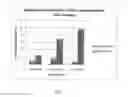
FIG. 1 is a graph showing modified and unmodified sorbent challenged with polar analytes in a preferred embodiment of the invention; and
FIG. 2 is a graph showing unmodified and modified sorbents challenged with polar compounds in an alternate preferred embodiment of the invention.
DETAILED DESCRIPTION OF THE PREFERRED EMBODIMENTS
The method and system of the present invention is further defined by the following working examples:
Example 1
Results in FIG. 1 show the desorption results of an analyte mix with polar compounds from the unmodified sorbent and the sorbent modified using amination to decrease the reactive step edge surface sites. Clearly, the modification increases the adsorbent's ability to desorb polar compounds. In the unmodified case, the largest percent recovery for these analytes is 17%, while the, modified sorbent yields as much as 97% recovery of the analytes.
Example 2
Results in FIG. 2 show the desorption results of an analyte mix with polar compounds from the unmodified sorbent and the modified aminated sorbent. Clearly, the modification increases the adsorbent's ability to desorb polar compounds. For each analyte, the analyte percent recovery from desorption is doubled or nearly doubled.
The present invention offers a way to provide enhanced adsorption via high surface area and mass transfer rates, and decreased reactivity at surface sites attractive to polar compounds. Taken together, these characteristics lead to less material incorporated into an environmental sampling device or chemical trapping system while increasing the fidelity and accuracy for identification of compounds in initial air samples.
Claims
What is claimed is:1. A method for providing superadsorption of polar organic compounds using a material system comprising the steps of:
(a) enhancing adsorption by means of using high surface area and mass transfer rates and decreased reactivity at surface sites attractive to the polar compounds; and
(b) employing consequence management by maintaining a high rate of adsorptivity combined with high fidelity and accuracy of the material system.
2. A method for modifying a superadsorbent material for air sampling applications comprising:
submerging a superadsorbent material in a Schlenk flask, wherein the Schlenk flask contains a charged bath;
degassing the Schlenk flask;
heating the charged bath to a temperature;
removing the superadsorbent material from the charged bath;
washing the superadsorbent material; and
drying the superadsorbent material.
3. The method of claim 2, wherein the superadsorbent material is a carbide derived carbon.
4. The method of claim 2, wherein the degassing further comprises evacuating an amount of air from the Schlenk flask.
5. The method of claim 2, wherein washing is conducted using a solvent.
6. The method of claim 2, wherein drying is conducted in a vacuum environment for a time.
7. A modified superadsorbent material for air sampling applications comprising:
a superadsorbent material treated with a solution, thereby forming a treated superadsorbent material, wherein the treated superadsorbent material is substantially hydrophobic and is capable of adsorbing polar compounds.
8. The superadsorbent material of claim 7, wherein the superadsorbent material is a carbide-derived carbon.
9. The superadsorbent material of claim 7, wherein the polar compounds further comprise alcohols, amines, and hydrocarbons containing carboxyl groups.
Images & Drawings included:

Sources:
- United States Patent and Trademark Office - verify current appl. status at the USPTO↗
Similar patent applications:
Recent applications in this class:
- » 20250146916 2025-05-08
SYSTEM AND METHOD FOR OBTAINING GAS SAMPLES - » 20250130146 2025-04-24
Methods and Systems for Extracting Analytes From a Sample - » 20250052652 2025-02-13
METHOD FOR CONCENTRATION AND FOR AUTOMATED ONLINE DETECTION OF AT LEAST ONE BIOLOGICAL TARGET SUBSTANCE IN A SAMPLE LIQUID, AND CONCENTRATOR UNIT - » 20250035521 2025-01-30
Microorganism Concentration Method and Concentration Vessel - » 20250027856 2025-01-23
Thermal Desorption Preconcentrator Adapted for Spectroscopic Gas Analysis - » 20250020556 2025-01-16
CHROMATOGRAPHIC ISOLATION OF CELLS AND OTHER COMPLEX BIOLOGICAL MATERIALS - » 20250003844 2025-01-02
METHOD FOR CASCADABLE CONCENTRATION OF AT LEAST ONE TARGET SUBSTANCE IN A SAMPLE LIQUID - » 20240280450 2024-08-22
CHELATOR BASED ELUENTS FOR SOLID PHASE EXTRACTION OF PHOSPHORYLATED COMPOUNDS - » 20240219275 2024-07-04
Methods to increase sensitivity of LC/MS analysis - » 20240159631 2024-05-16
METHOD FOR DETECTING AT LEAST ONE ANALYTE IN A SAMPLE
Recent applications for this Assignee:
- » 20250168533 2025-05-22
AUTOMATIC INTEGRATION AND READOUT GAIN READ OUT INTEGRATED CIRCUIT (ROIC) - » 20250150101 2025-05-08
MODULAR AND SCALABLE SWITCH MATRIX TOPOLOGY - » 20250141183 2025-05-01
LASER CONTROLLER - » 20250138130 2025-05-01
ANGLE AMBIGUITY MITIGATION FOR INTERFEROMETRY - » 20250136297 2025-05-01
LAUNCH INITIATED LOW-DRAG SEEKER WINDOW COVER - » 20250133514 2025-04-24
MULTINETTING TIME SYNCHRONIZATION - » 20250125531 2025-04-17
CAVITY BACKED DIPOLE ANTENNA WITH REDUCED CAVITY SIZE - » 20250112606 2025-04-03
PROGRAMMABLE GAIN TRANSIMPEDANCE AMPLIFIER HAVING A RESISTIVE T-NETWORK FEEDBACK ARCHITECTURE AND METHOD THEREOF - » 20250111881 2025-04-03
High dynamic range track and hold amplifier output stage using low voltage devices - » 20250110242 2025-04-03
GNSS SATELLITE SIGNAL AUTHENTICATION