Blade for a gas turbine engine
US20120076661A1
2012-03-29
12/889,836
2010-09-24
✅ Patent granted
US 8,708,655 B2
2014-04-29
-
-
Igor Kershteyn
Carlson, Gaskey & Olds, P.C.
2032-12-01
Abstract:
A rotor blade for a turbine engine includes a first side that defines a first contact face with a hardcoat and a second side that defines a second contact face without a hardcoat.
Inventors:
- John R. Farris 30 🇺🇸 Bolton, CT, United States
- Raymond Surace 81 🇺🇸 Newington, CT, United States
Assignee:
- UNITED TECHNOLOGIES CORPORATION 4,046 🇺🇸 Hartford, CT, United States
Applicant:
Interested in similar patents?
Get notified when new applications in this technology area are published.
Classification:
F01D5/225 » CPC main
Blades; Blade-carrying members ; Heating, heat-insulating, cooling or antivibration means on the blades or the members; Blades; Blade-to-blade connections, e.g. for damping vibrations by shrouding
F01D5/288 » CPC further
Blades; Blade-carrying members ; Heating, heat-insulating, cooling or antivibration means on the blades or the members; Blades; Selecting particular materials; Particular measures relating thereto; Measures against erosion or corrosion Protective coatings for blades
F05D2230/90 » CPC further
Manufacture Coating; Surface treatment
F05D2300/506 » CPC further
Materials; Properties thereof; Intrinsic material properties or characteristics Hardness
Y10T29/49325 » CPC further
Metal working; Method of mechanical manufacture; Impeller making; Turbomachine making Shaping integrally bladed rotor
B23P15/02 IPC
Making specific metal objects by operations not covered by a single other subclass or a group in this subclass turbine or like blades from one piece
F01D5/14 IPC
Blades; Blade-carrying members ; Heating, heat-insulating, cooling or antivibration means on the blades or the members; Blades Form or construction
Description
STATEMENT REGARDING FEDERALLY SPONSORED RESEARCH OR DEVELOPMENT
This disclosure was made with Government support under N00019-02-C-3003 awarded by The United States Navy. The Government has certain rights in this invention.
BACKGROUND
The present disclosure relates to a gas turbine engine, and more particularly to a blade thereof.
Gas turbine engines often include a multiple of rotor assemblies within a fan section, compressor section and turbine section. Each rotor assembly has a multitude of blades attached about a rotor disk. Each blade includes a root section that attaches to the rotor disk, a platform section, and an airfoil section that extends radially outwardly from the platform section. The airfoil section may include a shroud which interfaces with adjacent blades. In some instances, galling may occur on the mating faces of each blade shroud caused by blade deflections due to vibration.
SUMMARY
A rotor blade for a turbine engine according to an exemplary aspect of the present disclosure includes a first side that defines a first contact face with a hardcoat and a second side that defines a second contact face without a hardcoat.
A rotor assembly for a turbine engine according to an exemplary aspect of the present disclosure includes a plurality of adjacent blades, a first of said plurality of adjacent blades having a hardcoat on a first contact face in contact with a second contact face without a hardcoat on a second of the plurality of adjacent blades.
A method of manufacturing a rotor blade according to an exemplary aspect of the present disclosure includes hardcoating only one contact face of a rotor blade having a first side that defines a first contact face and a second side that defines a second contact face.
BRIEF DESCRIPTION OF THE DRAWINGS
The various features and advantages of this disclosure will become apparent to those skilled in the art from the following detailed description of the disclosed non-limiting embodiment. The drawings that accompany the detailed description can be briefly described as follows:
FIG. 1 is a schematic illustration of a gas turbine engine;
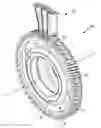
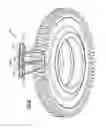
FIG. 2 is a general perspective view of a disk assembly form a turbine sectional view of a gas turbine engine;
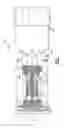
FIG. 3 is a side view of a shrouded turbine blade;
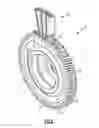
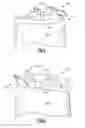
FIG. 4 is a suction side perspective view of the shrouded turbine blade;
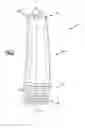
FIG. 5 is a pressure side perspective view of the shrouded turbine blade; and
FIG. 6 is a perspective view of the disk assembly and three turbine blade shrouds.
DETAILED DESCRIPTION
FIG. 1 schematically illustrates a gas turbine engine 10 which generally includes a fan section 12, a compressor section 14, a combustor section 16, a turbine section 18, an augmentor section 20, and an exhaust duct assembly 22. The compressor section 14, combustor section 16, and turbine section 18 are generally referred to as the core engine. An engine longitudinal axis X is centrally disposed and extends longitudinally through these sections. While a particular gas turbine engine is schematically illustrated in the disclosed non-limiting embodiment, it should be understood that the disclosure is applicable to other gas turbine engine configurations, including, for example, gas turbines for power generation, turbojet engines, high bypass turbofan engines, low bypass turbofan engines, turboshaft engines, etc.
The turbine section 18 may include, for example, a High Pressure Turbine (HPT), a Low Pressure Turbine (LPT) and a Power Turbine (PT). It should be understood that various numbers of stages and cooling paths therefore may be provided.
Referring to FIG. 2, a rotor assembly 30 such as that of a stage of the LPT is illustrated. The rotor assembly 30 includes a plurality of blades 32 circumferentially disposed around a respective rotor disk 34. The rotor disk 34 generally includes a hub 36, a rim 38, and a web 40 which extends therebetween. It should be understood that a multiple of disks may be contained within each engine section and that although one blade from the LPT section is illustrated and described in the disclosed embodiment, other sections will also benefit herefrom. Although a particular rotor assembly 30 is illustrated and described in the disclosed embodiment, other sections which have other blades such as fan blades, low pressure compressor blades, high pressure compressor blades, high pressure turbine blades, low pressure turbine blades, and power turbine blades may also benefit herefrom.
With reference to FIG. 3, each blade 32 generally includes an attachment section 42, a platform section 44, and an airfoil section 46 along a blade axis B. Each of the blades 32 is received within a blade retention slot 48 formed within the rim 38 of the rotor disk 34. The blade retention slot 48 includes a contour such as a dove-tail, fir-tree or bulb type which corresponds with a contour of the attachment section 42 to provide engagement therewith. The airfoil section 46 defines a pressure side 46P (FIG. 5) and a suction side 46S (FIG. 4).
A distal end section 46T includes a tip shroud 50 that may include rails 52 which define knife edge seals which interface with stationary engine structure (not shown). The rails 52 define annular knife seals when assembled to the rotor disk 34 (FIG. 6; with three adjacent blades shown). That is, the tip shroud 50 on one blade 32 interfaces with the tip shroud 50 on an adjacent blade 32 to form an annular turbine ring tip shroud.
With reference to FIGS. 4 and 5, each tip shroud 50 includes a suction side shroud contact face 54S and a pressure side shroud contact face 54P. The suction side shroud contact face 54S on each blade contacts the pressure side shroud contact face 54P on an adjacent blade when assembled to the rotor disk 34 to form the annular turbine ring tip shroud (FIG. 2).
In one non limiting embodiment, the blade 32 is manufactured of a single crystal superalloy with one of either the suction side shroud contact face 54S or the pressure side shroud contact face 54P having a hardface coating such as a laser deposited cobalt based hardcoat. That is, the hardface coating contacts the non-hardface coating in a shroud contact region defined by the suction side shroud contact face 54S and the corresponding pressure side shroud contact face 54P between each blade 32 on the rotor disk 34. The suction side shroud contact face 54S or the pressure side shroud contact face 54P to which the hardface coating is applied may be ground prior to application of the hardface deposition or weld to prepare the surface and then finish ground after the application of the hardface to maintain a desired shroud tightness within the annular turbine ring tip shroud.
By reducing wear on the mating surfaces of a blade shroud, there is an increase in the functional life of the blade due to consistent blade damping. Applicant has determined that contact of dissimilar metals reduces wear and engine test confirmed less wear as compared to base metal on base metal and hardface coat on hardface coat interfaces. This is in contrast to conventional understanding of shroud contact faces in which each contact face is generally of the same material.
It should be understood that although a tip shroud contact interface is illustrated in the disclosed non-limiting embodiment, other contact interfaces such as a partial span shroud will also benefit herefrom.
Although particular step sequences are shown, described, and claimed, it should be understood that steps may be performed in any order, separated or combined unless otherwise indicated and will still benefit from the present disclosure.
The foregoing description is exemplary rather than defined by the limitations within. Many modifications and variations are possible in light of the above teachings. Non-limiting embodiments are disclosed herein, however, one of ordinary skill in the art would recognize that certain modifications would come within the scope of this disclosure. It is, therefore, to be understood that within the scope of the appended claims, the disclosure may be practiced otherwise than as specifically described. For that reason the following claims should be studied to determine the true scope and content of this disclosure.
Claims
What is claimed is:1. A rotor blade for a turbine engine comprising:
a first side that defines a first contact face with a hardcoat and a second side that defines a second contact face without a hardcoat.
2. The rotor blade as recited in claim 1, further comprising:
a platform section;
a root section which extends from said platform section;
an airfoil section which extends from said platform section opposite said root section; and
a shroud section which extends from said airfoil section, said first contact face and said second contact face defined on said shroud section.
3. The rotor blade as recited in claim 2, wherein said shroud extends from a distal end of said airfoil section.
4. The rotor blade as recited in claim 3, wherein said airfoil is a turbine airfoil.
5. The rotor blade as recited in claim 1, wherein said first side is a suction side of an airfoil.
6. The rotor blade as recited in claim 1, wherein said first side is a pressure side of an airfoil.
7. The rotor blade as recited in claim 1, wherein said second contact face without said hardcoat is manufactured of a nickel alloy.
8. The rotor blade as recited in claim 1, wherein said first contact face with said hardcoat is manufactured of a nickel alloy with a welded cobalt based hardcoat.
9. The rotor blade as recited in claim 1, wherein said first contact face with said hardcoat is manufactured of a nickel alloy with a laser deposited cobalt based hardcoat.
10. A rotor assembly for a turbine engine comprising:
a plurality of adjacent blades, a first of said plurality of adjacent blades having a hardcoat on a first contact face in contact with a second contact face without a hardcoat on a second of said plurality of adjacent blades.
11. The rotor assembly as recited in claim 10, wherein each of said plurality of adjacent blades includes said first contact face and said second contact face.
12. The rotor assembly as recited in claim 11, wherein said first contact face and said second contact face are defined on a shroud section of each of said plurality of adjacent blades.
13. The rotor assembly as recited in claim 10, wherein said second contact face without said hardcoat is manufactured of a nickel alloy.
14. The rotor assembly as recited in claim 10, wherein said second contact face without said hardcoat is a base alloy of said plurality of adjacent blades.
15. A method of manufacturing a rotor blade comprising:
hardcoating only one contact face of a rotor blade having a first side that defines a first contact face and a second side that defines a second contact face.
16. The method as recited in claim 15, further comprising:
grinding the one contact face which receives the hardcoating prior to the application of the hardcoat.
17. The method as recited in claim 15, further comprising:
grinding the one contact face which receives the hardcoating after application of the hardcoat.
18. The method as recited in claim 15, further comprising:
locating the first contact face and the second contact face on a shroud.
Images & Drawings included:
Sources:
- United States Patent and Trademark Office - verify current appl. status at the USPTO↗
Similar patent applications:
- » 20120114495
Gas turbine engine and blade for gas turbine engine - » 20060263222
Composite filled gas turbine engine blade with gas film damper - » 20250154871
TAILORING ROTOR BLADE COATING TO TUNE GAS TURBINE ENGINE BLADED ROTOR - » 20250154869
TAILORING ROTOR BLADE SECTOR CONFIGURATIONS TO TUNE GAS TURBINE ENGINE BLADED ROTOR - » 10357987
Method for aluminide coating of gas turbine engine blade - » 10732344
Gas turbine engine blade containment assembly - » 20060140755
Gas turbine engine blade tip clearance apparatus and method - » 10357972
Aluminide coating of gas turbine engine blade - » 20050091846
Apparatus for rebuilding gas turbine engine blades - » 20050074328
Gas turbine engine blade containment assembly
Recent applications in this class:
- » 20250109692 2025-04-03
TURBINE BLADE AND METHOD FOR PRODUCING A TURBINE BLADE - » 20240318562 2024-09-26
TURBINE TIP SHROUD REMOVAL FEATURE - » 20240209740 2024-06-27
PART-SPAN SHROUDS FOR PITCH CONTROLLED AIRCRAFTS - » 20240159154 2024-05-16
TURBINE BLADE TIP SHROUD WITH AXIALLY OFFSET CUTTER TEETH, AND RELATED SURFACE PROFILES AND METHOD - » 20240011401 2024-01-11
TURBINE BLADE WITH MODAL RESPONSE ADAPTED TIP SHROUD - » 20230258092 2023-08-17
Part-span shrouds for pitch controlled aircrafts - » 20230184118 2023-06-15
TURBINE TIP SHROUD REMOVAL FEATURE - » 20230175406 2023-06-08
Turbocharger turbine wheel - » 20230160310 2023-05-25
Inner shroud damper for vibration reduction - » 20230093896 2023-03-30
Method for giving shroud interference to axial-entry blades in a rotary machine and rotary machine
Recent applications for this Assignee:
- » 20210131352 2021-05-06
Methods and systems for a modulated bleed valve - » 20180375008 2018-12-27
Method of forming electrodes on electrocaloric film - » 20180348087 2018-12-06
Parametric trending architecture concept and design - » 20180238268 2018-08-23
Composite wear pad for exhaust nozzle - » 20180159366 2018-06-07
Intra-microgrid communication architecture - » 20180066532 2018-03-08
Flow directing cover for engine component - » 20180038231 2018-02-08
Cooling hole with enhanced flow attachment - » 20180036918 2018-02-08
Media containment for iso-grid structure forming - » 20180003082 2018-01-04
Multiple reservoir lubrication system - » 20170343011 2017-11-30
System for an improved stator assembly