Galvanic cell having a lithium metal or an alloy comprising a lithium metal as anode material and an electrolyte having lithium . . . complex salt
US20120082900A1
2012-04-05
13/201,640
2010-02-17
✅ Patent granted
US 9,509,014 B2
2016-11-29
WO; PCT/EP2010/000992; 20100217
WO; WO2010/094467; 20100826
Daniel Gatewood
Jeremy J. Kliebert
2031-11-14
Abstract:
A galvanic cell having a lithium metal or an alloy comprising a lithium metal as anode material, having an electrolyte comprising lithium bis(oxalate)borate and at least one other lithium complex salt in an aprotic solvent or solvent mixture, in the ratio of lithium complex salt in the conducting salt equals 0.01 to 20 mol %.
Inventors:
- Ulrich Wietelmann 75 🇩🇪 Friedrichsdorf, Germany
- Ute Emmel 29 🇩🇪 Frankfurt am Main, Germany
- Thorsten Buhrmester 8 🇩🇪 Darmstadt, Germany
- Rebecca Metzger 1 🇩🇪 Eppstein, Germany
Assignee:
- Chemetall GmbH 17 🇩🇪 , Germany
Applicant:
Interested in similar patents?
Get notified when new applications in this technology area are published.
Classification:
C07F5/022 » CPC further
Compounds containing elements of Groups 3 or 13 of the Periodic System; Boron compounds without C-boron linkages
H01M10/052 » CPC main
Secondary cells; Manufacture thereof; Accumulators with non-aqueous electrolyte Li-accumulators
Y02E60/10 » CPC further
Enabling technologies; Technologies with a potential or indirect contribution to GHG emissions mitigation Energy storage using batteries
Y02E60/10 » CPC further
Enabling technologies; Technologies with a potential or indirect contribution to GHG emissions mitigation Energy storage using batteries
H01M4/40 IPC
Electrodes; Electrodes composed of, or comprising, active material; Selection of substances as active materials, active masses, active liquids of elements or alloys Alloys based on alkali metals
H01M4/134 » CPC further
Electrodes; Electrodes composed of, or comprising, active material; Electrodes for accumulators with non-aqueous electrolyte, e.g. for lithium-accumulators; Processes of manufacture thereof Electrodes based on metals, Si or alloys
C07F9/65748 » CPC further
Compounds containing elements of Groups 5 or 15 of the Periodic System; Phosphorus compounds; Heterocyclic compounds, e.g. containing phosphorus as a ring hetero atom having phosphorus atoms, with or without nitrogen, oxygen, sulfur, selenium or tellurium atoms, as ring hetero atoms having phosphorus and oxygen atoms as the only ring hetero atoms; Esters of oxyacids of phosphorus the cyclic phosphorus atom belonging to more than one ring system
H01M10/0568 » CPC further
Secondary cells; Manufacture thereof; Accumulators with non-aqueous electrolyte characterised by the materials used as electrolytes, e.g. mixed inorganic/organic electrolytes the electrolyte being constituted of organic materials only; Liquid materials characterised by the solutes
H01M10/0569 IPC
Secondary cells; Manufacture thereof; Accumulators with non-aqueous electrolyte characterised by the materials used as electrolytes, e.g. mixed inorganic/organic electrolytes the electrolyte being constituted of organic materials only; Liquid materials characterised by the solvents
H01M10/4235 » CPC further
Secondary cells; Manufacture thereof; Methods or arrangements for servicing or maintenance of secondary cells or secondary half-cells Safety or regulating additives or arrangements in electrodes, separators or electrolyte
H01M4/38 IPC
Electrodes; Electrodes composed of, or comprising, active material; Selection of substances as active materials, active masses, active liquids of elements or alloys
H01M10/0567 » CPC further
Secondary cells; Manufacture thereof; Accumulators with non-aqueous electrolyte characterised by the materials used as electrolytes, e.g. mixed inorganic/organic electrolytes the electrolyte being constituted of organic materials only; Liquid materials characterised by the additives
C07F5/04 » CPC further
Compounds containing elements of Groups 3 or 13 of the Periodic System; Boron compounds Esters of boric acids
H01M10/42 IPC
Secondary cells; Manufacture thereof Methods or arrangements for servicing or maintenance of secondary cells or secondary half-cells
C07F9/6574 IPC
Compounds containing elements of Groups 5 or 15 of the Periodic System; Phosphorus compounds; Heterocyclic compounds, e.g. containing phosphorus as a ring hetero atom having phosphorus atoms, with or without nitrogen, oxygen, sulfur, selenium or tellurium atoms, as ring hetero atoms having phosphorus and oxygen atoms as the only ring hetero atoms Esters of oxyacids of phosphorus
C07F5/02 IPC
Compounds containing elements of Groups 3 or 13 of the Periodic System Boron compounds
H01M10/056 IPC
Secondary cells; Manufacture thereof; Accumulators with non-aqueous electrolyte characterised by the materials used as electrolytes, e.g. mixed inorganic/organic electrolytes
H01M4/382 » CPC further
Electrodes; Electrodes composed of, or comprising, active material; Selection of substances as active materials, active masses, active liquids of elements or alloys; Alkaline or alkaline earth metals elements Lithium
Description
The invention relates to a galvanic cell having a lithium metal or an alloy containing a lithium metal as anode material.
Mobile electronic devices require ever more powerful rechargeable batteries for an independent power supply. In addition to nickel/cadmium and nickel/metal hydride rechargeable batteries, lithium batteries in particular, which in comparison to the first-named systems have a markedly higher energy density, are suitable for these purposes. Large-format lithium rechargeable batteries are also to be used in future for e.g., static applications (power back-up) and in the automotive sector for traction purposes (hybrid drives or electric-only drives). Lithium-ion batteries, in which a graphite-containing substance is used as the anode, are currently being developed and used for this purpose. In the charged state graphite anodes can generally store (intercalate) no more than 1 lithium per 6 carbon atoms, corresponding to a limiting stoichiometry LiC6. This results in a lithium density of max. 8.8 wt. %. The anode material thus brings about an undesired restriction of the energy density of such battery systems.
Instead of lithium intercalation anodes such as graphite, lithium metal or an alloy containing a lithium metal (e.g. alloys of lithium with aluminium, silicon, tin, titanium or antimony) can in principle also be used as the anode material. In comparison to the commonly used graphite intercalation cathode, this principle would allow a markedly higher specific lithium charge and hence energy density. Unfortunately such lithium-metal-containing systems exhibit unfavourable safety characteristics. In unfavourable operating conditions (e.g. elevated temperatures), decomposition reactions can occur which lead to a dangerous run-away situation. The battery then begins a spontaneous heating process, which can result in an explosive formation of gas and destruction of the battery casing. Owing to the combustibility of common electrolyte solutions consisting of organic solvents or mixtures thereof such as carbonic acid esters, for example ethylene carbonate (EC), propylene carbonate (PC), ethyl methyl carbonate (EMC), lactones, for example γ-butyrolactone (γ-BL), or ethers, for example dimethoxyethane (DME), fires can occur. As current lithium batteries contain an unstable, fluorine-containing supporting electrolyte (LiPF6 or LiBF4), dangerous, caustic and toxic decomposition products (hydrogen fluoride and volatile fluorine-containing organic products) also form during such events. For these reasons, rechargeable batteries containing lithium metal have hitherto been produced only at a micro-design scale, for example button cells.
The object of the invention is to overcome the disadvantages of the prior art as described above and to propose a safe, rechargeable battery system with an energy density exceeding that of lithium-ion technology.
According to the invention the object is achieved by means of a galvanic cell having a lithium metal or an alloy containing a lithium metal as anode material, said galvanic cell having an electrolyte containing lithium bis(oxalato)borate and at least one further lithium complex salt of formulae I and/or II in an aprotic solvent or solvent blend, wherein
wherein the proportion of compound (I) and/or (II) in the supporting electrolyte is 0.01 to 20 mol % and X, Y and Z in the formulae (I, II) is a bridge which is connected to the boron or phosphorus atom by two oxygen atoms and is selected from
where
-
- Z=N, N═C;
- S, S═C;
- O, O═C;
- C═C
- Y1 and Y2 together denote O, m=1, n=0 and Y3 and Y4 are independently of each other H or an alkyl radical having 1 to 5 C atoms, or
- Y1, Y2, Y3, Y4 are each independently of one another OR (where R=alkyl radical having 1 to 5 C atoms), H or an alkyl radical R1, R2 having 1 to 5 C atoms, and where m, n=0 or 1.
Surprisingly it has been found that when mixed with one of the cited complex additives, LiBOB appears to form a thin, extremely thermally stable layer on the lithium metal or lithium metal alloy surface, which effectively prevents a decomposition reaction between the lithium-metal-containing anode material and the electrolyte component. Furthermore, the undesired gas formation at elevated temperatures, which can cause a battery cell to explode, is substantially reduced. This effect is not observed if an electrolyte containing exclusively LiBOB as supporting electrolyte or containing a fluorine-containing supporting electrolyte is used.
The galvanic cell advantageously contains only one of the compounds according to formula I and/or II in an amount from 0.1 to 10 wt. %.
Alternatively the galvanic cell contains only one of the compounds according to formula I and/or II in an amount from 0.2 to 5 wt. %.
A galvanic cell in which only fluorine-free materials are contained in the electrolyte is particularly preferred.
A galvanic cell containing lithium tris(oxalato)phosphate or lithium maionato-oxalatoborate as lithium complex salts is most particularly preferred.
A galvanic cell in which the electrolyte is present as a liquid or gel electrolyte is also preferred.
The solvent in the electrolyte of the galvanic cell is preferably propylene carbonate or a mixture of ethylene carbonate and ethyl methyl carbonate.
According to the invention the galvanic cell is used to produce large-format batteries for electric drives or for static applications.
The invention is illustrated in more detail below by reference to five examples, three comparative examples and five figures.
To demonstrate the surprising observations mentioned above, experiments with lithium metal/electrolyte mixtures are described in the following section. Anhydrous mixtures of lithium metal (battery grade, i.e. with a sodium content below 200 ppm), lithium supporting electrolytes (LiPF6 or LiBOB) and optionally a further lithium complex salt, e.g. lithium tris(oxalato)phosphate (LiTOP) or lithium malonato-oxalatoborate (LiMOB), were produced in conventionally used solvents (PC or EC-EMC) and approximately 2.5 g of such mixtures were introduced into steel autoclaves with an approximate capacity of 3 ml in an argon-filled glove box. These vessels were heated in a RADEX apparatus and the thermal effects that occurred were measured (DSC). In further tests the steel autoclaves were connected to pressure sensors to allow gas formation to be observed as well.
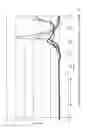
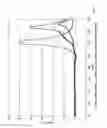
FIG. 1 shows the behaviour of fluorine-free, LiBOB-based electrolyte solutions in the presence of Li metal;
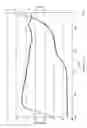
FIG. 2 shows the DSC test and simultaneous pressure monitoring of a PC solution containing 14% LiBOB and 1% LiTOP in the presence of lithium metal granules;
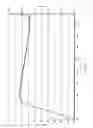
FIG. 3 shows the DSC test and simultaneous pressure monitoring of a solution of 15% LiPF6 in PC in the presence of lithium metal granules;
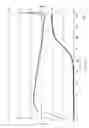
FIG. 4 shows the DSC test and simultaneous pressure monitoring of a PC solution containing 14% LiPF6 and 1% LiTOP in the presence of lithium metal granules;
FIG. 5 shows DEC tests of LiBOB-containing, fluorine-free solutions in EC-EMC (50:50) in the presence of lithium metal granules.
FIG. 1 shows the behaviour of fluorine-free, LiBOB-based electrolyte solutions in the presence of Li metal (Examples 1 to 3 and comparative example 1.)
In all experiments a weak endotherm is detected at an oven temperature of approx. 190-200° C., which can be attributed to the melting of the lithium metal content.
In comparative example 1 (not according to the invention) exclusively 15 wt. % of LiBOB-containing electrolyte is used as the supporting electrolyte. A strongly exothermic event can be seen (red curve) with a peak temperature of approx. 205° C. If by contrast a PC solution containing 14 wt. % LiBOB and 1 wt. % LiMOS is used as described in Example 1 (light blue curve), a markedly reduced evolution of heat is observed. This effect is even more evident with the partial substitution for LiBOB of 0.3% (Example 2—green curve) or 1% (Example 3—dark blue curve) LiTOP.
In Example 3 according to the invention, simultaneous pressure measurement shows that the scarcely exothermic decomposition reaction (peak oven temperature approx. 250° C.) of a LiBOB-LiTOP electrolyte is accompanied by only a very slight evolution of gas.
Comparative example 2 below shows the pressure-temperature behaviour of an electrolyte solution based purely on LiPF6. If an oven temperature of approx. 210° C. is exceeded, a highly exothermic decomposition event begins, accompanied by an explosive formation of gas. The pressure (blue curve) rises in a matter of seconds from <10 bar to >250 bar.
Examples 4 and 5 below (electrolyte solutions of LiBOB/LiTOP) show in comparison to the example not according to the invention (electrolyte solution containing only LiBOB) that the desired lithium metal stabilisation also takes place in the EC-EMC solvent blend, The addition of LiTOP shifts the peak temperature of the decomposition upwards by approximately 30° C., and the release of heat is very markedly reduced, in other words the undesired decomposition reaction between the components lithium metal and organic electrolyte solution takes place to a lesser extent in the examples according to the invention.
Claims
1-9. (canceled)
10. A galvanic cell having a lithium metal or an alloy containing a lithium metal as anode material, wherein said galvanic cell has an electrolyte containing lithium bis(oxalato)borate and a further lithium complex salt selected from the group consisting of a compound of formulae I and a compound of formula II:
in an aprotic solvent or solvent blend,
wherein the proportion of said further lithium complex salt in the supporting electrolyte is 0.01 to 20 mol % and X, Y and Z in the formulae I and in the formula II is a bridge which is connected to the boron or phosphorus atom by two oxygen atoms and is selected from the group consisting of
wherein
Z is N, N═C, S, S═C, O, O═C, or C═C;
wherein Y1 and Y2 together denote O, m is 1, n is 0, and Y3 and Y4 are independently H or an alkyl radical having 1 to 5 C atoms, or
Y1, Y2, Y3, Y4 are each independently of one another OR (where R=alkyl radical having 1 to 5 C atoms), H or an alkyl radical R1, R2 having 1 to 5 C atoms, and where m, n=0 or 1.
11. A galvanic cell according to claim 10, wherein said further lithium complex salt is present in an amount of from 0.2 to 10 wt %.
12. A galvanic cell according to claim 11, wherein said further lithium complex salt is present in an amount of from 0.2 to 5 wt. %.
13. A galvanic cell according to claim 10, wherein only fluorine-free materials are contained in the electrolyte.
14. A galvanic cell according to claim 10, said further complex lithium salt is selected from the group consisting of lithium tris(oxalato)phosphate and lithium malonato-oxalatoborate.
15. A galvanic cell according to claim 10, wherein the electrolyte is a liquid or a gel.
16. A galvanic cell according to claim 10, wherein the solvent in the electrolyte is propylene carbonate or a mixture of ethylene carbonate and ethyl methyl carbonate.
17. A large format battery for electric drives or for static applications comprising the galvanic cell according to claim 10.
18. A galvanic cell according to claim 11, wherein only fluorine-free materials are contained in the electrolyte.
19. A galvanic cell according to claim 11, said further complex lithium salt is selected from the group consisting of lithium tris(oxalato)phosphate and lithium malonato-oxalatoborate.
20. A galvanic cell according to claim 11, wherein the electrolyte is a liquid or a gel.
21. A galvanic cell according to claim 11, wherein the solvent in the electrolyte is propylene carbonate or a mixture of ethylene carbonate and ethyl methyl carbonate.
22. A large format battery for electric drives or for static applications comprising the galvanic cell according to claim 11.
23. A galvanic cell according to claim 14, wherein only fluorine-free materials are contained in the electrolyte.
24. A galvanic cell according to claim 15, wherein only fluorine-free materials are contained in the electrolyte.
25. A galvanic cell according to claim 16, wherein only fluorine-free materials are contained in the electrolyte.
26. A large format battery for electric drives or for static applications comprising the galvanic cell according to claim 12.
27. A large format battery for electric drives or for static applications comprising the galvanic cell according to claim 14.
28. A galvanic cell according to claim 10, said further complex lithium salt is lithium tris(oxalato)phosphate.
29. A galvanic cell according to claim 10, said further complex lithium salt is lithium malonato-oxalatoborate.
Images & Drawings included:
Sources:
- United States Patent and Trademark Office - verify current appl. status at the USPTO↗
Recent applications in this class:
- » 20250293288 2025-09-18
Lithium Secondary Battery - » 20250260044 2025-08-14
Lithium Secondary Battery - » 20250253387 2025-08-07
HIGH VOLTAGE AND FLASH POINT ELECTROLYTE FOR LITHIUM METAL BATTERY - » 20250210689 2025-06-26
Lithium Secondary Battery and Method of Manufacturing the Same - » 20250201902 2025-06-19
Lithium Secondary Battery - » 20250174707 2025-05-29
Lithium Battery Pack Comprising Internally Connected Unit Cells and Production Method - » 20250149623 2025-05-08
Secondary Battery - » 20250149622 2025-05-08
Lean-Electrolyte Lithium-Sulfur Cell and a Method of Manufacturing the Same - » 20250118729 2025-04-10
LITHIUM-ION BATTERY ELECTRODE PLATE AND PREPARATION METHOD THEREFOR - » 20250105339 2025-03-27
NEGATIVE ELECTRODE FOR NONAQUEOUS ELECTROLYTE SECONDARY BATTERY, AND NONAQUEOUS ELECTROLYTE SECONDARY BATTERY
Recent applications for this Assignee:
- » 20150140280 2015-05-21
Method of treating surface of metal base metallic material treated by the surface treatment method and method of coating the metallic material - » 20150079277 2015-03-19
Method for coating metallic surfaces of substrates, and objects coated according to said method - » 20140311533 2014-10-23
Process for the demulsifying cleaning of metallic surfaces - » 20140190592 2014-07-10
Chemical conversion treatment agent for surface treatment of metal substrate, and surface treatment method of metal substrate using same - » 20140051311 2014-02-20
Method for coating metal surfaces with an activating agent prior to phosphating - » 20140044868 2014-02-13
Process for producing a repair coating on a coated metallic surface - » 20140004266 2014-01-02
Method for coating surfaces and use of the objects coated using said method - » 20130344310 2013-12-26
Method for coating surfaces and use of the articles coated using said method - » 20130295279 2013-11-07
Tool for the application of a repair coating to a metallic surface - » 20120171402 2012-07-05
Process for the coating of metallic components with an aqueous organic composition