Electrically conductive polyrotaxane
US20120083582A1
2012-04-05
13/264,474
2010-04-22
✅ Patent granted
US 8,613,611 B2
2013-12-24
WO; PCT/JP2010/057178; 20100422
WO; WO2010/123079; 20101028
Terressa Boykin
Westerman, Hattori, Daniels & Adrian, LLP
2030-05-31
Abstract:
The conductive polyrotaxane of the present invention contains an electron-accepting cyclic molecule in each of its repeating unit. Since the electron-accepting cyclic molecule remains stable because of molecular interaction with a π-conjugated oligomer molecule, the electron-accepting cyclic molecule is not dissociated during rotaxane polymerization reaction, and thus a conductive polyrotaxane of stable quality can be obtained.
Inventors:
- Masayoshi Higuchi 10 🇯🇵 Ibaraki, Japan
- Taichi Ikeda 1 🇯🇵 Ibaraki, Japan
- Kurth Dirk G 1 🇯🇵 Ibaraki, Japan
- Dirk G. Kurth 3 🇯🇵 Ibaraki, Japan
Assignee:
- NATIONAL INSTITUTE FOR MATERIALS SCIENCE 166 🇯🇵 Tsukuba-shi, Ibaraki, Japan
- NAT'L INSTITUTE FOR MATERIALS SCIENCE 2 🇯🇵 Tsukuba-shi, Ibaraki, Japan
Applicant:
Interested in similar patents?
Get notified when new applications in this technology area are published.
Classification:
C07D495/04 » CPC main
Heterocyclic compounds containing in the condensed system at least one hetero ring having sulfur atoms as the only ring hetero atoms in which the condensed system contains two hetero rings Ortho-condensed systems
C08G61/126 » CPC further
Macromolecular compounds obtained by reactions forming a carbon-to-carbon link in the main chain of the macromolecule; Macromolecular compounds containing atoms other than carbon in the main chain of the macromolecule derived from five- or six-membered heterocyclic compounds, other than imides derived from five-membered heterocyclic compounds with a five-membered ring containing one sulfur atom in the ring
C08G2261/124 » CPC further
Macromolecular compounds obtained by reactions forming a carbon-to-carbon link in the main chain of the macromolecule; Definition of the polymer structure; Copolymers alternating
C08G2261/13 » CPC further
Macromolecular compounds obtained by reactions forming a carbon-to-carbon link in the main chain of the macromolecule; Definition of the polymer structure Morphological aspects
C08G2261/1424 » CPC further
Macromolecular compounds obtained by reactions forming a carbon-to-carbon link in the main chain of the macromolecule; Definition of the polymer structure; Side-groups; Side-chains containing oxygen containing ether groups, including alkoxy
C08G2261/3223 » CPC further
Macromolecular compounds obtained by reactions forming a carbon-to-carbon link in the main chain of the macromolecule; Monomer units or repeat units incorporating structural elements in the main chain incorporating heteroaromatic structural elements in the main chain non-condensed containing one or more sulfur atoms as the only heteroatom, e.g. thiophene
C08G2261/364 » CPC further
Macromolecular compounds obtained by reactions forming a carbon-to-carbon link in the main chain of the macromolecule; Monomer units or repeat units incorporating structural elements in the main chain; Oligomers, i.e. comprising up to 10 repeat units containing hetero atoms
C08G2261/43 » CPC further
Macromolecular compounds obtained by reactions forming a carbon-to-carbon link in the main chain of the macromolecule; Polymerisation processes Chemical oxidative coupling reactions, e.g. with FeCl
C08G2261/51 » CPC further
Macromolecular compounds obtained by reactions forming a carbon-to-carbon link in the main chain of the macromolecule; Physical properties Charge transport
C08G75/06 IPC
Macromolecular compounds obtained by reactions forming a linkage containing sulfur with or without nitrogen, oxygen, or carbon in the main chain of the macromolecule; Polythioethers from cyclic thioethers
C08G64/00 IPC
Macromolecular compounds obtained by reactions forming a carbonic ester link in the main chain of the macromolecule
C08G63/02 IPC
Macromolecular compounds obtained by reactions forming a carboxylic ester link in the main chain of the macromolecule Polyesters derived from hydroxycarboxylic acids or from polycarboxylic acids and polyhydroxy compounds
Description
TECHNICAL FIELD
The present invention relates to an electrically conductive polyrotaxane synthesized by polymerization of rotaxanes.
BACKGROUND ART
A rotaxane has a molecular structure consisting of a cyclic molecule, π-conjugated oligomer threaded through the cyclic molecule, and side chains introduced to both ends of the π-conjugated oligomer, wherein the cyclic molecule cannot be pulled out of the π-conjugated oligomer because of the existence of the side chains. A polyrotaxane, which is synthesized by oxidation polymerization of rotaxanes, has characteristics not shared by conventional polymers, and studies have been conducted on polyrotaxanes.
As disclosed in non-patent literatures 1 and 2 and patent literature 1, a conductive polyrotaxane is directly synthesized from an inclusion complex. However, if polymerization reaction should occur the moment the inclusion complex dissociates, repeating units without a cyclic molecule are synthesized within a conductive polymer.
Non-patent literatures 3 and 4 disclose a synthesis method using transition metal ions to form an inclusion complex consisting of a cyclic molecule and a conductive polymer. With this method, however, since a ligand site interacting with transition metal ions must be integrated into the main chain of the conductive polymer, π-conjugation of the conductive polymer is disconnected at the ligand site, which results in decrease in conductivity.
With the formation of an inclusion complex of an electron-accepting cyclic molecule and an electron-releasing oligomer molecule, charge transfer interaction and π-π stacking interaction play an important role to stabilize the inclusion complex. When the oligomer molecule is subjected to oxidation polymerization to form a conductive molecule, the oligomer molecule turns into a radical cation, thus losing electron-releasing property and being made to carry positive charge. Consequently reaction force against the electron-accepting cyclic molecule is generated, which causes the inclusion complex to dissociate. In other words, with the conventional method for obtaining a polyrotaxane based on polymerization of inclusion complexes, repeating units lacking a cyclic molecule is synthesized within the conductive molecule.
Since the equilibrium constant for formation and dissociation of an inclusion complex changes due to a slight difference in conditions such as temperature, solvent concentrations, and the composition of the solution, it is difficult to maintain the quality of conductive polyrotaxanes at a uniform level.
Citation List
Patent Literature
[Patent Literature 1] JP 2004-273881 A
Non-Patent Literature
[Non-Patent Literature 1] Nature Materials. vol. 1(3), 160-164, Oct. 20, 2002 (online); Franco Cacialli, Joanne S. Wilson, Jasper J. Michels, Clement Daniel, Carlos Silva, Richard H. Friend, Nikolai Severin, Paolo Samori, Jurgen P. Rabe, Michael J. O'Connell, Peter N. Taylor, Harry L. Anderson.
[Non-Patent Literature 2] Chemistry-A European Journal. vol. 9(24), 6167-6176, Dec. 15, 2003; Jasper J. Michels, Michael J. O. Connell, Peter N. Taylor, Joanne S. Wilson, Franco Cacialli, Harry L. Anderson.
[Non-Patent Literature 3] Inorganic Chemistry. vol. 38(19), 4203-4210, Aug. 27, 1999; Pierre-Louis Vidal, Bernadette Divisia-Blohorn, Grard Bidan, Jean-Marc Kern, Jean-Pierre Sauvage, Jean-Louis Hazemann. [Non-Patent Literature 4] Journal of the American Chemical Society. vol. 119(5), 12568-12577, Dec. 24, 1997; S. Sherry Zhu, Timothy M. Swager.
SUMMARY OF THE INVENTION
Technical Problem
In view of such circumstances, the present invention intends to provide a polyrotaxane having conductivity (hereinafter referred to as conductive polyrotaxane), in which a cyclic molecule is not dissociated.
Solution to Problem
The conductive polyrotaxane of the present invention is a rotaxane polymer having a π-conjugated oligomer and an electron-accepting cyclic molecule, wherein the electron-accepting cyclic molecule is contained in each repeating unit.
The conductive polyrotaxane of the present invention is also characterized in that the electron-accepting cyclic molecule has inter-molecular reaction with the π-conjugated oligomer.
The method of synthesizing a conductive polyrotaxane of the present invention is characterized in that reacting a π-conjugated oligomer, cyclic molecule precursor, and cyclizing agent in a low-polarity organic solvent to obtain a rotaxane, and subjecting the rotaxane to oxidation polymerization.
Advantageous Effect of the Invention
The conductive polyrotaxane of the present invention does not vary widely in quality such as conductivity, and can provide polymer products having stable conductivity.
BRIEF DESCRIPTION OF DRAWINGS
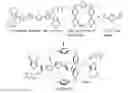
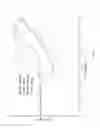
FIG. 1 is a schematic diagram showing the concept of the present invention.
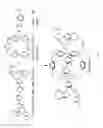
FIG. 2 is a diagram illustrating the synthetic scheme of the example of the present invention.
FIG. 3 is a chart illustrating NMR spectrum of the rotaxane of the above example.
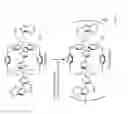
FIG. 4 is a chart illustrating the synthetic scheme of the polyrotaxane of the present invention.
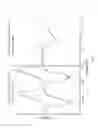
FIG. 5 is a cyclic voltammogram of the rotaxane of the above example.
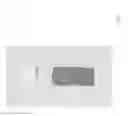
FIG. 6 is a chart showing an image of a polyrotaxane film formed on the indium tin oxide (ITO) electrode of the above example.
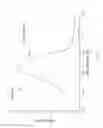
FIG. 7 is a chart illustrating the ultraviolet-visible absorption spectrum of the rotaxane and polyrotaxane film of the above example.
FIG. 8 is a cyclic voltammogram of the polyrotaxane film of the above example.
DESCRIPTION OF EMBODIMENTS
The inventors pursued research on synthesis of a polyrotaxane, and succeeded in completing the present invention based on the knowledge that in a rotaxane synthesized by a π-conjugated oligomer and an electron-accepting cyclic molecule, the electron-accepting cyclic molecule is prevented from being sterically dissociated from the π-conjugated oligomer because of the side chains of the π-conjugated oligomer.
FIG. 1 illustrates the concept of the present invention. Sign character 1 in FIG. 1 represents a π-conjugated oligomer, sign character 2 represents a cyclic molecule including electron-accepting part, and sign character 3 represents side chains.
Namely, the rotaxane has a basic structure having the π-conjugated oligomer 1 and the electron-accepting cyclic molecule 2, where the electron-accepting cyclic molecule 2 is prevented from being dissociated from the π-conjugated oligomer 1 because of the side chains 3 introduced into the π-conjugated oligomer 1.
In the example, a chemical compound represented by chemical formula 1 is shown as the rotaxane, and chemical formula 2 represents a cyclic molecule containing two 4,4′-bipyridinium salt regions as the electron-accepting cyclic molecule of the rotaxane. Intermolecular interaction takes place between the electron-accepting 4,4′-bipyridinium salt and the electron-releasing thiophene oligomer, and the electron-accepting cyclic molecule remains in stable state without being dissociated by oxidative condensation reaction of the rotaxane.
This description shows specific compound of the π-conjugated oligomer, citing an example of a thiophene hexamer derivative. However, a large number of π-conjugated oligomers that can be subjected to oxidation polymerization are known. π-conjugated oligomers that turn to conductive molecules as a result of synthesis by oxidation polymerization, such as derivatives including heterocyclic π-conjugated oligomer represented by chemical formula 4, oligophenylene represented by chemical formula 5, oligofluorene represented by chemical formula 6, oligo-aniline represented by chemical formula 7, and oligophenylene sulfide represented by chemical formula 8, derivatives partially containing the above derivatives, and mixed derivatives may be used. Since these oligomers have electron-releasing property similar to thiophene derivative, it is well imagined that synthesis of rotaxanes and that of polyrotaxanes based on oxidation polymerization are possible. Although the thiophene hexamer derivative is used in the example, it is well imagined that longer or shorter oligomers can also produce similar results.
The side chains of the π-conjugated oligomer prevent the cyclic molecule from being dissociated from the π-conjugated oligomer. Side chains of any length or chemical structure can be used, provided that they are larger than the internal diameter of the cyclic molecule (5 angstrom×11 angstrom). For example, alkyl group, ethylene glycol group having a repeating unit of 1 or higher, ethylene glycol group having a methyl group at the end and a repeating unit of 1 or higher, ethylene glycol group having an ethyl group at the end and a repeating unit of 1 or higher, ethylene glycol group having propyl group or isopropyl group at the end and a repeating unit of 1 or higher, and ethylene glycol group having a butyl group or tertiary butyl group at the end and repeating unit of 1 or higher can be used.
A rotaxane is synthesized by reacting π-conjugated oligomer, cyclic molecule precursor, and cyclizing agent to react with each other in a polar organic solvent.
In the example, as the cyclic molecule precursor, a molecule containing two 4,4′-bipyridinium salt regions can be used. In this specification, 1,1′-[1,4-phenylenebis (methylene)] bis-4,4′-bipyridinium bis (hexafluorophosphate) is used.
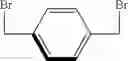
As the cyclizing agent, α,α′-dihalogen-p-xylene can be used. Specifically, α,α′-dibromo-p-xylene is used.
Any conductive work electrodes can be used without limitation to synthesize a polyrotaxane. Any work electrodes capable of applying a voltage sufficient to oxidize the rotaxane to the system can be used. It has been confirmed that a film is formed with the voltage of +1.0 V (to a reference saturated calomel electrode [SCE]) or higher. Any rotaxane solution concentrations sufficient to cause polymerization can be adopted, and the concentration of 5.0×10⁻⁵M (mol) or higher was confirmed to form a film. It is well considerable that even if these conditions would be changed, similar results would be obtained.
Any oxidizing agents having oxidizing power sufficient to oxidize the π-conjugated oligomer of the rotaxane can be used to synthesize a polyrotaxane by chemical oxidation. For example, SbCl5, SbF5, NOSbF6, O2SbF6, O2AsF6, NOAsF6, NOBF4, NOClO4, NOPF6, FeCl3, FeBr3, FeI3, Fe(ClO4)3, Fe(BF4)3, Fe(PF6)3, FePO4, Fe(CH3C6H4SO3)3, Fe(CF3SO3)3, MoCl5, RuCl3, CuCl2, etc. can be used. It is well considerable that even if the type of oxidizing agent should be changed, similar results would be obtained.
As shown in FIG. 1, if rotaxanes are subjected to chemical or electrochemical oxidation polymerization, the π-conjugated oligomer 1 turns to a conductive polymer 4, and thus a polyrotaxane is obtained.
The present invention will hereinafter be described in detail by referring to examples.
EXAMPLE 1
<Synthesis of a Rotaxane>
As shown in FIG. 2 and Table 1, a thiophene hexamer derivative expressed by chemical formula 3, namely 3,4,3″″′,4″″′-bis(ethylenedioxy)-3′,4″″-[2-(2-ethoxyethoxy)ethoxy]methyl-2,2′:5′,2″:5″,2″′:5″′,2″″:5″″,2″″′-sexithiophene, as olygomer, a cyclic molecule precursor (chemical formula 9), and a cyclizing agent α,α′-dibromo-p-xylene (chemical formula 10) were dissolved in acetonitrile or dimethylformamide, and the solution was kept agitated in the argon atmosphere for five to seven days.
| TABLE 1 |
| Rotaxane synthesis conditions and result |
| Starting Material | Reaction condition |
| Thiophene | Cyclic | Amount | |||||
| Experiment | hexamer | molecule | Cyclizing | of | |||
| No. | derivative | precursor | agent | Type of solvent | solvent | Duration | Yield |
| 1 | 90 | mg | 140 | mg | 50 | mg | Acetonitrile | 6 | mL | 5 | 10 | mol % |
| 2 | 130 | mg | 220 | mg | 75 | mg | Acetonitrile | 5 | mL | 6 | 11 | mol % |
| 3 | 300 | mg | 470 | mg | 175 | mg | Acetonitrile | 10 | mL | 7 | 11 | mol % |
| 4 | 270 | mg | 1500 | mg | 630 | mg | Dimethylformamide | 20 | mL | 7 | 7 | mol % |
| 5 | 300 | mg | 470 | mg | 175 | mg | Dimethylformamide | 10 | mL | 7 | 9 | mol % |
To decrease the polarity of the solution, 30 mL of acetic ester was added to the reaction solution, the solution was poured directly into a silica gel column to allow the rotaxane to adsorb to silica gel (Silica gel 60N, spherical neutral [KANTO KAGAKU]). To remove unreacted raw materials and byproducts that did not turn into the rotaxane, 100 mL of acetic ether, and then a 9:1 solution of dichloromethane and methanol were kept pouring in until the solution coming out of the silica gel column became completely transparent. Using a 6:3:1 solution of methanol, 2M ammonium chloride solution and nitromethane, the rotaxane was eluted from the silica gel column. The eluate was condensed using an evaporator, and then to allow the rotaxane to precipitate by counterion exchange, an ammonium hexafluorophosphate solution (11M) was added until precipitate was no longer formed. After the precipitate was recovered by vacuum filtration, vacuum drying was performed to obtain a green solid rotaxane represented by chemical formula 1.
Synthesized rotaxane was confirmed by nuclear magnetic resonance (NMR) and high-resolution mass spectrometry.
The results of NMR and high-resolution mass spectrometry are shown below.
(1) Result of 1HNMR (Solvent: CD3CM)
δ=1.01 (6H), 3.41 (4H), 3.58 (4H), 3.67 (4H), 3.76 (4H), 3.79 (4H), 4.38 (8H), 4.48 (4H), 5.57 (2H), 5.78 (8H), 5.89 (2H), 6.69 (2H), 6.78 (2H), 7.79 (8H), 7.88 (8H), 8.95 (8H) ppm.
(2) Result of 13CNMR (Solvent: CD3CM)
δ=15.4, 65.5, 65.6, 66.3, 66.8, 67.5, 70.3, 71.16, 71.22, 71.4, 101.7, 108.1, 125.5, 126.3, 126.5, 127.6, 131.8, 134.4, 135.0, 136.0, 138.0, 138.2, 140.4, 143.0, 146.0, 148.5 ppm.
FIG. 3 is an NMR chart of the rotaxane obtained in the example.
(3) Result of High-Resolution Mass Spectrometry
Actual measurement value m/z=522.4530 [M+PF6]3+
Theoretical value C78H78F6N4O10PS6: m/z=522.4561
<Synthesis of a Polyrotaxane 1>
FIG. 4 shows the scheme of synthesizing a polyrotaxane from rotaxanes.
First, by subjecting the rotaxane obtained as described above to electrochemical polymerization, the polyrotaxane was obtained. As shown in Table 2, using an acetonitrile solution containing 0.1 M of tetrabutylammonium perchlorate (TBA.PF6) or tetrabutylammonium hexafluorophosphate (TBA.Cl4), 0.01 to 1 mM of a rotaxane solution was prepared.
As a work electrode, a transparent indium tin oxide (ITO) electrode was used. As counter and reference electrodes, a platinum wire and a saturated calomel electrode (SCE) were used.
| TABLE 2 |
| Polyrotaxane film formation conditions and results |
| Work | π-π* transition |
| (1)* | Voltage | electrode | Number | Absorption | ||||
| Experiment | Concentration | range | sweep | of | maximum | |||
| No. | (mM) | (2)* | (V) | rate | sweep | (3)* | wavelength | Absorbance |
| 1 | 1 | TBA · PF6 | 0.0-1.2 | 100 | mV/s | 4 | No | — | — |
| 2 | 1 | TBA · ClO4 | 0.0-1.2 | 200 | mV/s | 4 | Yes | 519 nm | 0.42 |
| 3 | 1 | TBA · ClO4 | 0.0-1.2 | 100 | mV/s | 4 | Yes | 516 nm | 0.51 |
| 4 | 1 | TBA · ClO4 | 0.0-1.2 | 50 | mV/s | 4 | Yes | 516 nm | 0.53 |
| 5 | 1 | TBA · ClO4 | 0.0-1.2 | 100 | mV/s | 2 | Yes | 521 nm | 0.34 |
| 6 | 1 | TBA · ClO4 | 0.0-1.0 | 50 | mV/s | 4 | Yes | 519 nm | 0.18 |
| 7 | 1 | TBA · ClO4 | 0.0-0.8 | 100 | mV/s | 4 | No | — | — |
| 8 | 0.1 | TBA · ClO4 | 0.0-1.2 | 100 | mV/s | 4 | Yes | 523 nm | 0.05 |
| 9 | 0.05 | TBA · C1O4 | 0.0-1.2 | 100 | mV/s | 4 | Yes | 525 nm | 0.01 |
| 10 | 0.01 | TBA · ClO4 | 0.0-1.2 | 100 | mV/s | 4 | No | — | — |
| (1)* Rotaxane in experiment No. 2 in Table 1 was used. | |||||||||
| (2)* Supporting electrolyte | |||||||||
| (3)* Formation of film |
When the work electrode voltage was changed within the 0 V to 1.2 V range at the sweep rate of 50 mV/s to 200 mV/s, the first peak of oxidation was found when the voltage was 0.8 V or higher, but with the second and subsequent sweep, new oxidation peak was found around 0.6 V. While repeating voltage sweep, the peak was found to fall around 0.6 V (see FIG. 5), which means that electrolytic polymerization occurred on the electrode surface, thus causing thiophene contained in the rotaxane to be polymerized. It is desirable that a supporting electrolyte having low polyrotaxane-soluble property be selected and used.
As shown in FIG. 6., it was confirmed that a purplish-red film had been formed on the ITO electrode.
The structure of the polyrotaxane obtained in the example is shown by chemical formula 11.
<Synthesis of a Polyrotaxane 2>
Instead of conducting electrochemical polymerization, a polyrotaxane was synthesized by externally adding an oxidizing agent.
10 mg of a rotaxane was dissolved in 0.8 mL of acetonitril, then 7 mg of Fe(ClO3)4 was added to the solution, and the color of the solution turned from dark purplish red to green, and then to blue. After the solution was agitated for an hour, the reaction solution was dropped into 50 mL of methanol, and then the solution was further agitated for another hour. A centrifugal separator was used to precipitate polyrotaxane, the supernatant liquid was removed by decantation, and then vacuum drying was performed to obtain polyrotaxane powder.
<Optical Characteristics of the Polyrotaxane Film>
To examine the optical characteristics of the polyrotaxane film formed on the ITO substrate by electrochemical polymerization, the ITO substrate having the polyrotaxane film was placed on an optical path and analyzed using an ultraviolet-visible absorption spectrum analyzer. It was confirmed that as a result of rotaxane turning into polyrotaxane by electrochemical polymerization, the absorption maximum wavelength of π-π*transition shifted from 435 nm to 515-525 nm (see FIG. 7). This shift of absorption maximum wavelength of π-π*transition to longer wavelength represents expansion of π conjugation, meaning that the π-conjugated oligomer has been polymerized into a polymer. The absorption maximum wavelength of π-π*transition of the polythiophene polyrotaxane obtained fell within a small range from 515 to 525 nm irrespective of electrochemical polymerization conditions, which means a film of uniform quality was obtained.
<Electrochemical Measurement of the Polyrotaxane Film>
The electrochemical characteristics of the polyrotaxane film formed on the ITO substrate by electrochemical polymerization were measured by cyclic voltammetry. Polythiophene-derived oxidation/reduction peak was found in the oxidation region (voltage of the work electrode: positive), whereas in the reduction region (voltage of the work electrode: negative), oxidation/reduction peak derived from 4,4′-bipyridinium salt region of the electron-accepting cyclic molecule was found (see FIG. 8). This result confirms that the polytaxane film contains polythiophene and an electron-accepting cyclic molecule.
Claims
What is claimed is:1. A conductive polyrotaxane synthesized by polymerization of rotaxanes, characterized in that each repeating unit of the conductive polyrotaxane contains an electron-accepting cyclic molecule.
2. The conductive polyrotaxane as set force in claim 1, characterized in that the electron-accepting cyclic molecule interacts with a π-conjugated oligomer molecule.
3. A conductive polyrotaxane characterized in that the conductive polyrotaxane is a rotaxane polymer having a π-conjugated oligomer and an electron-accepting cyclic molecule.
4. The conductive polyrotaxane as set forth in claim 3, wherein the rotaxane is represented by the following chemical formula.
5. A method of synthesizing a conductive polyrotaxane, comprising: reacting a rotaxane obtained by allowing a π-conjugated oligomer, cyclic molecule precursor, and cyclizing agent in a low-polarity organic solvent for subjecting oxidation polymerization.
6. The method of synthesizing a conductive polyrotaxane as set forth in claim 5, wherein the π-conjugated oligomer is expressed by the following chemical formula;
the cyclic molecule precursor is expressed by the following chemical formula;
and the cyclizing agent is expressed by the following chemical formula.
Images & Drawings included:

Sources:
- United States Patent and Trademark Office - verify current appl. status at the USPTO↗
Recent applications in this class:
- » 20250282792 2025-09-11
GONADOTROPIN-RELEASING HORMONE RECEPTOR ANTAGONISTS AND METHODS RELATING THERETO - » 20250276979 2025-09-04
SARS-COV2 MAIN PROTEASE INHIBITORS - » 20250276978 2025-09-04
HETEROCYCLIC COMPOUNDS AS BET INHIBITORS - » 20250270231 2025-08-28
ULOTARONT HYDROCHLORIDE MANUFACTURING PROCESS - » 20250270230 2025-08-28
NOVEL SYNTHETIC STEPS FOR THE MANUFACTURING METHOD OF THE PDE4B-INHIBITOR 1-({(5R)-2-[4-(5-CHLOROPYRIMIDINE-2-YL)PIPERIDINE-1-YL]-5-OXIDO-6,7-DIHYDROTHIENO[3,2-D]PYRIMIDINE-4-YL}AMINO)CYCLOBUTYL]METHANOL - » 20250270229 2025-08-28
THIENO[3,2-d]PYRIMIDINE, FURO[3,2-d]PYRIMIDINE, AND PYRROLO[3,2-D]PYRIMIDINES USEFUL FOR TREATING RESPIRATORY SYNCITIAL VIRUS INFECTIONS - » 20250250281 2025-08-07
PROCESS FOR PREPARATION OF RELUGOLIX - » 20250243218 2025-07-31
NOVEL CARBAMATE COMPOUND AND USE THEREOF - » 20250243217 2025-07-31
COMPOSITIONS AND METHODS OF MODULATING SHORT-CHAIN DEHYDROGENASE ACTIVITY - » 20250243216 2025-07-31
CD16A BINDING AGENTS AND USES THEREOF
Recent applications for this Assignee:
- » 20250054664 2025-02-13
HOT-DEFORMED R-Fe-B MAGNET FOR VARIABLE-MAGNETIC-FORCE MOTOR, VARIABLE-MAGNETIC-FORCE MOTOR, AND ELECTRONIC DEVICE FOR VEHICLE AND HOUSEHOLD - » 20240347306 2024-10-17
Electron source, manufacturing method therefor, and device comprising electron source - » 20240315244 2024-09-26
ANTIVIRAL COATING AGENT, ANTIVIRAL AGENT, LAMINATED BODY, AND PACKAGE OR CONTAINER - » 20240313229 2024-09-19
OXYGEN CHANNEL AND COLLECTOR FOR AIR CELLS, AND AIR CELL - » 20240301163 2024-09-12
POLYMERIZABLE COMPOSITION AND RESIN-IMPREGNATED SUPERCONDUCTING COIL - » 20240288711 2024-08-29
Soft ocular lens and method for manufacturing same - » 20240252713 2024-08-01
ADHESIVE, WOUND DRESSING MATERIAL, ANTI-ADHESION MATERIAL, HEMOSTATIC MATERIAL, SEALANT, AND SPRAY KIT - » 20240242857 2024-07-18
SUPERCONDUCTING CONNECTION STRUCTURE OF NB3SN SUPERCONDUCTING WIRE ROD AND NBTI WIRE ROD, METHOD FOR PRODUCING SAME, AND NUCLEAR MAGNETIC RESONANCE APPARATUS USING SAME - » 20240240081 2024-07-18
PHOSPHOR, METHOD FOR PRODUCING SAME, LIGHT EMITTING ELEMENT AND LIGHT EMITTING DEVICE - » 20240212971 2024-06-27
ELECTRON GUN CHAMBER FOR SCANNING ELECTRON MICROSCOPE, ELECTRON GUN CONTAINING SAME, AND SCANNING ELECTRON MICROSCOPE