3.2.1-bicyclo-octane compounds
US20120087880A1
2012-04-12
12/901,180
2010-10-08
✅ Patent granted
US 8,399,522 B2
2013-03-19
-
-
Daniel Sullivan | Barbara Frazier
Elizabeth M. Quirk | XuFan Tseng | Joseph F. Leightner
2031-07-11
Abstract:
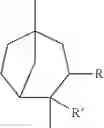
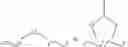
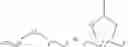
The present invention pertains to a method of counteracting a malodor by introducing a malodor counteracting effective amount of a novel 3.2.1-bicyclo-octane compound represented by formula:
-
- wherein R is selected from the group consisting of carbonyl and [1,3]dioxolane;
- R′ is selected from the group consisting of hydrogen and allyl;
- or R and R′ taken together represent
Inventors:
- Benjamin Amorelli 14 🇺🇸 Farmingdale, NJ, United States
- Johan Gerwin Lodewijk Pluyter 26 🇺🇸 Middletown, NJ, United States
- Adam P. Closson 12 🇺🇸 Red Bank, NJ, United States
Assignee:
- International Flavors & Fragrances Inc. 252 🇺🇸 New York, NY, United States
Applicant:
Interested in similar patents?
Get notified when new applications in this technology area are published.
Classification:
C07C49/443 » CPC main
Ketones; Ketenes; Dimeric ketenes ; Ketonic chelates; Saturated compounds containing a keto group being part of a ring polycyclic a keto group being part of a condensed ring system having two rings the condensed ring system containing eight or nine carbon atoms
A61K8/4973 » CPC further
Cosmetics or similar toilet preparations characterised by the composition containing organic compounds containing heterocyclic compounds with oxygen as the only hetero atom
A61Q15/00 » CPC further
Anti-perspirants or body deodorants
C07D307/937 » CPC further
Heterocyclic compounds containing five-membered rings having one oxygen atom as the only ring hetero atom ortho- or peri-condensed with carbocyclic rings or ring systems condensed with a ring other than six-membered; Not further condensed cyclopenta [b] furans or hydrogenated cyclopenta [b] furans with hydrocarbon or substituted hydrocarbon radicals directly attached in position 2, e.g. prostacyclins
C11D3/0068 » CPC further
Other compounding ingredients of detergent compositions covered in group; Other compounding ingredients characterised by their effect Deodorant compositions
C11D3/2072 » CPC further
Other compounding ingredients of detergent compositions covered in group; Organic compounds containing oxygen Aldehydes-ketones
C11D3/2096 » CPC further
Other compounding ingredients of detergent compositions covered in group; Organic compounds containing oxygen Heterocyclic compounds
A61L9/048 » CPC further
Disinfection, sterilisation or deodorisation of air using gaseous or vaporous substances, e.g. ozone using substances evaporated in the air without heating air treating gels
A61L9/127 » CPC further
Disinfection, sterilisation or deodorisation of air using gaseous or vaporous substances, e.g. ozone using substances evaporated in the air without heating; Apparatus, e.g. holders, therefor comprising a wick
A61L9/14 » CPC further
Disinfection, sterilisation or deodorisation of air using sprayed or atomised substances including air-liquid contact processes
C07C2602/44 » CPC further
Systems containing two condensed rings the rings having more than two atoms in common the bicyclo ring system containing eight carbon atoms
A61K8/49 IPC
Cosmetics or similar toilet preparations characterised by the composition containing organic compounds containing heterocyclic compounds
C07C49/653 » CPC further
Ketones; Ketenes; Dimeric ketenes ; Ketonic chelates; Unsaturated compounds containing a keto groups being part of a ring having unsaturation outside the ring polycyclic
C07D307/93 IPC
Heterocyclic compounds containing five-membered rings having one oxygen atom as the only ring hetero atom ortho- or peri-condensed with carbocyclic rings or ring systems condensed with a ring other than six-membered
A61Q13/00 IPC
Formulations or additives for perfume preparations
A61L9/04 IPC
Disinfection, sterilisation or deodorisation of air using gaseous or vaporous substances, e.g. ozone using substances evaporated in the air without heating
A61K8/35 » CPC further
Cosmetics or similar toilet preparations characterised by the composition containing organic compounds containing oxygen Ketones, e.g. benzophenone
C11D3/50 IPC
Other compounding ingredients of detergent compositions covered in group Perfumes
C07D303/04 IPC
Compounds containing three-membered rings having one oxygen atom as the only ring hetero atom; Compounds containing oxirane rings containing only hydrogen and carbon atoms in addition to the ring oxygen atoms
C07D317/72 » CPC further
Heterocyclic compounds containing five-membered rings having two oxygen atoms as the only ring hetero atoms having the hetero atoms in positions 1 and 3 spiro-condensed with carbocyclic rings
A61K31/122 IPC
Medicinal preparations containing organic active ingredients; Ketones having the oxygen directly attached to a ring, e.g. quinones, vitamin K, anthralin
A61L9/01 » CPC further
Disinfection, sterilisation or deodorisation of air Deodorant compositions
A61L11/00 IPC
Methods specially adapted for refuse
A01N35/00 IPC
Biocides, pest repellants or attractants, or plant growth regulators containing organic compounds containing a carbon atom having two bonds to hetero atoms with at the most one bond to halogen, e.g. aldehyde radical
Description
FIELD OF THE INVENTION
The present invention relates to novel chemical entities, a method of using the same as fragrance materials, and a method of using the same as malodor counteracting materials.
BACKGROUND OF THE INVENTION
There is an ongoing need in the fragrance industry to provide new chemicals to give perfumers and other persons the ability to create new fragrances for perfumes, colognes and personal care products.
A particular effort in the fragrance industry has also been made to provide new chemicals to treat and control malodors. “Malodor” is a term used to describe undesirable or unpleasant odor. Common sources of malodors include body perspiration, smoke, environmental odor such as mold and mildew, bathroom, and etc. Conventional perfumes including a variety of fragrance materials are developed to mask malodors, which generally function via two mechanisms: first, the fragrance materials blend with the malodor compound to provide a different and more desirable aroma; and second, the fragrance materials are employed to overwhelm the malodor compound. However, a large quantity of fragrance materials is required for both mechanisms, which in itself is often undesirable. Thus, there remains a need for new chemicals that are effective in counteracting malodors.
SUMMARY OF THE INVENTION
The present invention provides novel 3.2.1-bicyclo-octane compounds, the unexpected advantageous use thereof in enhancing, improving or modifying the fragrance of perfumes, colognes, toilet waters, fabric care products, personal products, and the like, and the unexpected advantageous use thereof in counteracting malodors.
One embodiment of the invention relates to novel 3.2.1-bicyclo-octane compounds represented by Formula Ia set forth below:
wherein R is selected from the group consisting of carbonyl and [1,3]dioxolane;
R′ is selected from the group consisting of hydrogen and allyl;
or R and R′ taken together represent
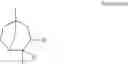
Another embodiment of the invention relates to novel 3.2.1-bicyclo-octane compounds represented by Formula Ib set forth below:
wherein R is selected from the group consisting of carbonyl and [1,3]dioxolane;
R′ is selected from the group consisting of hydrogen and allyl;
or R and R′ taken together represent
with the proviso that when R is carbonyl, R′ is allyl.
Another embodiment of the invention relates to a method of counteracting a malodor in air space or a substrate comprising the step of introducing a malodor counteracting effective amount of the novel compounds represented by Formula Ia and Formula Ib provided above.
Another embodiment of the invention relates to a malodor counteracting composition comprising the novel compounds represented by Formula Ia and Formula Ib provided above.
These and other embodiments of the present invention will be apparent by reading the following specification.
DETAILED DESCRIPTION OF THE INVENTION
In Formula Ia above, R is carbonyl or [1,3]dioxolane, R′ is hydrogen or allyl, or R and R′taken together represent
In Formula Ib above, R and R′, respectively, are defined the same as R and R′ in Formula Ia, with the proviso that when R is carbonyl, R′ is allyl.
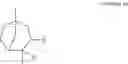
In one embodiment of the invention, the novel compounds of the present invention are represented by the following structures:
Those with the skill in the art will appreciate that
- Structure 1 is 2,6-dimethyl-3-oxa-tricyclo[4.2.1.0*2,4*]nonane;
- Structure 2 is 1,4-dimethyl-bicyclo[3.2.1]octan-3-one;
- Structure 3 is 4-allyl-1,4-dimethyl-bicyclo[3.2.1]octan-3-one;
- Structure 4 is 2,4,8-trimethyl-5-oxa-tricyclo [6.2.1.0*2,6*]undecane; and
- Structure 5 is 1,4-dimethyl-bicyclo[3.2.1]octan-3-dioxolane.
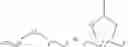
Novel 3.2.1-bicyclo-octane compounds of the present invention can be prepared with 1,4-dimethyl-4-vinyl-cyclohexene (commercially available from Evonik Industries) according to a reaction scheme shown as follows:
Those with skill in the art will recognize that the compounds of the present invention may have a number of chiral centers, thereby providing numerous isomers of the claimed compounds. It is intended herein that the compounds described herein include isomeric mixtures of such compounds, as well as those isomers that may be separated using techniques known to those having skill in the art. Suitable techniques include chromatography such as high performance liquid chromatography, referred to as HPLC, and particularly silica gel chromatography and solid phase microextraction, referred to as SPME.
The compounds of the present invention are surprisingly found to provide superior ingredient performance and possess unexpected advantages in malodor counteracting applications such as body perspiration, environmental odor such as mold and mildew, bathroom, and etc. The compounds of the present invention substantially eliminate the perception of malodors and/or prevent the formation of such malodors, thus, can be utilized with a vast number of functional products.
Examples of the functional products are provided herein to illustrate the various aspects of the present invention. However, they do not intend to limit the scope of the present invention. The functional products may include, for example, a conventional room freshener (or deodorant) composition such as room freshener sprays, an aerosol or other spray, fragrance diffusers, a wick or other liquid system, or a solid, for instance candles or a wax base as in pomanders and plastics, powders as in sachets or dry sprays or gels, as in solid gel sticks, clothes deodorants as applied by washing machine applications such as in detergents, powders, liquids, whiteners or fabric softeners, fabric refreshers, linen sprays, closet blocks, closet aerosol sprays, or clothes storage areas or in dry cleaning to overcome residual solvent notes on clothes, bathroom accessories such as paper towels, bathroom tissues, sanitary napkins, towellets, disposable wash cloths, disposable diapers, and diaper pail deodorants, cleansers such as disinfectants and toilet bowl cleaners, cosmetic products such as antiperspirant and deodorants, general body deodorants in the form of powders, aerosols, liquids or solid, or hair care products such as hair sprays, conditioners, rinses, hair colors and dyes, permanent waves, depilatories, hair straighteners, hair groom applications such as pomade, creams and lotions, medicated hair care products containing such ingredients as selenium sulphide, coal tar or salicylates, or shampoos, or foot care products such as foot powders, liquids or colognes, after shaves and body lotions, or soaps and synthetic detergents such as bars, liquids, foams or powders, odor control such as during manufacturing processes, such as in the textile finishing industry and the printing industry (inks and paper), effluent control such as in processes involved in pulping, stock yard and meat processings, sewage treatment, garbage bags, or garbage disposal, or in product odor control as in textile finished goods, rubber finished goods or car fresheners, agricultural and pet care products such as dog and hen house effluents and domestic animal and pet care products such as deodorants, shampoo or cleaning agents, or animal litter material and in large scale closed air systems such as auditoria, and subways and transport systems.
Thus, it will be seen that the composition of the invention is usually one in which the malodor counteractant is present together with a carrier by means of which or from which the malodor counteractant can be introduced into air space wherein the malodor is present, or a substrate on which the malodor has deposited. For example, the carrier can be an aerosol propellant such as a chlorofluoro-methane, or a solid such as a wax, plastics material, rubber, inert powder or gel. In a wick-type air freshener, the carrier is a substantially odorless liquid of low volatility. In several applications, a composition of the invention contains a surface active agent or a disinfectant, while in others, the malodor counteractant is present on a fibrous substrate. In many compositions of the invention there is also present a fragrance component which imparts a fragrance to the composition. The fragrances stated above can all be employed.
Malodor counteracting effective amount is understood to mean the amount of the inventive malodor counteractant employed in a functional product that is organoleptically effective to abate a given malodor while reducing the combined intensity of the odor level, wherein the given malodor is present in air space or has deposited on a substrate. The exact amount of malodor counteractant agent employed may vary depending upon the type of malodor counteractant, the type of the carrier employed, and the level of malodor counteractancy desired. In general, the amount of malodor counteractant agent present is the ordinary dosage required to obtain the desired result. Such dosage is known to the skilled practitioner in the art. In a preferred embodiment, when used in conjunction with malodorous solid or liquid functional products, e.g., soap and detergent, the compounds of the present invention may be present in an amount ranging from about 0.005 to about 50 weight percent, preferably from about 0.01 to about 20 weight percent, and more preferably from about 0.05 to about 5 weight percent, and when used in conjunction with malodorous gaseous functional products, the compounds of the present invention may be present in an amount ranging from about 0.1 to 10 mg per cubic meter of air.
The following are provided as specific embodiments of the present invention. Other modifications of this invention will be readily apparent to those skilled in the art. Such modifications are understood to be within the scope of this invention. All reagents were purchased from Sigma-Aldrich, Inc. unless otherwise noted. Further, as used herein all percentages are weight percent unless otherwise noted, mol is understood to be mole, μL is understood to be microliter, mL is understood to be milliliter, L is understood to be liter, g is understood to be gram, Kg is understood to be kilogram, oz is understood to be ounce, and mmHg be millimeters (mm) of mercury (Hg). IFF as used in the examples is understood to mean International Flavors & Fragrances Inc., New York, N.Y., USA.
Example I
Preparation of 2,5-Dimethyl-bicyclo[3.2.1]oct-2-ene: Phosphoric acid (145 g, 1.48 mol) was added to a solution of 1,4-dimethyl-4-vinyl-cyclohexene (403 g, 2.96 mol, commercially available from Evonik Industries) in toluene (500 mL) and refluxed for 6 hours. The reaction mixture was subsequently quenched with a solution of sodium hydroxide (NaOH). The organic layer was separated, dried over sodium sulfate (Na2SO4), and fractionated to provide 2,5-dimethyl-bicyclo[3.2.1]oct-2-ene (280 g) having a boiling point of 87° C. at a pressure of 27 mmHg.
1H NMR: 1.09 ppm (s, 3H), 1.33-1.58 ppm (m, 4H), 1.65 ppm (s, 3H), 1.68-1.82 ppm (m, 3H), 2.08 ppm (d, 1H, J=17 Hz), 2.17 ppm (t, 1H, J=4 Hz), 5.07 ppm (m, 1H)
2,5-Dimethyl-bicyclo[3.2.1]oct-2-ene was described as having green, terpineol, woody, and black pepper notes.
Example II
Preparation of 2,6-Dimethyl-3-oxa-tricyclo [4.2.1.0*2,4*]nonane (Structure 1): 2,5-Dimethyl-bicyclo[3.2.1]oct-2-ene (800 g, 5.88 mol, obtained as above in EXAMPLE I) was fed into a solution of peracetic acid (CH3CO3H, 32%, 1.466 Kg, 6.18 mol) and sodium acetate (CH3CO2Na, 72 g, 0.882 mol), and cooled to 0° C. The reaction mixture was aged for 6 hours, and subsequently quenched with water and toluene. The reaction mixture was shaken and split. The organic layer was first washed with a solution of sodium carbonate (Na2CO3), and then with a solution of sodium sulfite (Na2SO3). Fractional distillation of the organic layer provided 2,6-dimethyl-3-oxa-tricyclo[4.2.1.0*2,4*]nonane (734 g) having a boiling point of 31° C. at a pressure of 18 mmHg.
1H NMR: 0.92-1.34 ppm (m, 1H), 0.97 ppm (s, 3H), 1.31 ppm (s, 3H), 1.46 ppm (t, 2H, J=7.7 Hz), 1.61 ppm (d, 1H, J=15.0 Hz), 1.68-1.83 ppm (m, 4H), 2.21 ppm (t, 1H, J=5.0 Hz), 2.79 ppm (d, 1H, J=4.6 Hz)
2,6-Dimethyl-3-oxa-tricyclo[4.2.1.0*2,4*]nonane was described as having camphor, woody, fresh, sweet, minty, and thujone-like notes.
Example III
Preparation of 1,4-Dimethyl-bicyclo[3.2.1]octan-3-one (Structure 2): 2,6-Dimethyl-3-oxa-tricyclo[4.2.1.0*2,4*]nonane (381 g, 2.51 mol, obtained as above in EXAMPLE II) was fed into a solution of boron trifluoride diethyletherate (BF3.O(C2H5)2, BF3, 35 g, 0.251 mol) in toluene (500 mL) while the pot temperature was maintained at about 30° C. and the aging process continued for 6 hours. The reaction mixture was subsequently quenched with water and washed with a Na2CO3 solution. Fractional distillation of the organic layer provided 1,4-dimethyl-bicyclo[3.2.1]octan-3-one (337 g) having a boiling point of 43° C. at a pressure of 1 mmHg.
1H NMR: 0.99 ppm (d, ˜34% of 3H, J=6.5 Hz), 1.12 ppm (d, ˜66% of 3H, J=6.5 Hz), 1.13 ppm (s, 3H), 1.23-1.54 ppm (m, 4H), 1.62-2.44 ppm (m, 4H), 1.82 ppm (d, ˜34% of 1H, J=11.6 Hz), 1.88 ppm (d, ˜66% of 1H, J=12.2 Hz), 2.14 ppm (d, ˜34% of 1H, J=15.8 Hz)
1,4-Dimethyl-bicyclo[3.2.1]octan-3-one was described as having woody, fresh, minty, and menthol notes.
Example IV
Preparation of 4-Allyl-1,4-dimethyl-bicyclo[3.2.1]octan-3-one (Structure 3): Hydrochloric acid (HCl, 6 g) was added to a solution of 1,4-dimethyl-bicyclo[3.2.1]octan-3-one (400 g, 2.6 mol, obtained as above in EXAMPLE III), trimethylorthoformate (HC(OCH3)3, 280 g, 2.6 mol), and methanol (CH3OH, 400 mL). The reaction mixture was aged for 3 hours and subsequently quenched with a NaOH solution. Allyl alcohol (CH2CHCH2OH, 300 g, 5.2 mol), acetic acid (CH3COOH, 50 g), and methanesulfonic acid (CH3SO2OH, MSA, 5 g) were added and aged at reflux. The volatile ingredients were distilled off with a Dean Stark trap. The resulting mixture was washed with a Na2CO3 solution. Fractional distillation of the organic layer provided 4-allyl-1,4-dimethyl-bicyclo[3.2.1]octan-3-one (127 g) having a boiling point of 64° C. at a pressure of 0.2 mmHg.
1H NMR: 1.02 ppm (s, 3H), 1.13 ppm (s, 3H), 1.35-1.48 ppm (m, 3H), 1.58-1.67 ppm (m, 1H), 1.69-1.78 ppm (m, 1H), 2.03-2.13 ppm (m, 3H), 2.22-2.33 ppm (m, 2H), 2.46-2.49 ppm (d, 1H, J=14.2 Hz), 5.01-5.10 ppm (m, 2H), 5.61-5.73 ppm (m, 1H)
4-Allyl-1,4-dimethyl-bicyclo[3.2.1]octan-3-one was described as having amber, fruity, dusty, and musty notes.
Example V
Preparation of 2,4,8-Trimethyl-5-oxa-tricyclo[6.2.1.0*2,6*]undecane (Structure 4): 4-Allyl-1,4-dimethyl-bicyclo[3.2.1]octan-3-one (288 g, 1.5 mol, obtained as above in EXAMPLE IV) was added to a solution of Red-Al (65%, 506 g, 1.5 mol) in toluene at 75° C. The reaction mixture was aged for 3 hours while the temperature was maintained at 75° C., then cooled to room temperature, and subsequently quenched with a solution of sodium bicarbonate (NaHCO3). Distillation of the organic layer provided 4-allyl-1,4-dimethyl-bicyclo[3.2.1]octan-3-ol (288 g, 1.5 mol), which was then added to a MSA solution (30 g) in toluene (500 mL) and heated to reflux for 3 hours. The reaction mixture was subsequently washed with a Na2CO3 solution. Fractional distillation of the organic layer provided 2,4,8-trimethyl-5-oxa-tricyclo[6.2.1.0*2,6*]undecane (170 g) having a boiling point of 62° C. at a pressure of 0.3 mmHg.
1H NMR: 1.01 ppm (s, 3H), 1.11 ppm (s, 3H), 1.12-1.42 ppm (m, 4H), 1.30 ppm (d, 3H, J=6.1 Hz), 1.50 ppm (d, 1H, J=12.1 Hz, of d, J=6.0 Hz), 1.62-1.90 ppm (m, 5H), 1.98 ppm (t, 1H, J=5.5 Hz), 3.60 ppm (t, 1H, J=8.3 Hz), 4.29 ppm (m, 1H)
2,4,8-Trimethyl-5-oxa-tricyclo[6.2.1.0*2,6*]undecane was described as having green, earthy, fruity, fresh, and woody notes.
Example VI
Preparation of 1,4-Dimethyl-bicyclo[3.2.1]octan-3-dioxolane (Structure 5): 1,4-Dimethyl-bicyclo[3.2.1]octan-3-one (205 g, 1.35 mol, obtained as above in EXAMPLE III) was added to a solution of ethylene glycol ((CH2OH)2, 103 g, 1.69 mol) and PTSA (10 g), and refluxed for 4 hours. The reaction mixture was subsequently washed with water followed by a Na2CO3 solution. Fractional distillation of the organic layer provided the 1,4-dimethyl-bicyclo[3.2.1]octan-3-dioxolane (217 g) having a boiling point of 60° C. at a pressure of 16 mmHg.
1H NMR: 0.83-0.97 ppm (3d, 3H), 0.99-1.03 ppm (2s, 3H), 1.07-1.54 ppm (m, 6H), 1.61-2.12 ppm (m, 4H), 3.72-3.99 ppm (m, 4H)
1,4-Dimethyl-bicyclo[3.2.1]octan-3-dioxolane was described as having fruity, fresh, and camphor notes.
Example VIII
Establishment of Malodor Models: It is known that the perspirative malodors of human body, particularly sweat, are associated with the production of several unpleasant smelling organic acids, particularly isovaleric acid (“IVA”). The commercial sample of this malodorous material (commercially available at Sigma-Aldrich Inc.) was thus used as a model compound to assess the effectiveness of sweat malodor counteractants. The mold/mildew malodor model was prepared based on applicant's proprietary formulations for assessing the effectiveness of mold/mildew malodor counteractants.
Preparation of Test Samples: Two aluminum dishes were placed in an 8 oz glass jar. A malodor material was pipetted into one aluminum dish, and a compound of the present invention diluted in a solvent (10%) or a solvent alone control was pipetted into the other aluminum dish. The jar was then capped and the samples were allowed to equilibrate for one hour before the testing.
Testing Procedure: Test samples were presented in a blind and random order to 15-18 internal panelists (consisting of men/women with an age range of 25 to 55). However, different odor samples were arranged in an alternative order (for example, sweat, mold/mildew, sweat, mold/mildew, and etc.).
The panelists were instructed to take the steps of i) sniff jars containing only the malodor materials for familiarization prior to the testing; ii) uncap a jar; iii) place their noses at a distance of about 3-4 inches above the opening; iv) take short sniffs for 3 seconds; and v) provide a rank of the malodor coverage using an intensity scale of 1 to 5, where 1 represents “No Coverage”, 3 represents “Moderate Coverage”, and 5 represents “Excellent Coverage”. The means for each sample was then calculated.
Results and Discussion: The mean ranks of the malodor coverage for the above test were as follows:
| Compound (10%) | Control |
| Structure | Structure | Structure | Structure | Solvent- | |
| 1 | 2 | 4 | 5 | Only | |
| Vapor Pressure | 2186 | 4305 | 1045 | 1281 | |
| (μg/L) | |||||
| Sweat Malodor | 3.59 | 3.57 | 3.11 | 2.92 | 1 |
| Mold/Mildew | 3.87 | 3.63 | 2.79 | 2.39 | 1 |
| Malodor | |||||
Compounds of the present invention (Structures 1, 2, 4, and 5) were demonstrated effective in counteracting sweat and mold/mildew malodors.
Claims
What is claimed is:1. A method of counteracting a malodor in air space or a substrate comprising the step of introducing a malodor counteracting effective amount of a compound of formula:
wherein R is selected from the group consisting of carbonyl and [1,3]dioxolane;
R′ is selected from the group consisting of hydrogen and allyl;
or R and R′ taken together represent
2. The method of claim 1, wherein the compound is selected from the group consisting of
2,6-dimethyl-3-oxa-tricyclo[4.2.1.0*2,4*]nonane;
4-allyl-1,4-dimethyl-bicyclo [3.2.1]octan-3-one;
2,4,8-trimethyl-5-oxa-tricyclo[6.2.1.0*2,6*]undecane;
1,4-dimethyl-bicyclo[3.2.1]octan-3-dioxolan; and
a mixture thereof.
3. The method of claim 1, wherein the compound is used in a malodorous solid or liquid functional product, and wherein the malodor counteracting effective amount is from about 0.005% to about 50% by weight.
4. The method of claim 1, wherein the compound is used in a malodorous solid or liquid functional product, and wherein the malodor counteracting effective amount is from about 0.01% to about 20% by weight.
5. The method of claim 1, wherein the compound is used in a malodorous solid or liquid functional product, and wherein the malodor counteracting effective amount is from about 0.05% to about 5% by weight.
6. The method of claim 1, wherein the malodor in air space, and wherein the malodor counteracting effective amount is from about 0.1 to 10 mg per cubic meter of air.
7. A composition for counteracting a malodor in air space or a substrate comprising a compound of formula:
wherein R is selected from the group consisting of hydrogen, acetate, carbonate monomethyl ester, and allyloxy;
and wherein the broken line represents a single or double bond.
8. The composition of claim 7, wherein the compound is selected from the group consisting of
2,6-dimethyl-3-oxa-tricyclo[4.2.1.0*2,4*]nonane;
4-allyl-1,4-dimethyl-bicyclo [3.2.1]octan-3-one;
2,4,8-trimethyl-5-oxa-tricyclo [6.2.1.0*2,6*]undecane;
1,4-dimethyl-bicyclo[3.2.1]octan-3-dioxolan; and
a mixture thereof.
9. The composition of claim 7, wherein the composition is incorporated in a functional product selected from the group consisting of a room freshener spray, a fragrance diffuser, a candle, a sachet, a clothes deodorant, a detergent, a fabric softener, a fabric refresher, a linen spray, a disposable diaper, a diaper pail deodorant, an antiperspirant, a deodorant, a garbage bag, a car freshener, a pet care product, and an animal litter material.
Images & Drawings included:



Sources:
- United States Patent and Trademark Office - verify current appl. status at the USPTO↗
Similar patent applications:
- » 20120087885
3.2.1-bicyclo-octane compounds - » 20120088922
3.2.1-bicyclo-octane compounds
Recent applications in this class:
- » 20140256782 2014-09-11
Opsin-binding ligands, compositions and methods of use - » 20120010301 2012-01-12
Organoleptic compounds - » 20110034736 2011-02-10
Organoleptic compounds - » 20100120659 2010-05-13
Organoleptic compounds - » 20090156456 2009-06-18
Organoleptic compounds - » 20080274927 2008-11-06
Bicyclo(3.3.1)nonanes and bicyclo(3.3.1)nonenes and their use as flavor or fragrance ingredient
Recent applications for this Assignee:
- » 20230172820 2023-06-08
Compositions Containing Microcapsules - » 20230166181 2023-06-01
Device and method for integrating scent into virtual reality environment - » 20230146613 2023-05-11
GEL CANDLES - » 20230046103 2023-02-16
Stable microcapsule compositions - » 20220324778 2022-10-13
Circular economic methods for fragrance ingredients - » 20220250025 2022-08-11
PROTEIN MICROCAPSULES AND METHOD OF PREPARING THE SAME - » 20220127278 2022-04-28
Synthesis of 14-methyl-16-oxabicyclo[10.3.1]hexadec-12-ene - » 20220071864 2022-03-10
Hydroxyethyl cellulose microcapsules - » 20220071863 2022-03-10
Microcapsule compositions prepared from polysaccharides - » 20220071862 2022-03-10
Microcapsule compositions