Fabric with antimicrobial properties
US20120087951A1
2012-04-12
13/207,392
2011-08-10
✅ Patent granted
US 8,518,427 B2
2013-08-27
-
-
Frederick Krass | Michael P Cohen
McNeely, Hare & War LLP | Kevin J. McNeely
2031-08-10
Abstract:
A method of producing a fabric with antimicrobial properties that includes liquefying bamboo to produce a slurry, adding an antimicrobial element to the slurry, adding a non-bamboo fiber to the slurry to create a mixture and extruding the mixture to produce a fiber. The antimicrobial fabric may include a composition of 69% bamboo, 30% cotton and 1% silver.
Inventors:
- BERT H. RUBINSKY 2 🇺🇸 JACKSON, MS, United States
- Bert Rubinsky 1 🇺🇸 Jackson, MS, United States
- Herman A. Taylor, JR. 1 🇺🇸 Ridgeland, MS, United States
Assignee:
- R & T Fabric, LLC 1 🇺🇸 Ridgeland, MI, United States
Applicant:
Interested in similar patents?
Get notified when new applications in this technology area are published.
Classification:
A01N25/08 IPC
Biocides, pest repellants or attractants, or plant growth regulators, characterised by their forms, or by their non-active ingredients or by their methods of application, e.g. seed treatment or sequential application ; Substances for reducing the noxious effect of the active ingredients to organisms other than pests containing solids as carriers or diluents
D01F1/103 » CPC main
Addition of substances to the spinning solution or to the melt; Other agents for modifying properties Agents inhibiting growth of microorganisms
A61L15/44 » CPC further
Chemical aspects of, or use of materials for, bandages, dressings or absorbent pads; Bandages, dressings or absorbent pads for physiological fluids such as urine or blood, e.g. sanitary towels, tampons; Use of materials characterised by their function or physical properties Medicaments
A61L15/46 » CPC further
Chemical aspects of, or use of materials for, bandages, dressings or absorbent pads; Bandages, dressings or absorbent pads for physiological fluids such as urine or blood, e.g. sanitary towels, tampons; Use of materials characterised by their function or physical properties Deodorants or malodour counteractants, e.g. to inhibit the formation of ammonia or bacteria
D01F2/00 » CPC further
Monocomponent artificial filaments or the like of cellulose or cellulose derivatives; Manufacture thereof
A61L2300/104 » CPC further
Biologically active materials used in bandages, wound dressings, absorbent pads or medical devices containing or releasing inorganic materials; Metals or metal compounds, e.g. salts such as bicarbonates, carbonates, oxides, zeolites, silicates Silver, e.g. silver sulfadiazine
Y10T442/2033 » CPC further
Fabric [woven, knitted, or nonwoven textile or cloth, etc.]; Coated or impregnated woven, knit, or nonwoven fabric which is not [a] associated with another preformed layer or fiber layer or, [b] with respect to woven and knit, characterized, respectively, by a particular or differential weave or knit, wherein the coating or impregnation is neither a foamed material nor a free metal or alloy layer Coating or impregnation formed [e.g., by interfacial condensation, coagulation, precipitation, etc.]
Y10T442/2525 » CPC further
Fabric [woven, knitted, or nonwoven textile or cloth, etc.]; Coated or impregnated woven, knit, or nonwoven fabric which is not [a] associated with another preformed layer or fiber layer or, [b] with respect to woven and knit, characterized, respectively, by a particular or differential weave or knit, wherein the coating or impregnation is neither a foamed material nor a free metal or alloy layer Coating or impregnation functions biologically [e.g., insect repellent, antiseptic, insecticide, bactericide, etc.]
Y10T442/2762 » CPC further
Fabric [woven, knitted, or nonwoven textile or cloth, etc.]; Coated or impregnated woven, knit, or nonwoven fabric which is not [a] associated with another preformed layer or fiber layer or, [b] with respect to woven and knit, characterized, respectively, by a particular or differential weave or knit, wherein the coating or impregnation is neither a foamed material nor a free metal or alloy layer Coated or impregnated natural fiber fabric [e.g., cotton, wool, silk, linen, etc.]
Y10T442/3407 » CPC further
Fabric [woven, knitted, or nonwoven textile or cloth, etc.]; Woven fabric [i.e., woven strand or strip material]; Including a free metal or alloy constituent Chemically deposited metal layer [e.g., chemical precipitation or electrochemical deposition or plating, etc.]
A01N25/34 » CPC further
Biocides, pest repellants or attractants, or plant growth regulators, characterised by their forms, or by their non-active ingredients or by their methods of application, e.g. seed treatment or sequential application ; Substances for reducing the noxious effect of the active ingredients to organisms other than pests Shaped forms, e.g. sheets, not provided for in any other sub-group of this main group
A01N2300/00 » CPC further
Combinations or mixtures of active ingredients covered by classes - with other active or formulation relevant ingredients, e.g. specific carrier materials or surfactants, covered by classes -
A01N59/16 » CPC further
Biocides, pest repellants or attractants, or plant growth regulators containing elements or inorganic compounds Heavy metals; Compounds thereof
A01P1/00 IPC
Disinfectants; Antimicrobial compounds or mixtures thereof
D01F1/10 IPC
Addition of substances to the spinning solution or to the melt Other agents for modifying properties
A01N55/02 IPC
Biocides, pest repellants or attractants, or plant growth regulators, containing organic compounds containing elements other than carbon, hydrogen, halogen, oxygen, nitrogen and sulfur containing metal atoms
D03D15/00 IPC
Woven fabrics characterised by the material, structure or properties of the fibres, filaments, yarns, threads or other warp or weft elements used
B32B9/02 IPC
Layered products comprising a layer of a particular substance not covered by groups - comprising animal or vegetable substances, e.g. cork, bamboo, starch
A01N65/44 » CPC further
Biocides, pest repellants or attractants, or plant growth regulators containing material from algae, lichens, bryophyta, multi-cellular fungi or plants, or extracts thereof; Liliopsida [monocotyledons] Poaceae or Gramineae [Grass family], e.g. bamboo, lemon grass or citronella grass
Description
CROSS-REFERENCE TO RELATED APPLICATIONS
This utility patent application claims priority to U.S. provisional patent application Ser. No. 61,372,168 filed on Aug. 10, 2011, which is incorporated by reference herein.
TECHNICAL FIELD
The technology relates to fabrics with antimicrobial properties, in particular, fabrics used as wound dressings or in other situations to reduce chances of infection.
BACKGROUND
The spread of infectious disease through direct skin contact and open wounds is a well-known problem. In addition, the spread of “superbugs” such as methicillin-resistant Staphylococcus aureus (MRSA) has become a major problem in U.S.
MRSA can spread in hospitals and other health care facilities, and it can also be picked up in fitness centers, schools, and other public places. MRSA bacteria are resistant to most common antibiotics.
Hospitals typically take precautions to stop the spread of MRSA by stepping up infection control procedures. For example, hospitals implement various infection control procedures that include hand washing, skin disinfectants, sterilization, barrier protection, protective clothing and garments, sterile wound dressings and linen laundering procedures.
Despite these efforts at infection control, certain microbes and bacteria persist and continue to cause infection at an alarming rate. Thus, improvements in products and procedures to further inhibit the spread of infections are desired.
SUMMARY
Antimicrobial and antibacterial textiles can play a part in a strategic plan to reduce healthcare associated infections. The present invention relates to the developments of fabrics, wraps and dressings that have improved antimicrobial/antimicrobial properties by combinations of bamboo, heavy metal and other fibers in the textile product.
The natural antibacterial/antimicrobial properties of bamboo fabric come from inherent qualities of bamboo. One of the compounds found in bamboo is coconut oil, which may contribute to the antimicrobial properties. Bamboo does not require the use of pesticides due to this natural antifungal antibacterial agent. It is rarely attacked by pests or infected by pathogens. The same natural substance that protects bamboo growing in the field, functions in the spun bamboo fibers.
In addition, the anti-infective activity of some heavy metals is well known. For example, heavy metals such as silver have been used as a topical therapy for burn wounds as an antiseptics or disinfectant. Inactivation of bacteria on surfaces containing silver and zinc ions has also been demonstrated.
In one general aspect, a method of producing a fabric with antimicrobial properties includes liquefying bamboo to produce a slurry, adding an antimicrobial element to the slurry, adding a non-bamboo fiber to the slurry to create a mixture and extruding the mixture to produce a fiber.
Embodiments may include one or more of the following features. For example, the method may include crushing the bamboo into fibers or small pieces. Liquefying the bamboo may include adding water and/or a solvent mixture.
The slurry may also be pressurized and/or heated to a high temperature. Impurities can also be removed from the slurry.
The antimicrobial element may be a heavy metal, such as, for example, silver. The silver may be silver ions or silver nanoparticles.
Extruding the mixture may be performed by passing the mixture through spinnerets to create the fiber. The fiber can also be spun to produce a thread and the thread weaved produce the antimicrobial fabric.
In another general aspect, an antimicrobial fabric includes bamboo fiber, a non-bamboo fiber and an antimicrobial element. The antimicrobial element may be a heavy metal such as silver and the non-bamboo fiber may cotton. The antimicrobial fabric may be composed of 69% bamboo, 30% cotton and 1% silver.
DESCRIPTION OF THE DRAWINGS
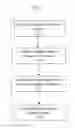
FIG. 1 illustrates a method of producing an antimicrobial fabric;
FIGS. 2-6 are tables that provide test results for the antimicrobial fabric; and
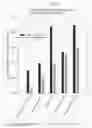
FIGS. 7 and 8 are graphs that illustrate test results for the antimicrobial fabric.
DETAILED DESCRIPTION
In one embodiment, a textile with antimicrobial properties is produced by a process described with respect to FIG. 1. First, the bamboo is liquefied into a slurry (operation 110). Typically, the bamboo is crushed into fibers or small pieces. The slurry may be produced by, for example, using water and a solvent mixture. The water and solvents may be added in a vat that is pressurized and heated until the bamboo fibers dissolve.
Impurities are then removed from the slurry. Silver is added to the liquefied bamboo (operation 120). The may be particles or silver nanoparticles are added to the slurry. Silver oxide or silver ions may also be used.
Then, cotton is added to the mixture (operation 130). Other fibers may be added to increase the absorption of silver particles into the fibers.
The composite is then woven into fabric (operation 140). For example, it may be extruded through spinnerets to create a thin and strong fiber. The fibers are then spun into a thread and weaved into the fabric.
The fabric may be further processed such as, for example, dyed to a desired color or cut to size for use in sheets or bandages.
In one of the embodiments of the novel material, the fabric is approximately 69% bamboo, 30% cotton and 1% silver. Other combinations of bamboo, cotton and an antimicrobial element such as a heavy metal may be used. For example, the composition may be 49% bamboo, 50% cotton and 1% silver. In other embodiments, synthetic fibers, such as spandex, may be added to the fabric.
Test reports have demonstrated that the fabric made of bamboo, cotton and silver has improved antimicrobial properties.
FIGS. 2-6 are tables that illustrate test results showing the antibacterial properties of the novel material as compared to other fabrics. Swatches of treated and untreated fabric were cut into 4.8 cm diameter discs which were inoculated with 1 ml of a test organism in a concentration of 1-2×10⁵. Each stack was aseptically transferred to sterile screw cap jars and incubated at 35° C. Treated and untreated samples with no inoculums were also set up as control. After specified time period the set of treated and untreated swatches were removed from the incubator and were neutralized with 100 ml of a neutralizer. Plate counts were performed and incubation was carried out according to requirements for each organism.
Percent reduction of bacteria was calculated by the following formulas:
% R=100 (B−A)/B
-
- where: R: % reduction
- A: the number of bacteria recovered from the inoculated treated test specimen swatches in the jar incubated over the desired contact period
- B: the number of bacteria recovered from the inoculated treated test specimen swatches in the jar immediately after inoculation (at “0” contact time).
The data is presented in Colony Forming Units (CFU)/ml after control and test samples were exposed to organisms. In all cases, the novel material (B++) showed significant inhibition of the four bacterial species tested at 24 hours after inoculation. Additionally, the novel materials showed significant antimicrobial activity at 6 hours after inoculation and two orders of magnitude inhibition at 18 and 24 hours against Staphylococcus Aureus MRSA. These results stongly suggest that both the B++ and the treated B++ Bandage could play a significant role in reducing the rate of nosocomial infections.
Another test result is shown graphically in FIGS. 7 and 8. The results shown in FIG. 7 are a comparison of the novel material to bamboo material and cotton-nylon mixtures respectively.
Since certain changes may be made in the above process without departing from the scope of the invention herein involved, it is intended that all matter contained in the above description or shown in the accompanying drawing shall be interpreted in an illustrative and not in a limiting sense. Accordingly, other implementations are within the scope of the following claims.
Claims
1. A method of producing a fabric with antimicrobial properties, the method comprising:
liquefying bamboo to produce a slurry;
adding an antimicrobial element to the slurry;
adding a non-bamboo fiber to the slurry to create a mixture; and
extruding the mixture to produce a fiber.
2. The method of claim 1, further comprising:
crushing the bamboo into fibers.
3. The method of claim 1, further comprising:
crushing the bamboo into small pieces.
4. The method of claim 1, wherein liquefying bamboo to produce the slurry includes adding water.
5. The method of claim 1, wherein liquefying bamboo to produce the slurry includes adding a solvent mixture.
6. The method of claim 1, wherein liquefying the bamboo further comprises pressurizing the slurry.
7. The method of claim 1, wherein liquefying the bamboo further comprises heating the slurry.
8. The method of claim 1, further comprising:
removing impurities from the slurry.
9. The method of claim 1, wherein adding the antimicrobial element comprises adding a heavy metal to the slurry.
10. The method of claim 1, wherein adding the antimicrobial element comprises adding silver to the slurry.
11. The method of claim 10, wherein adding silver comprises adding silver ions to the slurry.
12. The method of claim 1, wherein extruding the mixture comprises extruding the mixture through spinnerets to create the fiber.
13. The method of claim 1, further comprising:
spinning the fiber to produce a thread; and
weaving the thread to produce a fabric.
14. An antimicrobial fabric, comprising:
bamboo fiber;
a non-bamboo fiber;
and an antimicrobial element.
15. The antimicrobial fabric of claim 14, wherein the antimicrobial element comprises heavy metal.
16. The antimicrobial fabric of claim 14, wherein the antimicrobial element comprises silver.
17. The antimicrobial fabric of claim 14, wherein the non-bamboo fiber comprises cotton.
18. The antimicrobial fabric of claim 14, wherein the fabric the non-bamboo fiber is cotton and the antimicrobial element is silver such that the antimicrobial fabric is composed of 69% bamboo, 30% cotton and 1% silver.
Images & Drawings included:



Sources:
- United States Patent and Trademark Office - verify current appl. status at the USPTO↗
Similar patent applications:
Recent applications in this class:
- » 20250243606 2025-07-31
ANTIBACTERIAL AND ANTIVIRAL FABRICS - » 20250223728 2025-07-10
BIOCIDAL AND PHOTOLUMINESCENT TREATMENT OF VISCOSE FIBRE IMMEDIATELY FOLLOWING THE ADDITION OF CARBON DISULFIDE IN THE CONVERSION OF CELLULOSE INTO VISCOSE (XANTHATION) - » 20250171932 2025-05-29
METHOD OF PREPARING ANTIBACTERIAL ANTI-YELLOWING ZNO ANTIMONY-FREE POLYESTER FIBER - » 20250154691 2025-05-15
ANTIMICROBIAL ARTICLES FOR TEXTILES - » 20250137170 2025-05-01
FIBERS WITH EMBEDDED PARTICLES AND METHODS OF PRODUCING FIBERS WITH EMBEDDED PARTICLES - » 20240417888 2024-12-19
FIBRE MATERIAL HAVING AN ANTIMICROBIAL AND ODOUR-NEUTRALISING EFFECT - » 20240150939 2024-05-09
GRAPHENE INCORPORATED POLYMER FIBRE, CORRESPONDING FABRIC, PROCESS OF PREPARATION, AND APPLICATIONS THEREOF - » 20230313419 2023-10-05
POLYMERIC COMPOSITION AND METHOD WITH HERBAL MASTERBATCH - » 20230193516 2023-06-22
BICOMPONENT FABRICS - » 20230193515 2023-06-22
SELF-CLEANING FABRIC COVERS FOR AIRCRAFT FIXTURES