ANTIMICROBIAL FOAM
US20120087966A1
2012-04-12
13/271,012
2011-10-11
Abstract:
A resilient foam material having an active antimicrobial bound to, incorporated within, and projecting from its surface is provided for incapacitating or destroying microbes. The antimicrobial has an atomic structure that is capable of mechanically piercing or lysing a microbe thereby incapacitating or destroying the microbe. The resilient antimicrobial foam material may be manufactured into a resilient antimicrobial foam product for drawing across a surface and mechanically incapacitating or destroying microbes on the surface. The resilient antimicrobial foam material may be manufactured into a membrane for providing a sterile barrier for a surface. The resilient antimicrobial foam material is manufactured by combining the antimicrobial with a foam polymer material, heating the foam polymer material under pressure to a temperate that does not deactivate the antimicrobial, incorporating a blowing agent, cooling the material, and extruding the material.
Assignee:
- OBE Goods, LLC 1 🇺🇸 Linn, MO, United States
Interested in similar patents?
Get notified when new applications in this technology area are published.
Classification:
A61L15/425 » CPC further
Chemical aspects of, or use of materials for, bandages, dressings or absorbent pads; Bandages, dressings or absorbent pads for physiological fluids such as urine or blood, e.g. sanitary towels, tampons; Use of materials characterised by their function or physical properties Porous materials, e.g. foams or sponges
A61L15/46 » CPC further
Chemical aspects of, or use of materials for, bandages, dressings or absorbent pads; Bandages, dressings or absorbent pads for physiological fluids such as urine or blood, e.g. sanitary towels, tampons; Use of materials characterised by their function or physical properties Deodorants or malodour counteractants, e.g. to inhibit the formation of ammonia or bacteria
B82Y30/00 » CPC further
Nanotechnology for materials or surface science, e.g. nanocomposites
C08J9/008 » CPC further
Working-up of macromolecular substances to porous or cellular articles or materials; After-treatment thereof; Use of inorganic compounding ingredients; Nanosized fillers, i.e. having at least one dimension below 100 nanometers Nanoparticles
A61L2300/404 » CPC further
Biologically active materials used in bandages, wound dressings, absorbent pads or medical devices characterised by a specific therapeutic activity or mode of action Biocides, antimicrobial agents, antiseptic agents
C08J2201/026 » CPC further
Foams characterised by the foaming process characterised by mechanical pre- or post-treatments Crosslinking before of after foaming
C08J2201/03 » CPC further
Foams characterised by the foaming process characterised by mechanical pre- or post-treatments Extrusion of the foamable blend
C08J2207/12 » CPC further
Foams characterised by their intended use Sanitary use, e.g. diapers, napkins or bandages
A01N2300/00 » CPC further
Combinations or mixtures of active ingredients covered by classes - with other active or formulation relevant ingredients, e.g. specific carrier materials or surfactants, covered by classes -
A01N25/34 » CPC further
Biocides, pest repellants or attractants, or plant growth regulators, characterised by their forms, or by their non-active ingredients or by their methods of application, e.g. seed treatment or sequential application ; Substances for reducing the noxious effect of the active ingredients to organisms other than pests Shaped forms, e.g. sheets, not provided for in any other sub-group of this main group
A01N33/12 » CPC further
Biocides, pest repellants or attractants, or plant growth regulators containing organic nitrogen compounds; Amines; Quaternary ammonium compounds Quaternary ammonium compounds
A01N55/00 » CPC further
Biocides, pest repellants or attractants, or plant growth regulators, containing organic compounds containing elements other than carbon, hydrogen, halogen, oxygen, nitrogen and sulfur
A01N25/16 » CPC further
Biocides, pest repellants or attractants, or plant growth regulators, characterised by their forms, or by their non-active ingredients or by their methods of application, e.g. seed treatment or sequential application ; Substances for reducing the noxious effect of the active ingredients to organisms other than pests Foams
A61K9/12 IPC
Medicinal preparations characterised by special physical form; Dispersions; Emulsions Aerosols; Foams
A61P31/00 » CPC further
Antiinfectives, i.e. antibiotics, antiseptics, chemotherapeutics
B08B1/00 IPC
Cleaning by methods involving the use of tools, brushes, or analogous members
A61L15/22 IPC
Chemical aspects of, or use of materials for, bandages, dressings or absorbent pads; Bandages, dressings or absorbent pads for physiological fluids such as urine or blood, e.g. sanitary towels, tampons containing macromolecular materials
A01P1/00 IPC
Disinfectants; Antimicrobial compounds or mixtures thereof
C08J9/12 » CPC main
Working-up of macromolecular substances to porous or cellular articles or materials; After-treatment thereof using blowing gases generated by a previously added blowing agent by a physical blowing agent
B82Y40/00 » CPC further
Manufacture or treatment of nanostructures
B82Y5/00 » CPC further
Nanobiotechnology or nanomedicine, e.g. protein engineering or drug delivery
B82Y99/00 IPC
Subject matter not provided for in other groups of this subclass
Description
CROSS-REFERENCE TO RELATED APPLICATIONS
This application claims priority in U.S. Provisional Patent Application No. 61/391,775, filed Oct. 11, 2010, which is incorporated herein by reference.
BACKGROUND
The present invention relates generally to antimicrobial materials, and more specifically to a foam material having an antimicrobial nanostructure.
Foam material, including sponges, cleaning pads, blades for squeegees, and the like, are used to clean various surface, often in conjunction with one or more cleaning agents applied directly to the foam or surface. The cleaning agents used act either to chemically or mechanically incapacitate or destroy microbial agents.
Cleaning agents applied to the surface to be cleaned are typically required to be left in contact with the surface for a length of time to have the desired effect upon the microbial agents present. Applying a cleaning agent to a foam material, and passing the foam material and agent across the surface transfers the cleaning agent from the foam material to the surface resulting in an uneven distribution of the cleaning agent. Moreover, this approach results in removal of the cleaning agent from the foam material requiring reapplication of the cleaning agent and excessive use of the cleaning agent in order to have the desired antimicrobial effect.
The composition or characteristics of some cleaning agents makes them incompatible for use on some surfaces because they may damage the surfaces. Additionally, some cleaning agents have components that have undesirable side effects that make them undesirable for use in a variety of settings including off-gassing, odors, toxicity, as an irritant, and as an allergen.
SUMMARY
A resilient foam material having an active antimicrobial incorporated with, bound to, and projecting from its surface is provided for incapacitating or destroying microbes. The antimicrobial has an atomic structure that is capable of mechanically piercing or lysing a microbe thereby incapacitating or destroying the microbe. The resilient antimicrobial foam material may be manufactured into a resilient antimicrobial foam product for drawing across a surface and mechanically incapacitating or destroying microbes on the surface. The resilient antimicrobial foam material may be manufactured into a membrane for providing a sterile barrier for a surface.
The resilient antimicrobial foam material is manufactured by combining the antimicrobial with a foam polymer material, heating the foam polymer material under pressure to a temperate between about 300 to about 350 degrees Fahrenheit to form a melt, incorporating a blowing agent, cooling the material creating a cool melt or bun that will be manufactured into various foam products having various sizes and dimensions.
BRIEF DESCRIPTION OF THE DRAWINGS
The drawings constitute a part of this specification and include exemplary embodiments of the disclosed subject matter and illustrate various objects and features thereof.
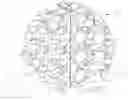
FIG. 1 shows a resilient antimicrobial foam material embodying principles of the disclosed subject matter.
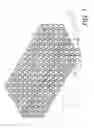
FIG. 2 is an enlarged view of the resilient antimicrobial foam material embodying principles of the disclosed subject matter taken generally within circle 2 in FIG. 1.
DETAILED DESCRIPTION
As required, detailed aspects of the disclosed subject matter are disclosed herein; however, it is to be understood that the disclosed aspects are merely exemplary of the disclosed subject matter, which may be embodied in various forms. Therefore, specific structural and functional details disclosed herein are not to be interpreted as limiting, but merely as a basis for the claims and as a representative basis for teaching one skilled in the art how to variously employ the disclosed technology in virtually any appropriately detailed structure.
Certain terminology will be used in the following description for convenience in reference only and will not be limiting. For example, up, down, front, back, right and left refer to the invention as orientated in the view being referred to. The words, “inwardly” and “outwardly” refer to directions toward and away from, respectively, the geometric center of the aspect being described and designated parts thereof. Said terminology will include the words specifically mentioned, derivatives thereof, and words of similar meaning.
Resilient foam materials are substances formed from the vaporization of gas within a matrix wherein the gas forms bubbles or cells disposed throughout the substance. The bubbles are typically formed by blowing a gas through a molten mixture. Polymer foams formed from polymer materials, and similar resilient foam materials that have cells formed from bubbles include latex, polyurethane, foam rubber, polyester, polystyrene, silicone rubber, neoprene, nitrite foam, and neoprene/ethylene propylene diene terpolymer blends. Products composed of resilient foams include sponges, cleaning pads, blades for squeegees, and the like.
Polymer foams may be produced by extrusion. In an extrusion process, the starting polymer material is first melted and the resulting molten or hot mixture is pressurized in a primary extruder, followed by the addition and incorporation of a blowing agent or agents that will create the cells. Blowing agents include hydrocarbons, halohydrocarbons, and inert gasses. The resulting melted polymer mixture is then cooled in a secondary extruder forming a cool melt and is delivered through a die. As the polymer mixture exits the die, the blowing agent vaporizes trapping the incorporated blowing agents within the polymer mixture creating a resilient foam material with cells disposed therein.
Polymer foam rubbers, including neoprene foams may be produced by blowing a gas through a neoprene latex mixture both before and during vulcanization forming a resilient foam material having cells disposed throughout.
Various additives may be incorporated in the polymer foams at the outset to give the resulting resilient foam material desirable characteristics. Such additives may include colorants, stabilizers, nucleators, flame retardants, plasticizers, nanoparticles, nanostructure antimicrobials, and the like.
There are nanostructure antimicrobials that have an atomic physical structure that enables them to incapacitate or destroy microbes. A nanostructure antimicrobial includes BioShield® (IndusCo. Ltd.; Greensboro, N.C.). BioShield® includes a quaternary ammonium salt chemically spliced to a silane molecule, resulting in 3-(trimethoxsilyl) propyldimethyl octadecyl ammonium chloride. The aforementioned atomic nanostructure characteristic of the antimicrobial is the physical structure that is capable of piercing or lysing a microbe thereby incapacitating or destroying the microbe. Accordingly, use of an antimicrobial that affects microbes by physical means avoids the need to use antimicrobials that affect microbes using chemical means. Physically, rather than chemically, incapacitating or destroying microbes reduces the development of resistance to incapacitation or destruction from adaptation, evolution, or mutation. By example, such a resistant type of microbe includes a multi-antibiotic resistant bacteria or a superbug, but would not be resistant to physical means of control.
Upon mixing the above nanostructure antimicrobial with the foam polymer during the manufacturing process it was discovered that the nano structure of the antimicrobial was unexpectedly maintained in the resulting resilient foam material thereby creating a polymer foam material having antimicrobial properties. It has been found that if the heating temperature of the manufacturing process, or the curing temperature of the curing process remains between about 300 to about 350 degrees Fahrenheit, the antimicrobial properties of the nanostructure remain unaffected, and the BioShield® antimicrobial becomes dispersed throughout and bound to the resilient foam material. It has been found that the addition of a nanostructure antimicrobial to the foam polymer during the manufacturing process such that the resulting resilient foam material contains one percent antimicrobial by unit volume results in a resilient foam material that presents active antimicrobial properties, and that does not lose antimicrobial potency over time. The resulting resilient antimicrobial foam material has the ability to remove, incapacitate, or destroy microbes on a surface by physical means due to the active antimicrobial nanostructure remaining within the foam structure, as well as the nanostructure antimicrobial being attached to and projecting outwardly from any available surface of the resilient antimicrobial foam material.
Referring to the drawings, FIG. 1 shows a resilient antimicrobial foam material 102 embodying principles of the disclosed subject matter having a plurality of cells 108. As described above, the resilient antimicrobial foam material 102 can be manufactured into a variety of resilient antimicrobial foam products. Therefore, the resilient antimicrobial foam material 102 shown in FIG. 1 is represented by a block of material for showing and describing the principles of the disclosed subject matter and is in no way to be interpreted as limiting. The resilient antimicrobial foam material 102 is shown adjacent to microbes 112 on a surface.
Referring to FIG. 2, active antimicrobial nanostructures 110 are shown attached to and projecting from the exterior surface 106 of a resilient foam material 104. The exterior surface 106 includes a surface of the resilient foam material 104 created by an exposed structural component of the resilient foam material 104 resulting from the shaping of the material, as well as by sectioning a cell 108 within the material. Because the active antimicrobial nanostructures 110 remain incorporated within the resilient foam material 104, the antimicrobial 110 is found incorporated within the structural component of the resilient foam material 104, projects from the exterior surface 106, as well as projects from the surfaces of the plurality of cells 108 disposed throughout the resilient foam material 104 that do not represent an exterior surface 106. Active and virulent microbes 112 present on a surface to be cleaned are brought into contact with the active antimicrobial nanostructures 110 causing the microbes to become incapacitated or destroyed microbes 114. Virulent microbes include gram positive and gram negative bacteria, fungi, algae, and yeast. Once the microbes are incapacitated or destroyed they are no longer virulent microbes. Because the nanostructure antimicrobials 110 remain incorporated within the resilient foam material 104 and incapacitate or destroy microbes by physical means, the incapacitated or destroyed microbes 114 either remain with the surface to be cleaned or become attached to the resilient antimicrobial foam material 102.
In use, the resilient antimicrobial foam material may be manufactured into a resilient antimicrobial foam product that may be wiped across a surface having microbes attached to it resulting in a demonstrable reduction of viable microbes on that surface. The antimicrobial nanostructure remains attached to the resilient antimicrobial foam material and is not left behind on the surface. Further, the antimicrobial does not leech out of the resilient foam material so there is no chemical residue left on the surface being cleaned.
The resilient antimicrobial foam material can be used to manufacture various resilient antimicrobial foam products, including sponges, pads, squeegees, cloths, gaskets, seals, coverings, handle grips, wound dressings, or any of a variety of foam products available. Further, membranes may be manufactured from the resilient antimicrobial foam material for use as a sterile barrier for a surface for example, in a medical or scientific environment. The resilient antimicrobial foam membrane becomes an antimicrobial barrier because a microbe coming into contact with the membrane would be incapacitated or destroyed by the antimicrobial nanostructure attached to the surface of the membrane because the nanostructure will pierce or lyse the microbe.
The resilient antimicrobial foam material has an additional benefit of being resistant to structural degradation and color loss due to the presence of the antimicrobial nanostructure and its ability to incapacitate or destroy microbes that are the causative agents of deterioration.
Resilient antimicrobial foam materials may be cleaned of any attached microbes and reused. After use, the resilient antimicrobial foam material may have microbes attached to its surface that were removed from the surface cleaned. The microbes may be removed using a wetting agent such as water or alcohol. Even without cleaning, most of the microbes remaining on the resilient antimicrobial foam material will be non-viable due to the antimicrobial nanostructure incorporated into the resilient foam material, and attached to any surface of the foam material.
Example 1
Incorporation of nanostructure antimicrobials into resilient foam products according to the disclosed subject matter and use of the resilient antimicrobial foam material to mechanically clean virulent microbes from a surface has shown to create a marked decrease in virulent microbes on the surface because the method of incorporating the nanostructure antimicrobial into the foam polymer unexpectedly yields a resilient foam material whereby the nanostructure of the antimicrobial is maintained.
A resilient antimicrobial foam product was used to mechanically wipe multiple test areas in a child care facility to determine the effect of the product on removing, incapacitating, or destroying the microbes in the test area. The tests were conducted without adding a wetting agent to the surface or foam product. Tests were conducted in six areas, twice a day, for two days. The amount of viable pathogens were measured before and after cleaning the area with a resilient antimicrobial foam product by swabbing the test area, and analyzing the swab in a sampling device to measure the amount of contamination present. Microbes contain adenosine triphosphate, a biological energy molecule. The amount of contamination present on the swab was measured by assessing the adenosine triphosphate present using relative light units (RLU) generated in response to this activity. The RLUs were measured using a System Sure II™ luminometer (Hygiena, Camarillo, Calif.). The results shown in Table 1 represent the change in amount of contamination before and after cleaning a surface with the resilient antimicrobial foam material where a decrease is shown in parenthesis.
| TABLE 1 |
| Effect of mechanically cleaning surfaces in a child care |
| facility with a resilient antimicrobial foam material. |
| Microbe Count (RLU) |
| Before | After | Percent | |||
| Area Tested | Day | Time | Cleaning | Cleaning | Change |
| Flooring at Entrance 1 | 1 | A.M. | 4573 | 679 | (85.152) |
| 1 | P.M. | 1760 | 343 | (80.511) | |
| 2 | A.M. | 662 | 173 | (73.867) | |
| 2 | P.M. | 4622 | 668 | (85.547) | |
| Flooring at Changing | 1 | A.M. | 1662 | 319 | (80.806 |
| Area | 1 | P.M. | 733 | 299 | (59.209) |
| 2 | A.M. | 198 | 142 | (56.549) | |
| Flooring at Child Play | 1 | A.M. | 2022 | 263 | (86.993) |
| Area | 1 | P.M. | 1089 | 153 | (85.950) |
| 2 | A.M. | 481 | 209 | (56.549) | |
| 2 | P.M. | 2325 | 372 | (84.000) | |
| Flooring at Crawl | 1 | A.M. | 804 | 41 | (94.900) |
| Area | 1 | P.M. | 2472 | 1774 | (28.236) |
| 2 | A.M. | 407 | 231 | (43.243) | |
| 2 | P.M. | 2027 | 1116 | (44.943) | |
| Food Prep & Sink | 1 | A.M. | 544 | 201 | (63.051) |
| Area | 1 | P.M. | 1402 | 1208 | (13.837) |
| 2 | A.M. | 606 | 224 | (63.036) | |
| Flooring at Entrance 2 | 1 | A.M. | 3 | 130 | 4233.333 |
| 1 | P.M. | 2367 | 785 | (66.836) | |
| 2 | A.M. | 238 | 153 | (35.714) | |
| 2 | P.M. | 2048 | 1546 | (24.512) | |
In the experiment above, mechanically cleaning a surface with an antimicrobial foam product embodying principles of the disclosed subject matter has shown to markedly decrease the presence of virulent microbes on the surface.
It will be appreciated that the resilient antimicrobial foam material can be used for various other applications. Moreover, the resilient antimicrobial foam material can be fabricated in various sizes and from a wide range of suitable materials, using various fabrication techniques.
Claims
1. A foam material, comprising:
a resilient foam material having a surface;
a plurality of cells formed within the resilient foam material;
an active antimicrobial bound to the resilient foam wherein an atomic nanostructure of the active antimicrobial projects from the surface.
2. The foam material of claim 1, wherein the resilient foam material is formed by extrusion.
3. The foam material of claim 1, wherein the resilient foam material is formed by vulcanization.
4. The foam material of claim 1, wherein the active antimicrobial mechanically incapacitates a microbe by lysing the microbe.
5. The foam material of claim 1, wherein the active antimicrobial mechanically incapacitates a microbe by piercing the microbe.
6. The foam material of claim 1, wherein the foam material is a foam product.
7. The foam material of claim 6, wherein the foam product is a membrane.
8. The foam material of claim 6, wherein the foam product is a sponge.
9. The foam material of claim 6, wherein the foam product is a wound dressing.
10. A method of manufacturing an antimicrobial foam, comprising the steps of:
providing a polymer material;
providing an active antimicrobial wherein an atomic nanostructure of the antimicrobial can mechanically incapacitate a microbe;
combining the polymer material with the antimicrobial;
heating the polymer material and the antimicrobial to form a hot melt;
pressurizing the hot melt;
incorporating a blowing agent into the hot melt;
cooling the hot melt to form a cool melt;
extruding the cool melt; and
forming a resilient antimicrobial foam material with a surface wherein the active antimicrobial is incorporated into the foam material.
11. The method of claim 10, further comprising the step of forming the antimicrobial foam material wherein the active antimicrobial is attached to and projecting from the surface.
12. The method of claim 10, further including the step of heating the hot melt to between about 300 to about 350 degrees Fahrenheit.
13. The method of using an antimicrobial foam, comprising the steps of:
providing a resilient foam material having a surface incorporating an active antimicrobial wherein the atomic nanostructure of the antimicrobial projects from a surface of the foam material and can mechanically incapacitate a microbe;
wiping the antimicrobial foam across a surface containing microbes; and
removing microbes from the surface with the antimicrobial foam.
Images & Drawings included:

Sources:
- United States Patent and Trademark Office - verify current appl. status at the USPTO↗
Similar patent applications:
- » 20180256466
Antimicrobial foaming compositions containing cationic active ingredients - » 20180340139
INTERACTION BETWEEN QUATERNARY COMPOUNDS AND ANIONIC SURFACTANTS - FOAM ENHANCEMENT AND STABILIZATION AND PREFERRED FOAMING ANTIMICROBIAL COMPOSITIONS - » 20160030315
Antimicrobial foaming compositions containing cationic active ingredients - » 20180087009
INTERACTION BETWEEN QUATERNARY COMPOUNDS AND ANIONIC SURFACTANTS - FOAM ENHANCEMENT AND STABILIZATION AND PREFERRED FOAMING ANTIMICROBIAL COMPOSITIONS - » 20140271794
ANTIMICROBIAL FOAM MEDICAL PATCH AND METHOD OF MAKING THE SAME - » 20100260824
Antimicrobial Foam Compositions, Articles and Methods - » 20110200674
Antimicrobial foam and method of manufacture - » 20080255014
Antimicrobial foam hand soap comprising inulin or an inulin surfactant - » 20160120176
ANTIMICROBIAL FOAMS AND METHODS OF MAKING SAME - » 20190125634
Foaming antimicrobial compositions
Recent applications in this class:
- » 20240294720 2024-09-05
FOAM ARTICLE WITH ENHANCED PROPERTIES - » 20240117135 2024-04-11
FOOTWEAR COMPONENT MANUFACTURING SYSTEM - » 20240084088 2024-03-14
FOOTWEAR MOLD SYSTEM FOR INJECTION-MOLDING - » 20240084087 2024-03-14
FOOTWEAR MOLD ASSEMBLY FOR INJECTION-MOLDING - » 20230407033 2023-12-21
Foam article with enhanced properties - » 20230303796 2023-09-28
Footwear component manufacturing methods - » 20230105284 2023-04-06
FOAM MANUFACTURING TECHNIQUES - » 20210277199 2021-09-09
Foam article with enhanced properties - » 20180163009 2018-06-14
Low density foam, midsole, footwear, and methods for making low density foam - » 20180066121 2018-03-08
Method for producing polyethylene-based resin extruded foam sheet, polyethylene-based resin extruded foam sheet, and plate interleaf sheet using the same for glass sheets