Polymer foams
US20120088091A1
2012-04-12
13/375,623
2010-06-14
✅ Patent granted
US 8,652,631 B2
2014-02-18
WO; PCT/US2010/038498; 20100614
WO; WO2010/147888; 20101223
Hai Vo
Dena M. Ehrich
2030-06-14
Abstract:
Polymer foams, including acrylic foams, comprising low amounts of high-surface-area silica are described. Methods of preparing such foams and articles comprising such foams are also described.
Assignee:
- 3M INNOVATIVE PROPERTIES COMPANY 8,957 🇺🇸 St. Paul, MN, United States
Applicant:
Interested in similar patents?
Get notified when new applications in this technology area are published.
Classification:
C08F220/06 » CPC main
Copolymers of compounds having one or more unsaturated aliphatic radicals, each having only one carbon-to-carbon double bond, and only one being terminated by only one carboxyl radical or a salt, anhydride ester, amide, imide or nitrile thereof; Monocarboxylic acids having less than ten carbon atoms; Derivatives thereof; Acids; Metal salts or ammonium salts thereof Acrylic acid; Methacrylic acid; Metal salts or ammonium salts thereof
C08L33/08 » CPC further
Compositions of homopolymers or copolymers of compounds having one or more unsaturated aliphatic radicals, each having only one carbon-to-carbon double bond, and only one being terminated by only one carboxyl radical, or of salts, anhydrides, esters, amides, imides or nitriles thereof; Compositions of derivatives of such polymers; Homopolymers or copolymers of esters of esters containing only carbon, hydrogen and oxygen, which oxygen atoms are present only as part of the carboxyl radical Homopolymers or copolymers of acrylic acid esters
C08L2666/14 » CPC further
Composition of polymers characterized by a further compound in the blend, being organic macromolecular compounds, natural resins, waxes or and bituminous materials, non-macromolecular organic substances, inorganic substances or characterized by their function in the composition; Organic macromolecular compounds, natural resins, waxes or and bituminous materials Macromolecular compounds according to - ; Derivatives thereof
C08F220/1808 » CPC further
Copolymers of compounds having one or more unsaturated aliphatic radicals, each having only one carbon-to-carbon double bond, and only one being terminated by only one carboxyl radical or a salt, anhydride ester, amide, imide or nitrile thereof; Monocarboxylic acids having less than ten carbon atoms; Derivatives thereof; Esters of monohydric alcohols or phenols of phenols or of alcohols containing two or more carbon atoms with acrylic or methacrylic acids C-(meth)acrylate, e.g. isooctyl (meth)acrylate or 2-ethylhexyl (meth)acrylate
C09J133/08 » CPC further
Adhesives based on homopolymers or copolymers of compounds having one or more unsaturated aliphatic radicals, each having only one carbon-to-carbon double bond, and at least one being terminated by only one carboxyl radical, or of salts, anhydrides, esters, amides, imides, or nitriles thereof; Adhesives based on derivatives of such polymers; Homopolymers or copolymers of esters of esters containing only carbon, hydrogen and oxygen, the oxygen atom being present only as part of the carboxyl radical Homopolymers or copolymers of acrylic acid esters
C09J153/02 » CPC further
Adhesives based on block copolymers containing at least one sequence of a polymer obtained by reactions only involving carbon-to-carbon unsaturated bonds; Adhesives based on derivatives of such polymers Vinyl aromatic monomers and conjugated dienes
C08F220/10 » CPC further
Copolymers of compounds having one or more unsaturated aliphatic radicals, each having only one carbon-to-carbon double bond, and only one being terminated by only one carboxyl radical or a salt, anhydride ester, amide, imide or nitrile thereof; Monocarboxylic acids having less than ten carbon atoms; Derivatives thereof Esters
C08J9/0061 » CPC further
Working-up of macromolecular substances to porous or cellular articles or materials; After-treatment thereof characterized by the use of several polymeric components
C08J9/0066 » CPC further
Working-up of macromolecular substances to porous or cellular articles or materials; After-treatment thereof Use of inorganic compounding ingredients
C08J9/236 » CPC further
Working-up of macromolecular substances to porous or cellular articles or materials; After-treatment thereof; After-treatment of expandable particles; Forming foamed products; Forming foamed products using binding agents
C09J7/26 » CPC further
Adhesives in the form of films or foils characterised by their carriers; Plastics; Metallised plastics Porous or cellular plastics
C08J2207/02 » CPC further
Foams characterised by their intended use Adhesive
C08J2333/08 » CPC further
Characterised by the use of homopolymers or copolymers of compounds having one or more unsaturated aliphatic radicals, each having only one carbon-to-carbon double bond, and only one being terminated by only one carboxyl radical, or of salts, anhydrides, esters, amides, imides, or nitriles thereof; Derivatives of such polymers esters of esters containing only carbon, hydrogen, and oxygen, the oxygen atom being present only as part of the carboxyl radical Homopolymers or copolymers of acrylic acid esters
C08J2433/00 » CPC further
Characterised by the use of homopolymers or copolymers of compounds having one or more unsaturated aliphatic radicals, each having only one carbon-to-carbon double bond, and only one being terminated by only one carboxyl radical, or of salts, anhydrides, esters, amides, imides, or nitriles thereof; Derivatives of such polymers
C08L53/00 » CPC further
Compositions of block copolymers containing at least one sequence of a polymer obtained by reactions only involving carbon-to-carbon unsaturated bonds; Compositions of derivatives of such polymers
C08L83/00 » CPC further
Compositions of macromolecular compounds obtained by reactions forming in the main chain of the macromolecule a linkage containing silicon with or without sulfur, nitrogen, oxygen or carbon only; Compositions of derivatives of such polymers
C08L2205/02 » CPC further
Polymer mixtures characterised by other features containing two or more polymers of the same -group
C09J2301/124 » CPC further
Additional features of adhesives in the form of films or foils characterized by the structural features of the adhesive tape or sheet by the arrangement of layers the adhesive layer being present on both sides of the carrier, e.g. double-sided adhesive tape
C09J2301/302 » CPC further
Additional features of adhesives in the form of films or foils characterized by the chemical, physicochemical or physical properties of the adhesive or the carrier the adhesive being pressure-sensitive, i.e. tacky at temperatures inferior to 30°C
C09J2301/41 » CPC further
Additional features of adhesives in the form of films or foils characterized by the presence of essential components additives as essential feature of the carrier layer
C09J2400/243 » CPC further
Presence of inorganic and organic materials; Presence of organic materials; Presence of a foam in the substrate
C09J2433/00 » CPC further
Presence of (meth)acrylic polymer
C09J2453/00 » CPC further
Presence of block copolymer
C09J2483/00 » CPC further
Presence of polysiloxane
Y10T428/249983 » CPC further
Stock material or miscellaneous articles; Web or sheet containing structurally defined element or component; Composite having voids in a component [e.g., porous, cellular, etc.]; With component specified as adhesive or bonding agent As outermost component
Y10T428/249986 » CPC further
Stock material or miscellaneous articles; Web or sheet containing structurally defined element or component; Composite having voids in a component [e.g., porous, cellular, etc.] Void-containing component contains also a solid fiber or solid particle
Y10T428/28 » CPC further
Stock material or miscellaneous articles Web or sheet containing structurally defined element or component and having an adhesive outermost layer
Y10T428/2883 » CPC further
Stock material or miscellaneous articles; Web or sheet containing structurally defined element or component and having an adhesive outermost layer; Adhesive compositions including addition polymer from unsaturated monomer including addition polymer of diene monomer [e.g., SBR, SIS, etc.]
C08L2666/04 » CPC further
Composition of polymers characterized by a further compound in the blend, being organic macromolecular compounds, natural resins, waxes or and bituminous materials, non-macromolecular organic substances, inorganic substances or characterized by their function in the composition; Organic macromolecular compounds, natural resins, waxes or and bituminous materials Macromolecular compounds according to groups - , or - ; Derivatives thereof
C08K3/36 » CPC further
Use of inorganic substances as compounding ingredients; Silicon-containing compounds Silica
Y10T428/2891 » CPC further
Stock material or miscellaneous articles; Web or sheet containing structurally defined element or component and having an adhesive outermost layer; Adhesive compositions including addition polymer from unsaturated monomer including addition polymer from alpha-beta unsaturated carboxylic acid [e.g., acrylic acid, methacrylic acid, etc.] Or derivative thereof
B32B7/12 IPC
Layered products characterised by the relation between layers; Layered products characterised by the relative orientation of features between layers, or by the relative values of a measurable parameter between layers, i.e. products comprising layers having different physical, chemical or physicochemical properties; Layered products characterised by the interconnection of layers; Interconnection of layers using interposed adhesives or interposed materials with bonding properties
C08J9/32 IPC
Working-up of macromolecular substances to porous or cellular articles or materials; After-treatment thereof from compositions containing microballoons, e.g. syntactic foams
Description
FIELD
The present disclosure relates to polymeric foams containing low amounts of high-surface-area silica. Hot melt adhesive foams, tapes incorporating such foams, and methods of preparing them are also described.
SUMMARY
Briefly, in one aspect, the present disclosure provides a foam comprising a polymer, a plurality of at least partially expanded expandable polymeric microspheres, and 0.3 to 1.5% by weight of a silica having a surface area of at least 300 square meters per gram as measured according to ASTM D1993-03(2008). In some embodiments, the foam comprises at least 0.5% by weight of the silica. In some embodiments, the foam comprises no greater than 1% by weight of the silica.
In some embodiments, the polymer comprises an acrylic polymer. In some embodiments, the polymer comprises a blend of a low molecular weight acrylic polymer and a high molecular weight acrylic polymer.
In some embodiments, the foam tape comprises the foam and a first adhesive bonded to a first surface of the foam. In some embodiments, the foam tape further comprises a second adhesive bonded to a second surface of the foam opposite the first adhesive.
In some embodiments, at least one of the first adhesive and the second adhesive comprises a pressure sensitive adhesive. In some embodiments, at least one of the first adhesive and the second adhesive comprises a heat-activated adhesive. In some embodiments, at least one of the first adhesive and the second adhesive comprises an acrylic polymer. In some embodiments, at least one of the first adhesive and the second adhesive comprises a block copolymer. In some embodiments, at least one of the first adhesive and the second adhesive comprises a silicone polymer. In some embodiments, at least one of the first adhesive and the second adhesive comprises a blend of at least two polymers selected from the group consisting of an acrylic polymer, a block copolymer, and a silicone polymer.
The above summary of the present disclosure is not intended to describe each embodiment of the present invention. The details of one or more embodiments of the invention are also set forth in the description below. Other features, objects, and advantages of the invention will be apparent from the description and from the claims.
BRIEF DESCRIPTION OF THE DRAWINGS
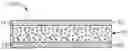
FIG. 1 illustrates an exemplary foam according to some embodiments of the present disclosure.
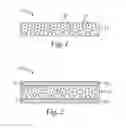
FIG. 2 illustrates an exemplary foam tape according to some embodiments of the present disclosure.
DETAILED DESCRIPTION
Gehlsen et al. (U.S. Pat. Nos. 6,103,152 and 6,797,371) describe a variety of methods for producing polymer foams, including acrylic foams. In some embodiments, the methods include melt mixing a polymer composition with at least one expandable polymeric microsphere (“epm”) and extruding the composition through a die to form a polymer foam. These foams may then be electron beam (“E-beam”) cured. The foams may be combined with one or more adhesive layers to form adhesive articles, e.g., an article comprising a layer of a skin adhesive on each major surface of a foam core.
While such adhesive articles have been used successfully in a wide variety of applications, the present inventor has discovered that the addition of small amounts of high-surface-area silica to the foam core results in a surprising improvement in a number of key mechanical properties including one or more of elongation at break, cohesive strength, and interlayer adhesion.
In some embodiments, the present disclosure provides a foam comprising a polymer, a plurality of at least partially expanded expandable polymeric microspheres, and 0.5 to 1.5% by weight of silica having a BET surface area of at least 300 square meters per gram.
Generally, the choice of polymer is not particularly limited. In some embodiments, it may be desirable to select polymers or blends of polymers that are suitable for melt extrusion processing. Exemplary polymers include acrylic polymers, acrylate-insoluble polymers, elastomers containing ultraviolet radiation-activatable groups, and polymers prepared from non-photopolymerizable monomers.
In some embodiments, the polymer may comprise one or more acrylic polymers, e.g., acrylate and methacrylate adhesive polymers and copolymers. As used herein, the term “(meth)acrylate” means acrylate and/or methacrylate, i.e., ethyl(meth)acrylate refers to ethyl acrylate and/or ethyl (meth)acrylate.
In some embodiments, the acrylic polymer comprises the reaction product of at least one acrylic or methacrylic ester of a non-tertiary alkyl alcohol and, optionally, at least one copolymerized reinforcing monomer. In some embodiments, the acrylic polymer comprises at least about 70 parts, in some embodiments, at least about 80 parts, at least about 90 parts, at least about 95 parts, or even about 100 parts of at least one acrylic or methacrylic ester of a non-tertiary alkyl alcohol. In some embodiments, acrylic adhesive composition comprises no greater than about 30 parts, in some embodiments, no greater than about 20 parts, no greater than about 10 parts, no greater than about 5 parts, and even no greater than 1 part of at least one copolymerized reinforcing monomer. In some embodiments, the acrylic adhesive composition does not include a copolymerized reinforcing monomer.
In some embodiments, the non-tertiary alkyl alcohol contains 4 to 20 carbon atoms. Exemplary acrylic acid esters include isooctyl acrylate, 2-ethylhexyl acrylate, butyl acrylate, isobornyl acrylate, and combinations thereof. Exemplary methacrylic acid esters include the methacrylate analogues of these acrylic acid esters.
In some embodiments, the copolymerized reinforcing monomer is selected from the group consisting of acrylic acid, methacrylic acid, 2-carboxyethyl acrylate, N,N′ dimethyl acrylamide, N,N′ diethyl acrylamide, butyl carbamoyl ethyl acrylate, and combinations thereof
In some embodiments, it may be desirable to combine at least one high molecular weight (meth)acrylate polymer with at least one low molecular weight (meth)acrylate polymer.
In some embodiments, the polymer may include a block copolymer. In some embodiments, the block copolymer comprises a rubbery block, R, and at least one glassy block, G. In some embodiments, the block copolymer comprises at least three glassy blocks. In some embodiments, the first block copolymer comprises between three and five glassy blocks, inclusive. In some embodiments, the first block copolymer comprises four glassy blocks.
In some embodiments, the first block copolymer is a multi-arm block copolymer having the general formula Qn−Y, wherein Q represents an arm of the multi-arm block copolymer; n represents the number of arms and is a whole number of at least 3; and Y is the residue of a multifunctional coupling agent. Each arm, Q, independently has the formula R−G, wherein G represents the glassy block; and R represents the rubbery block.
Generally, a rubbery block exhibits a glass transition temperature (Tg) of less than room temperature. In some embodiments, the Tg of the rubbery block is less than about 0° C., or even less than about −10° C. In some embodiments, the Tg of the rubbery block is less than about −40° C., or even less than about −60° C.
Generally, a glassy block exhibits a Tg of greater than room temperature. In some embodiments, the Tg of the glassy block is at least about 40° C., at least about 60° C., at least about 80° C., or even at least about 100° C.
In some embodiments, the rubbery block comprises a polymerized conjugated diene, a hydrogenated derivative of a polymerized conjugated diene, or combinations thereof. In some embodiments, the conjugated dienes comprise 4 to 12 carbon atoms. Exemplary conjugated dienes include butadiene, isoprene, ethylbutadiene, phenylbutadiene, piperylene, pentadiene, hexadiene, ethylhexadiene, and dimethylbutadiene. The polymerized conjugated dienes may be used individually or as copolymers with each other. In some embodiments, the conjugated diene is selected from the group consisting of isoprene, butadiene, ethylene butadiene copolymers, and combinations thereof
In some embodiments, at least one glassy block comprises a polymerized monovinyl aromatic monomer. In some embodiments, both glassy blocks of a triblock copolymer comprise a polymerized monovinyl aromatic monomer. In some embodiments, the monovinyl aromatic monomers comprise 8 to 18 carbon atoms. Exemplary monovinyl aromatic monomers include styrene, vinylpyridine, vinyl toluene, alpha-methyl styrene, methyl styrene, dimethylstyrene, ethylstyrene, diethyl styrene, t-butylstyrene, di-n-butylstyrene, isopropylstyrene, other alkylated-styrenes, styrene analogs, and styrene homologs. In some embodiments, the monovinyl aromatic monomer is selected from the group consisting of styrene, styrene-compatible monomers or monomer blends, and combinations thereof.
As used herein, “styrene-compatible monomers or monomer blends” refers to a monomer or blend of monomers, which may be polymerized or copolymerized, that preferentially associate with polystyrene or with the polystyrene endblocks of a block copolymer. The compatibility can arise from actual copolymerization with monomeric styrene; solubility of the compatible monomer or blend, or polymerized monomer or blend in the polystyrene phase during hot melt or solvent processing; or association of the monomer or blend with the styrene-rich phase domain on standing after processing.
In the general formula for some multi-arm block copolymers of the present disclosure, Qn−Y, n represents the number of arms and is a whole number of at least 3, i.e., the multi-arm block copolymer is a star block copolymer. In some embodiments, n is ranges from 3-10. In some embodiments, n ranges from 3-5. In some embodiments, n is 4. In some embodiments, n is equal to 6 or more.
In some embodiments, the block copolymer is a polymodal block copolymer. As used herein, the term “polymodal” means that the copolymer comprises glassy blocks having at least two different molecular weights. Such a block copolymer may also be characterized as having at least one “high” molecular weight glassy block, and at least one “low” molecular weight glassy block, wherein the terms high and low are used relative to each other. In some embodiments the ratio of the number average molecular weight of the high molecular weight glassy block, (Mn)H, relative to the number average molecular weight of the low molecular weight glassy block,(Mn)L, is at least about 1.25.
In some embodiments, (Mn)H ranges from about 5,000 to about 50,000 grams/mole. In some embodiments, (Mn)H is at least about 8,000, and in some embodiments at least about 10,000 gm/mole. In some embodiments, (Mn)H is no greater than about 35,000 gm/mole. In some embodiments, (Mn)L ranges from about 1,000 to about 10,000 gm/mole. In some embodiments, (Mn)L is at least about 2,000, and, in some embodiments, at least about 4,000 gm/mole. In some embodiments, (Mn)L is less than about 9,000, and, in some embodiments, less than about 8,000 gm/mole.
In some embodiments, the block copolymer is an asymmetric block copolymer. As used herein, the term “asymmetric” means that the arms of the block copolymer are not all identical. Generally, a polymodal block copolymer is an asymmetric block copolymer (i.e., a polymodal asymmetric block copolymer) as not all arms of a polymodal block copolymer are identical since the molecular weights of the glassy blocks are not all the same. In some embodiments, the block copolymers of the present disclosure are polymodal, asymmetric block copolymers. Methods of making asymmetric, polymodal block copolymers are described in, e.g., U.S. Pat. No. 5,296,547.
Generally, the multifunctional coupling agent may be any polyalkenyl coupling agent or other material known to have functional groups that can react with carbanions of the living polymer to form linked polymers. The polyalkenyl coupling agent may be aliphatic, aromatic, or heterocyclic. Exemplary aliphatic polyalkenyl coupling agents include polyvinyl and polyalkyl acetylenes, diacetylenes, phosphates, phosphites, and dimethacrylates (e.g., ethylene dimethacrylate). Exemplary aromatic polyalkenyl coupling agents include polyvinyl benzene, polyvinyl toluene, polyvinyl xylene, polyvinyl anthracene, polyvinyl naphthalene, and divinyldurene. Exemplary polyvinyl groups include divinyl, trivinyl, and tetravinyl groups. In some embodiments, divinylbenzene (DVB) may be used, and may include o-divinyl benzene, m-divinyl benzene, p-divinyl benzene, and mixtures thereof. Exemplary heterocyclic polyalkenyl coupling agents include divinyl pyridine, and divinyl thiophene. Other exemplary multifunctional coupling agents include silicon halides, polyepoxides, polyisocyanates, polyketones, polyanhydrides, and dicarboxylic acid esters.
In some embodiments, the block copolymer may be a linear block copolymer. A linear block copolymer can be described by the formula
R−(G)m
wherein R represents a rubbery block, G represents a glassy block, and m, the number of glassy blocks, is 1 or 2. In some embodiments, m is one, and the linear block copolymer is a diblock copolymer comprising one rubbery block and one glassy block. In some embodiments, m is two, and the linear block copolymer comprises two glassy endblocks and one rubbery midblock, i.e., the linear block copolymer is a triblock copolymer.
In some embodiments, the rubbery block of the second block copolymer comprises a polymerized conjugated diene, a hydrogenated derivative thereof, or combinations thereof. In some embodiments, the conjugated dienes comprise 4 to 12 carbon atoms. Exemplary conjugated dienes include any of the exemplary conjugated dienes described above.
In some embodiments, at least one glassy block, and in some embodiments, each glassy block of the second block copolymer comprises a polymerized monovinyl aromatic monomer. In some embodiments, the monovinyl aromatic monomers comprise 8 to 18 carbon atoms. Exemplary polymerized monovinyl aromatic monomers include any of the exemplary polymerized monovinyl aromatic monomer, as described above.
In some embodiments, the polymer may comprise a silicone polymer.
In some embodiments, the polymer may include blends of two or more polymers, e.g., blends of high and low molecular weight acrylic polymers, blends of one or more acrylic polymers with one or more block copolymers, and the like.
Expandable polymeric microspheres generally feature a flexible, thermoplastic, polymeric shell surrounding a core comprising a liquid and/or gas that expands upon heating. Examples of commercially available expandable polymeric microspheres include those available under the trade name MICROPEARL from Pierce & Stevens (Buffalo, New York) and Henkel AG; and EXPANCEL from Akzo-Nobel.
Generally, the amount of expandable microspheres is selected based upon the desired properties of the foam. In general, the greater the amount of microspheres, the lower the resulting density of the foam. In some embodiments, the foam comprises at least 0.1 part by weight, and in some embodiments at least 0.5 parts by weight expandable microspheres per 100 part of polymer resin. In some embodiments, the foam comprises no greater than 50 parts by weight, in some embodiments, no greater than 20 parts by weight expandable microspheres per 100 part of polymer resin.
The foams of the present disclosure include small amounts of a high-surface area silica. In some embodiments, the foam comprises 0.3 to 1.5 parts by weight silica per 100 parts of polymer resin. In some embodiments, the foam comprises at least 0.5, or even 0.7 parts by weight silica per 100 parts of polymer resin. In some embodiments, the foam comprises no greater than, 1.4 parts, or even no greater than 1 part by weight silica per 100 parts of polymer resin.
The silica particles have a high surface area relative to the silicas that have typically been added as fillers. In some embodiments, the surface area of the silica is at least 300 square meters per gram, in some embodiments, at least 320 square meters per gram, as measured according to ASTM D1993-03(2008) “Standard Test Method for Precipitated Silica-Surface Area by Multipoint BET Nitrogen Adsorption.”
EXAMPLES
| TABLE 1 |
| Materials used in the preparation of the examples. |
| I.D. | Description | Source |
| Silica-1 | CAB-O-SIL M-5 fumed silica | Cabot Corporation |
| (Boston, MA) | ||
| Silica-2 | CAB-O-SIL PTG fumed silica | Cabot Corporation |
| Silica-3 | CAB-O-SIL HS-5 fumed silica | Cabot Corporation |
| Silica-4 | CAB-O-SIL EH-5 fumed silica | Cabot Corporation |
| Silica-5 | CAB-O-SIL TS-720 surface- | Cabot Corporation |
| treated fumed silica | ||
| F-100 | MIROPEARL expandable | Pierce & Stevens |
| polymeric microspheres | (Buffalo, NY) | |
| 2-EHA | 2-ethylhexyl acrylate | |
| BA | butyl acrylate | |
| AA | acrylic acid | |
| IRGACURE | 2,2 dimethoxy-2- | Ciba Specialty |
| 651 | phenylacetophenone | Chemicals Corp. |
| (Tarrytown, NY) | ||
| IOTG | isooctyl thioglycolate | |
| KRATON | SIS linear block copolymer | Kraton Polymers, Inc. |
| 1161-D | (15% S, 19% diblock) | (Houston, Texas) |
| 4900 CMB | Black pigment having a 50/50 | M A Hanna Color |
| blend of carbon black in | (Suwanee, Georgia) | |
| ethylene vinyl acetate | ||
| copolymer resin having a | ||
| melt index of about 150 | ||
| IRGANOX | Pentaerythritol tetrakis | Ciba Specialty |
| 1010 | (3-(3,5-di-tert-butyl-4- | Chemical Co. |
| hydroxyphenyl)proprionate | (Tarrytown, NY) | |
| TINUVIN | 2-(2-hydroxy-3,5-di-(tert)- | Ciba Special |
| 328 | amylphenyl)benzotriazole | Chemicals Co. |
| (Tarrytown, NY) | ||
| REGALITE | Hydrogenated hydrocarbon resin | Eastman Chemical Co. |
| R1125 | (Kingsport, TN) | |
| CUMAR | Aromatic thermoplastic resin | Neville Chemical Co. |
| 130 | (Pittsburgh, PA) | |
| NYPLAST | Naphthenic oil plasticizer | Nynas Naphthenics AB |
| 222B | (Stockholm, Sweden) | |
Preparation of Acrylic Polymers
Acrylic Polymer 1 (AP-1) was prepared by mixing 90 parts of 2-EHA; 10 parts of AA; 0.15 part IRGACURE 651; and 0.03 part of IOTG. Discreet film packages were formed from a packaging film (0.0635 mm thick ethylene vinyl acetate copolymer film sold as VA-24 Film from CT Film, Dallas, Tex.). The AP-1 composition was sealed into the film packages, which measured approximately 10 centimeters (cm) by 5 cm by 0.5 cm thick. While immersed in a water bath maintained between about 21° C. and about 32° C., the packages were exposed to ultraviolet (UV) radiation having an intensity of about 3.5 milliWatts per square centimeter (mW/sq cm), and a total energy of about 1680 milliJoules per square centimeter (mJ/sq cm) as measured in NIST units. The method of forming the packages and curing are described in Example 1 of U.S. Pat. No. 5,804,610, the subject matter of which is incorporated herein by reference in its entirety.
Acrylic Polymer 2 (AP-2) was prepared according to the procedure for AP-1, except that 85 parts of 2-EHA; 15 parts of AA; 0.15 parts of IRGACURE 651; and 0.8 part IOTG were used. Similarly, Acrylic Polymer 3 (AP-3) was prepared according to the procedure for Acrylic Polymer 1 except that the composition was 95 parts of 2-EHA; 5 parts of AA; 0.15 part IRGACURE 651; and 0.02 part of IOTG. Similarly, Acrylic Polymer 4 (AP-4) was prepared by mixing 45 parts of IOA; 45 parts of BA; 10 parts of AA; 0.15 part IRGACURE 651; and 0.06 part of IOTG. Acrylic Polymer AP-5 by mixing 90 parts of 2-EHA; 10 parts of AA; 0.15 part IRGACURE 651; and 0.02 part of IOTG. AP-2, AP-3, AP-4, and AP-5 were placed in packages and exposed to UV energy, according to the procedure for AP-1.
Solid (unfoamed) samples were prepared according to the compositions set forth in Table 2 as follows. For each sample. The identified amounts of AP-1 and AP-2 were placed in the bowl of kneading mixture fitted with BANBURY mixing blades, as supplied by Brabender. The materials were mixed at 121° C. (250° F.) and 60 rpm for three minutes.
These samples were evaluated according to the Dynamic Shear Test Procedure. The results are reported in Table 2.
Dynamic Shear Test Procedure. Two 30 mm by 70 mm aluminum panels were primed with N200J primer (3M Company). A 25 mm by 25 mm sample of the tape was positioned between the primed surfaces of the aluminum panels, bonding them together near the ends such that the unbonded portions of the 70 mm dimension of the panels extended in opposite directions. The bonded specimen was aged at room temperature for 24 hours. The unbonded portions of the aluminum panels were clamped in the jaws of an INSTRON tensile tester such that when the jaws were separated, a shear force was cereated across the thickness of the tape sample. The jaws were separated at 1.3 mm per minute (0.05 inch per minute) and the peak force is reported in Table 2.
| TABLE 2 |
| Composition and dynamic shear of solid acrylate samples. |
| Silica | AP-3 | AP-2 | Dynamic Shear |
| Sample | I.D. | Surface Area* | Wt. % | Wt. % | Wt. % | kg/(25 × 25 mm) |
| CE-1 | none | — | 0 | 93% | 7% | 23.9 |
| CE-2 | PTG | 200 m2/gram | 2% | 91% | 7% | 23.6 |
| CE-3 | TS-720 | 115 m2/gram | 2% | 91% | 7% | 26.6 |
| EX-1 | HS-5 | 325 m2/gram | 2% | 91% | 7% | 31.1 |
| EX-2 | EH-5 | 380 m2/gram | 2% | 91% | 7% | 32.6 |
| *as measured according to ASTM D1993-03(2008) “Standard Test Method for Precipitated Silica-Surface Area by Multipoint BET Nitrogen Adsorption.” |
Foam Core Tape Preparation Procedure.
Skin Adhesive Preparation Procedure. A pressure-sensitive adhesive was compounded using a 60 mm, co-rotating twin screw extruder (available from Berstorff). A polymodal, asymmetric star block copolymer (“PASBC”) was prepared according to U.S. Pat. No. 5,393,373, the subject matter of which is hereby incorporated by reference in its entirety. The polymer had number average molecular weights of about 4,000 Dalton and about 21,500 Dalton for the two endblocks, 127,000-147,000 Dalton for the arm, and about 1,100,000 Dalton for the star measured by SEC (size exclusion chromatography) calibrated using polystyrene standards. The polystyrene content was between 9.5 and 11.5 percent by weight. The mole percentage of high molecular weight arms was estimated to be about 30%.
The polymodal asymmetric block copolymer (31.2 wt. %) and a linear styrene-isoprene-styrene (SIS) block copolymer (KRATON 1161-D) (13.4 wt. %) were dry fed into the first zone of the extruder. Using a roll-feed extruder (available from Berstorff), acrylic polymer AP-4 (4 wt. %) was heated and fed into the third zone of the extruder. Antioxidant (IRGANOX 1010) (1.3 wt. %), ultraviolet light absorber (TINUVIN 328) (1.3 wt. %), pigmented ethylene vinyl acetate (EVA; 4900 CMB) (0.4 wt. %) were dry fed; and first tackifier (REGALITE R1125) (30.9 wt. %); second tackifier (CUMAR 130) (10.3 wt. %); and plasticizer (NYPLAST 222B) (7.2 wt. %) were melt fed in to various zones of the first adhesive extruder. The compounded adhesive was fed into a silicone-coated box.
Foam Core Preparation Procedure. A foam core layer was processed in a 50 mm BONNOT single screw extruder. The extruder was operated at 120° C. The mixture was then fed into Zone 1 of a twin screw extruder (40 mm BERSTORFF (ZE-40) co-rotating twin screw extruder) where it was mixed with F-100 expandable polymeric microspheres. A standard compounding screw design was used with forward conveying, followed by kneading sections in Zone 2, reverse kneading in Zone 2, Zone 4, and Zone 6 with self-wiping conveying elements in the remaining zones. Screw speed was 125 RPM. The extruder temperature was set at 104° C., and the hose and die temperatures were set at 193° C. This temperature profile prevented expansion during compounding and minimized the rupturing of the expandable polymeric microspheres. Flow of the extrudate was controlled using a NORMAG gear pump. The expandable polymeric microspheres were metered into Zone 8 of the twin screw extruder using a KTron KCL-KC20 feeder at a rate of 0.23 kg/h. A 25.4 cm wide drop die was shimmed at 1 mm and operated at 193° C.
The compounded core layer was fed to the center layer of a three-layer, multi-manifold film die obtained from Cloeren Inc. (Orange, Tex.). The compounded skin adhesive was fed through a 50 mm BONNOT single screw extruder and fed to the outer layers of the three-layer die. This extruder was operated at 120° C.
Upon exiting the die, the co-extruded layers were cast onto a silicone release coated casting roll. The roll was cooled with water having a temperature of about 20° C. The cooled extrudate was transferred from the casting roll to a 0.117 mm thick two-side silicone coated polyethylene release liner that was transported at the same speed as the casting roll to the end of the web transport line. The first skin adhesive was in contact with the liner after the transfer whereas the second skin adhesive was open to the air. The liner had differential release properties which allows the tape to be unrolled after winding without liner confusion.
Release liners are well-known in the art, and any known release liner may be used. Typically, the release liner comprises a film or paper substrate coated with a release material. Commercially available release liners include, but are not limited to, silicone coated papers, and silicone coated films, such as polyester films. Suitable release liners are also disclosed in U.S. Pat. Nos. 6,835,422; 6,805,933; 6,780,484; and 6,204,350 assigned to 3M Innovative Properties Company.
The foam core and both adhesive skins were crosslinked on-web using electron beam curing while supported on the liner. Two sequential irradiation steps acting on opposite faces of the tape were employed. The first skin adhesive was irradiated through the polyethylene liner, whereas the second skin adhesive was irradiated in an open-face condition. The electron beam unit was an ELECTROCURTAIN CB-300 E-Beam unit (Energy Sciences Inc. (ESI), Wilmington, Mass.) with an acceleration voltage of 300 keV and a dose of 6 MRAD.
Pluck Force Test Procedure. The 30 mm by 30 mm flat faces of two T-blocks made of 6.4 mm (¼ inch) thick aluminum were primed with N200J primer from 3M Company. A 25 mm by 25 mm sample was placed between the primed faces, bonding the two T-blocks together. The T-blocks were mounted in an INSTRON tensile tester and pulled apart at a rate of 1.3 mm per minute (0.05 inches per minute). The peak separation force is reported as “Pluck force” in units of kilograms force.
Angle Cleavage Test Procedure. A 30 mm by 30 mm by 30 mm L-shaped piece of aluminum was primed on one 30 mm by 30 mm face with N200J primer from 3M Company. The primed surface was bonded to one surface of a 25 mm by 25 mm sample. The opposite surface of the sample was bonded to anodized aluminum panel that had also been primed with the N200J primer. The leg of the L-shaped piece of aluminum, which was perpendicular to the primed face, was pulled with an INSTRON tensile tester at a rate of 2.5 mm per minute (0.1 inch per minute). The peak force is reported in Table 4 in units of kilograms of force.
Foam tapes were prepared according to the Foam Core Tape Preparation Procedure. The compositions of the foam cores are summarized in Table 3. The pluck force, as measured with the Pluck Force Test Procedure is also reported in Table 3.
| TABLE 3 |
| Pluck test comparison of low and high surface area silicas. |
| Foam Core | Pluck |
| Silica | AP-5 | AP-2 | Force |
| Sample | I.D. | Surface Area | wt. % | wt. % | wt. % | kg (force) |
| EX-3 | HS-5 | 325 m2/gram | 0.7 | 89.3 | 10 | 21.5 |
| CE-4 | M-5 | 200 m2/gram | 0.7 | 89.3 | 10 | 13.3 |
| CE-5 | M-5 | 200 m2/gram | 3.5 | 86.5 | 10 | 21.6 |
Foam tapes were prepared according to the Foam Core Tape Preparation Procedure. The compositions of the foam cores are summarized in Table 4. The angle cleavage, as measured with the Angle Cleavage Test Procedure is also reported in Table 4.
| TABLE 4 |
| Affect of silica concentration on angle cleavage. |
| Foam Core | Angle |
| Wt. % | Density | Cleavage |
| Sample | HS-5 silica | AP-1 | AP-2 | gm/cc (*) | kg (force) |
| EX-4 | 0.3 | 90.1 | 9.6 | 0.61 | 11.0 |
| EX-5 | 0.5 | 89.9 | 9.6 | 0.61 | 20.3 |
| EX-6 | 0.7 | 89.7 | 9.6 | 0.61 | 17.9 |
| (*) 38 pounds per cubic foot |
The Angle Cleavage Test Procedure was also used to evaluate foam tapes having an alternative core composition, both with and without the addition of small amounts of a high surface area silica. The tape samples were prepared according to the Foam Core Tape Preparation Procedure except that the tape was E-beam cured from the linered side at 225 kEV and 10 MRAD and from the non-linered side (i.e., the open face side) at 250 kEV and 15 MRAD. The tape core compositions and the angle cleavage force are reported in Table 5.
| TABLE 5 |
| Affect of silica concentration on angle cleavage. |
| Foam Core | Angle |
| Wt. % | ems (a) | Cleavage |
| Sample | HS-5 silica | AP-3 | AP-2 | pbw (b) | kg (force) |
| EX-7 | 0.7 | 94.3 | 5.0 | 3.4 | 17.5 |
| CE-6 | 0 | 95.0 | 5.0 | 3.4 | 9.34 |
| (a) ems = expandable microspheres (DUALITE U010-185) | |||||
| (b) pbw = parts by weight based on the total weight of the silica, AP-2, and AP-3 |
An exemplary foam according to some embodiments of the present disclosure is shown in FIG. 1. Foam 10 comprises at least partially expanded expandable polymeric microspheres 30 and silica 40 dispersed in polymer 20.
As illustrated in FIG. 2, in some embodiments of the present disclosure, a foam tape may be prepared comprising such a foam. Foam tape 100 includes foam 10 and first adhesive layer 50 bonded to first surface 11 of foam 10. In some embodiments, foam tape 100 further includes second adhesive layer 60 bonded to second surface 12 of foam 10. In some embodiments, one or both adhesive layers may be directly bonded to the foam. In some embodiments, at least one of the adhesive layers may be indirectly bonded to the foam. That is, one or more intervening layers, e.g., primer layers, may be present between an adhesive layer and the foam core.
Various modifications and alterations of this invention will become apparent to those skilled in the art without departing from the scope and spirit of this invention.
Claims
1. A foam comprising a polymer, a plurality of at least partially expanded expandable polymeric microspheres, and 0.3 to 1.5% by weight of a silica having a surface area of at least 300 square meters per gram as measured according to ASTM D1993-03(2008).
2. The foam of claim 1, wherein the foam comprises at least 0.5% by weight of the silica.
3. The foam according to claim 1, wherein the foam comprises no greater than 1% by weight of the silica.
4. The foam according to claim 1, wherein the polymer comprises an acrylic polymer.
5. The foam according to claim 1, wherein the polymer comprises a blend of a low molecular weight acrylic polymer and a high molecular weight acrylic polymer.
6. A foam tape comprising the foam according to claim 1 and a first adhesive bonded to a first surface of the foam.
7. The foam tape of claim 6, further comprising a second adhesive bonded to a second surface of the foam opposite the first adhesive.
8. The foam tape according to claim 7, wherein at least one of the first adhesive and the second adhesive comprises a pressure sensitive adhesive.
9. The foam tape according to claim 6, wherein at least one of the first adhesive and the second adhesive comprises a heat-activated adhesive.
10. The foam tape according to claim 6, wherein at least one of the first adhesive and the second adhesive comprises an acrylic polymer.
11. The foam tape according to claim 6, wherein at least one of the first adhesive and the second adhesive comprises a block copolymer.
12. The foam tape according to claim 6, wherein at least one of the first adhesive and the second adhesive comprises a silicone polymer.
13. The foam tape according to claim 6, wherein at least one of the first adhesive and the second adhesive comprises a blend of at least two polymers selected from the group consisting of an acrylic polymer, a block copolymer, and a silicone polymer.
Images & Drawings included:
Sources:
- United States Patent and Trademark Office - verify current appl. status at the USPTO↗
Similar patent applications:
- » 20100068487
Formulations for cellular, foamed-polymer products based on polyvinyl chloride, improved cellular, foamed-polymer products based on polyvinyl chloride and a process for producing said improved cellular foamed-polymer products - » 20110281964
Process for preparing foamable polymer compositions, process for preparing foamed polymer compositions therefrom, foamed polymer compositions and adhesive tape therewith - » 20180111349
METHOD FOR THE MANUFACTURE OF A POLYMER FOAM COMPOSITE, POLYMER FOAM COMPOSITES PREPARED THEREBY, AND ARTICLES PREPARED THEREFROM - » 20050032924
Process for producing polymer foam and polymer foam - » 20240262971
PROCESS FOR MANUFACTURING A THERMOSET POLYMER FOAM AND POLYMER FOAM - » 20080203598
METHOD FOR PRODUCING FOAMED POLYMER MOLDED BODIES AND SAID FOAMED POLYMER MOLDED BODIES - » 20050175830
Method for producing foamed polymer molded bodies and said foamed polymer molder bodies - » 20210284816
Polymer foam articles and methods of making polymer foams - » 20200407529
Polymer foam articles and methods of making polymer foams - » 20210040284
Polymer foam articles and methods of making polymer foams
Recent applications in this class:
- » 20250223388 2025-07-10
SUPPORT MATERIAL FOR A DIGITAL MANUFACTURING SYSTEM - » 20250206861 2025-06-26
COPOLYMER FOR SUPPRESSING PROTEIN ADSORPTION, METHOD FOR PRODUCING COPOLYMER, RESIN MODIFIER, MOLDING MATERIAL, COPOLYMER-CONTAINING COMPOSITION, COATING FILM, AND ARTICLE - » 20250145748 2025-05-08
CARBOXYLIC ACID COSOLVENTS IN THE PRODUCTION OF ETHYLENE ACID COPOLYMER - » 20250026875 2025-01-23
LIQUID COMPLEX COACERVATES, ARTICLES DERIVED THEREFROM, AND METHODS FOR THE MANUFACTURE THEREOF - » 20250011509 2025-01-09
A NOVEL POLYMER, AN ANTISCALING FORMULATION, PREPARATION AND USE THEREOF FOR INHIBITING SCALE FORMATION - » 20240392050 2024-11-28
SUSPENDING AGENT FOR NEGATIVE ELECTRODE SLURRY OF LITHIUM ION BATTERY AND PREPARATION METHOD AND APPLICATION THEREOF - » 20240124630 2024-04-18
MULTISTAGE POLYMER - » 20240084060 2024-03-14
COMPOSITION INCLUDING AN ACRYLIC MONOMER WITH A CARBOXYLIC ACID GROUP, AN ACRYLIC MONOMER WITH A HYDROXYL GROUP, AN ALKYL (METH)ACRYLATE MONOMER AND CROSSLINKER, AND RELATED ARTICLES AND METHODS - » 20240010775 2024-01-11
COPOLYMER HAVING VISCOELASTIC AND SUSPENSIVE PROPERTIES - » 20230406979 2023-12-21
Electro-responsive hydrogel for reservoir and downhole application
Recent applications for this Assignee:
- » 20250171665 2025-05-29
TWO-PART EPOXY ADHESIVE WITH WORKING LIFE COLOR CHANGE INDICATOR - » 20250170787 2025-05-29
METHODS FOR OPERATION OF LAYUP CELL DURING COMPOSITE MANUFACTURING AND ASSOCIATED LAYUP CELLS - » 20250053288 2025-02-13
ON-DEMAND MANUFACTURING FOR MEDICAL TAPES - » 20250051549 2025-02-13
ADDITIVES FOR USE IN LOW SURFACE-ENERGY APPLICATIONS - » 20250044644 2025-02-06
Optical film, backlight and display system - » 20250011633 2025-01-09
Adhesives Comprising Cyclic Imide Addition-Fragmentation And Adhesion Agents - » 20250011020 2025-01-09
Methods and systems of using pocket roller to place objects on moving web - » 20250002645 2025-01-02
Polycarbonate polymer with siloxane repeat units, compositions, and methods - » 20240425622 2024-12-26
Flame retardant pressure-sensitive adhesive and method of making - » 20240393522 2024-11-28
MULTILAYER OPTICAL FILM, ROLL OF MULTILAYER OPTICAL FILM, BACKLIGHT, AND DISPLAY SYSTEM