Three dimensional tiled deck accessories
US20120090256A1
2012-04-19
12/925,051
2010-10-14
Abstract:
A modular system for creating multi-level areas on pedestal supported tiled decks for use as platforms, plinths, benches, seats, tables, planters and other accessories which utilize standard floor tiles for the visible horizontal surfaces. Standard floor tiles can be used through the use of an enabling component called a “frame”. Tiles fit in the frames. The system also uses square or rectangular box shaped modules which fit under or in the frames. A frame holds the modules together in a horizontal plane and supports additional modules in a vertical plane. The completed accessories appear to be built-in and to be a part of the deck but they can be easily relocated or expanded both horizontally and vertically. The accessories can be used on any deck, patio, rooftop or recreational surface.
Interested in similar patents?
Get notified when new applications in this technology area are published.
Classification:
E04F15/02447 » CPC main
Flooring; Flooring or floor layers composed of a number of similar elements; Sectional false floors, e.g. computer floors Supporting structures
E04F15/02044 » CPC further
Flooring; Flooring or floor layers composed of a number of similar elements Separate elements for fastening to an underlayer
E04F2015/02127 » CPC further
Flooring; Flooring or floor layers composed of a number of similar elements; Separate elements for fastening to an underlayer without load-supporting elongated furring elements between the flooring elements and the underlayer adjustable perpendicular to the underlayer
E04B1/343 IPC
Constructions in general; Structures which are not restricted either to walls, e.g. partitions, or floors or ceilings or roofs Structures characterised by movable, separable, or collapsible parts, e.g. for transport
Description
CROSS-REFERENCE TO RELATED APPLICATIONS
Not Applicable
FEDERALLY SPONSORED RESEARCH
Not Applicable
SEQUENCE LISTING OR PROGRAM
Not Applicable
BACKGROUND
I. Field of the Present Invention
This application relates to pedestal supported tile decks, specifically to the creation of additional tiled levels and improved accessories above the main deck surface.
II. Description and Examples of Prior Art
Floor systems have been developed and are widely used which elevate, connect and support individual tiles or floor panels above a base floor or sub-floor to create a new level floor. The tiles or panels are supported at the corners by adjustable height pedestals or along the edges by beams which run above and parallel to the base floor. The beams may also be supported by adjustable height pedestals. These raised floor systems are used on level, sloping or uneven sub-floors both inside and outside buildings. Outside installations include level pedestrian decks on roof tops. Tiles or panels are 2 ft×2 ft in size but other sizes such as 4 ft×2 ft, 60 cm×60 cm or 50 cm×50 cm are also used.
Installations inside buildings, often in offices and computer rooms, are called false floors. These floors allow cables, utilities and air conditioning ducts to be run underneath. Floor panels can be removed for rewiring, maintenance or for changing the location of air condition outlets when floor spaces are reconfigured.
Outside installations, over roofs and uneven or sloping ground, utilize wood or stone tiles or concrete pavers. The installations provide a level deck which allows rainwater to drain between or through the tiles to the base surface below. Water drains away on the sub floor. Utilities can be run in the space between the deck and the sub-floor. Tiles or pavers can be temporarily removed for maintenance of the roof and utility services.
Methods for incorporating furniture, storage units and planters into raised flooring systems inside buildings have been proposed, for example in U.S. Pat. No. 4,296,574 to Stephens (1981) which describes how furniture supports can be built into a floor panel. Stephens proposes the use of one or more of these special floor panels each of which incorporates an above floor pedestal or leg to allow an item of furniture to be supported. The special panels can be weighted to provide stability. The above floor pedestals or legs can be hollow to allow utilities to be run up from below. Items of furniture then become integral to the floor and its support system rather than sitting separately on top of the floor. The accessories are movable since the special panels, including the integral pedestals, rest freely on the supports and can be lifted off and relocated. Stephens discloses desks, seats, tables and lamps supported by one or more variously configured special panels and a filing cabinet that is sized to replace a floor panel.
Another example, in German patent DE003742558A1, to Brueckner (1989) describes how a planter box can be incorporated into a paneled floor to avoid the pressure points and discoloration on a carpeted panel where a conventional planter might be placed. Brueckner describes the use of a plant box that replaces a floor panel and is supported along its edges on the floor panel support system or fastened in place with clips. The planter is integrated with and is essentially flush with the floor and extends down into the cavity under the floor.
Specially designed panels, planters and furniture as described by Stephens and Bruekner, or which are similar to those described, have not been widely used, if at all. The special products are disadvantaged by having to compete in terms of cost, convenience and availability with large volume lower cost conventional accessories which are simply placed on top of false floors. Planters on a false floor can simply be placed in a tray to avoid the pressure points and discoloration described by Brueckner.
Outside tiled decks often have benches, seats, planters and other features built into the deck or onto the edge of the deck by carpenters during construction. These accessories may be built of the same material as the deck floor to create a uniform appearance, for example by using, teak, ipe, cedar or composite planks for both the deck floor and the accessories. The built-in features are permanent and custom carpentry is costly.
Pedestal supported decks can be installed with more than one level with a step up from one level to the next. A typical step up is between 5 inches and 7¾ inches in height, the same as a riser in a staircase. The lower deck level might use pedestals adjusted to a four inch height with the upper level pedestals adjusted to an eleven inch height to create a difference of seven inches between the deck levels. The vertical gap between the levels can be closed with a riser made by fixing a vertical plank to the top level pedestals which are modified to allow the attachment. This built-in transition between levels has to be customized for each installation. The same technique could be used to raise an area of the deck consisting of just a few tiles but this is permanent and also costly.
U.S. Pat. No. 6,606,823, to McDonough, et al. (2003) describes an interlocking modular tray system for covering roofs. Trays are held on the roof by their weight or the tray contents. The modular roof covering is designed for “green roofs” with the shallow trays being planted with vegetation or containing other means of protecting the environment such as solar panels. This roof covering system is designed predominantly to protect roofs and the environment.
Japanese Patent JP 2009219454, to Hata et al (2009) describes a modular system for the installation of planters, storage boxes and steps on wooden decks by stacking interlocking square box shaped frames, rims, lids and partitions in an up-and-down direction and placing the assembled units side-by-side. The lid and partition components are specially fabricated to fit on or in the square box shaped frames. The box shaped frames are not locked to each other in the side-by-side configurations and the system does not use unmodified standard tiles as used for pedestal supported decks, paving or flooring.
The means by which standard tiles and other components can be used in a flexible, modular system for creating benches, planters, seats and tables for pedestal supported decks with low labor installation costs and no tools is now addressed.
SUMMARY
A modular system for creating multi-level areas on pedestal supported tiled decks for use as platforms, plinths, benches, seats, tables, planters and other accessories which utilize standard floor tiles for the visible horizontal surfaces. Standard floor tiles are used through the use of a new enabling component referred to as a “frame”. Tiles fit in the frames. The system also uses square or rectangular box shaped modules which can fit under or in the new frames. A frame holds the modules together in a horizontal plane and supports additional modules in a vertical plane. The completed accessories appear to be built-in and to be a part of the deck but they can be easily relocated or expanded both horizontally and vertically. The accessories can be used on any deck, patio, rooftop or recreational surface. No tools are required for assembly, the system avoids the need for on-site custom carpentry and the products are economical with respect to materials. These and other aspects and advantages of the new system will become apparent after reading the descriptions of the preferred embodiments in conjunction with the drawings.
BRIEF DESCRIPTION OF THE DRAWINGS
FIG. 1—a prior art example of a pedestal supported deck using wooden tiles.
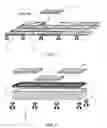
FIG. 2—key components of the new system: tiles, frame and a vertical module.
FIG. 3—the components of FIG. 2 assembled in the deck to create a bench.
FIG. 4—the accessory of FIG. 2 assembled on top of the deck with the use of a second frame.
FIG. 5—a top view of a frame that encloses and supports three tiles.
FIG. 6—a cross section of a frame showing the vertical sides and the horizontal planar element.
FIG. 7—(a) top view of a frame that holds a single tile,
-
- (b) perspective view of a module having the horizontal dimensions of a single tile.
FIG. 8—(a) top view of a frame that holds two tiles,
-
- (b) top view of two tiles,
- (c) top view of two tiles in the frame.
FIG. 9—two frames aligned to make a corner frame.
FIG. 10—a corner frame showing four tile or module locations.
FIG. 11—a corner bench in a tiled deck.
FIG. 12—a corner bench with an elevated corner table.
FIG. 13—(a) (b) and (c) the fabrication of module sides of two heights from one Ipê tile.
FIG. 14—(a) an Ipê tile sided module
-
- (b) a way of joining Ipê tile module sides.
FIG. 15—a corner bench with an elevated corner table using Ipê tiles and Ipê tile sided modules.
FIG. 16—cross sectional detail of an Ipê module on a pedestal in a deck with Ipê frame and Ipê tile.
FIG. 17—liner and panel for use with an Ipê module to create a lined planter.
FIG. 18—cross sectional detail of a lined Ipê planter in a deck.
FIG. 19—cross sectional detail of a one piece Ipê planter liner.
FIG. 20—cross sectional detail of a storage box with a cushioned seat top.
FIG. 21—a cushioned corner bench in an Ipê tiled deck with Ipê tile sided modules.
DRAWINGS
Reference Numerals
- 1. standard wood tile—prior art
- 2. adjustable height pedestal—prior art
- 3. frame for three tiles
- 4. marine board module
- 5. vertical sides of a frame that can hold three tiles
- 6. horizontal planar element of a frame that can hold three tiles
- 7. frame for one tile
- 8. vertical sides of a frame that can hold one tile
- 9. horizontal planar element of a frame that can hold one tile
- 10. marine board module with the external horizontal dimensions of one tile
- 11. frame for two tiles
- 12. vertical sides of a frame that can hold two tiles
- 13. horizontal planar element of a frame that can hold two tiles
- 14. cross member underneath a tile
- 15. side of a Ipê tile sided module 9.3″ high
- 16. side of a Ipê tile sided module 13.3″ high
- 17. Ipê tile sided module 9.3″ high
- 18. Ipê tile sided module 13.3″ high
- 19. an open top and open bottom liner
- 20. a rigid panel standard tile size
- 21. an open top and closed bottom liner
- 22. a seat cushion
- 23. small seat cushions
DETAILED DESCRIPTION OF THE PREFERRED EMBODIMENT OF THE INVENTION
In the following descriptions and illustrations like reference numbers designate like parts throughout the figures.
-
- FIG. 1 shows an example of a typical pedestal supported tiled deck or patio that is commercially available (prior art). The standard wood tile 1 is one of a plurality of identical wood tiles each of which is supported at its corners by an adjustable height pedestal 2. Pedestals 2 and wood tiles 1 are of the types sold by Bison Innovative Products of Denver, Colo. The pedestals are spaced two feet apart and the tiles are 23⅞″×23⅞″×1½″. Spacers on top of the pedestals create a ⅛″ gap between the tiles. Each tile consists of eight surface planks of Ipê wood each 23⅞″×2 11/16″×¾″ and three underneath planks at right angles to the surface planks, the same size as the surface planks, one on each edge and one in the center. The surface planks are held together by the underneath planks to make the tile using stainless steel screws. The countersunk screw heads are underneath so that they are not visible from the deck surface. Gaps between the surface planks and tiles allow rain water to drain down from the deck surface to the sub-floor on which the pedestals sit.
- FIG. 2 shows the key components of one embodiment. The accessory uses three tiles 1 removed from the deck where the accessory is to be located. Frame 3 is constructed from Ipê planks which are ¾″ thick, the same thickness as the tile planks. Frame 3 encloses and retains the three tiles. When tiles are sitting in the frame their top surfaces are essentially level with the top surfaces of the frame. Frame 3 fits on top of and is retained by module 4 which in turn fits on top of eight of the pedestals 2. Module 4 covers three tiles spaces and, in effect, elevates the tiles to a higher level.
- In this embodiment, module 4 is fabricated from four panels of 12″×½″ thick Sandstone Marine Board supplied by Interstate Plastics of Sacramento, Calif. Marine board is formulated to withstand harsh marine environments and is very suitable for exterior deck applications. Marine board comes in different colors and can be machined like wood using standard wood working tools. Module 4 is box shaped and open at the top and the bottom. The external dimensions of the box shaped module 4 are 6 feet×2 feet so as to fit on the pedestals in place of the three tiles. Module 4 can be closed at the bottom with an additional panel of marine board.
- FIG. 3 shows the components of FIG. 2 in place in the deck and resting on the pedestals to create a bench. The three tiles are shown with the planks aligned but they could be placed in the same criss-cross pattern as those on the tiled deck. Tiles can be removed from the frame to make a planter in which case the frame becomes the planter rim.
- FIG. 4 shows how the accessory shown in FIG. 2 and FIG. 3 can also be placed on top of the deck using a second frame for added stability and to create a neat lower edge. The second frame 3, identical to that shown in FIG. 2, is placed underneath module 4 on top of the deck. This variation allows the accessory to be out of alignment with the floor tiles or to cover partial tiles. This situation may occur in a pedestal supported deck along some edges or in the corners where one might want to place an accessory but the surface tiles have been cut to fit the deck to the adjoining walls.
- FIG. 5 shows a top view of frame 3 and FIG. 6 presents a side cross-sectional view of one edge of the frame. In this description the words “vertical” and “horizontal” refer to the orientation of the parts when the frame is level with the main deck as shown, for example, in FIG. 2 and FIG. 3. Frame 3 has vertical sides 5 which are fixed to a horizontal planar element 6 as shown in FIG. 6. In this embodiment the vertical sides 5 and the horizontal planar element 6 are made from Ipê planks which are ¾″ thick, the same thickness as the tile planks. The vertical sides are 2 11/16″ high the same width as the tile planks. Different dimensions could, of course, be used but there is merit, from an aesthetic perspective, in matching the tile plank dimensions. The horizontal planar element covers the top edge of the module to provide a neat appearance if the accessory is a planter. The frame is the planter rim.
- FIG. 6 shows the location of the horizontal planar element 6 part way up the vertical sides 5. The top surface of the horizontal planar element 6 is located so that the top of tile 1 placed in the frame is essentially flush with the top of the vertical side 5. The choice of plank width and thickness results in the entire frame 3 being prevented from lateral movement relative to module 4 below as a result of the overlap of vertical side 5 over the side walls of module 4.
- Frame 3 when constructed from Ipê wood weighs about 30 lb. Three Ipê tiles each weigh about 22 lb. Module 4 constructed from marine board, weighs about 32 lb. Assembly in the deck, one component at a time, in sequence, can be carried out by two people. No tools are required. The assembled bench weighs approximately 128 lb. This gives an average load of 16 lb for each of the eight supporting pedestals. Pedestal weight load is not a problem since even residential pedestals have a high load bearing capacity. For example residential pedestals, Level It™, from Bison Innovative Products of Denver, Colo., have a load rating of 750 lb per pedestal.
- FIG. 7(a) shows frame 7 which will hold one tile and FIG. 7(b) shows module 10 having the exterior horizontal dimensions of a single tile. Module 10 fits inside frame 7. These components are sized to replace and utilize one deck tile to create a seat. Frame 10 is created from 2 11/16″ wide and ¾″ thick Ipê planks. Module 10 is fabricated from 12″×½″ thick sandstone colored marine board.
- FIG. 8(a) shows frame 11 sized to hold two tiles. The vertical sides are indicated by 12 and the horizontal planar element by 13. FIG. 8(b) shows two tiles 1 and FIG. 8(c) shows the tiles in place in frame 11 resting on the horizontal planar element 13. There is a ⅛″ gap between the two tiles. Bison Innovative Products supply ⅛″ plastic spacers which can, optionally, be fixed to one or other of the tiles with a dab of construction adhesive to maintain the gap.
- FIG. 9 shows how frames can be aligned to create accessories such as benches, planters and bench-planter combinations around corners. Frame 10 is shown in juxtaposition to Frame 3. Frame 3 is modified by reducing the length of vertical side 5 by two feet at the corner where the two frames will meet.
- FIG. 10 shows the adjoining frames and tile positions A, B, C and D. To create a corner unit the frames can be supported on one three tile wide module 4, as shown in FIG. 2, under positions A, B and C and a second module 10 under position D. Alternatively, four modules 10 can be used, one under each of the positions A, B, C and D. FIG. 11 shows how a module under position B can be omitted in which case the frame bridges the gap at position B.
- FIG. 12 shows how the system allows a second level to be created above the main deck surface level. The corner tile 1 shown in position A on the first level in FIG. 11 is removed and replaced by a module 10. This module fits on the horizontal planar element of the frame since it has the same horizontal outside dimensions as a tile. A single frame 7 is then placed on top of module 10. FIG. 12 shows a tile 1 in that frame but this could be omitted to create a corner planter. A marine board with the same horizontal dimensions as a tile can also be used in that frame.
- Modules can obviously be fabricated from materials other than marine board and be of different heights. FIG. 13 and FIG. 14 illustrate how modules of different heights can be fabricated from Ipê floor tiles. FIG. 13(a) shows an underside view of an Ipê tile 1. The eight tile surface planks are held together by three identically sized underneath planks 14. To fabricate Ipê module sides an additional plank 14 is screwed to the floor planks as shown in FIG. 13(b). The assembly is then cut through between the two central planks using a table saw to create a 9.3″ module side 15 together with a 13.3″ module side 16 as shown in FIG. 13(c). Four tiles are required with four additional planks to produce the sides for two Ipê modules, one 9.3″ high and the other 13.3″ high.
- FIG. 14(a) shows a single module 17 created in this way. FIG. 14(b) shows one method of modifying and joining the Ipê tile corner members to create the “tile sided module”.
- A 9.3″ Ipê module weighs about 43 lb and a 13.3″ module weighs about 53 Lb. These can be handled by two people. Ipê modules can also be created that are two feet high and also 4 ft long using four whole 2 ft×4 ft tiles. However, these are too heavy for two people to handle. Frames allow smaller modules which can be handled by two people to be stacked to the required height.
- Lighter outdoor deck materials can be used, such as cedar, which has a specific gravity of about 40% of Ipê, or teak which has a specific gravity of about 75% of Ipê. Larger modules can then be created which can still be handled by two people.
- Modules and frames created from the same materials as the deck floor are particularly attractive when used in the system. FIG. 15 shows Ipê tile based modules of two different heights used in a corner accessory. Three single modules 17 which are 9.3″ high are used to support frames 3 and 7. The corner end of frame 3 supports module 18 which is 13.3″ high.
- FIG. 16 shows how Ipê module 17 is supported on the pedestals. Frame 7 is supported by the module 17 and tile 1 is retained by the horizontal planar element of the frame.
- FIG. 17 shows an open ended plastic liner 19 and a plastic panel 20 together with Ipê module 17. The liner 19 is fabricated from 0.187″ thick sheets welded together at the corners and sized to fit inside the module with about a ⅛″ clearance. The liner is the same height as the module. FIG. 18 shows how a liner box is created inside the module when panel 20 is placed on the pedestals, module 17 is placed on the panel and liner 19 is inserted in the module. Frame 7 creates a rim on the assembly covering the edges.
- An alternative way of creating a box inside a module is to fabricate a liner with a bottom floor 21 (FIG. 19) and insert that in the module. A panel is not then required.
- Polypropylene is a suitable plastic for liners 19 and 21 and panel 20. Liners and panels can also be fabricated from marine board or molded from polypropylene, PVC or other corrosion resistant materials. They can be produced from the same post-industrial plastic used to manufacture the pedestals.
- FIG. 20 shows how a seat cushion can be placed on top of a panel 20 in a frame. Custom cushions of various fabrics and thicknesses are obtainable from www.cushionsource.com. Cushions can be 2 ft×2 ft. One embodiment is to make four 1 ft×1 ft cushions 23 for each tile area. They then fit neatly into storage boxes underneath panel 20 as shown in FIG. 20 for protection in the winter or during inclement weather.
It will be evident that the enabling concept in the creation of these new deck accessories is the use of a new component or frame. The frame dimensions are matched to a standard tile size and the system uses box shaped modules which also conform to standard tile sizes. In addition the frame is designed to prevents lateral movement of the components and allow multi-level units to be created. Horizontal standard sized tile surfaces are created. Standard sized tiles are available in a wide range of materials and surfaces and these tiles can be incorporated into new accessories to create variety. Alternatively, the modules and frames can be fabricated from exactly the same materials as standard tiles or fabricated from the tiles themselves to create a uniform appearance. Manufacturers, marketers and installers of pedestal supported tiled decks and tiles are able to produce accessories that match or compliment their decks with no on-site carpentry costs. Landscape architects can create custom installations of benches, planters and tables using computer aided placement of standard components suited to the customer's existing or proposed deck or garden. Changes to the layouts can be made subsequent to installation at minimum cost.
Having described the invention in terms of the preferred and other embodiments it will be apparent that other tile sizes, parts and component dimensions, modifications and materials can be used. Other arrangements and improvements can be made and other deck accessories produced utilizing the same concept and intrinsic advantages. For the sake of clarity and ease of understanding these have been omitted since it will be evident that they are properly within the scope of the claims.
Claims
1-12. (canceled)
13. A deck accessory for installation in a pedestal supported tiled deck, comprising: (a) a box shaped module or modules with vertical sides having the same external horizontal dimensions as the standard deck tiles removed for the installation, each of said module or modules being disposed in the deck on the pedestals that previously supported said deck tiles, (b) a frame disposed on top of said module or modules, covering the top edges of said module or modules and completely open in the center, (c) standard deck tiles disposed in said frame supported by their edges on the horizontal planar element of said frame, (d) said frame having vertical sides joined to said horizontal planar element, said vertical sides extending upwards to the top of said deck tiles and extending down over the vertical sides of said module or modules.
whereby, (i) standard deck tiles, removed to install the accessory, can be re-used to create the top surface of the deck accessory and function as seat tops, planter lids, table tops and storage box tops, that match the deck in appearance, (ii) the module or modules are held together at their tops by the frame and at their bottoms by the surrounding deck providing structural integrity and stability to the accessory installed in the deck, and (iii) a module under a tile is completely open at the top when the tile is removed.
14. The accessory of claim 13 wherein said accessory: (a) covers an area of the deck which includes at least three standard deck tiles in a row, where the center deck tile in said row is left in place, and the deck tiles adjoining said center deck tile are removed and replaced by said box shaped modules, and (b) said frame disposed on said modules, bridges the area over said center deck tile, and (c) standard deck tiles are disposed in said additional frame.
15. The accessory of claim 13 wherein: (a) one or more of the standard tiles in said frame are replaced by an additional box shaped module or modules with the external horizontal dimensions of said standard deck tile or tiles, and (b) an additional frame disposed on top of said additional box shaped module or modules, and (c) standard deck tile or tiles are disposed in said additional frame at the very top of the accessory.
16. The accessory of claim 13 wherein the vertical sides of the box shaped modules are fabricated from deconstructed deck tiles whereby the deck and said accessories are symmetrical and alike in appearance in both vertical and horizontal planes.
Images & Drawings included:



Sources:
- United States Patent and Trademark Office - verify current appl. status at the USPTO↗
Recent applications in this class:
- » 20240287820 2024-08-29
FIRE RESISTANT MEMBRANE FOR FLOORING SYSTEM - » 20240076883 2024-03-07
Configurable base for supports for raised floors and support for raised floors comprising said configurable base - » 20230220681 2023-07-13
ASSEMBLIES, DEVICES, SYSTEMS AND METHODS RELATING TO SOUND ISOLATION BETWEEN FLOORS OF A BUILDING - » 20230071860 2023-03-09
Raised floor system for suspension type pipelines - » 20210025178 2021-01-28
System for distributing wireless networking components in a venue - » 20210025177 2021-01-28
System for distributing wireless networking components in a venue - » 20170138064 2017-05-18
Support plate system for elevated flooring tiles - » 20170058536 2017-03-02
Raised flooring system and assembly method with magnetically-attached flooring surface - » 20160097205 2016-04-07
Base isolation floor structure - » 20150074972 2015-03-19
Raised floor system grounding