ELECTRICAL CONNECTOR
US20120094548A1
2012-04-19
12/904,486
2010-10-14
Abstract:
An electrical connector for connecting a battery to a regulator may comprise a first electrical terminal, a second electrical terminal, and a body that is operably coupled to the first electrical terminal and the second electrical terminal for carrying current between the first electrical terminal and the second electrical terminal.
Interested in similar patents?
Get notified when new applications in this technology area are published.
Classification:
H01R11/287 » CPC main
Individual connecting elements providing two or more spaced connecting locations for conductive members which are, or may be, thereby interconnected, e.g. end pieces for wires or cables supported by the wire or cable and having means for facilitating electrical connection to some other wire, terminal, or conductive member, blocks of binding posts; End pieces or tapping pieces for wires, supported by the wire and for facilitating electrical connection to some other wire, terminal or conductive member; End pieces consisting of a ferrule or sleeve for connections to batteries Intermediate parts between battery post and cable end piece
H01M10/425 » CPC further
Secondary cells; Manufacture thereof; Methods or arrangements for servicing or maintenance of secondary cells or secondary half-cells Structural combination with electronic components, e.g. electronic circuits integrated to the outside of the casing
H01M10/48 » CPC further
Secondary cells; Manufacture thereof; Methods or arrangements for servicing or maintenance of secondary cells or secondary half-cells Accumulators combined with arrangements for measuring, testing or indicating the condition of cells, e.g. the level or density of the electrolyte
H01R11/12 » CPC further
Individual connecting elements providing two or more spaced connecting locations for conductive members which are, or may be, thereby interconnected, e.g. end pieces for wires or cables supported by the wire or cable and having means for facilitating electrical connection to some other wire, terminal, or conductive member, blocks of binding posts; End pieces or tapping pieces for wires, supported by the wire and for facilitating electrical connection to some other wire, terminal or conductive member End pieces terminating in an eye, hook, or fork
Y02E60/10 » CPC further
Enabling technologies; Technologies with a potential or indirect contribution to GHG emissions mitigation Energy storage using batteries
Y02E60/10 » CPC further
Enabling technologies; Technologies with a potential or indirect contribution to GHG emissions mitigation Energy storage using batteries
H01R4/34 » CPC further
Electrically-conductive connections between two or more conductive members in direct contact, i.e. touching one another; Means for effecting or maintaining such contact; Electrically-conductive connections having two or more spaced connecting locations for conductors and using contact members penetrating insulation; Clamped connections, spring connections utilising a screw or nut clamping member Conductive members located under head of screw
Description
BACKGROUND OF THE INVENTION
The present invention generally relates to electrical systems, and more specifically relates to an electrical connector.
Modern battery charging systems in the engines of automobiles, boats, motorcycles, and other vehicles generally include an alternator, a voltage regulator, and a battery. As the engine runs, the alternator may generate current for charging the battery. The voltage regulator regulates the charging voltage produced by the alternator, such as by keeping the charging voltage constant in order to protect electrical components on a vehicle.
During the course of operating a vehicle, the voltage regulator may sometimes need to be replaced. However, the process of replacing the voltage regulator may often be a cumbersome and expensive process.
SUMMARY OF THE INVENTION
In one aspect of the present invention, an electrical connector for connecting a battery to a regulator comprises a first electrical terminal, a second electrical terminal, and a body that is operably coupled to the first electrical terminal and the second electrical terminal for carrying current between the first electrical terminal and the second electrical terminal.
In another aspect of the present invention, a method for connecting a voltage regulator with a battery comprises connecting a battery wire connected to the battery to a first electrical terminal on an electrical connector and connecting a regulator wire connected to the voltage regulator to a second electrical terminal on the electrical connector. A body of the electrical connector is operably coupled to the first electrical terminal and the second electrical terminal for carrying current between the first electrical terminal and the second electrical terminal.
These and other features, aspects and advantages of the present invention will become better understood with reference to the following drawings, description and claims.
BRIEF DESCRIPTION OF THE DRAWINGS
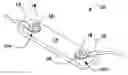
FIG. 1 shows a perspective view of an electrical connector in use in accordance with an embodiment of the present invention;
FIG. 2 shows an exploded perspective view of the electrical connector of FIG. 1;
FIG. 3 shows a plan view of the electrical connector of FIG. 1;
FIG. 4 shows a front/rear elevation view of the electrical connector of FIG. 1;
FIG. 5 shows a side elevation view of the electrical connector of FIG. 1;
FIG. 6 shows a bottom view of the electrical connector of FIG. 1; and
FIG. 7 shows a section view of the electrical connector of FIG. 1 taken along line 7-7 in FIG. 3.
DETAILED DESCRIPTION OF THE INVENTION
The following detailed description is of the best currently contemplated modes of carrying out exemplary embodiments of the invention. The description is not to be taken in a limiting sense, but is made merely for the purpose of illustrating the general principles of the invention, since the scope of the invention is best defined by the appended claims.
Various inventive features are described below that can each be used independently of one another or in combination with other features.
Broadly, embodiments of the present invention generally provide an electrical connector that may be used in a vehicle engine system to connect a battery and/or starter to a voltage regulator. The electrical connector may facilitate the task of replacing the voltage regulator. The electrical connector may also help to generally improve the electrical charging system of a vehicle, such as by preventing the alternator, voltage regulator, and generator from breaking or wearing out, and by helping to lengthen the life of the battery.
With reference to FIGS. 1-7, an electrical connector 10 may be a device comprising a first electrical terminal 22a and a second electrical terminal 22b that may connect to cable terminal lugs 12 or portions of uninsulated wire or cable, so that current may be conducted between the cables connected to the terminal lugs 12 and the first and second electrical terminals 22a and 22b.
The first and second electrical terminals 22a and 22b may be first and second screw terminals, respectively, with the first and second electrical terminals 22a and 22b each comprising a threaded contact 16 and a nut 18, such as a hex nut, that may be threaded onto the threaded contact 16. In an exemplary embodiment, the terminal lugs 12 may be placed so that they contact the threaded contact 16 and may be secured to the threaded contact 16 by the nut 18.
The electrical connector 10 may further include a body 20 operably coupled to the first electrical terminal 22a and the second electrical terminal 22b for carrying current between the first electrical terminal 22a and the second electric terminal 22b. The body 20 may be any material that may allow current to freely travel between the first and second electrical terminals 22a and 22b. In an exemplary embodiment, the body 20 may be made of a non-corrosive metal, such as a copper plate that may be about two inches in length and one and a half inch in width.
An insulating cover or coating 14, such as a rubber case, may cover at least a portion of the body 20. The insulating cover or coating 14 may help to prevent a user from being electrically shocked when handling the body 20 of the electrical connector 10.
In accordance with an embodiment of the present invention, the electrical connector 10 may be used to connect a battery or an ignition to a voltage regulator in a vehicle, such as in an automobile, motorcycle, boat, or any other vehicle. The battery may originally be connected to the voltage regulator directly with a wire. In that case, the wire may be cut to form two disconnected wires: a battery wire connected to the battery and a regulator wire connected to the voltage regulator. Wire insulators at the ends of the battery wire and the regulator wire may be stripped to expose the uninsulated wire underneath, and terminal lugs 12 may be crimped to the uninsulated ends of the battery wire and the regulator wire.
The battery wire may be connected to the first electrical terminal 22a, while the regulator wire may be connected to the second electrical terminal 22b. The second electrical terminal 22b may receive a current from the voltage regulator via the connected regulator wire. The body 20 of the electrical connector 10 may carry the current to the first electrical terminal 22a, and that current may flow from the first electrical terminal 22a to the battery through the connected battery wire.
To replace the voltage regulator, the regulator wire may be disconnected from the second electrical terminal 22b and the voltage regulator may be removed. A replacement voltage regulator attached to a replacement regulator wire may be installed. If needed, the wire insulator at the end of the replacement regulator wire may be stripped so that a terminal lug 12 may be crimped to the uninsulated end of the replacement regulator wire. The replacement regulator may be connected to the second electrical terminal 22b to output an appropriate current to the battery through the electrical connector 10.
It should be understood, of course, that the foregoing relates to exemplary embodiments of the invention and that modifications may be made without departing from the spirit and scope of the invention as set forth in the following claims.
Claims
We claim:1. An electrical connector for connecting a battery to a regulator, comprising:
a first electrical terminal;
a second electrical terminal; and
a body that is operably coupled to the first electrical terminal and the second electrical terminal for carrying current between the first electrical terminal and the second electrical terminal.
2. The electrical connector of claim 1, wherein the first electrical terminal is a first screw terminal and the second electrical terminal is a second screw terminal.
3. The electrical connector of claim 2, wherein the first screw terminal comprises a first threaded contact and a first nut and the second screw terminal comprises a second threaded contact and a second nut.
4. The electrical connector of claim 1, wherein the body comprises a metal plate.
5. The electrical connector of claim 4, wherein the body comprises a copper plate.
6. The electrical connector of claim 1, further comprising:
an insulating cover that covers at least a portion of the body.
7. The electrical connector of claim 6, wherein the insulating cover comprises a rubber casing.
8. A method for connecting a voltage regulator with a battery, the method comprising:
connecting a battery wire connected to the battery to a first electrical terminal on an electrical connector; and
connecting a regulator wire connected to the voltage regulator to a second electrical terminal on the electrical connector;
wherein a body of the electrical connector is operably coupled to the first electrical terminal and the second electrical terminal for carrying current between the first electrical terminal and the second electrical terminal.
9. The method of claim 8, further comprising:
disconnecting the regulator wire from the second electrical terminal.
10. The method of claim 9, further comprising:
connecting a replacement regulator wire connected to a replacement voltage regulator to the second electrical terminal.
Images & Drawings included:



Sources:
- United States Patent and Trademark Office - verify current appl. status at the USPTO↗
Similar patent applications:
- » 20220352660
Electrical connector, electrical connector assembly, electrical connector with circuit board, and electrical connector assembly with circuit board - » 20120052753
Assembled component having electrical connector and electrical connector cap, electrical connector cap, and method of mounting electrical connector - » 20110045690
Alignable electric connector, an electric connector system, and a method for connecting an alignable electric connector with a second electric connector - » 20210091499
Method for producing an electrical connector, in particular an electrical connector for a high-density header system; as well as an electrical connector, in particular an electrical connector for the motor vehicle industry; as well as high-density header system - » 20210296826
Electrical connector, electrical connector assembly and electrical connector module - » 20210257759
Intermediate electrical connector, electrical connector assembly, and electrical connector assembly equipped with a circuit board - » 20200203873
Electrical connector housing, electrical connector and electrical connector assembly - » 20220102903
Electrical connector, electrical mating connector, and electrical connector assembly - » 20220393402
First electrical connector, second electrical connector and electrical connector assembly - » 20220094110
Electrical connector and electrical connector set including electrical connector
Recent applications in this class:
- » 20240380138 2024-11-14
BATTERY TERMINAL COVER AND BATTERY TERMINAL UNIT - » 20230369789 2023-11-16
Battery and battery clamp systems - » 20230170634 2023-06-01
Multifunctional high-voltage connector and battery product - » 20200395693 2020-12-17
Wiring module - » 20200059019 2020-02-20
Multifunctional high-voltage connector and battery product - » 20160020536 2016-01-21
Booster cable holding structure - » 20150280336 2015-10-01
Assembly - » 20120309239 2012-12-06
Protective cap for prevention of oblique tightening of fusible link directly mounted on battery - » 20120164883 2012-06-28
Device for securing a post in a terminal clamp - » 20110306243 2011-12-15
Direct-connect fuse unit for battery terminal