High surface area carbon and process for its production
US20120094828A1
2012-04-19
13/278,754
2011-10-21
✅ Patent granted
US 8,691,177 B2
2014-04-08
-
-
Guinever Gregorio
Polsinelli PC
2031-10-21
Abstract:
The present invention provides a high surface area porous carbon material and a process for making this material. In particular, the carbon material is derived from biomass and has large mesopore and micropore surfaces that promote improved adsorption of materials and gas storage capabilities.
Inventors:
- Galen J. Suppes 19 🇺🇸 Columbia, MO, United States
- Peter Pfeifer 5 🇺🇸 Columbia, MO, United States
- Parag Shah 2 🇺🇸 Ames, IA, United States
- Jacob W. Burress 2 🇺🇸 Columbia, MO, United States
Assignee:
- The Curators of the University of Missouri 697 🇺🇸 Columbia, MO, United States
Applicant:
Interested in similar patents?
Get notified when new applications in this technology area are published.
Classification:
B01J20/22 IPC
Solid sorbent compositions or filter aid compositions; Sorbents for chromatography; Processes for preparing, regenerating or reactivating thereof comprising organic material
B01J20/3064 » CPC main
Solid sorbent compositions or filter aid compositions; Sorbents for chromatography; Processes for preparing, regenerating or reactivating thereof; Processes for preparing, regenerating, or reactivating; Addition of material, later completely removed, e.g. as result of heat treatment, leaching or washing, e.g. for forming pores Addition of pore forming agents, e.g. pore inducing or porogenic agents
B01J20/00 » CPC further
Solid sorbent compositions or filter aid compositions; Sorbents for chromatography; Processes for preparing, regenerating or reactivating thereof
B01J20/00 » CPC further
Solid sorbent compositions or filter aid compositions; Sorbents for chromatography; Catalysts
B01J20/20 » CPC further
Solid sorbent compositions or filter aid compositions; Sorbents for chromatography; Processes for preparing, regenerating or reactivating thereof comprising inorganic material comprising free carbon; comprising carbon obtained by carbonising processes
B01J20/28057 » CPC further
Solid sorbent compositions or filter aid compositions; Sorbents for chromatography; Processes for preparing, regenerating or reactivating thereof characterised by their form or physical properties characterised by their surface properties or porosity Surface area, e.g. B.E.T specific surface area
B01J20/28083 » CPC further
Solid sorbent compositions or filter aid compositions; Sorbents for chromatography; Processes for preparing, regenerating or reactivating thereof characterised by their form or physical properties characterised by their surface properties or porosity; Pore diameter being in the range 2-50 nm, i.e. mesopores
B01J20/28085 » CPC further
Solid sorbent compositions or filter aid compositions; Sorbents for chromatography; Processes for preparing, regenerating or reactivating thereof characterised by their form or physical properties characterised by their surface properties or porosity; Pore diameter being more than 50 nm, i.e. macropores
B01J21/18 » CPC further
Catalysts comprising the elements, oxides, or hydroxides of magnesium, boron, aluminium, carbon, silicon, titanium, zirconium, or hafnium Carbon
B82Y30/00 » CPC further
Nanotechnology for materials or surface science, e.g. nanocomposites
C01B3/0021 » CPC further
Hydrogen; Gaseous mixtures containing hydrogen; Separation of hydrogen from mixtures containing it ; Purification of hydrogen; Reversible uptake of hydrogen by an appropriate medium, i.e. based on physical or chemical sorption phenomena or on reversible chemical reactions, e.g. for hydrogen storage purposes ; Reversible gettering of hydrogen; Reversible uptake of hydrogen by electrodes characterised by the uptaking medium; Treatment thereof Carbon, e.g. active carbon, carbon nanotubes, fullerenes; Treatment thereof
C01B32/30 » CPC further
Carbon; Compounds thereof Active carbon
C01B32/318 » CPC further
Carbon; Compounds thereof; Active carbon; Preparation characterised by the starting materials
C01B32/342 » CPC further
Carbon; Compounds thereof; Active carbon; Preparation characterised by non-gaseous activating agents
C10L3/10 » CPC further
Gaseous fuels; Natural gas; Synthetic natural gas obtained by processes not covered by subclass , ; Liquefied petroleum gas; Natural gas; Synthetic natural gas obtained by processes not covered by , or Working-up natural gas or synthetic natural gas
F17C11/005 » CPC further
Use of gas-solvents or gas-sorbents in vessels for hydrogen
F17C11/007 » CPC further
Use of gas-solvents or gas-sorbents in vessels for hydrocarbon gases, such as methane or natural gas, propane, butane or mixtures thereof [LPG]
H01G11/24 » CPC further
Hybrid capacitors, i.e. capacitors having different positive and negative electrodes; Electric double-layer [EDL] capacitors; Processes for the manufacture thereof or of parts thereof; Electrodes characterised by structural features of the materials making up or comprised in the electrodes, e.g. form, surface area or porosity; characterised by the structural features of powders or particles used therefor
H01G11/34 » CPC further
Hybrid capacitors, i.e. capacitors having different positive and negative electrodes; Electric double-layer [EDL] capacitors; Processes for the manufacture thereof or of parts thereof; Electrodes characterised by their material; Carbon-based characterised by carbonisation or activation of carbon
H01M4/926 » CPC further
Electrodes; Inert electrodes with catalytic activity, e.g. for fuel cells; Selection of catalytic material; Metals of platinum group supported on carriers, e.g. powder carriers on carbon or graphite
C04B2111/00853 » CPC further
Mortars, concrete or artificial stone or mixtures to prepare them, characterised by specific function, property or use; Uses not provided for elsewhere in in electrochemical cells or batteries, e.g. fuel cells
C04B2111/00948 » CPC further
Mortars, concrete or artificial stone or mixtures to prepare them, characterised by specific function, property or use; Uses not provided for elsewhere in for the fabrication of containers
H01M8/04216 » CPC further
Fuel cells; Manufacture thereof; Auxiliary arrangements, e.g. for control of pressure or for circulation of fluids; Arrangements for control of reactant parameters, e.g. pressure or concentration; Reactant storage and supply, e.g. means for feeding, pipes characterised by the choice for a specific material, e.g. carbon, hydride, absorbent
Y02E60/13 » CPC further
Enabling technologies; Technologies with a potential or indirect contribution to GHG emissions mitigation Energy storage using capacitors
Y02E60/13 » CPC further
Enabling technologies; Technologies with a potential or indirect contribution to GHG emissions mitigation Energy storage using capacitors
Y02E60/32 » CPC further
Enabling technologies; Technologies with a potential or indirect contribution to GHG emissions mitigation; Hydrogen technology Hydrogen storage
Y02E60/32 » CPC further
Enabling technologies; Technologies with a potential or indirect contribution to GHG emissions mitigation; Hydrogen technology Hydrogen storage
Y02E60/50 » CPC further
Enabling technologies; Technologies with a potential or indirect contribution to GHG emissions mitigation; Hydrogen technology Fuel cells
Y02E60/50 » CPC further
Enabling technologies; Technologies with a potential or indirect contribution to GHG emissions mitigation; Hydrogen technology Fuel cells
Y02P20/145 » CPC further
Technologies relating to chemical industry; Feedstock the feedstock being materials of biological origin
Y02P20/145 » CPC further
Technologies relating to chemical industry; Feedstock the feedstock being materials of biological origin
Y02P70/50 » CPC further
Climate change mitigation technologies in the production process for final industrial or consumer products Manufacturing or production processes characterised by the final manufactured product
Y02P70/50 » CPC further
Climate change mitigation technologies in the production process for final industrial or consumer products Manufacturing or production processes characterised by the final manufactured product
Y02T10/70 » CPC further
Road transport of goods or passengers; Other road transportation technologies with climate change mitigation effect Energy storage systems for electromobility, e.g. batteries
Y02T10/70 » CPC further
Road transport of goods or passengers; Other road transportation technologies with climate change mitigation effect Energy storage systems for electromobility, e.g. batteries
C04B38/0022 » CPC further
Porous mortars, concrete, artificial stone or ceramic ware; Preparation thereof obtained by a chemical conversion or reaction other than those relating to the setting or hardening of cement-like material or to the formation of a sol or a gel, e.g. by carbonising or pyrolysing preformed cellular materials based on polymers, organo-metallic or organo-silicon precursors
C04B35/52 » CPC further
Shaped ceramic products characterised by their composition ; Ceramics compositions ; Processing powders of inorganic compounds preparatory to the manufacturing of ceramic products based on non-oxide ceramics based on carbon, e.g. graphite
C04B38/0054 » CPC further
Porous mortars, concrete, artificial stone or ceramic ware; Preparation thereof characterised by the pore size, pore shape or kind of porosity the pores being microsized or nanosized
B01J20/30 IPC
Solid sorbent compositions or filter aid compositions; Sorbents for chromatography; Processes for preparing, regenerating or reactivating thereof Processes for preparing, regenerating, or reactivating
C01B3/00 IPC
Hydrogen; Gaseous mixtures containing hydrogen; Separation of hydrogen from mixtures containing it ; Purification of hydrogen
C01B3/00 IPC
Hydrogen; Hydrides; Water; Synthesis gas from hydrocarbons
C07C11/24 IPC
Aliphatic unsaturated hydrocarbons containing carbon-to-carbon triple bonds Acetylene
C01B13/00 IPC
Oxygen; Oxides or hydroxides in general; Per-compounds
C01B13/00 IPC
Oxygen; Ozone; Oxides or hydroxides in general
C01B21/00 IPC
Nitrogen; Compounds thereof
C07C9/04 IPC
Aliphatic saturated hydrocarbons with one to four carbon atoms Methane
C01B23/00 IPC
Noble gases; Compounds thereof
C09C1/56 IPC
Treatment of specific inorganic materials other than fibrous fillers ; Preparation of carbon black; Carbon; Carbon black Treatment of carbon black ; Purification
B01D53/14 IPC
Separation of gases or vapours; Recovering vapours of volatile solvents from gases; Chemical or biological purification of waste gases, e.g. engine exhaust gases, smoke, fumes, flue gases, aerosols, by absorption
Description
CROSS-REFERENCE TO RELATED APPLICATIONS
This application is a divisional of U.S. patent application Ser. No. 11/937,150, entitled “High Surface Area Carbon and Process for its Production” filed on Nov. 8, 2007, which is hereby incorporated by reference in its entirety. U.S. patent application Ser. No. 11/937,150 claims priority to U.S. Provisional Application Ser. No. 60/857,554 filed on Nov. 8, 2006, which is hereby incorporated by reference in its entirety.
GOVERNMENT SUPPORT
The present invention was made, at least in part, with government support under Award ID 0438469 from the National Science Foundation. Accordingly, the United States Government has certain rights in this invention.
FIELD OF THE INVENTION
The present invention relates to high surface area porous carbon materials and, in particular, biomass-based activated carbon materials.
BACKGROUND OF THE INVENTION
Carbon materials, generally referred to as activated carbons, for adsorption, liquid cleanup, gas cleanup, gas storage, and monolith structures are widely available from many sources. Useful carbon materials have high surface areas and a high density of pores with optimal diameters. Table 1 lists the diameters considered to be critical (i.e., pore diameters below which the molecule would not fit into the pore) for adsorption. Observations and theory tend to agree that the optimal diameter for adsorbing a molecule is about 2.7 times the critical diameter, with optimal pore diameters of 6 Å, 6 Å, and 11 Å for hydrogen, acetylene, and methane, respectively.
| TABLE 1 |
| Common molecules and their critical diameters (Dcrit)a |
| Molecule | Dcrit (Å) | |
| Hydrogen | 2.4 | |
| Acetylene | 2.4 | |
| Oxygen | 2.8 | |
| Nitrogen | 3.0 | |
| Water | 3.2 | |
| Methane | 4.0 | |
| Methanol | 4.4 | |
| aMineral Adsorbents, Filter Agents and Drying Agents. Aldrich Technical Bulletin. http://www.sigmaaldrich.com/Brands/Aldrich/Tech_Bulletins/AL_143/Molecular_Sieves.html. |
The available carbons, whether derived from fossil fuels or biomass, rarely have surface areas in excess of 2000 m2/g and generally have pore diameters and pore volumes such that they are not able to adsorb and store >20% of their weight in natural gas (methane) at ambient temperature and a pressure of 500 psig. Thus, there is a need for a carbon material, preferably derived from biomass and hence renewable, with a high surface area and a high volume of pores with diameters in a range that promotes high storage capacity of natural gas and other energy carriers. Activated carbons having these properties would be useful in a wide range of applications, such as fuel tanks in vehicles, batteries, electrical capacitors, separation and purification devices, and catalysts.
BRIEF SUMMARY OF THE INVENTION
Among the various aspects of the invention, one aspect provides an activated carbon comprising a plurality of particles. Each particle in this aspect has an overall particle size of at least 100 mesh and a total porosity of at least about 70%.
Another aspect provides a process for making an activated carbon adsorbent that includes contacting a biomass feed stock with an acidic solution to form an acid soak having a mass ratio (acid solution: biomass) ranging from about 0.2:1 to about 1.5:1. The acidic solution includes an acid in water at an acid concentration ranging from about 50% to about 70% by mass. The process also includes maintaining the acid soak at a temperature ranging from about 30° C. to about 75° C. for a soak time ranging from about 8 hours to about 14 hours to form an acid-treated biomass. The process further includes forming a char by heating the acid-treated biomass to a char temperature ranging from about 400° C. to about 600° C. at a heating rate of less than about 2° C. per minute, maintaining the char temperature for a char time ranging from about 0.5 hours to about 3 hours, cooling the char to room temperature at a rate of less than about 2° C. per minute, and rinsing the char. The process additionally includes forming an aqueous slurry by contacting the char with an amount of an alkaline material having a pH greater than about 9; the slurry has a mass ratio of alkaline material:char ranging from about 1:1 to about 5:1. The process also additionally includes forming the adsorbent by heating the aqueous slurry to an activation temperature ranging from about 600° C. to about 1000° C. in the absence of oxygen, maintaining the activation temperature for an activating time ranging from about 0.1 hours to about 3 hours, cooling the slurry to room temperature at a cooling rate of less than rate of less than about 2° C. per minute, and rinsing the activated carbon.
Other aspects and features of the invention will be in part apparent and in part pointed out hereinafter.
BRIEF DESCRIPTION OF THE FIGURES
FIG. 1 is a block flow diagram illustrating key steps in the preferred carbon synthesis process. Important parameters that may impact the performance of the activated carbon product are listed to the right.
FIG. 2 is a block flow diagram illustrating an alternative synthesis path designed to increase graphite content for producing monolith materials intended for use in electrical devices.
FIG. 3 shows volume-for-volume methane storage isotherms for activated carbon prepared with different rates of base treatment in the base activation step. Uptake is at 20° C.
FIG. 4 shows gravimetric methane storage isotherms for activated carbon prepared with different rates of base treatment in the base activation step. Uptake is at 20° C.
FIG. 5 shows nitrogen isotherms for activated carbon prepared at different rates of base treatment in base activation step. Uptake is at 77 K.
FIG. 6 is a graphic illustration of the impact of pore volume and surface area on methane adsorption.
FIG. 7 illustrates two differed channel options to overcome pressure drops.
FIG. 8 shows nitrogen isotherms for activated carbon prepared at different temperatures of base activation. Uptake is at 77 K.
FIG. 9 shows high-performance gravimetric methane storage isotherms at 20° C. and illustrates that preferred embodiments of this invention are carbons with a large micropore volume and large mesopore volume (e.g., Ba5.32, Table 7) if the target is a minimum-weight methane tank.
FIG. 10 shows high-performance volumetric methane storage isotherms at 20° C. and illustrates that preferred embodiments of this invention are carbons with a large micropore volume and a small mesopore volume (e.g., S-33/k, Table 7) if the target is a minimum-volume methane tank.
DETAILED DESCRIPTION OF THE INVENTION
An activated carbon material has been discovered that has a particularly high mesopore volume and high surface area, such that it has excellent performance advantages in many applications. In certain preferred embodiments, the carbon materials have DFT surface areas in excess of 1500 m2/g. In particular, certain activated carbons of this invention have pore volumes in excess of 1 cc/g for pores whose diameters range from about 10 Å to about 50 Å. This feature of the carbon materials leads to superior performance in application-specific devices as summarized in Table 2. In other embodiments, the activated carbons have DFT surface areas in excess of 2850 m2/g and these carbons provide superior performance in applications that include natural gas (methane) storage, hydrogen storage, removing forms of soluble metals from liquids, and cleanup of gases.
A multi-step process is used in the manufacturing of these activated carbon materials. The process includes a first charring step that produces a desirable initial micropore and mesopore volume and a second step that produces high surface areas with preservation of useful distributions of mesopore and micropore volumes. A briquetting step densifies the activated carbon and provides for monolith-like material useful in applications such as gas storage, electrical devices, and fluid processing cartridges.
| TABLE 2 |
| Application-specific uses of the materials of this invention. |
| Novelty of | ||
| Invention | ||
| Application | Critical Parameter | Embodiments |
| methane | pore volume for pores with diameters between 10 | >1.0 | cc/g |
| storage tank | and 50 Å | ||
| hydrogen | pore volume for pores with at diameters less than | >0.5 | cc/g |
| storage tank | 10 Å |
| weight % of incorporated metal of atomic weight | >1% | |
| less than 60 | ||
| weight % of co-adsorbent compound with critical | >1% | |
| diameter between 7.5 and 12 Å |
| acetylene | pore volume for pores with diameters between 10 | >0.7 | cc/g |
| storage tank | and 15 Å | ||
| separates | pore volume for pores with diameters between 10 | >1.0 | cc/g. |
| methane from | and 50 Å | ||
| other gases | |||
| molecular sieve | pore volume for pores with diameters less than 10 Å | >0.5 | cc/g |
| volatile organic | pore volume for pores with diameters between 10 | >1.2 | cc/g |
| compound | and 50 Å | ||
| adsorbent | |||
| water treatment | pore volume for pores with diameters less than 10 Å | >0.5 | cc/g |
| adsorbent. | |||
| electrical | BET surface area | >2500 | m2/g |
| capacitor | |||
| battery | pore volume for pores with diameters between 10 | >1.0 | cc/g |
| and 50 Å |
| weight % of incorporated metal selected from the | >5% | |
| group lithium, sodium, lead, cobalt, iron, and | ||
| manganese | ||
| catalyst support | weight % for incorporated metal selected from the | >0.1% |
| group platinum, ruthenium, palladium, copper, | ||
| chromium, cobalt, silver, gold, and vanadium or | ||
| acidic or basic sites |
| catalyst support | BET surface area | >1000 | m2/g |
| in a fuel cell | |||
| ion exchange | pore volume for pores with diameters between 10 | >1.0 | cc/g |
| material | and 50 Å |
| water treatment | weight % of incorporated metal such as iron | >2% |
| adsorbent | ||
I. Mesopore Material
One aspect of the invention provides a biomass-based activated carbon that is porous and comprises greater than 50% carbon by weight. Furthermore, the activated carbon has the following properties that improve adsorption: a DFT surface area greater than 1500 m2/g, a pore volume greater than about 0.6 cc/g for pores with diameters between 10 Å and 50 Å, a pore volume greater than about 0.4 cc/g for pores with diameters between 10 Å and 20 Å, and a distribution of pores such that at least about 20% of the pore volume comprises pores with diameters between 20 Å and 50 Å. More preferably the activated carbon has a pore volume greater than about 0.8 cc/g for pores whose diameters range from about 10 Å to about 50 Å. Even more preferably, the activated carbon has a pore volume greater than about 1.1 cc/g for pores whose diameters range from about 10 Å to about 50 Å.
These properties provide for good natural gas (methane) adsorption, including the ability to adsorb greater than 15% of its weight in natural gas at 20° C. and a natural gas pressure of 500 psig. Typically, the micropore volume is between 0.32 and 1.2 cc/g and the mesopore volume is greater than 0.25 cc/g.
Materials for certain applications are more dependent on critical combinations of surface area and pore volume, such as the following:
-
- The preferred activated carbon may be used in a methane storage tank, wherein the activated carbon has a pore volume greater than 1.0 cc/g for pores with diameters between 10 Å and 50 Å.
- The preferred activated carbon may be used in a hydrogen storage tank, wherein the activated carbon has a pore volume greater than 0.5 cc/g for pores with diameters less than 10 Å. Preferably, the activated carbon contains at least 1% by weight of a metal of atomic weight less than 60. The activated carbon of the hydrogen storage tank may incorporate a co-adsorbent compound at a weight percentage greater than 1% with the compound having a critical diameter between 7.5 Å and 12 Å.
- The preferred activated carbon may be used in a separator that separates methane from other gases, wherein the activated carbon has a pore volume greater than 1.0 cc/g for pores with diameters between 10 Å and 50 Å.
- The preferred activated carbon may be used in a volatile organic compound adsorbent, wherein the activated carbon has a pore volume greater than 1.2 cc/g for pores with diameters between 10 Å and 50 Å.
- The preferred activated carbon may be used as a water treatment adsorbent to remove organic compounds from water.
Materials for certain other applications are more dependent on surface area, such as the following:
-
- The preferred activated carbon may be used in a battery, wherein the activated carbon has a pore volume greater than 1.0 cc/g for pores with diameters between 10 Å and 50 Å. The activated carbon in this battery may further comprise greater than 5% by weight a metal selected from the group consisting of lithium, sodium, lead, cobalt, iron, and manganese.
- The preferred activated carbon may be used as a catalyst support, wherein the carbon further comprises greater than 0.1% by weight a metal selected from the group consisting of platinum, ruthenium, palladium, copper, chromium, cobalt, silver, gold, and vanadium.
- The preferred activated carbon may be used as a catalyst support in a fuel cell.
- The preferred activated carbon may be used as an ion exchange material, wherein the activated carbon has a pore volume greater than 1.0 cc/g for pores with diameters between 10 Å and 50 Å.
- The preferred activated carbon may be used as a water treatment adsorbent to remove metals from water. For some water treatment applications the activated carbon may incorporate greater than 2% by weight of a metal to improve adsorption of targeted materials in the water.
II. Micropore Material
Another aspect of the invention provides activated carbon materials that have very high specific surface areas. These biomass-based activated carbon materials are porous, comprise greater than 50% by weight of carbon, and have improved adsorption characteristics. These activated carbons have the following properties: a nitrogen DFT surface area greater than 2850 m2/g and a pore volume greater than 0.5 cc/g for pores with diameters less than 10 Å. More preferably, the material is an activated carbon with a pore volume greater than 0.50 cc/g for pores in the less than 10 Å diameter range. Even more preferably, the material is an activated carbon with a pore volume greater than 0.70 cc/g for pores in the less-than 10 Å diameter range. More preferably, the DFT surface area is greater than 3100 m2/g.
Materials for certain micropore applications are more dependent on critical combinations of surface area and pore volume, such as the following:
-
- The preferred activated carbon may be used in a molecular sieve, wherein the activated carbon has a pore volume greater than about 0.50 cc/g for pores with diameters less than about 10 Å.
- The preferred activated carbon may be used in an acetylene storage tank, wherein the activated carbon has a pore volume greater than about 0.7 cc/g for pores with diameters between about 10 Å and about 15 Å.
- The preferred activated carbon may be used in an electrical capacitor, wherein the activated carbon has a BET surface area greater than about 2500 m2/g.
III. Volume-Based Storage Material
Still another aspect of the invention encompasses materials that maximize storage on a per-volume basis. The preferred activated carbon comprises greater than about 50% by weight of carbon of recent biomass origin, and a DFT surface area greater than about 1500 m2/g; a 10-20 porosity, which is defined as the volume of pores with diameters between 10 and 20 Å, in cc/g, multiplied by the apparent density, in g/cc, wherein the 10-20 porosity is greater than about 0.25. The activated carbon further comprises a pore volume greater than about 0.4 cc/g for pores whose diameters range from about 10 Å to about 20 Å, and a distribution of pores such that at least about 30% of the pore volume comprises pores whose diameters range from about 10 Å to about 20 Å. More preferably, the activated carbon has a 10-20 porosity, which is defined as the volume of pores with diameters between 10 and 20 Å, in cc/g, multiplied by the apparent density, in g/cc, wherein the 10-20 porosity is greater than about 0.3, and a pore volume greater than about 0.5 cc/g for pores whose diameters range from about 10 Å to about 20 Å. Metals present at a concentration greater than about 10% by weight may enhance performance in applications such as a methane storage tank, a hydrogen storage tank, an acetylene storage tank, a capacitor, a battery, and a molecular sieve.
IV. Fabrication Process for Activated Carbons
A further aspect of the invention provides a process for making an activated carbon. FIG. 1 illustrates in block flow a preferred process of this invention. This embodiment comprises sequential steps of preparing a biomass, acid soaking, charring, and activating the char in the presence of a base. For many applications, water may be used to wash the activated carbon to remove the base. Optionally, the washed base may be recovered for recycle and reuse. Optionally, the phosphoric acid may also be recovered for recycle. Optionally, the activated carbon may be pressed into a briquette. FIG. 2 illustrates an alternative embodiment with higher temperature base activation to prepare higher-graphite materials for use in electrical devices.
In general, the process fabricates an activated carbon that is porous and comprises greater than 50% by weight of carbon of recent biomass origin. The process comprises charring a biomass feed stock containing greater than 40% by weight of carbon at a temperature from about 350° C. to about 850° C. to produce a char having a DFT surface area greater than about 900 m2/g and a pore volume greater than about 1.0 cc/g for pores whose diameters range from about 10 Å to about 50 Å. The process further comprises activating the char in the presence of an alkaline material having a pH greater than about 9 at a temperature from about 600° C. to about 1000° C. to produce an activated carbon having a DFT surface area greater than about 1700 m2/g, a total pore volume greater than 1.1 cc/g, and a distribution of pores such that at least 20% of the pore volume comprises pores whose diameter range from about 20 Å to about 50 Å.
Preferably, the base is a metallic hydroxide selected from the group consisting of potassium hydroxide, sodium hydroxide, lithium hydroxide, and beryllium hydroxide; the biomass is selected from the group consisting of corn cobs, wood products, olive pits, peach pits, coconut shells, and nut shells; the char is produced from a blend of the biomass and phosphoric acid where the mass ratio of phosphoric acid and biomass is between 0.5:1 and 1:1; and the activated carbon is produced from a blend of the char and metallic hydroxide where the mass ratio of metallic hydroxide and biomass is between 1:1 and 5:1.
The fabrication procedure starts with pretreating the biomass and acid soaking the biomass in steps as summarized in Table 3. In general, smaller particle size makes soaking easier at lower temperatures, and ensures that acid reaches the center of the particle. Phosphoric acid (H3PO4) reacts well with the cellulose and lignin contents of the biomass compared to other acids. Higher acid content generally leads to better phosphorylation of the ligno-cellulosic matters of the biomass; however very high values may result in over-activation and loss of microporosity. Lower soaking temperatures generally ensure that the attack of the acid on the lignin and hemi-cellulose is not excessive and, hence, the structural damage is minimal before the actual temperature of phosphorylation and cross-linking is reached. Higher temperatures may cause structural changes in the biomass before the correct temperature is reached. Twelve hours of soaking time generally ensures that the acid reaches the interior of the biomass uniformly.
The preferred means to char the biomass includes selecting a biomass from the group including corn cobs, fruit seeds/pits, and wood; reducing the particle size to 5-100 mesh; using phosphoric acid at a concentration of 50-70% in water and mixing acid to biomass at a mass ratio from about 0.8:1 to about 1.3:1; soaking the biomass-acid mixture at 30-75° C. for 8-14 hours; and evaporating the excess water (from acid) at 170° C. for about 2 hours.
The exemplary means to char the biomass includes selecting corn cobs as the biomass; reducing the particle size to about 20-30 mesh; using phosphoric acid at a concentration of about 70% in water and mixing phosphoric acid to biomass at a mass ratio from about 0.9:1 to about 1:1; soaking the biomass-acid mixture at about 30° C. for about 12 hours; and evaporating the excess water (from acid) at 170° C. for about 2 hours.
| TABLE 3 |
| Preferred conditions for the pretreating and acid soaking steps. |
| Parameters | Broad Description | Preferred | Best |
| Pretreating of Biomass |
| Choice of | Any biomass that can be | corn cobs, fruit | corn cobs |
| biomass | processed to 2-30 mesh | seeds/pits, | |
| wood | |||
| Particle size | Smallest dimension less | 5-100 mesh | 20-30 |
| reduction and | than 5 inches | mesh | |
| control |
| Acid Soaking |
| Choice of acid | phosphoric, boric, | phosphoric | phosphoric |
| sulfuric, zinc chloride | acid | acid | |
| and similar | |||
| dehydrating agents | |||
| Acid | 30-80% | 50-70% | 70% |
| concentration | |||
| (in water) | |||
| Mass ratio of | 0.2:1 to 1.5:1 | 0.8:1 to 1.3:1 | 0.9:1 to 1:1 |
| acid to biomass | |||
| Soak | 10-100° C. | 30-75° C. | 30° C. |
| temperature | |||
| Soak time | 2-24 hrs | 8-14 hrs | 12 hrs |
| (duration) | |||
| Methodology | Contact/wash with water, | Evaporate near | |
| for removing | heat to evaporate residual | 170° C. for | |
| excess acid | water and some of | about 2 hours | |
| the acid | |||
Conditions for charring and washing of the char are summarized in Table 4. The rate of heating is slow, but not necessary over entire temperature range. The charring time is the period of time at the final temperature; charring occurs even during the heat-up process at temperatures greater than about 300° C. Preferred particle sizes relate to particle sizes that make soaking easier at lower temperatures, and ensure that the acid reaches the center of the particle.
The preferred charring conditions are heating to the charring temperature of at a rate of less than 2° C./min and charring at a temperature between 400 and 600° C. for 0.5 to 3 hours. Exemplary conditions are heating to the charring temperature at a rate of about 0.5° C./min and charring at a temperature of about 450° C. for 1.5 hours.
| TABLE 4 |
| Preferred conditions for the charring and washing of char steps. |
| Parameters | Broad Description | Preferred | Best |
| Charring |
| Rate of heating | Whatever is cost effective, | Less than | 0.5° C./min |
| to charring | faster heating rates may | 2° C./min | |
| temperature | require more-costly | ||
| equipment | |||
| Temperature of | 350-850° C. | 400-600° C. | 450° C. |
| charring | |||
| Charring time | 0-24 hr | 0.5-3 hr | 1.5 hr |
| (duration) | |||
| Methodology | Contact/wash with water | Trickle water | |
| for washing | through bed | ||
| char | of carbon | ||
| until pH of | |||
| water is 7 | |||
| Particle size | Smallest dimension less | 5-200 mesh | 20-60 |
| reduction and | than 0.5 inches | mesh | |
| control | |||
| Cooling | Whatever is cost effective, | Less than | |
| faster heating rates may | 2° C./min | ||
| require more-costly | |||
| equipment | |||
| Rate of heating | Whatever is cost effective | <2° C./min | |
| to charring | |||
| temperature | |||
Conditions for adding the base, base activating, and washing to remove the base are summarized in Table 5. The preferred base is KOH since it often produces pores with smaller diameter than other bases. Smaller particle sizes allow for a better reaction of char with KOH.
The preferred conditions for adding base and activating are adding a base to a char having a surface area greater than 900 m2/g and mesopore volume greater than 0.3 cc/g, wherein the base is selected from the group consisting of KOH, NaOH, and LiOH such that the mass ratio of base to char is from about 1.5:1 to about 5:1. Activating is preferably performed at 700-900° C. in the absence of oxygen, such as with a nitrogen purge, for about 0.1 to about 3 hours. For most, but not all, applications the activated carbon is washed with water after cooling to ambient temperature until the wash water has a pH less than 7.0.
Exemplary conditions include using KOH at a mass ratio of about 2.5:1 to about 4:1, activating at about 800° C. in the absence of oxygen for about 1 hour.
| TABLE 5 |
| Preferred conditions for adding base, base activating, and washing to |
| remove base steps. |
| Parameters | Broad Description | Preferred | Best |
| Adding Base |
| Choice of base | KOH, NaOH, LiOH, | KOH, NaOH, | KOH |
| K2CO3, Na2CO3, | LiOH | ||
| pH > 10 | |||
| Mass ratio of | 0.5:1 to 6:1 | 1.5:1 to 5:1 | 2.5:1 to |
| base to char | 4:1 | ||
| Methodology of | Mix base, carbon, | ||
| Addition | and water in paste | ||
| to slurry | |||
| consistency |
| Base Activating |
| Rate of heating | Whatever is cost | 5-15° C./min | 9-10° |
| to charring | effective, faster heating | C./min | |
| temperature | rates may require | ||
| more-costly | |||
| equipment | |||
| Temperature of | 600-1000° C. | 700-900° C. | 800° C. |
| activating | |||
| Activating time | 0.1-24 hr | 0.1-3 hr | 1 hr |
| (duration) | |||
| Cooling | Whatever is cost | Less than 2° | |
| effective, faster heating | C./min | ||
| rates may require | |||
| more-costly | |||
| equipment |
| Washing to Remove Base |
| Methodology for | Contact/wash with water | Trickle water | |
| washing | through bed of | ||
| carbon until pH | |||
| of water is 7 | |||
| Handling of | Evaporate excess water | Staged and/or | |
| recovered base | from wash water | countercurrent | |
| for recycle | wash that | ||
| concentrates base | |||
| in wash water | |||
In some embodiments, the activated carbon may be further processed into briquettes. Preferred conditions for briquetting are summarized in Table 6. Optimum amounts of binder provide enough compression and abrasion strengths to the monoliths and promote higher densities. Higher binder additions can plug pores and decrease micropore volumes. Preferred briquetting temperatures allow the binder to reach the glass transition phase and provide monoliths with better compressive and abrasive strengths. Preferred pressures lead to monoliths with high piece densities (apparent density) and better compressive and abrasive strengths. Pressures even higher than 16000 psi may be effective and, in some cases, preferred. Pressing time and post-treating at elevated temperatures may be needed to open the pore structure in the briquette as some pores may be plugged with binder.
The preferred conditions for briquetting include mixing 40-100 mesh activated carbon particles with about 20-40% of a briquette binder, such as polyvinylidene chloride or modified soybean oil. The preferred method to modify a vegetable oil, preferably soybean oil, for use as a briquette binder is to body the vegetable oil. The preferred bodying process is to heat the oil at a temperature from about 200° C. to about 400° C. in the absence of oxygen for an adequate period of time such that the viscosity is increased to at least 200 cP but less than 40000 cP. Preferably, the briquette is formed by pressing at a temperature of about 150-180° C., at a pressure of about 14000-16000 psi for about 1-2 hours. The preferred post-treatment pyrolysis is at a temperature of about 700-900° C.
Exemplary conditions for briquetting include mixing 50-100 mesh activated carbon particles with about 30% of a briquette binder, such as polyvinylidene chloride or modified soybean oil. The briquette is formed by pressing at a temperature of about 175° C., at a pressure of about 16000 psi for about 990 min, and then heating at a temperature of about 750° C.
| TABLE 6 |
| Preferred conditions for briquetting. |
| Parameters | Broad Description | Preferred | Best |
| Briquetting |
| Particle size | 20-100 mesh | 40-100 mesh | 50-100 |
| reduction and | mesh | ||
| control | |||
| Selection of | Any material capable of | polyvinylidene | |
| binder | polymerizing at | chloride, | |
| temperatures above | modified | ||
| 100° C., adhesives, or | soybean oil | ||
| thermoplastic polymers | |||
| Amount of | 5-50% | 20-40% | 30% |
| binder | Thoroughly mix such | Add carbon to | |
| Methodology | that all components | liquids to | |
| for | have at least some | generate evenly | |
| binder addition | minimum particle | mixed wetted | |
| size | carbon | ||
| Temperature of | 130-180° C. | 150-180° C. | 175° C. |
| pressing | |||
| Pressure of | 13000-17000 psi | 14000-16000 | 16000 psi |
| pressing | psi | ||
| Dye | No restrictions so long as | ||
| specifications | temperature, pressure, | ||
| and time constraints are | |||
| met throughout mold | |||
| Briquette | No restrictions | 0.25-6″ height, | 1″ height, |
| dimensions | 0.25-4″ dia | 3.5″ dia | |
| Time of | 0.1-270 min | 60-120 min | 90 min |
| pressing | |||
| Temperature of | 600-1200° C. | 700-900° C. | 750° C. |
| post-treatment | |||
| pyrolysis | |||
| Rate of heating | 0.1-5° C./min | 0.1-2° C./min | 0.1° C./min |
| during binder | up to | ||
| removal | 500° C.; | ||
| 1.5° C./min | |||
| up to | |||
| 750° C. | |||
When preparing briquettes for electro-chemical applications, it is preferred to use activating conditions that lead to higher graphite contents and binders that have or promote electrical conductivity.
By example, applications of the activated carbon material of this invention include: methane storage (especially with briquette embodiments); hydrogen storage (especially with briquette embodiments); purification of methane from landfill gases; purification of methane from natural gas wells; adsorption of volatile organic compounds from gases processed for release from chemical processes; adsorption of catalysts from products of liquid synthesis (including use of cartridges with briquette embodiments); supports for metal and acid catalysts; and electrode assemblies for use in batteries and/or fuel cells. As an example, Example 5 illustrates an application for removing soluble metals from an aqueous solution.
DEFINITIONS
To facilitate understanding of the invention, several terms are defined below.
An “activated carbon,” as used herein, refers to a char that has undergone a second heat treatment method (>300° C.) to increase surface area.
The “BET surface area” is computed from Brunauer-Emmett-Teller (BET) analysis of a nitrogen adsorption isotherm.
The term “biomass”, as used herein refers to recent organic matter, wherein “recent” generally means that it was produced as a direct or indirect result of photosynthesis within the past 10 years. Carbon-14 dating methods may be used to identify whether or not a carbon material is from biomass versus fossil fuels.
The phrase “biomass-based material” refers to a material that was made from biomass by manmade chemical or thermal processes.
The term “char,” as used herein, refers to a biomass that has been heat treated (>300° C.) one time to produce a material with a DFT surface area greater than about 900 m2/g.
The “DFT surface area” is computed from density functional theory (DFT) analysis of a nitrogen adsorption isotherm.
As used herein, a “mesopore” refers to a pore with a diameter from about 20 Å to about 500 Å.
As used herein, a “micropore” refers to a pore with a diameter less than about 20 Å.
The term “10-20 porosity,” as used herein, refers to the volume of pores with diameters between 10 Å and 20 Å, in cc/g, multiplied by the apparent density, in g/cc. The term “7.5-20 porosity,” as used herein, refers to the volume of pores with diameters between 7.5 Å and 20 Å, in cc/g, multiplied by the apparent density, in g/cc.
As various changes could be made in the above-described materials and processes without departing from the scope of the invention, it is intended that all matter contained in the above description and the examples presented below, shall be interpreted as illustrative and not in a limiting sense.
EXAMPLES
The following examples illustrate various embodiments of the invention. The following conclusions may be drawn regarding the embodiments of this invention:
-
- The best performing samples of this invention had pore volumes greater than 1.8 cc/g except for S-33/k, which performed well despite not meeting this criterion. More broadly described, the preferred materials had pore volumes greater than 1.2 cc/g. Stated another way, the preferred materials had pore volumes in excess of about 1.0 cc/g for pores whose diameters ranged from about 7.5 Å to about 50 Å in diameter.
- Methane surface area does correlate with pore volumes greater than 7.5 Å and less than 50 (or 40) Å.
- Methane uptake does not correlate with pore volumes less than 7.5 Å.
- Methane uptake at pressures higher than 500 psig (positive slope on excess adsorption at 500 psig) is enhanced by pores in the 20-40 Å diameter range. This is a distinct advantage of the embodiments of this invention with substantial pore volume in the 20-30 Å diameter range.
- Hydrogen uptake correlates with pore volume in pores with diameters less than 10 Å.
- Optimal KOH:char ratio is about 2.5:1 to 4.0:1 for methane storage.
- Slightly reduced combinations of activation temperature and KOH lead to more pores <7.5 Å and very high surface area. Novel materials were made with pore volumes >0.5 cc/g in the <7.5 Å range. An interpretation of the processing is that higher temperatures cause KOH to continue to increase pore diameters to values greater than 10 Å. There are optimal values of activation temperature, KOH concentration, and activation time to maximize the volume of pores with diameters near about 10 Å. These optimal values are near those used to prepare samples S56 and Ba5.1 (see Table 7).
- Soaking at 80° C. rather than 50° C. leads to greater density. Density tends to increase with soaking at a temperature between 75° C. and 100° C. for at least two hours prior to charring.
- Higher acid concentration in soaking leads to greater density.
- Capacitor functionality correlates with high surface area.
Example 1
Preparation and Characterization of Preferred Carbon Samples
A series of experiments were carried out to demonstrate the impact of different parameters (e.g., phosphoric acid treatment and KOH activation) on the final carbon pore volume, pore size distribution, and surface area. For purposes of clarity, the carbon materials prior to base (preferably KOH) activation are referred to as char and after base activation as activated carbon.
Dried crushed corncobs were mixed with different concentrations of phosphoric acid ranging from 0-70% by volume in the weight ratio of 1:1.5 (grams corn cob: grams phosphoric acid/water solution). This is about a 0.8:1 ratio of acid mass to corn cob mass on a water-free basis. The corn cobs were soaked at different temperatures in phosphoric acid for about 8-10 hrs. After that, the excess of phosphoric acid was removed by heating the mixture at 165-175° C. for 2 hrs. Then the soaked corncobs were carbonized at a constant temperature in the range 400-800° C. for 1 hour in nitrogen atmosphere to form a char. After carbonization, the char was washed thoroughly with water until the effluent has a pH of about 7 to remove the excess acid.
In order to get higher pore volumes and higher surface areas the char obtained by phosphoric acid was further treated. The char was mixed with varying amounts of KOH flakes and water to form a slurry. This slurry was then heated to temperatures between 700 to 900° C. in an inert atmosphere (e.g., under nitrogen) for one hour. The final product was then washed thoroughly with water until the effluent had a pH of about 7 to remove potassium solids formed during the reaction. KOH activation of the char formed an activated carbon.
The characterization of all the char/carbon produced was done with N2 adsorption at 77 K using the Autosorb 1-C instrument from Quantachrome. Analysis of isotherms was carried out by applying various methods to obtain different information. The BET equation was used to get the BET surface area from the N2 isotherm. The T-method was used to find the micropore volume and the external surface area of the mesoporous fraction from the volume of N2 adsorbed up to the P/P0=0.0315. The DFT method was used to estimate surface area as a function of pore size, while the BET method was used to report total surface area. Unless otherwise reported, these parameters were used in preparing the activated carbon.
Table 7 summarizes the preparation, characterization, and performance of several embodiments of this invention. For methane storage, the preferred samples had excess methane adsorption greater than 170 g/kg (grams of methane per kilogram of activated carbon). The more preferred samples also had a volume-for-volume methane storage capacity greater than 160 V/V.
Methane Uptake Analysis—A cylindrical pressure vessel of approximately 10 cc in volume was packed to approximately 85% full with a measured mass of carbon. The vessel was closed and subjected to about 0.02 bars absolute pressure (vacuum) for 4 hours at a temperature of 140° C. The mass change due to being subjected to vacuum was measured and the mass of carbon in the container was reduced based on this change. The cylinder was then pressured to 500 psig with methane at 20° C. for an hour to allow equilibration with the pressure and temperature. The mass increase from the vacuum state to equilibrium at these conditions was measured. The mass of the methane uptake minus the amount of mass of methane in the void space in the vessel was divided by the mass of the carbon to obtain the excess adsorption of methane per mass of carbon.
| TABLE 7 |
| Preparation conditions, performances, and properties of activated carbon samples with best performances. |
| Sample Name |
| S- | B- | |||||||||||||
| Ba5.32 | 33/k | S-52 | S-59 | S-58 | Ba5.31 | S-62 | 21/k | Ba5.2 | S-56 | S-55 | Ba5.1 | S-36 | S-30 |
| Alt. Name |
| KOH- | KOH- | KOH- | KOH- | |||||||||||
| KC2.5 | KC3 | HTT5 | HTT4 | HTT2 | HTT1 | |||||||||
| Feed | Corn | Corn | Corn | Corn | Corn | Corn | Corn | Corn | Corn | Corn | Corn | Corn | PVDC | Saran |
| Cob | Cob | Cob | Cob | Cob | Cob | Cob | Cob | Cob | Cob | Cob | Cob | Latex | ||
| 0.51 | ||||||||||||||
| Acid Conc. | 0.516 | 0.5 | 0.5 | 0.5 | 0.516 | 0.516 | 0.5 | 0.5 | 6 | |||||
| Soak T (° C.) | 45 | 80 | 50 | 50 | 50 | 45 | 50 | 80 | 45 | 50 | 50 | 45 | ||
| Acid:Feed (g:g) | 0.8 | 0.8 | 0.8 | 0.8 | 0.8 | 0.8 | 1 | 0.8 | 0.8 | 0.8 | 0.8 | 0.8 | ||
| Char T (° C.) | 450 | 450 | 480 | 480 | 480 | 450 | 480 | 450 | 450 | 480 | 480 | 450 | ||
| Base:Char (g:g) | 4 | 2.5 | 3 | 3 | 3 | 4 | 4 | 2.5 | 3 | 3 | 3 | 2 | ||
| Activation time | 1 hr | 1 hr | 1 hr | 1 hr | 1 hr | 1 hr | 1 hr | 1 hr | 1 hr | 1 hr | 1 hr | |||
| Activation T (° C.) | 790 | 790 | 800 | 900 | 850 | 790 | 790 | 790 | 790 | 750 | 700 | 790 | 750 | 750 |
| 30% | ||||||||||||||
| binder | ||||||||||||||
| Methane Storage | ||||||||||||||
| (20° C., 500 psig) | ||||||||||||||
| Excess Ads (g/kg)a | 197 | 193 | 193 | 186 | 179 | 176 | 175 | 170 | 158 | 146 | 141 | 135 | 77 | 74 |
| Total Ads g/kgb | 247 | 224 | 241 | 251 | 238 | 228 | 220 | 205 | 195 | 195 | 173 | 182 | 87 | 84 |
| Total Ads in g/lb | 95 | 130 | 100 | 100 | 83 | 89 | 96 | 108 | 99 | 79 | 98 | 76 | 94 | 93 |
| Total Ads in V/Vc | 145 | 199 | 153 | 152 | 127 | 136 | 146 | 165 | 151 | 121 | 150 | 117 | 143 | 142 |
| BETd SA1) [m2/g] | 3173 | 2129 | 2997 | 2932 | 3421 | 2939 | 3010 | 2243 | 2256 | 3175 | 1988 | 2556 | 660 | 591 |
| DFTe SA2) <360 Å | 2153 | 2149 | 2788 | 1934 | 2394 | 1852 | 2360 | 2106 | 2089 | 3484 | 2167 | 3158 | 954 | 1062 |
| [m2/g] | ||||||||||||||
| DFTe Sa2) <7.5 Å | 543 | 954 | 1292 | 442 | 570 | 422 | 838 | 987 | 931 | 2095 | 1282 | 2164 | 796 | 895 |
| [m2/g] | ||||||||||||||
| Porosity | 0.81 | 0.71 | 0.79 | 0.80 | 0.83 | 0.81 | 0.78 | 0.74 | 0.75 | 0.80 | 0.72 | 0.79 | 0.46 | 0.45 |
| Apparent Densityf | 0.38 | 0.58 | 0.41 | 0.40 | 0.35 | 0.39 | 0.44 | 0.53 | 0.51 | 0.41 | 0.57 | 0.42 | 1.07 | 1.10 |
| (g/cc) | ||||||||||||||
| Pore Vol <7.5 Å | 0.16 | 0.26 | 0.38 | 0.13 | 0.17 | 0.12 | 0.24 | 0.29 | 0.27 | 0.61 | 0.37 | 0.63 | 0.23 | 0.22 |
| [cc/g] | ||||||||||||||
| Pore Vol <10 Å | 0.24 | 0.39 | 0.52 | 0.20 | 0.27 | 0.18 | 0.34 | 0.39 | 0.38 | 0.77 | 0.43 | 0.76 | 0.25 | 0.25 |
| [cc/g] | ||||||||||||||
| Pore Vol <16 Å | 0.62 | 0.81 | 0.92 | 0.49 | 0.69 | 0.45 | 0.77 | 0.71 | 0.72 | 1.16 | 0.75 | 0.98 | 0.28 | 0.28 |
| [cc/g] | ||||||||||||||
| Pore Vol <20 Å | 0.86 | 0.96 | 1.15 | 0.66 | 0.87 | 0.64 | 0.98 | 0.88 | 0.87 | 1.32 | 0.85 | 1.03 | 0.29 | 0.28 |
| [cc/g] | ||||||||||||||
| Pore Vol <36 Å | 1.51 | 1.05 | 1.47 | 1.41 | 1.67 | 1.44 | 1.48 | 1.09 | 1.09 | 1.56 | 0.97 | 1.26 | 0.33 | 0.31 |
| [cc/g] | ||||||||||||||
| Pore Vol <50 Å | 1.66 | 1.06 | 1.56 | 1.72 | 2.00 | 1.59 | 1.56 | 1.16 | 1.17 | 1.64 | 1.02 | 1.39 | 0.36 | 0.34 |
| [cc/g] | ||||||||||||||
| Pore Vol <360 Å | 1.87 | 1.09 | 1.72 | 1.85 | 2.16 | 1.83 | 1.62 | 1.26 | 1.31 | 1.78 | 1.13 | 1.69 | 0.39 | 0.38 |
| [cc/g] | ||||||||||||||
| Total Pore Vol | 2.11 | 1.22 | 1.91 | 2.02 | 2.37 | 2.07 | 1.80 | 1.40 | 1.47 | 1.97 | 1.26 | 1.88 | 0.43 | 0.41 |
| Direct from | ||||||||||||||
| Isotherm [cc/g] | ||||||||||||||
| Pore Vol (3-10 Å)g | 0.24 | 0.39 | 0.52 | 0.20 | 0.27 | 0.18 | 0.34 | 0.39 | 0.38 | 0.77 | 0.43 | 0.76 | 0.25 | 0.25 |
| Pore Vol (7.5-16 Å) | 0.46 | 0.56 | 0.55 | 0.36 | 0.52 | 0.33 | 0.52 | 0.42 | 0.45 | 0.55 | 0.38 | 0.36 | 0.05 | 0.06 |
| Pore Vol (10-20 Å) | 0.62 | 0.57 | 0.63 | 0.45 | 0.60 | 0.46 | 0.64 | 0.49 | 0.49 | 0.55 | 0.42 | 0.27 | 0.04 | 0.04 |
| Pore Vol (10-50 Å) | 1.42 | 0.67 | 1.04 | 1.52 | 1.73 | 1.41 | 1.22 | 0.77 | 0.79 | 0.87 | 0.59 | 0.64 | 0.11 | 0.09 |
| 7.5-20 Porosityh | 0.27 | 0.41 | 0.32 | 0.21 | 0.25 | 0.20 | 0.32 | 0.32 | 0.30 | 0.29 | 0.27 | 0.17 | 0.07 | 0.07 |
| 10-20 Porosityh | 0.24 | 0.33 | 0.26 | 0.18 | 0.21 | 0.18 | 0.28 | 0.26 | 0.25 | 0.22 | 0.24 | 0.11 | 0.05 | 0.04 |
| Percent Pores at | 37.7 | 8.8 | 21.2 | 52.7 | 47.4 | 46.0 | 32.2 | 20.0 | 20.1 | 16.1 | 13.6 | 19.4 | 15.3 | 13.4 |
| 20-50 Å | ||||||||||||||
| Percent Pores at | 29.5 | 46.3 | 33.0 | 22.3 | 25.5 | 22.3 | 35.7 | 35.1 | 33.4 | 28.2 | 33.4 | 14.5 | 9.8 | 8.8 |
| 10-20 Å | ||||||||||||||
| Percent Pores <50 Å | 78.5 | 87.0 | 81.3 | 85.1 | 84.4 | 77.0 | 86.8 | 83.3 | 79.2 | 83.2 | 81.3 | 74.0 | 82.9 | 83.6 |
| aExcess adsorption, mads, e, denotes the difference between the mass of methane adsorbed and the mass of an equal volume of non-adsorbed methane. Excess adsorption depends only on the surface area and how strongly the surface adsorbs methane; i.e., excess adsorption does not depend on the pore volume of the sample. | ||||||||||||||
| bThe amount stored, mst, denotes the total mass of methane present in the pore space (adsorbed plus non-adsorbed methane). It was computed from excess adsorption as mst/ms = mads, e/ms + (ρa−1 − ρs−1)ρmethane, where ms denotes the mass of the sample, ρa denotes the apparent density of the sample, f ρs denotes the skeletal density of the sample, f and ρmethane denotes the density of bulk methane at the given temperature and pressure. The gravimetric storage capacity, mst/ms, increases if the apparent density, ρa, decreases. The volumetric storage capacity, ρamst/ms, decreases if ρa decreases. | ||||||||||||||
| cThe volume-for-volume storage capacity, V/V, was computed as the amount stored, expressed as volume of methane at 25° C. and atmospheric pressure, per volume of sample, ρa/ms. | ||||||||||||||
| dComputed from Brunauer-Emmett-Teller (BET) analysis of the nitrogen adsorption isotherm. | ||||||||||||||
| eComputed from density functional theory (DFT) analysis of the nitrogen adsorption isotherm. | ||||||||||||||
| fApparent density, ρa, denotes the density of the sample including the pore space and was computed from ρa = (Vpore/ms + ρs−1)−1, where Vpore denotes the total pore volume of the sample, ms denotes the mass of the sample, and ρs denotes the skeletal density of the sample (density of the sample without the pore space). | ||||||||||||||
| gThe lower limit of 3 Å is implied as a result of nitrogen being used to evaluate porosity. The instrument's software reported this value as <7.5 Å. | ||||||||||||||
| h10-20 porosity is defined as the volume of pores with diameters between 10 and 20 Å, in cc/g, multiplied by the apparent density, in g/cc. The 7.5-20 porosity is defined as the volume of pores with diameters between 7.5 and 20 Å, in cc/g, multiplied by the apparent density, in g/cc. |
Example 2
Parametric Studies on Charring Process
Table 8 summarizes the parametric study results on charring with phosphoric acid using 40-60 mesh corn cob stock.
The C-series demonstrates the impact of phosphoric acid concentration in which higher concentrations of phosphoric acid lead to higher surface areas for the char that is produced. This charring step consistently produces a char with a BET surface area of at least 900 m2/g.
The ST-series demonstrates the impact of acid soaking temperature. Soak temperatures greater than 80° C. dramatically decreased the BET surface area and increased char density.
The HTT-series demonstrates the impact of charring temperature in which exceeding higher charring temperatures results in decreased micropore volumes and decreased surface areas. Charring temperatures near 450° C. consistently produced a char with a BET surface area of at least 900 m2/g. Charring temperatures above about 450° C. decreased surface areas and micropore volumes.
The N-series re-evaluates the impact of charring temperature at the narrower range of temperatures of 400, 450, and 500° C. and with subsequent KOH activation. Process parameters included: 80% phosphoric acid, 1.5 g/g ratio of acid to feed stock, soaking at 80° C. for 24 hours, heating at 1.5° C./min to the indicated charring temperatures, charring for 1.5 hours at the indicated temperatures, a KOH:char ratio of 2 g/g, heating at maximum oven rate to the activation temperature, activation at 790° C. for 1 hour, cooling overnight, and washing with water to a neutral pH in a vacuum-drawn filter. The mass of carbon for methane uptake studies was at near-constant volume—the higher charring temperatures resulted in higher density carbons. Thus, while excess adsorption (g/g) was nearly constant over the 400-500° C. range, the V/V storage capacity increased with increasing temperature.
The RH-series demonstrates the impact of heating rate. Charring rates above about 0.5° C./min decreased surface areas and micropore volumes.
| TABLE 8 |
| Results of parametric study on charring conditions. |
| Temper- | Micro- | |||||
| Temperature | Rate | ature | BET | pore | ||
| % of | of | of Heat- | of | Surface | Vol- | |
| H3PO4 | Charring | ing ° C./ | Soaking | Area | ume | |
| Sample | Solution | ° C. | min | ° C. | m2/g | cc/g |
| Impact of Phosphoric Acid Concentration: C-Series |
| C-1 | 30 | 450 | 1.0 | 40 | 934 | 0.252 |
| C-2 | 50 | 450 | 1.0 | 40 | 986 | 0.278 |
| C-3 | 70 | 450 | 1.0 | 40 | 1195 | 0.315 |
| Impact of Acid Soak Temperature: ST-Series |
| ST-1 | 50 | 450 | 1.0 | 30 | 1520 | 0.174 |
| ST-2 | 50 | 450 | 1.0 | 80 | 1017 | 0.164 |
| ST-3 | 50 | 450 | 1.0 | 85 | 691 | 0.089 |
| Impact of Charring Temperature: HTT-Series |
| HTT-1 | 50 | 450 | 1.0 | 50 | 910 | 0.197 |
| HTT-2 | 50 | 650 | 1.0 | 50 | 826 | 0.052 |
| HTT-3 | 50 | 800 | 1.0 | 50 | 802 | 0.047 |
| HTT-4 | 50 | 850 | 1.0 | 50 | 424 | 0.073 |
| Termperature | Methane | ||
| of | Mass | Uptake (excess | |
| Charring | Carbon in | adsorption) | |
| Sample | ° C. | Chamber | g/100 g |
| Impact of Charring Temperature: N-Series |
| N-4.2-2 | 400 | 1.26 | 0.159 |
| N-2-2 | 450 | 2.75 | 0.166 |
| N-3-2 | 500 | 2.55 | 0.163 |
| Temper- | Micro- | |||||
| Temperature | ature | BET | pore | |||
| % of | of | Rate of | of | Surface | Vol- | |
| H3PO4 | Charring | Heating | Soaking | Area | ume | |
| Sample | Solution | ° C. | ° C./min | ° C. | m2/g | cc/g |
| Impact of Heating Rate: RH-Series |
| RH-1 | 50 | 450 | 0.5 | 80 | 1135 | 0.145 |
| RH-2 | 50 | 450 | 1 | 80 | 754 | 0.124 |
| RH-3 | 50 | 450 | 1.5 | 80 | 637 | 0.115 |
Example 3
Parametric Studies on Activation Process
Table 9 summarizes parametric study results on activation with KOH. The default process conditions of Example 1 apply.
The KC-series demonstrates how KOH:char ratios in excess of 2.0 may be used to attain BET surface areas in excess of 3000 m2/g. Density decreased with increasing KOH:char ratios. Micropore volume decreased at KOH:char ratios greater than 3.0. The samples were activated at a temperature of 800° C. for 1 hour. The char used for this activation was soaked with 50% phosphoric acid at 50° C. for 8 hours, charred at 450° C., and heated to charring temperature at 1° C./min. FIGS. 3, 4, and 5 illustrate the impact of pressure (methane and nitrogen) on adsorption.
The Ba-series re-evaluates the KOH:char ratios with an emphasis on methane uptake. Preparation conditions in addition to those listed in Table 7 included use of 20-40 mesh corn cob feed stock, a 24 hr soak time, heating at 1.5° C./min to the charring temperature, a 1.5 hr charring time, grinding to 40 mesh after charring, cooling overnight in the oven, and KOH activation at 790° C. for 1 hour. FIG. 6 graphically correlates the pore volumes and BET surface areas with methane uptake and conclusively demonstrates the importance of pores with diameters between 20 and 50 Å on excess methane adsorption. The greater the amount of KOH, the greater the amount of carbon lost as vapor during activation. Based on the correlation of FIG. 6, methane uptake for the embodiments of this invention correlated best with the volume of pores with diameters between 7.5 and 50 Å. This finding is different than literature assumptions and/or findings that do not consider pore diameters greater than 20 Å to be of prominence in providing methane uptake. Based on critical molecule diameters, pore volumes between about 6 and 30 Å are the most important for methane uptake at 500 psig and 20° C. Higher storage pressures would make more effective use of the larger pore diameters.
The KOH-HTT-series demonstrates the impact of activation temperature on activated carbon properties. The acid soak was for 8 hours and was heated to charring temperature at 1° C./min. Density decreased with increasing activation temperatures. A maximum in activated carbon BET surface area and total pore volume corresponded to an activation temperature near 850° C. Combined, the optimal values of the critical parameters summarized in the tables define a path through which a biomass such as corn cobs may be converted to an activated carbon with BET surface areas in excess of 3000 m2/g.
| TABLE 9 |
| Results of parametric study on activation conditions. |
| BET | Micro- | Meso- | Total | ||||
| Surface | pore | pore | Pore | Particle | Methane | ||
| KOH | Area | Volume | Volume | Volume | Density | Uptake | |
| Sample | X C | m2/g | cc/g | cc/g | cc/g | g/cc | V/V |
| Impact of KOH:Char Ratio: KC-Series |
| KC1 | 1.5 | 1314 | 3.38E−01 | 0.21 | 0.55 | 0.74 | 135 |
| KC2 | 2 | 1724 | 4.90E−01 | 0.19 | 0.68 | 0.69 | 128 |
| KC3 | 3 | 2997 | 1.16E+00 | 0.66 | 1.72 | 0.47 | 159 |
| KC4 | 4 | 3347 | 5.14E−01 | 1.68 | 2.03 | 0.37 | 96 |
| KC5 | 5 | 3837 | 1.52E−01 | 1.86 | 2.01 | 0.33 | 85 |
| Methane | Ratio of | |||
| Uptake | Ratio of | Activated | ||
| Corrected for | KOH:Char | Carbon | ||
| Void Space | Methane | used in | Produced to | |
| (g/100 g | Uptake | Preparation | Char | |
| Sample | carbon) | (V/V) | (g:g) | Consumed |
| Impact of KOH: Char Ratio: Ba-Series |
| Ba-5.1 | 13.5 | 132 | 2 | 0.556 |
| Ba-5.2 | 15.8 | 150 | 3 | 0.452 |
| Ba-5.31* | 17.6 | 163 | 4 | 0.374 |
| Ba-5.32 | 19.7 | 179 | 4 | 0.398 |
| Ba-5.4 | 16.8 | 157 | 5 | 0.402 |
| BET | Micro- | Meso- | Total | ||||
| Activation | Surface | pore | pore | Pore | Methane | Piece | |
| T | Area | Volume | Volume | Volume | Uptake | Density | |
| Sample | ° C. | m2/g | cc/g | cc/g | cc/g | V/V | g/cc |
| Impact of Activation Temperature: KOH-HTT-Series |
| KOH- | 700 | 1988 | 8.19E−01 | 0.31 | 1.14 | 156 | 0.60 |
| HTT1 | |||||||
| KOH- | 750 | 3175 | 1.29E+00 | 0.49 | 1.78 | 156 | 0.58 |
| HTT2 | |||||||
| KOH- | 800 | 2997 | 1.16E+00 | 0.66 | 1.82 | 159 | 0.47 |
| HTT3 | |||||||
| KOH- | 850 | 3421 | 3.39E−01 | 1.82 | 2.16 | 140 | 0.40 |
| HTT4 | |||||||
| KOH- | 900 | 2932 | 0.5E−01 | 1.80 | 1.85 | 139 | 0.35 |
| HTT5 | |||||||
| *Ba-5.31 was prepared without a nitrogen purge during most of the activation step. |
Example 4
Control Studies with Darco Carbon
The commercial carbons Darco G-60 (24, 227-6, a 100 mesh carbon) and Darco B (27, 810-6) were evaluated for comparison to the carbons of this invention and were prepared in accordance to the carbons of this invention. These commercial products had particle sizes of 100-325 mesh and reported BET surface areas of 600 and 1500 m2/g, respectively.
The Darco G-60 was activated at KOH:carbon ratios of 0, 2, 2.25, and 2.5 under nitrogen flow at 790° C. After the activation each sample was washed in a Buchner funnel until neutral. The respective excess adsorption (g/kg) was 22.2, 85.2, 63.4, and 28.2. The respective bulk densities were 0.149, 0.206, 0.300, and “unknown”, respectively. The Darco B product adsorbed methane at 57.4 g/kg.
By comparing the surface areas of the Darco products without further treatment, these data indicate that surface area, alone, does not lead to high methane storage capabilities. These data also illustrate how a carbon made from a feed stock other than corn cobs can be transformed to a material adsorbing more than 5% methane by weight. These data also illustrate how the treatment of a relatively high surface area carbon can be further enhanced with KOH treatment.
Example 5
Demonstration of Adsorption of Copper Cations for Water
The carbon materials of this invention were evaluated for their ability to remove metals from water. Distilled water was additized with about 9 mg/l copper cations. Emission spectroscopy was performed on this mixture as reported by the Blank sample of Table 10. Equal masses of 5 carbons were mixed with this stock solution to remove the copper. Two commercial products (Calgon and Darco) were tested with results as reported. The last three samples listed in Table 10 are samples prepared by the processes of this embodiment. The best adsorption was demonstrated by the KC4 sample (see Table 9). This example illustrates the effectiveness of the activated carbons of this invention for adsorbing metals from water—especially the materials with greater than 45% of their pore volume in the 20-50 Å diameter range and with total pore volumes greater than 2.0 cc/g.
| TABLE 10 |
| Data on Adsorption of Copper Cations from Water. |
| Absorbance | Concentration | |||
| Sample | value | mg/L | pH of Solution | |
| Blank | 2.9 | 8.99 | 7 | |
| Calgon-T | 2.1 | 6.23 | 5-6 | |
| Darco-T | 0.15 | 0.15 | 6-7 | |
| S-22-T | 0.4 | 0.88 | 6-7 | |
| KC4-T | 0.11 | 0.04 | 6-7 | |
| Lab C-T | 0.24 | 0.41 | 6-7 | |
Example 6
Demonstration of Supporting Catalyst on Activated Carbon
It is known that metals such as Pt, Cu, Pd, Cr, Ni, etc. can be supported on carbon. In order to demonstrate the effectiveness of highly porous carbon based disc catalyst, which will act as nano-scale flow device, copper chromite catalyst was selected for demonstration and further study.
The conditions of this reaction were within the range where they will not cause the gasification of the carbon support of the catalyst. Table 11 shows some of the preliminary data on the conversion of glycerin to propylene glycol using carbon supported copper chromite catalyst in powder-form carried out in plug flow reactor. It also shows the comparison between the conversions and productivities for the conventional copper chromite catalyst and the copper chromite catalyst supported on activated carbon. The reaction was conducted at 220° C., and the hydrogen to glycerin mole ratio was about 20:1. Catalyst 1 and Catalyst 2 are catalysts supported on highly porous carbon (similar to the KC3 of Table 7) with different metal loadings.
| TABLE 11 |
| Comparison of Commercial Catalyst and Catalyst Supported on Activated |
| Carbon of the Invention. |
| Amt of | Productivity | |||
| Catalyst | catalyst (g) | Conversion | (gPG/gcatalyst) | |
| Catalyst-1 | 1.00 | >99% | 1.02 | |
| Catalyst-2 | 1.00 | >98% | 0.95 | |
| Commercial | 10 | >99% | 0.16 | |
The size of the metal particles on the carbon (observed with electron microscopy) was less than 20 nm, which shows that the metal particles can be deposited in micropores that constitute the large section of pore size distribution of the carbon. The conversion of glycerol to propylene glycol over copper chromite catalyst will result in product degradation if/when the reaction is carried out for times longer that that required to achieve an equilibrium conversion of propylene glycol and acetol. Due to this, the results (even though the are all over 98% conversion) do demonstrate that the low catalyst loading on the carbon is considerably more effective than the same commercial catalyst. Further increases in productivity are expected in the pressed discs with microreactor configurations. To promote even flow and reduce pressure drops channels are preferably incorporated in the pressed discs such as that illustrated by FIG. 7. The closed channel approach is preferred. One method of creating closed channels is to drill the channels into the briquette from the two opposite faces.
Example 7
Example Pore Size Distribution
Table 12 summarizes an example pore size distribution for a carbon prepared by a method similar to sample KC3 of Table 7.
| TABLE 12 |
| Example summary of pore size and pore |
| volume distributions. |
| Width | Volume | Area |
| (nm) | To | (nm) | [cc/g] | [m2/g] |
| 0.0 | 1.00 | 0.4 | — | |
| 0.79 | 1.00 | — | 1398.1 | |
| 1.00 | 1.26 | 0.083 | 182.4 | |
| 1.26 | 1.58 | 0.161 | 283.9 | |
| 1.58 | 2.00 | 0.244 | 336.5 | |
| 2.00 | 2.51 | 0.234 | 259.1 | |
| 2.51 | 3.16 | 0.155 | 134.3 | |
| 3.16 | 3.98 | 0.135 | 95.4 | |
| 3.98 | 5.01 | 0.044 | 25.6 | |
| 5.01 | 6.31 | 0.072 | 31.2 | |
| 6.31 | 7.94 | 0.049 | 17.2 | |
| 7.94 | 10.00 | 0.039 | 10.7 | |
| 10.00 | 12.59 | 0.026 | 5.9 | |
| 12.59 | 15.85 | 0.019 | 3.4 | |
| 15.85 | 19.95 | 0.014 | 2.0 | |
| 19.95 | 25.12 | 0.010 | 1.1 | |
| 25.12 | 31.62 | 0.007 | 0.6 | |
| Total | 1.71 | 2787.5 | ||
Example 8
Carbon Paste Capacitor
Activated carbon sample S-56 was evaluated for use in a carbon paste capacitor by methods known in the art. The capacitor performed better than several controls representative of some of the best available carbons for use in carbon paste capacitors. The good performance of S-56 is attributed to the high surface area made possible with a high pore volume in pores of diameter less than 10 Å.
Example 9
Hydrogen Storage
Hydrogen adsorption and storage was evaluated in Sample 5-33/k at 77 and 300 K. At 500 psig, these samples reversibly adsorbed 70 and 10 g/kg (H2:carbon) of hydrogen, respectively.
Example 10
Adsorption at Higher Pressures
FIGS. 3, 4, 5, 8, and 9 illustrate the impact of pressure (methane and nitrogen) on adsorption. FIG. 10 illustrates an additional example of amount stored (total adsorption) for Ba5.32 and S-30 samples.
An advantage of adsorbed natural gas (ANG) storage is to be able to store gas at lower pressures. The principal advantage of ANG storage is to be able to store more gas at the same pressure, relative to storage in the same tank without adsorbent (shown as compressed natural gas, CNG, in FIG. 10). When using ANG at higher pressures, the preferred carbons have isotherms with higher positive slopes on the isotherms at 500 psig, which indicates that higher pressures continue to increase total adsorption. Several embodiments of this invention are particularly good for ANG storage at higher pressures, especially those like KC3 having pore volumes in excess of 1.1 cc/g in pores with diameters between 10 and 50 Å.
Claims
What is claimed is:1. An activated carbon adsorbent comprising a plurality of particles, wherein each particle has an overall particle size of at least 100 mesh and a total porosity of at least about 70%.
2. The adsorbent of claim 1, further comprising pores with diameters ranging from about 10 Å to about 20 Å, wherein greater than about 30% of a total pore volume consists of the pores with diameters ranging from about 10 Å to about 20 Å.
3. The adsorbent of claim 2, further comprising a methane gravimetric storage capacity of greater than about 200 g/kg at a temperature of about 20° C. and a pressure of about 500 psig.
4. The adsorbent of claim 2, further comprising a methane volumetric storage capacity of greater than about 175 V/V at a temperature of about 20° C. and a pressure of about 500 psig.
5. A process for making an activated carbon adsorbent, the process comprising:
contacting a biomass feed stock with an acidic solution to form an acid soak having a mass ratio of acid solution: biomass ranging from about 0.2:1 to about 1.5:1, wherein the acidic solution comprises an acid in water at an acid concentration ranging from about 50% to about 70% by mass;
maintaining the acid soak at a temperature ranging from about 30° C. to about 75° C. for a soak time ranging from about 8 hours to about 14 hours to form an acid-treated biomass;
forming a char by heating the acid-treated biomass to a char temperature ranging from about 400° C. to about 600° C. at a heating rate of less than about 2° C. per minute, maintaining the char temperature for a char time ranging from about 0.5 hours to about 3 hours, cooling the char to room temperature at a rate of less than about 2° C. per minute, and rinsing the char;
forming an aqueous slurry by contacting the char with an amount of an alkaline material having a pH greater than about 9, wherein the slurry has a mass ratio of alkaline material:char ranging from about 1:1 to about 5:1; and
forming the adsorbent by heating the aqueous slurry to an activation temperature ranging from about 600° C. to about 1000° C. in the absence of oxygen, maintaining the activation temperature for an activating time ranging from about 0.1 hours to about 3 hours, cooling the slurry to room temperature at a cooling rate of less than rate of less than about 2° C. per minute, and rinsing the activated carbon.
6. The process of claim 5, wherein the alkaline material is a metallic hydroxide selected from the group consisting of potassium hydroxide, sodium hydroxide, lithium hydroxide, and beryllium hydroxide.
7. The process of claim 5, wherein the acidic solution is phosphoric acid and the mass ratio of phosphoric acid:biomass ranges from about 0.5:1 to about 1:1.
8. The process of claim 5, wherein the adsorbent comprises a plurality of particles, wherein each particle has an overall particle size of at least 100 mesh and a total porosity of at least about 70%.
9. The process of claim 8, wherein the adsorbent further comprises a methane gravimetric storage capacity of greater than about 200 g/kg at a temperature of about 20° C. and a pressure of about 500 psig.
10. The process of claim 8, wherein the adsorbent further comprises a methane volumetric storage capacity of greater than about 175 V/V at a temperature of about 20° C. and a pressure of about 500 psig.
11. The process of claim 5 further comprising pressing the activated carbon with a binder at a temperature ranging from about 130° C. to about 180° C. at a pressure ranging from about 13000 psi to about 17000 psi to form a briquette; and heating the briquette at a temperature ranging from about 600° C. to about 1200° C.
12. A method of adsorbing a gas onto an activated carbon adsorbent comprising contacting the adsorbent with the gas in a pressurized container, wherein the adsorbent comprises an overall particle size of at least 100 mesh and a total porosity of at least about 70%.
13. The method of claim 12, wherein the gas comprises a gas species chosen from methane, hydrogen, helium, oxygen, carbon dioxide, nitrogen, acetylene, and combinations thereof, and wherein the pressurized container is chosen from a gas storage tank, a gas separator, a gas treatment tank, and a volatile organic compound removal chamber.
14. The method of claim 13, wherein the gas is methane, the storage tank is a gas storage tank, and wherein the adsorbent further comprises a gravimetric methane storage capacity of greater than about 200 g/kg at a temperature of about 20° C. and a pressure of about 500 psig.
15. The method of claim 13, wherein the gas is methane, the storage tank is a gas storage tank, and wherein the adsorbent further comprises a volumetric methane storage capacity of greater than about 175 V/V at a temperature of about 20° C. and a pressure of about 500 psig.
Images & Drawings included:
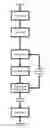
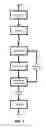


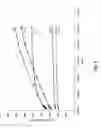
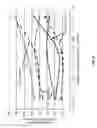
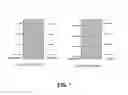
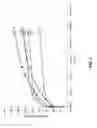


Sources:
- United States Patent and Trademark Office - verify current appl. status at the USPTO↗
Similar patent applications:
Recent applications in this class:
- » 20250288972 2025-09-18
Nanoporous Superabsorbent Particles with Low Non-Solvent Levels - » 20250153141 2025-05-15
LITHIUM ADSORBENT, AND PREPARATION METHOD AND APPLICATION THEREOF - » 20250108357 2025-04-03
SPHERICAL LITHIUM ADSORBENT AS WELL AS PREPARATION METHOD AND USE THEREOF - » 20230372897 2023-11-23
Nanoporous Superabsorbent Particles with Low Non-Solvent Levels - » 20190201869 2019-07-04
Method for manufacturing a solid adsorbent fiber - » 20160303542 2016-10-20
Perforated adsorbent particles - » 20150158014 2015-06-11
Adsorbent for removal of con-carbon and contaminant metal present in hydrocarbon feed - » 20140264143 2014-09-18
Porositization process of carbon or carbonaceous materials - » 20140208945 2014-07-31
Phosphoric acid treatment of carbonaceous material prior to activation - » 20130211158 2013-08-15
HIGH SURFACE AREA CARBON AND PROCESS FOR ITS PRODUCTION
Recent applications for this Assignee:
- » 20250273700 2025-08-28
MULTI-CELL FLOW BATTERY AND FUEL CELL ASSEMBLIES - » 20250253513 2025-08-07
HIGH FREQUENCY TERMINATIONS IN ELECTRONIC CIRCUITS - » 20250251447 2025-08-07
METHOD OF TERMINATING UNUSED PORTS DURING CROSSTALK MEASUREMENT - » 20250236690 2025-07-24
CONFORMANCE IMPROVEMENT IN HYDROCARBON-BEARING RESERVOIR USING GREEN CROSSLINKERS - » 20250194194 2025-06-12
RADIATION DOPED SEMICONDUCTOR JUNCTIONS - » 20250164319 2025-05-22
THIN CAVITY RESONATOR BY USING LASER FOIL PRINTING - » 20250164290 2025-05-22
OPTICAL FIBER ANCHOR FOR DISTRIBUTED SENSING IN BRITTLE MEDIUMS - » 20250052542 2025-02-13
VISCOELASTIC PROTECTIVE ARMOR LINERS AND PROTECTIVE ARMOR - » 20250033975 2025-01-30
HIGH-EFFICIENCY, HIGH-YIELD ELECTROCHEMICAL EXFOLIATION PROCESS - » 20250033974 2025-01-30
OPEN-STRUCTURED GRAPHENE FROM SELECT BIOMASS SOURCES AND METHODS OF MAKING AND USING THE SAME