Brassiere liner
US20120095423A1
2012-04-19
13/317,137
2011-10-11
Abstract:
A disposable bra liner has three layers which before use are flat, and in use become cup-shaped. The first layer is an outermost layer, the second layer is a middle layer, and the third layer is an innermost layer. The outermost layer and the innermost layer have circular peripheries and are disk-shaped. The middle layer has a central body portion and a plurality of arms extending outwardly in a generally spiral pattern. At least the outermost layer and the innermost layer are attached together, securing the middle layer between them. Regions of the first and third layers located between the spiral arms, when in use, become folded so as to allow contouring of the liner to the body of the user.
Interested in similar patents?
Get notified when new applications in this technology area are published.
Classification:
A61F13/141 » CPC main
Bandages or dressings ; Absorbent pads specially adapted for the breast or abdomen Milk breast pads
A61F13/15 IPC
Bandages or dressings ; Absorbent pads Absorbent pads, e.g. sanitary towels, swabs or tampons for external or internal application to the body ; Supporting or fastening means therefor; Tampon applicators
A61L15/56 IPC
Chemical aspects of, or use of materials for, bandages, dressings or absorbent pads; Bandages, dressings or absorbent pads for physiological fluids such as urine or blood, e.g. sanitary towels, tampons; Use of materials characterised by their function or physical properties Wetness-indicators or colourants
Description
CROSS REFERENCE TO RELATED APPLICATIONS
The entire specification and drawings of U.S. Pat. No. 5,690,536, issued to Kathleen A. D. Madden on Nov. 25, 1997, is hereby referred to and incorporated herein in its entirety.
STATEMENT REGARDING FEDERALLY SPONSORED RESEARCH OR DEVELOPMENT
Not applicable.
FIELD OF THE INVENTION
This invention relates to multi-layer disposable brassiere (bra) liners for nursing mothers. More specifically, the bra liners maintain their shape and positioning while being worn and prevent breast milk leakage from seeping into and through a mother's clothing.
BACKGROUND OF THE INVENTION
Devices for preventing breast milk leakage from contacting and seeping into and through clothing are currently available on the market. Generally, these devices fall into two broad categories, nursing or breast pads and nursing or protective brassieres. These two broad categories each comprise two general sub-categories, reusable pads and disposable pads, and unitary brassieres and brassieres having replaceable absorbent pads. Each of the devices currently comprising these categories suffers from at least one disadvantage, including low moisture absorbency, visibility of the device through clothing, bulkiness, inability to keep the moisture of the breast milk away from both the skin and clothing, poor fit within the brassiere, failure to maintain the proper shape within the brassiere, and lack of multiple sizes for accommodating women's differently sized breasts.
In addition, the prior art devices use large pads for absorbing liquid, and cannot conform easily to different cup shapes and sizes.
SUMMARY OF THE INVENTION
From the foregoing, it is seen that it is a problem in the art to provide a device meeting the above requirements. According to the present invention, a device is provided which meets the aforementioned requirements and needs in the prior art. Specifically, the device according to the present invention provides a disposable bra liner that has three layers which before use are flat, and in use become cup-shaped. The first layer is an outermost layer, the second layer is a middle layer, and the third layer is an innermost layer which in use is in contact with the skin of the user. The outermost layer and the innermost layer have circular peripheries and are generally disk-shaped. A middle layer has a non-circular periphery, and has a central body portion and a plurality of arms extending outwardly in a generally spiral pattern.
In this bra liner, the outermost extent of the plurality of arms is not further than the outermost periphery of the outermost and innermost layers. At least the outermost layer and the innermost layer are attached together, securing the middle layer between them. The first, outermost layer is formed of a moisture resistant layer. The second, middle layer is absorbent, and absorbs liquids. This second layer can be retained between the first and third layers which are attached to each other; or the second layer can itself be attached to either or both of the first and third layers. The third layer is a wicking layer having wicking material for wicking away moisture into the second, middle absorbent layer.
Regions of the first and third layers located between the spiral arms, when applied against the breast in use, become folded so as to allow contouring of the liner to the body of the user.
The specific shape used, having spaced-apart arms extending in a generally curved pattern, has at least the following advantages, which are a significant improvement over the prior art: (1) they permit instant adaptation to a wider variety of sizes and shapes; (2) the spiral pattern uses less material without sacrificing thoroughness of coverage since the spiral arms converge when the pad is applied in use; (3) the spiral pattern means that, in use, leaks are stopped in every direction—if the arms were straight there would be uneven leakage control; and (4) the first and third layers can be directly bonded together in the regions between the spiral arms of the middle layer.
Other objects and advantages of the present invention will be more readily apparent from the following detailed description when read in conjunction with the accompanying drawings.
BRIEF DESCRIPTION OF THE DRAWINGS
FIG. 1 is a schematic drawing of a bra cup liner in its initial configuration, showing an inner, wicking layer in elevational view and showing an absorbent middle layer in dashed outline, according to the present invention.
FIG. 2 is a top elevational view of the middle layer of FIG. 1.
FIG. 3 is a top elevational view of an outer, moisture resistant layer which underlies the middle layer shown in FIG. 1, shown by itself.
FIG. 4 is a top elevational view of the inner layer of FIG. 1, shown by itself.
FIG. 5 is a sectional view of the middle layer, taken along line 5-5 of FIG. 2.
FIG. 6 is an assembly view of the outer, middle, and inner layers of FIGS. 1-5.
FIG. 7 shows a close up view of a portion of the bra cup liner of FIG. 1 showing two types of stitching used to connect the outer and inner layers of FIG. 1.
FIG. 8 is a schematic sectional view of the assembled layers of the bra cup liner of FIG. 1, showing connection between the inner and outer layers.
FIG. 9 shows a side elevational view of the bra cup liner of FIG. 1 in use, having a curved shape.
FIG. 10 shows a front elevational view of the bra cup liner of FIG. 1 in use, showing the folds which occur during convergence of the arms of the middle layer in forming the curved shape of FIG. 9.
DETAILED DESCRIPTION OF THE INVENTION
FIG. 1 is a schematic drawing of a bra cup liner 100 in its initial configuration, showing an inner, wicking layer 130 in elevational view having a center C, and showing an absorbent middle layer 120 (shown in FIG. 2) in dashed outline. The middle layer 120 has a plurality of spiral-shaped arms 120A-F (shown in FIG. 2), including arms 120A and 120F identified and shown in FIG. 1.
The bra liner 100 is shown flat in FIG. 1, its configuration prior to use, and in use it is cup-shaped to conform comfortably to the shape of the mother's breasts. To use the bra liner 100, it is simply inserted into the cup of a bra (not shown), and the regions of the bra liner 100 in between the spiral arms 120A-F can fold or wrinkle so as to allow the spiral arms 120A-F to converge together. The inner layer 130 in use is proximal to the skin of the user, and wicks away breast milk leakage from the mother's skin into the second intermediate absorbent layer 120 of FIGS. 1 and 2.
Specifically, the device of FIGS. 1-10 provides a disposable bra liner which has three layers 110, 120, and 130 which before use are flat, and in use become cup-shaped. The first layer 110 is an outermost layer, the second layer 120 is a middle layer, and the third layer 130 is an innermost layer. The outermost layer 110 and the innermost layer 130 have circular peripheries and are generally disk-shaped. The middle layer 120 has a non-circular periphery, and has a central body portion 106 (shown in FIG. 2) and a plurality of arms 120A-F extending outwardly in a generally spiral pattern (also shown in FIG. 2).
In this bra liner 100, the outermost extent of the plurality of arms 120A-F is not further than the outermost periphery of the outermost layer 110 and the innermost layer 130. At least the outermost layer 110 and the innermost layer 130 are attached together, securing the middle layer 120 between them. The first, outermost layer 110 is formed of a moisture resistant material. The second, middle layer 120 is absorbent, and absorbs liquids. This second layer 120 can be retained between the first layer 110 and the third layer 130 which are attached to each other; or the second layer 120 can itself be attached to either or both of the first and third layers 110 and 130. The third layer 130 is a wicking layer having wicking material for wicking away moisture into the second, middle absorbent layer 120. Regions 104 (shown in FIG. 10) between the spiral arms 120A-F, in use become folded to allow contouring of the bra liner 100 to the body of the user.
The specific shape used, having spaced-apart arms 120A-F extending in a generally curved pattern, has at least the following advantages, which are a significant improvement over the prior art: (1) they permit instant adaptation to a wider variety of sizes and shapes; (2) the spiral pattern uses less material without sacrificing thoroughness of coverage since the spiral arms 120A-F converge when the pad 100 is applied in use; (3) the spiral pattern means that, in use, leaks are stopped in every direction—if the arms 120A-F were straight instead of being curved then there would be uneven leakage control; and (4) the first and third layers 110 and 130 can be directly bonded together in the regions between the spiral arms of the middle layer, permitting ease of manufacture.
FIG. 2 is a top elevational view of the middle layer 120 of FIG. 1. This view shows a central region 106 which is generally circular, and having a plurality of spiral-shaped arms 120A, 120B, 120C, 120D, 120E, and 120F extending from the central region 106. While six spiral arms 120A-F are shown, it will be understood that a greater or lesser number of spiral arms can be used without departing from the present invention. For example, five, seven, eight, or nine spiral arms could be used.
FIG. 3 is a top elevational view of an outer, moisture resistant layer 110 which underlies the middle layer shown in FIG. 1. In use, the middle layer 110 is the most distal layer from the skin of the user.
FIG. 4 is a top elevational view of the inner layer 130 of FIG. 1, and is described hereinabove with regard to FIG. 1. The layer 130 is a wicking layer which in use is proximal to and in contact with the skin of the user. The layer 130 is composed of any type of known wicking materials which can conduct moisture to the middle layer 120 and which are suitable for use in contact with human skin. Such materials are well known in the art, such as in multi-layer absorbent diapers and in conventional prior bra cup liners.
FIG. 5 is a sectional view of the central disk portion 106 of the middle layer 120, taken along line 5-5 of FIG. 2. Here, it is seen that the material is a fibrous, absorbent material. Any known type of absorbent material can be used, including materials such as those used in the prior art absorbent disposable diapers. Selection of such materials is within the ambit of skill of any one having skill in the absorbent liner arts or in the disposable diaper arts. All such absorbent materials suitable for use with human skin are contemplated as being within the scope of the present invention.
FIG. 6 is an assembly view of the outer layer 110, the middle layer 120, and the inner layer 130 of FIG. 1.
FIG. 7 shows a close up view of a portion of the bra cup liner 100 of FIG. 1 showing two types of stitching 122 and 124, used to connect the outer layer 110 and the inner layer 130 of FIG. 1. The stitching 124 passes through all three layers 110, 120, and 130, securing them to each other. The stitching 122 passes only through the innermost layer 130 and the outermost layer 110, missing the layer 120 entirely. Either type of stitching can be used alone or in combination, and other stitching patterns can be used.
Instead of stitching, ultrasonic welding can be used, in which case the layers 110 and 130 are secured together easily and securely, without need for any stitching. Alternatively, adhesive can be used in the pattern of the stitching 122. Such adhesives and securing methods would be understood by any one having skill in the manufacturing or sewing arts. All such types and methods of securing the layers 110 and 130 together are contemplated as being within the scope of the present invention. Further, it is contemplated that all three layers 110, 120, and 130 can be bonded together, by any suitable adhesive, ultrasonic welding, stitching, fastening, or other connection means. Such connection means would be known by any one having skill in the fastening, welding, adhesive, or sewing arts, and all such connection means are contemplated as being within the scope of the present invention.
FIG. 8 is a schematic sectional view of the assembled layers 110, 120, and 130 of the bra cup liner 100 of FIG. 1, showing connection between the inner, proximal layer 130 and the outer, distal layer 110, as well as the stitching 122 and 124 of FIG. 7. This view is schematic and the parts are expanded and distances between elements exaggerated for the sake of clarity.
FIG. 9 shows a side elevational view of the bra cup liner 100 of FIG. 1 in use, having a curved shape. The layers 120 and 130 are shown in dashed outline. The outer, distal layer 110 is the only layer visible in elevation in FIG. 9, the layers 120 and 130 being shown in dashed outline. The periphery is shown at numeral 102 in FIG. 9.
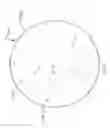
FIG. 10 shows a front elevational view of the bra cup liner 100 of FIG. 1 in use, showing the folds 104 which occur during convergence of the spiral arms 120A-F of the middle layer 120 in forming the curved shape of FIG. 9. In this view, only the innermost, proximal layer 130 is visible in elevation; the location of some other regions are indicated schematically for the sake of clarity such the as central region 106 of layer 120 and the location of the spiral arms 120A-F. The periphery 102 is visible in elevation in this view.
While six spiral-shaped arms 120A-F are shown, it will be understood that the number can be different. For example, 5 spiral arms could be provided, or 7, 8, 9, or more such spiral arms can be provided. The spacing between the arms must be great enough to permit folds 104 to form when in use; this depends on the specific materials used and the thicknesses thereof, among other factors. All such variations are contemplated as being within the scope of the present invention.
The invention being thus described, it will be evident that the same may be varied in many ways by a routineer in the applicable arts. Such variations are not to be regarded as a departure from the spirit and scope of the invention and all such modifications are intended to be included within the scope of the claims.
Claims
What is claimed is:1. A bra cup liner comprising:
an absorbent material layer shaped for placement in a bra cup presenting a periphery;
wherein the absorbent material layer has a central region and a plurality of arms extending from the central region;
a correspondingly shaped moisture resistant material layer presenting a periphery and being attached to said absorbent layer.
2. A bra cup liner as claimed in claim 1, further comprising:
a correspondingly shaped wicking away layer attached to said absorbent layer for wicking moisture into said absorbent layer.
3. A bra cup liner as claimed in claim 1, wherein said plurality of arms are formed as a spiral shape extending from a central region.
4. A bra cup liner comprising:
an absorbent material layer shaped for placement in a bra cup presenting a periphery;
where the absorbent material layer has a central region and a plurality of arms extending from the central region in a spiral pattern;
a correspondingly shaped moisture resistant material layer presenting a periphery and being attached to said absorbent layer.
5. A bra cup liner as claimed in claim 4, wherein the innermost layer and the outermost layer are secured together by stitching.
6. A bra cup liner as claimed in claim 6 wherein said stitching does not pass through the middle layer.
7. A bra cup liner as claimed in claim 4, wherein the innermost layer and the outermost layer are secured together by adhesive.
8. A bra cup liner as claimed in claim 4, wherein the innermost layer, the middle layer, and the outermost layer are all secured together by adhesive.
9. A bra cup liner as claimed in claim 4, wherein the innermost layer and the outermost layer composed of material capable of being ultrasonically welded, and are secured together by ultrasonic welding.
Images & Drawings included:



Sources:
- United States Patent and Trademark Office - verify current appl. status at the USPTO↗
Similar patent applications:
- » 20140141693
BRASSIERE LINER - » 20120115395
Brassiere Cup Exterior Liner
Recent applications in this class:
- » 20230293355 2023-09-21
Nursing Pad System - » 20230029730 2023-02-02
BREAST PAD AND METHOD OF MANUFACTURE - » 20220249294 2022-08-11
Absorbent component - » 20220117799 2022-04-21
SYSTEM AND METHOD FOR A NURSING PAD - » 20220087872 2022-03-24
Nursing Pads with Straps - » 20210137747 2021-05-13
WASHABLE MULTILAYER NURSING PAD - » 20210052433 2021-02-25
BREASTFEEDING ASSISTANCE DEVICE - » 20190133832 2019-05-09
Absorbent Adhesive Nipple Cover - » 20190038475 2019-02-07
Cloth-silicone nursing pad assembly - » 20180168872 2018-06-21
Nursing pad